Warehouse for Rent in Gurgaon (2026): Rates by Micro-Market, and the Lease Clause Nobody Prices In
Short answer
Warehouse for rent in Gurgaon runs roughly ₹14 to ₹25 per sq ft per month in 2026, depending on micro-market, compliance status and clear height. The corridor benchmark is Blue Dart's Pataudi Road lease — 5,83,660 chargeable sq ft at ₹1.02 crore a month, which works out to ₹17.48 per sq ft. Lozy's flexible warehouse and godown space starts at ₹12 per sq ft per month with no multi-year lease.
The transaction the whole Gurgaon market is priced against
Most "warehouse rent in Gurgaon" pages quote a range and cite nobody. There is a better way to answer the question, because one Gurgaon lease is fully public and it sits on exactly the corridor most enquiries are about.
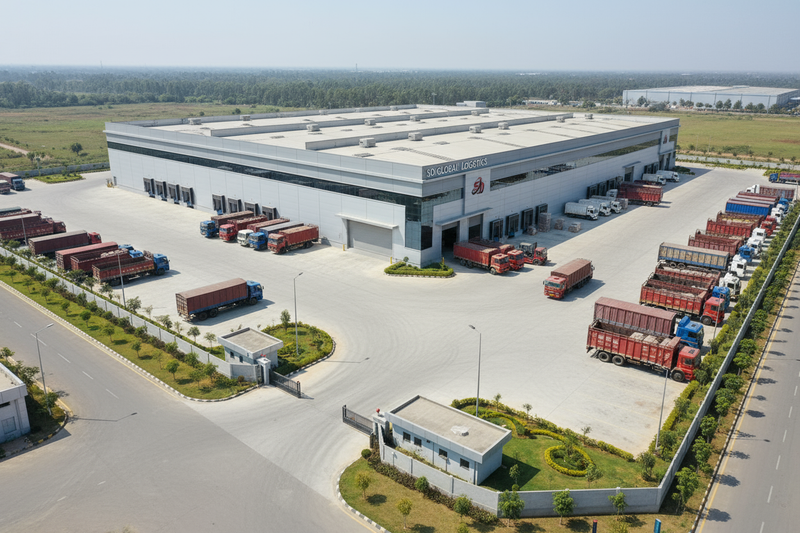
In 2025, Blue Dart Express leased approximately 6 lakh sq ft on Pataudi Road, Gurugram, on a nine-year term. The registered terms:
- Chargeable area: 5,83,660 sq ft
- Additional parking area: 1,18,960 sq ft
- Monthly rent: ₹1.02 crore
- Security deposit: ₹6.12 crore
- Annual escalation: 5%
- Landlord: ASD Hotels & Resorts LLP
- Operational from: 15 June 2025
Divide the rent by the chargeable area and you get ₹17.48 per sq ft per month. That is the closest thing Gurgaon has to a published, third-party-verifiable Grade A rate — a large, creditworthy, listed occupier transacting at arm's length on the Pataudi Road belt.
It is also the number to argue with your landlord about, because a deal that size sets the ceiling, not the floor. A 20,000 sq ft occupier will not get Blue Dart's terms. A 5,000 sq ft occupier is in a different market entirely.
The escalation clause is the real cost, and almost nobody models it
Here is the part that gets skipped in every Gurgaon warehouse comparison we have read. A 5% annual escalation on a nine-year lease is not a footnote. It is the largest single variable in the deal.
Applying Blue Dart's own 5% escalation to its own starting rate:
| Lease year | Rate per sq ft | Monthly rent |
|---|---|---|
| 1 | ₹17.48 | ₹1.02 cr |
| 2 | ₹18.35 | ₹1.07 cr |
| 3 | ₹19.27 | ₹1.12 cr |
| 4 | ₹20.23 | ₹1.18 cr |
| 5 | ₹21.24 | ₹1.24 cr |
| 6 | ₹22.30 | ₹1.30 cr |
| 7 | ₹23.42 | ₹1.37 cr |
| 8 | ₹24.59 | ₹1.44 cr |
| 9 | ₹25.82 | ₹1.51 cr |
By year nine the tenant is paying ₹25.82 per sq ft — a 48% increase on the headline rate they signed. Total rent across the nine years comes to roughly ₹135 crore against a year-one run rate of ₹12.24 crore.
So when a Gurgaon broker quotes you "₹18 a foot", ask what the escalation is and what the term is. Those two numbers, multiplied out, move the total commitment far more than the ₹1 or ₹2 per foot you are haggling over on day one.
Arithmetic note: figures are compounded from the publicly reported chargeable area, monthly rent and escalation rate. They are our calculation, not disclosed lease totals.
Chargeable area vs covered area: the 20% gap
Blue Dart's deal shows this cleanly. The headline is "6 lakh sq ft". The chargeable area is 5,83,660 sq ft. The full footprint including parking is 7,02,620 sq ft.
- Rent ÷ chargeable area = ₹17.48 per sq ft
- Rent ÷ total footprint = ₹14.52 per sq ft
Same building, same rent, two rates 20% apart. Gurgaon landlords quote on chargeable area. Some include the loading apron, driver rest rooms, security cabin and office block in the chargeable number; some do not. This is where two apparently identical quotes stop being comparable.
Before you compare any two Gurgaon warehouse quotes, ask for the chargeable area definition in writing. A ₹16 quote on an inflated chargeable area can cost more per usable pallet position than a ₹19 quote on tight measurement.
Gurgaon warehouse micro-markets, and what separates them
Gurgaon is not one warehousing market. It is at least five, and the rate gap between the cheapest and the dearest is roughly the same size as the rate itself.
Garhi Harsaru / Pataudi Road (NH-352W). The container corridor. The Gateway Rail Inland Container Depot here occupies about 90 acres and handles around 2,60,000 TEUs a year, with customs clearance on site, 25 monthly rail services to JNPT and 8 to Mundra. If you import, this is structurally the cheapest total-cost address in Gurgaon even when the per-foot rent is not the lowest, because a customs-cleared container can move from rail head to your floor without a long road leg. Garhi Harsaru Junction railway station and the Dwarka Expressway crossing at Pataudi Road are both close. This is where Blue Dart went, and it is where Lozy's Gurgaon inventory sits.
IMT Manesar. The established industrial estate — HSIIDC-allotted plots, mature power and effluent infrastructure, automotive OEM and ancillary density. Rates sit at the top of the Gurgaon band; listings in the 16,500–60,000 sq ft range have been advertised around ₹19–₹25 per sq ft. You are paying for a clean title, a settled compliance position and neighbours who are audited.
Farrukhnagar. The volume corridor. Cushman & Wakefield's Delhi NCR MarketBeat put Farukhnagar at 17% of the region's H2-2025 warehouse leasing, behind Gurgaon at 32% and Sonipat at 24% — which means it is now absorbing serious Grade A supply rather than being a fringe option. Connectivity to NH-48, the KMP Expressway and IMT Manesar with land cost below the estate. Newly built PEB sheds of 30,000–80,000 sq ft are the typical product.
Bilaspur, Tauru, Pataudi outer. Cheapest per foot in the Gurgaon orbit. Larger boxes, 12-metre clear heights on new construction, and the trade-off is a longer road leg into Delhi and a thinner labour pool. Sensible for slow-moving stock, bulk raw material and seasonal buffer. Poor for same-day urban delivery.
Gurgaon city sectors and Sohna Road. Smallest units, highest rate per foot, best for last-mile and dark-store operations where the delivery radius is worth more than the rent saved. Genuine warehousing stock here is scarce and much of what is advertised is retail or basement space with no fire NOC.
"Godown for rent in Gurgaon" and "warehouse for rent in Gurgaon" are not the same search
They return overlapping listings, which is why so many enquiries end in a wasted site visit.
In practice in Haryana, godown usually means an independent shed or ground-floor covered space — often on land whose use has not been formally converted, often without a fire NOC, usually with a low clear height and a single shutter rather than dock levellers. Warehouse in the current market means a purpose-built PEB or RCC structure with dock-height loading, fire hydrant and sprinkler systems, and documented compliance.
That distinction determines whether you can legally and practically store certain goods at all:
- No fire NOC means most insurers will not cover high-value cargo, and pharmaceutical, FMCG and automotive audits will fail the site outright.
- No CLU — Change of Land Use, administered in Haryana by the Town and Country Planning department, with GMDA executing within Gurugram — means the facility is operating on agricultural or unconverted land. Applications run 60–90 days when documents are in order. A shed without CLU is a shed you can be asked to vacate.
- Clear height under 6 metres roughly halves your storage density against a 12-metre building at the same floor area, which is why a "cheaper" godown often costs more per pallet stored.
So a ₹14 godown and a ₹20 warehouse are not a ₹6 saving. They are different products, and for regulated cargo only one of them is an option. Our godown vs warehouse vs self storage explainer covers the terminology in more depth.
Why "rent per sq ft" is the wrong first question
Four variables move your real Gurgaon cost more than the headline rate does:
- Chargeable area definition. Established above — worth up to 20%.
- Escalation and term. A 5% escalation over nine years adds 48% to the rate by the final year.
- Clear height. Cost per pallet position, not cost per square foot, is what your finance team should be tracking. A 12-metre building at ₹20 can beat a 6-metre shed at ₹14.
- Utilisation. This is the one occupiers consistently get wrong. If your peak is 40,000 sq ft in October and your trough is 12,000 sq ft in March, a fixed lease means you pay for 40,000 sq ft for twelve months. You are not paying ₹18 a foot. On average utilisation you are paying far more.
That fourth point is the entire argument for flexible space, and it is arithmetic rather than marketing. Take an occupier averaging 15,000 sq ft with an October peak of 40,000 sq ft. A fixed 40,000 sq ft lease at ₹18 costs ₹7.2 lakh a month, every month. Flexible space billed on actual occupancy at a higher nominal rate can land below that annual total, because eight months of the year the fixed lease is paying for empty floor.
The break-even depends on your own peak-to-trough ratio. If your volume is flat year-round and you need five-plus years in one building, sign the lease — a long lease is genuinely cheaper for stable, predictable volume. If your ratio is above roughly 2:1, or you cannot forecast beyond 18 months, run the numbers before committing to nine years. Our on-demand warehousing pricing guide sets out how the billing works.
What the wider NCR market is doing in 2026
Context for anyone deciding whether to move now or wait.
Delhi NCR recorded 7.1 million sq ft of warehouse leasing in H2-2025, taking the annual figure to an all-time high of 13.9 million sq ft, per Cushman & Wakefield's Delhi NCR MarketBeat. Gurgaon contributed 32% of that, Sonipat 24% and Farukhnagar 17% — so roughly half of NCR's leasing happened in Gurgaon and its immediate western corridor.
Knight Frank's India Warehousing Market Report puts national transacted volume at 72.5 million sq ft across eight primary markets in 2025, up 29% year on year, with NCR the second largest market at a 21% share behind Mumbai, and national vacancy contained at 11.6%. Q1 2026 ran 19.3 million sq ft, up 15% year on year.
What that means for a tenant: demand is strong and vacancy is tightening, so landlords on the good corridors have little reason to discount. The negotiating room in Gurgaon right now is in the terms — escalation rate, chargeable area definition, fit-out contribution, rent-free period — rather than in the headline rate.
Where Lozy has warehouse space in Gurgaon
Both of Lozy's Gurgaon facilities are on the Garhi Harsaru corridor described above, adjacent to the ICD.
100,000 sq ft warehouse, Garhi Harsaru — highway access at 100 metres, Dwarka Expressway 1 km, Garhi Harsaru railway 1 km, HUDA City Centre 7 km. Set up for distribution, e-commerce fulfilment and industrial storage with palletised and bulk configurations.
Garhi Harsaru facility on Pataudi Road (NH-352W), Gurgaon 122505 — RCC and block construction, minimum seven bay doors, hydraulic dock levellers, fire hydrant and sprinkler systems with fire NOC, CCTV and door contactors, controlled access to floor and office. The team works to Good Distribution Practice norms and handles kitting, labelling, light assembly, pick and pack, rework and physical inventory counts in-house. Garhi Harsaru Junction is 500 metres from the gate; the Gateway Rail ICD and ICD Patli are adjacent; IMT Manesar is 10 km and IGI Airport 34 km.
Both are taken on flexible monthly terms rather than a multi-year lease, and both sit within Lozy's network of 75 warehouse locations and roughly 10 lakh sq ft under management across owned, leased and partner facilities.
Pricing starts at ₹12 per sq ft per month and moves with the space, the duration and whether you need value-added services alongside storage. See all Gurgaon warehouse options →
Gurgaon warehouse rent FAQs
How much does warehouse space cost in Gurgaon per sq ft in 2026?
Between about ₹14 and ₹25 per sq ft per month. Bilaspur, Tauru and outer Pataudi sit at the lower end; IMT Manesar and Grade A parks at the upper end. The verifiable corridor benchmark is Blue Dart's 2025 Pataudi Road lease at ₹1.02 crore a month for 5,83,660 chargeable sq ft — ₹17.48 per sq ft. Lozy's flexible space starts at ₹12 per sq ft per month.
What is the cheapest area to rent a warehouse in Gurgaon?
Bilaspur, Tauru and the outer Pataudi belt carry the lowest per-square-foot rates in the Gurgaon orbit. The saving comes with a longer road leg into Delhi and a thinner labour pool, so it suits slow-moving stock and bulk buffer rather than same-day distribution. Farrukhnagar sits a step above on rate and a clear step above on connectivity and building quality.
What is the difference between a godown and a warehouse in Gurgaon?
A godown is typically an independent shed or ground-floor covered space, often without fire NOC or formal Change of Land Use, usually with a low clear height and shutter loading. A warehouse in the current market means purpose-built PEB or RCC construction with dock-height loading, fire hydrant and sprinkler systems and documented compliance. For pharmaceutical, FMCG and automotive cargo, only the second is viable — insurers and auditors will reject the first.
Do I need CLU approval to run a warehouse in Gurgaon?
If the land is agricultural or otherwise unconverted, yes. Change of Land Use in Haryana is administered by the Town and Country Planning department, with the Gurugram Metropolitan Development Authority executing CLU within Gurugram. Approval usually takes 60–90 days from submission when documents are in order, and a Haryana State Pollution Control Board NOC is required where the site falls in the agricultural zone. Ask any prospective landlord for the CLU order and the fire NOC before you sign.
Is Garhi Harsaru a good location for a warehouse in Gurgaon?
For importers and exporters it is arguably the best address in NCR. The Gateway Rail Inland Container Depot there spans roughly 90 acres, handles about 2,60,000 TEUs a year, clears customs on site and runs 25 monthly rail services to JNPT and 8 to Mundra. Combined with Garhi Harsaru Junction, NH-48 access and the Dwarka Expressway crossing at Pataudi Road, a container can reach your floor without an unnecessary road leg.
How much does a 10,000 sq ft godown cost in Gurgaon per month?
At prevailing rates of roughly ₹14–₹25 per sq ft, a compliant 10,000 sq ft unit runs approximately ₹1.4 lakh to ₹2.5 lakh a month before deposit, maintenance and GST. Confirm whether the 10,000 sq ft is chargeable or covered area — the gap between the two definitions has been worth around 20% in comparable Gurgaon transactions.
Can I rent warehouse space in Gurgaon without a long lease?
Yes. Lozy takes Gurgaon space on flexible monthly terms with no multi-year lock-in, billed monthly, from ₹12 per sq ft per month. This suits seasonal peaks, market entry and any operation that cannot forecast volume beyond 12–18 months. If your volume is flat and you need five or more years in a single building, a conventional lease will normally cost you less.
How much deposit is standard for a Gurgaon warehouse lease?
Six months of rent is common at the Grade A end — Blue Dart's Pataudi Road lease carried a ₹6.12 crore deposit against ₹1.02 crore monthly rent, exactly six months. Smaller and older stock typically ranges from three to six months. Flexible arrangements carry materially lower deposits, which is often the deciding factor for a business protecting working capital.
Need warehousing or storage in India?
Request a free, tailored quote in under 2 minutes — free pickup, no lock-in.