Warehouse & Godown for Rent in India: The Complete 2026 Guide
Written by the Lozy Warehousing Team · Last updated: August 2026
Quick answer
A warehouse for rent or godown
for rent in India is usually quoted at ₹8 to ₹25 per sq ft per month.
The rate depends on the city, the building type and what is included. Old-style
leases run 3 to 5 years with a lock-in period and a 3 to 6 month security
deposit. Flexible providers rent the same space month to month. Lozy
plans start at ₹12 per sq ft per month with no lock-in.
Who this guide is for
If you are looking for a godown for rent for stock, or
a warehouse for rent
for a growing business, this guide is for you. It is written in plain language.
No jargon, no theory.
By the end you will know what a
fair rent looks like, how much space you really need, what to check on site,
and what to read in the agreement before you sign.
One thing to fix first. The
cheapest space is rarely the cheapest deal. A 10,000 sq ft godown with a bad
approach road and no truck turning space will cost you more every month in
labour and delays than a smaller, better-planned unit close to your customers.
Godown vs warehouse: is
there any real difference?
In everyday Indian usage the two
words mean the same thing. In practice, there is a small difference worth
knowing.
A godown is a simple
storage building. Four walls, a roof, a floor. Goods come in and sit there
until they are needed. Most commercial godown space in India is like
this.
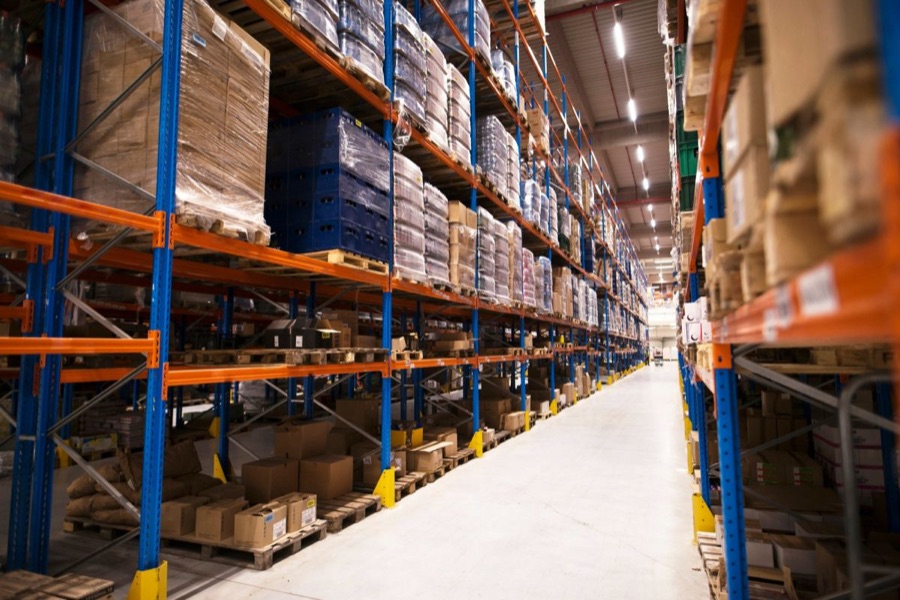
A warehouse is built for
movement. It has racking and shelving, marked pallet spots, a proper loading
bay, space for a forklift, and often software to track stock.
So ask yourself one question: do
you only need to keep goods safe, or do you need goods to move in and out every
day? If it is only storage, a godown is enough and cheaper. If stock moves
daily, pay for a warehouse. Our godown vs warehouse vs self storage guide
explains this with examples.
How much does a warehouse
cost per sq ft in India?
The rate for a warehouse for
rent changes with the city, the building and the services included. Most warehouse
rent per sq ft quotes in India fall between ₹8 and ₹25 per sq ft per
month. Small towns and back-road industrial area plots sit at the
lower end. Grade A space near a highway or an ICD sits at the top end.
But the rent line is never your
full bill. This is where most businesses get the number wrong.
●
Base rent — the per sq ft figure you were quoted
●
Maintenance or CAM charges — building upkeep and
repairs
●
Electricity, water and backup power
●
Security staff and CCTV upkeep
●
Labour, if you hire your own loaders
●
Racking and shelving — buying it, fitting it,
maintaining it
●
Forklifts and pallet jacks, bought or rented
●
Insurance on your goods
●
GST on rent, and any property tax the landlord passes
on
A ₹15 space can easily become
₹22 once you add security, power and basic labour. A ₹20 space that includes
all of it can end up cheaper. So compare the total monthly bill, not the
rent line.
Before you shortlist anything,
ask the landlord for a written month-wise cost sheet. If they will not give
one, that itself tells you something. You can see how we publish transparent
warehouse and godown rent pricing for reference.
How much space do you
actually need?
Before you book a godown for
rent, fix this number. Most businesses guess it, and guess wrong. Square
feet alone will not tell you.
Work it out from how your goods
are stored:
●
On pallets: count your peak pallet position
requirement. One pallet spot with racking, aisle and handling room takes
roughly 50 sq ft on the floor
●
On the floor: floor storage is cheaper to
set up, but you lose height and stack safety
●
Peak season: plan for your busiest month, not
your average month
Then add space you cannot store
in. Aisles for the forklift, an unloading area, a packing area, a returns
corner, and a small office. That is usually a quarter of the building.
A simple method: take your peak
pallet count, add 15 to 20 percent for growth, then add the non-storage areas.
When you visit a site, ask about real storage capacity in pallets, not
square footage. "How many pallets can I keep here?" is the better
question.
If you are storing household
goods or small business stock, our size guide gives you unit sizes from 5x5 ft
upwards.
Carpet area vs built-up
area: the number that really matters
Landlords quote two numbers, and
they are not the same.
Built-up area is
everything under the roof, including walls and columns. Carpet area is
the floor you can walk on. This is the classic carpet area vs built-up area
gap.
In a warehouse there is a third
number that matters more than both: usable storage area. That is what is
left after columns, ramps, the loading bay, aisles, the office and the
toilets.
In real buildings, usable
storage is often only 70 to 80 percent of the built-up figure. On a 10,000 sq
ft quote, that can be 2,000 to 3,000 sq ft you are paying for but cannot fill.
So before signing, ask them to
mark the columns, the dock area and the aisles on a floor plan. Then ask what
is left.
Which type of godown or
warehouse suits you?
Not every warehouse for rent
is built the same way. The structure decides your rent, your usable height and
your monsoon risk.
RCC godown
An RCC godown is a
concrete building. Strong floor, solid roof, long life. It handles heavy loads
and holds racking well. The trade-off is more internal columns, which eat
usable space, and higher rent. Check the floor for cracks and water marks, and
check the roof before monsoon.
PEB shed
A PEB shed is a
pre-engineered steel structure. It gives wide column-free spans, more height
and more usable floor. Rent is often lower. The trade-off is heat build-up in
summer and leaks at roof joints if maintenance is poor. Good for bulk goods and
industrial warehousing, less good for heat-sensitive
stock.
Commercial godown
A basic commercial godown
with minimal facilities. Fine for slow-moving stock, records and seasonal
goods. Look at document and archive storage or seasonal
warehousing if that is your use case.
Shared or flexible space
You rent a unit or a bay instead
of a whole building, and pay monthly. This suits sellers with seasonal spikes,
startups testing a city, and anyone who does not want a 3-year signature. This
is how on demand warehousing works.
What to check before you
rent: a site checklist
Photos lie. Before you commit to
any godown for rent, spend two hours at the site during working hours
and check these.
●
Floor — level, no deep cracks, no standing water
marks
●
Roof — no rust, no sagging, no leak stains at
the joints
●
Height — you need roughly 14 ft clear height for
two-tier racking and shelving
●
Columns — wider spacing means more usable space
●
Loading — how many loading bay doors, and
is there a dock leveller?
●
Trucks — can a 32 ft truck turn and reverse in
the yard?
●
Forklift — is there clean forklift access
inside and at the door?
●
Mezzanine — can you add a mezzanine floor
later, and does the landlord allow it?
●
Power — sanctioned load, and is there a backup?
●
Safety — fire extinguishers, marked exits, CCTV
with no blind spots
●
Approach road — is it usable in monsoon and at
night?
Also talk to a tenant already in
the building. Five minutes with them will tell you more than an hour with the
broker.
Why the cheapest rent is
not the cheapest option
Rent is a monthly number. So is
transport. Businesses compare the first and forget the second, then wonder why
a cheap warehouse for rent feels expensive.
Take a simple case. A unit 60 km
from your delivery area costs ₹10 per sq ft. One 20 km away costs ₹15. On 5,000
sq ft that is ₹25,000 extra rent a month. But if the far unit adds two extra
trips a day, fuel, driver hours and delayed deliveries usually swallow that
saving.
Three things to weigh before you
chase a low rate:
●
Distance to your main customers, not to the city centre
●
Highway or expressway access for inbound trucks
●
Whether labour and transporters are available nearby
If most of your orders go to one
city, rent there. We list live space across Delhi NCR and
PAN India locations, including New
Delhi, Gurugram, Haryana,
Uttar
Pradesh and Maharashtra. Our Gurgaon warehouse rent breakdown shows how rates change
area by area.
Is there a lock-in period
for warehouse rent?
Yes. Almost every long lease for
a warehouse for rent carries one. Understand these four terms before you
sign anything.
●
Lock-in period — the time you must pay rent even
if you leave. Commonly 3 to 5 years in commercial leases
●
Security deposit — usually 3 to 6 months of
rent, refunded when you vacate. Flexible providers ask for far less
●
Notice period — how early you must inform before
leaving. Usually 30 to 90 days
●
Rent escalation — the yearly increase written
into the lease. Often 5 to 10 percent
A lock-in hurts when your
business changes. You may outgrow the space in 18 months and still owe two more
years. Or you may shrink and pay for empty floor.
If your volumes are not steady
yet, monthly plans with simple monthly billing remove that risk
entirely.
What should you check in a
warehouse rent agreement?
The paperwork for a godown
for rent is where most disputes start. A weak warehouse rent agreement
only shows its problems on the day you have a dispute. Read these clauses line
by line.
●
Property description — full address, and the
exact area you are renting
●
Rent — amount, due date, late fee, and the
escalation clause
●
Deposit — amount, and how many days after
vacating it is refunded
●
Lock-in and notice — exact months, and any exit
clause
●
Repairs — landlord handles structure, tenant
handles interior, usually
●
Permitted use — check the ban list for
inflammable or hazardous goods
●
Changes — can you install racking or a mezzanine
floor?
●
Access hours — 24x7, or only working hours?
●
Insurance — you insure the goods, the landlord
insures the building
●
GST — whether GST applies and how it will be
invoiced
One more legal point people
miss. Under the Registration Act, 1908, a lease of 12 months or more has to be
registered. An unregistered long lease is weak evidence if there is a dispute
later. Stamp duty is a state subject, so the rate changes by state.
A few thousand rupees for a
lawyer to read a 5-year lease is cheap insurance.
What documents are needed
to rent a godown?
The list for a godown for
rent depends on whether you are renting as an individual or as a business.
Ask the landlord for their exact list, but this covers most cases.
Individual: PAN, Aadhaar
or ID proof, address proof, bank details, signed agreement.
Company: company PAN, GST
certificate, Certificate of Incorporation, MOA and AOA, authorised signatory
details, bank details, signed agreement.
LLP or partnership: firm
PAN, GST certificate, partnership deed or LLP agreement, partner ID proof, bank
details.
Two tax points to settle at the
start, not later:
●
GST invoicing address — your rent invoice should
carry your registered GST address. If you store goods in another state, that
warehouse usually has to be added to your GST registration as an additional
place of business, or your input credit can be questioned
●
TDS on rent — under Section 194-I of the
Income-tax Act, TDS applies once rent crosses the threshold set for the year.
Confirm the current limit with your CA before the first payment
These are routine compliance
steps, not grey areas. Just get them right on day one.
Can I rent a warehouse for
just 3 months?
Yes, but not from every
landlord. A short warehouse for rent booking is normal with managed
providers and rare with traditional ones.
Most traditional landlords want
12 months minimum. Short tenancies are not worth the paperwork and vacancy risk
for them.
Managed providers are built
differently. Short-term storage and monthly plans let
you take space for 3 months, 6 months, or as long as you need. This works well
for:
●
Festive and seasonal stock around Diwali and
end-of-year sales
●
Overflow when a big order lands
●
Goods in transit while you shift premises
●
Testing a new city before committing
Short-term space costs a little
more per sq ft than a long lease. You are paying for the freedom to walk away.
For most growing businesses that is a fair trade. Our guide on short-term vs long-term storage helps you
decide.
Full lease or flexible
monthly rental: which one fits you?
Choose a full lease if
your volumes are steady, you plan to stay five years or more, and you are ready
to invest in your own racking, staff and systems. Your per sq ft cost will be
the lowest.
Choose flexible monthly
rental if you are growing, seasonal or unsure about the location. You get a
ready space, no lock-in, and the ability to scale up or down each month. The
per sq ft rate is higher, but you carry no dead space.
A simple rule: if you can
predict your stock 24 months out, sign a lease. If you cannot, take a godown
for rent on a monthly plan and keep your options open.
Who rents warehouse and
godown space
The same warehouse for rent
serves very different needs. Here is who rents what.
●
E-commerce sellers — daily dispatch, packing
tables, returns space. See e-commerce warehousing and our guide for Amazon and Flipkart sellers
●
Distributors and wholesalers — bulk stock close
to the market, with inventory warehousing support
●
Manufacturers — raw material and finished goods
space, usually bulk or industrial warehousing
●
Retail chains — one central stock point feeding
several stores, through commercial warehousing
●
Offices and startups — files, equipment and
furniture, through office warehousing or furniture
warehousing
●
Families — goods during a move or renovation,
through household warehousing, self
storage or personal storage
You can see the full list on our
warehouse
solutions page and the sectors we handle on industries we
serve.
Renting a warehouse or
godown with Lozy
LozySmart Warehousing offers warehouse for
rent and godown for rent space across Delhi NCR and PAN India, on
monthly terms instead of multi-year leases.
●
Units from 5x5 ft up to full warehouse floors
●
Plans from ₹12 per sq ft per month, quoted item
by item
●
24/7 CCTV, unique PIN access to gates and units
●
Racking and shelving or open floor storage,
depending on the facility
●
Free move-in trolleys and pallet trucks
●
Monthly billing, no long lock-in
●
Optional manpower, business
warehousing and long-term
warehousing plans
Facilities differ. Not every
site has a dock leveller or a wide loading bay, so ask about the
specific unit you are being offered. Real examples include our godown near IGI Airport, Dwarka Sector 26, the
unit near Ghevra Metro in outer Delhi, and the
distribution centre in Jamalpur, Manesar.
Rated 4.8/5 by customers. Read the reviews, our case studies, or why businesses choose Lozy. When you are ready, contact our team for an itemised quote.
About this guide
This guide was written by the
Lozy warehousing team using rates and site conditions from facilities we run
and partner with across Delhi NCR, Gurugram, Pune, Chennai, Jaipur, Ahmedabad
and Kolkata. Price ranges are typical market figures, not guarantees, and
change by city and season. Tax and registration points are general information,
not professional advice. Please confirm them with your CA or lawyer before
signing. Last reviewed in August 2026.
Need warehousing or storage in India?
Request a free, tailored quote in under 2 minutes — free pickup, no lock-in.