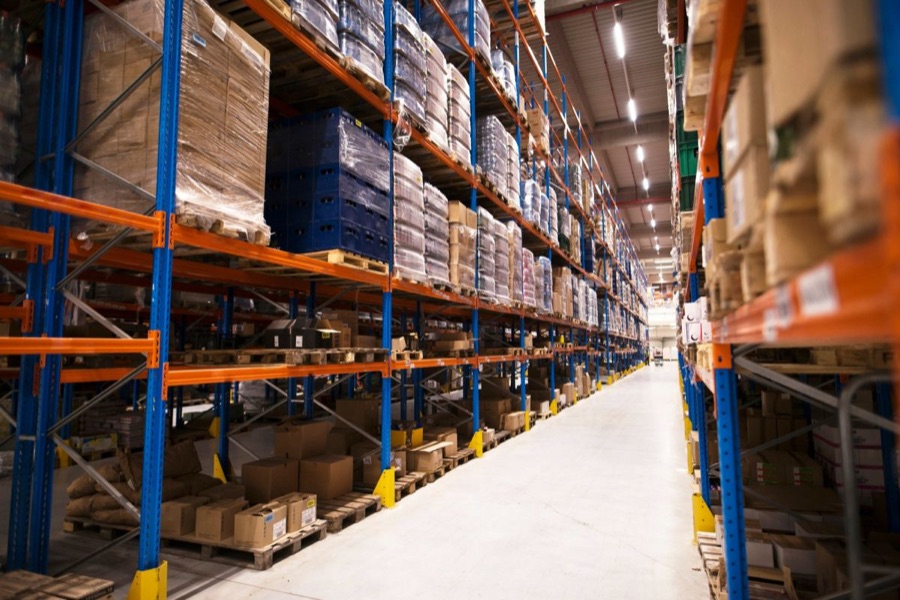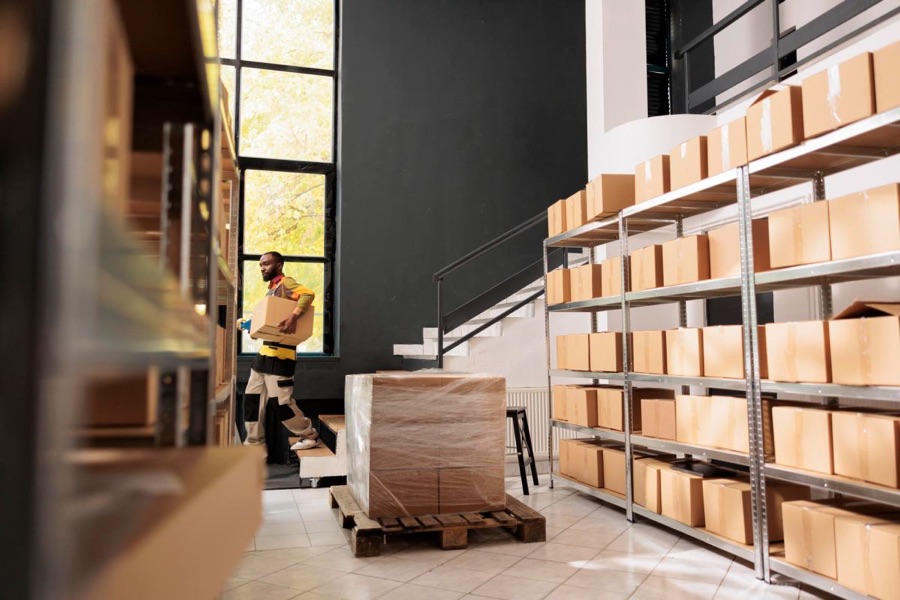
Import & export consignment warehousing
Cargo arrives in lots. It leaves in stages.
Containers come off the dock, counts are matched to packing lists, lots are stored apart, and consignments release in stages — clearance to dispatch, every movement recorded.
- Warehouses
- 34
- Locations live
- 25
- Collection centres
- 74
- States & UTs
- 19
01 · Lots kept apart
Two lots, one floor,
never one pile.
Every consignment is checked in with its lot code, shipping marks, counts and visible condition — so months later, a short-landing query has dates and figures, not a shrug.
What the register knows about one consignment
- Lot No
- LOT-3075
- Container
- CNTR-4410
- Cartons
- 840 cartons
- Status
- Part released
Sample lot record, shown to illustrate how consignments are logged — not a live Lozy figure.
A consignment rarely leaves in one go. Buyers take part quantities over weeks, so the register has to know exactly which cartons left, which stayed, and under whose release instruction — or part-dispatch turns into guesswork.
02 · Container to release
From one container
to staged releases.
01 / 08
The EXIM walk-through, drawn as a sample — one carton lot from container to release.
-
01
Inbound
Full containers arrive on shipping schedules, with dock space ready before the unloading clock starts.
-
02
Receive
Cartons tallied against the packing list, marks and visible condition noted, lot code logged before put-away.
-
03
Store
Bays assigned lot by lot, so two look-alike consignments never end up sharing a pile or a row.
-
04
Pick
Buyers release stock in parts, and each piece is picked from the correct consignment, never from its neighbour.
-
05
Pack
Consolidated into shipment-ready loads, with wrapping and marks applied as one destination's stock goes out.
-
06
Label
Every carton's marks matched to its lot record, so the load on the truck matches the file in the office.
-
07
Dispatch
Trucks loaded to the release list, with the part-quantity and its lot written back into the register.
-
08
Delivery
Part loads roll out; whatever stays behind sits labelled and racked for the next release.
03 · Where each lot goes
One lot feeds
many buyers.
Import lots and export cargo sit on one recorded floor: buyers release in parts, factories draw as lines need material, and each outbound picks from its own lot.
- Buyer releases
- Dealer part-loads
- Project deliveries
- Factory indents
- Port-bound loads
- 01 Part-release note
- 02 Lozy warehouse
- 03 Pick
- 04 Pack
- 05 Ship
04 · Lots in waiting
What can wait
between shipments.
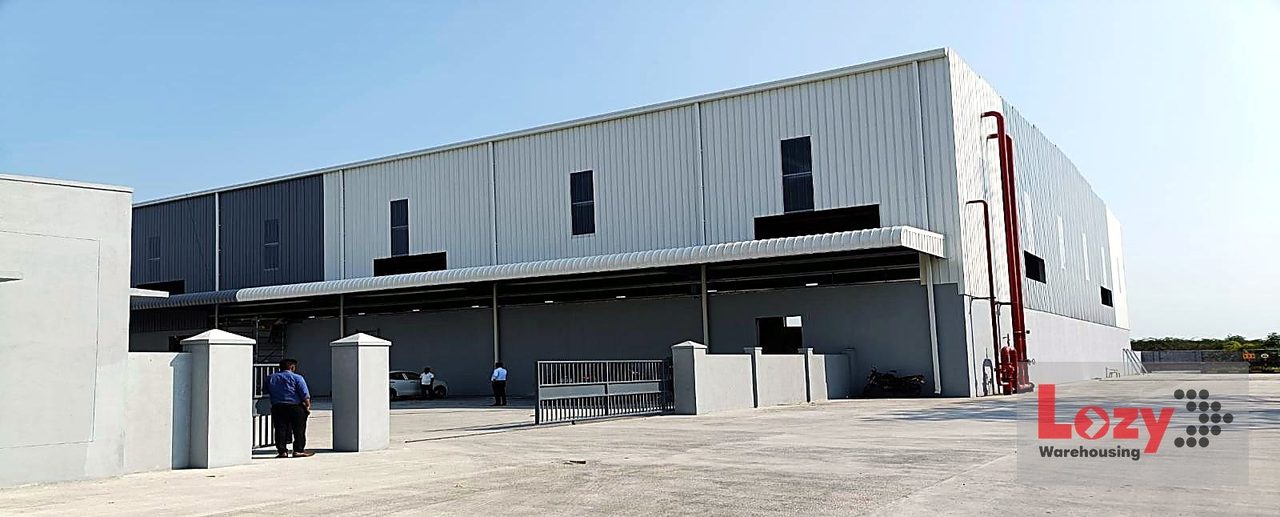
Import and export consignments arrive as finite lots, each with its own distinct paperwork and clearances, and they wait for the next step in their journey before eventually moving on. Some lots move within weeks, others sit for a season:
- 01Cleared consignments awaiting dispatch
- 02Machine crates and heavy parts
- 03Raw material lots for production
- 04Export cartons awaiting stuffing
- 05Sample consignments and spares
- 06Project cargo called off in phases
- 07Bulk bags and palletised cargo
- 08Consumables for regular shipments
- 09Goods held for quality inspection
- 10Export packing material
- 11Short-landed stock under query
Consignments under customs queries or duty questions need prior discussion before storage. Share the cargo status and the team will confirm what applies.
Need space for Import & Export (EXIM) stock?
Tell us what you store and where it needs to reach — the team confirms availability, the plan and the rates in writing.
05 · Where EXIM strains
Every industry carries its own pressure — these are the ones the space, the handling and the paperwork are planned around.
-
01
A container on a clock
Containers arrive on shipping schedules, not at your convenience. If unloading is slow or the site lacks space to sort goods, demurrage and detention charges build while the container is still awaiting its return.
-
02
Lots that blur together
Two consignments of similar cartons, landed weeks apart, can merge into one pile when storage is not separated by lot. Mix-ups then surface at dispatch, when the wrong buyer's goods leave first.
-
03
Dispatch in stages, not one shot
Import lots rarely leave in one truck. Buyers take part quantities, dealers call off stock weekly, and projects draw material as phases begin, so storage has to support planned part-dispatch over weeks.
-
04
Paperwork that moves with goods
Consignment records, packing lists and transporter documents travel with every movement. Storage without matching entry and exit records makes it hard to prove what arrived short and what left complete.
-
05
Space near the right trade lane
Storing an import lot two states away from the market it serves adds freight to every dispatch. The storage location should sit between the clearance point and the buyer, not wherever rent is lowest.
-
06
Export deadlines before stuffing
Export consignments often reach the warehouse close to a shipping cut-off, and they need staging space and prompt handling in that window. Miss it, and the cargo waits for the next sailing while costs and buyer patience run down.
06 · Unload, record, stage
What Lozy covers
per consignment.
5 operations, one contract. Pick one to see what it covers.
07 · Getting started
From enquiry
to moving in.
Onboarding starts with your shipment schedule: what is arriving, how it clears and how it will leave. The team confirms space and handling per lot, agrees the check-in records and sets release rules before the first container is unloaded.
-
01
Enquire
Share your product type, volumes and the city you need. The team confirms availability and shares rates in writing.
-
02
Site visit and requirement planning
Visit the shortlisted facility or plan remotely — space, access and handling are matched to your operation.
-
03
Onboarding
Documentation, check-in records and access setup are completed before your stock arrives, so day one runs clean.
-
04
Storage, fulfilment and dispatch
Stock is stored, managed and dispatched per your instructions, with monthly GST-invoiced billing.
08 · Why the dock stays busy
-
01
1M+ Sq. Ft. Live Space gives consignments room to land, stage and release without waiting on space.
-
02
CCTV surveillance and controlled access cover storage areas, and movement records track every lot from gate-in to final release.
-
03
A customs desk sits beside the storage operation, so clearance questions and warehouse timelines stay cleanly joined up.
-
04
Monthly plans with GST invoices and no long lock-in suit the lumpy nature of trade cycles and one-off consignment lots.
09 · Coverage
Store here.
Deliver everywhere.
Warehousing sits where the orders are. Lozy runs 74 collection centres across 19 states and union territories — store in the right city and the last mile gets shorter.
Boundary as India officially depicts it
- 01 Warehouse
- 02 Fulfilment
- 03 Distribution
- 04 Customer
Every lane on the map is a real movement: stock received at a Lozy warehouse or collection centre, picked and packed there, then distributed to the customer — or moved between sites to be closer to demand.
Guwahati · Jorhat · Bengaluru · Patna · Coimbatore · Madurai · Puzhal & Ambattur · Red Hills (Chennai) · Sholavaram · Ahmedabad · Ankleshwar · Vapi · Ambala · Dharuhera · Faridabad · Garhi Harsaru · Jamalpur · Sonipat · Hyderabad · Jammu · Srinagar · Ranchi · Cochin · Indore · Aurangabad · Bhiwandi · Nagpur · Nashik · Pune · Alipur · Bamnoli · Dhulsiras · Bhubaneswar · Cuttack · Chandigarh · Ludhiana · Zirakpur · Jaipur · Ballia · Ghaziabad · Lucknow · Noida · Haridwar · Roorkee · Rudrapur · Kolkata · Siliguri
10 · The flow test
Before you
start storing.
The questions Import & Export (EXIM) teams ask before taking warehouse space — answered in plain words.
What does import export warehousing with Lozy involve?
Import export warehousing with Lozy covers the gap between a cleared consignment and its final dispatch. Consignments are stored lot by lot with entry records, container unloading and reloading support, and staged releases across Delhi NCR and our India network, for importers and exporters.
What is import export warehousing?
Import export warehousing is the storage of inbound consignments and outbound cargo between customs clearance and final dispatch. Goods are held by shipment or lot, with entry and exit records that match the paperwork, until buyers, dealers or production lines call them off in stages.
Key points
- Lot-wise and shipment-wise storage that keeps every consignment clearly identifiable
- Support for container unloading, palletising and reloading as lots release
- Staged dispatch of import lots as buyers call off quantities
- Entry and exit records that align with your shipment paperwork
- Storage after customs clearance, with no locked-in lease to sign
From customs clearance to staged dispatch: a consignment's route through storage
A cleared consignment leaves the port, CFS or ICD and reaches the warehouse, where it is unloaded, counted against the packing list and stored lot by lot. From there it leaves in stages: part quantities for buyers, material for projects, or the full balance once a transporter is fixed. Each movement is recorded against the lot, so the paperwork and the physical stock stay aligned. Where clearance or import-export support is needed around these steps, it runs through Lozy's customs desk.
Why lot-wise storage pays for itself
Two consignments of similar cartons can look identical on the floor, even when one is bound for a northern market and the other for a project in the south. Lot-wise storage keeps each consignment in its own labelled location with its own record, so part-dispatches pick from the right stock and short-landing queries can be answered with dates and counts. The discipline costs a little space; mixed-up dispatches, returned trucks and disputed shortages cost considerably more.
What drives the cost of storing import and export consignments
The bill for consignment storage follows four things: how much space a lot occupies, how long it stays, the location you store in, and how much handling each movement needs. Container unloading, palletising and repeated part-dispatches take more effort than a pallet that sits untouched, and a lot held for three weeks prices differently from one held for three months. Billing stays monthly on GST invoices, so a cleared lot does not commit you to a year of space. Exact rates are quoted in writing after a short requirement check.
How to choose a warehouse for Import & Export (EXIM)
The right storage for import and export consignments is judged on flow, not just floor area. These checks match a facility to your clearance points, release schedules and cargo type.
Distance to clearance and buyers
Storage should sit between where cargo clears and where it is consumed. A short run to the clearance point or the buyer's city saves freight on every part-dispatch, which usually outweighs a small rent difference.
Space to unload a full container
Ask how a container is unloaded: dock access, trolley routes, room to sort and stack before goods are put away. A facility that unloads into a corridor slows every consignment and invites damage.
Lot segregation capability
Confirm the facility can keep each consignment physically separate, with its own rack section, floor marks or labelled pallets. That separation is what stops two similar-looking lots from merging into one unaccountable pile.
Entry and exit record discipline
Goods should be counted and recorded as they cross the gate, with documents matched to the lot. Weak gate records are the single biggest source of short-landing disputes months later.
Handling matched to your cargo
Crates, cartons, coils and machinery each need different equipment and stacking rules. Match the facility's handling to your cargo before committing, especially for heavy or awkward consignments that cannot be stacked.
Release windows and staging space
If buyers call off stock unpredictably, the warehouse needs staging space and a pickup process that works at short notice, not just a counter window with fixed hours and one person on duty.
Terms that follow trade cycles
Trade flows are lumpy, so prefer monthly terms with clear notice. A quiet month should not cost like a full container, and a peak month should not need a fresh agreement.
Frequently asked questions
Can Lozy unload a full container at the warehouse?
How does staged dispatch work for an import lot?
Where should consignments be stored after customs clearance?
Does Lozy handle customs clearance for consignments?
How much does import export warehousing cost?
Can you store export goods waiting for a shipping date?
What records are kept when a consignment enters and leaves?
Can part of a consignment stay while the rest moves on?
Do you support both imports and exports?
Explore the services
06 links
From the blog
03 reads
Keep exploring
Industries that
move like yours.
Every industry page runs the same eight-stop walk — these pages tell it again with their own cargo, their own records and their own rules.
 01
01
 02
02
 03
03
11 · Schedule the first lot
Containers keep coming.
Your lots need staging space.
Send your shipment schedule, lot list and release plan.
Speak to a human · +91 9354712345
12 · Enquiry
Tell us what
you need to store.
Availability, plan and rates — one short form, a written reply.
- Tell us the industry, product and city — one short form or call.
- Get availability and rates in writing, itemised.
- Move in with documentation, access and records done before stock arrives.
Contact our experts
One form, one reply — Import & Export (EXIM) availability and rates.