B2B & wholesale distribution warehousing
Truckloads arrive full. Dealer orders leave complete.
You buy in truckloads and sell in cartons — Lozy gives that flow a counted floor, while your own team runs the books, margins and dispatch inside.
- Warehouses
- 34
- Locations live
- 25
- Collection centres
- 74
- States & UTs
- 19
01 · Lot, bay, count
Lot numbered,
bay marked, count kept.
A truckload is only dealer-ready once every lot is counted against the delivery papers and parked at a marked bay, so your order sheet and the floor agree on what is actually there.
One bulk lot, as the bay records it
- Lot
- L-2609-118
- Bay
- BAY-P07
- Stock
- 288 cartons
- Status
- Ready to split
Sample record only, showing how wholesale lots are counted — not a live Lozy figure.
Your order book can only promise what the floor can load, so intake is where trust in the stock position is built — and a busy season is the worst time to discover a count was wrong.
02 · Bulk in, dealer out
Full loads in,
dealer orders out.
01 / 08
One master case's trip to a dealer counter — the wholesale walk-through, drawn as a sample.
-
01
Inbound
Vehicles arrive from suppliers on a steady weekly rhythm, each one booked against your sheet and unloaded to a count.
-
02
Receive
Every pallet tallied while the vehicle waits; any shortage or broken case goes on the sheet before the driver leaves.
-
03
Store
Full pallets in reserve racks; the lines dealers ask for weekly stay within reach of the dock.
-
04
Pick
One dealer's list at a time, pulled from the live shelves so two orders never cross.
-
05
Pack
Cut down to order size, master cases are resealed and weighed before the route sheet prints.
-
06
Label
Marks applied carton by carton — dealer, town and drop order — checked against the loading sheet.
-
07
Dispatch
Trucks leave in route order, every docket closed out before the shutter comes down.
-
08
Delivery
Runs finish at dealer counters with counts signed off, so the next order starts from clean books.
03 · One floor, many counters
From one floor,
to every counter.
Dealers, sub-dealers, counters and institutional buyers all pull from lots you have already counted — an order taken at the counter matches a carton on the floor.
- Dealer networks
- Sub-dealer points
- Trade markets
- Counter sales
- Institutional supply
- 01 Dealer indent
- 02 Lozy warehouse
- 03 Pick
- 04 Pack
- 05 Ship
04 · Bulk and break-bulk
What the floor holds
until a dealer calls.
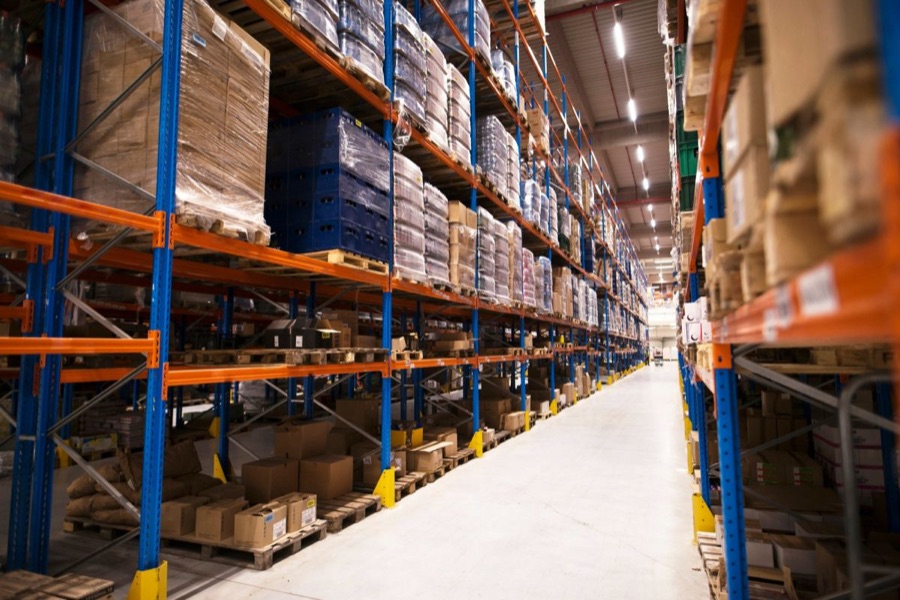
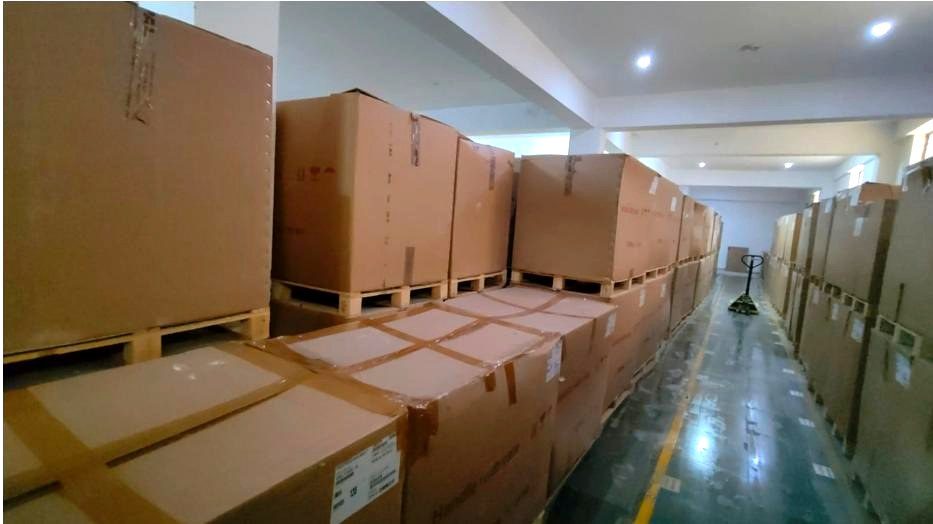
A wholesale warehouse usually carries a wide mix: fast-moving lines for the season, reserve depth of steady sellers, goods returned from dealers, and the odd slow lot waiting for the right buyer. One organised location can hold most of it in one place:
- 01Bulk cartons and master cases
- 02Palletised wholesale lots
- 03Bagged and sack-packed goods
- 04Dealer order lots awaiting dispatch
- 05Seasonal stock built ahead of demand
- 06Slow-moving reserve lines
- 07Returns collected from dealers
- 08Empty pallets and crates
- 09Repacking and labelling material
- 10Sample lots for dealer visits
Bulky, hazardous or restricted goods need prior approval before storage. Run your product list past the team to check what the facility can hold.
Need space for B2B & Wholesale Distribution stock?
Tell us what you store and where it needs to reach — the team confirms availability, the plan and the rates in writing.
05 · Where the trade bites
Every industry carries its own pressure — these are the ones the space, the handling and the paperwork are planned around.
-
01
Bulk in, small out
A wholesale dock receives full pallets and container lots, but ships mixed cartons to dealers. Without a break-bulk area, split consignments take over the floor and outbound orders slow down exactly when the season demands speed.
-
02
Dealer order accuracy
Wholesale orders come in by phone, message and ledger, and a mixed-up load means a dealer is short on stock and you arrange a return trip. Route-wise or dealer-wise staging prevents that.
-
03
Turnover beats storage
Wholesale runs on turnover, not on how much stock sits in a godown. When slow lines are buried or parked in the wrong city, capital stays stuck while fresh demand waits, and the next buying cycle begins with money already spent.
-
04
Regional demand swings
Festivals, monsoon and harvest cycles move demand between districts and states. Stock parked where demand was strong last season becomes dead stock when trade shifts to another market the next quarter.
-
05
Carton condition for resale
Wholesale goods often pass from your warehouse to a dealer counter in their original outer cartons. Crushed, torn or damp packaging gets refused or discounted at handover, and that erodes thin wholesale margins quickly.
-
06
Seasonal peaks and lulls
Wholesalers build stock heavily before a season and carry light stock after it. A fixed commercial lease charges for peak capacity all year, including the months when half the floor sits empty.
06 · Space, records, access
Space and records,
you run the trade.
5 operations, one contract. Pick one to see what it covers.
07 · Getting started
From enquiry
to moving in.
Wholesale onboarding starts by mapping how stock enters and leaves: truck sizes, pallet counts, dealer order patterns and the season you are planning around. The team then allocates reserve bays and a break-bulk area that fits your trade rhythm.
-
01
Enquire
Share your product type, volumes and the city you need. The team confirms availability and shares rates in writing.
-
02
Site visit and requirement planning
Visit the shortlisted facility or plan remotely — space, access and handling are matched to your operation.
-
03
Onboarding
Documentation, check-in records and access setup are completed before your stock arrives, so day one runs clean.
-
04
Storage, fulfilment and dispatch
Stock is stored, managed and dispatched per your instructions, with monthly GST-invoiced billing.
08 · Why trade renews
-
01
Space through 77+ Warehouses across our network lets wholesalers park stock near the markets their dealers actually serve.
-
02
Monthly billing, GST invoice, no lock-in keeps a seasonal stock build from turning into a year-long commitment on space.
-
03
Reserve pallet bays and an active break-bulk area in one facility, so bulk intake and dealer dispatch do not compete for the same floor.
-
04
Check-in records and marked lot locations make stock counts, dealer claims and trade books easier to keep straight through a busy season.
09 · Coverage
Store here.
Deliver everywhere.
Warehousing sits where the orders are. Lozy runs 74 collection centres across 19 states and union territories — store in the right city and the last mile gets shorter.
Boundary as India officially depicts it
- 01 Warehouse
- 02 Fulfilment
- 03 Distribution
- 04 Customer
Every lane on the map is a real movement: stock received at a Lozy warehouse or collection centre, picked and packed there, then distributed to the customer — or moved between sites to be closer to demand.
Guwahati · Jorhat · Bengaluru · Patna · Coimbatore · Madurai · Puzhal & Ambattur · Red Hills (Chennai) · Sholavaram · Ahmedabad · Ankleshwar · Vapi · Ambala · Dharuhera · Faridabad · Garhi Harsaru · Jamalpur · Sonipat · Hyderabad · Jammu · Srinagar · Ranchi · Cochin · Indore · Aurangabad · Bhiwandi · Nagpur · Nashik · Pune · Alipur · Bamnoli · Dhulsiras · Bhubaneswar · Cuttack · Chandigarh · Ludhiana · Zirakpur · Jaipur · Ballia · Ghaziabad · Lucknow · Noida · Haridwar · Roorkee · Rudrapur · Kolkata · Siliguri
10 · Before you move in
Before you
start storing.
The questions B2B & Wholesale Distribution teams ask before taking warehouse space — answered in plain words.
What does wholesale and B2B distribution warehousing with Lozy involve?
Wholesale distribution warehousing with Lozy gives wholesalers and trading businesses bulk space to receive pallets and container lots, break-bulk areas to split stock into dealer orders, and dispatch bays for retailer supply. Facilities in Delhi NCR and across our India network sit close to dealer catchments, billed monthly so stock can be parked near demand.
What is wholesale distribution warehousing?
Wholesale distribution warehousing is the storage and handling of goods in wholesale quantities between manufacturers and retail sellers. A wholesale warehouse receives full pallets or container lots, holds bulk stock, breaks consignments into dealer-sized orders and dispatches them to shops, dealers and distributors across a region.
Key points
- Bulk pallet and container intake, sized for wholesale consignment arrivals
- Break-bulk areas where full lots split into compact dealer orders
- Stock parked close to dealer and retailer catchments across regions
- Dispatch bays that keep dealer supply runs on a steady weekly rhythm
- Monthly billing with GST invoices and no long lock-in on space
Why wholesale distribution warehousing works best near the market
Factories and importers dispatch in full truckloads, but dealer demand trickles in small orders across many outlets. Park stock close to those outlets and replenishment becomes a short run instead of a long haul. That cuts freight on every dealer order, shortens the wait for retailers who buy weekly, and lets a wholesaler carry depth without warehousing everything at one central point. Done well, regional stocking is the difference between serving a market and merely supplying it.
Bulk in, break-bulk out: planning the wholesale flow
A wholesale warehouse has two jobs that pull in opposite directions: receive and store big, then ship small. The layout has to separate them. Reserve bays hold full pallets and container lots, while a break-bulk zone close to dispatch is where lots open into dealer-wise orders, get checked against the order sheet and wait for the supply vehicle. Returns come back through the same zone, so dealer returns and fresh orders do not mix on the floor. Getting this flow right is most of what a wholesale warehouse actually contributes.
Planning wholesale stock across regions and seasons
Demand for wholesale goods shifts with festivals, harvest cycles, monsoon and local construction seasons, and it rarely shifts evenly. A wholesaler holding stock across regions can move depth to where trade is active and keep quiet markets lean. Monthly warehouse plans make that practical: space can be scaled before a season and released after it, so the network follows demand instead of paying for a fixed footprint through every lull in the trade calendar.
How to choose a warehouse for B2B & Wholesale Distribution
A warehouse for wholesale trade should shorten the distance between bulk stock and dealer orders. These checks help wholesalers compare facilities on the things that actually affect trade.
Distance to dealer catchments
Wholesale freight is repeated and predictable, so small distance savings multiply across every supply run. Map where dealers and retailers actually sit before you choose a location, not where the lowest rent is.
Truck access and dock space
Bulk consignments arrive in large vehicles that need turning space, a workable dock or ramp, and a floor plan that lets unloading finish without blocking dispatch for the rest of the day.
A real break-bulk area
Splitting pallets into dealer orders needs its own floor, separate from reserve storage. Without it, every dispatch day becomes a search through stacks that were never laid out for picking.
Reserve and active zones
Keep fast-moving lines near dispatch and slow depth in reserve racks. Replenishing from the back, not digging from the front, is what keeps wholesale order processing predictable through a busy week.
Space that flexes with season
Wholesale demand is seasonal and a fixed lease is not. Prefer facilities where space can be added before a season and released after it, with clear notice terms and a fair way to scale down again.
Paperwork that supports trade
GST invoices, delivery documentation and clean records matter when stock moves daily to dealers on credit. Confirm what paperwork the facility provides, and that it fits neatly with your accounts process.
Security and stock control
Wholesale stock is theft-prone when counts are loose and lots are stored without records. Controlled access, CCTV coverage and recorded check-ins keep losses visible early, instead of at the annual stocktake.
Frequently asked questions
What warehouse space does a wholesale distributor need?
Can Lozy store stock for several dealers in the same warehouse?
What does wholesale warehouse space cost with Lozy?
How should a wholesaler plan stock across regions?
Can I scale space up before the season and down after it?
How do you keep bulk stock and dealer orders from mixing?
Can our own team run the warehouse for wholesale operations?
What kinds of goods suit wholesale trade storage?
Is bulk unloading from trucks arranged at the facility?
How is wholesale stock protected at Lozy facilities?
Explore the services
06 links
From the blog
03 reads
Keep exploring
Industries that
move like yours.
Every industry page runs the same eight-stop walk — these pages tell it again with their own cargo, their own records and their own rules.
 01
01
 02
02
 03
03
11 · Send your mix
Dealers reorder weekly.
Keep the depth to answer them.
Share your product mix and dealer catchments.
Speak to a human · +91 9354712345
12 · Enquiry
Tell us what
you need to store.
Availability, plan and rates — one short form, a written reply.
- Tell us the industry, product and city — one short form or call.
- Get availability and rates in writing, itemised.
- Move in with documentation, access and records done before stock arrives.
Contact our experts
One form, one reply — B2B & Wholesale Distribution availability and rates.