Warehouse Space for Rent on Monthly Basis: A Flexible Guide for Indian Businesses
For many growing businesses, locking into a
large warehouse lease before demand is predictable creates unnecessary cost and
operational risk. Warehouse space for
rent on monthly basis gives businesses a way to store inventory, test a
market, handle seasonal demand, or bridge a temporary capacity gap without
committing to more space than they actually need. This guide explains how
monthly warehouse arrangements work, what they can include, and how to choose
the right model. For businesses comparing options, start with Lozy's warehouse
for rent service, business warehousing solutions, or the
dedicated on-demand warehouse option.
At a glance: Monthly warehouse space is most
useful when your inventory needs change faster than a traditional lease can.
Before signing, evaluate total monthly cost, minimum commitment, access,
security, inventory handling, location, and the ability to scale up or down.
What Does Warehouse Space for Rent on a Monthly Basis
Mean?
A warehouse
space for rent on monthly basis arrangement allows a business to pay for
storage capacity for a month at a time or under a short, renewable term rather
than committing to a long commercial lease. The exact structure varies by
provider: some charge by square foot, some by pallet or storage unit, and some
combine space with operational services. The important distinction is
flexibility. The business is not forced to forecast its warehouse requirement
years in advance.
This model is especially useful when a
company has a temporary inventory build-up, is entering a new city, is waiting
for its own facility to become operational, or wants to test demand before
taking a larger footprint. It can also work for businesses that need short
term warehouse space for a few months rather than a fixed warehouse
for the long term.
Why Businesses Choose Monthly Warehouse Space
1. You pay for the capacity you actually need
Traditional leases often make businesses
estimate peak space requirements upfront. That can leave empty capacity during
slower months. With warehouse space for
rent on monthly basis, businesses can match storage commitments more
closely to actual inventory levels. The financial benefit is not simply a lower
headline rent; it is reducing the amount of unused capacity a business carries.
2. It reduces the risk of overcommitting
A startup may not know whether it will need
500, 2,000, or 10,000 square feet six months from now. A retailer may see sharp
demand changes around a campaign or festive period. A distributor may need
overflow storage while a new site is being prepared. Monthly terms can make
these situations easier to manage because space requirements can be reassessed
regularly.
3. It helps businesses enter new markets faster
Opening a new warehouse from scratch can
involve property search, deposits, fit-outs, staffing, equipment, security,
processes, and technology. Flexible warehousing can remove some of that setup
burden and let a business place inventory closer to a target market while it
evaluates demand. This is particularly relevant for e-commerce and multi-city
distribution models.
4. It works for seasonal and overflow inventory
Inventory does not always move at a steady
rate. Promotions, product launches, seasonal peaks, imports, or supply delays
can create temporary storage pressure. A seasonal
inventory storage warehouse can absorb that demand without forcing a
business to maintain the same warehouse footprint all year. Lozy also has a
dedicated seasonal warehousing service page for
businesses evaluating that use case.
Monthly Warehouse Rental vs. Traditional Long-Term Leasing
The right model depends on how predictable
your space requirement is. A traditional lease can make sense when inventory
volume, location, and operating requirements are stable for a long period. A
monthly or flexible model is more suitable when the business expects movement
in demand or wants to limit fixed commitments.
|
Factor |
Monthly /
Flexible Model |
Traditional
Long-Term Lease |
|
Commitment |
Lower or
renewable commitment |
Usually longer
fixed term |
|
Capacity |
Can be adjusted
with demand |
Mostly fixed
until lease changes |
|
Best for |
Seasonal,
growing, testing, overflow needs |
Stable and
predictable operations |
|
Setup |
Potentially
faster to start |
May require more
setup and fit-out |
|
Cost structure |
More variable |
More fixed |
|
Expansion |
Easier to test
extra capacity |
May require
additional premises |
There is no universal winner. The wrong
choice is the one that makes your business pay for capacity, services, or
contract length that does not match how the inventory actually behaves. Lozy's
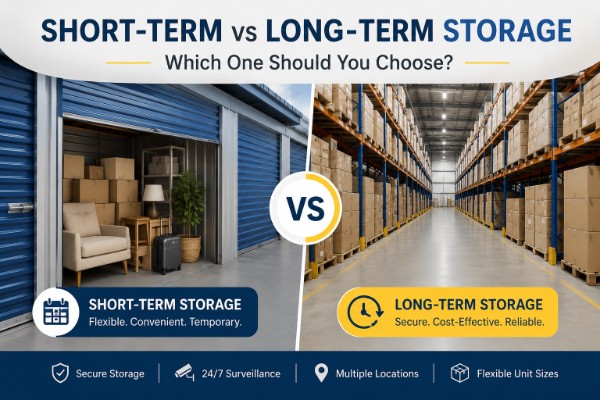
guide on short-term vs. long-term storage can help you
evaluate the decision more systematically.
What Should Be Included in a Warehouse Space for Rent on
Monthly Basis Arrangement?
A low monthly price is not enough. Two
facilities can quote similar storage rates while offering very different
operating conditions. When comparing warehouse
space for rent on monthly basis, look at the full service model and the
total operating cost, not just the quoted rent.
Storage and space terms
Confirm how space is measured, whether
storage is dedicated or shared, what the minimum commitment is, how additional
space is priced, and how quickly you can reduce capacity. Ask whether the
quoted price covers the physical space only or includes other warehouse
activities.
Inventory handling
For business inventory, storage is only one
part of the workflow. Clarify receiving, inward checks, put-away, stock
identification, picking, packing, dispatch, returns, and reporting. Businesses
searching for an inventory storage warehouse should evaluate
the complete movement of stock, not just the number of square feet offered.
Security and access
Ask about surveillance, access controls,
site security, fire-safety measures, loading and unloading access, and
operating hours. The right checklist depends on the type of goods stored.
High-value products, sensitive documents, electronics, and fragile inventory
may require stricter controls than low-risk general merchandise.
Location and transport connectivity
Warehouse rent is only one component of
logistics cost. A site that is cheaper per square foot can become more
expensive if trucks, staff, suppliers, or customers have to travel farther. For
businesses serving Delhi NCR, Lozy's New
Delhi locations and Haryana locations can be reviewed alongside
the wider Uttar Pradesh locations network.
Who Can Benefit From Flexible Monthly Warehouse Space?
Small businesses and startups
A growing business often needs storage
before it can justify a dedicated warehouse lease. Business warehousing can provide a more practical bridge while
sales volume, product mix, and geographic demand are still changing. Businesses
that specifically need a warehouse for
small business in Delhi NCR can also compare location, access, and service
requirements before committing to a larger facility.
E-commerce and D2C brands
Online sellers often experience faster
inventory turnover and sharper demand swings than a conventional storage
operation. Ecommerce warehousing can
combine inventory storage with operational processes such as order handling,
packing, dispatch, and returns. Before selecting a partner, compare Lozy's ecommerce
warehousing offering with your actual order-volume and service
requirements.
Retailers, distributors, and manufacturers
Businesses may need temporary overflow
space when inbound stock arrives before store allocations, when a production
batch is completed, or when an existing facility is full. A flexible
arrangement can act as a capacity buffer without changing the main warehouse
strategy.
Businesses entering a new city
Instead of immediately signing a long lease
in every market, a company can use flexible storage to test the economics of a
local inventory position. This can be especially useful when delivery speed,
replenishment frequency, and customer density are still being measured.
How Much Does Monthly Warehouse Space Cost?
There is no single national monthly rate
for warehouse space. Pricing varies with city, micro-market, building grade,
accessibility, size, storage method, demand, security, handling requirements,
and the services included. A monthly quote should therefore be evaluated as a
total operating cost rather than just a rent-per-square-foot number.
For a deeper look at warehouse pricing, use
Lozy's warehouse rent per sq ft guide. When comparing
quotes, ask for a clear breakdown of storage, handling, receiving, dispatch,
labour, technology, taxes, and any minimum monthly charges. A transparent quote
makes two providers much easier to compare.
Monthly Space Does Not Mean Low Commitment to Standards
Flexibility should change the contract
model, not lower the operating standard. A business still needs clear
responsibility for inventory condition, stock accuracy, access, damage
handling, service levels, and escalation. A good agreement should define what
the provider handles and what remains the customer's responsibility.
This matters because a cheap storage
arrangement can become expensive when stock is difficult to locate, receiving
is delayed, orders cannot be processed quickly, or inventory reporting is
inconsistent. For many companies, the most important KPI is not the rental
rate; it is how reliably the warehouse supports the broader business process.
Monthly Warehouse Space for Seasonal, Short-Term, and
Overflow Needs
Short-term demand is one of the strongest
use cases for flexible capacity. A company may need extra space during a
festive sales period, for a temporary project, during a relocation, or while
its main warehouse is under maintenance. In these cases, short term warehouse space can be more practical than changing the
entire long-term footprint.
Businesses can also combine models. For
example, a stable core inventory can remain in a long-term facility while
temporary or fast-moving stock is placed in flexible capacity. This hybrid
model can reduce pressure on the main site without forcing the company to
renegotiate its core lease every time inventory changes.
When Should You Choose Monthly Warehouse Space?
Monthly storage is worth evaluating when at
least one of these conditions exists: your inventory changes significantly
month to month; you need storage for a defined project; you are testing a new
market; your existing warehouse is temporarily full; your business is scaling
faster than the current facility; or you do not want a long lease before demand
is predictable.
It may be less suitable when you have a
very stable, large-scale requirement and already know the exact location and
infrastructure your operation needs for several years. In that case, a
conventional lease or dedicated facility can provide a more stable long-term
operating base.
How to Choose the Right Provider
Start with the business requirement, not
the warehouse photo. Define your inventory type, average and peak stock levels,
expected duration, inbound and outbound frequency, locations served, service
requirements, and budget. Then compare providers against the same checklist.
Lozy's warehouse storage solution guide is a useful
next step for evaluating facility requirements. Also review the dedicated warehouse
for rent page when you are ready to compare a more direct rental
option, or explore on-demand warehousing for a broader
explanation of flexible storage models.
Conclusion
The main advantage of warehouse space for rent on monthly basis is not simply flexibility
in payment. It is flexibility in capacity, commitment, and location as business
requirements change. For startups, e-commerce brands, retailers, distributors,
and companies handling seasonal or overflow inventory, that can make
warehousing easier to scale without carrying unnecessary fixed capacity.
The decision should still be made on the
complete operating picture: monthly cost, location, security, inventory
handling, access, service levels, and contract terms. When those factors match
the business model, flexible storage can become a practical part of the
logistics strategy rather than just a temporary workaround. To evaluate
available options, explore Lozy's warehouse
for rent, business warehousing, inventory
warehousing, and on-demand warehouse solutions.
Need warehousing or storage in India?
Request a free, tailored quote in under 2 minutes — free pickup, no lock-in.