How to Choose the Right Storage Unit Size for Your Needs

Choosing a
storage unit should not be a guessing game. Rent a space that is too small and
you may have to cram furniture, boxes and equipment into every available
corner or pay for a second unit. Rent one that is too large and you will keep
paying for empty floor space every month.
The smarter
approach is to start with what you actually need to store, measure the bulky
items, estimate how many boxes you have, and then choose a storage unit size
that leaves enough room for safe stacking and access. Your ideal storage space
also depends on whether you are storing household belongings, business
inventory, documents, equipment or seasonal items.
This storage
unit size guide explains the most common dimensions, what they can typically
hold, how to calculate your requirement, the mistakes that cause people to
overpay, and when it makes more sense to use professional warehouse storage
instead of a small self storage unit.
Quick Answer: What Storage Unit Size Do You Need?
As a starting
point, use the table below. These are planning guidelines, not guarantees.
Actual capacity depends on the size and shape of your furniture, box
dimensions, ceiling height, door opening, packing method and whether you need
an aisle.
|
Unit Size |
Floor Area |
Best For |
Typical Contents |
Lozy Relevance |
|
5 × 5 ft |
25 sq ft |
Small storage |
Boxes, documents, seasonal items, small furniture |
Small household/personal storage |
|
5 × 10 ft |
50 sq ft |
Studio/single room |
Mattress, dresser, sofa, boxes, small appliances |
Compact self storage |
|
10 × 10 ft |
100 sq ft |
1-bedroom / medium storage |
Bedroom + living-room furniture and boxes |
Household or business storage |
|
10 × 15 ft |
150 sq ft |
2-bedroom / larger inventory |
Multiple furniture sets, appliances, cartons |
Growing household/business storage |
|
10 × 20 ft |
200 sq ft |
Large household/business |
Several rooms, equipment, larger inventory |
Larger storage/warehouse use |
1. Start With an Inventory of What You Need to Store
Do not begin by
choosing a unit from a size chart. Begin with your belongings. Make three
lists: large items, medium items and boxes.
Large items
include sofas, beds, wardrobes, dining tables, refrigerators, washing machines,
office desks, cabinets and machinery. Medium items include chairs, side tables,
televisions, shelves, suitcases and smaller appliances. Then estimate your
boxes or cartons separately.
This matters
because a room filled with flat-pack boxes needs a very different footprint
from a room filled with sofas, wardrobes and appliances. Bedroom count alone is
only a rough shortcut; furniture density is often the real deciding factor.
2. Measure the Bulkiest Items First
Measure the
width, depth and height of the largest objects. Pay special attention to items
that cannot be easily dismantled. A large sectional sofa, king-size bed frame,
commercial refrigerator or office workstation can determine your minimum
storage footprint.
Also measure
doorways, lifts and access routes if the storage provider has not already
confirmed them. A unit may have enough internal space but still be impractical
if a bulky item cannot pass through the entrance.
3. Understand Common Storage Unit Sizes
5 × 5 Storage Unit: Best for Small, Compact Storage
A 5 × 5 storage
unit provides about 25 square feet of floor space. It is a practical choice
when you mainly need to store boxes, documents, seasonal belongings, luggage,
sports equipment or a few smaller pieces of furniture.
It is usually
not the right choice for a full apartment or a furniture-heavy move. If your
list includes a sofa, bed, wardrobes and several cartons, moving up to a 5 × 10
or 10 × 10 unit is likely to be more practical.
Internal link: Household
Storage for flexible household storage options.
5 × 10 Storage Unit: A Good Fit for a Studio or Single Room
A 5 × 10 unit
gives you about 50 square feet of floor space. It can work well for the
contents of a studio apartment, a single bedroom, a small office or a limited
quantity of business inventory.
You may be able
to fit a mattress and frame, dresser, small sofa, desk, television and multiple
boxes, depending on how efficiently everything is packed. If you need a clear
aisle or expect to add items later, consider moving up a size.
Commercial link: Lozy self storage in Dwarka offers unit
options from compact storage through larger spaces.
10 × 10 Storage Unit: The Practical Middle Ground
A 10 × 10
storage unit provides about 100 square feet of floor space and is often a
useful middle ground for household and business storage. It can accommodate the
contents of a typical one-bedroom apartment when furniture is packed
efficiently.
A possible load
could include a bed and mattress, dresser, sofa, coffee table, television,
dining furniture and multiple cartons. For business users, the same footprint
can work for equipment, documents, retail stock, samples or office furniture.
Do not treat
'10 × 10 = one-bedroom apartment' as a guarantee. A heavily furnished apartment
with oversized furniture may require 10 × 15 or more.
10 × 15 Storage Unit: When You Need More Breathing Room
At
approximately 150 square feet, a 10 × 15 unit is useful when a 10 × 10 would be
too tight. It can suit a two-bedroom apartment, a larger home move, renovation
storage or a growing inventory that needs better organization.
This is also a
sensible upgrade when you need to reach items regularly. The extra area can
make it easier to create a narrow access path instead of unloading half the
unit whenever you need something at the back.
10 × 20 Storage Unit: Large Household or Business Storage
A 10 × 20 unit
provides about 200 square feet of floor space. It is better suited to larger
households, multi-room moves, significant furniture collections, business
equipment or larger quantities of inventory.
If your
requirement has moved beyond 'a few things in storage' and into ongoing
inventory management, compare a larger professional warehouse or business
warehousing solution rather than automatically renting the biggest self storage
unit available.
For larger stock, equipment or inventory,
see Lozy Bulk / Industrial Warehousing.
4. Think in Cubic Space, Not Just Floor Space
One of the
biggest mistakes people make is thinking only about square feet. Storage is
three-dimensional. Ceiling height can create useful capacity when you stack
suitable boxes and use shelving.
However, do not
stack blindly. Heavy cartons should stay low, fragile goods need protection,
and frequently accessed items should remain reachable. Leave ventilation and
safe access rather than filling every inch simply because the ceiling is high.
For example, a
10 × 10 unit with an 8-foot ceiling has roughly 800 cubic feet of theoretical
volume before accounting for the door, packing gaps and access requirements.
Actual usable capacity will be lower and depends on how the facility is
configured.
5. Leave Room for an Access Path
If you are
storing items for months and will never need anything until move-out, dense
packing may be acceptable. If you expect to visit regularly, your sizing
calculation must include access space.
Put the items
you rarely need toward the back and frequently used items near the front. Label
cartons on more than one side. Keep a simple inventory list so you know where
important items are stored.
If you need to
retrieve individual cartons or business stock regularly, a slightly larger unit
can be cheaper in practice because it reduces repacking, wasted time and
accidental damage.
6. Choose the Size Based on Your Use Case
Moving Home
For a move,
estimate storage by room rather than by the number of boxes. A studio or
single-room load may fit in a 5 × 10. A furnished one-bedroom apartment often
needs around 10 × 10, while larger two- or three-bedroom households may need 10
× 15 or 10 × 20 depending on furniture density.
Home Renovation
Renovation
storage is easy to underestimate because furniture is often joined by
appliances, décor, fixtures, tools and protective materials. If you are
clearing an entire floor, do not size the unit only for the furniture. Leave
enough room to keep items safely organized.
For household moves, renovation and
decluttering, Lozy Household Storage provides scalable
storage options.
Business Inventory
Businesses
should size storage around stock volume, SKU count, replenishment frequency and
handling requirements—not simply the number of rooms in an office. If you need
to access cartons frequently, leave space for sorting and movement.
For scalable stock storage, explore Lozy Business Warehousing.
E-commerce Stock
E-commerce
sellers need to think beyond static storage. If orders are increasing, a small
self storage unit can quickly become inefficient because inventory needs
picking, packing, dispatch and stock control. In that situation, professional
warehousing can make more sense than repeatedly upgrading unit sizes.
If you need larger-scale inventory
handling, compare Lozy warehouse and godown solutions.
Documents and Records
Documents
usually require less floor area than furniture, especially when stored in
uniform cartons. Use labelled boxes, keep them off the floor where appropriate,
and consider the environmental conditions of the facility. If records are
business-critical, ask about security, access, fire protection and any
insurance options.
7. Don't Rent More Space 'Just in Case'—Unless There Is a Reason
The opposite
mistake is renting a much larger unit because it feels safer. That is expensive
if you never use the extra space.
A modest amount
of spare capacity is useful when you expect to add belongings, need an aisle,
or anticipate business growth. But there is no SEO-friendly or practical rule
that says you should always rent 20% or 30% more space. Your actual storage
pattern should determine the buffer.
If the provider
allows you to upgrade or downsize as your needs change, that flexibility can be
more valuable than paying for unused capacity from day one.
8. Packing Efficiently Can Change the Size You Need
·
Disassemble beds, tables and
shelving where safe to do so.
·
Use uniform cartons because
they stack more efficiently than random boxes.
·
Put heavy boxes at the bottom
and lighter cartons on top.
·
Use shelving when permitted and
appropriate for the storage environment.
·
Label every box clearly and
maintain a basic inventory.
·
Keep an access path if you will
retrieve items during the rental period.
·
Protect mattresses and
upholstered furniture with breathable covers rather than sealing damp items in
plastic.
·
Do not store prohibited,
hazardous or perishable materials.
9. Check the Storage Facility, Not Just the Unit Size
A cheap unit is
not necessarily a good deal if the facility makes loading, access or security
difficult. Before booking, ask about the actual door dimensions, ceiling
height, loading area, lift access, vehicle access, security, pest control, fire
safety and retrieval process.
You should also
clarify billing terms, minimum rental period, notice requirements, insurance,
prohibited items and what happens if you need a larger or smaller unit later.
Lozy's
facilities are positioned around flexible monthly storage, monitored
facilities, controlled access and scalable space. Exact amenities can vary by
location, so confirm the specific facility before booking.
Start with Lozy's storage and warehousing options and
request a tailored quote based on the items you need to store.
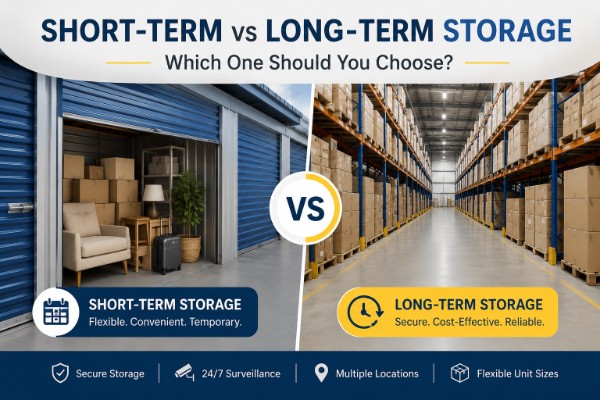
10. Self Storage vs. Warehouse Storage: Which One Do You Need?
Self storage is
usually a better fit when you have a relatively small amount of personal
belongings, furniture, documents or compact business stock and want a dedicated
space for those items. Professional warehouse storage becomes more attractive
when you have higher inventory volumes, regular inbound/outbound movement,
pallets, equipment, fulfilment needs or a requirement for operational support.
|
Need |
Better Fit |
Why |
|
Few boxes / seasonal items |
Small self storage |
You avoid paying for unused warehouse space. |
|
Furniture during a move |
Household storage |
Flexible space for household belongings. |
|
Office furniture and records |
Business storage |
Keeps the workplace clear while retaining assets. |
|
Growing inventory |
Business warehousing |
More scalable than repeatedly changing small units. |
|
High-volume stock / equipment |
Industrial warehousing |
Designed for larger operational requirements. |
|
Stock needing fulfilment |
Professional warehouse |
Better suited to picking, packing and dispatch workflows. |
11. Storage Unit Size Checklist Before You Book
·
Have I listed every large item
I plan to store?
·
Have I measured the largest
furniture or equipment?
·
How many cartons or boxes do I
have?
·
Will I need to access the unit
during the rental period?
·
Do I need an aisle or working
space?
·
Can my largest item fit through
the entrance and loading route?
·
Will I add more items later?
·
Do I need self access, or would
managed warehouse storage be better?
·
What security and fire-safety
features are available?
·
What are the rental, notice,
insurance and prohibited-item rules?
12. What Size Storage Unit Should You Choose?
If you are
storing only a few boxes, documents or seasonal belongings, start by looking at
a 5 × 5 unit. If you have a studio, one room of furniture or a moderate
quantity of cartons, a 5 × 10 can be more suitable.
For a furnished
one-bedroom apartment, medium household storage or a 10 × 10 unit is a useful
starting point. Larger two-bedroom loads often move into the 10 × 15 range,
while multi-room households and substantial business storage may require 10 ×
20 or professional warehouse space.
The key is not to choose the biggest unit you can afford. Choose the smallest practical space that lets you store items safely, organize them properly and access what you need. If your needs are likely to change, a provider that can scale your storage up or down can prevent you from paying for unnecessary space.
Why Choose Lozy for Flexible Storage Space?
Lozy provides
storage and warehousing options for both households and businesses, with
solutions ranging from compact self storage to larger warehouse requirements.
Its website highlights monitored facilities, controlled access, flexible plans
and monthly billing across Delhi NCR and other locations in India.
For households,
the service can be useful during relocation, renovation, decluttering or
periods when furniture and belongings temporarily exceed the space available at
home. For businesses, storage can help free office or retail space while
keeping inventory, equipment, documents and supplies organized.
Explore Lozy's full storage and warehousing solutions
to compare the option that matches your requirement.
Need warehousing or storage in India?
Request a free, tailored quote in under 2 minutes — free pickup, no lock-in.