
In-plant warehousing · Delhi NCR · Gurgaon · Noida
In-plant warehousing in Delhi NCR, Gurgaon, Noida.
Run the stores inside your plant like a warehouse. Lozy stations its teams at your factory gates in Delhi NCR — receiving, line feeding, WIP control and finished-goods records, all against one live system.
- Warehouses
- 77+
- Live space
- 1M+ sq ft
- Plans from
- ₹21 / sq ft
- Cities served
- 9 hubs
01 · Inventory truth
Every line-side tote
carries a record.
In-plant warehousing fails silently when a line runs dry. This is what the store team knows about one line-side tote — updated on every issue and return.
What the plant store knows about one tote
- Client
- Your production line
- SKU / Lot
- TOT-IP-0091
- Location
- LINE-3 · feed station 2
- Quantity
- 14 units · 36 kg
- Issued
- Store issue no. 0887 · signed off
- Movements
- RM store → Line → WIP → FG
Live record · updated on every issue and return
Every issue to the line and every return is written to the record at the point of handover — not reconciled at shift end. Your team keeps ownership of the stock and sets the min-max levels; the store team holds the count to them.
01 · The in-plant operations story
From the plant gate
to the finished-goods bay.
01 / 08
One component, followed end to end — the way Lozy runs in-plant warehousing operations inside a factory.
-
01
Goods arrive at the plant gate.
Vehicles check in against your schedule, and documents are verified before the dock opens.
-
02
Received into the raw-material store.
Counts, condition and labels are recorded at the dock, and goods are racked by part number.
-
03
Line feeding, on schedule.
Trolleys run from the store to each feed station on a set cadence, so the line never waits for parts.
-
04
Issues recorded at the line.
Every issue is written against the line and the operator at the point of handover.
-
05
WIP tracked between stages.
Work-in-progress buffers are counted and located, so semi-finished stock never goes missing between processes.
-
06
Finished goods palletised.
Shift output is counted, packed to your standard and palletised, with batch details recorded.
-
07
Moved to the plant warehouse.
Finished pallets are racked by SKU in the plant warehouse, ready for dispatch.
-
08
Dispatched from the plant.
Loading, invoices and e-way bills at the plant dock; vehicles leave through partner transport.
02 · Channels
One store team.
Every line served.
The in-plant team feeds every consumer of stock — production lines, assembly stations, kitting benches and the dispatch dock — from one set of records, so nothing is double-issued and nothing sits unread.
- Production lines
- Assembly stations
- Kitting benches
- QA & quarantine
- Finished-goods bay
- Dispatch dock
- 01 Production lines
- 02 Lozy warehouse
- 03 Pick
- 04 Pack
- 05 Ship
03 · Storage
What your stock
sits beside.
From a corner raw-material store to full plant warehousing — the same records and handling whether you run two shifts or a three-line factory.
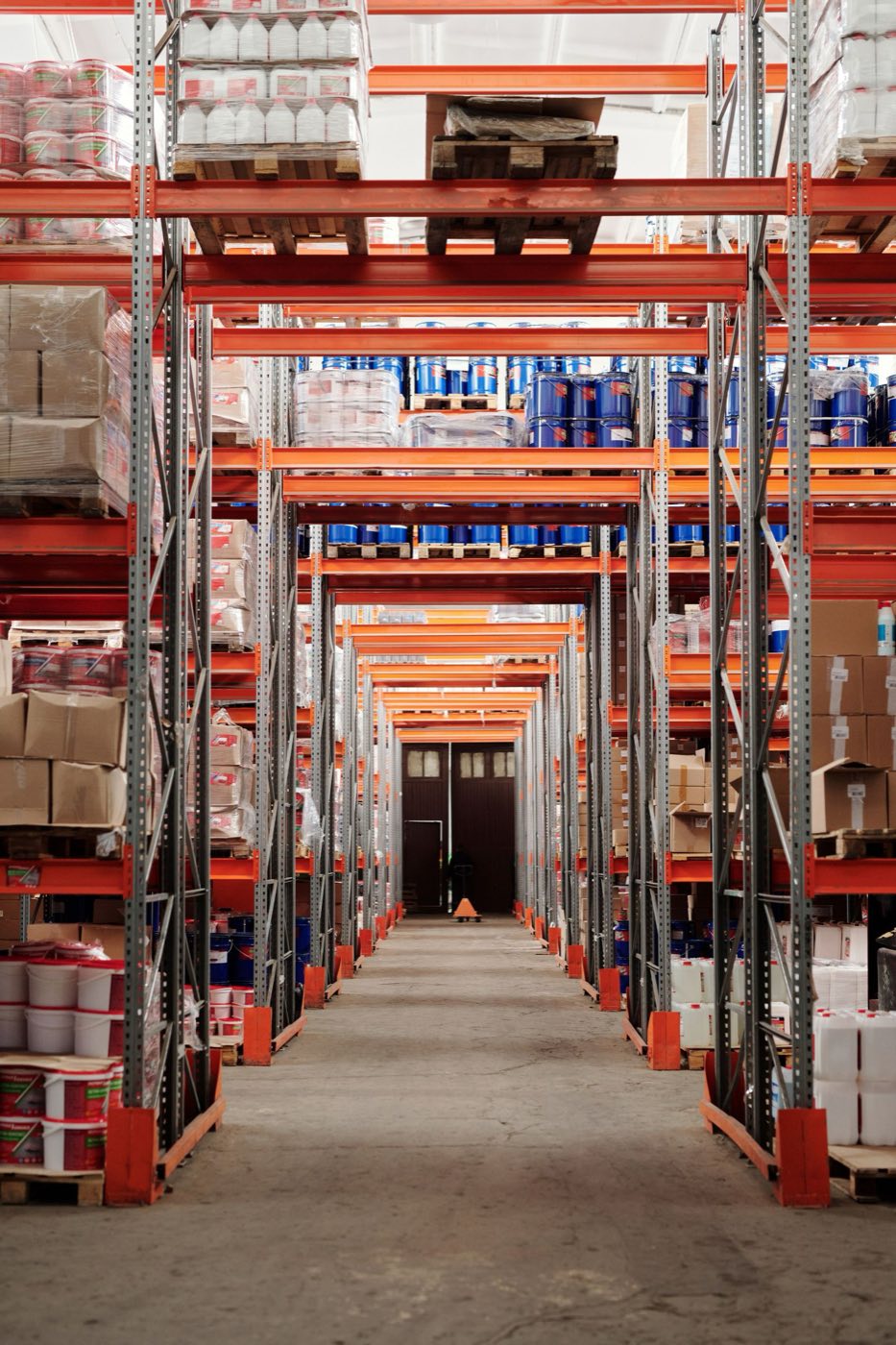
- 01Raw-material & component stores
- 02Line-side replenishment stock
- 03WIP & semi-finished buffers
- 04Consumables & packaging
- 05Spares & maintenance stock
- 06Finished-goods staging
Need a 3PL partner in Delhi NCR?
Tell us what you store and where it needs to reach — the team confirms availability, the plan and the rates in writing.
04 · The hard parts
Every 3PL operation carries the same pressures — these are the ones the space, the handling and the paperwork are planned around.
-
01
Line stoppages
A dry line is the costliest hour in a plant. Feed schedules and min-max levels are held daily, not audited monthly.
-
02
WIP that vanishes
Semi-finished stock between stages is the least counted and most misplaced stock in a factory. Buffers get the same records as the RM store.
-
03
Shift handovers
Counts drift when one shift trusts the previous shift’s memory. Issue and return logs are written at the point of handover.
-
04
Space inside the plant
Plant space is tighter than any warehouse. Slotting and layout keep RM, WIP and FG zones from crowding each other.
05 · How Lozy helps
What the 3PL team
handles.
8 operations, one contract. Pick one to see what it covers.
Warehousing In-Plant Operations — priced to your volumes.
Share your product list, volumes and cities. You get site options, the scope of work and rates, itemised in writing.
03 · Coverage
Inside your plant,
backed by our network.
Lozy stations in-plant teams at factories across the NCR belt, backed by 77+ warehouses across owned, leased and partner facilities for overflow and buffer stock.
Boundary as India officially depicts it
Delhi NCR belt
- Okhla
- Gurgaon
- Manesar
- Noida
- Greater Noida
- Ghaziabad
- Faridabad
- Bhiwadi
Across India
- Jaipur
- Mumbai
- Pune
- Ahmedabad
- Hyderabad
- Bengaluru
- Chennai
- Kolkata
Warehouses across the NCR belt and every major metro — stock sits close to where your customers are, and moves between sites through the same partner-fleet network.
07 · Pricing
Plans from
₹21 per sq ft a month.
In-plant warehousing is scoped by team size, shifts and plant space. Monthly GST-invoiced terms, with the team and the system quoted together.
- 01
Written scope: team size, shifts and store zones itemised before start
- 02
Monthly billing tied to the team and space you actually use
- 03
Add a second or third shift for peak production without a new contract
- 04
No hidden charges — every line on the quote is explained
08 · Cost
In-plant warehousing charges in Delhi NCR,
item by item.
The numbers plant heads ask for — how in-plant warehousing pricing in India is built, and what a Lozy quote covers.
-
01
Store team & supervision
Supervisors and storekeepers quoted per shift, per plant — the size depends on lines served and issue volumes.
-
02
Warehouse space
Storage plans from ₹21 per sq ft per month for RM, WIP and FG zones inside or beside the plant, GST-invoiced monthly.
-
03
Line feeding
Trolley runs and milk runs quoted per shift, tied to the number of feed stations served.
-
04
System & records
Issue, return and consumption records run on the same live system as the warehouse, billed with the monthly plan.
09 · Good to know
Before you
sign a 3PL.
The questions Delhi NCR teams ask before handing over their warehousing — answered in plain words.
In-plant warehousing operations in Delhi NCR
In-plant warehousing keeps a factory running from the inside: raw-material stores, line feeding, WIP buffers and finished-goods handling, all run by one team inside your plant. Lozy stations in-plant warehousing teams at factories across the NCR belt — Okhla, Gurgaon, Manesar, Noida, Greater Noida, Ghaziabad, Faridabad and Bhiwadi — on monthly GST-invoiced plans from ₹21 per sq ft. Every issue to the line and every return is recorded at the point of handover, so line-side stock, WIP and finished goods stay visible without spreadsheets.
In-plant warehousing in Gurgaon
Factories in Gurgaon — across the Manesar belt and its industrial sectors — use in-plant warehousing to keep production running without stocking out the line. Lozy’s Gurgaon-side teams run raw-material stores, feed stations and WIP buffers inside the plant, with issue and return records held shift by shift. Finished goods move from the plant dock to a nearby warehouse on the 3PL network, and overflow stock sits in partner facilities until the line needs it. Terms are monthly and GST-invoiced, with no long lock-in.
In-plant warehousing in Noida
Noida’s manufacturing units — electronics, auto components and consumer goods — run tight line-side stores where space is scarce. In-plant warehousing in Noida puts Lozy store teams inside the plant to receive, rack and feed components on a fixed cadence, so production schedules are not held up by missing parts. WIP between processes is counted and located, and shift output is palletised and recorded at the finished-goods bay. When plant space runs short, buffer stock moves to a warehouse across Greater Noida, Noida or Ghaziabad and returns when the line calls for it.
In-plant warehousing across India
Beyond Delhi NCR, in-plant warehousing operations run on the same model at plants near every major metro: Jaipur, Mumbai, Pune, Ahmedabad, Hyderabad, Bengaluru, Chennai and Kolkata, backed by 77+ warehouses across owned, leased and partner facilities. The store team works inside your plant while the network holds raw material, WIP and finished goods around it, so a plant never waits for stock and never pays for idle space it does not use. One contract covers the in-plant team, the warehouses and partner transport.
How to choose an in-plant warehousing partner in Delhi NCR
Five checks that separate a working in-plant team from a manning agency.
Line-side records
Ask for one day’s issue log. If the last shift cannot be shown, the store runs on memory.
Written scope
Team size, shifts, zones and responsibilities listed in writing, so performance can be measured.
Min-max discipline
A store team that holds min-max levels daily prevents both stock-outs and locked-up inventory.
Shift coverage
Confirm handover discipline and coverage for the shifts your plant actually runs.
Network behind the plant
A partner with warehouses beyond the plant gate can absorb overflow and buffer stock without a new lease.
Frequently asked questions
How much do in-plant warehousing operations cost in Delhi NCR?
What does in-plant warehousing include?
Can Lozy run in-plant warehousing at Gurgaon plants?
Which Noida-area plants does the in-plant team serve?
How are line-feeding charges calculated?
Do our plant staff or Lozy staff run the stores?
How are shift handovers handled?
Can the in-plant team handle finished-goods dispatch too?
What happens to excess raw material when production slows?
What do we need to share to get an in-plant warehousing quote?
10 · City by city
Warehousing in-plant operations across Delhi, Gurgaon and Noida
One store team, three belts. How the same in-plant operation — receiving, line feeding, WIP and finished goods — behaves inside a Bawana plant, a Manesar plant and a Noida electronics line. Delhi NCR is the planning unit all three cities share, and in plant operations in Gurgaon or Noida stay inside the same Delhi NCR record set as a Bawana store.
In-plant warehousing in Delhi
Delhi plants keep their floor space tight, so the store has to work inside what the factory already has. Lozy runs plant stores on-site at Bawana and Mundka — receiving at the gate, part-number racking, line feeding and WIP control by one resident team — with the Ghevra corridor units holding overflow when plant space runs short. That pairing is the Delhi model: the line never waits for parts, and the factory never pays for square footage it is not using. Plans run from ₹21 per sq ft per month on monthly GST invoices, with the store team quoted per shift, CCTV and PIN access on the adjoining units, and no lock-in. When a Bawana line scales for the season, buffer stock moves out to Ghevra and returns on the line-feeding schedule. Beyond the plant gate, the 7 live Delhi units across Dwarka, the IGI belt, Ghevra and Alipur give the store team somewhere to put stock the plant does not need this week. The Delhi NCR plants Lozy already serves run the same in plant operations discipline every shift, and the store team in any Delhi NCR plant stays on the same monthly plan whether overflow sits at Ghevra or returns to the line. See 3PL warehouse services in Delhi.
In-plant warehousing in Gurgaon
Gurgaon pairs plants with serious storage capacity, and in-plant work there follows the auto-supplier playbook. Lozy stations store teams at Manesar auto-supplier plants — raw-material stores and line feeding run inside the plant — while plant-adjacent contract storage on the Manesar, Kherki Daula and Pataudi Road belts holds buffer and finished stock minutes from the gate. The 12 live Gurgaon units include space beside the Garhi Harsaru ICD, so import-heavy supplier lines can file, clear and feed without stock crossing the city. Storage plans start at ₹21 per sq ft per month, GST-invoiced monthly with no lock-in, and the store team is quoted per shift so both lines stay visible. Finished goods stage at the plant warehouse and move to the nearby units for dispatch runs, and when a supplier line adds a second shift, the team and the adjacent space scale on the same monthly terms. Gurgaon buyers inside the Delhi NCR belt get the same store discipline, and in plant operations on the Gurgaon side of the map stay tied to the Manesar and Kherki Daula belts. See 3PL warehouse services in Gurgaon.
In-plant warehousing in Noida
Noida electronics lines run on tight floor plans, and the honest position matches the network: Lozy runs no unit inside the city today, so in-plant work there runs on a corridor model. The store team works inside the plant while buffer and finished stock sit at the Gurgaon-side hubs of Garhi Harsaru and Dwarka Expressway or the Delhi-side Dwarka units, reached in 30–45 minutes across the DND Flyway and the Eastern Peripheral Expressway. Line-side space stays for production, overflow sits off-site and returns on the feeding cadence, and import-heavy electronics lines clear at ICD Dadri and NSEZ Noida — all on one monthly GST-invoiced plan from ₹21 per sq ft per month. Electronics plants in Noida and Greater Noida run the same store discipline, with kitting benches and QA quarantine zones fed from the same records as the production lines, while the corridor keeps bulk off the plant floor. That corridor is how in plant operations work in Noida today, and it keeps Noida and Greater Noida plants inside the same Delhi NCR record set as their Gurgaon-side hubs. See 3PL warehouse services in Noida.
What the in-plant team runs inside the factory
From the plant gate inward: vehicles check in against your schedule, goods are counted and racked by part number in the raw-material store, and trolley runs feed every station on a set cadence. Each issue to the line is written at the point of handover with operator sign-off, WIP buffers are counted and located between stages, and shift output is counted, packed and palletised at the finished-goods bay. Loading, invoices and e-way bills close the loop at the plant dock. Your team owns the stock and sets the min-max levels; the store team holds the count to them every shift.
How in-plant pricing is built
Storage plans start from ₹21 per sq ft per month for the RM, WIP and FG zones inside or beside the plant, billed monthly on a GST invoice with no lock-in. The store team — supervisors and storekeepers — is quoted per shift, per plant, sized to the lines served. Line-feeding runs are quoted per shift against the number of feed stations, and the record system rides on the same monthly plan. Every line on the quote is itemised, so two providers can sit beside each other line for line.
The overflow loop — plant store to network and back
Plant space is the tightest square footage a factory has, and it should not hold stock the line will not touch this week. Excess raw material and slow movers move out to a unit on the network — 77+ warehouses and 1M+ sq ft of live space — still recorded against your part numbers. When production picks up, the stock returns on the line-feeding schedule. You pay for plant space only while the stock sits inside it, and the records never reset because the stock moved.
In-plant vs contract warehousing — where each fits
In-plant operations run the stores the line consumes from, inside the plant or metres from the gate. Contract warehousing holds the bulk: the raw-material buffers, the seasonal stock and the finished goods that do not need plant-side positioning. The two work as one loop — the plant store calls stock in, the contract floor holds it until called. Because both run on the same records and the same monthly billing, a plant can shift the split as production swings without renegotiating anything.
Industries that run in-plant stores
Auto-component suppliers, electronics and consumer-durables makers, FMCG lines and spare-parts operations are the groups that feel a dry line fastest: high SKU counts, tight min-max levels and shift output that must be counted and palletised daily. Each runs the same store model — receiving, racking, feeding, WIP control, finished-goods handling — with different cadences, and each has a dedicated Lozy industry page. The difference is cadence: an electronics line feeds hourly, a spare-parts store feeds per shift, and an FMCG line runs milk rounds between both. 3PL & Distribution industry page · Spare Parts & Aftermarket industry page.
Records that survive a shift change
Counts drift when one shift trusts the previous shift’s memory, so nothing here runs on memory. Every issue and return is written to the system at the point of handover, with operator sign-off, and every shift ends with the logs reconciled to a clean count before the line starts. WIP buffers get the same treatment as the raw-material store — counted and located, not guessed. Daily line-side stock statements and consumption reports go to your plant team, so the GST trail reconstructs from one record set instead of notebooks.
How the engagement is set up
One requirement check, one written scope, one quote. You share the part list, the lines and feed stations, the shift pattern and the zones to be managed; the desk proposes the team size, the store layout and the split between plant space and network space. The reply is itemised — team per shift, space per sq ft, feeding per run — so it can sit beside another provider’s quote line for line. The same desk then runs onboarding, so the first shift starts on a reconciled count rather than a handover of notebooks. See the full 3PL services hub.
In plant operations across Delhi NCR, Gurgaon and Noida
In plant operations follow the shape of each city. In Delhi NCR the store sits inside a Delhi plant and leans on Ghevra overflow; in Gurgaon in plant operations run beside Manesar supplier lines; in Noida in plant operations ride a corridor to Gurgaon-side hubs. Because Gurgaon and Noida sit inside the same Delhi NCR loop, one store team can serve all three cities from a single record set.
What in plant operations cost at a Delhi NCR plant
In plant operations price the same way across the network: storage from ₹21 per sq ft per month on monthly GST invoices, with the store team quoted per shift. A Delhi NCR plant in Bawana pays the same ₹21 start line as a Gurgaon supplier line in Manesar or a Noida electronics line, and in plant operations in Delhi NCR, Gurgaon and Noida all run off one rate card.
The Gurgaon belt pattern for in-plant stores
Gurgaon in-plant work runs on three belts — Manesar, Kherki Daula and Pataudi Road — with the Garhi Harsaru ICD beside them for import-heavy lines. Lozy’s 12 live Gurgaon units give a Gurgaon plant an adjacent unit minutes from the gate, and for Delhi NCR buyers Gurgaon is the middle of the map: the store team running in plant operations in a Gurgaon plant can cover Delhi NCR corridors into Noida without stock crossing the city.
Noida electronics lines and the corridor store
Noida runs the tightest floor plans in the region, so in plant operations in Noida lean on the corridor. A Noida electronics plant keeps line-side space for production while buffer sits at Garhi Harsaru or Dwarka Expressway on the Gurgaon side, and Noida plants and Greater Noida plants clear imports at ICD Dadri and NSEZ Noida on one monthly GST-invoiced plan from ₹21 per sq ft per month.
Delhi NCR as one in-plant market
Delhi NCR is the unit buyers actually plan in: a plant in Delhi, a supplier line in Gurgaon and an assembly line in Noida usually share one store team and one record set. In plant operations in Delhi NCR cross the city borders daily — Bawana overflow to Ghevra, Manesar buffers to the ICD, Noida bulk to the Dwarka Expressway — without any of it leaving the same monthly plan.
Line feeding, WIP and returns — the in-plant cadence
Every in-plant store runs the same daily cadence: receiving at the gate, part-number racking, line feeding, WIP counts between stages and finished-goods handover. An in-plant team in Delhi NCR works the same cadence as an in-plant team in Gurgaon or Noida, because the feeding rhythm comes from the line, not the city.
When a Gurgaon plant outgrows its floor
A Gurgaon plant that adds a second shift rarely adds floor space; it adds the adjacent unit instead. On the Manesar and Kherki Daula belts a Gurgaon store holds buffer minutes from the gate, and Gurgaon’s 12 live units mean overflow never has to cross the city. The same pattern holds in Noida, where Gurgaon-side corridor space absorbs the peak, and in Delhi NCR the Ghevra corridor plays the same role for Delhi plants.
In-plant vs plant-adjacent — the Gurgaon and Noida split
In Gurgaon, in-plant and plant-adjacent units usually sit minutes apart, and in Noida the split runs longer because bulk sits in Gurgaon-side hubs. The records keep it honest: an in-plant store in Delhi NCR and the network unit beside it share the same part numbers, so stock moves out and back without the count resetting — the same in-plant to network loop in Delhi, Gurgaon and Noida.
Why Delhi NCR plants choose in plant operations over shared sheds
A shared shed works when stock sits still; in plant operations work when the line sets the clock. In Delhi NCR that matters most at Bawana and Mundka, where plant space is tight and the store team works inside the factory. Gurgaon supplier lines and Noida electronics lines reach the same conclusion for the same reason: in Delhi NCR the store belongs inside the plant gate.
The GST and billing side of in-plant stores
In-plant storage bills monthly on a GST invoice, from ₹21 per sq ft per month, with the store team quoted per shift and line feeding per run. The same line items apply in Delhi NCR, Gurgaon and Noida, and there is no city surcharge for in plant operations in any of the three.
More questions, answered
How much do in-plant warehousing operations cost at a Delhi plant?
Can Lozy run the store inside a Manesar auto-supplier plant in Gurgaon?
How does a Noida electronics plant get in-plant support without a unit inside the city?
What happens to excess raw material when a Delhi NCR plant slows down?
Is there a lock-in on in-plant warehousing in Delhi, Gurgaon or Noida?
How are in plant operations different in Delhi NCR, Gurgaon and Noida?
Which Gurgaon belts host in-plant stores?
Does a Noida electronics plant need a Noida warehouse for in-plant support?
What does the ₹21 in-plant plan include in Delhi NCR?
Can one store team cover Delhi NCR, Gurgaon and Noida plants together?
Still comparing? Get the written rate card.
Storage, handling and transport — itemised, in one reply. Compare providers like for like before you decide.
More 3PL services
19 services · one teamIndustries that move like yours
Industry walk-throughsRelated pages
Space, rates & more11 · Start
Hand over the
warehouse work.
Send your stock list, volumes and cities. You get site options, scope and
rates in writing.Speak to a human · +91 9354712345
12 · Enquiry
Tell us what
you need stored.
Availability, plan and rates — one short form, a written reply.
- Written, itemised quote after one requirement check
- Site options across Delhi NCR and India
- Onboarding in days once the rules are agreed
Contact our experts
One form, one reply — 3PL availability and rates in Delhi NCR
and across India.


