Business Warehousing in Delhi NCR: Cost, Space and How to Book (2026 Guide)
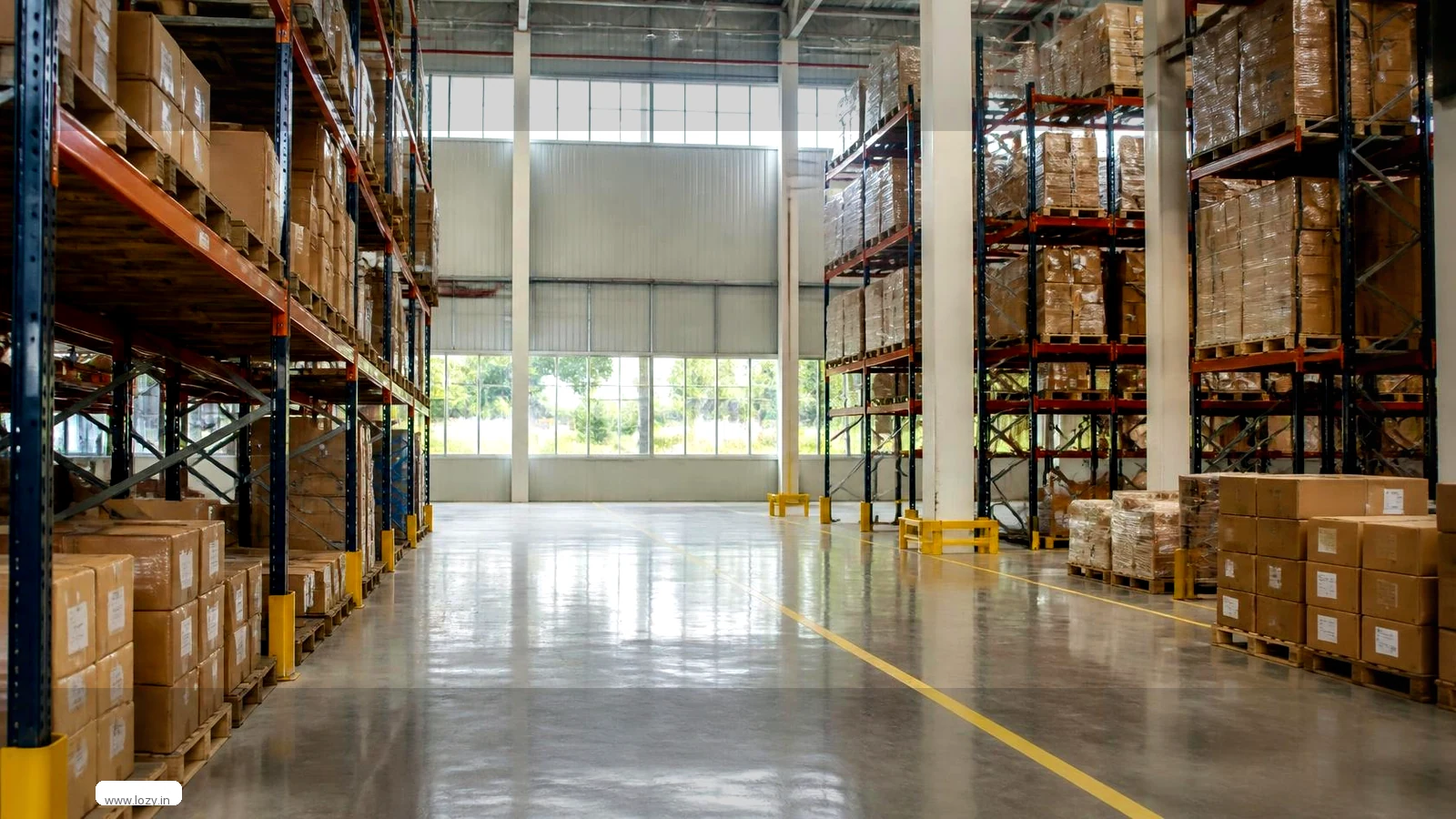
Short answer: Business warehousing is secure, professionally managed warehouse space a company rents month by month for stock, equipment and records, instead of leasing and fitting out a building of its own. Space from Lozy starts at ₹14 per sq ft per month, and the final rate depends on city, size and term. If your real question is "where does this month's stock live?", a monthly plan is usually the cheaper answer.
Key takeaways
- Business warehousing is space you rent by the month for stock, equipment or records — not a multi-year commercial lease that you fit out and maintain yourself.
- Lozy's business warehousing starts at ₹14 per sq ft per month, billed monthly, with no setup charge and no long lock-in; the final rate depends on city, size and term.
- Every plan includes a dedicated racked or floor area, 24/7 CCTV, on-site security and unique PIN access to gates, lifts and your own storage area.
- Storage and handling are invoiced with GST, so a registered business can claim the input credit on what it pays for warehouse space.
- Lozy runs 77+ warehouses and more than one million square feet of live space across nine city hubs, including Delhi NCR, Gurgaon and Jaipur.
- Free doorstep pickup is included on bookings of 30 days or more, so a move out of the back office need not interrupt trading.
Most businesses do not decide one day to rent a warehouse. The need arrives sideways: a shop fills up with pre-season stock, a distributor's garage cannot take another pallet, a project ends and the equipment needs somewhere to sit until the next one.
This guide explains what business warehousing is, what a monthly plan includes, how the pricing works and how to move goods in without pausing the business — written for companies in Delhi NCR and the surrounding hubs.
What business warehousing is
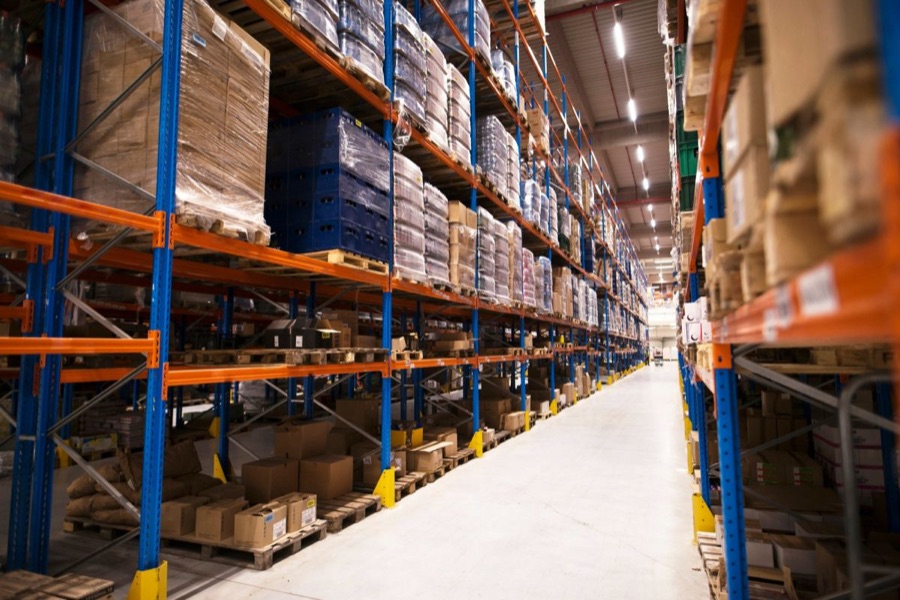
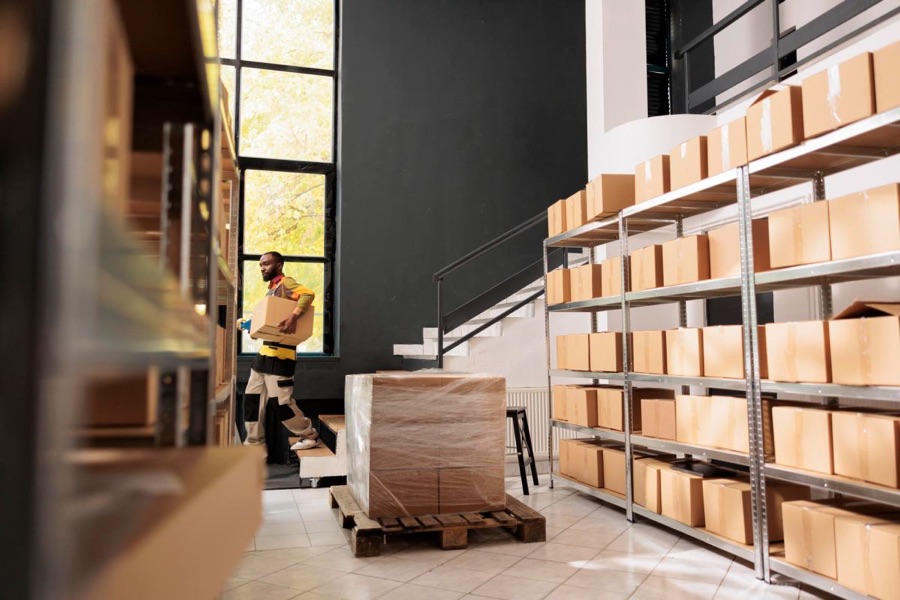
Business warehousing is secure, professionally managed warehouse space that a company rents month by month instead of leasing a building of its own. You get racked or floor storage for stock, equipment and records, with 24/7 security and a unique PIN for access — and you scale the space up or down as your inventory changes.
For growing businesses in Delhi NCR and across PAN India, it replaces the spare room, the crowded office corner or a string of informal godowns. Everything is documented — a photo inventory at check-in, barcoded storage, GST-compliant invoicing — so your stock stays visible and audit-ready.
The word to hold on to is "managed". You are buying a service, not four walls. Security, housekeeping, pest control and the paperwork sit with the operator, and you pay for the floor area or the storage position you actually use. That is the practical difference between business warehousing and ringing a landlord about a godown, and it is why a commercial warehousing arrangement usually costs more per square foot than an informal shed and considerably less per headache.
Who business warehousing is built for
Business warehousing suits any company that holds stock it is not ready to sell, ship or install — and that wants the flexibility to stop paying for that space once the stock moves.
- Retailers and wholesalers holding slow-moving lines or pre-season buys.
- Distributors parking stock close to Delhi NCR's markets, with pickup and delivery on call.
- SMEs that have outgrown the back office, garage or shop mezzanine.
- Manufacturers storing packaging material, spares and finished goods between dispatch cycles.
- Service firms and agencies keeping equipment, signage and event material between projects.
- Importers holding cleared cargo while it is allocated to orders.
If you recognise yourself in that list, the question is not whether flexible space works — it is how much of it you need. Start from what the goods occupy, add room for aisles and handling, and let the facility suggest the next size up.
The kinds of space you can rent
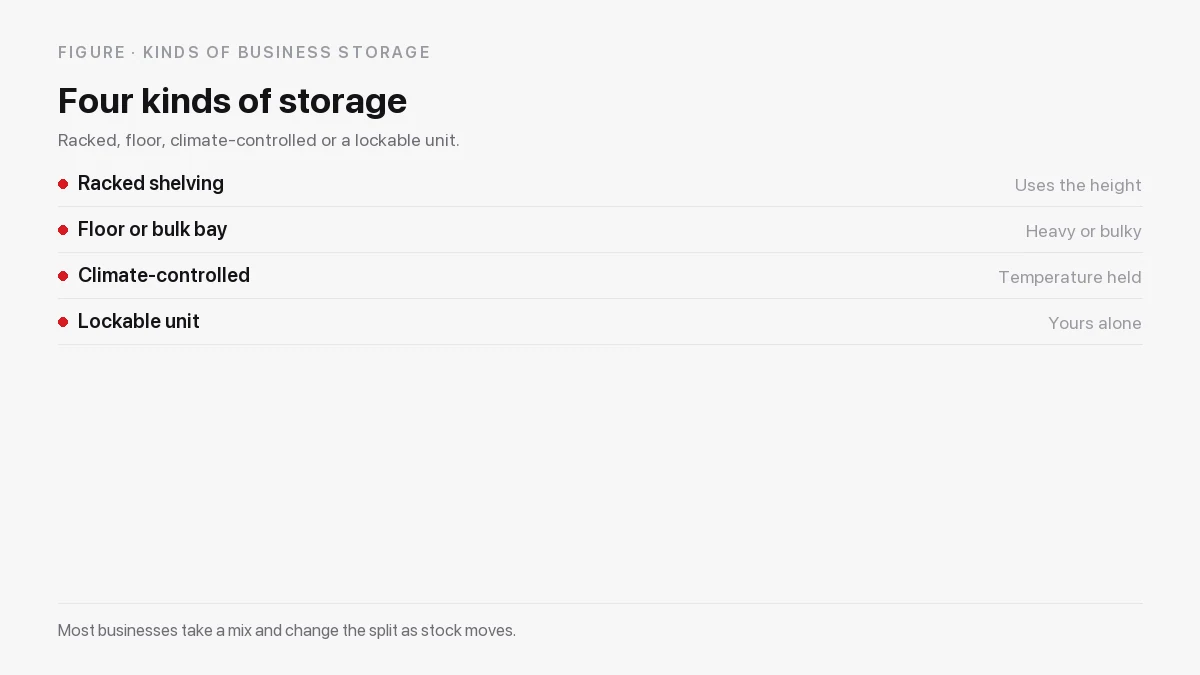
Business storage is not one product. Before you compare quotes, decide which of these you are actually buying — the price basis is different for each.
- Racked storage. Shelving and pallet racking that use height instead of floor area. Good for cartons, spares and stock-keeping units you pick individually.
- Floor or bulk storage. A demarcated bay where goods sit on the floor, on pallets or in stacks. Best for heavy, uniform or slow-moving stock.
- Climate-controlled space. A section where temperature and humidity are managed, for goods that cannot take a Delhi summer or the monsoon.
- A lockable self storage unit. A room that is yours alone, priced per unit rather than per square foot, for records, tools or small equipment.
Most businesses end up with a mix: racked space for fast-moving lines, floor space for the bulky ones. The split can change as stock moves.
Racked or floor: which to take
Racked storage costs more per square foot and less per pallet, because it uses the height of the building. Floor storage is simpler and often cheaper for goods you rarely touch. If your stock turns over weekly, racking earns its keep. If it is one seasonal consignment that leaves in three months, floor space is usually enough.
Ask what is included either way. Racking is sometimes installed within the rate, sometimes rented per pallet position on top of it, and sometimes left to you — a difference that changes the real cost far more than the headline rate does.
When you need climate control
Not every business needs it, and paying for it unnecessarily is one of the easier mistakes to make. Climate-controlled storage earns its place for goods that swell, warp, corrode or spoil — printed material in a Delhi summer, electronics through the monsoon, adhesives, leather and anything with a short shelf life.
For plain cartons, hardware, packaging material and most trade stock, a clean, dry, pest-controlled facility is enough. If you are unsure, describe the goods rather than asking for "a warehouse". A good operator will tell you when the extra is not worth paying for.
What a monthly plan includes
Every plan includes the essentials that usually cost extra elsewhere — security, handling and paperwork. This is the list to hold up against any quote, including ours.
| Included as standard | What it means for you |
|---|---|
| Dedicated racked or floor area | Space sized to your requirement, from a few shelves to a full bay. |
| 24/7 CCTV and on-site security | Your goods are watched when you are not there. |
| Unique PIN access | Authorised people reach gates, lifts and your storage area without an escort. |
| Clean, dry, pest-controlled facility | Climate-controlled options where the goods need it. |
| Trolleys and pallet trucks on site | Free to use at the facility when you move stock in or out. |
| Photo inventory at check-in | A documented record of everything you store, plus optional insurance cover. |
| GST-compliant monthly invoicing | Storage rent flows through as input credit. |
Inward and outward handling, picking and packing, and special packing material are worth naming before you sign, even where they are included.
Monthly plan versus a commercial lease
A commercial lease makes sense when you know what your business will look like for the next three to five years and want to fit out a building of your own. Flexible business warehousing answers a different question: where does this month's stock live?
| What you are deciding | Monthly storage plan | Commercial lease |
|---|---|---|
| Commitment | Month by month; weekly if the need is short | Multi-year, usually with escalation |
| Capital up front | No fit-out and no setup charge | Deposit plus fit-out and fitment |
| When volumes move | Shrink or grow the footprint | Pay for space you may not fill |
| Facility upkeep | Security, housekeeping and pest control included | Yours to arrange and pay for |
| A sensible first step when | Your requirement is still settling | Your requirement is proven and long |
With a monthly plan you skip the fit-out, keep your capital working, and shrink or grow the footprint as demand moves — less space in a quiet quarter, more during the festive run. Flex space also works well as a first step: start small, watch your real requirement for a few months, and commit to more only once your volumes settle.
That is why many businesses run both: a leased base for the steady core and business warehousing for the overflow. For peaks that last weeks rather than months, on-demand warehouse space and short-term storage are priced to match.
What business storage costs
Business warehousing with Lozy starts at ₹14 per sq ft per month, billed monthly. The exact figure depends on the city, the size of the space and how long you commit, so we quote after a short, free requirement check. Space on a business warehousing plan is billed as you go, which keeps the cost tied to the space you are actually using.
A few things worth knowing before you compare quotes: billing is monthly with no setup charges, there is no long lock-in, and every storage and handling charge is invoiced with GST so registered businesses can claim input credit.
Rates in this market are quoted in a few different ways, and mixing them up is the fastest route to a misleading comparison. Space is normally priced per square foot per month, shared and palletised arrangements per pallet per month, and a lockable unit per unit per month. Ask which basis each quote uses before you line the numbers up.
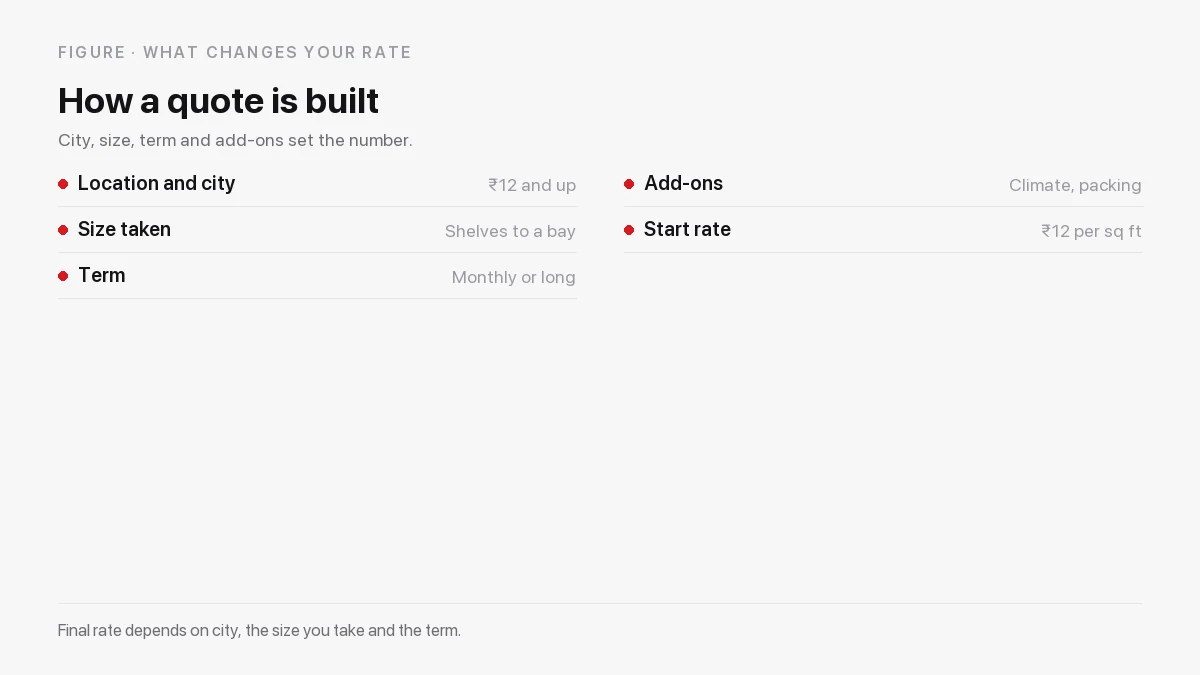
What actually changes your rate
- Location. A unit inside Delhi and a large floorplate on the Haryana belt are not priced the same way, because the land under them is not the same price.
- Size. The area you take, from a few shelves to a full bay, is the biggest single input.
- Term. A monthly booking and a longer commitment are different products; the longer one can be cheaper per month.
- Add-ons. Climate control, extra handling, packing material and insurance cover all move the number.
We deliberately do not publish a single rate for business storage in India — an average quoted without its basis causes more confusion than clarity. Starting rates are set out on warehouse and godown space for rent, and your real answer comes from a short conversation.
GST, invoicing and input credit
Warehouse rent in India attracts GST, and a registered business can claim input credit on it when the invoice is raised properly. That is why every Lozy business storage plan is invoiced monthly with GST, and why the paperwork deserves as much attention as the rate.
Before you sign with anyone, ask plainly: is GST included or charged on top, will the invoice be a tax invoice in your entity's name, and will it show storage and handling as separate lines if your accountant needs that split. The rules for registration and input credit are published on the GST portal; your accountant can confirm how they apply to your business in a minute.
A cash rent paid to a landlord with no invoice looks cheaper on the day and costs more over a year, because none of it comes back.
How booking and moving in works
You can go from enquiry to storage in days, not months. The process runs the same way at every Lozy facility.
- Talk to us. Share what you are storing, roughly how much space it needs and your timeline. We recommend a facility and a unit size.
- Select and reserve. Confirm the space and book it online on a monthly plan — weekly if your need is short-term.
- Move in. Deliver the goods yourself, or book a free doorstep pickup on bookings of 30 days or more, with basic packing materials and trolleys included.
- Manage it. Your stock is barcoded and documented; request anything back and we deliver it, or visit during access hours and handle it yourself.
Two details are worth settling before the first truck: the check-in list, which records everything against your booking, pallet by pallet with a photo inventory behind it, and who on your team gets PIN access.
Moving in without pausing the business
A storage move should be a side quest, not a shutdown. The handover is built to keep your operation running — most businesses in Delhi NCR move goods during working days and never see a gap in supply.
- Pickup from your office, shop or godown across Delhi NCR, on a schedule you set.
- Goods travel straight to the facility and are checked in against your list, pallet by pallet.
- You keep working — a check-in summary lands with the photo record, not a week later.
When the requirement grows later — an extra pallet row, a second bay, a bigger unit in the same facility — the upgrade is handled in place. Nothing about the arrangement needs a renegotiation to change sizes, which is how business warehousing stays matched to the stock instead of the other way round.
If the goods are coming out of a home or a small office rather than a godown, the same team handles it; household warehousing covers the domestic end of the same service.
Access, hours and security
Your team gets PIN-controlled access to gates, lifts and the storage area, so authorised people come and go during working hours without an escort. For anything they would rather not fetch themselves, a delivery request brings the item out — the same route customers use for returns.
Security is not an optional line item here. The facility carries 24/7 CCTV and on-site security, and access is controlled per person rather than handed out with the keys. If your goods are sensitive — samples, electronics, branded stock close to launch — say so at the enquiry stage.
Records, barcoding and the audit question
Records stay tidy on the Lozy side too: what entered, what left, and when, all sitting against your booking. Barcoded storage and a check-in photo inventory mean the first question of any audit — where is it — has a short answer.
A business holding stock in a spare room, or across two informal godowns, usually cannot answer that question quickly, and the answer it gives is a guess. Ask to see a sample stock report before you sign; if you cannot read it, it will not help you.
For records specifically, document and archive storage does the same job for files and paperwork, and inventory warehousing takes it further for businesses that want stock treated as a running ledger rather than a pile.
Mistakes that cost businesses money
Most of the problems we see come from the same short list. All of them are avoidable with questions asked before signature rather than after.
- Paying for space you cannot fill. Take the unit that matches your pallet count and aisles, not one with room to grow you may never use.
- Choosing on rate alone. The cheapest square foot in the wrong place costs more in transport hours than it saves in rent. Measure the drive to your actual customers.
- Overlooking the invoice. If the storage bill is not a GST tax invoice in your entity's name, you are paying more than the rate suggests.
- Locking in longer than the stock. Seasonal and project stock should not carry a multi-year clause. Monthly terms are worth a little more when your volumes move.
- Assuming the space can grow with you. Ask whether the next size up is available on the same site, and what happens when the answer is no.
- Skipping the insurance conversation. Ask what happens if goods are damaged by fire, water or handling, and get the answer in writing.
- Forgetting how trucks reach the door. A unit on a narrow lane with a height restriction is unusable for a large trailer, however good the racking inside looks.
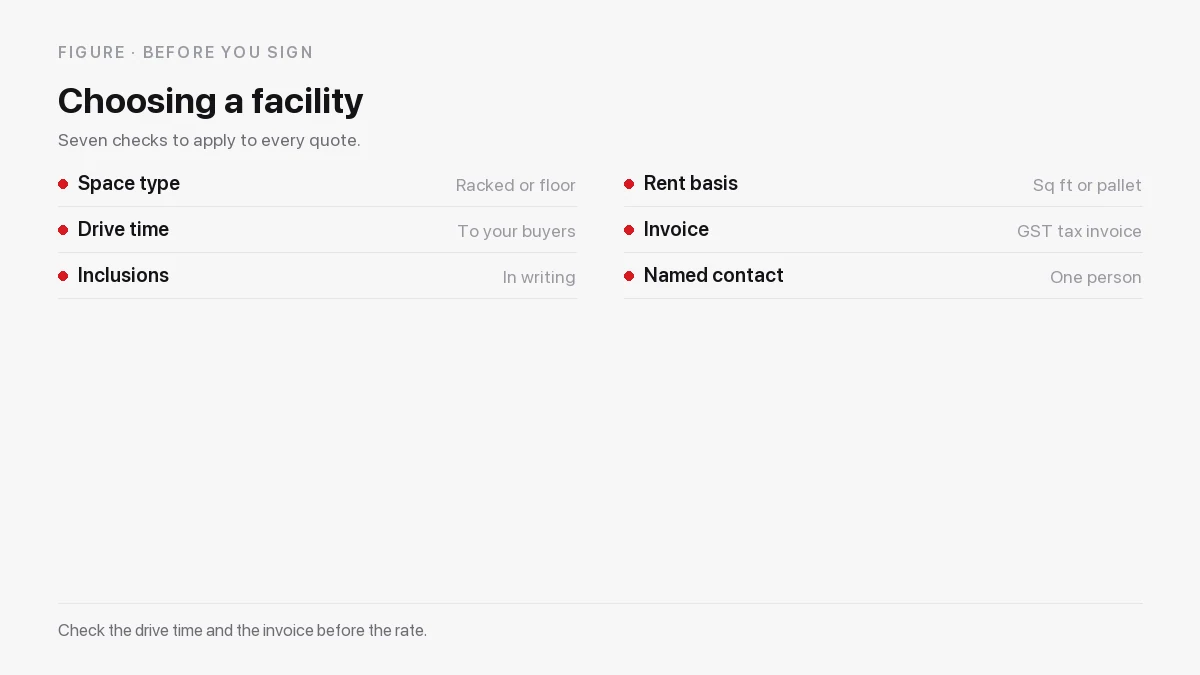
How to choose a business storage facility
Work through this list before you commit to a business storage plan. It is the same checklist we would want a customer to apply to us.
- Match the space to the goods. Racked or floor, dry or climate-controlled, shared floor or a lockable unit.
- Check the drive time. Distance to your main delivery area matters more than distance from your office.
- Get the inclusions in writing. Racking, trolleys, handling, security, housekeeping and pest control.
- Confirm the rent basis and the term. Per square foot, per pallet or per unit — and how much notice you must give to leave.
- Look at the invoice. GST treatment does not change because a business is small.
- Test the reporting. Ask what you will be sent after check-in, and what a stock query looks like on a normal day.
- Meet your contact. One named person who answers is worth more than a call centre.
Depending on what you are storing, the right starting page may be office warehousing for equipment and fit-out material, e-commerce warehousing for online sellers, or industrial and bulk warehousing for large floorplates.
Where the space is
Lozy's network covers 77+ warehouses and over one million square feet of live space across nine city hubs, and the Delhi NCR belt is the deepest part of it. Facilities you can ask about by name:
- Lozy Jamalpur Distribution Center — Haryana
- Warehouse in Dwarka for Business and 3PL — New Delhi
- Warehouse in Ghevra Metro 2 - Lozy Warehousing Company — New Delhi
- Warehouse in Ghevra Metro - Lozy Warehousing Company — New Delhi
- Factory and Warehouse Space in Faridabad (DLF Industrial Area 2) — Haryana
- Self Storage for Home and Business in Dwarka Sector 26 — New Delhi
- Warehouse in Manesar Sector 8 — Gurgaon
- Warehouse in Manesar M-Zone, Sector 9 — Gurgaon
- Warehouse in Manesar Sector 8 (Shedded) — Gurgaon
- Warehouse in Kherki Daula, Gurugram — Gurgaon
- Self Storage Unit in Dwarka Sector 27 — New Delhi
- Warehouse in Manesar, Gurugram — Gurgaon
- Warehouse in Gurugram for Business and 3PL — Gurgaon
- Storage Space in Jaipur — Jaipur
The Delhi and Haryana location pages show the full coverage, and you can also browse the warehouse listing for what is available now.
How Lozy helps
Lozy provides business warehousing across Delhi NCR and the surrounding hubs, backed by 77+ warehouses and more than a million square feet of live space. You get a dedicated racked or floor area, 24/7 CCTV, on-site security and unique PIN access, with monthly billing, GST invoicing and no long lock-in.
Moving in is the part most businesses worry about, so it is the part we run tightest: a free doorstep pickup on bookings of 30 days or more, check-in against your list pallet by pallet, and a photo inventory back to you the same day. When the requirement changes, you change size in the same facility.
If you are still deciding between options, the services page sets out everything Lozy runs, from seasonal and long-term warehousing to smaller lockable units. If your goods are imported, duty-deferred storage sits alongside this service and is explained on the customs bonded warehouse page.
If you want to read more before you call, the Lozy blog covers warehousing, self storage and customs topics in the same plain style as this guide.
Storing something, or just comparing?
Tell us what you need to store and where. We reply with availability and a price — usually the same working day.
About the author
Lozy Editorial Desk. This guide was written by the Lozy Editorial Desk, the in-house team that covers warehousing, self storage, logistics and customs/EXIM topics for lozy.in. We write from Lozy's own facility and pricing information and from public, citable sources. We do not publish invented statistics, ratings or reviews.
Sources. Pricing and facility details are Lozy's own. GST registration and input credit are described from the GST portal; import and export context comes from the DGFT and the CBIC; small-business context from the Ministry of MSME.
Last updated: 11 October 2026. Have a question the FAQ below does not answer? Call +91 93547 12345 or email care@lozy.in.
Need warehousing or storage in India?
Request a free, tailored quote in under 2 minutes — free pickup, no lock-in.