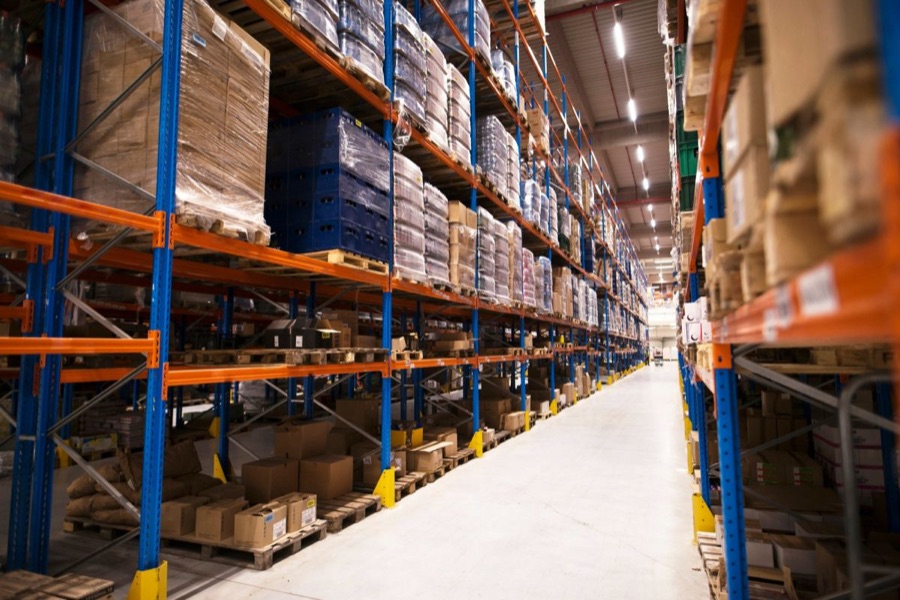
E-commerce Warehousing and Fulfilment: A 2026 Guide for Sellers
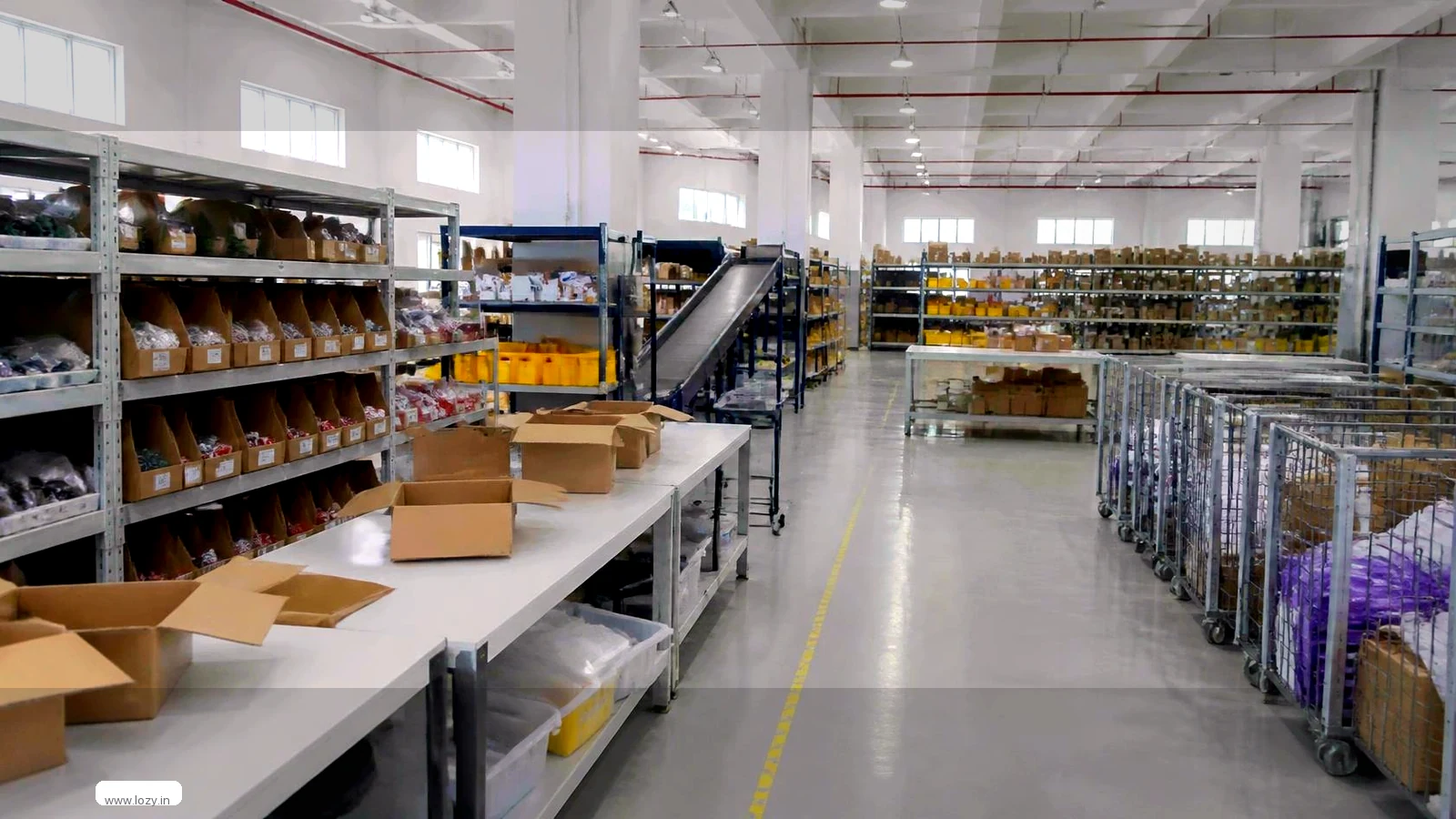
Short answer: E-commerce warehousing is storage that also runs the fulfilment cycle - your stock is received, barcoded and shelved pick-ready, and every order is picked, packed and dispatched from the same building. Lozy runs e-commerce warehousing and fulfilment for D2C brands and marketplace sellers, starting at ₹4,999 per month for a starting catalogue, with the exact price set by the space you take and the volume you ship.
Key takeaways
- E-commerce warehousing is not a shelf with a door - it is storage plus pick, pack and dispatch, so one contract replaces the spare room, the packing table and the daily courier run.
- Lozy's e-commerce warehousing starts at ₹4,999 per month for fulfilment-ready storage, and because the plan renews monthly, quiet months bill lower than peak months.
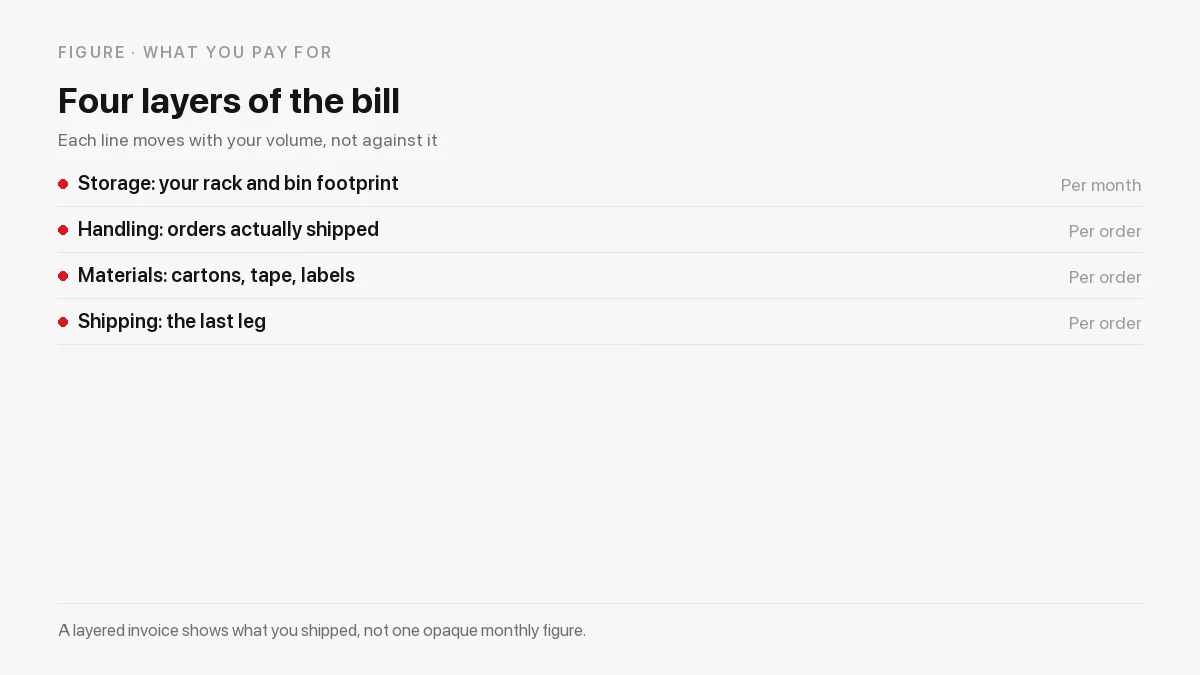
- The price has layers you can see: storage follows your rack and bin footprint, handling follows the orders actually shipped, and materials and shipping follow what each order consumes.
- One warehouse can sit behind every channel - Amazon, Flipkart, Meesho, Shopify and your own website - so listings reflect real stock instead of a best guess.
- Returns and RTO are part of the service: goods come back, get checked, and either return to saleable stock or wait for your call.
- You can add racking and hands ahead of a sale event and release them after it, so you scale for a surge without hiring for it permanently.
Packing your first online order at the kitchen table feels like the beginning of something. Packing your two-hundredth order of the week at the same table feels like a second job - one that pays nothing and eats your evenings. That shift, from a seller who ships occasionally to a seller who ships every day, is exactly when e-commerce warehousing starts to make sense.
This guide explains what e-commerce warehousing and fulfilment actually cover, who it suits, how the bill is put together, how returns and sale seasons are handled, and how to choose a partner without overpaying. Everything here comes from Lozy's own e-commerce warehousing service and facility information, plus public Government of India sources for the tax and customs points.
What e-commerce warehousing and fulfilment means
"Warehouse" and "fulfilment" are two different jobs that most sellers assume they have to run separately. E-commerce warehousing joins them. It is holding inventory in a warehouse that also runs the fulfilment cycle - receiving stock, storing it in pick-ready form, packing each order and dispatching it to the customer. For an online seller, that single arrangement replaces the bedroom floor, the office corridor and the daily courier run.
Lozy runs e-commerce warehousing and fulfilment for D2C brands and marketplace sellers. Your stock is stored, barcoded and shown on a live inventory view, and orders move out through pick, pack and dispatch as they come in. You are not renting a shelf and doing the rest yourself; you are handing over the operation between "stock arrived" and "parcel left the building".
The fulfilment cycle, step by step
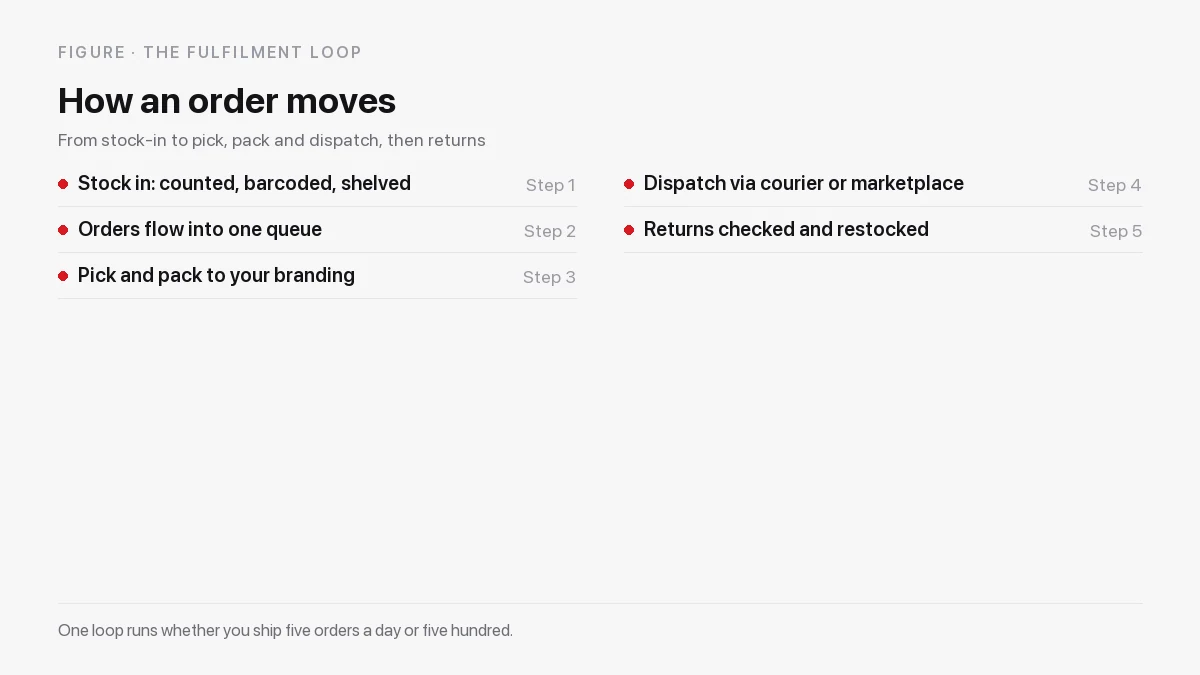
Fulfilment is a loop, not a single service. In an e-commerce warehouse it runs like this.
- Stock in. Inventory arrives from your supplier or moves over from your old storage. It is counted, barcoded and shelved in pick-ready form.
- Orders flow. Marketplace and store orders land in one queue, each checked against real stock positions rather than a figure you typed in last week.
- Pick and pack. Each order is pulled, packed and labelled to your branding, so the parcel that reaches your customer still looks like you.
- Dispatch. Cleared orders are handed to the courier or marketplace network the same day, where the daily cycle allows.
- Returns. RTOs and returns route back to the warehouse, get checked, and either return to saleable stock or wait for your call.
The value of the loop is that it repeats without you. Whether you ship five orders a day or five hundred, the sequence is the same, and the parts that used to sit on your desk sit in the warehouse instead.
Who e-commerce warehousing is built for
Fulfilment space is not for every business. It is for sellers whose order volume has outgrown the space and the hours they have. In practice that means a handful of recognisable profiles.
- D2C brands of any size, from first sales to thousands of SKUs, that would rather build the brand than run a packing line.
- Marketplace sellers on Amazon, Flipkart, Meesho and similar channels who work to dispatch deadlines and cannot afford a late handover.
- Shopify and own-website stores that want one warehouse behind every channel instead of a stock count per storefront.
- Sellers shipping pan-India from a single NCR base, who can feel the distance between where their stock sits and where their customers are.
- Importers who sell online and want storage that understands the customs side, not just the shelf.
- Any seller heading into a sale event with more orders coming than shelf space to hold them.
If one of those describes you, the rest of this guide is the detail worth reading. If none does, plain storage is probably the cheaper answer, and it is worth saying so plainly.
What actually happens to your stock on the floor
Fulfilment-ready storage means your stock is not stacked in a corner waiting to be found. It is binned, barcoded and pick-ready, so the person pulling an order knows where the item is before they walk to the shelf. That single habit is the difference between a warehouse and a godown.
Because every movement is recorded, the inventory dashboard shows what is on the shelf without anyone counting it. Listings are synced against those positions, so a product that sells out on one channel does not keep taking orders on another. For a seller running three or four channels at once, that one link is often worth more than the storage itself.
When to move fulfilment out of your own space
The move out of your own space rarely happens on a spreadsheet. It happens when a seller notices a pattern.
- Evenings go to packing, and the order pile still grows overnight.
- Courier pickups clash with the hours that used to belong to work.
- Stock has quietly spread from the spare room to the corridor, then the balcony.
- A sale weekend arrives with more orders than hands, and orders slip.
- Holidays and weddings bring the whole operation to a halt.
None of these are failures. They are size. E-commerce warehousing is the point at which selling can grow without the home or the office growing with it. For most sellers it is also cheaper than the alternative they were circling: renting a bigger flat or a small godown to hold stock that still has to be picked, packed and shipped - at first, by you.
One warehouse behind every sales channel
Most sellers do not choose between channels; they end up on several. A brand page, a marketplace listing, a catalogue channel and a Shopify store can all be selling the same SKU on the same afternoon. Running a separate stock count for each is how overselling happens, and overselling is the one mistake online buyers do not forgive.
E-commerce warehousing puts one inventory behind all of them. Orders from every channel land in one queue - that is the marketplace and store sync for Amazon, Flipkart, Shopify and Meesho - and each order is checked against the same stock positions. When something sells out, the listing reflects it, rather than promising a product you no longer have on the shelf.
You still see each channel's numbers. You just stop being the integration layer between them, which is the part that quietly consumes a seller's weekends.
What e-commerce warehousing costs
E-commerce warehousing with Lozy starts at ₹4,999 per month, covering fulfilment-ready storage for a starting catalogue. That figure is a starting point, not a flat rate for every seller. Your exact price follows the space you take and the volume you ship, so a brand moving a few orders a day and a brand moving thousands do not pay the same amount, and it would be dishonest to pretend otherwise.
Because the plan renews monthly, the fulfilment line on your books moves with the season instead of against it. A quiet month bills like a quiet month. A festival month bills for the work it actually created. The rate also depends on the city, the size of the footprint and the term - which is why any honest quote starts with "it depends" and then shows you the layers underneath.
One tax point is worth knowing before you sign anything. Warehouse rent and fulfilment services attract GST, and whether you can set off input credit depends on your own registration and how the invoice is raised (see the GST portal for the current rules). Ask for the GST treatment in writing and compare quotes on the same basis.
The comparison that matters is not Lozy's number against a competitor's number. It is the single fulfilment line against the DIY stack it replaces: extra rent, packing materials, packing help, courier runs and the hours you personally lose to fulfilment. That trade is usually the point at which selling starts scaling without the apartment filling up.
How the fulfilment bill is built up
Fulfilment pricing is layered, and each layer maps to something you can see on your own statement. Nothing here is a hidden fee; it is simply that a warehouse is doing several jobs at once, and a good invoice shows them separately.
| Price layer | What drives it | What it covers |
|---|---|---|
| Storage | The rack and bin footprint your catalogue needs | Fulfilment-ready space - binned, barcoded, pick-ready stock held on the shelf |
| Handling | The orders you actually shipped this month | Picking, packing and labelling each order to your branding |
| Materials | What each order consumes | Cartons, tape, filler and labels used on your parcels |
| Shipping | Where each order is going | The last leg - NCR-wide or pan-India, through your courier or marketplace network |
Read your first invoice against those four lines and the number stops being mysterious. If handling is high because you shipped a lot, that is your volume, not a penalty. If storage is high because you bought deep for a sale, the warehouse is simply holding the stock you asked it to hold. The layers move with your business, which is the point of pricing it this way instead of quoting one flat monthly figure.
Returns and RTO: the part sellers underestimate
Returns are the part of selling that gets planned last and costs the most attention. An online order can come back for a dozen reasons - wrong size, wrong expectation, a change of mind, a failed delivery attempt. Each one is a parcel travelling the other way, and each one has to land somewhere.
In returns and RTO management, those parcels route back to the warehouse rather than to your living room. They are received, checked, and either returned to saleable stock or set aside until you decide what to do with them. That check is what keeps a damaged or incomplete return from quietly re-entering inventory in a condition you would not want to sell.
For sellers on marketplaces, where a high RTO rate can decide whether a product is profitable, a named process beats a pile by the door: you see the return, decide its fate, and either restock it or write it off.
Scaling for sale seasons and spikes
Sale weeks and festive runs load the same catalogue with far more orders. The work does not change; the volume does. Extra racking and extra hands can be layered on ahead of the event and released after it, so you scale for the surge without hiring for it permanently.
The same flexibility works downward. Once the season is done, you drop the extra space instead of storing empty racks for another year. That is the practical difference between a monthly plan and a long lease: you pay for the fulfilment you needed, not the fulfilment you feared. Sellers who plan their seasonal warehousing this way tend to enter the next sale event ahead of the rush rather than behind it.
For a genuine short spike - a single launch, a one-off bulk dispatch - on-demand warehouse space covers the gap without committing you to a standing footprint.
Selling imported goods: the customs side
If you import your stock and sell it online, storage and customs are one problem, not two. Duty is normally payable when goods are cleared, which ties up working capital exactly when you are trying to buy more stock for a busy season.
A licensed bonded warehouse changes that timing. Under Indian customs law administered by the Central Board of Indirect Taxes and Customs, dutiable imported goods can be stored in a licensed bonded warehouse, with duty becoming payable when the goods leave it for the market - store first, pay duty later. Declarations for that movement are filed electronically through ICEGATE, Indian Customs' national trade portal, and the rules governing imports and exports are set by the Directorate General of Foreign Trade.
So if you import and sell, look for a partner that handles both sides rather than stitching together a warehouse, a broker and a transporter yourself. Lozy provides customs bonded warehouse space alongside customs clearance, can act as your importer of record if you would rather not hold that role yourself, and offers DDP shipping if you sell across borders. That is the difference between storage that ends at the shelf and storage that understands where the goods came from.
How to choose a fulfilment partner
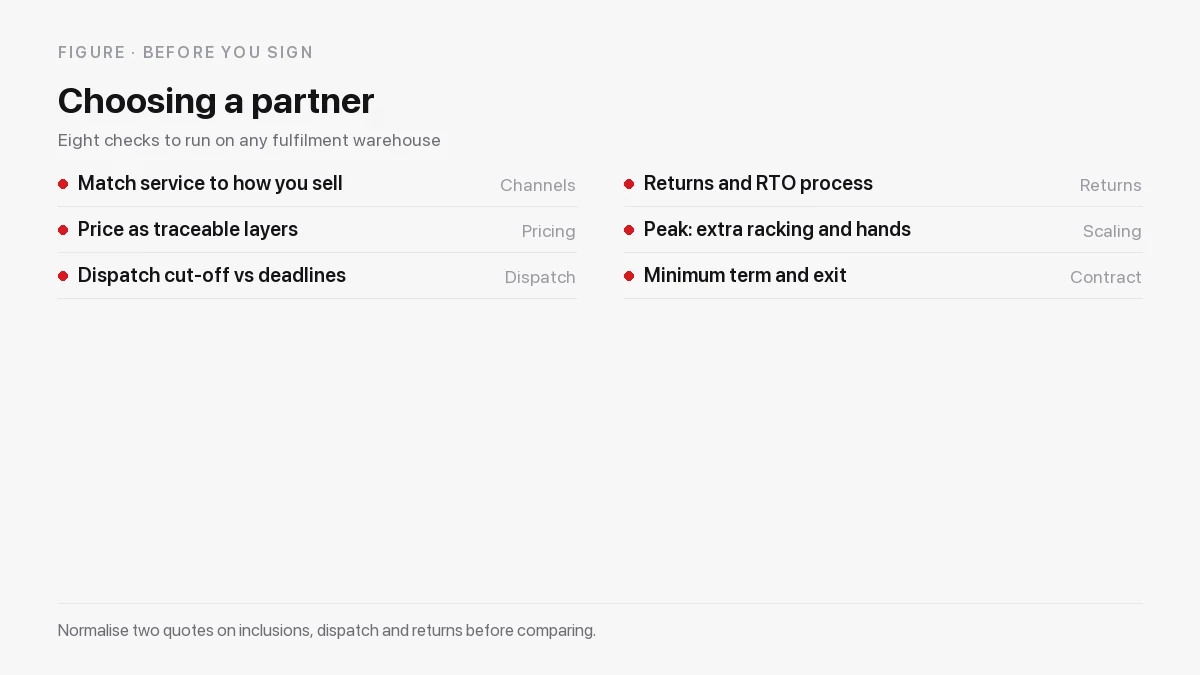
Work through this list before you sign anything. It is the same checklist we would want a seller to apply to us.
- Match the service to how you sell. A single-channel seller and a four-channel seller need different sync, and a seller with heavy returns needs a returns process, not just a shelf.
- Ask how the price is built. Storage, handling, materials and shipping should be separate lines you can trace, not one opaque monthly figure.
- Check the dispatch cycle. When do orders need to be out, and does the warehouse's daily cut-off actually meet your marketplace deadlines?
- Look at the inventory view. Ask for a sample dashboard before you sign. If you cannot read your own stock position, the dashboard is decoration.
- Confirm the returns process. Who receives RTOs, who checks them, and where the stock sits until you decide its fate.
- Ask about peak. Can the facility give you more racking and more hands for a sale event, and can you release them after it?
- Check the minimum term. Monthly renewal suits most online sellers. A long lock-in suits almost none.
- Meet your contact. One named person who answers questions is worth more than a call centre, especially in your first month.
Before you compare two quotes, normalise them: same inclusions, same dispatch promise, same returns handling. A rate that looks cheaper usually is not, once those sit on the same line.
| Task | In-house fulfilment | E-commerce warehousing with Lozy |
|---|---|---|
| Space | Spare room, corridor or rented office corner | Racked, binned and barcoded warehouse space |
| Packing | Your evenings, every evening | Pick and pack on the daily cycle |
| Courier | A daily run to a drop point | Orders handed to the courier or marketplace network |
| Stock view | What you can see on the shelf | A real-time inventory dashboard |
| Returns | A pile by the door | Received, checked, restocked or set aside |
| Peak | More orders than hands | Extra racking and hands added for the event |
Mistakes sellers make with e-commerce warehousing
Most of the problems we see come from the same short list. All six are avoidable with questions asked before signature, not after.
- Treating warehousing as off-site storage. Fulfilment is a cycle; if you buy storage without the pick, pack and dispatch, you have moved the work, not removed it.
- Choosing on price per square foot alone. For an online seller the cost that matters is per order shipped, not per foot held. A cheap floor with a slow dispatch cycle costs more in late orders than it saves in rent.
- Forgetting the returns loop. Sellers plan for outbound orders and discover RTOs in month two. Sort the returns process before the first sale weekend, not after it.
- Buying space for the peak, all year. The whole point of a monthly term is that you do not store January's emptiness to cover December's demand.
- Assuming every channel syncs. Ask exactly which marketplaces and store platforms connect, and what happens to a listing when stock runs out.
- Skipping the stock move. Moving existing inventory in is a project in itself - count it, agree the cut-off, and transfer in a planned window rather than mid-sale.
Locations: an NCR base, a pan-India reach
Where your stock sits decides how fast it reaches your customers and how much of the freight bill it eats. A single warehouse in the NCR belt can serve a large share of pan-India orders, especially with marketplace and courier networks doing the last leg - but it should be a decision you make, not a default you inherit.
Lozy's network covers 77+ warehouses and more than 1 million sq ft of live space across nine city hubs, centred on Delhi NCR and the surrounding belt, with storage space in Jaipur. Fulfilment runs from facilities such as the Lozy Jamalpur Distribution Center in Haryana, the warehouse in Dwarka for business and 3PL in New Delhi, and 3PL-ready space in Ghevra, Manesar and Kherki Daula on the Gurugram side.
If you are still deciding between buying your own space and using a fulfilment partner, the warehouse and godown space starts at ₹12 per sq ft per month, while short-term storage starts at ₹699 per week for a genuine peak-only need. The warehouse listing shows what is live, and the location pages for Delhi, Gurgaon and Haryana show what sits where.
How Lozy helps
Lozy runs e-commerce warehousing and fulfilment as one contract. That covers fulfilment-ready stock warehousing that is binned, barcoded and pick-ready; pick, pack and same-day dispatch where the daily cycle allows; marketplace and store sync with Amazon, Flipkart, Shopify and Meesho; a real-time inventory dashboard; returns and RTO management; and NCR-wide and pan-India shipping support for the last leg.
It starts at ₹4,999 per month for a starting catalogue, on a plan that renews monthly, with the final price following the space you take and the volume you ship. If you are still comparing options, the wider Lozy services list covers business, industrial, seasonal and on-demand warehousing, and the business warehousing and inventory warehousing pages go deeper on the storage side. The warehousing guides cover the rest, post by post.
Whatever you choose, the honest test is simple. Does the arrangement take the packing table off your kitchen counter and put a dispatch cycle in its place? If it does, it is doing the job.
Storing something, or just comparing?
Tell us what you need to store and where. We reply with availability and a price — usually the same working day.
About the author
Lozy Editorial Desk. This guide was written by the Lozy Editorial Desk, the in-house team that covers warehousing, self storage, logistics and customs/EXIM topics for lozy.in. We write from Lozy's own service and facility information and from public, citable sources, and we do not publish invented statistics or reviews.
Sources. Tax and customs points were taken from public Government of India sources: the GST portal (gst.gov.in), the Central Board of Indirect Taxes and Customs (cbic.gov.in), ICEGATE (icegate.gov.in) and the Directorate General of Foreign Trade (dgft.gov.in). Service, pricing and facility details are Lozy's own.
Last updated: 11 October 2026. Have a question the FAQ below does not answer? Call +91 93547 12345 or email care@lozy.in.
Need warehousing or storage in India?
Request a free, tailored quote in under 2 minutes — free pickup, no lock-in.