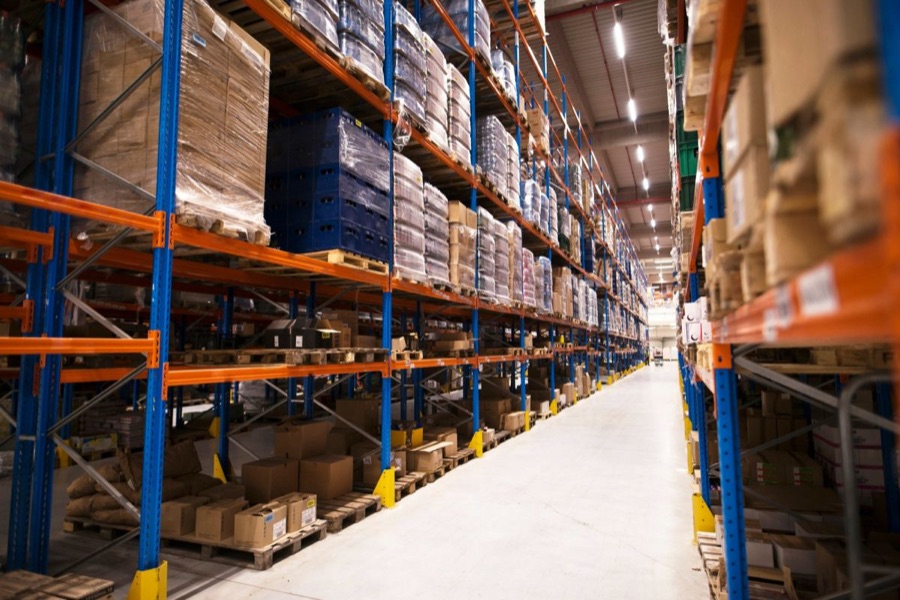
Household Storage in Delhi NCR: Cost, Sizes and How It Works (2026 Guide)
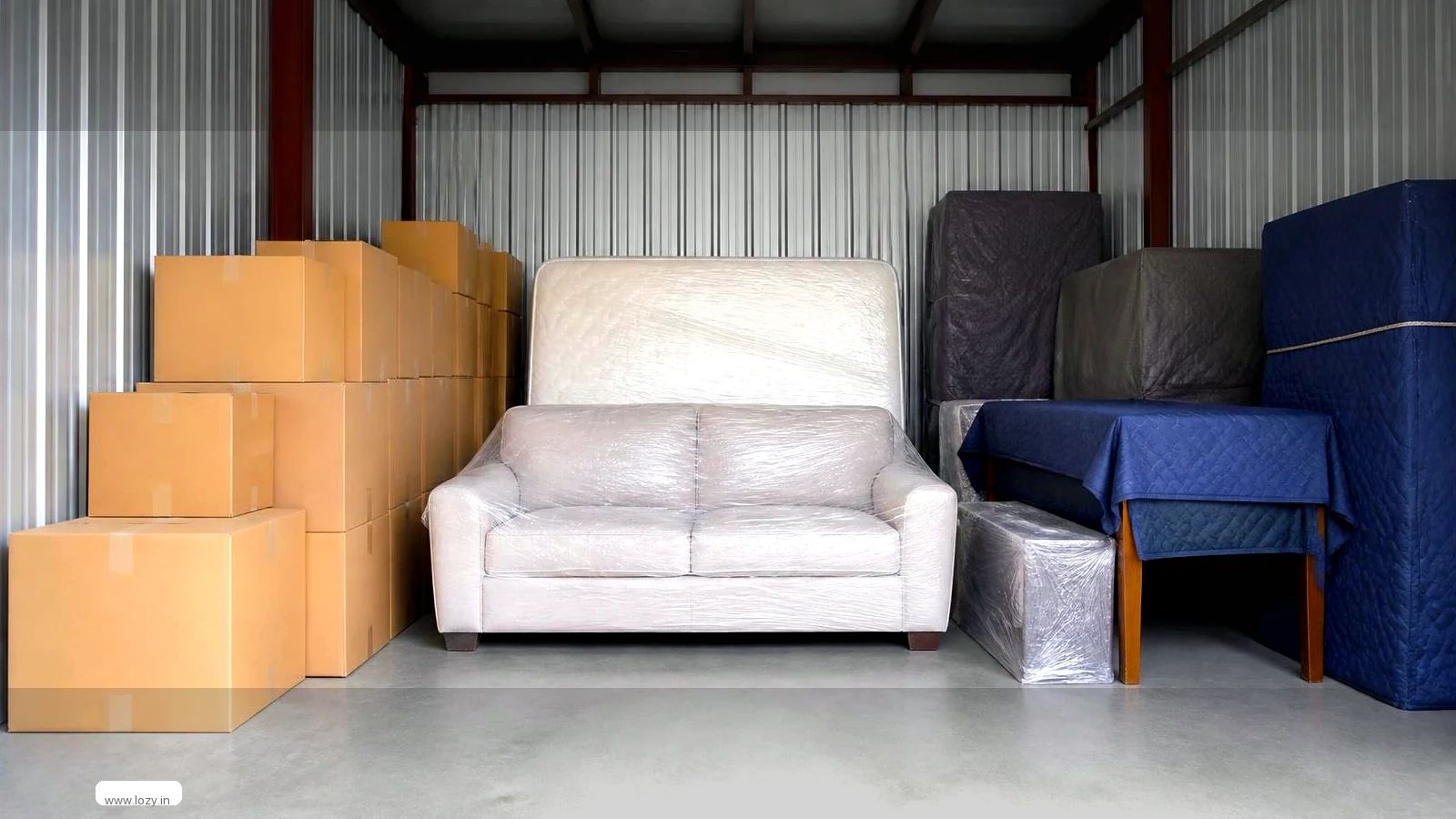
Short answer: Household storage is warehouse space for the things a home cannot hold right now — furniture, appliances, boxes and seasonal items — kept clean, dry and secure until you need them back. Lozy household storage starts at ₹1,499 per month, with the final price set by the volume of goods and how long you store them. Most bookings are for a house move, a renovation, a posting abroad or a declutter, and the final rate depends on city, size and term.
Key takeaways
- Household storage is priced on the volume of goods and the length of stay, not on square feet — Lozy household storage starts at ₹1,499 per month, billed monthly with no long lock-in.
- Goods are wrapped, padded, labelled and listed in a photo inventory, so you know what is where without opening a box.
- Units are pest-controlled, clean, dry and CCTV-monitored round the clock, with climate-controlled options for electronics and artwork.
- Free doorstep pickup across Delhi NCR applies on bookings of 30 days or more, with packing materials, trolleys and pallet trucks included.
- The difference from a godown is accountability: a photo inventory, PIN-controlled access, pest control, monthly terms, and one item back on request mid-way.
- Sizing the unit against your whole list on day one prevents a second trip and a second bill.
Somewhere in every family's year the maths stops working. The furniture is fine, the boxes are fine, but there is no longer a room for them — because you are moving, renovating, going abroad for a stretch, or clearing a house that has held thirty years of family life.
This guide covers what it means, what it costs, how your belongings are protected, how pickup and return run, and how to get a home ready before the truck arrives. Everything below comes from Lozy's own facility and pricing information.
What household storage actually means
Household storage is warehouse space for the things a home cannot hold right now — furniture, appliances, boxes, seasonal items — kept clean, dry and secure until you need them back. Instead of crowding a relative's garage or paying rent on a bigger flat to hold things you are not using, you book a space that fits your goods and your timeline.
It is not a shed with a padlock. A properly run household warehouse is a monitored building where goods are handled to household standards: furniture wrapped and padded, boxes labelled, floors clean and units pest-controlled.
Lozy's household warehousing service is built around that pattern — families moving, renovating or decluttering store their belongings in a monitored facility, with pickup from the door and delivery back when the new place is ready.
When families book household storage
Almost every household storage booking starts with one of six situations. If you recognise yours, you are the standard case rather than an unusual one.
- Moving house, and needing a safe gap between vacating the old home and setting up the new one, because handover dates rarely line up.
- Renovation or repair work, when household furniture would only be in the way of painters, plumbers and masons for weeks.
- Living abroad for a stint — NRIs storing a full home's furniture and appliances for months or years, without giving up the home itself.
- Children away at college or a first job, with a room's worth of belongings needing somewhere to live.
- Decluttering a family home — keeping what matters and clearing what does not.
- Shifting between cities, when the destination address is not final and a lease is out of the question.
Most bookings sit on two of these at once. Because household storage is billed monthly, the unit can change size as the plan changes.
Household storage versus a traditional godown
A neighbourhood godown can look cheaper on the first phone call. The trade-offs show up later: dusty floors, little real security, no record of what went in, and a landlord who wants six or twelve months' commitment. Household warehousing is the organised version of the same idea.
| What matters | Neighbourhood godown | Household warehousing |
|---|---|---|
| Condition of the space | Dusty floors | Clean, dry, pest-controlled |
| Security | Little real security | CCTV monitored round the clock |
| Access | At the caretaker's convenience | PIN-controlled access |
| Record of contents | None | Labelled boxes and a photo inventory |
| Term | Six or twelve months' commitment | Monthly billing, no long lock-in |
| Getting one item back | Negotiate a visit with the caretaker | Ask for it and have it delivered |
The bigger difference is accountability. When something needs to come out mid-way — the winter quilts in June, a document folder before the move — you ask for it and have it delivered, rather than negotiating a visit with a caretaker.
What families actually store
Household storage almost always starts with furniture and ends up holding more.
By the time the truck is loaded, a typical booking covers beds and wardrobes, sofas and dining sets; kitchen sets, crockery and small appliances; quilts, blankets and seasonal clothing; cycles, play equipment and fitness gear; books, framed pictures and the boxes every home produces; and documents that must not sit in a damp corner for a year.
Electronics, artwork and anything humidity-sensitive belong in a climate-controlled unit rather than a standard one — worth deciding before pickup rather than after. Sizing to the whole list the first time avoids a second trip.
If part of what you are keeping is really paperwork, Lozy also runs dedicated document storage.
How your belongings are protected
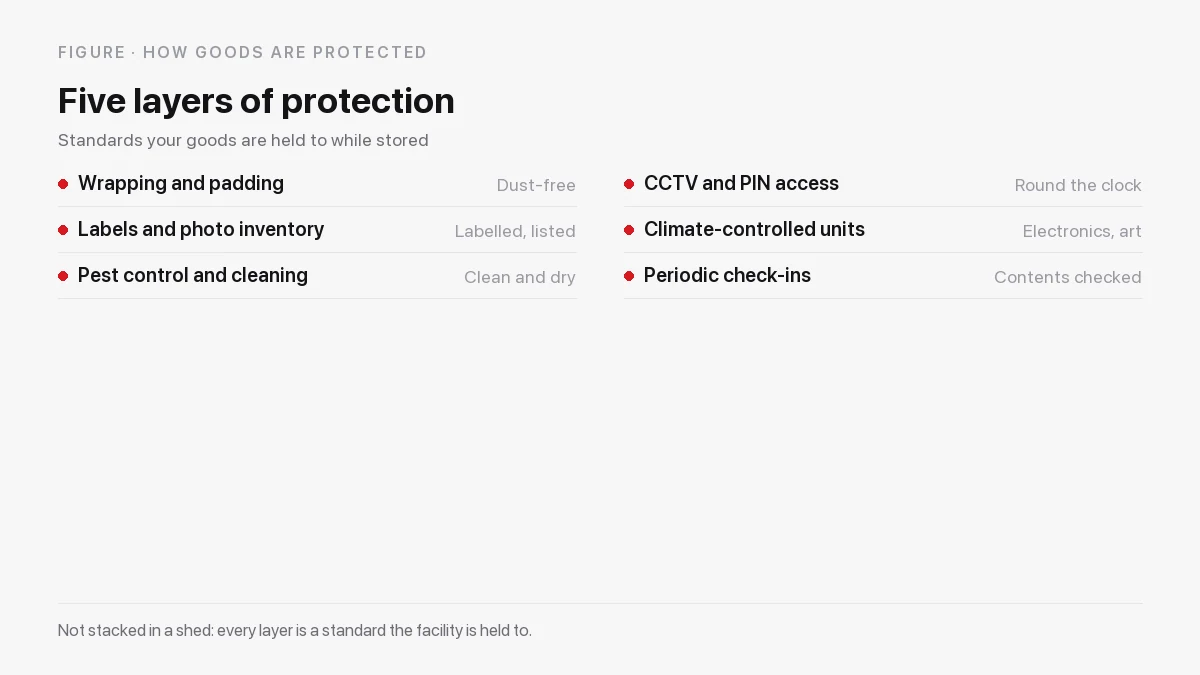
Household goods are not simply stacked in a shed. Everything is handled to household standards, in five layers.
- Wrapping and padding. Furniture and large items are wrapped, padded and kept dust-free.
- Labelling and inventory. Boxes are labelled and listed in a photo inventory, so you know what is where from home.
- Pest control and housekeeping. Facilities are pest-controlled, clean and dry — the difference between goods that come back as they left and goods that come back smelling of the room.
- Monitoring and access. CCTV round the clock, with access controlled on a PIN.
- Climate control. Climate-controlled options are available for electronics, artwork and anything sensitive to humidity.
Insurance cover can be added for complete peace of mind — see insurance and liability below. If the same move involves shop stock, business warehousing works on the same principles at commercial scale.
Choosing the right size
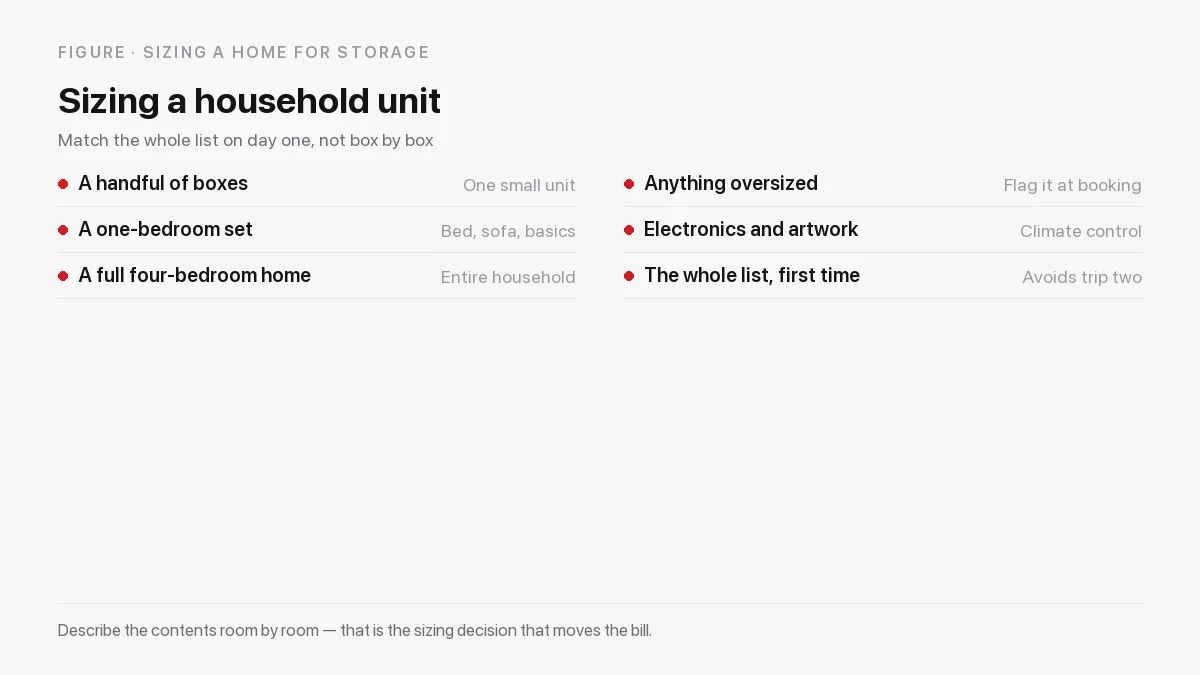
Sizing affects both the bill and your peace of mind, and you do not need a measuring tape — just an honest description of your home, room by room.
Three shapes cover most bookings:
- A handful of boxes. A few cartons, cycles, books or seasonal items — often a student's room, or the overflow from a declutter.
- A one-bedroom set. A bed, a wardrobe, a sofa, kitchen basics and the boxes that come with them.
- A full home. Three or four bedrooms' worth — furniture, appliances, kitchen sets, cycles, books and the lot. The classic NRI or long-renovation booking.
Tell us which is closest, plus anything unusual: a piano, a large mirror, a marble top, an aquarium, a scooter. Awkward items change how the pickup is planned, and mentioning them on the first call costs nothing.
What household storage costs
Household storage at Lozy starts at ₹1,499 per month. The final price is set by two things: the volume of goods going in, and how long you store them. You are quoted after a quick requirement check — no obligation and no hidden charges — and the final rate depends on city, size and term.
Monthly billing keeps the cost predictable, and GST invoicing keeps the paperwork clean for reimbursements when an employer is paying for a relocation.
Other Lozy storage products are priced on different bases, and it is worth knowing which one you are buying:
- Warehouse and godown space from ₹12 per sq ft per month, billed monthly — priced by floor area, for trade stock.
- Self storage from ₹999 per month — a lockable unit priced per unit rather than per square foot.
- Short-term storage from ₹699 per week — for a few weeks between two addresses.
If your timeline is genuinely short, a weekly product can work out better; if it runs into months, monthly household storage usually does. The warehouse listing shows what is available where.
What is included, and what costs extra
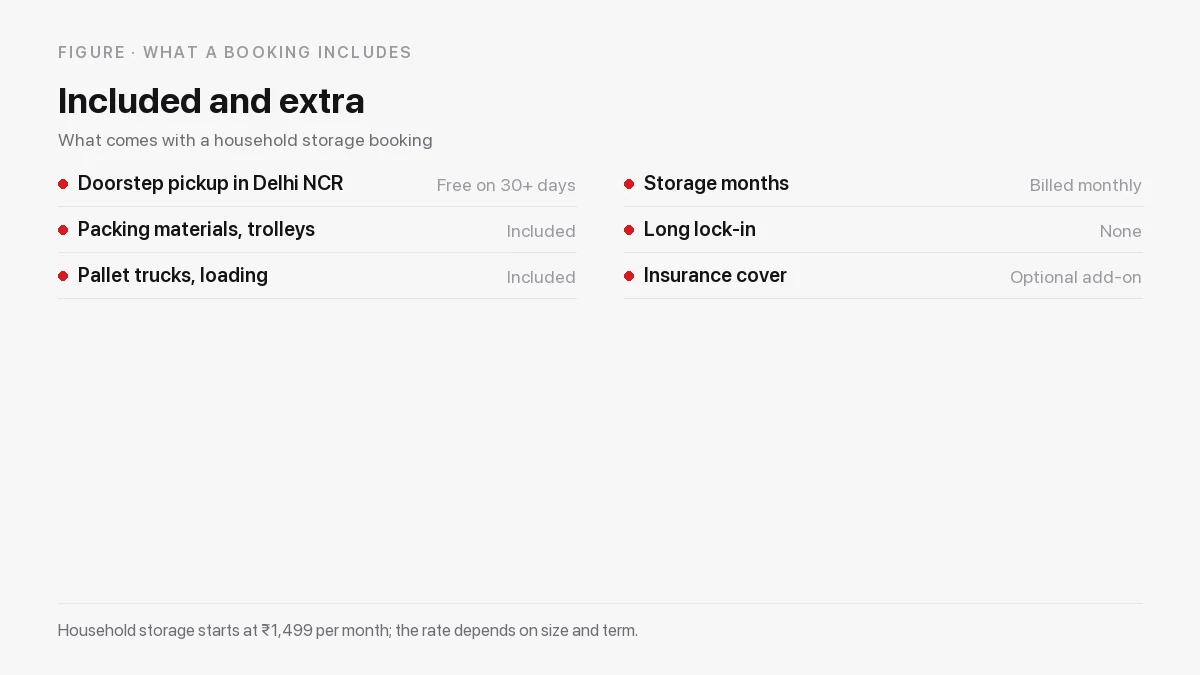
On bookings of 30 days or more, doorstep pickup across Delhi NCR is free, and basic packing materials, trolleys and pallet trucks are included. That covers the heavy end: wrapping, loading and the trip itself.
What stays on your side is the labelling, the open-first box and the decisions about what travels with you. Insurance cover is optional. Ask for the inclusions in writing before the truck is booked, so the invoice holds no surprises.
Pickup, storage and return: how the process runs
The whole cycle is managed for you, from the first load out of your home to the last box delivered back. There are four steps.
- Book a size. Tell us what is going into storage — a one-bedroom set, a full four-bedroom home, or a handful of boxes — and we match it to a unit.
- Pickup day. Free doorstep pickup across Delhi NCR on bookings of 30 days or more; basic packing materials, trolleys and pallet trucks are included.
- Storage months. Pay monthly, with no long lock-in and no penalty when plans change.
- Return delivery. When you are ready, we deliver everything back to your new address.
The household warehousing page sets out the same steps in the same order.
Before storage day: getting a home ready
An hour of preparation the evening before pickup saves an afternoon of confusion later. The team handles the heavy end — wrapping, loading and the trip are part of the pickup. The list below is the difference between goods that arrive back like new and goods that arrive back with a story.
- Label boxes by room, not by contents. The dinner set, the study, the balcony. When a box comes back it goes straight to the right room.
- Pack an open-first box. Chargers, a few kitchen basics, documents you use weekly — and keep it with you.
- Clean and dry appliances before wrapping. A fridge that goes away damp comes back that way, and the smell is hard to shift.
- Photograph anything fragile before it is packed. The inventory stays honest that way.
For a full home, walk the rooms the night before and write the list down. Twenty minutes of that is the difference between a smooth load-out and standing in a hallway guessing what is still upstairs.
Labelling and the photo inventory
The photo inventory is the quiet feature that changes how storage feels. Every box is labelled and its contents listed, so you can find the winter quilts in June without a trip to the facility or opening eight cartons.
Two habits keep the list useful:
- Number the boxes as they are packed, and keep that number on the label. Room names alone get vague once there are forty identical cartons.
- Keep your own copy somewhere you will look. Phone notes beat a sheet of paper that has gone into a box.
For extended storage, goods can move between unit sizes as plans change, and periodic check-ins keep the contents accounted for.
Climate control, humidity and sensitive items
Delhi NCR humidity swings hard between a monsoon and a dry winter, and household goods notice. Wooden furniture swells and cracks, books cockle, and electronics suffer most.
Standard units are clean, dry and pest-controlled, which is enough for most household goods. Climate-controlled options are available for electronics, artwork and anything sensitive to humidity. If you are storing a television, a music system, framed art or a camera collection, ask at booking rather than discovering the need three months in.
A simple rule: if the item would suffer in a closed, unventilated room through a Delhi summer, put it in climate control.
Insurance and liability
Insurance cover can be added for complete peace of mind. It is optional, and worth asking about even when the goods look ordinary — what people store is often the hardest to replace.
Three questions worth asking any storage provider, ours included:
- What is covered while the goods are in storage, and what is excluded?
- Does the cover apply during pickup and return delivery, or only while the goods sit in the unit?
- What do you need from me — a declared value, the photo inventory, receipts?
Clear answers are worth more than a low headline price. Lozy can arrange cargo liability cover for goods in storage and in transit.
Storing a home while living abroad
An NRI booking is usually the largest household booking there is: a full home's furniture and appliances, stored for months or years while the family lives in another country.
- A written inventory matters more. You cannot walk over and check, so the labelled boxes and photo inventory are your eyes on the unit.
- Name someone local. A relative or friend who can receive a delivery or collect a document on your behalf.
- Monthly billing suits the arrangement. Postings extend and plans change, and monthly terms mean no penalty when they do.
- Keep the paperwork with you. Documents you may need abroad belong in your bag, not in a box.
Return delivery is the part people forget to plan. Give us the new address when you have it, and the goods go back to the home rather than waiting in a unit while you arrange a truck from another country.
Storing during a renovation
A renovation is one of the most common reasons families book storage while staying put. You are not moving anywhere; you simply cannot live around three rooms of furniture while the work happens.
- Store what the work touches — the living room, the bedrooms, the kitchen if it is being redone.
- Keep what you will use — beds, a table, the kitchen basics, whatever room stays functional.
- Pad mattresses and upholstery before they go; a building site produces dust for weeks.
- Store the seasonal and the sentimental first. Dust and damp damage those most.
One line to get right is household goods versus site material. Building material, tiles and trade stock belong in commercial warehousing or industrial warehousing, not in a household unit.
Decluttering a family home
Decluttering is storage's gentlest use, and often its most emotional. A parent has moved to a smaller place, a house is being sold, or a family has accumulated thirty years of things that each matter to someone.
Storage lets you postpone the decision without putting things on the street: clear the house, keep what matters, and let the rest sit in a clean, dry, pest-controlled unit.
One caution: decluttering with a storage unit can quietly turn into hoarding with a monthly bill attached, so set a review date before you book. If what you are clearing is furniture specifically, furniture warehousing and personal storage cover the same ground.
Long-term and multi-year storage
Some bookings last a season; some last years. A posting abroad, a house under repair, a slow renovation or an elderly parent's furniture being held until the family decides — these run on a different clock.
Two things matter most. The unit can change size as plans change, so you are never locked into a size you have outgrown. And monthly billing with no long lock-in keeps the arrangement as flexible in year three as in month one. Lozy's long-term warehousing and seasonal warehousing pages cover both ends of that range.
Where Lozy stores household goods
Lozy's network runs to 77+ warehouses and 1M+ sq ft of live space across 9 city hubs. For household storage, the practical question is what sits closest to the home you are emptying and where you are going next.
Self storage options for homes are live in Delhi — a facility for home and business in Dwarka Sector 26, and a self storage unit in Dwarka Sector 27. Storage space is also available in Jaipur, and the Haryana and Gurgaon clusters take the overflow from households shifting within Delhi NCR.
| Where | Facility | Best for |
|---|---|---|
| Dwarka Sector 26, New Delhi | Self Storage for Home and Business | Furniture, appliances and boxes |
| Dwarka Sector 27, New Delhi | Self Storage Unit | Smaller household sets |
| Jamalpur, Haryana | Lozy Jamalpur Distribution Center | Larger household loads |
| Manesar Sector 8 and Sector 9, Gurgaon | Warehouses | Full-home storage for NCR moves |
| Kherki Daula, Gurugram | Warehouse | Households leaving south Gurugram |
| Jaipur | Storage Space in Jaipur | Households in and around Jaipur |
Within Delhi NCR the pickup point and the unit are usually a short drive apart, which keeps the load-out to a single day.
Seven mistakes to avoid
Most of the trouble we hear about starts with a decision made in a hurry.
- Under-declaring what you are storing. Guessing small saves nothing and costs a second pickup and a second bill.
- Leaving goods damp. A fridge, washing machine or cooler packed without drying comes back with a smell that is hard to remove.
- Unlabelled boxes. Forty identical cartons are a storage problem, not a storage solution.
- Keeping the inventory in your head. You will not remember which box has the documents.
- Skipping insurance because the goods look ordinary. Photograph albums and paperwork cannot be re-bought.
- Booking a term longer than the plan. Monthly terms with no long lock-in exist precisely for that.
- Not flagging the awkward items. A piano, a marble top, an aquarium and a scooter all change how the pickup is planned.
A one-page checklist
Work down this list and nothing important gets missed.
- Rooms listed, and the contents of each written down.
- A rough size chosen: a handful of boxes, a one-bedroom set, or a full home.
- Awkward items flagged — piano, marble, aquarium, scooter, oversized mirror.
- Electronics and artwork marked for climate control.
- Boxes numbered and labelled by room as they are packed.
- An open-first box packed and kept with you.
- Appliances cleaned and dried before wrapping.
- Fragile items photographed before they are packed.
- Insurance cover decided, including cover during transit.
- Return address and a named local contact shared with the provider.
Ten lines. If you can answer all ten, you are ready to book household storage and get on with the move.
How Lozy helps
Lozy is a warehousing and storage company with 77+ warehouses and 1M+ sq ft of live space across 9 city hubs. Household storage sits alongside self storage, personal storage, furniture warehousing, document storage and business warehousing, so a home move and a business run from the same address do not need two providers.
With a household booking you get a unit sized to your goods, free doorstep pickup across Delhi NCR on bookings of 30 days or more, packing materials, trolleys and pallet trucks included, monthly billing with no long lock-in, and return delivery when you are ready. Units are pest-controlled, clean, dry and CCTV-monitored round the clock, with a photo inventory of what went in.
Prices start at ₹1,499 per month, and the final rate depends on city, size and term. See the full picture on the Household Warehousing page or browse everything on Lozy's services.
Storing something, or just comparing?
Tell us what you need to store and where. We reply with availability and a price — usually the same working day.
About the author
Lozy Editorial Desk. This guide was written by the Lozy Editorial Desk, the in-house team covering warehousing, self storage, logistics and customs/EXIM topics for lozy.in. We write from Lozy's own facility and pricing information and from public, citable sources, and we do not publish invented statistics or reviews.
Sources. Facility, pricing and service details are Lozy's own and are published on lozy.in. GST invoicing follows the rules published on the GST portal; Indian packaging and labelling standards are published by the Bureau of Indian Standards; consumer and government services are listed on the National Portal of India; and home-based business registration sits with the Ministry of MSME.
Last updated: 11 October 2026. Have a question the FAQ below does not answer? Call +91 93547 12345 or email care@lozy.in.
Need warehousing or storage in India?
Request a free, tailored quote in under 2 minutes — free pickup, no lock-in.