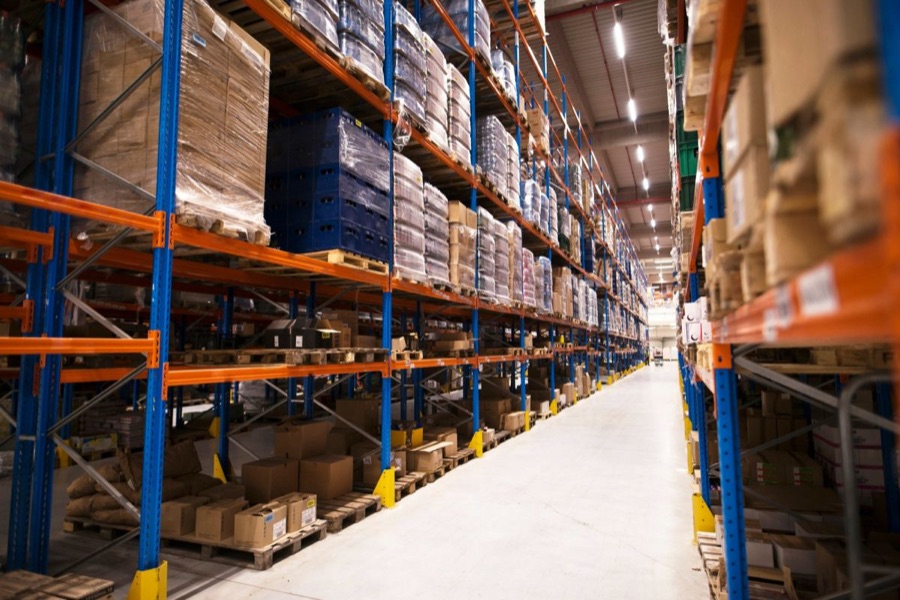
Inventory Warehousing: A 2026 Guide to Tracked Stock
Short answer: Inventory warehousing is storage with a register: every item that enters is barcoded, given a position and tracked, so the stock you own matches the stock you can see. Lozy runs tracked inventory warehousing from ₹4,499 per month, with the final rate set by the space you take and the handling you add - city, size and term decide where it lands.
Key takeaways
- Inventory warehousing is the difference between renting space and running a warehouse: the space arrives with SKU-level records, a live stock view and routine cycle counts.
- Lozy's tracked inventory storage starts at ₹4,499 per month, billed monthly, while plain warehouse space starts at ₹12 per sq ft per month if a floor is all you need.
- Every SKU or lot is barcoded at inbound and given a position, so stock levels update as goods are received, moved and picked.
- Spreadsheets drift silently; a tracked register is corrected by cycle counts that surface a discrepancy while it is still small enough to explain.
- Tracked stock can also ship, because pick, pack and dispatch run off the same live positions, so stock leaves the shelf and the record together.
- Where you already use your own SKU codes, the register maps to them, so your reports read like your own system's output.
Most businesses do not lose stock because somebody steals it. They lose it because the record and the shelf stopped agreeing and nobody noticed for a month. A box was never registered. A pallet was moved and never re-scanned. A row in a spreadsheet was quietly overwritten by a newer count. By the time the gap becomes visible it has a hundred possible explanations and not one you can act on.
Inventory warehousing exists to close that gap. This guide explains what tracked inventory storage covers, who needs it, how the billing is put together, how the system works with your own SKU codes, and what the first month looks like. Everything here comes from Lozy's own service and facility information, plus public Government of India sources for the tax, standards and customs points.
What inventory warehousing means
Inventory warehousing is storage with a system. Every item that enters is barcoded, given a position and recorded. From that moment the register - not memory, and not a spreadsheet on somebody's laptop - is the source of truth about what sits on the racks.
That is the whole difference between renting space and running a warehouse. Plain warehouse and godown space gives you four walls and a lock. Inventory warehousing gives you the walls plus the tracking: SKU-level records, a live view of what is on hand, cycle counts, and the pick, pack and dispatch that moves stock out when orders arrive.
Why spreadsheets drift and a register does not
Spreadsheets work until they don't. A count drifts quietly. An item disappears between two rows. A listing keeps selling a product the shelf no longer holds, and the first person to find out is the customer.
The cost of that drift is not the missing item. It is the cancellations, the marketplace penalties, the replacement sent by air to keep a promise and the apology emails - costs that arrive one at a time and never appear on the same line as the stock loss.
A tracked warehouse fixes the cause rather than the symptom: the record updates when the goods move, not when somebody remembers to update it.
Who needs tracked inventory storage
Tracked storage is not for everybody. If you own three items that never move, a locked room and a key is the cheaper answer. It is for businesses where the quantity on hand is a number somebody acts on:
- E-commerce sellers whose listings have to match physical stock, because an oversell is a cancellation and a cancellation is a rating.
- Distributors carrying hundreds of SKUs across several brands, where stock has to be found without a call to whoever packed it.
- SMEs that have outgrown spreadsheets and sticky labels, tired of a count that takes a weekend and is still wrong on Monday.
- Brands supplying retail while selling online, where the same unit must not be promised to two buyers on the same afternoon.
- Businesses storing high-value lines where shrinkage is not an option: electronics, spares, tools, contract stock.
- Anyone holding lot-controlled goods, where it matters not only how many units you have but which consignment they came from.
If you recognise yourself above, read on. If not, plain storage will cost you less.
How inventory tracking works, step by step
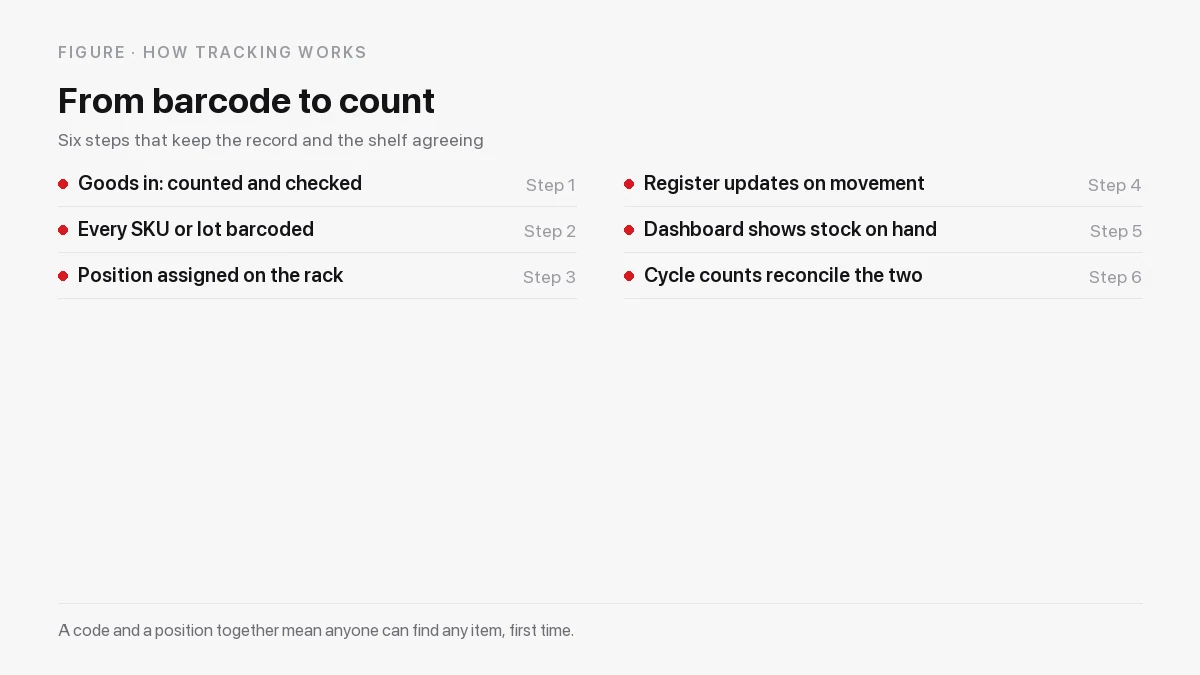
Tracking is not a dashboard you buy; it is a sequence you follow every day, in the same order, for every item.
- Goods arrive. Inbound stock is unloaded, counted against the paperwork and checked for damage before anything is put away.
- Everything is barcoded. Each SKU or lot is labelled at inbound with a code that identifies it uniquely, whether it is one unit or a pallet of them.
- A position is assigned. The item gets a named location - a rack, a bay, a bin - so it can be found by someone who has never handled it before.
- The register updates. Stock levels change as goods are received, moved and picked, instead of being reconciled at month-end.
- The dashboard shows the position. What is on hand is visible without a walk to the racks and without a physical count.
- Counts keep it honest. Cycle counts compare the record against the shelves, and differences are corrected while they are still small enough to explain.
Miss one step and the chain breaks. Barcoding without a position leaves you searching. A position without a record leaves you guessing. A record without counts slowly turns into fiction.
Barcodes, SKUs and storage positions
A barcode is only useful if it identifies the right thing. In a tracked warehouse the code distinguishes the item and, where the business needs it, the lot or batch it came from as well. Two boxes of the same product from two consignments can carry two codes, so a quality question about one is answered without quarantining both.
The storage position is the other half of the pair. Knowing you hold four hundred units is useful; knowing they sit in bin C-12 of rack 9 is what turns a stock figure into a dispatch. Code plus position means any person on the floor can find any item, and any report can locate it without asking anyone.
For goods under a product standard, storage and handling also have to respect the applicable Indian standards, and the reference point is the Bureau of Indian Standards. A tracked register makes that easier to evidence, because lot numbers and dates sit on the record.
What the dashboard answers
A dashboard earns its place by answering the everyday questions of a stock business without a walk to the racks. There are three, and they are always the same three.
- How much of each SKU is on hand right now? One number per item, not a range and not a guess.
- Where does it sit? So a replacement, an audit or a dispatch knows which shelf to visit.
- What moved in and out, and when? The audit trail behind every number - not just what the count is but how it got there.
Those answers have to arrive before the decisions do, so a listing, a purchase order or a customer reply can be written off the register rather than off memory.
Cycle counts and audits: keeping the register honest
A register is only as good as its corrections. Instead of one exhausting annual stocktake that freezes the warehouse and produces a discouraging list, routine cycle counts compare the record against the shelves in small, regular slices.
When the two disagree, the difference is investigated while it is small. A short floor stack. A mis-scanned label. A pick that took two units and recorded one. Each of those is a two-minute correction in a cycle count and a month-long mystery in an annual one.
Over time the counts change behaviour as well as numbers: when everybody knows the shelf is checked regularly, labels get scanned properly the first time and the register stops drifting on its own.
Working alongside your own SKU codes
Most businesses arrive with codes: a naming scheme, labels already printed, a catalogue the team knows by heart, and a store platform that speaks in your own SKUs. Replacing all of that to suit a warehouse is the wrong trade.
Where you already run SKU codes and labels, the warehouse follows your naming. The register maps to your codes rather than the other way round, so your store view, your reports and the racks refer to the same item the same way, and stock reports read like your own system's output.
What inventory warehousing costs
Inventory warehousing with Lozy starts at ₹4,499 per month, covering tracked storage for a starting catalogue - the SKU register, cycle counts and the pick-and-pack that moves stock out. That figure is a starting point, not a flat rate for every business.
The price follows two things: the space your stock occupies and the handling it needs. A seller holding a hundred units across two SKUs and a distributor holding thousands across hundreds are not doing the same job, and it would be dishonest to quote them the same number. City, footprint size and term also move the rate.
One tax point is worth settling before you sign. Warehouse rent and warehousing services attract GST, and whether you can set off input credit depends on your registration and how the invoice is raised; the current rules sit on the GST portal. If your business is registered as an MSME, the classifications and schemes that apply are set out by the Ministry of MSME. Ask for the GST treatment in writing and compare quotes on the same basis, or you are comparing two different numbers and calling one of them cheaper.
The comparison that matters is not Lozy's figure against a competitor's. It is the cost of tracked inventory storage against the do-it-yourself stack it replaces: rent, labels, counting hours, unexplained shrinkage and the customer apologies you cannot bill to anyone.
How the inventory bill is built up
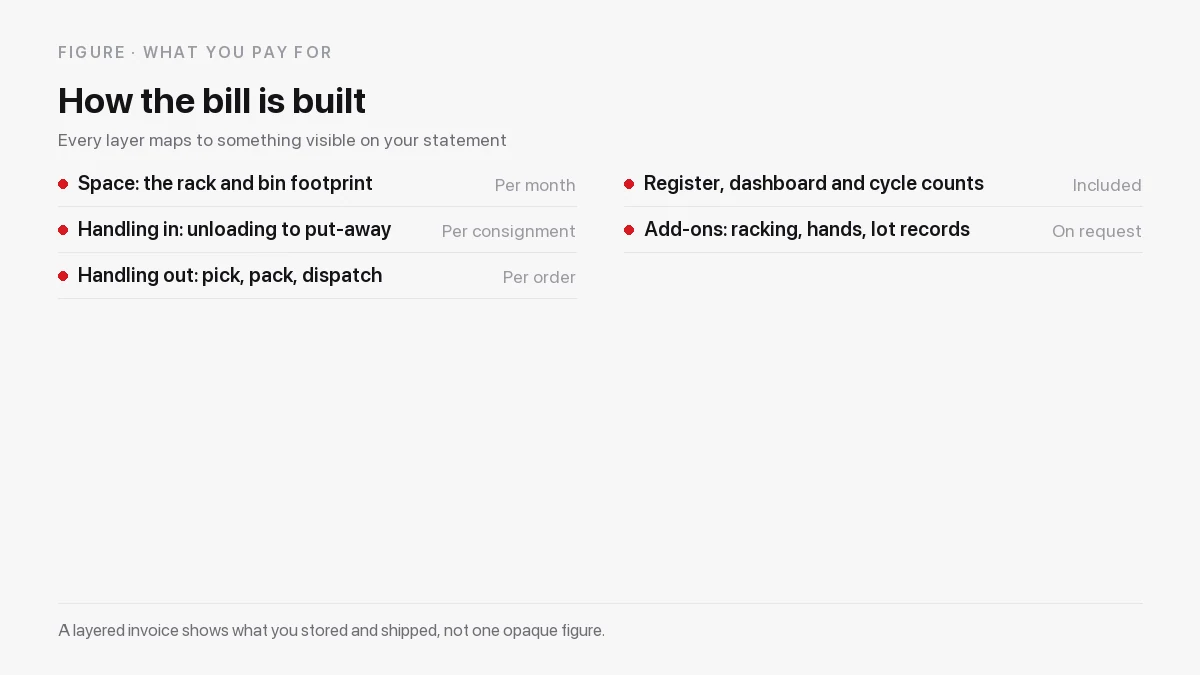
Inventory pricing is layered, and each layer maps to something you can see on your own statement. Nothing here is a hidden fee; a warehouse does several jobs at once, and a good invoice shows them separately rather than rolling them into one number.
| Price layer | What drives it | What it covers |
|---|---|---|
| Space | The rack and bin footprint your catalogue needs | Tracked storage positions held for your stock |
| Handling in | The consignments you actually receive | Unloading, counting, barcoding and put-away |
| Handling out | The orders you actually ship | Picking against live positions, packing and dispatch |
| Register and counts | The tracking the service runs for you | SKU records, the live dashboard and cycle counts |
| Add-ons | What the month actually demanded | Extra racking, extra hands, lot or batch records |
Read your first invoice against those lines and the number stops being mysterious: if handling is high, that is your volume, and if space is high, the warehouse is holding the stock you asked it to hold. The layers move with your business, which is why the pricing is built this way.
Storage that can also ship
Tracked stock is half the chain. The other half is outbound, and it only works cleanly if both halves share one register. Because orders are picked against live stock positions, pick, pack and dispatch run from the same view you are reading.
That is not a small detail. Where storage and dispatch are separate systems, stock leaves the shelf one day and the record catches up the next, and during that gap the same unit can be promised twice. Sharing one register means stock leaves the shelf and the record together.
For a business selling online, this is often where tracked storage pays for itself, and the e-commerce warehousing and fulfilment service covers the same ground from the order side.
What the first month looks like
Inventory storage proves itself quickly, which is worth knowing before committing to anything longer than a month.
- Week one. Every SKU is registered, barcoded and shelved, and the dashboard shows what the racks hold rather than what the spreadsheet remembered.
- Week two. The first pick-and-pack cycle runs against live stock positions.
- Weeks three and four. The first cycle count runs and the register is reconciled against the shelves.
By the end of month one the numbers match, and the answers to where, how many and since when arrive before the questions harden into problems. That is the honest test of tracked inventory storage: your own reports stop surprising you.
When to move to a tracked warehouse
The move is rarely a spreadsheet decision; it is a pattern you notice.
- Your count takes a weekend and is still wrong on Monday.
- You keep finding items you forgot you owned, and missing items you were certain about.
- A listing sells something the shelf does not hold, and the customer finds out first.
- Dispatch has become a search - somebody walks the racks for a SKU the system says is somewhere.
- Two people keep different numbers for the same item, and neither can say which is right.
None of those are failures. They are size, and it is the record that has to change: tracked inventory warehousing changes it in one move rather than in another year of patching spreadsheets. If the pressure is seasonal, seasonal warehousing covers the peak without a standing commitment; for a single one-off consignment, short-term storage from ₹699 per week is the lighter answer.
How to choose an inventory warehousing partner
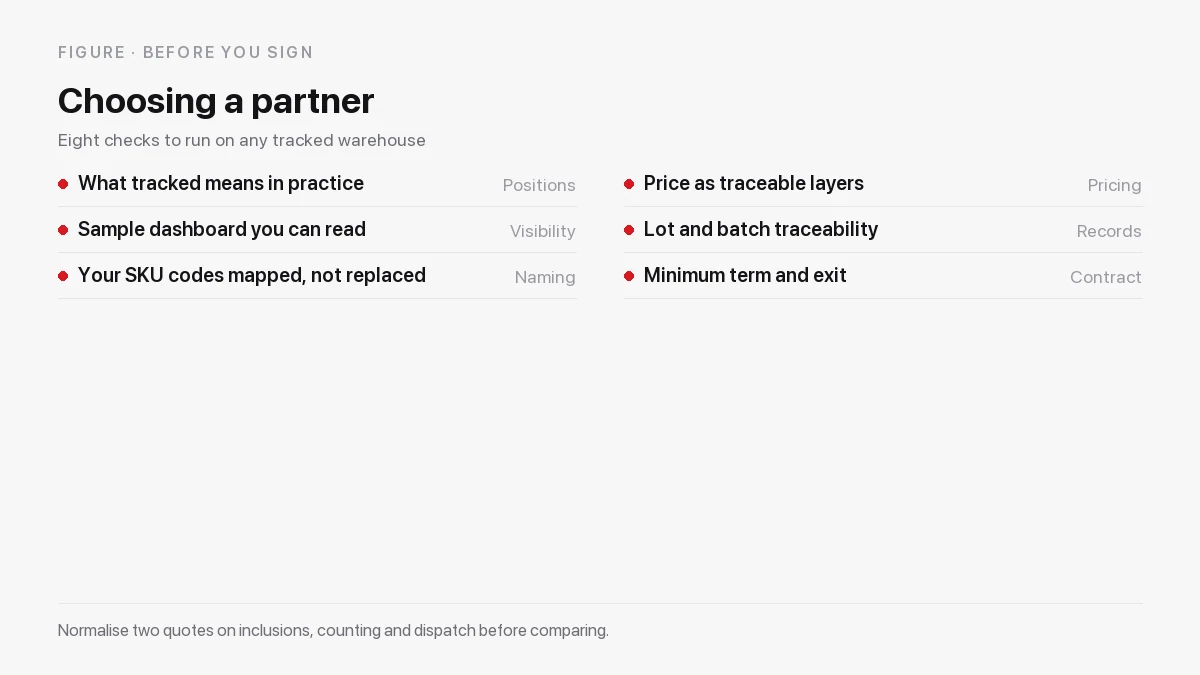
Work through this list before you sign anything. It is the checklist we would want a business to apply to us, which is why it starts with the least flattering question.
- Ask what "tracked" means in practice. Barcoding is a starting point. Ask whether items get positions, whether the register updates on movement, and whether cycle counts run on a stated schedule.
- Ask to see a sample dashboard. If you cannot read your own stock position from it, the dashboard is decoration.
- Confirm how your codes are handled. The register should map to your SKU naming, not force your team onto somebody else's.
- Ask how the price is built. Space, inbound handling, outbound handling and counts should be separate lines you can trace.
- Check the dispatch path. If orders are picked against live positions, ask how quickly a pick becomes a dispatched parcel.
- Ask about lot and batch records. If you ever have to trace a consignment, this question decides whether you can.
- Look at the minimum term. A monthly renewal suits a moving catalogue; a long lock-in suits almost nobody.
- Meet your named contact. One person who answers questions is worth more than a call centre, especially in month one.
Before you compare two quotes, normalise them: same inclusions, same counting frequency, same dispatch promise. A rate that looks cheaper usually is not, once those sit on the same line. The warehouse listing shows what is live if you would rather see the space first.
| Question | A spreadsheet and a rented room | Tracked inventory warehousing |
|---|---|---|
| Stock view | What you can see on the shelf | A live register of what is on hand |
| Accuracy | Drifts until the next big count | Corrected by routine cycle counts |
| Finding an item | Ask whoever packed it | Look up the position and walk to it |
| Dispatch | A search, then a manual update | Picked against live positions |
| Shrinkage | Noticed at year-end | Surfaced while it is still small |
| Peak | More stock than system | Extra racking and hands added for the event |
Mistakes businesses make with inventory storage
Most of the problems we see come from a short list, and each is cheaper to avoid before signature than after.
- Tracking only the expensive items. Partial tracking is how discrepancies are born - a box that was never registered is the box nobody can find.
- Treating the register as a report rather than a rule. If updates are optional, the register decays and stops being worth reading.
- Buying on price per square foot alone. For a stock business the cost that matters is per unit handled and per dispatch, not per foot held.
- Skipping the cycle count cadence. A register that is never checked is a spreadsheet with better formatting.
- Renaming everything to suit the warehouse. Forcing your team to relearn items creates errors in the first month and friction long after.
- Moving stock in mid-season. A transfer is a project: count it, agree a cut-off, and move it outside your busiest week.
If you need the wider picture, the Lozy services list sets out what sits alongside tracked storage.
Locations and the network behind them
Where your stock sits decides how quickly it moves and what the freight costs. For most businesses in north India a single well-placed base covers a large share of demand, with courier networks doing the last leg - but it should be a decision you make.
Lozy's network covers 77+ warehouses and more than 1 million sq ft of live space across nine city hubs, centred on Delhi NCR and the surrounding belt, with storage space in Jaipur. Tracked storage runs from facilities such as the Lozy Jamalpur Distribution Center in Haryana, the warehouse in Dwarka for business and 3PL in New Delhi, and shedded space in Manesar and Kherki Daula on the Gurugram side.
If you only need the floor, warehouse and godown space starts at ₹12 per sq ft per month. See the location pages for New Delhi, Gurgaon and Haryana, and the warehousing guides for each service in turn.
How Lozy helps
Lozy runs inventory warehousing as one service, with the space and the tracking in the same contract: SKU-level records with barcoding, named storage positions, a live view of what is on hand, cycle counts that reconcile the register against the shelves, the register mapped to your own codes, and the pick, pack and dispatch that moves stock out against those positions.
It starts at ₹4,499 per month, billed monthly, with the final price following the space you take and the handling you need. If you are still comparing, the wider Lozy services list covers commercial warehousing among others. Where the goods are imported, customs bonded warehouse space stores them before duty is paid: under Indian customs law, administered by the Central Board of Indirect Taxes and Customs, dutiable imported goods can be held in a licensed bonded warehouse with duty becoming payable when they leave it for the market, and those movements are declared electronically through ICEGATE, Indian Customs' national trade portal.
Whatever you choose, the honest test is simple. When somebody asks how many you have and where they are, can you answer in a minute without walking the floor? If you can, the register is doing its job.
Storing something, or just comparing?
Tell us what you need to store and where. We reply with availability and a price — usually the same working day.
About the author
Lozy Editorial Desk. This guide was written by the Lozy Editorial Desk, the in-house team that covers warehousing, self storage, logistics and customs/EXIM topics for lozy.in. We write from Lozy's own service and facility information and from public, citable sources, and we do not publish invented statistics or reviews.
Sources. Tax, standards and customs points were taken from public Government of India sources: the GST portal (gst.gov.in), the Bureau of Indian Standards (bis.gov.in), the Ministry of MSME (msme.gov.in), the Central Board of Indirect Taxes and Customs (cbic.gov.in) and ICEGATE (icegate.gov.in). Service, pricing and facility details are Lozy's own.
Last updated: 11 October 2026. Have a question the FAQ below does not answer? Call +91 93547 12345 or email care@lozy.in.
Need warehousing or storage in India?
Request a free, tailored quote in under 2 minutes — free pickup, no lock-in.