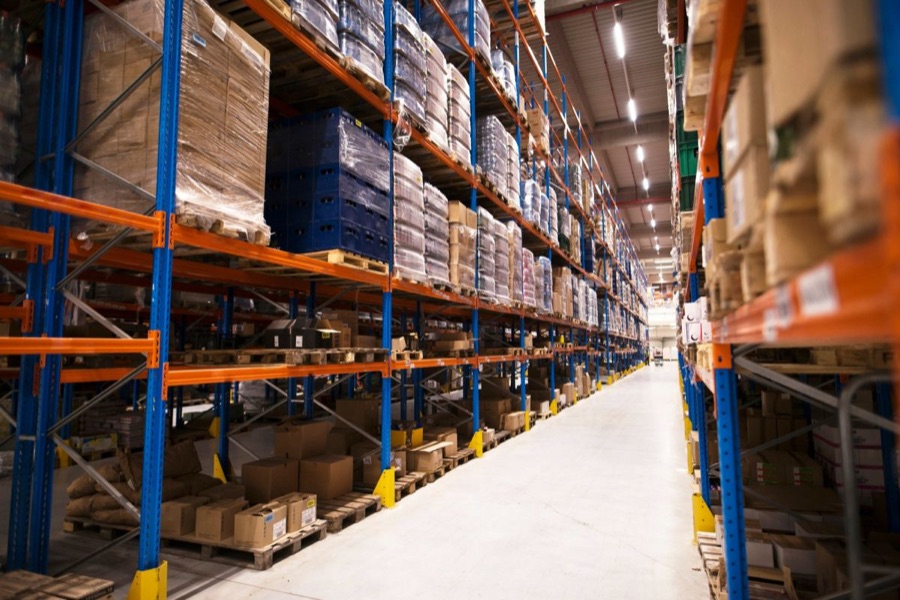
Long-Term Warehousing: A 2026 Guide to Storing by the Year
Short answer: Long-term warehousing is storage planned in quarters and years rather than weeks, for belongings or stock that will not be touched often but must stay safe, dry and accounted for. Lozy long-term warehousing starts at ₹1,199 per month, runs from six months upward, and locks the monthly rate for the term you commit to. The final rate depends on city, size and term.
Key takeaways
- Long-term warehousing suits goods whose next move is genuinely far off — a home kept intact while you work abroad, a family between postings, or business stock and records going into an archive.
- Plans start at six months and run to several years, and Lozy long-term storage starts at ₹1,199 per month, with the lowest monthly rates on six-month, one-year and multi-year commitments.
- The monthly rate is locked for the plan rather than repriced along the way, so a long stay is never exposed to a renewal increase.
- Scheduled check-ins note the condition of the goods, and the inventory written at packing stays the single source of truth for insurance and retrieval.
- Deliveries are raised as requests rather than visits, and you can nominate an authorised family member or representative in advance.
- Climate-controlled options and insurance cover are available for the length of the term.
What is long-term warehousing?
Long-term warehousing is storage planned in quarters and years rather than weeks. It is for belongings or stock that will not be touched often but must stay safe, dry and accounted for the whole time they are away.
The arrangement runs on the same warehouse discipline as any other Lozy booking. What changes is the pricing: plans begin at six months and run upward, and the monthly rate rewards the commitment.
Long-term warehousing suits NRIs keeping a home's furniture and appliances while working abroad, families on long postings, and businesses archiving equipment, fixtures or records after a change. The pattern in each case is the same: the goods matter, the date you need them again is far off, and a monthly arrangement you renew forever is the wrong shape for the job. Anything perishable, anything you reach for weekly, or anything needing vault-grade custody belongs elsewhere.
Who plans storage by the year
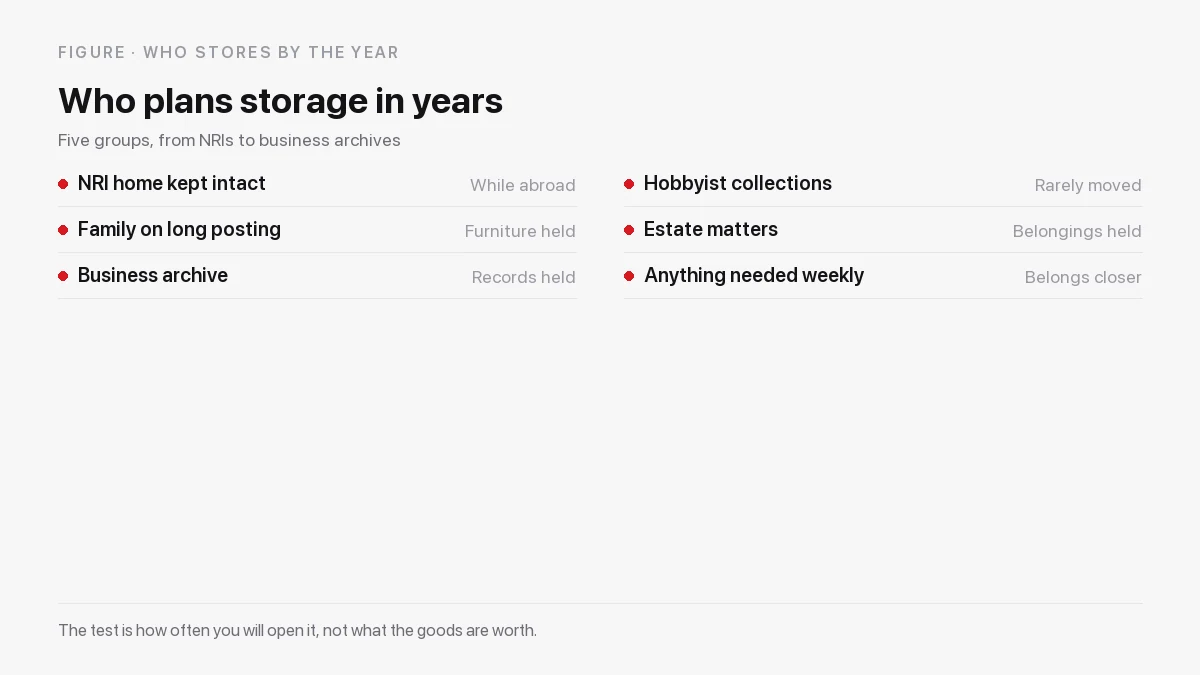
Long-term storage is chosen by people whose plans are already measured in years. Five groups account for most of it.
- NRIs. A home's furniture and appliances kept intact while you work abroad, so that returning does not mean buying everything twice.
- Families on long postings. Transfers, deputations and foreign assignments that run for months and years, where sending furniture back and forth costs more than it is worth.
- Businesses archiving. Equipment, fixtures or records put aside after a change — a shift, an upgrade, a merger or a move into smaller premises.
- Hobbyists and collectors. Pieces too valuable to keep moving, and too rarely used to earn a place in the flat.
- Estate matters. A household's belongings held safely while arrangements are settled.
What these groups share is that nobody wants to manage their storage. They want one decision, trusted for years, with a way to check on the goods and get something back — which is why the plans run in six-month, one-year and multi-year terms.
What long-term plans include
Every long-term plan carries the same set of commitments:
- Locked-in pricing. The monthly rate is fixed for the plan and is not repriced along the way.
- The lowest per-month rates. Six-month, one-year and multi-year commitments carry the best monthly rates Lozy publishes.
- Periodic check-ins. The goods are inspected on a schedule and their condition noted, so problems surface as notes rather than as surprises.
- Remote management. Deliveries can be requested, and the plan extended or ended, from anywhere.
- Climate-controlled options. For instruments, artwork, electronics, leather and anything else that dislikes heat and damp.
- Insurance cover. Available across the term, sized to the contents rather than to a guess.
Notice what is missing: there is no separate rider for each line, no annual repricing clause, and no requirement that you be in the country to use the plan. The inclusions are the product.
What long-term warehousing costs
Long-term warehousing with Lozy starts at ₹1,199 per month. The longer the commitment, the lower the monthly rate, which is what makes six-month, one-year and multi-year plans the best value — and the rate you agree is locked for the term.
Say "from" and mean it: a long-term warehousing quotation in one city and the same commitment in another are not the same number, and neither is a small footprint and a large one. The final rate depends on city, size and term, so ask for a figure against your own list.
The comparison worth keeping is not stored-versus-stored but what the alternatives cost across the same years: rent on rooms you do not use, replacing goods at future prices, or moving everything twice.
How the locked rate works
A locked rate means the monthly figure you agree at the start is the figure you pay for the whole plan, not repriced along the way and not moved because a market moved. On a term that runs for years, that quiet is worth as much as the discount.
What changes the rate
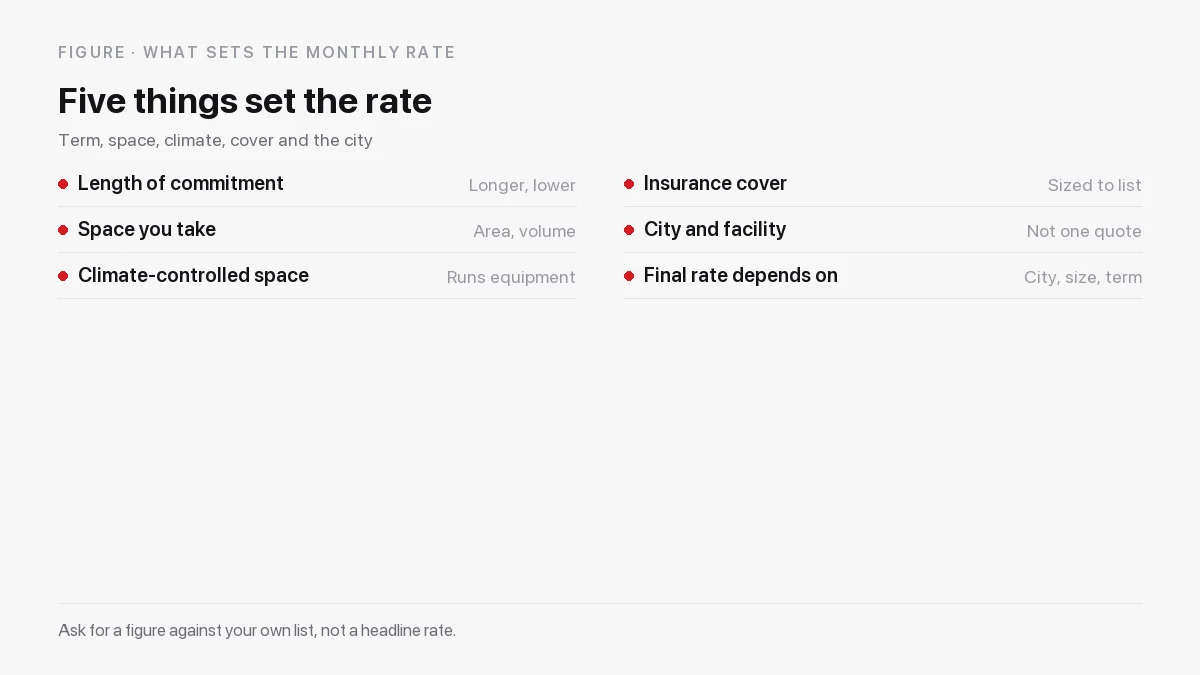
Four or five things move the monthly figure, and they are the reasons two people quoting the same service get different numbers.
| What you choose | What it does to the monthly rate |
|---|---|
| Length of commitment | The longer the term, the lower the monthly rate — six-month, one-year and multi-year plans carry the best value |
| Space you take | Footprint and volume set the base cost, just as they do for a godown or a self storage unit |
| Climate control | A climate-controlled space runs equipment a standard one does not, and is priced accordingly |
| Insurance | Cover across the term is sized to the value of the contents, so it moves with your list |
| City and facility | The same term in two cities is not the same quotation |
Ask how GST is treated on the invoice while you are asking about the rate. The rules on registration and tax invoices are published on the official GST portal, and a plain answer now prevents an awkward question at month two.
Long term vs rolling short cycles
Long-term storage is not merely a cheaper month; it is a calmer one. Rolling short cycles re-price every renewal, re-paper every extension and re-ask every question, so every renewal is a fresh chance for the number to change.
For goods whose next move is genuinely far off, moving them onto a long-term plan is the difference between storing something and managing it endlessly — and that settled pace is what long-term warehousing is for. The same logic holds for businesses: archived assets on a settled arrangement cost less attention as well as less money, which is what an archive is supposed to do.
Short cycles do have their place. Short-term storage starts at ₹699 per week and fits a gap of weeks — between two homes, during a renovation, across a project window. The mistake is using a weekly product for a multi-year need.
Duty and customs supervision of imported goods sits with the Central Board of Indirect Taxes and Customs, so keep the paperwork with the goods.
Warehouse or self storage for a long stay
Long-term warehousing answers a question about duration. Warehouse, self storage and personal storage answer a question about format. Decide the format first, then the term.
The format question is simple. Racked or floor space for stock and equipment is a godown or warehouse. A lockable unit holding home contents, furniture and boxes is self storage. A household's whole contents during a move sits closer to household warehousing.
| Format | Billed as | Starts at | Choose it when |
|---|---|---|---|
| Warehouse or godown space | Monthly, by area | From ₹12 per sq ft per month | Stock, equipment or racked goods that occupy floor space |
| Self storage | Monthly, per unit | From ₹999 per month | Home contents and belongings in a lockable unit of your own |
| Short-term storage | Weekly | From ₹699 per week | Weeks, not quarters — a gap between two addresses |
| Long-term warehousing | Monthly rate locked for the term | From ₹1,199 per month | Six months and beyond, with a fixed rate and scheduled check-ins |
Every figure above is a floor, not a quotation: costs start there and the final rate depends on city, size and term. Compare the full range on the services page or see what is available near you on the warehouse listing page.
Archives and home contents
The two long-term use cases look identical on a rate card and behave differently in practice: a home archive is a fixed list, while a business archive grows and occasionally needs a carton pulled out.
Where the long-term list is mostly paper — files, records, certificates — document storage is built around that single job. Stock that still turns belongs in inventory warehousing or business warehousing, since both are wired for goods that move. The test is not the value of the goods but how often someone will ask for them. Anything opened more than once a quarter is not an archive; it is working stock in the wrong home.
Storing a home from abroad
Distance changes what you need from storage: fewer visits, clearer records, and people who answer when you call.
The photo inventory taken at check-in and the periodic visits cover the three questions remote owners actually ask — what is there, how is it holding up, and how do I get something back.
Deliveries are raised as requests rather than visits, and whoever collects them locally can be authorised in advance, so nothing waits on your being in the country. Keep the file that ties the plan together too: the signed inventory, the list of approximate values, the authorised collector's details and the plan's start and end dates. If the goods were originally imported, the Directorate General of Foreign Trade is the body that administers India's foreign trade policy and licences, and goods still under customs control belong on the customs bonded warehouse route.
What we check while it stays with us
Long storage is mostly quiet, but it is not unattended. Units have scheduled check-ins, insurance can cover the term, and the inventory stays the single source of truth for everyone involved.
That is why a realistic list at packing time is worth more than a hopeful one. If the inventory says four cartons of kitchenware and the unit holds seven, every later document is wrong: the cover is under-sized, a retrieval takes longer than it should, and a check-in note you cannot reconcile is worse than no note at all. Check-ins are also why we ask you to keep contact details current: a changed phone number is nothing until the day someone needs to reach you.
Setting up years of storage properly
Long storage is decided in an afternoon and lived with for years, so the setup of a long-term plan deserves an extra hour. None of the four steps delays the move; all pay out the first time someone needs to check, claim or collect.
- Write the inventory honestly at packing. The list is what insurance, retrieval and peace of mind all run on.
- Record approximate values for the goods worth covering, so the insurance is sized to the contents, not to a guess.
- Flag anything that needs climate control — instruments, artwork, electronics, leather.
- Nominate an authorised family member or representative for visits and deliveries, so nothing waits on a flight.
If the archive is a business one, it helps to know how the definition of a small enterprise is drawn: the Ministry of MSME publishes the current criteria, which matters when you are deciding whether archived equipment counts as a business asset or as a cost of moving.
The inventory that sizes everything else
The inventory is not paperwork. It decides the space you book, the cover you buy and the speed of the first delivery request, and it is the only document that lasts for the whole term.
Write it room by room for a home or bay by bay for a business, with counts and a short description of anything bulky, fragile or valuable, and an approximate value beside anything worth covering. Keep a copy where you can reach it from anywhere. A second pass after packing closes the gaps: count what is in front of you and photograph the loaded space.
Climate control and insurance
Four categories most often need more than a dry room: instruments, artwork, electronics and leather. Paper swells and warps with damp, screens and batteries dislike heat, and leather and wood move as the air does. If you are storing a guitar, a set of paintings, a rarely used laptop or a box of family photographs, ask for a climate-controlled option when you book rather than a year later.
Insurance is the other half of the same decision. Cover is available across the term and should be sized to the contents, so ask plainly what is covered and what is not. Lozy also offers cargo liability cover for goods that travel, which is a separate question from cover for goods at rest.
Nominating a representative
Name one person, and a backup, who can visit and collect on your behalf, and give their details at booking rather than at the moment of need. That single line on the form is what makes a plan genuinely remote: they can walk the space, sign for a delivery, and confirm that the carton on the list is the carton in hand.
Coming back: ending, extending or delivering
Long plans end the way they run — quietly. When a return date firms up, deliveries are scheduled against your move-in calendar rather than the warehouse's convenience, and split deliveries cover the cases where the new home is ready before the paperwork is. Splitting a return is normal: a kitchen, a bedroom and a storage room do not all become usable on the same day.
Ending is the same motion in reverse. You clear the space at your own pace, close the plan when the last item is out, and nothing pursues you afterwards. The long-term warehousing terms are settled before the first carton arrives precisely so that the ending is uneventful.
Extending a plan
Extending is the simplest of the three: the plan rolls on at the same locked rate, with no penalty and no renegotiation. It helps to extend before the term runs out rather than after, particularly when a posting has been stretched — a little notice keeps the goods where they are, on the rate you agreed, instead of turning a settled decision back into a decision.
Mistakes that cost years of storage
Most long-term storage problems come from the same short list, and every one of them is avoidable before the first box goes in.
- Booking a term you cannot justify. A plan from six months upward is priced for commitment. If the goods may come home in eight weeks, take a weekly arrangement and move onto a long-term plan when the date is real.
- Writing a hopeful inventory. A list that flatters the load mis-sizes the space and the cover, and it is the first thing anyone reads during a claim.
- Skipping the climate question. Instruments, artwork, electronics and leather want stable conditions; say so at booking, not at the first check-in.
- Leaving no way in without you. No authorised collector on file means every delivery waits for you to be in the country — the exact problem storage was meant to solve.
- Storing what you still use. Anything needed more than once a quarter belongs close by; a long-term plan rewards a list that will genuinely sit still.
- Letting the record go stale. A changed address, phone number or representative matters only on the day someone needs to check or collect — and then all of it does.
The pattern is simple: long storage is decided fast and lived with slowly, so the hours spent on the setup are the cheapest part of the term.
Where Lozy long-term warehousing is
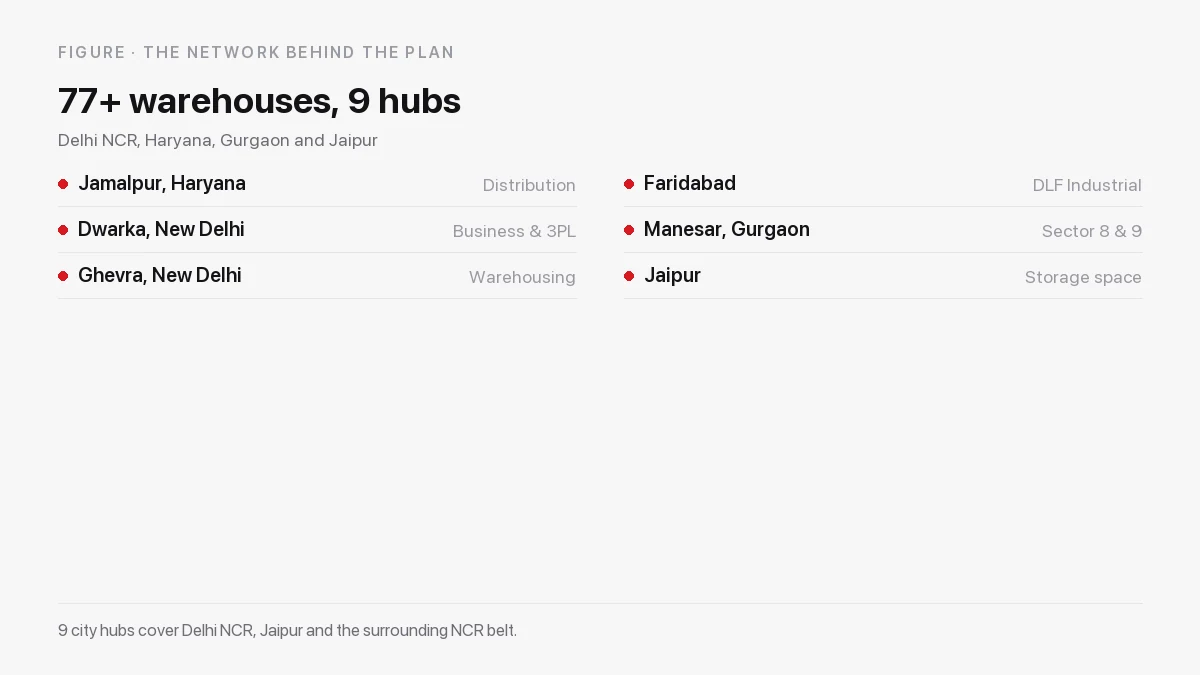
Lozy runs 77+ warehouses across the network with over 1 million square feet of live space, spread over 9 city hubs covering Delhi NCR, Jaipur and the surrounding NCR belt. Long-term plans sit inside that same network rather than in a one-off site.
The facilities you can name today include Lozy Jamalpur Distribution Center — Haryana, the Warehouse in Dwarka for Business and 3PL — New Delhi, the Warehouse in Ghevra Metro 2 - Lozy Warehousing Company — New Delhi, the Warehouse in Ghevra Metro - Lozy Warehousing Company — New Delhi, the Factory and Warehouse Space in Faridabad (DLF Industrial Area 2) — Haryana and the Warehouse in Kherki Daula, Gurugram — Gurgaon. The Manesar cluster adds the Warehouse in Manesar Sector 8 — Gurgaon, the Warehouse in Manesar M-Zone, Sector 9 — Gurgaon and the Warehouse in Manesar, Gurugram — Gurgaon.
For belongings rather than stock, the network includes Self Storage for Home and Business in Dwarka Sector 26 — New Delhi, the Self Storage Unit in Dwarka Sector 27 — New Delhi and Storage Space in Jaipur — Jaipur.
The city picture is on the New Delhi, Gurgaon and Haryana location pages, and every site is listed on the warehouse listing page.
How Lozy helps
Lozy takes a problem with no good short-term answer — goods that matter, a return date years away — and turns it into one monthly figure that stays put. Tell us what you are storing and where you are, and we match a space, a facility and a locked rate.
Long-term warehousing starts at ₹1,199 per month for six-month, one-year and multi-year terms, with locked-in pricing, scheduled check-ins, remote management, climate-controlled options and insurance cover available for the term. Because the same network runs warehouses and self storage, a plan that needs to change shape is a one-line conversation rather than a new provider — whether that means moving onto a self storage unit or taking warehouse space for rent by area.
If you want to see what the goods actually sit in first, the services page compares the range and the Lozy blog carries more background on storage, logistics and customs. When you are ready, send us the list — rooms for a home, bays for a business — and tell us what needs climate control, what needs cover, and who else should be authorised to collect.
Storing something, or just comparing?
Tell us what you need to store and where. We reply with availability and a price — usually the same working day.
About the author
Lozy Editorial Desk. This guide was written by the Lozy Editorial Desk, the in-house team that covers warehousing, self storage, logistics and customs/EXIM topics for lozy.in. We write from Lozy's own facility and pricing information and from public, citable sources. We do not publish invented statistics, ratings or reviews.
Sources. Pricing, sizes, inclusions and facility details are Lozy's own published information — long-term warehousing from ₹1,199 per month, warehouse and godown space from ₹12 per sq ft per month, self storage from ₹999 per month and short-term storage from ₹699 per week, with rates depending on city, size and term. External links point to official Indian government resources — the GST portal, the Central Board of Indirect Taxes and Customs, the Directorate General of Foreign Trade and the Ministry of MSME — for the reader's reference rather than as a substitute for professional advice.
Last updated: 11 October 2026. Have a question the FAQ below does not answer? Call +91 93547 12345 or email care@lozy.in.
Need warehousing or storage in India?
Request a free, tailored quote in under 2 minutes — free pickup, no lock-in.