Personal Storage in Delhi NCR: A Complete 2026 Guide
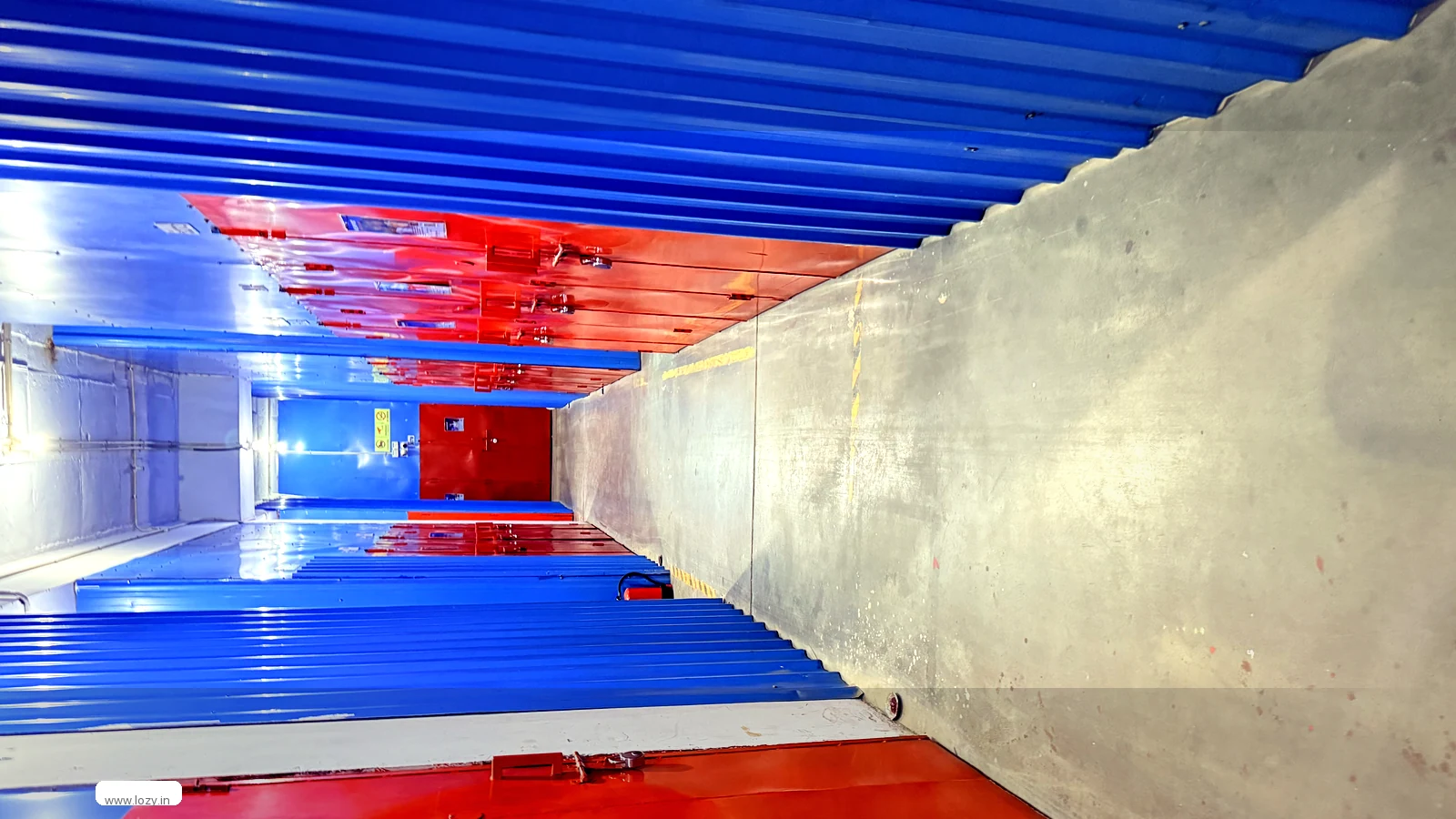
Short answer: Personal storage is a small, private, lockable space you rent by the month for the belongings your home has run out of room for — the books, sports gear, luggage, quilts and collections that never had a proper home. Lozy's personal storage starts at ₹999 per month for a locker or a mini unit, billed monthly with no lock-in, and the final rate depends on the city, the size you take and how long you keep it.
Key takeaways
- Personal storage is rented by the month, not bought, and the unit is yours alone — you hold the PIN and you come and go as you like.
- Sizes run from a locker for documents and small collections, through a mini unit that takes cartons, sports bags and two or three suitcases, up to a room-sized space for a bedroom's worth of furniture.
- Lozy's range starts at ₹999 per month for lockers and mini units, billed monthly, so you are only ever committed to the month you are in.
- Free doorstep pickup across Delhi NCR applies on bookings of 30 days or more, and you can always drop your things off yourself instead.
- Climate-controlled units suit books, electronics and instruments, and insurance cover is available as an add-on.
- If you are between two sizes, list your big items first and size up — getting it right at booking beats paying for two units later.
What is personal storage?
Personal storage is a small, private space for the belongings a home has run out of room for. Think of the books, sports gear, instruments, collections, luggage and out-of-season clothes that never had a proper home. You rent it monthly, you hold the PIN, and you come and go as you like.
The Lozy range starts at lockers and mini units and steps up through cupboard- and room-sized spaces, all inside the same monitored facilities used for household and business storage. That last point matters more than it first appears. A personal unit is not a shed at the end of a lane; it sits inside a working, watched site, which is why a bicycle, a box of family photographs or a camera bag can live there without a worry at the back of your mind.
If you are trying to decide where your things should live, the simplest framing is this: personal storage buys back the space a home is missing, one month at a time, without a move and without a sale. Nothing you own needs to be thrown away or sold cheaply just because there is no room left for it.
What people keep in personal storage units
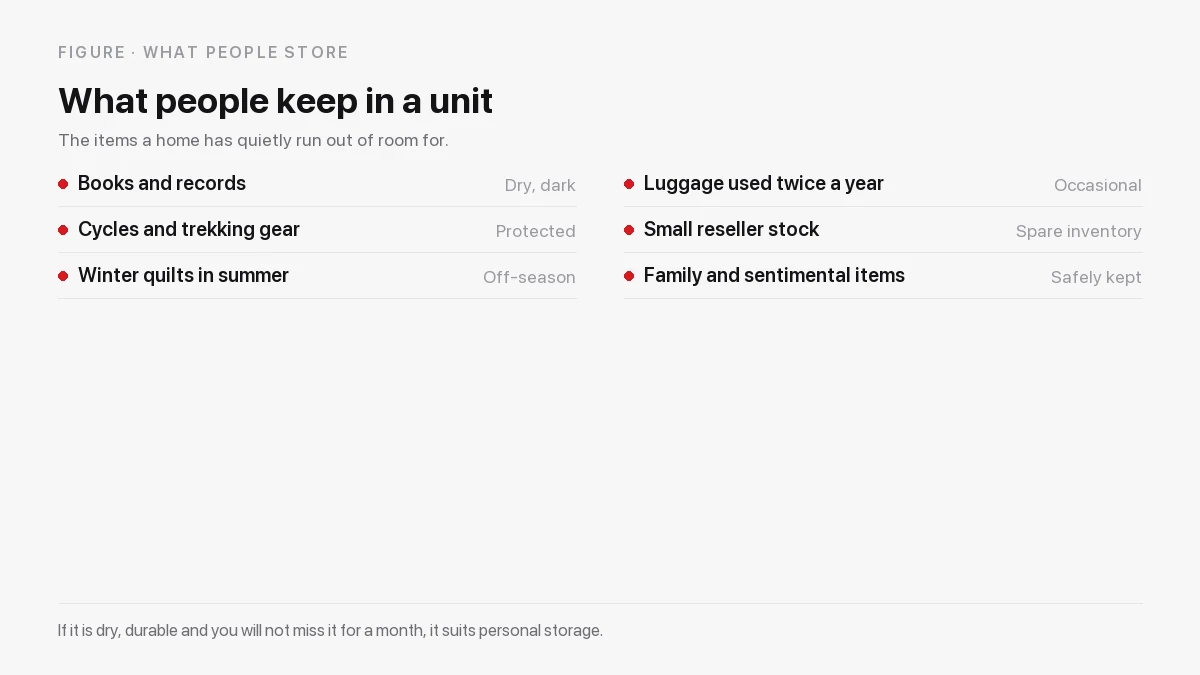
The list is longer than most people expect, and it is remarkably consistent from one household to the next:
- Book, manga and record collections — kept dry, dust-free and out of the sun.
- Sports gear: cycles, cricket kits, trekking and camping equipment.
- Luggage sets that come out twice a year.
- Winter woollens and quilts through the summer months.
- Childhood, family and sentimental items that deserve better than a loft.
- Small trading stock — resellers and creators keeping spare inventory.
Look at that list and the pattern is obvious. These are things you want to keep, use occasionally and no longer have a sensible place for. None of them deserve to be thrown away, sold cheaply or crammed into a cupboard that will not close.
If the spare stock you are storing is imported rather than made locally, duty and customs supervision sit with the Central Board of Indirect Taxes and Customs, so keep the paperwork with the goods. If you run a small reselling operation out of your unit, the Ministry of MSME is the official source on what counts as a micro-enterprise.
What personal storage is not right for
Honest scope saves everyone a wasted trip. Things you need to reach weekly, anything perishable, and items requiring vault-grade custody are better off elsewhere — a cupboard at home or a specialist custodian.
For everything else, the rule of thumb is simple. If it is dry, durable and you will not miss it for a month at a time, personal storage suits it. If a category is unclear, ask before booking. We would far rather confirm a question than store the wrong thing well.
Choosing a size
Most of the value of personal storage comes from paying for the right amount of space — no more, no less. The choice usually comes down to how you will use the unit, not simply how much you own.
Locker, mini unit or room
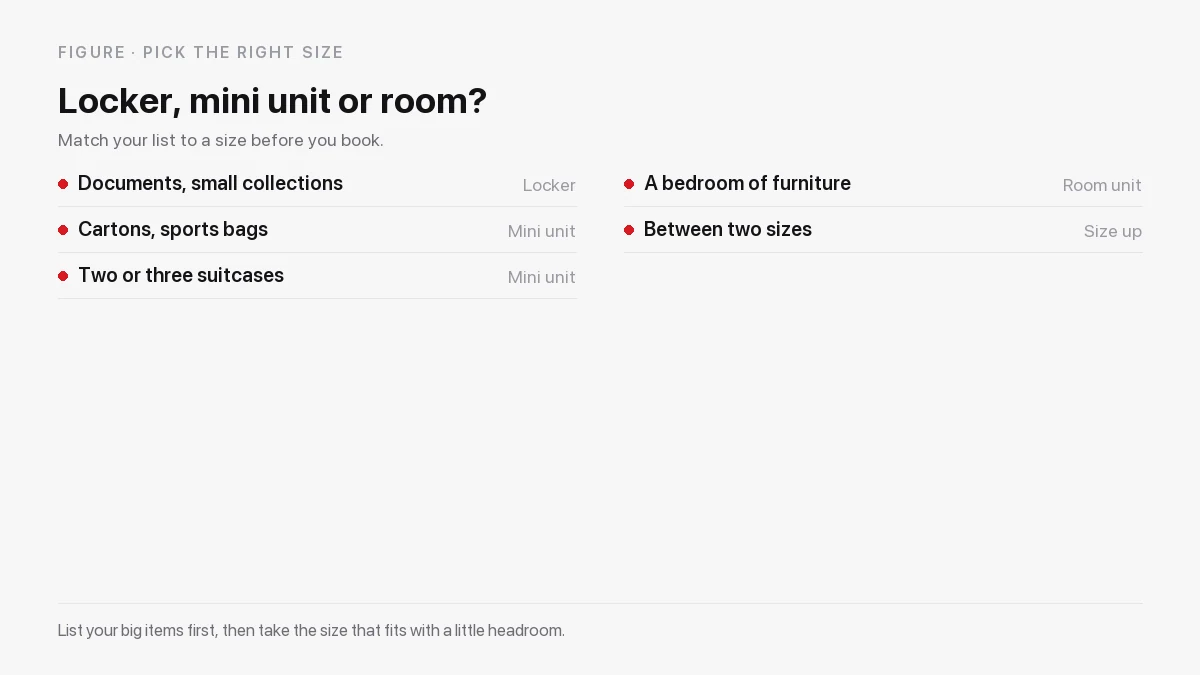
- A locker suits documents, small collections and anything you touch a few times a year.
- A mini unit — think a large cupboard — takes cartons, sports bags and two or three suitcases.
- A room-sized unit holds a bedroom's worth of furniture and boxes if the need grows.
The three sizes map onto three kinds of user. A collector with boxes of records and a file of certificates wants a locker. A family between homes, packing away a season's quilts and two suitcases, wants a mini unit. A household that has moved to a smaller flat, left with a spare bed and a stack of cartons, wants the room-sized unit until the rest of the plan settles.
| Size | Best for | Typical contents | Starting rate |
|---|---|---|---|
| Locker | Documents and small collections | Boxes of papers, records, certificates | From ₹999 per month |
| Mini unit | Cartons, gear and luggage | Sports bags, seasonal clothes, two or three suitcases | From ₹999 per month |
| Room-sized unit | A bedroom's worth | Furniture, boxes and larger household items | Priced on size |
Treat the starting figure as the floor of the range, not a quotation: the final rate depends on city, size and term. If some of what you have is paperwork rather than gear, the dedicated document storage service is built around that single job.
The sizing rule that saves money
If you are between two sizes, list your big items first and size up. Getting it right at booking beats paying for two units later, and it beats a second move inside the same month.
Starting with the smallest honest size is the cheaper path. List the big items, estimate the boxes, and take the unit that fits that list with a little headroom — then resize only when the goods prove you wrong. A bicycle, a cricket kit and a set of trekking bags take more room than they look, and a mini unit that sounds generous on paper can fill faster than you think.
What personal storage costs
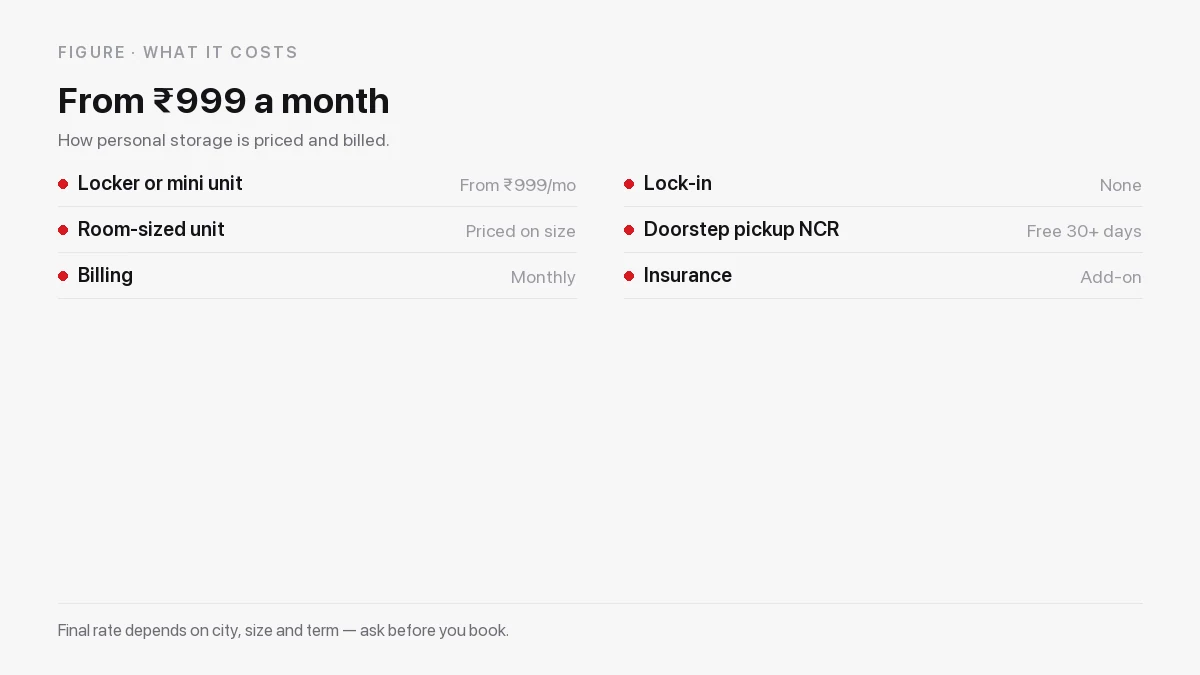
Personal storage with Lozy starts at ₹999 per month for lockers and mini units. The price follows the space you take and how long you keep it, and monthly billing means you are only ever committed to the month you are in.
Say "from" and mean it. A locker in one facility and a room-sized unit in another are not the same product: the ₹999 figure is the floor of the range, not a flat rate for every size and location.
How the price is worked out
Four things move the number, and all four are worth confirming before you book:
- The space you take. A locker, a mini unit and a room-sized unit are priced differently, because they are different amounts of floor and volume.
- How long you keep it. Personal storage is billed monthly, so a plan that runs six months and one that runs a year can carry the same monthly rate but a different total.
- Climate control. A standard unit and a climate-controlled unit are not priced the same, because one runs equipment the other does not.
- Add-ons. Doorstep pickup is free on bookings of 30 days or more, and insurance cover is an optional add-on priced separately.
Ask how GST is treated on the invoice as well. The rules on registration and tax invoices are published on the official GST portal, and a plain answer now prevents an awkward question at month two.
| Service | Billing | Starts at |
|---|---|---|
| Personal storage (locker or mini unit) | Monthly | ₹999 per month |
| Self storage (full size range, including furniture-sized units) | Monthly | ₹999 per month |
| Short-term storage | Weekly | ₹699 per week |
| Warehouse and godown space | Monthly | ₹12 per sq ft per month |
Compared with the alternatives
For small loads, personal storage is the cheapest way to buy space back at home. Compare it with moving to a bigger flat, or with the resale value of gear you would otherwise sell. A larger flat costs more every month and carries a longer lease; a new bicycle loses value the moment it leaves the shop. A personal storage unit holds what you already own for a monthly figure that starts at ₹999.
Personal storage is not free, but it is usually cheaper than the two alternatives people actually face — a bigger home, or a forced sale — and you still own the thing at the end of it.
What is included, and what costs extra
Every Lozy personal storage booking carries the same core, and the extras are clearly separated so there are no surprises on the invoice:
- Monthly booking with no lock-in. You are committed to the month you are in, not a year.
- PIN-protected access, unique to you. Your unit opens to your code, not a shared key on a hook.
- A monitored facility. Your belongings sit inside the same watched sites used for household and business storage.
- Free doorstep pickup across Delhi NCR on bookings of 30 days or more, or you can drop things off yourself.
- Climate-controlled options for anything sensitive to heat and damp.
- Insurance cover as an add-on if you want the goods protected, not just stored.
Climate-controlled options
Books, electronics and instruments are the three categories that most often need more than a dry room. Paper swells and warps with damp, screens and batteries dislike heat, and wooden instruments move when the air does. A climate-controlled unit holds the conditions steady, which is the difference between a collection that comes out as it went in and one that needs repair.
If you are storing a record collection, a rarely used laptop, a guitar or a set of photographs, ask for a climate-controlled option at booking.
Insurance as an add-on
Insurance cover is available as an add-on, and it is worth pricing even when you are confident your goods are safe. Ask plainly what is covered and what is not, and keep a simple list of what sits inside the unit with rough values. That list is useful in a claim and just as useful when you are deciding whether the cover is worth the money. Lozy also offers cargo liability cover for goods that travel, which is a separate question from cover for goods at rest.
Personal storage vs self storage
The two overlap, and that is fine. Personal storage zeroes in on small, private spaces for belongings, while self storage covers the full range of sizes — including units that hold a household's furniture.
The decision rule is short. If your list is bags, boxes and gear, take the locker or the mini unit. If a sofa and a fridge are on it, step up to the larger service. Both are rented monthly, both give you a PIN of your own, and both sit in the same kind of monitored facility, so the only real question is how much room the list needs.
Personal storage vs household storage
Household storage is what people reach for during a move, a renovation or a gap between two homes, when the whole contents of a flat need somewhere safe for a few weeks or months. Household warehousing is built for exactly that. Personal storage is the smaller, longer-running cousin: a private unit for the things a settled home has quietly outgrown.
The two often run side by side: a family shifts house, puts the furniture into household storage, and puts the bikes, quilts and boxed-up books into a personal unit that suits them for years. If a bed, a wardrobe or a sofa is the main event, look at furniture warehousing first; if the list is gear and boxes, personal storage is the fit.
How a booking works
A booking takes a single conversation about what you are storing, and goods can move in within days of it. There is no long process, no credit check and no stack of paperwork — you describe the list, we match a size, and you start.
Access and your PIN
Your access is PIN-protected and unique to you, which is the practical difference between personal storage and a shared godown. You do not ask a manager for a key, you do not rely on someone being on duty, and you do not have to explain why you are there. You come and go as you like, the way you would at a cupboard you own.
Moving in, moving on
Goods can move in within days of your first conversation. If the load is more than a car boot, free doorstep pickup across Delhi NCR applies on bookings of 30 days or more, or you load it yourself and drop it off.
Leaving is meant to feel as light as arriving. You clear the unit at your pace, close the plan when the last bag is out, and nothing pursues you afterwards. This should feel like a spare cupboard you can walk away from — not a contract you have to escape. That is the whole point of monthly billing with no lock-in.
Upgrades stay just as painless. Personal storage rarely stays the same size for long: a locker fills, a collection grows, a move adds furniture. You move up within the same facility, keep the same PIN, and shift the contents across once, not twice — sizing is not a decision you have to get permanently right at the start.
Where Lozy personal storage is
Lozy runs 77+ warehouses across the network with over 1 million square feet of live space, spread over 9 city hubs covering Delhi NCR, Jaipur and the surrounding NCR belt. Personal units sit inside that same network, so you are not booking a one-off site but a space inside a facility that already runs at scale.
The personal and self storage facilities on the network include Self Storage for Home and Business in Dwarka Sector 26 — New Delhi and the Self Storage Unit in Dwarka Sector 27 — New Delhi, with Storage Space in Jaipur — Jaipur serving the Jaipur hub. Around these, the network holds warehouse and godown space at Ghevra and Manesar, in Faridabad's DLF Industrial Area 2, at Jamalpur in Haryana and in Kherki Daula, Gurugram.
You can see the full list on the warehouse listing page, and the city-level picture on the New Delhi, Gurgaon and Haryana location pages. If you are storing for a shop or a small online business rather than a home, the same network also runs business warehousing and e-commerce warehousing.
Mistakes to avoid
Most of the trouble people run into with storage comes from the same short list, and all of it is avoidable with questions asked before the first box goes in.
- Booking a size by guesswork. Estimate the boxes, list the big items, and take the size that fits with a little headroom. A unit chosen in a hurry is a second move waiting to happen.
- Storing something you actually need weekly. Personal storage rewards things you will not miss for a month. A daily-use item in a unit kilometres away is an inconvenience, not a solution.
- Assuming everything can go in. Perishables and items needing vault-grade custody belong elsewhere. Ask about an unclear category before booking, not after.
- Skipping the climate question. Books, electronics and instruments want stable conditions. If your list includes them, choose a climate-controlled unit rather than hoping a dry room is enough.
- Forgetting what is inside the unit. Keep a list with rough values. It settles insurance questions and makes a claim straightforward.
- Packing badly. Overfilled cartons split, unlabelled boxes get opened uselessly, and heavy items stacked on light ones crush the bottom layer. A little care at packing saves a lot at unpacking.
Packing and protecting your things
Personal storage is a dry, monitored space, and most damage over a long stay comes from how goods were packed on day one rather than from the store itself. A small amount of discipline at the start pays off when you open the unit months later.
Boxes, labels and stacking
- Use strong, same-size cartons so they stack without toppling, and keep each box to a weight you can lift yourself.
- Label every box on the side that will face out, with its contents and a rough date, so you can find one without unpacking the stack.
- Put the heaviest boxes at the bottom and the fragile ones on top, and leave a small gap at the wall so air can move.
- Keep a written list of what is in the unit and where the big items sit. It is the same list you want for insurance.
Books, electronics and instruments
Books want flat boxes, not tight ones, and a dry unit rather than a sealed crate that traps damp. Electronics should be cleaned, powered down and stored with cables bagged and labelled; anything with a battery is better off in a climate-controlled unit for a long stay. Instruments want their cases, stable conditions and a little slack in the strings or tension. If you want to confirm how a product's own marking is defined, the national standards body, the Bureau of Indian Standards, is where such labelling rules are published.
For anything paper-heavy — certificates, business records, boxes of letters — the dedicated service is document storage, which is built around that single job rather than around gear and luggage.
How Lozy helps
Lozy takes a small, specific problem — a home with no room left — and turns it into a simple, monthly arrangement. You tell us what you are storing and where you are; we match a size, a facility and a rate, and you start from there. Because the same network runs warehouses, self storage and household storage, a unit that turns out to be too small is a one-line fix rather than a new provider.
Personal storage starts at ₹999 per month, billed monthly with no lock-in, with PIN-protected access, climate-controlled options and free doorstep pickup across Delhi NCR on bookings of 30 days or more. If your list is more home than gear, the full-size path runs through household warehousing; if it is spare stock for a shop, look at inventory warehousing; and if you need space for only a few weeks, short-term storage starts at ₹699 per week.
The whole range, including every size of unit and how it is priced, is set out on the personal storage page, and you can compare service types on the services page. More background on storage and warehousing sits on the Lozy blog. When you are ready, tell us the list and we will reply with availability and a price.
Storing something, or just comparing?
Tell us what you need to store and where. We reply with availability and a price — usually the same working day.
About the author
Lozy Editorial Desk. This guide was written by the Lozy Editorial Desk, the in-house team that covers warehousing, self storage, logistics and customs/EXIM topics for lozy.in. We write from Lozy's own facility and pricing information and from public, citable sources. We do not publish invented statistics, ratings or reviews.
Sources. Pricing, sizes, inclusions and facility details are Lozy's own published information. External links point to official Indian government resources — the GST portal, the Ministry of MSME, the Central Board of Indirect Taxes and Customs, and the Bureau of Indian Standards — for the reader's reference, not as a substitute for professional advice.
Last updated: 11 October 2026. Have a question the FAQ below does not answer? Call +91 93547 12345 or email care@lozy.in.
Need warehousing or storage in India?
Request a free, tailored quote in under 2 minutes — free pickup, no lock-in.