What Size Storage Unit Do I Need? (1BHK to 5BHK Guide)
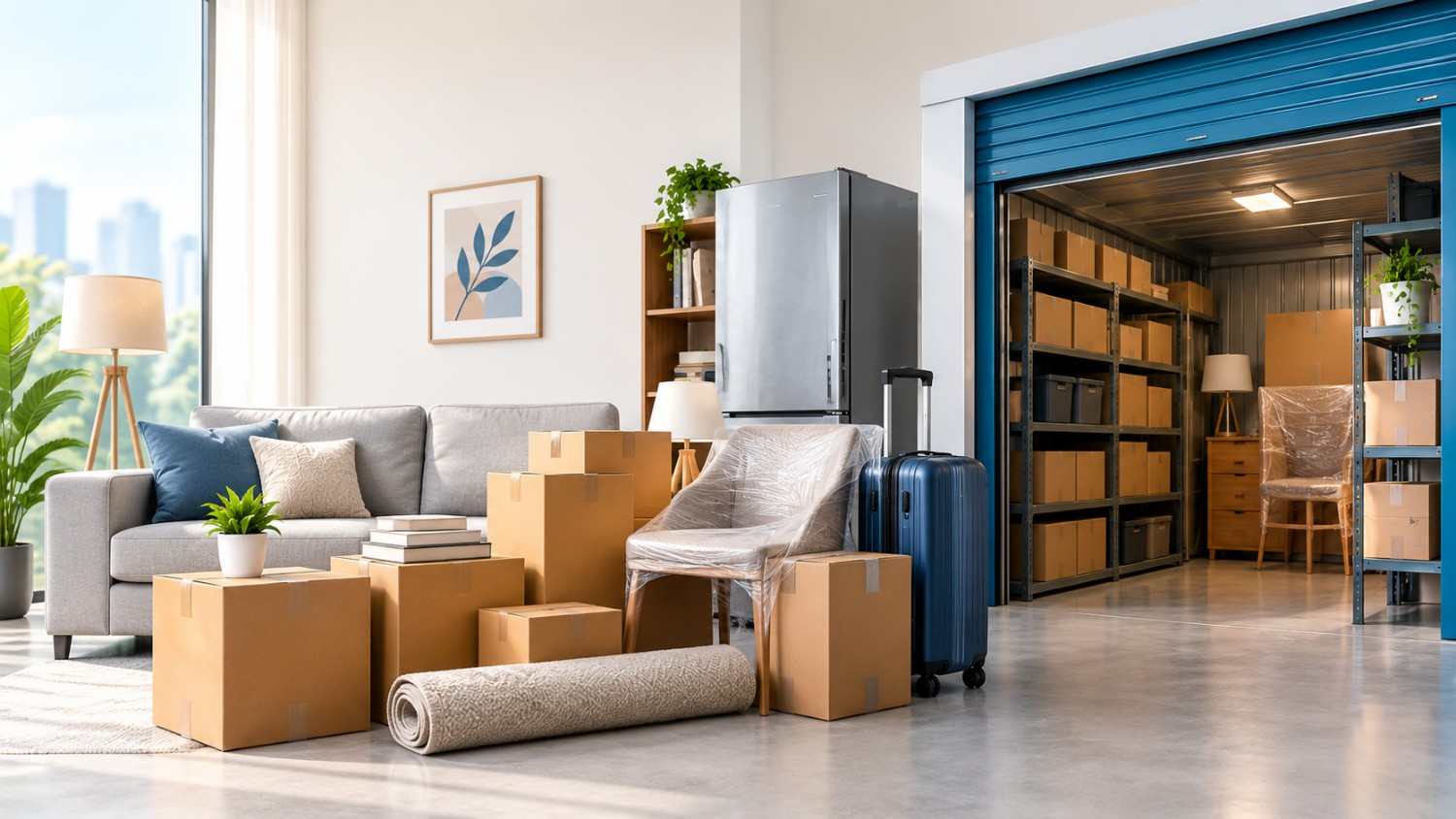
The first time you look for storage, the hardest part is usually not finding a facility, it is figuring out how much space you actually need. This storage unit size guide is designed for people comparing a 1BHK storage unit, 2BHK storage unit, 3BHK storage unit, 4BHK storage unit or 5BHK storage unit. It also answers common searches such as what size storage unit do I need and how much storage space do I need for 2 BHK, while covering self storage, self storage near me, personal storage units, household storage services, furniture storage, short-term storage units and long-term storage.
Here is the most important thing to know
before you start measuring: bedroom count is only a starting point. A furnished
2BHK with two beds, a large sofa, wardrobes, appliances and 30 cartons can need
far more room than a lightly furnished 2BHK. That is why a reliable storage
estimate should look at the actual belongings, how they are packed, whether
furniture can be dismantled, and whether you need access while the items are
stored.
Quick Answer: How Much Storage Space Do You Need?
For
planning purposes, use this as a starting point — not a fixed rule: a lightly furnished 1BHK may fit in a small or medium space; a
typical 2BHK often starts around a medium footprint; a full 3BHK usually moves
into the large category; and larger 4BHK and 5BHK households may need an
extra-large footprint or a managed household-warehousing plan.
|
Home |
Practical starting
range |
Lozy size to
consider |
Typical storage load |
When to size up |
|
1BHK |
25–100 sq ft |
Small 25 sq ft or Medium 100 sq ft |
Bedroom furniture, sofa, appliances, cartons |
Full furnishing, bulky sofa, many cartons |
|
2BHK |
100–200 sq ft |
Medium 100 sq ft; larger requirement may need Large |
2 bedroom sets, living/dining furniture, appliances, cartons |
Heavy furniture, extra appliances, high carton count |
|
3BHK |
200–400+ sq ft |
Large 400 sq ft |
3 bedroom sets plus living/dining and appliances |
Large wardrobes, extra rooms, bulky or fragile pieces |
|
4BHK |
400–625+ sq ft |
Large 400 sq ft or Extra Large 625 sq ft |
Multiple bedroom sets, living/dining, appliances and cartons |
Large home office, extra furniture, storage-room contents |
|
5BHK |
625+ sq ft |
Extra Large 625 sq ft or custom plan |
Full household with substantial furniture and boxes |
Very high volume, oversized items, regular retrieval |
Important:
These are planning ranges. They are not an
industry-wide BHK conversion. Storage providers use different buildings,
ceiling heights, service models and packing methods, so the same home can
produce different estimates.
Lozy Storage Unit Sizes: What the Available Footprints
Mean
Lozy currently lists four self-storage
footprints: Small — 25 sq
ft, Medium — 100 sq
ft, Large — 400 sq
ft and Extra Large —
625 sq ft. The right choice depends on what you are storing
rather than simply the number of bedrooms.
|
Lozy footprint |
Approx. area |
Best suited to |
Key point |
|
Small — 5 ft × 5 ft |
25 sq ft |
Documents, compact furniture, archived records, seasonal supplies |
Good when you have a small amount to store |
|
Medium — 10 ft × 10 ft |
100 sq ft |
Office furniture, equipment, cartons and moderate storage loads |
Useful middle ground for larger household or business needs |
|
Large — 20 ft × 20 ft |
400 sq ft |
Bulky furniture, office fixtures, warehouse overflow and large
inventory |
A serious step up in usable floor space |
|
Extra Large — 25 ft × 25 ft |
625 sq ft |
High-volume stock, large fixtures, equipment and extensive storage |
For large requirements where smaller footprints become restrictive |
1BHK Storage: When Is a Small or Medium Unit Enough?
A 1BHK is where people most often
overestimate or underestimate storage. If you are storing a few important
pieces — for example, a bed, mattress, a compact wardrobe, a small sofa and
cartons — a small footprint may be enough. If you are putting away most of a
furnished 1BHK, the medium 100 sq ft option is a more realistic starting point
to discuss with the provider.
The number of cartons matters. So does the
shape of the furniture. A dismantled bed frame is easier to organise than a
fully assembled bed, while a large sectional sofa can consume more practical
floor area than a simple two-seater. The smartest approach is to send a photo
or inventory list and get the size checked before committing.
2BHK Storage: How Much Space Do I Need for a 2 BHK?
If
you are asking, “how much storage space do I need for 2 BHK?”, start with your actual furniture rather than assuming every 2BHK
needs the same unit. A moderately furnished 2BHK may begin around the 100–200
sq ft planning range. Two beds and wardrobes, a sofa set, dining furniture,
refrigerator, washing machine, TV unit and packed cartons can quickly push the
requirement upward.
There is also a useful distinction between
storing a home temporarily and storing it for an extended period. For a
renovation, you may only need to remove large furniture and fragile items. For
a full relocation, you may be keeping almost everything. The second scenario
needs more capacity and a better loading plan.
3BHK Storage: What Size Storage Unit Do I Need?
For a fully furnished 3BHK, the large 400
sq ft category is a practical place to start a conversation. Three bedroom
sets, living-room furniture, dining furniture, appliances and cartons create a
very different storage load from a minimalist home.
This is also the point where internal
organisation becomes important. If you expect to retrieve a few items before
the entire household is returned, leave an accessible section instead of
packing the unit wall-to-wall. For a short renovation, you may also be able to
reduce the footprint by storing only bulky pieces and moving smaller items
elsewhere.
4BHK and 5BHK Storage: When Does Extra Large Make Sense?
With 4BHK and 5BHK homes, a simple
bedroom-count calculator becomes less reliable because larger homes often
contain more specialised furniture: home-office equipment, children’s
furniture, multiple appliances, large cabinets, exercise equipment or decorative
pieces.
For these requirements, the 400 sq ft Large
unit and 625 sq ft Extra Large unit are useful reference points, but a custom
inventory assessment is better than booking the biggest space automatically. A
managed household storage service can also be more practical when the
requirement is large and you do not need daily self-access.
The Most Accurate Way to Calculate Your Storage
Requirement
Want a better estimate before you ask for a
quote? Use the five-step method below. It takes less time than moving
everything twice.
1.
List the big pieces first. Beds, mattresses,
wardrobes, sofas, dining tables, cabinets, refrigerators, washing machines and
other bulky appliances should be counted before anything else.
2.
Count your cartons. Even an approximate number
helps. Ten large cartons and forty medium cartons represent very different
storage loads.
3.
Measure unusual items. Large sectional sofas, gym
equipment, display units, commercial fixtures and oversized cabinets can
distort a simple room-based estimate.
4.
Decide whether you need access. Dense storage is
efficient when you will not touch the items for months. Regular retrieval needs
an easier layout and may justify more space.
5.
Share photos with the provider. A short inventory
plus photos can produce a much better recommendation than the label “2BHK” or
“3BHK” alone.
Why BHK Size Alone Is Not Enough
Think of BHK as a shortcut, not a
measurement. Two identical 2BHK flats can have completely different storage
needs. One family may have built-in storage, a compact sofa and fewer
possessions. Another may have two large beds, a full dining set, multiple appliances,
wardrobes in every room and years of accumulated cartons.
Packing quality makes a difference too.
Flat-packed or dismantled furniture can use space more efficiently. Clearly
labelled cartons can be stacked and arranged more logically. On the other hand,
fragile items, awkward shapes and goods that need frequent retrieval can reduce
the amount of space you can practically use.
What If You Choose a Storage Unit That Is Too Small?
An undersized unit is not just
inconvenient. You may end up blocking the entrance, stacking fragile items too
aggressively, making retrieval difficult or moving part of the load to another
location. The cheapest monthly option is therefore not always the cheapest
overall option.
A small amount of extra space can be worth
paying for when it gives you safer packing, easier access and room to organise.
At the same time, avoid automatically choosing a large unit just because you
think empty space is harmless — you can end up paying for capacity you never
use.
How to Get More From the Same Storage Space
·
Disassemble beds, tables and
other suitable furniture before storage.
·
Protect upholstered and wooden
furniture with appropriate covers and moisture protection.
·
Use consistent carton sizes
where practical so boxes stack more neatly.
·
Keep a simple inventory and
label every carton on more than one side.
·
Place frequently needed items
where they are easier to retrieve.
·
Do not place heavy items on
fragile goods simply to save floor space.
Self Storage or Household Storage: Which One Fits Your
Situation?
The words may sound similar, but the
experience can be different. Self storage
generally makes sense when you want a defined storage space and a particular
access arrangement. Household
storage services can be more convenient when the main need is
moving, storing and later returning household belongings.
For individual belongings, personal storage units can
suit smaller, mixed personal storage needs. For sofas, beds and whole-home
furniture, furniture
storage is a more specific service category.
Short-Term vs Long-Term Storage
The right storage plan also depends on how
long you expect to keep your belongings. Short-term storage is useful
for situations such as a home renovation, temporary relocation or a move
between properties. For uncertain timelines, monthly plans can make more sense
because you are not forced to predict an exact end date. Long-term storage is a
better fit when belongings will stay out of the home for an extended period.
What Should You Check Before Booking a Storage Unit?
·
Usable size: Ask how much space
is actually available for your goods, not just the advertised area.
·
Access: Confirm when you can
visit or retrieve items and whether access is self-service or managed.
·
Security: Ask about CCTV,
controlled access, individual locks and how stored items are monitored.
·
Handling: Confirm whether
pickup, delivery, packing, loading and retrieval are included or charged
separately.
·
Billing: Check GST, minimum
term, renewal terms and any additional handling or transport charges.
·
Storage restrictions: Ask about
prohibited items. Lozy’s storage-unit pages, for example, note restrictions
around hazardous, flammable and perishable goods without prior approval.
When a Warehouse Makes More Sense Than a Storage Unit
A storage unit is not always the right
answer. If you are holding business stock, pallets, e-commerce inventory or
large quantities of goods,
business warehousing can be
a better fit. You may also want on-demand warehousing when
capacity changes with the season instead of staying constant all year.
The same principle applies to large
household moves: once the requirement becomes a high-volume operation, it is
better to compare the complete storage and handling model than to force
everything into a single “unit size.”
Why Lozy Is Useful for Storage Size Decisions
Lozy’s current storage pages list four
standard self-storage footprints and invite customers to share a photo or item
list so the team can confirm whether the size is sufficient before payment.
That inventory-first approach is exactly what a good storage-sizing process
should do: start with what needs to be stored, then match it to the available
space.
Lozy also operates storage and warehousing
solutions across Delhi NCR and a wider India network, including household,
personal, furniture, business and on-demand options. See Lozy storage units to compare the
available footprints, or use the relevant service page based on what you need
to store.
Final Takeaway
The best storage unit is not the largest
one and it is not necessarily the cheapest one. It is the smallest practical
space that can hold your belongings safely, without turning every retrieval
into a puzzle.
Use your BHK size to get a rough starting
point, but make the final decision from your furniture, appliances, cartons,
packing method and access needs. For a lightly furnished 1BHK, a small or
medium footprint may be enough. A typical 2BHK usually needs a medium-sized
conversation point, while a full 3BHK often moves into the large category. For
4BHK and 5BHK homes, larger or custom storage plans are usually more realistic.
Not sure where your requirement falls?
Share your item list or photos with Lozy and ask for a storage-size
recommendation before booking.
Need warehousing or storage in India?
Request a free, tailored quote in under 2 minutes — free pickup, no lock-in.