Warehousing in Haryana: The North-South Corridor, Costs and How to Pick a Node (2026 Guide)
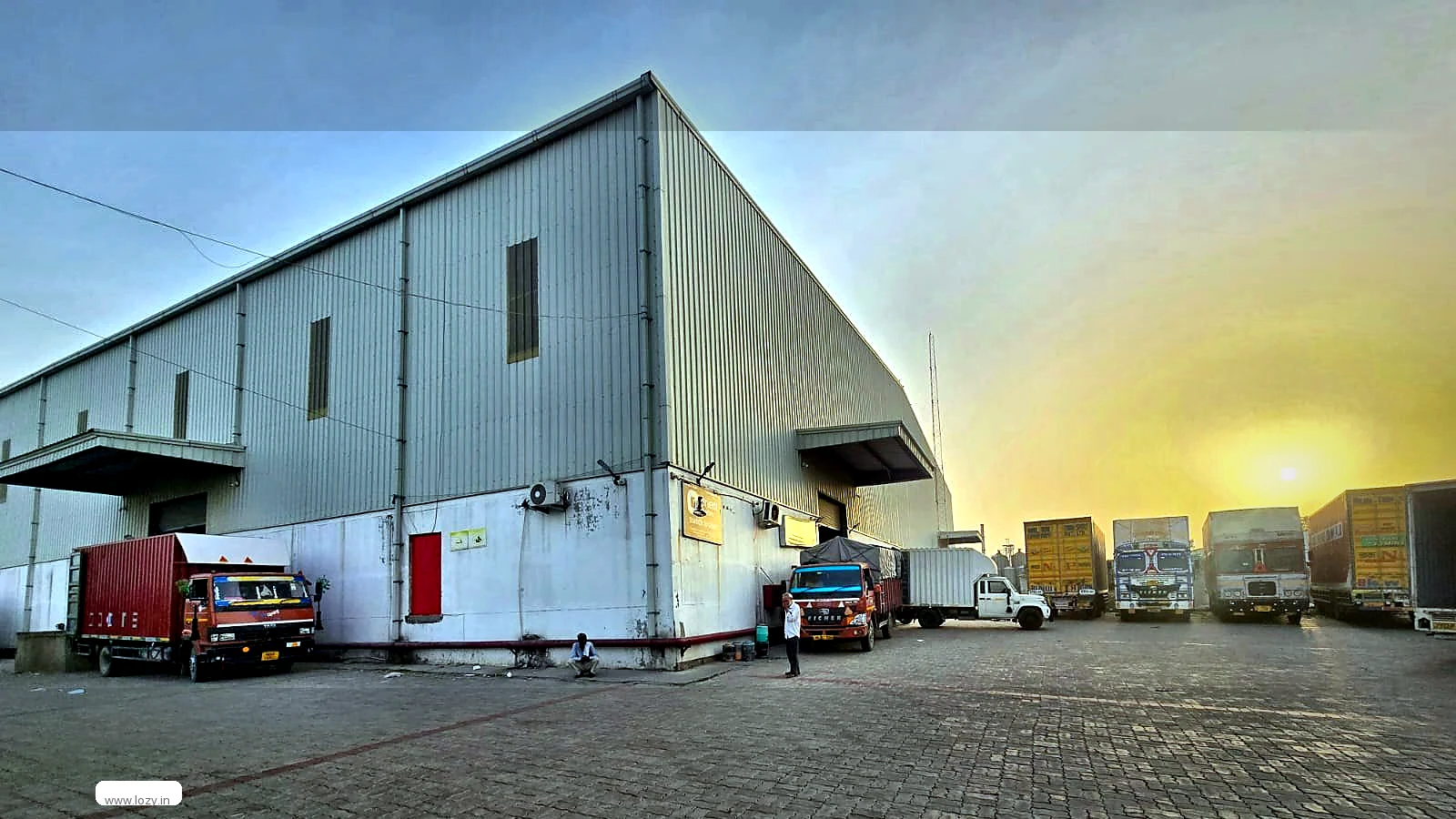
Haryana is where much of Delhi NCR's stock actually sits, because the state wraps the capital on three sides and the land outside the boundary can take a building the capital cannot. It is also Lozy's densest cluster: eight collection centres, from Ambala in the north to Faridabad in the south-east, with the Gurugram-Manesar belt in between. Space for rent starts at ₹12 per sq ft per month. On a state this long, the node you choose moves your transport bill more than the rate you negotiate.
Key takeaways
- Eight Lozy collection centres cover Haryana, among them Ambala, Dharuhera, Faridabad, Garhi Harsaru, Jamalpur and Sonipat.
- Two corridors organise the state: NH-44 (GT Road) running north through Sonipat and Murthal, and NH-48 with the KMP Expressway sweeping south and west past Dharuhera, Garhi Harsaru and Faridabad.
- Warehouse space for rent starts at ₹12 per sq ft per month, business and on-demand space at ₹14, and a long-term booking from ₹1,199 per month.
- The network runs 77+ warehouses and more than one million square feet of live space, billed monthly on a GST invoice with no long lock-in.
Haryana's role in NCR logistics is structural rather than fashionable. The state grew its industrial belt where the highways crossed, and the highways are still there: the Grand Trunk Road running north to Punjab, the Delhi-Jaipur road running south-west, and the KMP expressway arcing across the western edge to link them without a detour through Delhi. What a business rents in Haryana is, in practice, a position on one of those routes.
That is why the useful question is never simply "warehouse in Haryana". It is which stretch of which corridor puts your goods closest to the people who receive them, and which node's land, access and paperwork can actually support the building you need. This guide works through the state as a corridor, node by node, and sets out what the space costs and how to narrow the choice.
Why Haryana carries so much of NCR's freight
Haryana surrounds Delhi on the north, west and south, so a warehouse sited almost anywhere in the state can serve the capital's markets without entering it. That matters more than it sounds. Trucks moving goods into Delhi face entry timing restrictions and unpredictable congestion; a facility on the Haryana side of the boundary can hold stock, receive it and dispatch it while the capital sleeps and opens for business the moment the city does.
Land is the second reason. Large, level, truck-accessible plots still exist within an hour of central Delhi on the Haryana side, and they do not inside the capital. That is the plain arithmetic behind the state's bulk floorplates, dock-side sheds and third-party logistics operations: floor area per rupee is simply different once you cross the boundary. The belt from Kundli down through Sonipat, Gurugram, Dharuhera and Faridabad has therefore developed as one continuous industrial strip rather than a string of separate towns, and its warehouses are occupied by the same national brands and NCR distributors whichever node they sit in.
The National Highways Authority of India maintains the corridors the belt depends on, and their alignment explains almost every siting decision a business makes here.
The northern leg: NH-44 to Ambala
National Highway 44, the old Grand Trunk Road, leaves Delhi at Singhu and runs north through Sonipat and Murthal towards Karnal, Ambala and then into Punjab and Himachal Pradesh. For a business distributing north of Delhi, this is the spine. A truck on NH-44 is on the most direct route to Ludhiana, Jalandhar, Chandigarh and the hill states, which is why the warehouses along it cluster where the city limits end.
The other advantage of the northern leg is the junction at Kundli, immediately south of Sonipat, where the KMP Expressway meets the Eastern Peripheral Expressway. From that point a truck reaches Ghaziabad, Noida, Palwal or Manesar without touching Delhi traffic or Delhi's entry restrictions, which turns a north-side warehouse into an unexpectedly central one.
The western and southern legs: NH-48, the KMP and NH-19
NH-48 leaves Delhi through Gurugram and continues south-west through Dharuhera towards Jaipur, carrying the Delhi-Jaipur freight that makes the Rewari side of the state attractive to distributors serving Rajasthan as well as NCR. The KMP Expressway runs in a wide western arc, and its value is the thing businesses underrate before they use it: it connects the northern and southern corridors internally, so goods can move between Sonipat and Faridabad, or between Kundli and Manesar, without ever being routed through the capital.
On the south-east side, NH-19 - the old Mathura Road - runs through Faridabad towards Mathura and Agra. Faridabad's industrial legacy sits on that road, and the city remains the state's manufacturing address rather than a distribution one: more of its sheds serve production, component supply and assembly than pure storage.
Put the three legs together and Haryana is the only state from which a business can serve Punjab, Himachal, Rajasthan and the capital out of one network without paying for a building inside Delhi.
The corridor, node by node
Haryana's eight collection centres are not spread evenly, and the unevenness is the useful part. Each node answers a slightly different question, and a business that matches its answer to its own traffic saves money that no rate negotiation would have recovered. The Haryana location page carries the live coverage; the notes below are what each node is actually good at.
Sonipat and Murthal: the northbound answer
Sonipat district sits about 45 km north of Delhi on NH-44, with Murthal immediately to its south on the same road. Between them they hold the state's most direct position for anything moving towards Punjab, Himachal Pradesh, Uttarakhand or Jammu. The Murthal sheds are the ones a northbound distributor tends to settle on: high clear height for selective racking, a gated yard with room for a rigid truck to turn, and a fire NOC in place rather than pending.
Containerised cargo is the quieter advantage here. Two inland container depots lie within roughly 25 km of Murthal - the rail-linked terminal near Ganaur to the north and the Central Warehousing Corporation depot at Kundli to the south - and most Haryana warehouses sit far further from a depot than that. For an exporter whose drayage bill is a visible line, the difference is easier to measure than to argue about.
Garhi Harsaru: the export node
Garhi Harsaru, west of Gurugram on the NH-48 side, is where Haryana's container traffic concentrates. The inland container depot corridor there handles a large share of NCR's export and import cargo, and a business that ships regularly through it wants its stock within a short, predictable truck run rather than across the city. Space at Garhi Harsaru is therefore chosen for a reason that has little to do with rent per square foot: drayage time and cut-off times decide whether a consignment catches its sailing or its train.
It suits importers holding cleared cargo before allocation to orders, exporters staging consignments ahead of a cut-off, and NCR businesses that need a second position on the western side of the capital without moving their whole operation.
Dharuhera: the south-west gateway
Dharuhera sits on NH-48 between Gurugram and Rewari, on the stretch that carries Delhi-Jaipur freight and feeds the industrial estates of the Rewari-Bawal belt. A distributor serving Rajasthan, or one whose goods arrive from the Ahmedabad-Mumbai side, finds it convenient for the same reason the northern nodes suit Punjab: it is the first sensible stop in the right direction. Space here is typically bulk floor plate rather than fine racking, because the stock that lands in Dharuhera is usually palletised and moving again quickly.
Faridabad: the manufacturing node
Faridabad is the state's oldest industrial city and still its most manufacturing-heavy. Lozy runs space in Faridabad DLF Industrial Area 1 and Faridabad DLF Industrial Area 2, in the estate belt that has supplied Delhi's engineering, auto-component and consumer-goods trades for decades. A business choosing Faridabad is usually choosing it for production rather than distribution: component storage beside an assembly line, packaging material for a factory, finished goods waiting on a dispatch schedule.
Because the city is dense and old, access varies street by street. A shed on a wide estate road works for a trailer; one two turns deeper in may not. Checking how a container or a long trailer actually reaches the gate is more decisive in Faridabad than almost anywhere else in the state. Across the district, near the Sohna side, Lozy also operates at Village Jori, which broadens what is available south of the city.
Jamalpur: the NCR overflow
Jamalpur sits in the Gurugram belt, and the Lozy Jamalpur Distribution Center is the kind of space a business takes when its requirement is real but not permanent - a distribution centre for stock that will be reallocated, a festive season's worth of inventory, the overflow from a primary warehouse that is running hot. It sits close enough to Gurugram's customer base to keep delivery times short while pricing off land that the heart of the city no longer offers cheaply.
Ambala: the northern gateway
Ambala lies roughly 200 km north on NH-44, at the junction of the routes to Amritsar and to Shimla. As a collection centre it does something a Delhi-side warehouse cannot: it shortens the final leg into Punjab, Himachal Pradesh and Jammu and Kashmir, so stock that will not come back to Delhi can be staged closer to the customer. A business distributing across the whole north, rather than only NCR, often finds the state's northern centre pays for itself in a single lane's running cost.
| Node | What it suits | Corridor |
|---|---|---|
| Sonipat and Murthal | Northbound distribution, container drayage | NH-44 north |
| Garhi Harsaru | Export cargo, import staging | NH-48, ICD |
| Dharuhera | Rajasthan-bound freight, bulk pallets | NH-48 south |
| Faridabad | Manufacturing, components, packaging | NH-19, DLF belt |
| Jamalpur | NCR overflow, distribution centre | Gurugram belt |
| Ambala | Punjab and Himachal legs | NH-44 north |
Where the state's policy meets your warehouse
Two things decide whether a Haryana site is usable, and neither of them is the rent: whether the land is allowed to hold a warehouse, and whether the building's compliance is real. Both are settled before a single pallet arrives.
Land use, industrial estates and CLU
Industrial estates developed by the Haryana State Industrial and Infrastructure Development Corporation carry the land-use approvals a warehouse needs, which is why estates such as Rai and Kundli in Sonipat district became the addresses NCR freight gravitates to. Buying or leasing a plot outside an estate usually means dealing with a change-of-land-use process before anything else, and that timeline is measured in months rather than days. The HSIIDC publishes the estate and allotment rules, and Invest Haryana sets out the wider industrial and logistics policy framework for the state.
The practical consequence for a tenant is a simple question at the viewing: is the shed inside an approved industrial area or on land whose use has been converted, and can the owner show the paperwork? A warehouse on paper that is not allowed on the land underneath it is not cheaper - it is a future stop-work notice.
GST, registration and the invoice
Warehouse rent attracts GST, and a registered business can claim input credit on it when the invoice is raised properly in its own entity's name. That is the part worth insisting on before signing anything: is the rent invoiced with GST at the rate you see, will the document be a tax invoice, and will it separate storage from handling if your accountant needs that split. The rules are published on the GST portal, and your accountant can confirm how they apply in minutes.
For operators who issue and trade warehouse receipts rather than simply store goods, registration with the Warehousing Development and Regulatory Authority governs that instrument. A manufacturer renting managed space to hold its own inventory is not in that business, and needs the tax invoice rather than the registration. A cash rent handed over with no document looks cheaper in the month and costs more over a year, because none of it comes back.
Monsoon, drainage and the site visit
July to September is the season that separates a good Haryana site from a merely cheap one. A yard with poor drainage turns a loading dock into a problem for days: trucks cannot approach cleanly, goods get wet in transfer, and the floor near the doors stays damp. The checks are physical rather than contractual - plinth height above the surrounding grade, a paved or hard-standing yard instead of loose ground, a drain invert that runs away from the shed rather than towards it.
Visit the site after rain if you can. A photograph taken in October will not tell you what the gate looked like in August, and a landlord who has watched a monsoon at the property usually knows exactly where the water goes.
What warehousing in Haryana costs
Lozy publishes starting rates on its own service pages rather than quoting a single state average, because an average without its basis misleads more than it informs. The three numbers that matter most in Haryana, each attached to the service it belongs to:
- Warehouse for rent - from ₹12 per sq ft per month on the warehouse and godown space for rent page. This is the basis you use when you are pricing a floorplate by area, and it is the lowest of the three starting rates.
- Business and on-demand warehousing - from ₹14 per sq ft per month on the business warehousing page, for racked or floor space taken month by month with security, handling and invoicing included.
- Long-term warehousing - from ₹1,199 per month on the long-term warehousing page, for a fixed, smaller footprint held over a longer commitment, which is usually the cheaper way to keep the same goods in the same place for a year or more.
All three are starting rates, not quotes. Every charge is billed monthly and invoiced with GST, and none of them carries a long lock-in, so the space can grow for a peak and shrink again afterwards.
What moves the number in Haryana
- The node. Land under a shed on the Gurugram side and land under an equivalent shed near Ambala are not priced alike, and the difference shows up in the rent long before it shows up in the transport bill.
- The size taken. A racked area of a few shelves and a full bulk bay are different products, and the area you occupy is the single largest input to the rate.
- The term. A monthly booking and a long-term commitment price differently, and the longer one is usually the cheaper per month for the same footprint.
- The add-ons. Climate control, extra handling, packing material and insurance each move the figure, and it is worth describing your goods rather than asking for a generic warehouse, so the extras you are quoted are the ones you actually need.
Space in Haryana is quoted in more than one way, and mixing the bases is the fastest route to a bad comparison. Floor area is priced per square foot per month, shared and palletised arrangements per pallet, and a lockable unit per unit. Ask which basis each quote uses before you put the numbers side by side.
How to choose a node in Haryana
Work from your customer backwards to the shed, not from a cheap rate forwards. Check first which nodes have space today on the Haryana coverage page, then apply the sequence below - it is the one that catches the expensive mistakes early.
- Start with the corridor your trucks already use. If most of your outbound freight heads north, the northern leg of NH-44 is home. If it heads to Rajasthan or arrives containerised, the NH-48 side is. A node off your own trunk route adds a leg to every single movement.
- Measure the drive to your buyers, not to your office. Distance to the customer decides service; distance to where you happen to sit today decides nothing. Check the same run at the time of day your trucks actually leave.
- Confirm the approach road before the racking. A trailer needs width, height clearance and a turning circle. An estate road in Faridabad and an approach lane in Dharuhera are not interchangeable, and no interior photograph will show you the problem.
- Ask whether the container depot matters to you. If any part of your business exports or imports, the distance to the ICD changes the value of the node more than the rent does.
- Match the space to the goods. Racked height for fast-moving lines, bulk floor for heavy or slow stock, climate control only where the goods genuinely need it.
- Get the invoice answer in writing. GST treatment, the invoicing entity, the minimum term and the notice period belong in the quote before anything is signed.
Red flags in a Haryana warehouse deal
- No clear land-use answer. If the owner cannot say whether the plot is industrial or converted, the compliance risk is yours, not his.
- Fire compliance "coming". A NOC in hand and a NOC in progress are different buildings; fire clearance is routinely the longest item in a fit-out programme.
- Dock count described as "multiple". Demand a number. It governs how many vehicles can work the face at once and how fast goods actually move.
- A yard that holds water. Visit after rain, or ask directly how the yard behaved last monsoon.
- Cash rent with no tax invoice. Cheaper on the day, dearer across the year, and nothing to claim.
- No room to grow on the same site. Ask what the next size up looks like and where it is, because a business that outgrows a node pays twice for the move.
A worked example: one decision, two nodes
Take a representative case rather than a named customer. A Delhi-based distributor of kitchenware sells to retailers across Punjab, Himachal Pradesh and Haryana, and has been holding its stock in a rented basement in north Delhi. Volumes have grown to the point where the basement cannot take the pre-season consignment, and the trucks that collect from it spend the first hour of every run getting out of the city.
The business has two realistic Haryana options: space near Murthal on NH-44, or space in the Faridabad estate belt. Rent per square foot is close enough to be a wash once the sizes are matched, so the decision has to be made on something else.
Written down, the comparison resolves quickly. Nine of the ten destination cities sit on the northern leg, so the Murthal-side facility removes about 45 km from the start of every northbound run and lets trucks leave before the capital wakes. Faridabad would suit the business if it also supplied Agra and Mathura, or if it manufactured components to store beside a line; neither is true here, so it is the second choice despite being the more famous industrial address. The deciding factor is not the rent at all - it is which direction the trucks leave in.
The same logic applies in reverse to a business serving Rajasthan out of a north-side shed. The exercise is worth doing on paper with real distances before any site visit, because it usually eliminates two of the three nodes you had shortlisted and makes the remaining visit far more focused.
Also in Delhi NCR
Haryana is one band of a wider NCR network, and the belts connect. A business moving goods between the state's nodes and the capital should read the Gurgaon warehousing guide for the Manesar and Kherki Daula cluster, the Faridabad guide for the DLF belt in more detail, and the New Delhi guide for space inside the boundary. The Noida and Uttar Pradesh posts cover the eastern side of the region, and the Haryana location page maps the state's own belt.
How Lozy helps in Haryana
Lozy runs its densest cluster in Haryana: eight collection centres and space in the state's main industrial belts, backed by 77+ warehouses and more than a million square feet of live space across the network. The Haryana location page shows the full coverage and the facilities you can ask about by name, and everything from a single rack to a bulk floorplate is bookable through Lozy's services.
For an industrial-scale requirement, industrial and bulk warehousing covers large floorplates with dock access, which is what most Haryana manufacturing and 3PL enquiries turn into. For stock that moves month to month, the business warehousing or warehouse for rent routes are the ones to compare. You can also browse the warehouse listing for what is available now, or read the business warehousing guide and the warehouse for rent guide before you call.
The state's coverage is also worth reading alongside its neighbours: the Delhi locations, the wider network of locations, and the Lozy blog for everything else. When you have a city, a size and a date, the contact page gets you a rate and the available options, usually the same working day.

Need warehouse space in Haryana?
Tell us the node and the size you need - we reply with a rate and the options available now.
Get a quoteCall +91 93547 12345Sources. Rates, facility names and centre counts are Lozy's own published information. Highway and expressway context comes from the NHAI; industrial estate and land-use framework from the HSIIDC and Invest Haryana; GST registration and input credit from the GST portal; warehouse receipt regulation from the WDRA; and state economic context from IBEF's Haryana profile.
Last updated: 13 October 2026. Have a question the FAQ below does not answer? Call +91 93547 12345 or email care@lozy.in.
Need warehousing or storage in India?
Request a free, tailored quote in under 2 minutes — free pickup, no lock-in.