Warehousing in Faridabad: Auto Components, Engineering Stock and Trader Overflow (2026 Guide)
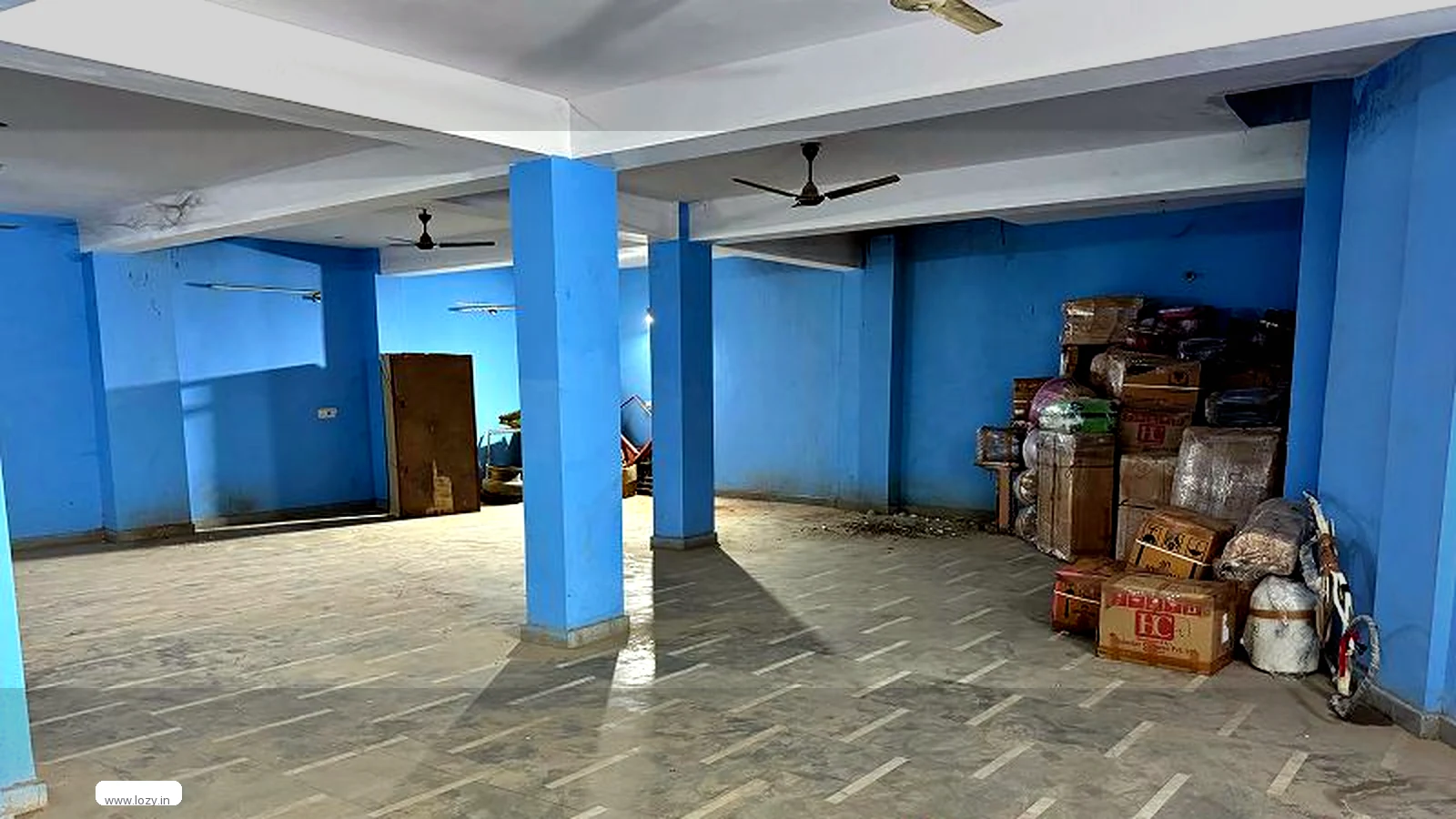
Warehousing in Faridabad is two markets sharing one city: space for the components, tooling and engineering stock that arrives heavy and leaves on an order book, and overflow space for traders who sell into Delhi and need a southern address without paying a Delhi rent. Lozy runs a factory-and-warehouse unit in Faridabad DLF Industrial Area 2, and Faridabad is one of the eight Haryana collection centres in Lozy's own network. Space around the city starts at ₹12 per sq ft per month; what you finally pay depends on the size you take, the term, and whether the goods want racking or open floor.
Key takeaways
- Faridabad is one of eight Haryana collection centres in Lozy's network, alongside Ambala, Dharuhera, Garhi Harsaru, Jamalpur and Sonipat.
- The Lozy facility here sits inside Faridabad DLF Industrial Area 2 — a factory and warehouse building in a working industrial estate, not a shed on open land.
- Warehouse space around Faridabad starts at ₹12 per sq ft per month, and a lockable self storage unit is priced per unit, from ₹999 a month.
- Most stock stored here is components, spares, paper and packaging — dense, dry goods that want a strong rack and a pest-controlled floor rather than air conditioning.
Why warehousing in Faridabad is a market of its own
Faridabad does not store the same goods as the rest of Delhi NCR, and that one fact explains most of its warehouse market. The city grew around manufacturing, and the businesses that still fill its industrial areas — component makers, tool rooms, sheet-metal and fabrication units, and the traders who supply them — bring stock that is dense, counted in batches and rarely delicate. Nobody here is hunting for a climate-controlled room for designer samples. They want a dry floor, a rack that carries weight, a shutter a truck can back up to, and a rate that does not assume a Delhi postcode.
Two other forces shape demand in the city. Faridabad is where a good share of the capital's southern trade stock sits, because the alternative is paying Delhi rent for space that holds goods rather than sells them. And the city quietly absorbs overflow — a manufacturer whose factory floor is full of machines, or a trader whose shop is full of cartons, needs somewhere to park the surplus until the order book moves. That pattern is why the Haryana coverage page lists Faridabad with the rest of the state's centres rather than treating it as a Delhi suburb.
The DLF industrial estates
Two addresses carry most of the weight here: DLF Industrial Area 1 and DLF Industrial Area 2. Both are mixed estates where a factory, a godown and a small office can sit in the same building and share one compound. Lozy's Faridabad facility is a factory-and-warehouse unit in DLF Industrial Area Phase 2, which is the arrangement most tenants in this city actually want: an industrial address with a real indoor floor, not a plot with a shed dropped on it.
The estate setting changes two practical things. Loading happens off a shared compound rather than a private dock apron, so the turning circle and the approach matter as much as the floor inside. And because the neighbours are running machinery, a storage floor in a DLF estate has to take weight and dust — fine for pallets of components, less fine if you are storing something that must stay spotless. If your goods are in the second category, say so at the enquiry stage instead of discovering it at check-in.
The auto-component and engineering cluster
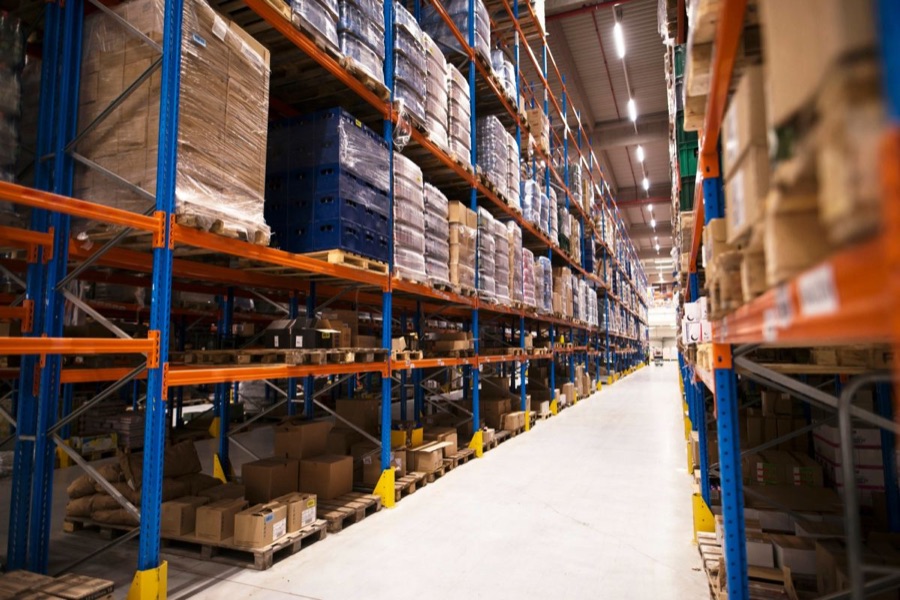
Faridabad's storage calendar follows order books, not retail weekends. A component or spares business here holds a season's stock against a contract, clears it, and refills — so the useful question is not how big a warehouse you need, but how quickly you can change size. Racked storage does the heavy lifting for that kind of inventory: cartons, crates and spares put away by part number, counted, and pulled individually. Bulk floor space takes over for goods that arrive on pallets and leave on pallets.
Engineering stock also brings two conditions worth planning for. Anything machined, painted or greased does not want standing damp, so a dry, pest-controlled floor with ventilation matters more than a temperature set-point. And because components are heavy relative to their volume, a Faridabad tenant usually runs out of floor load before running out of height — which is the argument for checking racking capacity rather than simply choosing the tallest available unit.
Overflow stock for east-Delhi traders
Faridabad sits on the capital's southern edge, and that position has a commercial use: a trader selling into Delhi can hold stock in a Faridabad unit and run it in as orders come, instead of renting a Delhi godown for goods that only need somewhere to sit. Lozy's own reading of this market is blunt — almost all the storage capacity serving the capital sits outside city limits, in Ghaziabad, Bahadurgarh, Gurgaon or Sonipat — so a Faridabad address is not a compromise, it is the same belt with a different postcode.
For a trader the arithmetic changes. The unit is not competing with a showroom; it is competing with a locked back room that is already costing rent per square foot and delivering nothing except clutter. A business warehousing plan priced per square foot per month usually wins that comparison on the day the back room runs out of floor, and it can be given back when the stock clears.
What Faridabad businesses actually store
Three groups of goods account for most of the warehousing in Faridabad. They need slightly different things from a unit, and knowing which group you are in is what makes a quote comparable.
Auto components, spares and tooling
The staples are castings, fasteners, bearings, sheet-metal parts, filters, brackets, jigs and fixtures. They arrive on pallets or in crates, are racked by part number, counted in and out, and move in batches against a production plan. Tooling behaves differently: it is heavier, slower and often sits for months between production runs, which makes a floor bay or a pallet position a better home than a shelf. Both want the same three things — a clean dry floor, a rack that carries the load, and a check-in list you can reconcile against a job card.
Paper, packaging and print material
Faridabad carries a long printing and packaging trade, and paper is the one stock in this city that genuinely cares about moisture. Reels, cartons, corrugated sheet and printed stock absorb damp, go wavy and lose value quickly, so they need height off the floor, pallets underneath, and a facility that keeps the monsoon out of the store. Paper rarely needs cooling; it needs a dry room and a straight answer about how water is kept away from it.
Trader stock, seasonal lines and house-shifting overflow
The third group is the least industrial and the most price-sensitive: a trader's surplus lines, cleared import cartons waiting to be allocated, furniture and appliances from a household between homes, and the fittings of an office being refitted. These are requirements a self storage unit fits better than a warehouse bay, because they are small, irregular in shape, and often do not justify a square-foot minimum at all.
Which kind of space to take in Faridabad
Decide what you are renting before you compare rates, because each product is priced on a different basis and mixing the bases is the fastest way to compare two quotes that were never comparable in the first place.
| What you take | Priced on | What it suits in Faridabad |
|---|---|---|
| A lockable self storage unit | The unit, month by month | Records, samples, tooling, a trader's surplus lines |
| Business warehousing — racked or floor | Square feet, month by month | Component and spares stock that turns over through the year |
| Industrial or bulk floor space | Square feet, on a longer term | Contract stock, packaging material, one-off bulk buys |
Racked or floor is the next decision, and in this city it usually answers itself. If stock is picked by part number or turned weekly, racking earns its cost by using height instead of floor area. If it is a single seasonal consignment that leaves in three months, floor space is enough and simpler to manage. What matters is asking which of the two is included in the rate you are quoted, because racking is sometimes installed within the rate, sometimes rented per pallet position on top of it, and sometimes left to you to buy — a difference that moves the real cost far more than the headline number does.
Two smaller choices are worth settling early. A dry, pest-controlled bay is the default here and is enough for almost everything Faridabad stores; climate control is worth paying for only when goods spoil, warp or corrode without it. And the loading side matters more than the address, because a unit whose approach cannot take the vehicle you use is unusable however good the racking inside looks — the self storage guide covers the unit-sized end of the same decision, for records and small overstock.
What warehousing space costs in Faridabad
Space around Faridabad starts at ₹12 per sq ft per month, and a business warehousing plan — racked or floor space inside a managed facility, with security, housekeeping and handling arrangements included — starts at ₹14 per sq ft per month. A lockable unit at the small end, for records or a trader's overstock, starts at ₹999 a month. Those are the published starting rates; the figure you are actually quoted depends on the size you take and how long you commit, which is why Lozy quotes after a short requirement check rather than straight off a rate card.
Billing on the monthly plans is monthly, with GST invoiced on storage and handling so a registered business can claim input credit on what it pays for space. Most warehousing in Faridabad is taken on exactly this basis — monthly, invoiced, and with no fit-out bill at the start. There is no setup charge and no multi-year lock-in, which matters more in Faridabad than it might sound: a component tenant whose order book can double in a quarter should not be signing a five-year lease to solve a six-month problem.
What changes the rate in this city
- Floor load and racking. Heavy, dense stock needs stronger racking on a bay that carries it, and that shows up in the price before anything else does.
- Size and position. The rack or bay you take is the biggest single input, and a ground-floor position with its own shutter is worth more than an upper floor reached by lift.
- Term. A monthly booking and a longer commitment are different products, and the longer one is normally cheaper per month.
- Add-ons. Extra handling, packing material, insurance cover and climate control each move the number, so ask which of them you have actually asked for.
Longer commitments are covered on the Haryana location page and priced on the long-term warehousing plans; for a short peak there is no reason to take a year, because a monthly booking exists precisely so you can step back down once the stock clears.
How stock reaches Faridabad, and how it leaves
The Haryana belt it sits in
Faridabad is the southern end of the same Haryana band Lozy runs from Ambala down through Sonipat, Garhi Harsaru, Dharuhera and Jamalpur. Read as a corridor rather than a list, that means stock can be picked up at one Haryana centre and held at another without a cross-country movement, and a Faridabad unit is one option among several when the price of space in one part of the belt moves. Garhi Harsaru's advantage is the container depot beside it, Sonipat's is the northern corridor, and Faridabad's is its own industrial estates.
The Delhi border question
Sitting beside Delhi is not the same as sitting in it, and the difference is the point. Goods held in Faridabad do not have to enter the city to reach a Delhi customer when the route suits, and a trader can hold stock outside the boundary and run it in on demand rather than paying for a Delhi address all month. For importers the appeal is the same one Lozy hears from the customs side of its business: boxes can be handled in the NCR belt without being trucked across the capital. Read the New Delhi coverage if you need a unit inside the boundary; choose Faridabad if you do not. For most warehousing in Faridabad, that one question — inside the boundary or beside it — settles more than the rate does.
Monsoon, drainage and the loading yard
The practical risk in this part of Haryana is water, not temperature. Monsoon rain arrives hard and fast, and a store is only as good as its plinth and its yard. Before you sign, walk the approach during or just after rain if you can: check that the floor sits above the level of the yard, that puddles drain away from the shutter rather than toward it, and that a loaded vehicle can stand without blocking the lane. Goods damaged by a wet floor are the most avoidable loss in a Faridabad warehouse, and paper stock is where it hurts first. If the requirement is a larger floorplate, industrial and bulk warehousing covers the options on the same belt, and the live warehouse listing shows what is available now rather than what is possible in principle.
How to choose a warehouse in Faridabad
Work through the same checklist we would want a tenant to apply to us. It takes twenty minutes on site and saves a season of arguing.
- Walk the floor before the office. Look at the plinth, the damp line at the bottom of the walls, and whether water has ever stood where your pallets will go.
- Measure the approach, not the yard. A loaded trailer needs turning space and headroom on the way in, and a shared compound in a working estate is tighter on a weekday afternoon than it looks on a Sunday.
- Ask what the rate includes. Racking, trolleys, handling, security, housekeeping and pest control — in writing, not in conversation.
- Check the load the floor takes. Component stock is heavy, so ask for the floor load per square metre instead of assuming a loaded rack can go anywhere.
- Confirm the invoice. Storage and handling should be invoiced with GST in your entity's name so the rent comes back as input credit.
- Agree the notice period and the size above you. If your stock doubles, the next bay should be on the same site rather than in another district.
- Meet the person who answers. One named contact who picks up is worth more than a call centre and a ticket number.
The red flags are the mirror of that list: a rate quoted before anyone asks what you store, paper stock offered floor-level space in a low-lying yard, no clear answer on who secures the compound at night, and a unit that cannot grow. A state-wide view of the same decisions sits in the Haryana warehousing guide, the site's own take on pricing and terms is in the business warehousing guide, and Lozy's location pages show which of the Haryana facilities is closest to your own traffic.
A worked example: 4,500 sq ft for a component supplier
Take a Faridabad component business with two deliveries a week and a contract that runs for four months. Its stock is roughly 40 pallets of boxed parts, a rack of small spares, and one tooling crate that has to stay dry.
What it does not need: a dock door, 20,000 square feet, or a locked room priced per unit. What it does need: racked space for the spares, a floor bay that holds 40 pallets with aisle room to reach them, and a covered approach so a wet delivery morning does not become a wet floor. Around 4,500 sq ft covers that comfortably once aisles are counted, which at the published starting rate of ₹14 per sq ft per month comes to roughly ₹63,000 a month — a number worth holding next to the cost of wherever that stock sits today, because the factory floor it is occupying is the floor you want back.
Two details decide this requirement. The first is that the tooling crate is not furniture: it needs a dry corner rather than a high shelf, and it is the item most likely to be quietly ruined by a bad floor. The second is the term. Four months is a monthly-plan requirement, not a lease, so the sensible booking lets the supplier step down when the contract ends instead of holding space through a quiet quarter. The same logic applies to a trader sitting on a seasonal line — the warehouse for rent guide explains how space is quoted and compared, the services page covers everything Lozy runs beyond straightforward storage, and the Haryana centres list the units your stock could move to next. That shape of requirement — a real need with a short horizon, solved by space that can be handed back — is what most warehousing in Faridabad actually looks like.
Also in Delhi NCR
Faridabad's stock does not stay in Faridabad. A component maker shipping north holds finished goods through the Gurgaon belt, a trader serving the eastern districts uses space described in the Noida and Ghaziabad posts, and a business that must be inside the capital reads the Greater Noida and New Delhi guides. What changes between those cities is mostly the corridor and the order type, not the way space is priced.
About the author
Lozy Editorial Desk. This guide was written by the Lozy Editorial Desk, the in-house team that covers warehousing, self storage, logistics and customs/EXIM topics for lozy.in. We write from Lozy's own facility and pricing information and from public, citable sources. We do not publish invented statistics, ratings or reviews.
Sources. Facility names, coverage and pricing are Lozy's own. Industrial land and estate context comes from the Haryana State Industrial and Infrastructure Development Corporation; state economy context from IBEF's Haryana profile; GST registration and input credit from the GST portal; small-business registration and support from the Ministry of MSME; and policy announcements from PIB.
Last updated: 13 October 2026. Have a question this page does not answer? Call +91 93547 12345 or email care@lozy.in.

Need warehouse space in Faridabad?
Tell us the city and the size you need — we reply with a rate and the options available now.
Get a quoteCall +91 93547 12345Need warehousing or storage in India?
Request a free, tailored quote in under 2 minutes — free pickup, no lock-in.