Warehousing in Ghaziabad: Space, Cost and Booking (2026 Guide)
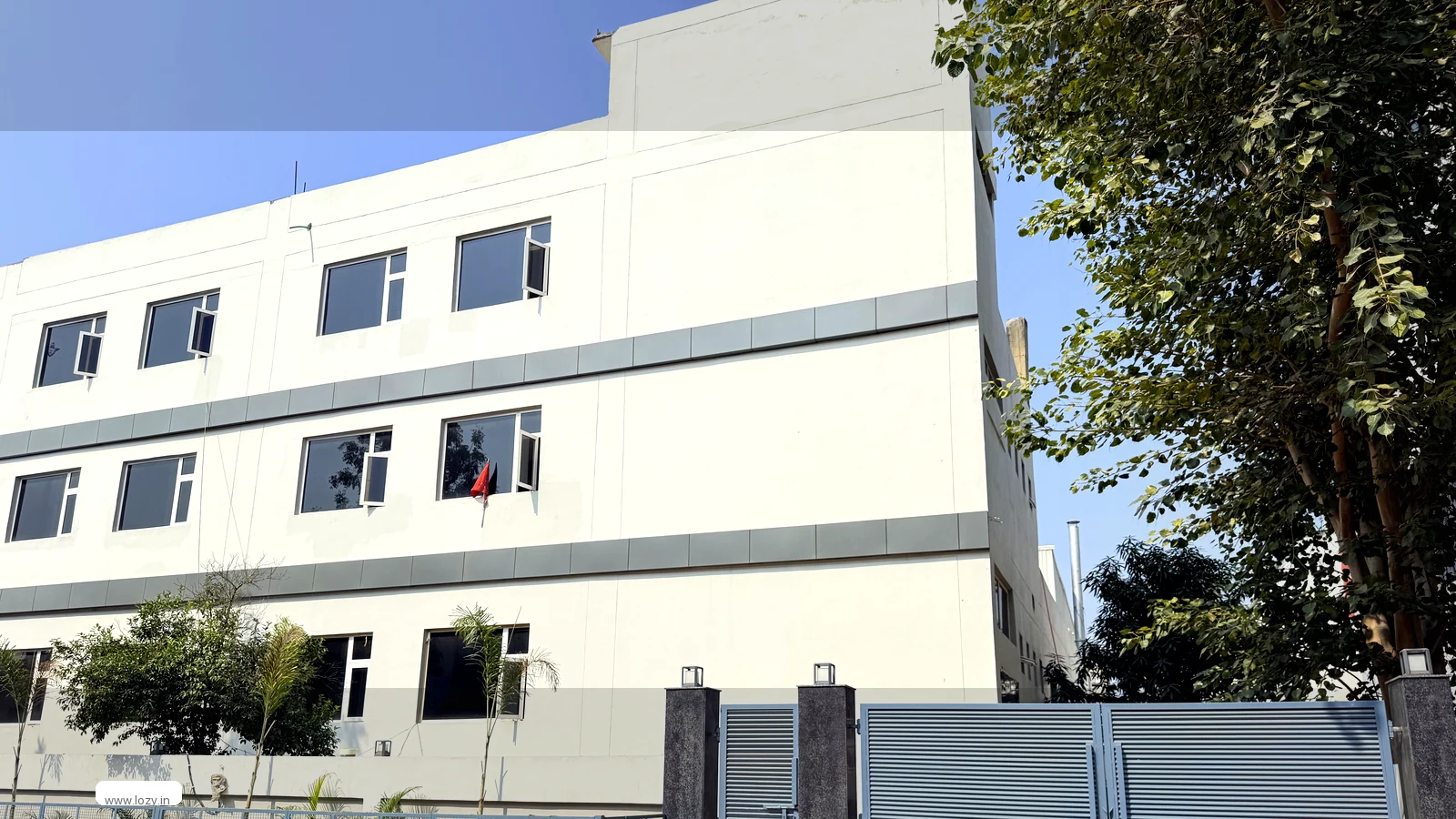
Warehousing in Ghaziabad means the industrial half of Delhi NCR's eastern edge — an engineering and secondary-distribution belt that runs along the NH-9 / NH-24 corridor from Sahibabad and Loni out to the Delhi border. Most businesses here rent warehouse space month by month rather than sign a shed lease, so the footprint can shrink again the moment a project or a season ends. This guide sets out what that space costs in Ghaziabad, what local companies actually store in it, and how to pick a unit a loaded truck can reach.
Key takeaways
- Four of Lozy's eight Uttar Pradesh collection centres are in Ghaziabad — the densest single city in the state's pickup network — so a booking starts with a local run rather than a Noida or Delhi trip.
- The warehouse belt follows the NH-9 / NH-24 Delhi–Meerut corridor through Sahibabad and Loni, which keeps east Delhi's wholesale markets and the Delhi–UP border inside a single shift.
- Warehouse and godown space starts at ₹12 per sq ft per month, billed monthly with GST invoicing and no long lock-in; the figure you are actually quoted depends on the location, the size and the term.
- Lozy runs 77+ warehouses and more than a million square feet of live space, and its published Uttar Pradesh facility is the 30,000 sq ft commercial and 3PL unit at Bisnoli, Dadri.
Why Ghaziabad holds the NCR's engineering-warehouse belt
Ask a Delhi NCR distributor where the engineering stock sits and the answer is usually Ghaziabad. The district is the first strip of Uttar Pradesh a truck meets when it leaves east Delhi, and the road it meets is the NH-9 — the number the old NH-24 now carries — the Delhi–Meerut corridor that has moved north India's road freight for decades.
Two things follow from that geography, and both matter when you are signing for space. The belt is where manufacturing and distribution physically meet, so engineering units, fabricators, auto-component suppliers and packaging firms sit within a few streets of the traders who resell what they make. And the Delhi border runs close enough that a unit on the Ghaziabad side can serve east Delhi buyers without paying for a warehouse inside Delhi's own limits — the most useful thing about this location, and on a bad traffic morning the most irritating one.
It is also a corridor with room in it. Where an inside-Delhi unit is often a converted shed on a lane it never chose, the Ghaziabad belt has industrial estates, wide internal roads and gate widths that were built for vehicles rather than adapted to them.
Where the belt actually sits
Sahibabad is the industrial anchor on the Delhi side of the city — the estate belt that grew up alongside the highway, and the reason most of Ghaziabad's warehousing exists at all. Loni sits at the other edge, where the Delhi–Uttar Pradesh boundary cuts through the built-up area, and it carries an inland container depot, ICD Loni, that handles container freight for the eastern NCR.
Lozy's own network has the same shape. Four of the eight collection centres across Uttar Pradesh are in Ghaziabad — more than in any other city in the state — and that is the practical difference between a booking placed from here and one placed from Lucknow or Ballia: the pickup vehicle is already in the district. The Uttar Pradesh coverage page names both ends of the state network.
Who the neighbours are
These are not empty units standing in open land. The tenants are the businesses that created the demand: press shops, sheet-metal and fabrication works, fastener and electrical traders, packaging suppliers, and the secondary distributors who break bulk for east Delhi's wholesale markets. Add the e-commerce sellers who want somewhere north-east of Delhi to hold stock and you get a belt with more than one kind of tenant — which is exactly why space is available as a single racked bay as well as a large floorplate.
What Ghaziabad businesses actually store
The stock profile here is not the same as a Delhi self-storage building or a Gurgaon 3PL floor, and it is worth being specific about what you are holding before you size a unit.
Engineering, fabricators and auto components
A Ghaziabad engineering unit usually holds two very different kinds of inventory. There is the raw side — coils, bars, castings, fasteners by the box, packaging material bought in bulk — which is heavy, uniform and slow-moving, and belongs on the floor in a demarcated bay. And there is the finished side: assembled components waiting on a buyer's dispatch schedule, which needs racking, a barcode against each pallet, and a stock report that answers "where is lot 214" without a phone call.
The two ends behave differently, and a plan that fits only one of them will cost you. If your dispatch is weekly, the finished side wants racked positions that use the height of the building; if a consignment will not move for three months, paying racked rates for it is money spent on convenience you are not using. Most Ghaziabad manufacturers end up with both inside one unit and shift the split as order books change — which is the argument for monthly space over a fitted-out shed of your own.
Secondary distribution and the Sahibabad last mile
The second group is the traders. A Ghaziabad secondary distributor buys in container or truckload quantities and sells in case quantities into east Delhi, north-east Delhi and the Sahibabad–Indirapuram retail belt. Their requirement is not really storage at all — it is a staging point with a door wide enough for a 32-foot truck, a check-in at goods-in, and enough free floor to sort a mixed consignment without blocking the aisles.
For that business the drive time to the buyer matters more than the drive time from home. A unit at the wrong end of the belt can add an hour a day to a delivery round; a unit on the right side of the NH-9 run removes it. Ask any operator to quote you the drive time to the market you actually sell into, not to the district boundary, and measure the answer yourself on a Monday morning.
Online sellers fit between the two groups. They hold stock that turns over weekly, need packing benches and a place to park returns, and want the freedom to double the space for a festive season and hand it back in January — see e-commerce warehousing for how that looks as a managed service.
What the Delhi border changes for your plan
Every warehouse decision in Ghaziabad is made with the border in mind, because the district's whole advantage is proximity to Delhi and its whole frustration is the same thing.
The NH-9 run and truck timing
The corridor into Delhi is a single loaded artery for most of the day. That means a warehouse on the Ghaziabad side and a warehouse inside Delhi are not interchangeable for a morning dispatch: the first has a border crossing and a queue in front of it, the second has the queue behind it. Plan the loading slot around the run rather than the rate, and confirm with the operator what time a trailer can actually be at the dock — gate timings, not office timings, are what move goods.
Because the belt has real industrial estates and internal roads, the thing that usually ruins a good-looking unit is the last hundred metres: a lane too narrow for a 40-foot trailer, a low overhead cable, or a gate that opens outward onto a road with no set-down space. Walk that last stretch with the vehicle you actually send, before you sign rather than after.
ICD Loni and duty-deferred stock
Ghaziabad is one of the few districts in the NCR with an inland container depot inside it — ICD Loni — which matters if any of your stock arrives in a container rather than a truck. Cleared and duty-deferred cargo can sit minutes from where it will be stored instead of making a second cross-city run, and the paperwork can be handled by the same desk that does the customs filing. Lozy's customs bonded warehouse page explains where duty-deferred space fits, and the Uttar Pradesh network shows where the storage on the other side of that move sits.
GST, invoicing and input credit
Rent for a warehouse in India attracts GST, and a registered business can claim input credit on it when the invoice is raised properly. That single fact separates two quotes that look identical on a rate sheet: a managed monthly plan issues a GST tax invoice in your entity's name, and a cash rent paid to a landlord who issues a receipt at best is money that never comes back. The registration and credit rules are published on the GST portal; before you commit, confirm with your accountant that the invoice format being offered will carry the credit.
Rented warehouse, monthly plan or leased shed
There are three ways to get space in this belt, and they are not variations of one product. The table sets out what each one actually commits you to.
| Option | What you commit to | Who it suits in Ghaziabad | Price basis |
|---|---|---|---|
| Managed monthly plan | Month to month, no fit-out | Traders, e-commerce sellers, project stock | from ₹12 per sq ft |
| Commercial / 3PL floor | Month to month, larger area | Engineering and manufacturing overflow | from ₹13 per sq ft |
| Business or on-demand space | Month to month, short peaks | Seasonal and dispatch-cycle stock | from ₹14 per sq ft |
| Leased private shed | Multi-year plus fit-out and upkeep | High-volume, stable manufacturers | Not a Lozy product |
The first three are billed per square foot per month and can change size inside the same facility. The fourth is a landlord arrangement: cheaper per square foot on paper, with the deposit, the racking, the security and the maintenance on your side of the ledger. If your volumes are still settling — and in an engineering belt they usually are — the flexible end of that table is the safer place to start.
What warehousing in Ghaziabad costs
Three published starting rates cover almost every enquiry that comes out of this belt, and each one is attached to a different product rather than to a different city.
- Warehouse and godown space — from ₹12 per sq ft per month, per the warehouse and godown space for rent page. This is the general-purpose starting point: a demarcated floor or racked area for stock that moves on a normal cycle.
- Commercial warehousing — from ₹13 per sq ft per month on the commercial warehousing page. Aimed at larger, better-serviced floors with truck access and dispatch support — the shape an engineering or distribution business usually outgrows the first option into.
- Business and on-demand space — from ₹14 per sq ft per month, quoted on business warehousing. The premium buys flexibility: a short or rolling term for stock that is only passing through.
Every one of those is a starting rate, not a quote. The figure you are given depends on the city, the size of the space and how long you take it for, and the answer comes from a short requirement check rather than from a rate card. Billing is monthly, there is no setup charge, and storage and handling are invoiced with GST so a registered business can claim the credit.
What moves the number in this belt
Four inputs do most of the work, and only the first one is really about Ghaziabad:
- Position in the belt. A unit on the estate side with a proper approach road is priced differently from an equivalent shed behind a residential lane, because one can take a trailer and the other cannot.
- Area taken. The single biggest input, from one racked bay to a full floor. Measure what the goods occupy, add aisles and handling space, and resist the bay two sizes up.
- Term. A rolling monthly booking and a longer commitment are different products; the longer one can be cheaper per month, which is the opposite of what most tenants assume about flexibility.
- Add-ons. Climate control, extra handling, packing material and insurance cover each move the number, and each should be a separate line on the quote rather than a lump.
How to choose a Ghaziabad warehouse — and the red flags
Work through this list before you commit, and apply it to us as hard as to anyone else.
- Check the approach, not just the address. Drive a loaded vehicle to the gate. If a 32-foot truck cannot turn in, nothing on the rate sheet matters.
- Ask about the monsoon. Low-lying ground in this belt floods, and a unit at the bottom of a slope with a level loading bay is a problem for a week a year. Ask what the yard looked like after the last heavy spell, and look at the plinth height yourself.
- Confirm what the rate includes. Racking, trolleys, handling, security, housekeeping and pest control — in writing, before the first invoice.
- Establish the rent basis. Per square foot, per pallet or per unit, and how much notice you must give to leave.
- Read the invoice before you sign. It should be a GST tax invoice in your entity's name with storage and handling visible as separate lines if your accountant needs that split.
- Ask what happens in a truck strike or a border closure. A facility with its own yard can hold a loaded vehicle overnight; one that loads on the road cannot.
Three warnings worth hearing plainly. A rate quoted without saying whether the invoice carries GST is not a rate. A landlord who will not put the inclusions in writing will not honour them in month four. And a "warehouse" that is a first-floor room is fine for records and useless for the coil stock most Ghaziabad enquiries are about.
A worked example: a fabricator in the Sahibabad belt
Take a mid-sized sheet-metal fabricator on the Sahibabad side — a business with a factory it owns and no room left in it. It buys fasteners and packaging in bulk, finishes components against orders, and currently keeps overflow in a rented garage and a corner of the shop floor, which is where stock goes missing and where the annual audit gets awkward.
Say the overflow works out at 2,000 sq ft: roughly 1,200 sq ft of floor for the raw side and a racked area for finished stock awaiting dispatch. At the published starting rate of ₹12 per sq ft per month that is ₹24,000 a month before add-ons — a number small enough to compare directly against a lease deposit, and one that can be halved in a slow quarter instead of being carried. The garage goes back to the landlord, the shop floor gets its clearance back, and the audit question about finished stock has a documented answer: check-in photographs, barcodes against each pallet, and a stock report that arrives when the goods do.
That is the whole argument for monthly space in this belt. The requirement moves with the order book, and the rent should move with it. When the requirement grows, the next bay is added inside the same facility; when a buyer cancels a season, the space goes back — see Lozy's Uttar Pradesh network for what is available near Ghaziabad. Larger floorplates for the same business sit under industrial warehousing.
Also in Delhi NCR
Ghaziabad and its neighbours cover different buyers rather than competing for the same ones. A business shipping into south Delhi or Gurugram usually pairs this belt with a unit on the Gurgaon corridor or in Faridabad; stock destined for the eastern gateway goes to Noida or Greater Noida, where the Dadri facility sits. Coverage inside the city itself is set out in the New Delhi guide, and the state-level picture in warehousing in Uttar Pradesh.

Where the space is in Uttar Pradesh
Lozy's Uttar Pradesh warehouse is a 30,000 sq ft commercial and 3PL unit at Bisnoli, Dadri, in Greater Noida — rack, pallet and bulk-floor storage with dispatch support, on the industrial stretch that takes NCR freight east of Delhi. For a Ghaziabad booking it is the published state facility, and the pickup network that feeds it runs through eight collection centres, four of them in this district.
The full coverage is set out on the Uttar Pradesh location page, with the Delhi side on Lozy's New Delhi page and every state together on the locations index. To see what is available today near Ghaziabad, browse the warehouse listing.
How Lozy helps
Lozy provides managed warehouse space in Ghaziabad and across the Uttar Pradesh network, backed by 77+ warehouses and more than a million square feet of live space. You get a dedicated racked or floor area, 24/7 CCTV, on-site security and unique PIN access, monthly billing with GST invoicing and no long lock-in. Pickup is free on bookings of 30 days or more, and stock is checked in against your list pallet by pallet with a photo inventory behind it.
The services page sets out everything Lozy runs, and if you want the monthly-plan side in more depth the business warehousing guide takes it line by line. For stock coming into Delhi rather than moving out of it, the Delhi warehouse guide covers the city-side options. When you are ready to talk, the fastest route is the contact page — or read more in the same plain style on the Lozy blog.
Need warehouse space in Ghaziabad?
Tell us the city and the size you need — we reply with a rate and the options available now.
Get a quoteCall +91 93547 12345About the author
Lozy Editorial Desk. This guide was written by the Lozy Editorial Desk, the in-house team that covers warehousing, self storage, logistics and customs topics for lozy.in. We write from Lozy's own facility and pricing information and from public, citable sources. We do not publish invented statistics, ratings or reviews.
Sources. Pricing, facility names and the collection-centre count are Lozy's own. GST registration and input credit are described from the GST portal; industrial and infrastructure context for Uttar Pradesh comes from Invest UP and the India Brand Equity Foundation; the highway corridor is described from NHAI; MSME context from the Ministry of MSME; policy announcements from the Press Information Bureau.
Last updated: 13 October 2026. Have a question the FAQ below does not answer? Call +91 93547 12345 or email care@lozy.in.
Need warehousing or storage in India?
Request a free, tailored quote in under 2 minutes — free pickup, no lock-in.