
Warehousing in Uttar Pradesh: The NCR Edge, the Interior Towns and What Space Costs (2026 Guide)
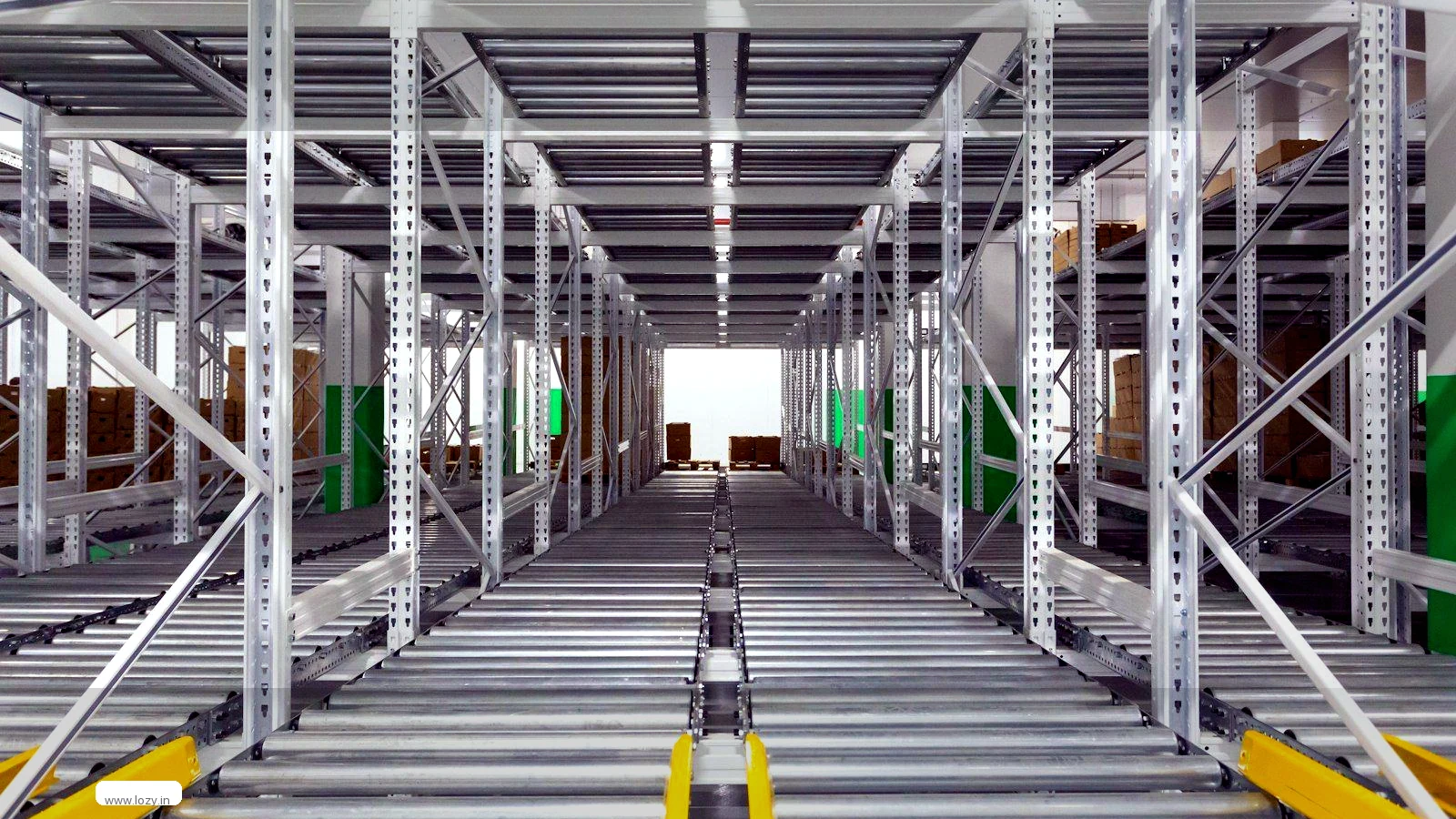
Warehousing in Uttar Pradesh is really two markets wearing one state name. Around Noida and Ghaziabad it is a Delhi-adjacent shed belt, where land, trucks and last-mile cost the most and a warehouse is judged by how fast it reaches the capital. At Lucknow and the eastern towns it is a slower interior market, where the godown sits further from your buyer and the road decides the delivery day. Lozy runs eight collection centres across the state and a 30,000 sq ft commercial and 3PL facility at Bisnoli, Dadri — so the same monthly booking reaches both ends of it.
This guide treats the state as a whole: what the two halves cost, which corridors the freight actually uses, what Uttar Pradesh businesses store, and how to read a quote that has been built for one half and handed to a customer in the other. The city pages take Noida, Ghaziabad and Greater Noida one at a time; this is the map all three of them sit on. For the facility and the pickup list on their own, the Uttar Pradesh coverage page is the short version.
Key takeaways
- Lozy runs 8 collection centres across Uttar Pradesh — Ghaziabad and Noida on the Delhi NCR edge, Lucknow and Ballia deeper inside the state.
- The state's own facility is a 30,000 sq ft commercial and 3PL warehouse at Bisnoli, Dadri, on the Greater Noida (GB Nagar) industrial stretch that feeds Delhi NCR's eastern freight.
- Warehouse space starts at ₹12 per sq ft per month, commercial warehousing from ₹13, and self storage from ₹999 a month — every figure quoted for the city, size and term you actually take.
- A Delhi-adjacent shed and an interior godown are not priced on the same basis, because the land underneath them is not the same price and the drive to your buyer is not the same drive.
Uttar Pradesh is two warehouse markets, not one
Most warehousing advice written for "Uttar Pradesh" quietly describes Delhi NCR and stops there. That is a mistake with money attached. India's most populous state contains two different storage economies, and a business on one side can waste a lot of time shopping rates on the other.
The dividing line is the drive to Delhi. Land within reach of the capital trades at a premium, so a shed there is priced like NCR property; land three hours east is priced like farmland, and an interior godown can be cheaper per square foot than anything you will be quoted in Ghaziabad. What the cheaper rate buys you is distance — from your buyers if they are in Delhi, from your suppliers if they are eastern. Neither half is better. They answer different questions.
The NCR edge: Noida and Ghaziabad
Noida and Ghaziabad are the state's warehouse front line. They sit inside the National Capital Region, which means the goods stored there are usually being staged for a Delhi market, not a UP one: cartons waiting for the next run into the city, stock for a distributor whose customers are across the Yamuna, e-commerce inventory that has to reach the capital's pin codes before cut-off.
This is the half of Uttar Pradesh where a warehouse behaves differently from a godown. Dispatch runs on a clock rather than a day, cab drivers and small Commercial vehicles can be called at short notice, labour is available in shifts, and the facility is expected to handle a customer return in the same week it happened. The compensation is that nothing here is cheap. If your stock is genuinely NCR-bound, that is what you are paying for; if it is not, you have chosen the wrong half of the state.
The interior: Lucknow, Ballia and the eastern run
Lucknow is the state's own market — a capital city with its own distributors, its own retail chains and its own e-commerce demand, roughly six hours and roughly a few hundred kilometres from Delhi depending on the route taken. Ballia, on the Bihar border in the east, is a different kind of place again: a district town where stock moves towards local trade and across the state line, and where the nearest large market is not Delhi at all.
An interior godown is usually a single-storey shed or a racked bay inside one, on ground that can be reached by a truck, with power that stays on and a gate that locks. The business case is proximity: if your customers are in Lucknow or across eastern UP, storing near them removes a day from every delivery and a large slice from every freight bill. The constraint is that a small interior facility cannot always grow with you, and the next size up may be a different site — a point worth settling before you sign, not after.
Where Lozy's Uttar Pradesh space actually is
Lozy's Uttar Pradesh warehouse is a commercial and 3PL facility at Bisnoli, Dadri — about 30,000 sq ft on the Greater Noida (GB Nagar) industrial stretch, the belt where NCR freight moves east and comes back loaded. The unit takes palletised inventory, bulk stock and the overflow that spills out of a distribution centre, with rack, pallet and bulk-floor storage and dispatch support for e-commerce and distribution operations. Truck access is on the industrial stretch itself rather than a village lane, which sounds like a small point and is not: a shed you cannot back a container into is a shed you cannot use.
Pickup and delivery run through eight collection centres spread across the state. Two of them sit on the NCR edge — Ghaziabad and Noida — and two sit well inside it, at Lucknow and Ballia, which is what makes the interior half of Uttar Pradesh bookable rather than theoretical. Each booking is routed to the nearest centre, so a household in Lucknow and a distributor in Ghaziabad are both collected from their own door rather than being told to bring the goods to a hub.
That arrangement sits inside a wider network: 77+ warehouses and more than one million square feet of live space nationally, all billed the same way. You can see the state's full coverage on the Uttar Pradesh location page, and the NCR's on the New Delhi page.
The corridors your stock actually travels
Freight in Uttar Pradesh does not move by pin code, it moves by road. Two corridors matter for storage decisions, and knowing which one you sit on tells you more than any rate comparison.
The NCR edge belt: Noida, Ghaziabad, Dadri
The western end of the state is stitched together by the ring of expressways that wraps around Delhi. The Eastern Peripheral Expressway gives Ghaziabad and Greater Noida a route that avoids entering the capital at all — the single most useful piece of infrastructure for anyone running long-haul freight into and out of north India without paying a Delhi congestion tax in hours. Further south, the Yamuna Expressway runs from Greater Noida towards Agra, which is why the industrial belt has filled up the way it has.
What this means for storage is simple. A shed at Dadri or a bay in Ghaziabad is a distribution decision as much as a property one: you are buying access to the ring, not just four walls. If your trucks need to get to Rajasthan, Haryana or Punjab without crossing Delhi, this is the half of Uttar Pradesh where that is possible. Serious buyers ask about the approach road and the height restriction before they ask about the rent — a unit behind a village lane is unusable for a container however good the racking inside looks.
The run east: Lucknow and the Purvanchal belt
Head east and the same logic runs on different roads. Agra and Lucknow are joined by an expressway, and the Purvanchal Expressway continues from Lucknow towards Ghazipur in the east, which is what finally made eastern UP a place where stock can be held instead of only passed through. Ballia sits at the end of that movement, closer to Patna than to Delhi in commercial terms, serving a market that a Delhi warehouse cannot reach economically.
The practical consequence is that a business with customers on both sides of the state usually needs space on both sides, or accepts a day of transit it does not need. Storing eastern UP stock in Ghaziabad and driving it to Ballia every week is a choice you can make; it is rarely the cheap one. If your eastern volume is seasonal rather than permanent, short-term storage for the peak weeks is often the honest answer.
A Delhi-adjacent shed versus an interior godown
The two halves of the state rent space on visibly different terms. This table is the comparison to run before you accept any quote, because a rate that looks like a bargain is often an interior rate attached to an NCR requirement.
| What you are really choosing | Delhi-adjacent shed — Noida, Ghaziabad, Dadri | Interior godown — Lucknow, Ballia |
|---|---|---|
| What the rent reflects | NCR land value and the ring-road access that comes with it | District land value and local demand |
| Who it suits | Stock headed for the capital, e-commerce, 3PL overflow | Stock headed for UP's own towns and the Bihar border |
| Dispatch rhythm | Same-day, on a clock, cut-off driven | Next-day, route and truck-availability driven |
| Growth room | Larger floorplates, more racking options on the same site | Smaller sites; the next size up may be elsewhere |
| Labour and vehicles | Shifts and small vehicles available at short notice | Planned movements; vehicle booked a day ahead |
| When it wins | Your buyer is in or near Delhi NCR | Your buyer is in Uttar Pradesh or eastern India |
Read the last row first. Everything above it is detail; that one line decides most of the argument. A business that keeps goods near Delhi "just in case" and delivers them to Kanpur is paying NCR rent for a UP route.
What Uttar Pradesh businesses put in storage
The state's storage demand looks different in each half, and the split is worth knowing before you describe your own requirement.
Distributors, traders and manufacturers
Western UP's storage is driven by trade: distributors holding fast-moving consumer goods, auto spares and building material for the Delhi market, and manufacturers parking packaging material, spares and finished goods between dispatch cycles. The requirement is usually pallets, a loading bay and a facility that will not ask questions about a truck arriving at nine at night. On the eastern side, the same businesses keep smaller volumes for a local market — a Lucknow distributor does not need 30,000 sq ft, they need the right 2,000.
E-commerce sellers and 3PL operations
The Dadri belt is where e-commerce storage concentrates, because a seller fulfilling Delhi NCR orders wants stock inside the ring rather than outside it. This is e-commerce warehousing territory: racked positions for stock-keeping units you pick individually, floor space for the bulky lines, and dispatch support when a campaign lands harder than planned. Third-party logistics operators use the same sheds for overflow, which is why a unit that looks empty in a quiet month can be full in November.
Households and families between homes
The other half of Uttar Pradesh's demand has nothing to do with trade. Families renovating, relocating jobs or handling a bereavement need somewhere dry for furniture, appliances and wardrobes for a few months, and they are not going to take a warehouse floor to get it. That is what household warehousing is for: a private, lockable unit, picked up from the door and returned when the new home is ready. For a smaller requirement — a student's belongings, a two-bedroom flat's worth of boxes — self storage is the cheaper entry point.
What warehousing in Uttar Pradesh costs
Lozy publishes starting rates rather than an average, because an average quoted without its basis misleads more than it helps. On today's published figures, warehouse space starts at ₹12 per sq ft per month, commercial warehousing from ₹13 per sq ft per month, and self storage from ₹999 a month for a lockable unit. The rate you are actually offered depends on the city, the size you take and how long you commit — and everything is billed monthly with GST invoicing and no long lock-in.
Those three numbers are not competing quotes, they are three different products, and mixing them up is the fastest way to a bad comparison. A rate quoted per square foot covers floor or racked space inside a shed; a lockable storage room is sold per unit instead. A lockable self storage unit is priced per unit per month, not per square foot, because you are buying the room rather than the area. The state's own page lists which of those products is bookable here. If a quote does not tell you which basis it uses, the quote is not finished.
Two other things worth confirming before you sign: that GST is charged on the invoice in your entity's name, so a registered business can claim input credit, and what the notice period is. The rules for registration and credit sit on the GST portal; your accountant can confirm how they apply to you in a minute. The broader picture of warehousing and logistics investment in the state is tracked by IBEF.
Worked example: a Ghaziabad distributor's festive quarter
Take an FMCG distributor serving retail outlets across Ghaziabad and east Delhi. From August their warehouse starts to choke: the pre-festive stock arrives before the festive demand does, and the racks that were comfortable in June are full by September. The old answer is to rent a bigger godown on an annual lease and pay for it in February when the shelves are half empty.
The flexible answer is to keep the base where it is and take overflow alongside it. The distributor stores their steady core in their own leased shed and moves the seasonal surge into managed space on the NCR edge — racked positions for fast-moving lines, floor space for cartons that will not be touched until October, both billed month by month. When the peak passes and stock clears, the extra space goes back with no unwinding cost. If the whole requirement is temporary, seasonal warehousing is built for exactly this shape of demand, and for a need measured in weeks rather than months, on-demand warehouse space prices it per week.
Nothing in that worked example requires a new building. It requires knowing which half of your stock is permanent and which half is not — which is the same question the two-halves distinction at the top of this guide is asking.
How to choose a facility in Uttar Pradesh — and the red flags
The state's spread makes one mistake unusually common: choosing on rent per square foot alone. In a market where an interior godown and an NCR shed differ sharply in price, the cheaper number is often the more expensive decision. Work through these before you commit.
- Name your buyer's location before you name your own. Distance to the people you deliver to matters more than distance from where you sit. If the answer is Delhi, you are shopping in Noida and Ghaziabad, not Lucknow.
- Match the space to the goods. Racked, pallet or bulk floor; dry or climate-controlled; shared floor or a private lockable unit. Describe the goods, not the building you have in mind.
- Ask how a truck reaches the door. Approach road width, turning space and any height restriction decide whether the shed is usable for a container, however good the racking looks inside.
- Confirm the rate basis and the term. Per square foot, per pallet or per unit — and how much notice you must give to leave.
- Get the inclusions in writing. Racking, trolleys, handling, security, housekeeping and pest control vary between facilities and change the real cost more than the headline rate.
- Check the invoice. A GST tax invoice in your entity's name is worth real money; a cash rent with no paper is not.
- Ask whether the next size up exists on the same site. Interior facilities especially may not have it, and that is better known now than at peak.
Red flags worth treating as red flags: a rate quoted without a stated basis; a facility that cannot show you what it sends after check-in; a unit offered for a seasonal requirement on a multi-year clause; and any site that will not let you walk the approach road before you commit. The state's industrial policy context, if you need it for a larger project, is set out by Invest UP, and the NCR's planning framework by the NCR Planning Board.
Also in Delhi NCR
Uttar Pradesh's western edge does not stop at the state line, and most businesses working there end up holding space on two sides of it. Noida and Ghaziabad sit on the same lorry network as New Delhi and Haryana, so a distributor staging for the capital often splits stock between a Ghaziabad bay and a shed in the south-west of Delhi rather than picking one. The Noida and Ghaziabad guides cover those cities on their own terms, and the Greater Noida guide takes the industrial stretch; read together they are one NCR decision, and the Uttar Pradesh page is where that split is written down in full.
How Lozy helps
Lozy offers business warehousing and industrial and bulk storage across Uttar Pradesh, backed by 8 collection centres in the state and 77+ warehouses nationally. The Dadri facility takes commercial and 3PL requirements; the collection centres at Ghaziabad, Noida, Lucknow and Ballia feed it from the door. Every plan includes a dedicated racked or floor area, 24/7 CCTV, on-site security and PIN access, on monthly billing with GST invoicing and no long lock-in.
Moving in is the part businesses worry about, so it is the part we run tightest. Free doorstep pickup is included on bookings of 30 days or more, goods are checked in against your list pallet by pallet, and a photo inventory backs the check-in summary. If the requirement grows, you change size in the same facility rather than renegotiating. If your stock is imported and duty has not been paid, duty-deferred space sits alongside this service and is explained on the customs bonded warehouse page.
If you are still comparing options, the services page sets out everything Lozy runs, and you can browse the warehouse listing for what is available now. Every location we serve, in this state and the rest of India, is indexed on the locations page, and anything you want to read first is on the Lozy blog. When you are ready, tell us the city and the size and we reply with a rate.
Need warehouse space in Uttar Pradesh?
Tell us the city and the size you need — we reply with a rate and the options available now.
Get a quoteCall +91 93547 12345
About the author
Lozy Editorial Desk. This guide was written by the Lozy Editorial Desk, the in-house team that covers warehousing, self storage, logistics and customs/EXIM topics for lozy.in. We write from Lozy's own facility and pricing information and from public, citable sources. We do not publish invented statistics, ratings or reviews.
Sources. Pricing, facility details and the collection-centre list are Lozy's own. GST registration and input credit are described from the GST portal; Uttar Pradesh industrial policy from Invest UP; national capital region planning from the NCR Planning Board; warehousing and logistics investment context from IBEF; official releases from PIB; and customs and EXIM provisions from CBIC.
Last updated: 13 October 2026. Have a question the FAQ below does not answer? Call +91 93547 12345 or email care@lozy.in.
Need warehousing or storage in India?
Request a free, tailored quote in under 2 minutes — free pickup, no lock-in.






