Warehousing in Maharashtra: The Port, Engineering and Interior Belts (2026 Guide)
Short answer: warehousing in Maharashtra is not one market, it is three belts with three different sets of economics. The port belt runs through Bhiwandi on the Mumbai–Nashik corridor, where import cargo, FMCG and fulfilment stock concentrate; the engineering belt sits around Pune and Chakan, where factories keep line-side components and dispatch-ready parts; the interior belt reaches Nashik, Aurangabad and the eastern run out to Nagpur, where the land is cheaper and the buyer is further away. Lozy runs ten collection centres in the state and 77+ warehouses nationally. This guide is about choosing between those three belts rather than hunting the cheapest rate.
Most storage advice written for the state describes Bhiwandi and stops there. A business whose customers are in Nashik, Pune or Nagpur can then spend a season shopping port-belt space it does not need. The three belts price differently, hold different goods and go wrong in different ways. The Maharashtra coverage page is the short version of where the network sits; this post is the reasoning behind it.
Key takeaways
- Maharashtra carries 10 collection centres in Lozy's network — Bhiwandi, Pune, Nashik, Aurangabad and Nagpur among them.
- The port belt's centre of gravity is Bhiwandi, where Lozy's 50,000 sq ft godown sits on the Mumbai–Nashik corridor with cross-dock, kitting and fulfilment work running on site.
- Warehouse space for rent starts at ₹12 per sq ft per month and commercial warehousing at ₹13, each billed monthly on a GST invoice with no long lock-in.
- Self storage starts at ₹999 per month — the product for a Maharashtra household between two homes rather than for a pallet of stock.
Why Maharashtra is three belts and not one market
The state is long. Bhiwandi sits just outside Mumbai on its north-east side, Nashik is an hour and a half up the same expressway, Aurangabad lies further inland again, Pune sits south of Mumbai on its own expressway, and Nagpur is a day's drive east. Those are five positions on three logistics problems, not five suburbs of one storage market.
A storage decision here starts with a question that has nothing to do with rent: which direction does your stock leave in, and how often? A business answering "towards the port, daily" is shopping in Bhiwandi whether it knows it or not. One answering "into a plant gate, weekly" belongs near Pune and Chakan; one answering "to distributors across the interior" can hold stock on cheaper land at Nashik or Aurangabad.
The port belt: Bhiwandi and the Mumbai–Nashik corridor
Bhiwandi is the state's cargo town, and it did not become one by accident. It sits between the port complex at Nhava Sheva and the consuming market of Mumbai, on the corridor that leads out of the city towards Nashik and the rest of India. Container traffic, FMCG distribution and third-party logistics converge on the same few kilometres, because a truck off the port wants to reach a shed, be de-stuffed or re-labelled, and be gone without crossing the city twice.
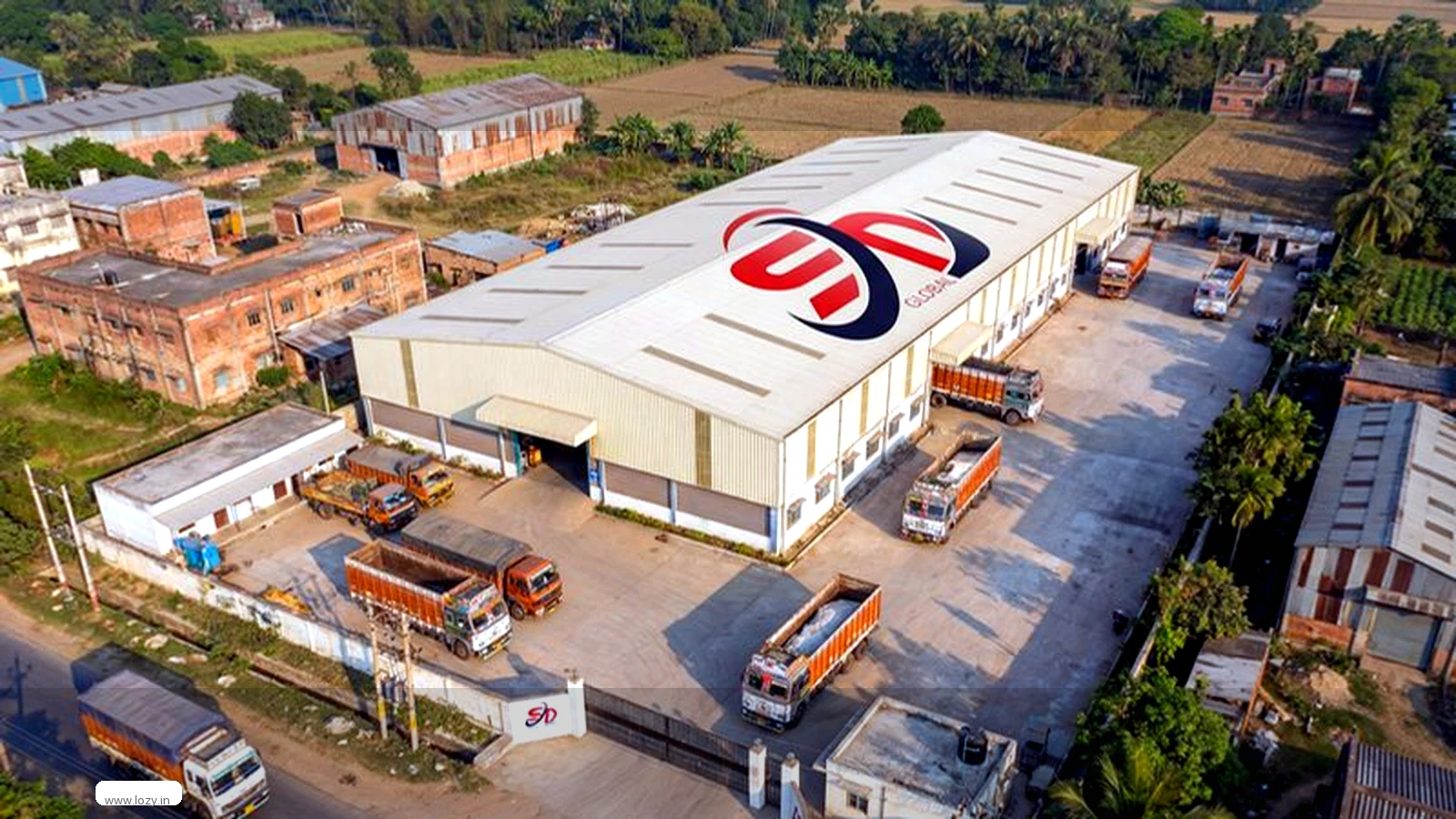
Lozy's own godown there is a 50,000 sq ft building off the Mumbai–Nashik highway, with cross-dock operations, inventory handling, kitting and labelling, pick and pack and secondary distribution running on the floor rather than storage alone. That is the shape of port-belt demand: the space has to work, because the goods are moving through it rather than settling in it. The Mumbai location page carries the city-side detail.
The engineering belt: Pune and Chakan
Pune's storage demand is production-shaped. The city and the industrial belt to its north — the Chakan side, where much of the state's automotive and engineering capacity sits — buy a buffer rather than a building: raw material and packaging waiting on the line, components moving between suppliers, assemblies staged for a dispatch schedule that changes when the build schedule changes.
A supplier on that belt measures a warehouse in minutes and truck turns. A bay the plant's vehicle can back into, racking that keeps fast-moving part numbers reachable, and a gate that works on the shift the plant works. Miss a line-side delivery and the rate you negotiated stops mattering, which is why this belt behaves like an industrial requirement rather than a distribution one. The Pune location page sets out the city's own coverage.
The interior belt: Nashik and Aurangabad, and the eastern run
Head inland and the arithmetic changes. Nashik and Aurangabad are industrial towns with their own consumer markets and their own distributors, and the land under a shed there carries no port-adjacent premium. The trade is straightforward: less per square foot, and every load heading for Mumbai or the port starting with a longer drive than it would from Bhiwandi.
For goods that are not port-bound, that trade usually pays. A Nashik manufacturer supplying Nashik and Aurangabad wants stock inside that radius, not at the edge of Mumbai. Nagpur answers the same question for central India, holding stock for the far side of the state without routing it back through the Mumbai region at all.
The three belts side by side
Run this comparison before you look at any rate. Every row below is a decision you are making whether or not you write it down.
| The belt | What it is good at | What it costs you |
|---|---|---|
| Port belt — Bhiwandi | Cargo arriving from or leaving for the port, FMCG and 3PL volumes that ship every working day | The heaviest land value of the three, so the same budget buys less floor than it does inland |
| Engineering belt — Pune and Chakan | Component and line-side stock for plants on a build schedule, with truck access built into the estate | Demand follows production, so space tightens exactly when the plants are busiest |
| Interior belt — Nashik and Aurangabad | Stock destined for the state's own inland towns and their distributors, held on cheaper land | Every Mumbai-bound load starts with a longer drive than it would from the port belt |
| The eastern end — Nagpur | Central India and the far east of the state, served without a Mumbai leg at all | Furthest position from the port, so anything that must clear through Nhava Sheva travels the longest road |
Read the third column honestly. A business that picks the port belt for inland customers has paid a Mumbai land price on a Nashik route, and no negotiation recovers it. One that picks the interior belt for port-bound cargo pays in drayage and cut-off risk instead — the harder number to see, and the dearer one on the day a consignment misses its sailing.
Where Lozy's Maharashtra network actually sits
Lozy runs ten collection centres across Maharashtra. Five are named on the network list — Bhiwandi, Pune, Nashik, Aurangabad and Nagpur — and between them they cover the port belt, the engineering belt and the interior. Each booking is routed to the centre nearest the goods rather than to a single state hub, so a household in Nashik and a distributor in Pune are both collected from their own door.
The state's own facility is the Bhiwandi godown: 50,000 sq ft on the Mumbai–Nashik corridor, taking racked and bulk storage in the same building so that fast-moving lines and palletised bulk do not compete for floor. It is offered in parts rather than as one block, on terms as flexible as the area, so a business can open a western-India position without taking the whole floor.
All of it sits in a wider network of 77+ warehouses and more than a million square feet of live space, billed monthly on a GST invoice with no long lock-in. The Maharashtra location page lists the centres and the facility, and the warehouse listing shows what is free right now. The state's two metro posts take the cities on their own terms — warehousing in Mumbai and warehousing in Pune — while freight crossing the state line is covered by the Gujarat guide on the western side your inbound pallets come from and the Karnataka guide on the southern run out.
The corridors Maharashtra's goods move along
Storage in this state is a road decision before it is a property decision, and three routes carry most of it.
The Mumbai–Nashik corridor
This is the busiest of the three and the reason Bhiwandi exists as a warehouse town. Leaving the Mumbai region to the north-east, it carries port traffic out towards Nashik and the interior and brings consumer goods back the other way, which is why the belt filled up from the Mumbai end outwards rather than from Nashik downwards. The test for a unit anywhere on it is unglamorous: can a container trailer get in and out at the hour your dispatch actually runs, and how many minutes does that add before the highway?
The Mumbai–Pune expressway and the Chakan belt
Pune's freight runs on a different axis. The expressway links the city to Mumbai, while the industrial belt north of the city links the plants to each other and to the highways heading inland. A warehouse sitting between a plant and its suppliers shortens the loop on a component that has to come back the same week. Because these estates were laid out for industry, truck access is usually easier here than in the older, denser parts of the Mumbai region. Land is not.
The eastern run: Nagpur and central India
Nagpur does something the western belts cannot. Stock held there serves the eastern side of the state and the markets around it with no Mumbai leg, so the saving is a road mile on every dispatch rather than a few rupees on the rate. The choice on that axis is about volume and frequency, not distance alone: a permanent eastern requirement justifies a position there, while a seasonal one is often better served by taking space for the peak months and giving it back.
What Maharashtra businesses put in storage
Four kinds of customer fill the state's units, and each asks a different question of a facility.
FMCG, pharma and distribution
The port belt carries the distribution load: fast-moving consumer goods, pharmaceutical and personal-care stock, electronics and retail inventory, arriving in pallets and leaving in mixed consignments. These operations need racked positions they can pick from, floor for the bulky lines, and handling that keeps up when a campaign lands harder than the forecast. Labelling, kitting, rework and order assembly happen inside the shed rather than at the gate, which is why the deeper end of the port belt is bought as commercial warehousing rather than as bare floor.
Auto components and engineering stock
Around Pune and Chakan the goods are heavier and slower-moving: castings, machined parts, packaging material, spares held against a service commitment, assemblies waiting for a truck that leaves when the plant says so. The requirement is modest in area and demanding in access — a bay, a racked aisle, a place to put a pallet that must not be double-handled. Bulk requirements of that shape sit on the industrial and bulk warehousing side of the service.
E-commerce sellers and third-party logistics
Maharashtra is the largest consumer market any seller faces in India, and the state's storage demand reflects it. Sellers and 3PL operators keep stock where their cut-off times can be met: close to Mumbai in the port belt, close to Pune for the city's own orders, and inland where the delivery promise is a day rather than an hour. The requirement is rarely a whole building — usually a racked area sized to order volume, with room to add positions for a festive sale and hand them back after.
Households between two homes
The other half of the demand has nothing to do with trade. A state this size moves a great many people between its cities, and a family relocating from Mumbai to Pune, or from Nashik to Mumbai for a posting, needs somewhere dry for furniture, appliances and cartons rather than a warehouse floor. Self storage from ₹999 per month, billed month to month with PIN access and CCTV coverage, is the product built for that: a private unit rather than a shared aisle, sized to what a household actually owns.
What warehouse space in Maharashtra costs
Lozy publishes starting rates on its own service pages rather than a single state average, because an average quoted without its basis misleads more than it informs. Three figures matter for this market, each attached to the product it belongs to:
- Warehouse space for rent — from ₹12 per sq ft per month on the warehouse space for rent page. This is the basis you use when you are pricing a floor or a racked area by size, and it is the entry point for business storage in the state.
- Commercial warehousing — from ₹13 per sq ft per month on the commercial warehousing page, for managed space where handling, security and dispatch support are part of the service rather than add-ons.
- Self storage — from ₹999 per month, priced per unit on the self storage page, because a household is buying a lockable room rather than an area of floor.
All three are published starting points rather than quotations. Every one is billed monthly and invoiced with GST, and none carries a long lock-in, so space can grow for a peak and shrink again without unwinding a lease.
What moves the number in Maharashtra
- The belt. Land under a shed in Bhiwandi and land under an equivalent shed near Aurangabad are not priced alike, and the difference reaches the rent well before it reaches the transport bill.
- The area taken. A racked section sized to a few SKUs and a full bulk bay are different products, and the space you occupy is the largest single input to the rate.
- The term. A monthly booking and a longer commitment price differently, and the longer arrangement is usually the cheaper one per month for the same footprint.
- The extras. Handling, climate control, packing material, insurance and dispatch support each move the figure, so describe the goods rather than asking for a generic godown and you will be quoted what you actually need.
Two quotations in this state can look comparable and not be. Floor and racked space is priced per square foot per month, shared and palletised arrangements per pallet, and a lockable unit per unit. Ask which basis a quote uses before you line two numbers up, and confirm whether the rate includes GST, because a figure that names its basis is worth more than one that is simply lower.
A worked example: one requirement, two belt answers
Take a distributor of household and personal-care products with sales split four-to-one between the Mumbai region and the state's interior. Most volume arrives in pallets from a manufacturer in Gujarat, and the peak is the run-up to the festive season, when the requirement roughly doubles for about ten weeks.
The base requirement is around 4,500 sq ft of racked and floor space. Held in one place on the port belt at the published starting rate of ₹12 per sq ft per month, that is about ₹54,000 a month. Held as a 3,000 sq ft port-belt unit plus 1,500 sq ft inland at Nashik at the same starting rate, it is ₹36,000 plus ₹18,000 — the same ₹54,000, because the starting rate is a per-square-foot number rather than a city-by-city price list. Treat the figure as indicative; the final rate follows the unit, the term and the extras.
So the rate does not decide this one. What decides it is that the split creates a second set of stock positions, a second check-in and a second floor to manage, while removing a day from every interior delivery and a long southbound leg during the peak. The single unit wins on simplicity, the split wins on service, and the festive ten weeks are the tiebreaker: the distributor can add positions at the port-belt unit for the peak and give them back in January, which is what business warehousing is priced for. The lesson is not the number — it is that the belt decision and the rate decision are separate ones.
Compliance and paperwork for a Maharashtra warehouse
None of this is difficult, and all of it is cheaper to settle before the first truck arrives than after it.
GST, the e-way bill and the invoice
Storage rent in Maharashtra attracts GST, and a registered business can claim input credit when the invoice is raised correctly: in your entity's name, as a tax invoice, with the storage and handling lines shown the way your accountant needs them. Goods moving on the road between states, or over the threshold within one, travel with an e-way bill raised by the consignor or consignee. Those rules are published on the GST portal. A cash rent paid with no invoice looks cheaper every month and costs more across a year, because none of it comes back.
Land use, industrial estates and fire clearance
Maharashtra's industrial land is largely developed through the state's industrial development corporation, and a shed inside an approved estate carries the land-use position a warehouse needs. The Maharashtra Industrial Development Corporation publishes the estate framework behind that, and the state's economic profile sets out the industrial picture a site sits in. Ask any operator for the plain answer: which authority approved this building, and where are the occupancy and fire clearance papers? A slow answer is information in itself.
Monsoon, drainage and the site visit
June to September is the season that separates a good site from a cheap one, and the west-coast belt takes the heaviest of it. A yard that drains poorly turns a loading dock into a problem for days: trucks cannot approach cleanly, cartons get wet in transfer, and the floor near the doors stays damp. The checks are physical rather than contractual — plinth height above the surrounding grade, a hard-standing yard instead of loose ground, and a drain invert that runs away from the shed rather than towards it. Visit after rain if you can; a photograph taken in February will not tell you what the gate looked like in July.
How to choose between the belts — and the red flags
This is the checklist we would want a customer to run against us. It takes an hour and usually eliminates one of the three belts before you call anyone.
- Start with the direction your trucks leave in. Port-bound, plant-bound or inland distribution — that answer picks the belt, and no rate comparison improves on it.
- Match the space to the goods. Racked or floor, dry or climate-controlled, a shared aisle or a lockable unit of your own.
- Drive the route, not the map. Time the run from the gate to your main customer area at the hour you dispatch, not at noon on a Sunday.
- Check the approach before the racking. Width, height clearance, turning circle. A port-belt shed with a trailer-friendly yard beats an inland unit down a lane with a height barrier, whatever the interior looks like.
- Get the inclusions in writing. Racking, trolleys, handling, security and pest control vary between facilities and change the real cost more than the rate does.
- Confirm the basis and the notice period. How the number is calculated, and how much notice you must give to leave.
- Ask what the next size up looks like. In an inland belt especially the answer may be a different site, which is better known now than at peak.
Red flags, in the order they usually appear: a quote that will not say whether GST is included or how the number is built; a yard you cannot picture a container trailer reversing into; an operator who cannot produce an occupancy or fire clearance; a monthly figure that turns out to carry an annual minimum; and a facility that cannot tell you which unit your pallets will sit in until you arrive with the truck. Any one of those is worth asking about twice, and the Maharashtra coverage is public, so there is no reason to accept a vague answer about it.
Also in Delhi NCR
Maharashtra and Delhi NCR are two ends of the same national run, and the loads are rarely one-way. A distributor holding import stock at Bhiwandi for the port and a northern position for NCR deliveries is running two belts of one network, not two suppliers. The New Delhi guide covers space inside the capital, and the Gurgaon guide the Manesar and Kherki Daula belts where most NCR freight actually sits. Read with the belt logic above, they answer the same question at the other end of the highway.
How Lozy helps in Maharashtra
Lozy runs ten collection centres in the state and the 50,000 sq ft Bhiwandi godown on the Mumbai–Nashik corridor, backed by 77+ warehouses and more than a million square feet of live space nationally. Every unit comes with a dedicated racked or floor area, 24/7 CCTV, on-site security and unique PIN access to gates, lifts and your own storage area, and billing is monthly on a GST invoice with no long lock-in.
Moving in is the part most businesses worry about, so it is the part we run tightest. Free doorstep pickup is included on bookings of 30 days or more, goods are checked in against your own list pallet by pallet, and a photo inventory backs the check-in summary. When the requirement changes — a festive peak, a new plant contract, an export season — you change size inside the same facility instead of renegotiating.
Everything the company runs is set out on the services page, and the centres themselves are on the Maharashtra location page. If you would rather see the space first, browse the warehouse listing for what is free right now, or talk to the team with the belt, the size and the timeline you have in mind. The locations hub covers the rest of the network if your goods move beyond this state, and the Lozy blog carries the deeper guides on business warehousing and warehouse space for rent.

Need warehouse space in Maharashtra?
Tell us the belt and the size you need — we reply with a rate and the options available now.
Get a quoteCall +91 93547 12345About the author
Lozy Editorial Desk. This guide was written by the Lozy Editorial Desk, the in-house team that covers warehousing, self storage, logistics and customs/EXIM topics for lozy.in. We write from Lozy's own facility and pricing information and from public, citable sources. We do not publish invented statistics, ratings or reviews.
Sources. Facility names, centre counts and prices are Lozy's own published information. Corridor and highway context comes from the National Highways Authority of India; port and container context from the Jawaharlal Nehru Port Authority; industry context from the Warehousing Development and Regulatory Authority and IBEF's Maharashtra profile; industrial land and estate framework from the Maharashtra Industrial Development Corporation; warehouse receipt regulation from the WDRA; and policy releases from the Press Information Bureau. If you want to read more before you call, the Lozy blog covers warehousing, self storage and customs in the same plain style as this post.
Last updated: 13 October 2026. Have a question the FAQ below does not answer? Call +91 93547 12345 or email care@lozy.in.
Need warehousing or storage in India?
Request a free, tailored quote in under 2 minutes — free pickup, no lock-in.