Bonded Warehouse in India: How Duty Deferment Actually Works (2026 Guide)
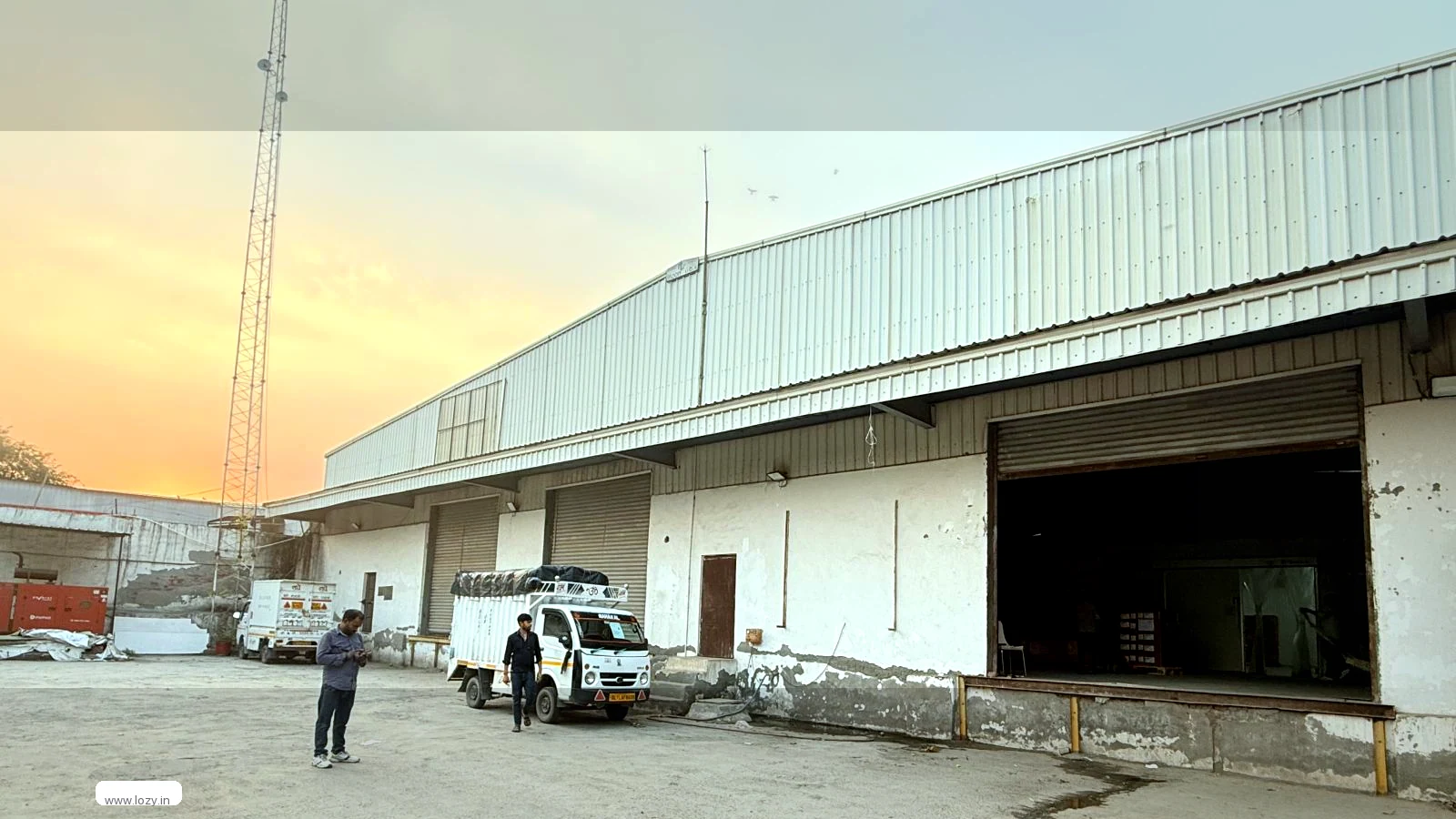
A bonded warehouse in India is a customs-licensed building that stores imported goods while duty and IGST stay unpaid. The duty falls due only when you clear goods for use or sale in the country, and not at all if they leave again on a shipping bill. Bonded storage is a cash-flow decision before it is a storage decision, and the whole of this guide is about the difference between the two.
Key takeaways
- Bonded warehouses in India are licensed under the Customs Act, 1962. Duty and IGST are paid at ex-bond clearance, on the quantity you clear and at the rate in force on the day the ex-bond bill of entry is filed.
- Most goods may stay in bond for up to a year, and the Commissioner can extend that. Interest on the deferred duty begins once goods pass 90 days in bond, so a deferment is genuinely free only inside that window.
- Lozy runs the bonded service from the Delhi NCR depots and IGI Air Cargo: into-bond and ex-bond filing, bonded storage, part clearances, re-export from bond, bond-to-bond transfers, and inspection or sampling of goods in bond with customs permission.
- Ordinary space starts at ₹12 per sq ft per month on warehouse space for rent, ₹14 for business space and ₹4,499 per month on an inventory-led plan. Bonded storage is quoted on its own basis, and every figure here is a starting floor rather than a quote.
Import duty is a payment that lands at the worst possible moment. A consignment arrives, the assessment is done, duty and IGST are settled, and only then does the cargo move - which means the tax on a full shipment is paid on the day the ship berths, whether or not a single unit has been sold. Bonded storage interrupts that sequence without changing the amount owed. It is not a discount, not a free port and not an exemption; it is a delay, and a well-used delay is money that stays working in your business for the months the goods take to sell. The customs framework behind it is published by the Central Board of Indirect Taxes and Customs, the filings run electronically through ICEGATE, and the Lozy customs desk handles the into-bond and ex-bond work as one file. Where you prefer the operational picture first, the import and export warehousing guide covers the de-stuffing and depot side, and this post takes the bond itself.
What a bonded warehouse in India actually is
A bonded warehouse in India is a storage facility licensed to hold imported goods on which duty and IGST have not yet been paid. The goods sit under customs control inside the building, counted and recorded lot by lot, and they cannot leave for the domestic market until an ex-bond entry is filed and the duty is settled. Lozy's own customs bonded warehouse page sets out the mechanism in one line: duty is deferred, not cancelled.
The licence, the bond and who answers for the goods
Three parties share the arrangement. The importer owes the duty and owns the stock. Customs watches the liability and releases the goods only on a filed entry. The warehouse operator holds the merchant or private bond that lets the goods be stored outside a port area in the first place, which is why the operator keeps the lot records and the into-bond dates, and why the bonded zone is physically separated from duty-paid stock. When a warehouse says it can hold bonded cargo, what it is really saying is that it can stand behind that bond, keep a customs-auditable record, and produce the goods on demand.
What it is not
A bonded warehouse is not a way to avoid tax. Duty on goods sold in India is paid in full; the only quantity that escapes Indian import duty is stock re-exported from bond on a shipping bill, which leaves the country rather than the market. It is also not a place to store domestic goods or already-cleared imports, because those have no duty outstanding and nothing for customs to supervise. And it is not universal: only a licensed facility can accept cargo into bond, so an ordinary duty-paid bay cannot be converted into one by asking.
What duty deferment does to working capital, in plain terms
Start with what normally happens. Goods land, duty and IGST are paid, and the tax is treated as part of the landed cost on the day the goods are received. If those goods take four months to sell, the duty you paid in month one has been sitting in stock rather than in the bank for the whole of it. That is the entire argument for bonding, and it is a working-capital argument rather than a tax argument.
The money that stays in the business
When the cargo goes into bond instead, the duty and IGST on the whole consignment stay unpaid until you clear. Sell a quarter of the stock and you pay duty on a quarter of it. The tax tracks the sale rather than the shipment. For an importer whose consignments are large, whose duty rate is high and whose stock turns slowly, the sum that would have left the account at the port is instead available for the next order, for payroll, or simply as headroom against a lean quarter. Nothing about the goods changes; only the date the liability is settled.
Where deferment stops being free: the 90-day mark
A delay is only a benefit while it costs less than the alternative. Lozy's bonded page is explicit that interest on the deferred duty begins once goods pass 90 days in bond, so the free window is the first quarter. Inside it, the money you hold has a value equal to what it would have cost to fund that same duty from a bank or a working-capital line. Once the interest clock starts, the deferment has a price, and the calculation becomes the interest on the deferred amount against the cost of funds you would otherwise pay. That is why a bond plan should be built around clearance dates - which lots sell when - rather than around the longest possible stay. Most goods can rest up to a year, but a year is a maximum, not a target.
Bonded versus general warehouse: the difference that matters
The two facilities look identical from the gate and behave nothing alike. The table below is the comparison worth holding in mind, because most of the cost of getting it wrong shows up months later and in the wrong line of the accounts.
| What changes | Customs bonded warehouse | General (non-bonded) warehouse |
|---|---|---|
| When duty and IGST are paid | At ex-bond clearance, only on the quantity you clear | Before the goods arrive at the bay; the stock is already duty-paid |
| What it may hold | Imported goods with duty and IGST outstanding | Domestic goods, or imports that have already been cleared |
| Customs control | Yes, from into-bond filing to ex-bond release | None; it is ordinary storage |
| Re-export | Leaves from bond on a shipping bill with no Indian import duty | Duty has already been paid and is not refunded on re-export |
| Stock records | Lot-wise, with the into-bond date logged for each lot | Recorded for your own stock control |
| Best for | Deferring duty, clearing in batches, keeping re-export open | Stock already cleared for sale in India |
| Worst fit for | Stock you intend to sell and deliver within days | Goods whose duty should wait several months |
Read the "when duty is paid" row first, because it decides everything beneath it. A general bay that receives duty-paid cargo has nothing to file, nothing to defer and nothing to release, which is why it can rent on a per square foot basis and move at ordinary speed. A bonded bay carries a customs file with every pallet, and that file is what the importer is buying alongside the space: control, record and the option to change their mind about the goods.
The documents that actually move through bond
Bonded storage is a paperwork arrangement with a warehouse attached, so the file is the product. Three stages carry the cargo from a vessel to a cleared delivery, and each has its own entry.
Before the goods land
The set opens at origin, well before a berth is booked: the commercial invoice, the packing list, the bill of lading or airway bill, and the Importer-Exporter Code that a business holds with DGFT, alongside any product-specific licence the goods require. Getting these right is what lets the assessment run without a query, and a query at the gateway is the one delay that reliably costs the container's free period.
The into-bond file
To move cargo into bond rather than paying on arrival, the entry is filed for warehousing and the goods are placed under customs control. The warehouse into-bond date is recorded against each lot as the pallets are put away, because that date is the anchor for both clocks that follow: the 90-day interest mark and the end of the permitted stay. Cargo travels from the gateway to the bonded zone under customs seal, and the seal is read and broken at the receiving dock rather than at the port.
The ex-bond file
When stock is needed, an ex-bond bill of entry is filed for the quantity being taken out, duty is paid at the rate in force on the day of that filing, and the goods are released. The important detail is that this is done per lot, so a consignment on a single bill of lading can serve several orders without the whole of it being cleared at once. For goods destined abroad, the same decision is made the other way: a shipping bill is filed and the cargo leaves from bond without any Indian import duty becoming payable. Lozy's customs services desk runs both the filing and the release, and can act as Importer or Exporter of Record where a business has no Indian entity of its own.
How bonded storage connects to ICD, CFS and port movement
A bonded warehouse is only useful if it sits close to the point where your cargo actually appears, because the goods have to travel from the gateway to the bonded zone before any of the deferment begins. That journey is where CFS and ICD facilities decide your timing.
The gateway: port, airport and inland depot
Most Delhi NCR clearances run through Tughlakabad - India's largest dry port - or IGI Airport for air cargo, with Lozy warehouse bays a short run from either. The Lozy locations page maps the positions that sit near those gateways, and the practical rule is simple: the shorter the leg between the container's release and the bonded dock, the sooner the goods are under record and the more of the free period you keep.
What a CFS does, and what it does not
A container freight station is where a container is de-stuffed, examined and handled for customs purposes near the point of entry. It sells speed at the gateway and a place for examination to happen; it does not sell months of storage, because its free period is short and its yard is built for throughput. An importer who needs the goods to rest - while a classification is settled, an approval arrives, or the buyer simply is not ready - needs a bonded facility inland, not a longer stay at a CFS.
Moving cargo under bond, and bond to bond
Once goods are in bond they can move again without being cleared. Bonded cargo travels between facilities under customs seal, and a bond-to-bond transfer moves stock from one licensed warehouse to another without duty being paid in between, which lets a business hold bonded stock near a gateway and shift it closer to the market as demand firms up. Transfers are not casual: each one is a filing, and the receiving warehouse has to be able to hold bond. This is the mechanism that ties a bonded facility to the ICD and port network rather than leaving it as an isolated shed.
When bonded storage is the wrong answer
Bonding is a tool with a narrow best fit, and there are clear cases where it costs more than it saves. Walk away from it in these situations.
- The duty will be paid within days anyway. If the goods are sold and delivered on arrival, the deferment window is a week and the benefit barely covers the extra filing. Pay at the port and move on.
- The duty is small. Deferment is worth the paperwork when the amount deferred is large enough to matter to your cash position. On a low-duty consignment the filing cost and the complexity can exceed the saving.
- There is nothing to batch and no chance of re-export. Bond earns its keep through part clearances and the re-export option. A single consignment sold in a single lot, with no prospect of the goods leaving India, gains little.
- The bonded site is a long way from the gateway. A cheap rate a hundred kilometres from the container's release is spent again on drayage and on the free period you burn before the goods are under record.
- The stock is not imported, or is already cleared. Domestic goods and duty-paid imports have no outstanding liability and cannot go into bond; putting them in a bonded zone only muddles the record.
None of this argues against bond as such. It argues for asking one question first: how long will this stock sit, and how much duty am I holding back by making it sit under control? If the answer is weeks and a meaningful amount, bond fits. If it is days and loose change, it does not.
What bonded storage costs
Lozy publishes starting rates against the service each one belongs to rather than a single customs figure, since the storage basis and the customs charges are separate parts of the bill and mixing them misleads. Four published bases cover most bonded requirements:
- Warehouse and godown space for rent - from ₹12 per sq ft per month on the warehouse and godown space for rent page, priced by floor area, for the palletised stock that sits in bond.
- Business and managed space - from ₹14 per sq ft per month on the business warehousing page, for racked or floor space held month by month with handling and invoicing in the plan.
- Industrial space - from ₹12 per sq ft per month on the industrial warehousing page, for bulk cargo, drums and heavy import stock with dock access.
- Inventory-led storage - from ₹4,499 per month on the inventory warehousing page, where bonded stock is tracked as a running lot-wise ledger rather than as a rented area.
Those four are starting rates; billing is monthly, invoiced with GST, with no long lock-in. Bonded storage itself is a different service from duty-paid storage - it carries the filing, control and lot records that customs supervision requires - so it is quoted on its own basis after a look at your pallets and the days you expect to stay in bond. Customs charges are itemised separately from storage, and your quote should let you read the duty, the taxes and the desk's own fee apart from the rent. The published storage bases sit together on the Lozy pricing page.
What moves the number
- Whether the space is bonded. A customs-controlled zone is a different product from an ordinary bay, and the filing and control are priced with it.
- Dwell time. A cargo cleared inside a month and one that rests nine months use similar floor area and are different businesses, because the second ties the position up through a season.
- Handling intensity. A floor-loaded mixed container costs more labour to count and re-palletise into bond than a clean palletised load with a readable packing list.
- Gateways and drayage. Space near Tughlakabad or the air cargo complex and space across the region are not the same asset, and the gap reappears in the short truck legs as well as the rent.
- Add-ons. Dedicated labour, packing material, insurance and any climate-controlled position sit on top of the space rate, which is why describing the cargo beats asking for a generic bonded shed.
A worked example: an importer clearing in lots at Tughlakabad
Take the case below as representative rather than a real account. An importer of packaging machinery brings in a full container of mixed spares and completed units through Tughlakabad, and sells them to dealers across Haryana and western Uttar Pradesh over the following six months. Two routes are on the table. The first is to pay the duty at the port on the whole consignment and hold the goods in an ordinary duty-paid bay. The second is to take the consignment into bond and clear it against dealer orders.
The bond route wins on the arithmetic, and for one reason: the duty on the whole container would have left the account in month one and returned as sales spread across six. Held in bond, duty is paid only as lots are cleared, so the tax outflow lines up with the dealer orders that fund it. The risk in the plan is the clock. The stock sits under record at a Lozy bay near the gateway, the into-bond date is logged against each lot, and the desk keeps the clearance plan inside the 90-day interest-free window by clearing the fast-moving lines first and moving the slower ones out before the mark. Anything left long enough to re-export - a few units for a regional buyer - leaves from bond on a shipping bill with no Indian import duty at all.
What decides the case is neither the rate nor the postcode. It is whether the stock genuinely turns over more slowly than the duty would have been paid, and whether the clearance dates are managed against the two clocks rather than left to the calendar. Get that right and the deferment is real money; get it wrong and the interest and the filing cost eat the benefit.
What people get wrong about bonded storage
The mistakes in this trade are consistent, and most of them come from treating a deferment as an exemption.
- Reading "bonded" as "duty-free". Duty on goods sold in India is paid in full; only re-exported stock escapes Indian import duty. A plan built on the idea that bond reduces the tax rather than delays it collapses at the first clearance.
- Ignoring the 90-day mark. The free window is a quarter. Interest on the deferred duty starts once goods pass that point, and a consignment left to rest without a clearance plan turns a saving into a cost.
- Paying duty at the port when bond was open. This is the one decision that cannot be reversed. Once duty and IGST are paid, no bonded route returns them, so the choice has to be made before the entry is filed, not after the allocation is regretted.
- Keeping the bonded stock in an unlicensed bay. Only a licensed facility can accept cargo into bond. A duty-paid godown cannot hold bonded cargo no matter how much space it has, and stock placed there without an into-bond entry is simply undeclared.
- No lot-wise record. Bonded stock has to be traceable from the entry that brought it in to the ex-bond entry that releases it. A count kept by eye cannot answer a customs query or support a later duty or IGST recovery position.
- Forgetting the container clock. Detention on the box runs on a separate schedule from the bond. A bay that is slow to release the empty leaves the importer paying for a container that is carrying nothing.
Two habits hold the rest together. Choose the bonded route at the point of filing, when the option is still open, rather than after the duty has been paid. And keep the clearance plan on the same page as the into-bond dates, so the 90-day mark and the end of the stay are planned around rather than discovered.
How Lozy handles bonded storage and customs
Lozy runs the customs desk and the storage bay under one roof, which matters here because bonded cargo needs both. The customs bonded warehouse service covers into-bond and ex-bond filing, bonded storage in a customs-controlled zone, part clearances, re-export from bond, bond-to-bond transfers, and inspection or sampling of goods in bond with customs permission - each lot logged with its into-bond date so the two clocks are visible. The customs services desk sits alongside it and handles clearance, Importer or Exporter of Record where you have no local set-up, delivered duty paid delivery, cargo liability cover, and IGST and duty recovery, and can sort product compliance such as BIS, WPC and EPR before the goods ship.
The storage behind the bond draws on 77+ warehouses and more than one million square feet of live space, with a Delhi NCR base and a PAN-India network. That means bonded cargo can come in near Tughlakabad or IGI Air Cargo and, where it suits the sale, move on to a position nearer the market without clearing first. Where the requirement is a mix of bonded and ordinary storage - some stock clearing duty at once and some waiting - a duty-paid bay sits under the same management, and an inventory warehousing plan keeps both sides on one lot-wise ledger. Everything Lozy operates is listed on the services page, and browsing the warehouse listing shows what is free right now.
Related reading in the same family: the import and export warehousing guide covers de-stuffing, CFS and ICD coordination and the duty trail from the operational side; the inventory warehousing guide explains a lot-wise ledger; the warehouse for rent guide and the business warehousing guide set out the space bases in plain terms. Bring your pallet count, your gateway and the dates you expect to clear, and the FAQ together with the contact page is where the reply comes back - a rate, what is available, and an honest answer on whether bond is worth it for your consignment at all.

Related guides
- warehousing for importers and exporters guide
- warehouse rent per sq ft
- warehousing companies in Delhi NCR
- warehouse inspection checklist
Weighing a bonded consignment against paying duty at the port?
Send your gateway, your pallet count and the dates you expect to clear - we reply with a rate, what is available in bond, and an honest read on whether it is worth it.
Get a quoteCall +91 93547 12345Sources. Rates, facility details, bonded services and network counts are Lozy's own published information, drawn from the live customs bonded warehouse and customs services pages. The warehousing provisions behind bond come from the Customs Act, 1962 as published by the Central Board of Indirect Taxes and Customs; electronic filing from ICEGATE; the Importer-Exporter Code regime from DGFT; and GST registration and input credit rules from the GST portal.
Last updated: 14 October 2026. Have a question the FAQ below does not answer? Call +91 93547 12345 or email care@lozy.in.
Need warehousing or storage in India?
Request a free, tailored quote in under 2 minutes — free pickup, no lock-in.