Warehouse Rent Per Sq Ft in Delhi NCR: What Moves the Rate (2026 Guide)
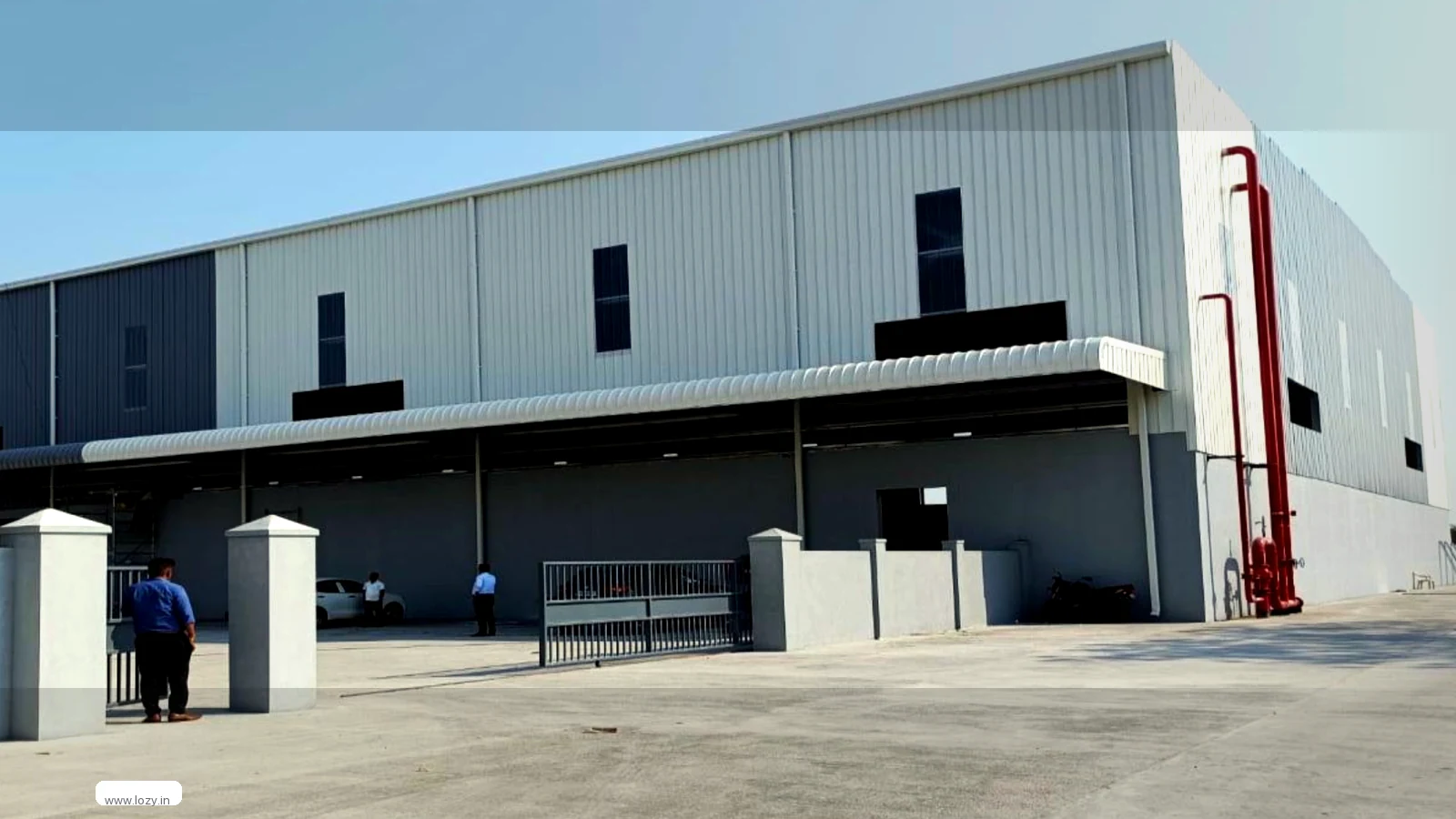
Warehouse rent per sq ft in Delhi NCR is where every enquiry starts, and it is also the number most likely to mislead. Rates across the region are quoted on different bases — per square foot, per pallet, per unit and per monthly plan — and the headline figure usually sits above handling, power, dock use and GST rather than covering them. Lozy's published starting figure is ₹12 per sq ft per month, a basis to compare from and not a quote. This guide sets out what that rate actually buys, how the billed area is measured and the six things that move a Delhi NCR rate.
Key takeaways
- Lozy's published starting basis is ₹12 per sq ft per month for warehouse and godown space, ₹13 for commercial space and ₹14 for business or on-demand space — each a floor, not a quote.
- A per sq ft rate normally covers the floor, the building and its common areas; handling, power, dock use, packing material, insurance and GST are billed separately unless the quote names them.
- The billed area, not the usable area, sets the invoice — centre-line measurement, mezzanine treatment and office blocks can open a wide gap between the number quoted and the pallet positions you can actually use.
- Six things move a Delhi NCR rate: corridor, building specification, clear height, term, handling and the quantity taken — and NH-44, NH-48 and NH-19 do not price alike.
Delhi NCR is not one rental market with one rate per square foot. It is a set of corridors — the National Capital Region is a planning construct defined by the NCR Planning Board before it is a property market — and each corridor carries its own land cost, building stock and tenant mix. A shed on the NH-48 side of Gurugram, a converted bay in the Faridabad belt and a new build on the Ghaziabad approach are all advertised per square foot, and none is quite the same product.
The useful question is therefore not what the rate is, but what it covers, what the invoice is measured on and which of the six drivers below your requirement is sensitive to. Settle those and two quotes become two propositions you can choose between.
What a per sq ft rate includes — and what is billed on top
Ask for a rate on a Delhi NCR warehouse and you will normally be handed one number, per square foot, per month. That number is a starting point rather than the whole bill, and the fastest way to compare two of them honestly is to split each quote into what sits inside it and what is charged on top. Lozy publishes warehouse and godown space for rent from ₹12 per sq ft per month, and what that basis includes is published with it rather than assumed.
What the quoted rate normally covers
The floor you are billed for, and the building that stands over it: the shell, the roof, the loading face, the columns, the lighting, the common yard and the shared circulation. At a managed, month-to-month position it also carries 24/7 security, access control and pest control, because those are operating costs the facility runs rather than lines you commission. Common areas and the yard generally sit inside the rate; a landlord who itemises the yard separately is doing it deliberately, and it is worth noticing.
What is usually charged on top of the rate
These are the lines that most often sit outside the headline number, in the order they matter to a Delhi NCR distributor:
- Inward and outward handling. Labour to unload, put away, pick and load is a separate line in most managed contracts, priced per pallet, per carton or per man-day. A rent-only quote in the region almost never includes it.
- Power and electricity. Lighting, dock levellers, compactors and any climate control are metered or apportioned at the utility's rate. On a dense racked operation or temperature-sensitive stock this line can rival the rent.
- Dock use and after-hours work. Loading bays are shared at many facilities and are sometimes billed per turn, per hour or per vehicle, with movements outside the standard window charged as overtime.
- Packing material and consumables. Stretch wrap, cartons, strapping and labels are consumables, billed as you use them unless the quote says otherwise.
- Insurance on your goods. The building and its fire systems are the landlord's concern; the stock is yours. Insurance on stored inventory is a separate cost and is rarely inside the rate.
- GST. Warehouse rent attracts GST, charged above the quoted rate rather than inside it. A registered business can claim input credit when the tax invoice is raised in its own entity's name, which is why the invoice format deserves as much attention as the rate — the rules sit on the GST portal.
The practical test is one sentence long: list every charge your operation will generate in a normal month, then ask which of them the quote contains. A rate with handling excluded is not the same product as one with handling inside it, however similar the two figures look on a page.
How the billable area is measured
Two quotes for the same nominal size can sit twenty per cent apart before a single rupee of rate is discussed, because the area a landlord bills is not necessarily the area you can store in. Four measurements get used across Delhi NCR, sometimes precisely and sometimes interchangeably.
Carpet, built-up, centre-line and chargeable
Carpet or usable area is the floor your operation can work in — between the columns, excluding the office block, toilets, stair core and wall thickness. Built-up area adds the structure and often a share of the common area. Centre-line measurement takes the billed footprint to the middle of the shared walls, a convention common in older sheds, which inflates the number on the page relative to the floor you can rack. Chargeable or leasable area is whatever the lease settles on, and it is the only one of the four that appears on your invoice.
Some landowners include the loading apron, driver rest area, security cabin and office block in the chargeable number; others keep them outside it. Both are defensible, but they are not the same measurement, so a ₹12 basis on an inflated chargeable area can cost more per usable pallet position than a ₹14 basis on a tight one. The corridor compounds that, which is why the all-India per sq ft comparison shows the same building grade pricing differently market to market.
Mezzanine, rack structures and office blocks
A mezzanine floor, an in-shed office and a permanent rack structure are each treated differently in different contracts. One landlord may bring the mezzanine into the chargeable area at the full ground-floor rate, another may charge a reduced rate for the upper level, a third may exclude it and price rack positions separately. If your plan turns on a mezzanine or a two-level pick face, that treatment is a direct multiplier on the bill and belongs in the written quote before the rate is agreed.
The questions to ask before you compare two quotes
- Is this carpet, built-up, centre-line or chargeable? Insist on the definition, not only the number.
- What is inside the charged area? Ask specifically about the apron, the office, the mezzanine and the rack footprint.
- How many pallet positions does it support at the clear height on offer? That, not the square footage, is what your operation consumes.
- Where is the dimensioned drawing? A measured plan settles an argument a floor-area figure alone cannot.
For the terminology behind the labels, godown vs warehouse vs self storage sets out what each word implies about specification and compliance, which decides whether a cheap shed is usable for your cargo at all.
Why two quotes for the same size differ
Two landlords in the same corridor, both quoting 20,000 sq ft, can end up a clear margin apart once the measurement is normalised — and the gap usually has nothing to do with the asking rate. It sits in four places: the definition of the charged area, the rateable treatment of the mezzanine and office block, whether handling, power and dock use are inside or outside, and the escalation and term attached to the deal.
The consequence is that negotiating only the headline rate means negotiating the least informative number on the table. Ask for every quote written out on the same six lines — rate, basis, charged area, escalations, handling, exclusions — and the comparison makes itself.
The cost bases, and what each one suits
A per sq ft rate is one way of pricing warehouse space, not the only one. Before putting two figures side by side, note which basis each quote is built on, because comparing a per-pallet quote with a per-sq-ft quote is the fastest route to a confident and wrong decision.
| Cost basis | What you are billed on | When it suits in Delhi NCR |
|---|---|---|
| Per sq ft per month | The billed floor area, measured as the lease defines it | A bulky, steady requirement you can size in area — bulk pallets, raw material, buffer stock |
| Per pallet per month | Each pallet position, including the rack level above it | Fast-moving cartons and trade packs where you think in pallets rather than in floors |
| Per unit per month | A lockable room or enclosure, priced as one unit | Records, samples, high-value goods and small equipment you want behind your own lock |
| Monthly plan | The space you occupy in a given month, often from a published monthly starting figure | Peaks, market entry, seasonal stock and any requirement you cannot forecast beyond a season |
Most businesses in the region end up on two bases at once: floor area for bulky or slow lines and pallet positions for the ones that turn weekly. That mix is a legitimate arrangement worth asking for, because one basis applied to goods that behave differently means overpaying on one half and under-racking the other.
The basis also decides where you look. A palletised position inside a shared, managed facility is what commercial warehousing sells, priced per position or per area depending on the site, while a lockable room for records or samples is priced as a unit on the self storage side. A fixed longer commitment prices differently again, and it is worth comparing that directly in the long-term warehousing guide against the short-term alternative when your horizon is uncertain.
The six things that move a Delhi NCR rate
Once the basis is settled, six variables decide where inside the public range a specific quote lands. Each is visible before you sign rather than after.
1. The corridor
Location is the largest driver, and in this region location means which highway you sit on. A shed near the NH-48 belt through Gurugram, a bay in the Faridabad estates off NH-19, a plot on the Ghaziabad or Noida approach and a build out past Sonipat on the NH-44 side serve different buyers with different route economics. The corridors are maintained by the National Highways Authority of India; on the Haryana side estates are allotted through the HSIIDC, and on the Uttar Pradesh side through its industrial development authorities, such as the Noida Authority, which is why an approved estate plot prices differently from private land in the same district.
2. Building specification
Purpose-built stock and converted space are not the same product. A shed with dock-height loading, fire hydrant and sprinkler systems, a paved yard and documented compliance commands more than a godown with one shutter and a low ceiling, and the gap reflects real differences in what the building can legally and practically hold. It is a different answer to a different question, not a discount.
3. Clear height
Clear height decides how many pallet levels the same floor carries, and therefore your true cost per pallet stored. Two sheds at the same per sq ft rate are not the same value if one stacks four pallets high and the other two. Whatever the headline says, the figure to track is cost per pallet position.
4. Term
A monthly position and a longer commitment price differently, and the longer one is often cheaper per month for the same footprint. The trade is flexibility against rate: monthly billing lets you grow into a peak and shrink out of it, while a fixed commitment protects a lower rate and charges you through the quiet months. The break-even is your peak-to-trough ratio, not a general rule.
5. Handling
Whether the facility supplies labour and equipment, and how intensively your goods need them, moves the true monthly figure more than a rupee or two of rate. A carton-handed operation and a full-pallet operation at the same address do not cost the same to run, so describe your goods and your movement pattern when you ask for a rate.
6. Quantity taken
The area or position count you commit to is the most controllable driver. A single rack and a full bay are different products on the same price curve, and size interacts with term: a larger commitment over a longer horizon has more room in it than a small monthly one. It is also the easiest thing to change later, by adding or releasing space inside the same facility.
What warehouse rent per sq ft in Delhi NCR costs
Lozy publishes starting figures on its own service pages rather than a single regional average, because an average without its basis misleads more than it informs. Each number below is the floor for the service it belongs to and a basis to compare from — never a quotation, and never a figure anyone can be promised before a requirement is assessed.
- Warehouse and godown space — from ₹12 per sq ft per month on the warehouse space for rent page, the basis to use when pricing a floorplate by area.
- Industrial and bulk warehousing — from ₹12 per sq ft per month for large floorplates with dock access, on the industrial warehousing page.
- Commercial warehousing — from ₹13 per sq ft per month for racked or shared positions, billed on the area or position count you take.
- Business and on-demand warehousing — from ₹14 per sq ft per month, taken month by month with security, handling and invoicing included, on the on-demand warehouse page.
- Monthly managed plans — smaller footprints and services priced as monthly starting figures from a few hundred to a few thousand rupees, set out on the pricing page and inside the services catalogue.
All of these are starting rates, billed monthly with a GST invoice and without a long lock-in. What a business pays above the published floor depends on the six drivers above and on the region's wider industrial conditions, which the IBEF tracks in its state profiles. The honest way to reach your own figure is to compare quotes rather than argue from a headline.
A worked example: one requirement, three corridors
Take a representative case rather than a named customer. A distributor of fast-moving consumer goods needs about 20,000 sq ft to serve Delhi, Ghaziabad and the Noida belt, and has shortlisted three options: a shed in the Faridabad belt off NH-19, a position on the Ghaziabad approach near NH-9, and a managed facility on the Gurugram side of NH-48. Lozy's published starting basis is ₹12 per sq ft per month.
At that floor on 20,000 billed sq ft the space costs ₹2,40,000 a month. If the same requirement lands on a centre-line measurement that bills 22,000 sq ft at the same ₹12, the bill becomes ₹2,64,000 — ₹24,000 a month, or ₹2,88,000 a year, more for goods that did not change. On a commercial position at the ₹13 basis on the same area the figure is ₹2,60,000; on a managed business or on-demand position at ₹14 it is ₹2,80,000. The same 20,000 sq ft spans ₹2,40,000 to ₹2,80,000 a month before anyone negotiates.
That span is why the corridor and the basis have to be settled together. Faridabad on NH-19 suits a route down the Mathura Road side into south Delhi; the Ghaziabad approach on NH-9 shortens the run into east Delhi and Noida; the Gurugram side on NH-48 is the natural home for a south-west route, the airport belt and a container-linked operation, and the Gurgaon coverage is where those facilities sit, while a Sonipat or Murthal shed on NH-44 answers the north. Choose the corridor from where your goods have to go, then use the rate only to compare addresses inside it — and check what is available on the warehouse listing before the range narrows further.
What people get wrong about per sq ft rates
The expensive mistakes in this market are consistent, and all are made before a single pallet arrives.
- Treating the rate as the bill. Handling, power, dock use, packing material, insurance and GST sit outside most published rates, and a ₹12 basis and a ₹14 basis can reverse in order of dearness once the inclusions are compared.
- Comparing across bases. A per-pallet quote and a per-sq-ft quote measure different things. Convert both to pallet positions at the clear height on offer before judging which is cheaper.
- Sizing by floor area instead of pallet positions. A cheaper rate on a low-ceiling shed can cost more per pallet stored than a dearer rate on a tall one.
- Ignoring the charged-area definition. Ten per cent more measured area is ten per cent more bill at the same rate. Ask for the definition and the drawing.
- Choosing the far, cheap corridor. A lower rate two corridors away is spent again in vehicle hours on every run. Measure the drive to your buyers at the hour your trucks leave.
- Forgetting the invoice. If the bill is not a GST tax invoice in your own entity's name, none of it returns as input credit, and the effective cost is higher than the rate suggests.
None of these needs an expert to spot, only the right questions asked before signature — which is what the frequently asked questions page and the warehouse for rent guide are for.
How Lozy helps across Delhi NCR
Lozy runs 77+ warehouses and more than one million square feet of live space, and Delhi NCR is the deepest part of the network — positions on the Gurugram, Manesar, Faridabad and Greater Noida belts, with collection reaching the Ghaziabad and Noida sides as well. That spread matters for a per sq ft decision, because it makes the corridor a routing choice rather than a compromise with whatever happens to be free.
Space can be taken as a managed business warehousing position or as one of the inventory warehousing plans priced as a monthly starting figure, across the region's locations. The proven Gurgaon rent guide works the same arithmetic for one corridor, the Delhi NCR price guide compares the storage options side by side, the provider round-up helps while you are still shortlisting, and monthly warehouse space explains the billing when your stock moves month to month. With a size, a corridor and a date, the contact page returns a written rate and the available options, usually the same working day.

Related guides
- warehouse for rent in Noida
- small warehouse for rent
- warehouse cost per pallet
- warehousing companies in Delhi NCR
Want the rate that applies to your corridor?
Tell us the size, the corridor and when you need it — we reply with a written rate and the options available now.
Get a quoteCall +91 93547 12345Sources. Rates, facility names and counts are Lozy's own published information. Region and corridor context draws on the National Highways Authority of India for the highway network, the HSIIDC and the Noida Authority for state industrial estates, the National Capital Region Planning Board for the definition of the NCR, the GST portal for registration and input credit, and IBEF for state economic profiles. The figures quoted above are starting bases, not quotations; the worked example uses Lozy's published ₹12 basis and illustrative areas, with all arithmetic our own.
Last updated: 14 October 2026. Have a question the FAQ below does not answer? Call +91 93547 12345 or email care@lozy.in.
Need warehousing or storage in India?
Request a free, tailored quote in under 2 minutes — free pickup, no lock-in.