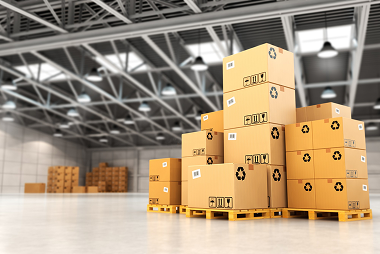
Warehouse Cost Per Pallet: How the Price Is Built, in Plain Numbers (2026 Guide)
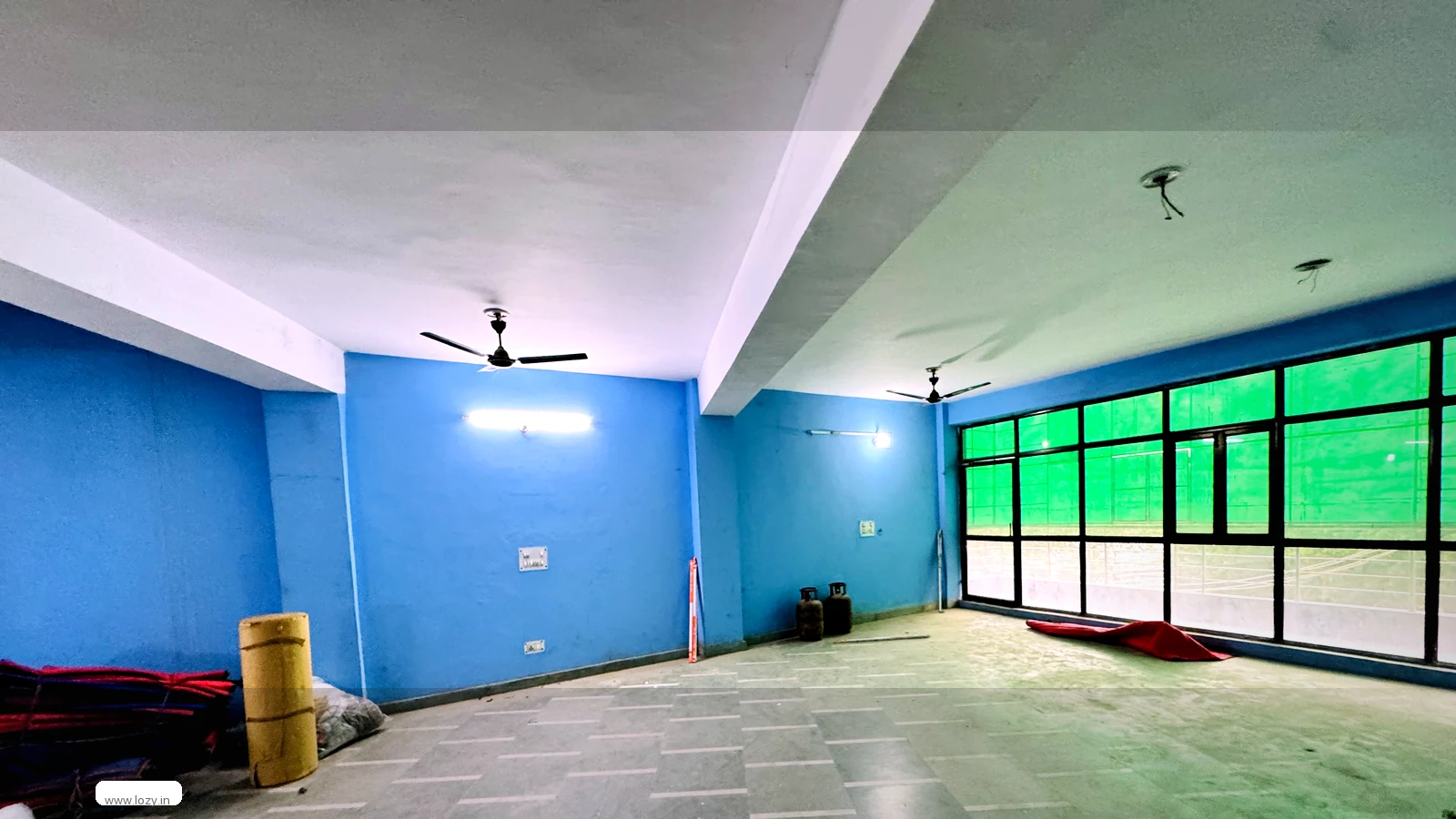
Warehouse cost per pallet is rent expressed per pallet position instead of per square foot, and the two figures describe the same floor from opposite ends. A position takes up its own footprint plus a share of the aisle in front of it, so a rate per square foot becomes a rate per pallet by multiplying those two numbers together. Lozy's published starting point for godown and warehouse space is ₹12 per sq ft per month - the base for the arithmetic below, and a basis rather than a quote.
Key takeaways
- A 1200 × 1000 mm pallet - the common size in India - covers 1.2 sq m of beam face, but the position it needs is bigger: at 1.0 m rack depth sharing a 3 m aisle, one ground-level position carries about 3 sq m of building.
- Rack levels divide that floor: 10.8 sq ft per pallet at three levels, 8.1 at four. Adding the dock apron, staging and a charger aisle, 12 to 15 sq ft per position is the figure to plan on.
- On the ₹12 basis, 12 sq ft per position derives ₹144 per pallet per month, and 8 to 15 sq ft spreads that from ₹97 to ₹180; the same 12 sq ft on the ₹14 business warehousing basis gives ₹168.
- Storage is only the first line. In and out handling, labelling, repacking, dock overtime, power and GST are charged on top unless the quote names them, so two pallet rates compare only once both say what they contain.
Two buyers can ring the same warehouse on the same morning, describe a hundred pallets of the same cartons, and come away with two numbers that cannot be read side by side. One is a pallet storage price, the other an area rate. Both are honest and neither is complete: the floor, the building over it and the dock are the same asset, and only the unit of measure differs. Convert one into the other and the argument becomes arithmetic. That is the question behind the prompt "how much do warehouses charge for storage", and the space rates this arithmetic rests on sit on the warehouse space for rent page.
What "per pallet" means in a warehouse quote
A pallet rate is not a price for the pallet you send. It is a price for a position in a rack, on a floor or in a stack - the storage your goods occupy, counted in pallets rather than square feet. Operators quote this way because racking is installed to hold a known number of positions at a known clear height, and it suits buyers who know their pallet count and not their floor area.
The position, not the pallet
On selective racking a position is a slot between two uprights on one beam level, one pallet deep, with the level above setting the headroom. Drive-in blocks, double-deep pairs and floor stacks are positions too, but each is counted differently. So when a quote says per pallet per month, the follow-up question is not the rate but what counts as a pallet: the standard 1200 × 1000 mm footprint, a 1200 × 800 mm Euro, a heavy 1200 × 1200 mm. A rate built on 1.2 sq m is not the same product as one built on 1.44 sq m.
Why operators quote this way, and who it protects
Under a per sq ft contract you pay for the area you have taken whether or not it is full, so empty racking is your risk. Under a per pallet contract the facility carries that emptiness and prices for it, which is why a pallet rate reads higher than an area rate before conversion. Steady, countable pallets suit a monthly pallet arrangement; a dense operation run in-house suits the area - the distinction the commercial warehousing pages draw for buying-and-selling businesses.
What one pallet position occupies, in square feet
The arithmetic starts with three measurements: the pallet footprint, the depth of the rack and the width of the aisle in front of it.
Step 1 - the pallet's own footprint
The common pallet in India is 1200 × 1000 mm, so 1.2 m × 1.0 m = 1.2 sq m, which is 12.9 sq ft. A Euro pallet at 1200 × 800 mm is 0.96 sq m (10.3 sq ft) and a heavy-duty 1200 × 1200 mm is 1.44 sq m (15.5 sq ft). Note what that means: the pallet alone already covers ten to sixteen square feet. Only stacking can shrink it, and stacking is a function of the rack.
Step 2 - the rack depth and the shared aisle
A row of single-deep pallets takes 1.0 m of depth. A 3 m aisle is a normal working width for a reach truck and serves the rows on both sides, so each row carries 1.5 m of it. Module width is therefore 2.5 m per row, and a ground position is one 1.2 m beam face of it:
2.5 m × 1.2 m = 3.0 sq m per ground-level position.
That 3.0 sq m, about 32 sq ft, is the building the ground level consumes per position. It is also why layout changes cost: a 2.5 m aisle and a 3.5 m aisle sit far apart per position across a fifty-position row.
Step 3 - divide by the levels above it
Racking exists to stack, and levels convert building area into pallet capacity. At 6 m to 7 m of clear height four beam levels is the usual build; three is common in older sheds, five or six in modern high-bay space of the kind the industrial warehousing pages describe. Dividing the 3.0 sq m gives 16.1 sq ft per pallet at two levels, 10.8 at three, 8.1 at four and 6.5 at five.
Two additions bring those theoretical figures up to what a facility quotes. The dock apron, the staging area where pallets wait for a vehicle and the aisle where the charger lives are all real floor and none of them positions - and a warehouse is never perfectly full. Allow a quarter to a third for the two, and the planning figure lands at 12 to 15 sq ft per pallet position for ordinary palletised goods.
Warehouse cost per pallet, derived step by step from a per sq ft rate
With a positional area in hand, the per-pallet rate is one multiplication from the published area rate. Nothing here is a quotation - the base rate applied to the floor a position occupies, with both inputs on the page.
- At 12 sq ft per position: 12 × ₹12 = ₹144 per pallet per month.
- At the tight four-level figure of 8.1 sq ft: 8.1 × ₹12 = ₹97.
- At the loose 15 sq ft figure: 15 × ₹12 = ₹180.
- On the ₹14 business basis, at 12 sq ft: 12 × ₹14 = ₹168.
Read the spread rather than a single figure. One published base produces a per-pallet cost from under ₹100 to about ₹180 depending on how the positions are built, and the difference is physical: levels, aisle width, how full the facility is and whether the goods stack at all. Loose cartons that can be neither double-stacked nor put on a top beam occupy far more building per unit stored than a dense pallet at four levels.
The published bases this sits on
Lozy puts a starting figure against each service rather than one flat number for storage, because each service is a different product. Commercial positions open at ₹13 a square foot each month, business and on-demand positions at ₹14, godown space at ₹12, and an inventory-led plan, where the ledger rather than the floor is the product, from ₹4,499 a month. Billing is monthly on a GST invoice, and each figure is a floor rather than a quote - the final number follows the pallets, the racking, the handling and the term.
Cost basis, what is included, and when it suits
Read the middle column first: it decides whether two quotes can be compared at all.
| Cost basis | What the rate normally covers | Charged on top | When it suits |
|---|---|---|---|
| Per pallet position, per month | Storage of one pallet in a defined position, on the facility's racking, for the month | In and out handling, labelling, repacking, dock overtime, GST | Steady pallet counts, mixed SKUs, racking the facility built |
| Per sq ft, per month | Floor, shell, dock, common areas and security where the bay is managed | Everything the operation does on the floor, plus power and GST | A dense operation that fills the floor and runs itself |
| Per unit or per order | Storage plus pick, pack and dispatch of a defined unit | Storage beyond the included allowance, returns, packaging | Fulfilment flows where the unit moves, not the pallet |
| Monthly plan, flat fee | A defined scope: space, handling and the stock record as one number | Work outside the agreed scope, and GST | Small stock with a predictable monthly shape |
Where the requirement is uncertain - a seasonal peak, a pilot in a new market, a month of overflow - the flat-fee plans avoid the argument about floor area, and the short-term storage arrangements exist for exactly that shape of demand. Where pallets are stable and known, the pallet or area basis is more efficient. At the small end, a flat monthly plan on an on-demand warehousing basis is priced from a few hundred rupees a month for a pallet-scale footprint - worth knowing before a long argument about beam levels.
The charges that sit outside the headline rate
A pallet rate describes storage. Most of what happens in a warehouse is not storage, and that gap is the distance between a quote and an invoice.
Inward and outward handling
Handling is the labour that touches the goods: unloading the vehicle, counting against the document, put-away to the position, picking the pallet back out and loading the outgoing truck. It is billed per pallet, per tonne or per man-day, and it is the most common omission from a headline pallet rate. A "storage only" quote is not cheaper than one with handling inside it - it is a different product, and the comparison belongs after the handling line is added back.
Labelling, repacking and other value-added work
Anything done to the goods rather than to the position is charged separately: barcode or MRP labels, kitting and bundling, shrink-wrapping for a retail customer, restacking a collapsed load, palletising loose cargo on arrival, batch or serial marking for regulated goods. These are labour-and-material jobs priced per pallet or per unit, and they are the usual reason an operation that "only needs storage" is billed a third more than the storage line. Estimate them at enquiry and put them in the quote - they will happen whether or not they were priced.
Dock overtime, power and GST
Loading and unloading normally happens inside a standard daytime window. A vehicle that arrives outside it, or a container de-stuffed late to beat detention, is overtime work at most facilities and is billed per hour, per vehicle or per turn. Power is metered or apportioned when lighting and dock equipment run beyond the ordinary, and GST is charged above the rent on the tax invoice raised in the client's own entity's name, under the rules published on the GST portal. Long dwell time and a dedicated crew change the shape of the bill too, which is why long-term warehousing and seasonal warehousing price a pallet differently - one that stays two years is not the same asset as one that turns four times.
Reading a per-pallet rate against a per-sq-ft rate
Put both quotes on one unit and the argument ends: cost per pallet per month, storage only, at the occupancy you expect.
Convert in both directions
From per sq ft to per pallet: divide the area you would take by the number of pallets, then multiply by the rate. A hundred pallets at 12 sq ft each is 1,200 sq ft; at ₹12 per sq ft that is ₹14,400 a month, or ₹144 per pallet.
From per pallet to per sq ft: divide the pallet rate by the base rate to see how much floor the quote assumes you occupy. A quote of ₹200 per pallet against the ₹12 base implies 16.7 sq ft per position; ₹180 implies 15 sq ft; ₹144 implies 12 sq ft. That implied area is the honest test of a pallet quote, and the question to ask is whether the racking really gives you 12 sq ft per position or 17. If it gives 17 and charges ₹200, an area contract at ₹12 may well be the cheaper route - provided you can fill the floor. That comparison is the subject of the city-wise per sq ft cost comparison, which is worth reading alongside this post.
The occupancy question that decides it
Both bases are correct at different occupancy levels. If your pallets fill the area you would rent - dense racking, steady volume, no long seasonal gap - an area contract at the published ₹12 base is the lower-cost structure, because you buy floor at its base rate and use all of it. If your pallet count swings, or the area you need at peak is double the trough, the per pallet route protects you from paying rent on air in the quiet months, and the premium is what you pay for that protection. Your own swing decides which one you are.
A worked example: 100 pallets, quoted three ways
The numbers below are illustrative rather than a real account. A distributor of industrial fasteners near Kherki Daula holds about 100 pallets of standard 1200 × 1000 mm cartons, all rackable, moving steadily through the year with a modest pre-monsoon peak. Three quotations come back, presented as they usually are.
Quote A - space on an area basis. Racking in a managed bay on the published ₹12 base. At 12 sq ft per position, 100 pallets need 1,200 sq ft: 1,200 × ₹12 = ₹14,400 a month, or ₹144 per pallet, storage only, with handling and power separate.
Quote B - positions on a pallet basis. ₹180 per pallet per month, storage only: 100 × ₹180 = ₹18,000 a month, 25 per cent above quote A for the same hundred pallets.
Quote C - a flat monthly plan. A monthly arrangement of the kind priced from ₹4,499 a month on an inventory-led basis, where space, in and out handling and the stock record sit behind one number. On 100 pallets that is a different product line, and the one to cost properly if the distributor's real problem is paperwork rather than rent.
Now read A and B honestly. Quote B's ₹180 per pallet implies 15 sq ft per position at the ₹12 base, so the pallet rate only makes sense if the racking genuinely consumes 15 sq ft per pallet - a three-level build with a wide aisle. If the racking is a four-level build at 8 to 10 sq ft per position, ₹180 per pallet is the equivalent of ₹18 to ₹22 per sq ft, and the area quote is not 25 per cent cheaper by accident. On the other side of the ledger, quote A bills 1,200 sq ft whether the racking is full or not: in a trough month when the same distributor holds 60 pallets, A still bills ₹14,400 while B bills ₹10,800. That protection is what the premium buys, and across a year with a real swing it usually outweighs the monthly difference.
The corridor matters too. Space on NH-48 at Kherki Daula or Manesar, in the Farrukhnagar belt, on NH-44 at Murthal or on the Jhajjar road at Luhari is not the same product at the same rate, and 1,200 sq ft carries a different number in each. The detail sits in the Gurgaon rent guide and the Delhi warehouse guide, with a wider view of who operates where in the Delhi NCR warehousing companies round-up.
What people get wrong about warehouse cost per pallet
The mistakes cluster around one habit: treating the headline number as the bill.
- Comparing a storage-only pallet rate with an all-in one. ₹180 storage-only against ₹200 with handling inside it compares scopes, not rates, and the second is usually the cheaper arrangement once handling is priced. Ask what the rate contains before asking what it is.
- Assuming stacking is free. Levels per square foot of building is the whole arithmetic. A pallet that cannot be double-stacked because of crush rating, weight or packaging can consume three times the building of one that can, and no negotiation changes that.
- Forgetting the pallet's own footprint. A 1200 × 1200 mm heavy pallet covers 15.5 sq ft before rack and aisle are counted, against 12.9 sq ft for a standard 1200 × 1000 mm. A mixed load will not fit the position count that standard pallets alone suggest.
- Reading a derived per-pallet figure as a quotation. ₹144 is the published ₹12 base applied to 12 sq ft. It is a way of comparing quotes, not a price any facility has agreed to, and treating a derived number as an offer ends in disappointment at the real one.
- Ignoring the monthly minimum, and pricing the peak. A pallet rate that applies above twenty positions is not the rate for five, and taking the area you need in your busiest week and signing a twelve-month contract on it is the costly way to buy storage. Small volumes are priced on flat monthly plans instead.
One habit simplifies the exercise: write down the pallet count, the pallet size, whether the load stacks and the month-by-month swing. Those four facts decide the area, the level count and the basis - and they are what every facility asks for first, as the FAQ pages show.
How Lozy prices pallet storage
Lozy publishes a starting basis against each service rather than a single pallet rate, because a pallet of cartons on racking and a pallet of drums moved twice a week are not the same product. Commercial positions open at ₹13 a square foot each month, business and on-demand positions at ₹14, and godown space at ₹12, with monthly plans from ₹4,499 where the running stock record is the product. Billing is monthly on a GST invoice and the figures are floors rather than quotations. The full list sits on the pricing page, and what is live right now is on the warehouse listing.
Behind those rates sits a live portfolio of 77+ warehouses and over a million square feet, NCR based with PAN-India coverage, so a requirement can begin on the corridor that suits the inbound freight and move later on the same terms. Where the record rather than the rent is the real problem, an inventory-led plan wraps space, handling and the stock ledger into one monthly number. The service types sit together on services pages, the sectors served under industries, and the corridors on the locations index.
Further reading in this family: the warehouse for rent guide explains the area bases behind these rates, and the monthly-billing explainer covers a term without a long commitment. Send your pallet count, pallet size, whether the load stacks and the node you need - the contact page is where the reply starts, and it comes back with a rate and the working shown.

Related guides
Comparing a pallet rate with an area rate?
Send your pallet count, the pallet size and whether the load can be stacked - we will reply with the rate basis, what it includes, and the arithmetic for your pallets so the two quotes can be read side by side.
Get a quoteCall +91 93547 12345Sources. Every rate, service scope and network count above is Lozy's own published material, taken from the live pricing, warehouse for rent, business, commercial, inventory, industrial, on-demand, short-term, long-term and seasonal storage pages. Pallet dimensions, rack depth, aisle width and beam levels appear as general industry practice for palletised storage in India, not as anyone's published figure, and each per-pallet number here is arithmetic over Lozy's published per sq ft basis. Tax invoicing and input credit are governed by the GST portal; warehouse classification and regulation by the Warehousing Development and Regulatory Authority; highway corridor notes from the National Highways Authority of India, and the small-business framework from MSME, with sector market context from IBEF. Nothing here is modelled, estimated or copied from a quotation.
Last updated: 14 October 2026. Have a question the FAQ below does not answer? Call +91 93547 12345 or email care@lozy.in.
Need warehousing or storage in India?
Request a free, tailored quote in under 2 minutes — free pickup, no lock-in.