Shared Warehouse Space: How Multi-Client Storage Really Works (2026 Guide)
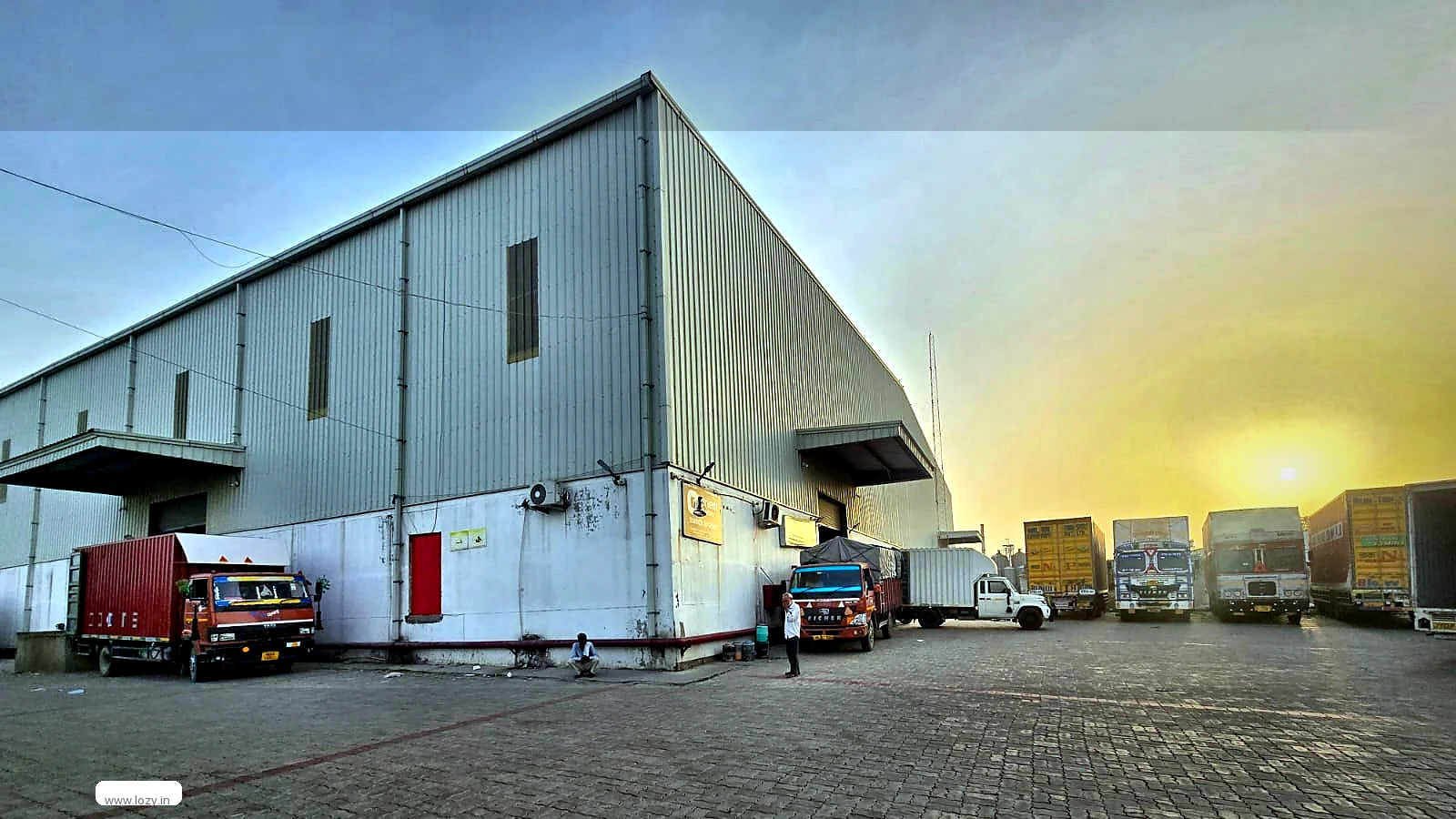
Shared warehouse space is an allotted bay inside a warehouse that other businesses also use, where you rent only the area or the slot your stock needs and every client's goods stay under their own record. The building is shared; the stock never is. That distinction decides how the model works, so this guide takes it apart: how separation is enforced day to day, the controls around it, what a shared client saves against an exclusive unit, and who should not share at all.
Key takeaways
- A multi-client warehouse keeps each business in its own zone, own bin locations and own client-wise ledger, so a shared building still shows a single owner for every pallet at any stock count or audit.
- Lozy publishes starting bases rather than one shared rate: ₹14 per sq ft per month on business space, the same floor on on-demand warehousing, ₹12 per sq ft per month on warehouse space for rent, and ₹999 per month on a self-storage unit.
- What a shared client gives up is specificity - no dedicated dock door, no custom fit-out, no say over who else is in the building. What they keep is title to the goods, the stock record and the right to walk in and count.
- The model runs across 77+ warehouses and more than a million square feet of live space, Delhi NCR based with PAN-India reach, so a shared bay off NH-48 at Kherki Daula or in Dwarka can be added or released without a multi-year commitment.
Two businesses want almost the same thing from a warehouse and neither needs a whole building. One imports spare parts twice a quarter and wants somewhere dry, secure and close to a highway; the other sells household goods and wants a clean, lockable corner it can walk into on a Saturday. Rented separately, both would pay for floor they never fill. Under one operator, one gate and one dock, each holds only the area its stock actually occupies - which is the whole proposition of a multi-client facility.
What keeps that from collapsing into an anonymous godown is the layer buyers rarely ask about until something goes missing: zones, bin locations and client-wise records. Read that layer before you read the rate.
What shared warehouse space actually means
A shared warehouse, in the multi-client sense rather than the self-storage sense, is a facility where several businesses store stock at the same time under one operator, each in its own allotted area with its own stock record. You pay for the space and handling your goods need rather than for a whole floor, and the operator carries the building, the compound, the security and usually the inward and outward labour.
Many clients, one roof, no pooled stock
The thing that separates a real multi-client warehouse from a heap is ownership. Every pallet in the building has exactly one owner and the facility's records say which. Goods are never commingled into a common pool where quantity is tracked but identity is not, because the moment two clients' cartons sit in one undifferentiated stack, neither can prove what it holds. A shared building is a set of tenancies under one management, not a cooperative storage club.
What shared warehousing is not
Four products get sold with these words and only two of them are in scope here. Self-storage is a lockable unit, usually small, where you hold the key and the operator rarely touches the contents. A 3PL fulfilment operation is different again: the operator picks, packs and dispatches stock for several clients under one roof, but the service being sold is fulfilment rather than storage. A conventional lease is the opposite of shared - the whole shed in your name with your crew inside it - and a public warehouse is a customs-adjacent category rather than a tenancy model.
How your stock stays separate inside a shared building
Separation is a design decision made once and then enforced daily. There are three layers to it, and a serious operator will show you all three on a five-minute walk.
Zones, bays and how the boundaries are drawn
A shared floor is divided into zones, and each client holds a bay or a block of racking inside a zone - never a scatter of positions across the building. The boundary is marked rather than implied: painted floor lines around a bulk block, an end-stop on a rack run, a mesh panel or a cage for a high-value corner. Bagged material gets a block that can be squared off so the stack does not wander into a neighbour's line; a client on racking gets dedicated bay numbers on a dedicated run.
The practical test is whether a stranger walking the floor could point at any pallet and name its owner. If not, the facility is running on memory - and memory fails at exactly the wrong moment: a dispute, an insurance claim, a busy Friday shift change.
Bin locations and what the label has to say
Every received line goes to a bin location, and that location is recorded against the line: zone, rack, level and position, or a block reference for floor-stored goods. Numeric bin locations are what make a shared building workable, because they let a picker find a line without knowing whose it is, and let a count be scoped to one client's positions instead of the whole floor.
Two details matter more than the scheme itself. The location must be recorded at put-away rather than reconstructed from memory, and it must appear on the dispatch document as well as in the ledger. A bin label with no entry behind it is decoration; an entry with no label is a hunt.
Client-wise records: the ledger that decides ownership
Each client has a separate ledger: inward entries, outward entries, a running balance per line and per location, and the adjustments and count sheets behind both. The warehouse may run one system underneath, but the reporting and the access are client-wise, so you see your stock and not your neighbour's, and your count produces your variance.
The ledger also answers the question a shared facility is asked most often, which is how the operator can prove the goods are still there. Inward is signed at the dock with quantity and condition; every dispatch carries a reference and the bin it came from; anything short, damaged or quarantined is recorded as an exception with a date and an authoriser. The month-end closing balance reconciles against all of it, and that reconciliation is the evidence.
When separation has to be physical, not just visual
Food and beverages, cosmetics, pharmaceuticals, medical devices and anything flammable or otherwise regulated need more than a zone: segregation from incompatible goods, controlled temperature where the product demands it, pest and hygiene controls, and a documented trail a regulator or a brand auditor can follow. High-value electronics, warranty spares and serialised items generally want a lockable or caged position inside the shared floor, so that access is narrow and countable.
The honest position is that a shared facility can hold these categories where it has the right bay and the right controls, but not everywhere. If your product carries a licence condition, ask where it would physically sit before you ask for the rate - the pharma warehousing guide and the FMCG warehousing guide set out what those controls look like in practice.
Access and security controls in a multi-client warehouse
A shared building has more people moving through it than a captive one, and that is the trade-off a client accepts for a lower entry cost. Three controls are what keep the trade-off from being a real risk.
Who gets in, and how the door is decided
Entry is by named person or by vehicle consignment, not by general permission. Employees are listed, visitors and client representatives sign in against the client they are visiting, and drivers are matched to an inward or outward document before the gate opens. Freight does not wander the floor: it is unloaded into a receiving area, counted, and only then put away to its bin. A client who wants to send someone in to inspect or collect should be able to do so on a booked slot, accompanied, with the visit written into the log.
There is one boundary worth stating plainly. In a shared facility you do not get unrestricted 24-hour keys to a bay inside a building full of other people's stock; access is scheduled, recorded and usually supervised. If unrestricted access at any hour is a requirement, that requirement points at an exclusive lockable unit rather than a shared bay, and it is better settled at the start than argued about later.
Cameras, logs and the audit trail
What a client should be given is coverage rather than reassurance: camera coverage over the receiving dock, the aisles and the outbound area, with recordings retained long enough to be useful in a claim; a gate register or an electronic inward-outward log of every vehicle; and the stock ledger itself, which is the slowest but most reliable trail in the building. CCTV catches an incident; the ledger establishes what should have been where when the incident happened.
Liability, insurance and what the contract has to say
Title to the stock stays with you in a shared arrangement, exactly as in an exclusive one, and so does the insurance on it unless the agreement says otherwise. Read three clauses before signing: what the operator is liable for and on what standard (negligence, gross negligence or strict custody), whether that liability is capped at a fee multiple or at declared value, and which party insures which risk. If you carry your own cover, tell the insurer that the goods sit in a multi-client facility under a named operator, because a policy written for a captive godown may not read cleanly onto a shared bay. Operator liability and goods cover are two separate instruments and both should exist.
GST-registered billing with a tax invoice in your entity's name is the other half of this - the framework sits on the GST portal, and input credit on the storage invoice is a routine line in the sums for any registered business.
Shared versus exclusive warehouse space: the comparison
Set the two side by side and the choice usually makes itself, but only once the dock, the fit-out and the term are on the table rather than hidden behind a per-square-foot rate.
| What changes | Shared / multi-client bay | Exclusive warehouse unit |
|---|---|---|
| What you pay for | The area or racked positions your stock occupies, plus handling | The whole shed or floor, whether or not it is full |
| Entry point | Low - one bay or a few pallet positions is enough to start | High - rent, deposit and fit-out on a floor you may not fill |
| Your own dock door | No; you book a loading slot on a shared dock | Yes; the dock is yours and so is the vehicle queue |
| Custom fit-out and branding | Limited; standard racking and standard bays | Yours to alter - racking, partitions, signage, offices |
| Who else is in the building | Other clients, under one operator and one access list | Nobody; the access list is your payroll |
| Stock separation | By zone, bin location and client-wise ledger | By the walls, because there is no neighbour |
| Record keeping | Client-wise ledger kept by the warehouse desk | Whichever system you install and staff |
| Term and exit | Monthly billing on a GST invoice, no long lock-in on Lozy's shared services | Usually a multi-year lease with a lock-in and a make-good obligation |
| Best for | Stock that is seasonal, regional, growing or intermittent | Steady high volume, regulated handling, a bespoke process |
| Worst fit for | Bulk throughput needing its own dock and 24-hour key access | A requirement you cannot yet fill or predict for a year |
Read the entry-point row first, because it sets up everything below it. An exclusive unit is not more expensive because the rate is higher; it is more expensive because the commitment is the whole floor, the fit-out and the term regardless of what the stock does. A shared bay swaps that certainty of cost for flexibility of size, and the swap is worth making whenever the requirement is real but not yet stable.
Why shared space lowers the entry point
Storage has a fixed spine and a variable skin. The roof, the compound wall, the gate, the guard and the dock exist whether the building is half full or full, and an exclusive rent prices that whole spine onto you. A multi-client model spreads the same spine across several tenants, so what you pay tracks the space and handling you actually use.
The published starting bases
Lozy publishes a starting figure against each service rather than one shared rate, because the basis differs from one service to the next. Space billed by floor area sits from ₹12 per sq ft per month on the warehouse for rent service and from ₹14 per sq ft per month on business warehousing, where the month is taken with handling, security and billing included. The same ₹14 floor applies to a month-by-month on-demand arrangement, which is the version most shared clients actually want: space that flexes with the stock instead of a fixed area held through a lean quarter. Where the requirement is a small lockable unit rather than a bay on a shared floor, self-storage starts at ₹999 per month, and where the record rather than the floor area is the product, an inventory-led plan starts at ₹4,499 per month.
Every one of those is a published floor, not a quotation, and billing is monthly on a GST invoice with no long lock-in on these services. The final figure follows the goods, the area and the term. The pricing page gathers the published bases in one place if you want to read them side by side before you call.
What moves the number
- Floor area versus racked positions. Palletised stock on racking uses vertical space and can be priced by position; bagged or odd-shaped goods on the floor consume square footage and cost more per unit stored.
- Basis: area or item count. An area basis suits dense, stable stock; a monthly plan priced per unit of stock suits a business whose holdings swing, because the bill swings with them.
- Handling intensity. A bay at the lowest rate still needs goods unloaded, counted and put away. A clean palletised intake costs less than a loose-loaded truck that has to be sorted before anything can be recorded.
- Bay type inside the shared floor. A caged or otherwise restricted position for high-value goods is a narrower, more controlled asset than open floor, and prices accordingly.
- How long it stays, and where it is. Space on the NH-48 belt at Kherki Daula or in an urban pocket like Dwarka is not the same asset as space further out, and the gap reappears in the short runs to customers as well as in the rate.
A worked example: a household-goods firm and a parts importer share a Dwarka bay
Take the following as representative rather than a real account. A household-goods business running a small three-vehicle distribution operation in west Delhi needs somewhere clean, dry and lockable for about a truckload of mixed goods at a time, with one person able to walk in and pull an order on a Saturday. Its requirement varies with the season and it does not want a lease, so it takes a self-contained block inside a shared facility in Dwarka, with its own bay, its own ledger and access booked in advance. Three bays away, a distributor of commercial-vehicle spares imports twice a quarter and needs palletised storage close to the NH-48 run out to Gurugram and Manesar. It takes racked positions on a shared run rather than a floor block, because its lines are numbered and palletised, and it wants picks made from a bin location rather than from wherever the stack happens to be.
What the two share is the spine: one gate, one security arrangement, one dock with booked slots, one operator keeping both ledgers apart. What each keeps is the part that matters - its own zone, its own locations, its own record and its own entry on the access list. Neither could justify a shed of its own; both get a properly run warehouse for the space they actually occupy. The access detail usually decides this case in real life, so raise it in the first minute: a business that needs a person inside the building several times a week, on no schedule, is buying a lockable unit or an exclusive bay rather than a shared one.
Who should not take shared warehouse space
Shared space is the right answer for more businesses than most buyers assume, and the wrong answer for a specific few. Walk away from it in these cases.
- The requirement is genuinely a whole building. Multi-truck throughput, own-branded racking and fleet parking need an exclusive facility; a shared bay only adds a coordination layer to an operation that will not benefit from it.
- A dedicated dock door and a fixed loading window are non-negotiable. Several inbound trailers at once, or a hard 6 a.m. dispatch slot, need space where the dock is yours. Sharing a dock by slot works for most small and mid-size operations and not for that one.
- Unrestricted 24-hour key access is required. A bay inside a multi-client building cannot be left open to one client at any hour, because other businesses' stock is in the same shed.
- The process is bespoke or regulated beyond what a standard bay carries. Non-standard packing lines, an assembly step, clean-room handling or a licensed process usually need fit-out the shared floor does not have.
- The stock is incompatible with other goods. Anything needing real segregation from food, cosmetics, paper or electronics - strong odours, dust, flammables, certain chemicals - should not be placed in a general multi-client shed to save a few rupees.
- The requirement is one consignment, once. A single delivery stored for a fortnight barely justifies the enrolment, the record and the security paperwork; a short-term or straightforward rent arrangement is simpler and cheaper.
- The brand must not be seen by anyone else in the building. Pre-launch stock, embargoed samples and brand-confidential goods belong in a restricted position rather than on a floor with a common access list, however well the bay is separated.
What people get wrong about shared warehousing
The mistakes here are consistent, and most come from treating a shared roof as pooled risk.
- Assuming the operator is liable for the value of the goods. Title and the insurance on the stock sit with the owner unless the contract says otherwise. A capped liability clause is not insurance.
- Not asking for the location scheme and the ledger format. This is the most useful question you can ask. If the answer is a company-level total with no per-location balance, the separation exists only on paper and your stock cannot be found without walking the floor.
- Comparing a shared bay with a bare shed on rent alone. A shed at a lower rate per square foot still needs a guard, a lock, a crew and a record. Put those back on the lease side before deciding which is cheaper.
- Leaving the goods unnamed and uncounted. Inward is where the record is made. A client who sends stock without a packing list, and does not sign an inward count, has given away the baseline every later variance would be measured against.
- Assuming the dock works like a private one. Loading at a shared dock happens on a slot; a vehicle that arrives outside its slot waits, and a client who was not told that blames the warehouse for a delay the schedule created.
- Reading "shared" as "cheap" without asking what is included. Security, handling, inward labour, the ledger and the dock slot may or may not be inside the rate. Two ₹14 quotes are not necessarily the same product.
One habit covers the rest: write down what has to be true for you to trust a shared building - who can enter, how your stock is located, what the monthly pack shows, what happens when a count goes short - and treat anything the operator will not put in writing as not existing.
How Lozy runs multi-client shared warehouses
Lozy runs shared and multi-client space on the same basis it runs everything else: one operator for the building, a defined bay for each client, and a stock record kept per client at the location level. A business that wants the space with handling and a monthly invoice takes business warehousing from ₹14 per sq ft per month; one whose requirement flexes month to month takes on-demand warehousing on the same published floor; where the key matters more than the floor, a self-storage unit starts at ₹999 per month, and where the record is the product, an inventory-led plan starts at ₹4,499 per month.
Behind the shared bays sits a network of 77+ warehouses and more than a million square feet of live space, Delhi NCR based with PAN-India reach and legs on NH-48, NH-44 and NH-19. That matters to a shared client for one reason: a bay can be added, moved to another node or released as the stock moves, without a lease to unwind. What is free at each node sits on the locations index, the service types are gathered on the services pages, and a shared requirement that grows into a dedicated one - own bay, own dock, own fit-out - can move to warehouse space for rent without changing operators.
Related reading in the same family: the 3PL warehousing guide covers the version where the operator also picks and dispatches your orders, and the business warehousing guide sets out the space bases in plain terms. For a specific node, the Noida and New Delhi city guides cover the local picture. Send the pallet count, the goods and the access you need: the FAQ pages and the contact desk come back with a rate, what is free, and a straight answer on whether a shared bay or an exclusive unit is the better fit.

Related guides
- small warehouse for rent
- warehouse cost per pallet
- B2B distribution warehousing
- warehousing companies in Delhi NCR
How much of a warehouse do you actually need?
Send your pallet count, the goods and how often someone needs to get inside - we reply with a rate, the bays free near you, and an honest read on whether a shared bay or an exclusive unit is the better fit.
Get a quoteCall +91 93547 12345Sources. Rates, service scope, separation and access controls and network counts are Lozy's own published information, drawn from the live business warehousing, on-demand warehouse, warehouse for rent, self-storage, inventory warehousing and pricing pages. Warehouse classification and regulatory context comes from the Warehousing Development and Regulatory Authority; GST registration, invoicing and input credit from the GST portal; corridor context from the National Highways Authority of India; the small-business framework from MSME; and sector-level market context from IBEF. Every figure above is a published starting basis rather than a quotation, and nothing in this article is modelled or estimated.
Last updated: 14 October 2026. Have a question the FAQ below does not answer? Call +91 93547 12345 or email care@lozy.in.
Need warehousing or storage in India?
Request a free, tailored quote in under 2 minutes — free pickup, no lock-in.