Pharma Warehousing in Delhi NCR: Storage Classes, Licences, Cost and Site Choice (2026 Guide)
Pharma warehousing stops being ordinary godown work the moment a carton carries a batch number and an expiry date that a stockist or a drug inspector can ask you to explain. Pharma warehousing with Lozy is dry, ambient, camera-covered storage where quantity and batch are written down as consignments are checked in, billed from ₹12 per sq ft per month. The half of the subject buyers research first is the part the category rarely states plainly: which medicines may sit in an ambient shed at all, what a refrigerated store must prove on paper, and whose drug licence covers the rack.
Key takeaways
- Storage class decides the site. Most tablets, capsules, syrups, supplements and consumables are labelled for below 25°C or below 30°C; insulin, most vaccines and many biologicals are labelled for 2-8°C; a smaller set must stay frozen.
- A refrigerated store is a different asset with a different paper trail - a validated room, a mapping study, calibrated loggers and an excursion procedure. Lozy does not run one.
- Monitored pharma storage starts at ₹12 per sq ft per month; an inventory-led plan starts from ₹4,499 per month and short-term storage from ₹699 per month.
- In Delhi NCR the choice narrows to the Manesar belt on NH-48, the Faridabad DLF estates on NH-19, or a north-side position at Alipur, Bamnoli or Dhulsiras - behind them, 77+ warehouses and over one million square feet of live space.
Every question about pharma warehousing comes back to one document: the storage statement printed on the product's own label. Indian drug law requires a medicine to be labelled with the conditions under which it must be kept, and that line - not the price of the pack - decides which building a consignment may enter. Three things sit on top of it: the temperature class the label names, the records the facility can produce on demand, and the licence covering the premises.
Delhi NCR is where most of this trade's storage decisions get made, and the belts its depots sit in were shaped by the roads out of the capital. Those corridors are maintained by the NHAI, and the sector behind them is set out in IBEF's pharmaceuticals profile.
How pharma storage is actually classified
The category divides into three classes, and only one of them is an ordinary warehouse's business.
Ambient lines: the bulk of the trade
Most of what a stockist, a chemist and a hospital store handle is labelled to be kept below 25°C, below 30°C, or in a cool, dry place protected from light, usually with a companion line saying it must not be refrigerated or frozen. Tablets and capsules, blister strips, syrups and oral liquids, dry powders, most nutraceutical lines, ayurvedic and herbal preparations, oral care items, dressings, bandages, surgical disposables and PPE sit here, as do many diagnostic kits.
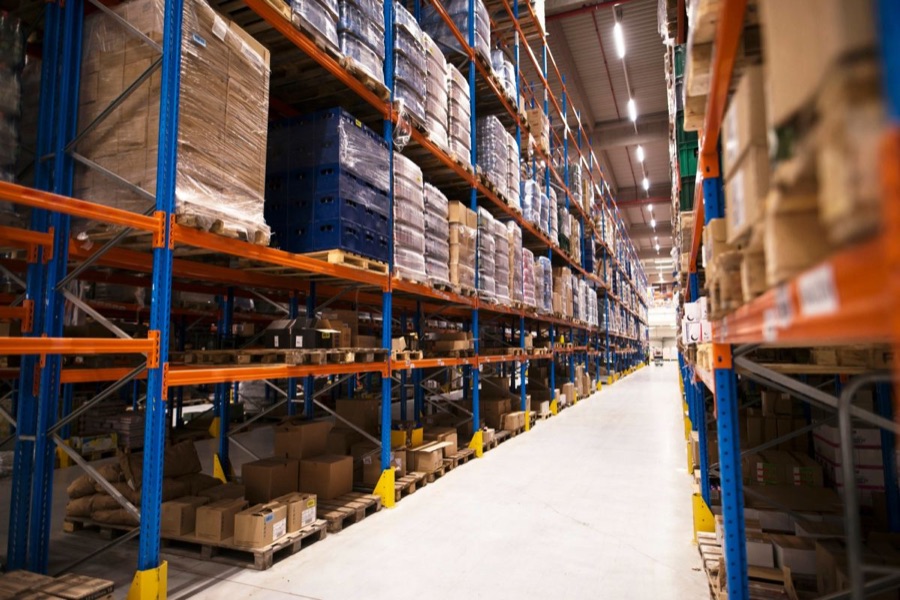
In an Indian warehouse that label becomes a duty. The shed must stay under the labelled ceiling through a Delhi June, which is a question about roof insulation and whether a roller door stands open at one in the afternoon. It must stay dry through a monsoon - plinth height, roofing sheet condition, where the yard drains. And goods must stay off the floor and out of sun, because moisture climbing a carton is how a saleable pack starts losing its value.
Refrigerated lines: a different building, not a different shelf
Insulin, most vaccines, many biologicals and hormone products, certain ophthalmic preparations once opened, and a set of diagnostic reagents are labelled for 2-8°C, usually with a separate do-not-freeze statement. For a refrigerated product a freeze event is a discrete failure rather than a dip an average later cancels out.
A corner of an ambient shed and a domestic air conditioner do not make a compliant store, whatever the wall thermometer reads on the day of a visit. This class needs a purpose-built insulated room or a validated chamber, and everything around that room is documentation rather than equipment.
Frozen lines
A smaller group is stored frozen - certain vaccines, some plasma-derived products and a minority of molecular diagnostic reagents. Storage means a freezer room with its own alarm, back-up power and log, because a thaw-and-refreeze cycle is a loss event.
Where Lozy fits, stated plainly
Lozy is not a cold-chain operator and this post will not invent the capability. There is no validated refrigerated room in the network, no temperature-mapped 2-8°C chamber and no freezer capacity, so the second and third classes above belong with a specialist cold-chain partner. The pharma and healthcare warehousing page advertises no temperature-controlled service either.
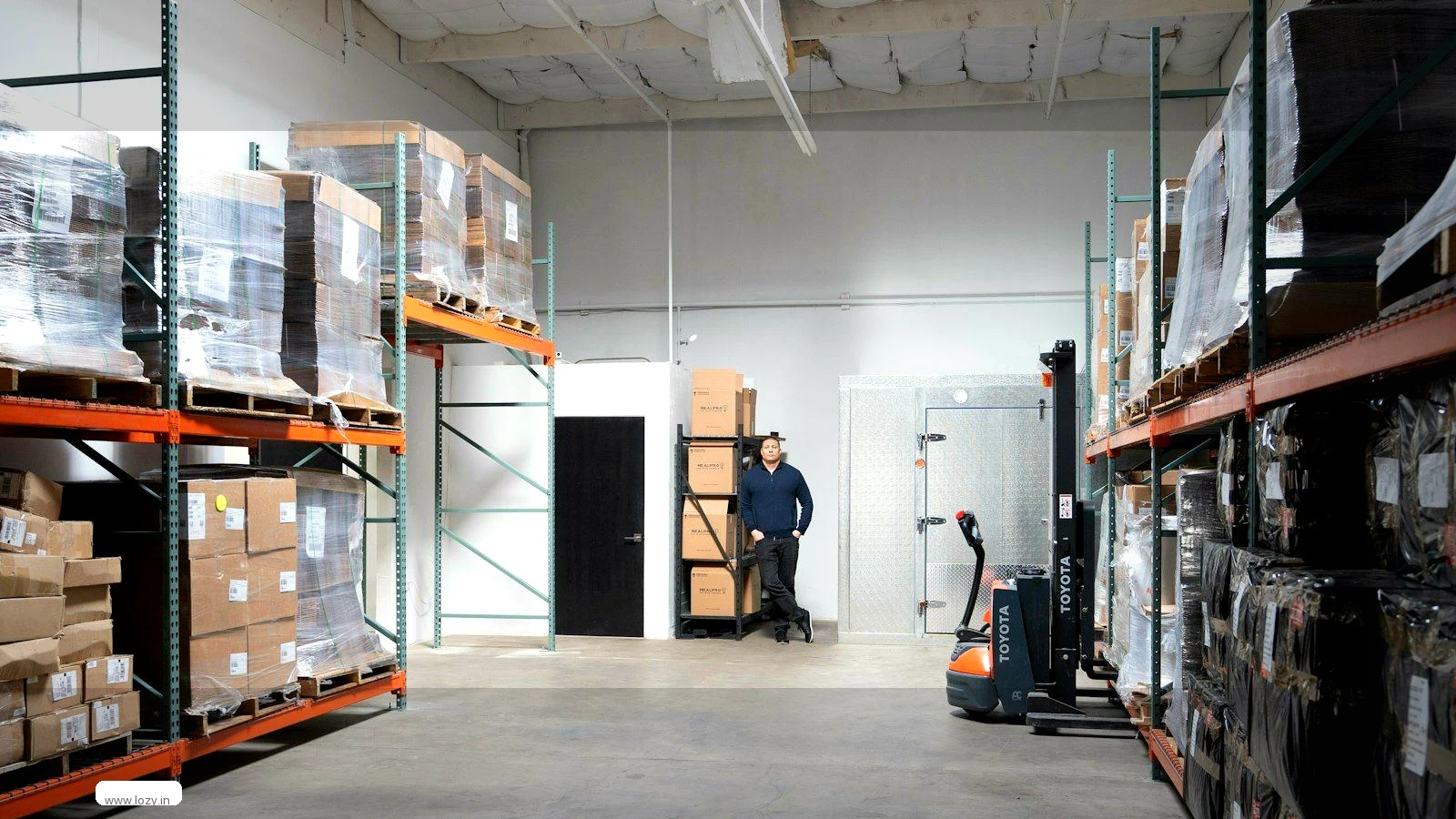
What Lozy runs is dry, ambient, secure, monitored storage, with consignments documented at check-in and movement records kept to the client's instructions. That is the right home for the first class: tablets, capsules, syrups, supplements, ayurvedic and herbal lines, oral care products, dressings, consumables, surgical disposables, PPE and institutional tender stock carrying an ambient label. If a consignment needs a cold room, the honest answer from Lozy is that it should go to somebody who has one.
What a temperature-controlled store has to prove on paper
Even for a business that will never hold a refrigerated product, the document set behind cold storage is worth knowing: it is the standard a stockist or a hospital quality team has in mind in any pharma store.
The document set behind a validated cold room
- A temperature mapping study - how temperature distributes through the empty room and then the loaded one, which is what validates the room.
- Continuous monitoring on calibrated devices, with current calibration certificates and records kept for the life of the stock and beyond.
- An alarm path that reaches a person, because a high-temperature alarm is worth nothing if it sounds in an empty building at two in the morning.
- An excursion procedure: who is informed when a reading leaves range, how the affected stock is segregated, and who decides the disposition.
- Written operating procedures for receipt, put-away, picking, dispatch, cleaning and pest control, with a training record behind them.
The Central Drugs Standard Control Organisation is the regulator the Indian framework sits under, and the storage statement on a pack traces back to the stability data held for that product. Packaging standards are published by the Bureau of Indian Standards.
The same discipline at ambient scale
An ambient store is judged on a shorter version of that list, and the questions cost nothing to ask. What was the building like in the hottest week of last June? Can the facility produce the movement record for one named batch, from intake entry to dispatch release, without a telephone call? Is there a pest-control schedule and a signed visitor log? Does the intake sheet capture batch number, quantity and expiry line by line, or a pallet count?
The licence reality: whose licence covers the rack
This question separates a buyer who has stored medicines before from one who has not, and it is settled long before the rent is discussed.
A drug licence names premises, not a business
Drug licences in India are granted by the State Licensing Authority for specific premises, and the address is part of the licence. A wholesale business typically holds Form 20B, and Form 21B where Schedule C and C1 products such as biologicals and vaccines are handled; retail sale runs on Form 20 and Form 21, and manufacture on a manufacturing licence of its own. Moving stock into a building whose address is not on your licence is something to settle with your authority before the first consignment.
Put it in writing: does the third-party address need to be endorsed on my licence, does the operator need a licence of its own to hold goods on my behalf, and what record does the authority expect kept there? The answers vary by state, which is why the question deserves a reply on paper.
What to ask the warehouse operator
Three things, before the quote is compared with anyone else's. Whether the entity you contract with holds a drug licence itself or is purely a storage provider. Who signs a release when stock leaves, and what that document contains. And whether the facility will be open to a scheduled or surprise visit from your stockist, your auditor or your quality team, with the visit entered in a log.
What pharma warehousing costs, and how the bill is built up
Lozy publishes starting rates against the service each one belongs to, which matters here because two quotes for pharma storage can be measuring entirely different things.
- Monitored pharma storage - from ₹12 per sq ft per month on the pharma and healthcare warehousing page.
- Warehouse and godown space for rent - from ₹12 per sq ft per month on the warehouse for rent page, for matching a floorplate to pallets.
- Business warehousing - from ₹14 per sq ft per month on the business warehousing page, for racked or floor space held month by month with security and handling in the plan.
- Inventory-led storage - from ₹4,499 per month on the inventory warehousing page, for stock run as a ledger that reconciles SKU by SKU.
- Long-term warehousing - from ₹1,199 per month on the long-term warehousing page, for slow institutional and tender stock holding one position for months.
- Short-term storage - from ₹699 per month on the short-term storage page, when a consignment stays weeks rather than months.
A season-bound requirement uses the same family: seasonal warehousing is the form for stock that arrives with a tender cycle and leaves when the cycle closes. Every figure is a starting rate, billed monthly and invoiced with GST, with no long lock-in, so space can grow for a tender lifting and settle back after. The bases sit together on the Lozy pricing page.
What moves the number in this trade
- The storage class. An ambient carton and a pallet needing a validated cold room are not the same product, and no negotiation closes the distance.
- Handling intensity. Batch checking at intake, piece picking against a stockist indent and label verification before sealing are skilled work, so handling is a larger share of the bill here than in most categories.
- The record format. Batch number, quantity, expiry and dispatch detail logged to the client's own format is desk work, and a quote that ignores it gets adjusted in the first month.
- Footprint, term and add-ons. Area is the largest input, a monthly booking prices differently from a longer commitment, and a returns bay, labour, packing material and insurance are quoted on top.
What the invoice should show
Warehouse rent attracts GST, and a registered business can claim input credit when the invoice is raised as a tax invoice in its own entity's name, as the rules on the GST portal set out. Settle two things in the quote: whether storage and handling are shown as separate lines, and which legal entity issues the invoice, since the name on the paper has to match the licence the stock sits under.
The largest cost here never appears on an invoice: near-expiry stock found during a count instead of before it, a distributor return that was never segregated, or a batch question nobody can answer.
Choosing a pharma warehouse site in Delhi NCR
Work backwards from the places your stock has to reach - stockists, pharmacy chains, hospital stores, clinic groups, tender points - then test the building against the class of goods it will hold, in the sequence below.
- Ask what the building did last June. Not whether it is insulated as a design intention, but what the working aisles measured during the hottest week. A shed with a bare metal roof passes a winter visit and fails a summer one.
- Check dry stowage before the racking. Plinth height, roof sheet condition, the direction the yard drains, and whether stock sits off the floor on pallets.
- Walk one batch from gate to rack. Hand the facility a batch number and ask to see the intake entry, the rack position and the movement record for it. If that takes a day, the record is a memory.
- Settle rotation, the returns bay and release authority. First-expiry-first-out needs aisles wide enough to reach the older pallet and a designated near-expiry position; who may sign stock out, how entry is granted out of hours, and what the visitor log records all belong in writing.
The belts, and what each one suits
Manesar and the Gurugram belt, on the NH-48 side. The answer when distribution runs to chemists, hospital stores and stockists across Gurugram, south-west Delhi and the Rewari-Bawal side, and when stock arrives from a Bawal co-packer. Lozy holds space at Manesar Sector 8; the Gurgaon warehousing guide covers that cluster.
Faridabad and the DLF estates, on the NH-19 side. Suits a depot serving south-east Delhi, Ballabgarh and Palwal, or the Mathura Road corridor towards Agra, where how a container reaches the gate matters more than in most estates. The Faridabad guide walks the estates through.
The north side and the Uttar Pradesh direction. For counters on the Delhi wholesale and Uttar Pradesh institutional side, the practical positions are Alipur, Bamnoli and Dhulsiras inside the capital and the Noida, Ghaziabad and Dadri belt beyond it. The New Delhi guide and the Uttar Pradesh guide cover both.
Red flags in a pharma storage deal
- A cold-chain claim with no mapping study behind it. Any facility offering refrigerated storage should be able to show how the room was mapped and what it logs.
- An ambient store that cannot produce one batch's history. If retrieving a single carton's record takes a day, the record is a memory.
- Returns held in the same space as saleable stock, which is where write-offs begin and where a count stops reconciling.
- No clear answer on whose licence the stock sits under. The ambiguity becomes yours at the first inspection.
- Cash rent with no GST invoice in your entity's name, and no pest-control record or fire clearance in hand.
Own godown, shared pharma warehouse or a 3PL
These three routes answer different questions rather than ranking against each other. A distributor with settled volume lands on one, an operation living on tender cycles on another.
| Decision | Own godown | Shared monthly warehouse | 3PL distribution partner |
|---|---|---|---|
| What you sign | A lease, usually multi-year | Month by month | A service contract priced on volume |
| Cost before the first carton | Deposit, racking, security staff, licence endorsement | No fit-out; monitored storage from ₹12 per sq ft per month | Onboarding and system integration |
| Who the drug licence sits with | Yours, on premises you control | Yours, with the storage address settled with the licensing authority | Usually the partner's, which changes who answers for a discrepancy |
| Batch and expiry control | Yours to design and staff | Written at intake and rotated as you instruct | Held in the partner's system, visible on their report |
| When a tender lifts at short notice | Corridors fill, or the consignment waits at the plant | Rack and floor positions added, then released after | Worked only if the contract was written for surge |
| Records for an inspection | As good as your own routine | Movement records kept to your format | Summarised through the partner's systems |
| Stops making sense when | Volume is modest or the season is short | The requirement is entirely flat and long-term | Stock visibility has to stay in your own hands |
| Usually right for | A settled core depot | A depot with tender and scheme swings | A brand outsourcing the channel itself |
Plenty of businesses in this trade run two of the three at once: leased space for the steady core of the range, and a monthly warehouse for the tender lifting and the campaign stock that arrives in a heap and leaves in one. What matters then is that the batch records on both sides join up.
The first month: what goes wrong in pharma storage
Failures in this category are rarely dramatic. They are small, procedural, and they surface weeks later as a count that does not reconcile.
The most common is a record format agreed in conversation and then written to a different template at the first intake, because the person who designed the format was not the person standing at the gate. Write the format down, run one guided intake with your own team present, and compare the finished sheet against the original before the second consignment arrives.
The second is returns. A distributor sends back near-expiry stock in week three, it is put away wherever there is room, and within a fortnight it has merged with saleable inventory. Decide the returns bay, the record and the decision path at onboarding, while nobody is under pressure.
The third is rotation under load: a picker with a queue at the gate takes the pallet he can reach. Then there is the small stuff a stockist notices - a visitor log unsigned since the day it was opened, a roller door standing open through the hottest afternoon, a pest-control schedule with a gap in it.
On day thirty, take the batch number of a box that arrived on day one and ask the facility to show it end to end on paper. Ten minutes means the arrangement is working; a day means you have found the fault while it is cheap to fix.
A worked example: a supplements depot choosing between two belts
Take the case below as representative rather than a real account. A nutraceutical and over-the-counter supplier runs protein and vitamin lines through a contract manufacturer in the Bawal belt of Rewari district, and supplies chemists, hospital stores and institutional buyers across Gurugram, south-west Delhi and the Rewari-Bawal industrial side. Until now the NCR stock has sat in a rented room on a lane in Ghaziabad.
Two Lozy positions are worth weighing. One is at Manesar Sector 8 on the NH-48 side, between the contract manufacturer's plant and the counters the business serves. The other is in the Faridabad DLF estate belt on the other side of the region, closer to the Mathura Road corridor but on the wrong side of the capital for a route that starts at Bawal every morning.
Written down, the comparison resolves on three points rather than on rent. Manesar removes a cross-city leg from every inbound run from the plant, the largest line in the transport cost. Space can be added before a tender lifting and released after it clears, which a fixed rented room could never do. And because the stock is ambient - blister cards, capsule bottles, powder jars and protein tubs, all labelled for dry storage - the requirement is dry stowage, readable rack positions and records that reconcile.
How Lozy handles medicines and healthcare consumables
Lozy provides medicines and healthcare consumables warehousing across 77+ warehouses and more than one million square feet of live space, with the deepest coverage in Delhi NCR and collection centres feeding the rest of the country. The service is dry, ambient, secure, camera-covered space in organised racking, with consignments checked in against your documents, movement records kept the way your team needs them, and dispatch to stockists, pharmacy chains, clinics and institutional buyers run from the same building. It is not a temperature-controlled store: refrigerated and frozen stock belongs with a cold-chain specialist.
Because billing is monthly on a GST invoice with no long lock-in, the space follows the trade rather than predicting it. Stock that rises for a tender lifting and settles afterwards is held under a monthly plan and released once it has moved, and everything from a single rack position to a full floorplate is available to book - the warehouse listing shows what is free now.
Two adjacent verticals share most of the handling problem: the medical devices warehousing guide covers equipment and instruments, and the B2B distribution guide is written for trade-channel supply at volume. Where the goods are consumed rather than dispensed, the food and beverage warehousing guide covers dated stock with similar stowage needs. If you are comparing service shapes first, the inventory warehousing guide and the business warehousing guide each set out one basis in plain terms.
When you have a city, a product list and a date, the Lozy contact page comes back with rates and availability, usually within the working day.

Related guides
Storing medicines, supplements or healthcare consumables?
Send your product list, the storage statement on the pack and the cities you dispatch to - we reply with a rate and the space available now.
Get a quoteCall +91 93547 12345Sources. Rates, facility names and service bases are Lozy's own published information. Drug licensing and storage-condition context comes from the CDSCO; packaging standards from the Bureau of Indian Standards; GST registration and input credit from the GST portal; sector context from IBEF's pharmaceuticals profile; policy announcements from the Press Information Bureau; and highway context from NHAI.
Last updated: 14 October 2026. Have a question the FAQ below does not answer? Call +91 93547 12345 or email care@lozy.in.
Need warehousing or storage in India?
Request a free, tailored quote in under 2 minutes — free pickup, no lock-in.