
Solar Equipment Warehousing: Storing Modules, Inverters and Rails Until the Site Is Ready (2026 Guide)
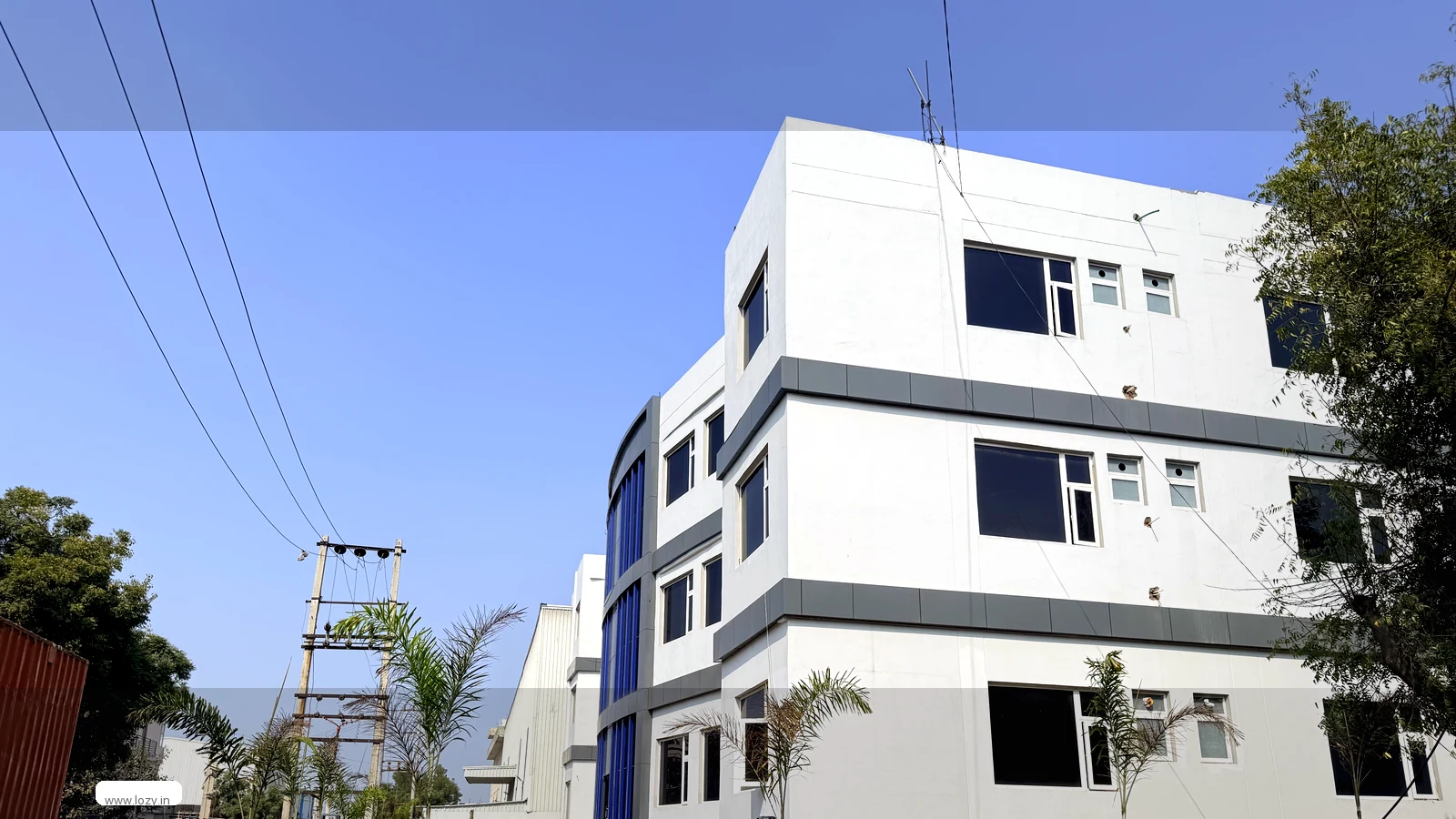
Solar equipment warehousing is the work of holding a project's bill of materials - crated modules, inverter cartons, cable drums, rail bundles - between the day it lands and the day an installation block can take it. Solar equipment warehousing with Lozy logs each lot's serial range against a project tag, keeps crates off the floor inside the maker's stacking limit, and releases stock block by block from ₹12 per sq ft per month.
Key takeaways
- Lozy holds solar consignments across a network of 77+ warehouses and over a million square feet of live space, with Delhi NCR positions on the Gurugram-Manesar belt, in Faridabad and along the Sonipat-Murthal corridor.
- Floor area begins at ₹12 per sq ft per month, on-demand space at ₹14, an inventory-led plan from ₹4,499 per month and a long-term booking from ₹1,199 per month, all on a monthly GST-invoiced plan with no long lock-in.
- Module crates stay in the maker's crate, inside the printed stacking limit, on dunnage or racked decks and out of the forklift turning arc, because over-stacked glass carries micro-cracks that surface only at installation.
- Every lot is written in at intake with its crate count, serial range and project reference, and dispatch is drawn one installation block at a time - the record a commissioning team leans on months later at a site in Gurugram, Faridabad or Bhiwadi.
A solar consignment is several products under one project name. Modules leave a maker in crates, inverters and combiner boxes arrive in cartons, cable comes on drums, and rails, purlins and clamps turn up as several-metre lengths on a truck of their own. Each lands against a different date while the site at the other end moves at one speed.
That mismatch is ordinary rather than exceptional, because the build-out is policy-shaped: capacity and scheme context sit on IBEF's renewable energy profile, and released announcements come through the Press Information Bureau. A project's kit therefore arrives early, waits sometimes for months, then leaves in a hurry against a date that cannot move.
How modules, inverters and rails are actually held
Three handling families share one facility. Glass-faced modules need crates that never touch the slab; electronics need a dry racked zone with controlled access; long steel and aluminium need a straight run supported along its length. The shell matters less than whether those three answers fit inside it at once.
A bill of materials arrives in waves, and the site sets the order
Module crates are usually the first wave, often enough to fill a bay on their own, while inverters, cable and the mounting system arrive on their own dates - a fortnight later sometimes, a season later at others. What a commissioning team needs at the far end is set by which installation blocks are ready, not by which consignment landed first. A lot received in one sequence therefore has to be handed over in another, which works only when every crate carries a project and block reference from the moment it is counted in.
Crates off the floor, and inside the marked limit
Nothing sits directly on concrete. Crate pallets stack on dunnage or racked decks, which keeps the bottom layer clear of the slab, of water crossing it and of the wash-down traffic a floor-level row collects, and stacking stops at the limit the module maker prints on the crate rather than at the height the roof allows. Crates also sit out of the forklift turning arc at the end of a row, and loose clamps and hardware travel in labelled bins rather than an open crate a tipped pallet can scatter.
Why breakage-sensitive glass changes the handling
Module damage is quiet. A crate set down harder than it should have been, a pallet stacked one layer deep, a fork that grazed a corner on withdrawal - none of it looks like anything at the time. Micro-cracks pass a visual check and surface months later, with the module already on the structure and the crew standing beside it.
The routines that prevent it are unglamorous: modules stay in the maker's crate, corners are protected before a pallet meets a ramp, and the count with its visible condition is written down at check-in. That entry is what turns a cracked module into a supplier conversation with evidence behind it.
Inverter cartons, cable drums and long rail loads
Inverters, combiner boxes and monitoring units are the high-value, weather-sensitive half of a consignment. They stay upright as marked, racked dry and off the floor behind controlled access, not in an open bay by a roller door where a passing vehicle can reach them. Cable drums stay on their flanges and roll only in the winding direction: a drum left standing on damp ground pulls moisture into the outer wrap.
Rails, purlins, cradles and profiles are the awkward cargo. Several metres long and slim, they sag in the middle when only their ends are supported, and they must not rest on wet ground. Stored well they sit on long cradles or in a straight lane, supported along their length and crossing no turning circle; stored badly they arrive with a bend no installer can work out.
Project-wise and site-wise separation: making a lot findable months later
On a single-site project one lot is the whole building. On a portfolio it is not, and the failure that costs money is a pallet that cannot be identified. Two projects, two sites, two block sequences and one racking row is the arrangement to avoid, because a call-off made in a mixed row takes whichever crate is nearest, and the shortfall surfaces only when another site's truck is at the gate. Lozy's solar warehouse network separates lots per project for that reason.
The record that has to survive the project
Intake decides everything downstream: the crate count against the delivery papers, the serial range on each crate, the project and site reference, the block the stock is meant for, and the rack position it went to. Those five fields answer the two questions a commissioning team asks - is my module here, and which one is it? On a warranty claim the serial range is the only thing tying a batch to a site.
The record also has to live where the picker reads it: a lot reference on the crate face and in the stock register, changed in the same action whenever a quantity is drawn. Where a project reports to an owner's engineer, those entries build the monthly stock statement.
Reserve, active and staging: three zones, not one
Solar storage works best split three ways. Reserve holds the project's untouched kit in racked crates; active holds the week's call-off list at a quantity that leaves the next block's kit whole; staging by the dispatch bay holds only what a vehicle takes today. Where two projects must share a rack, a bay face belongs to one project at a time - the mixed bay is where quantities quietly disappear.
Monsoon, plinth height and the yard that decides a site
June to September is where a solar storage site earns its rent or loses it. The cargo is less forgiving than most: glass that wants to stay dry, electronics that corrode at a terminal, steel that marks wherever a coating is scratched, cable whose outer wrap holds water long after the surface looks dry.
The checks are physical, not contractual
Plinth height above the surrounding grade, so water standing in the yard does not reach the slab. A hard-standing surface at the dock rather than loose earth, because a loaded trailer that sinks in August is not a theoretical problem. A drain invert running away from the building instead of towards it, and door thresholds that behave during the heaviest hour of a storm. Indoors, every crate row sits on dunnage with the bottom layer off the concrete.
The test is a visit after rain rather than a photograph taken in a dry month, plus one question about how the building behaved in the previous monsoon.
Staging for site dispatch, block by block
Solar deliveries rarely leave as a full truck to one address. A commissioning team wants part quantities per block, and the site pad has nowhere to hold kit that arrives early. Staging converts a warehouse call-off into a load a crew can fix in the week it lands.
Drawing down one block at a time
The work runs against a list: which block, how many modules, which inverter, what hardware. A crate is opened to that quantity, loose hardware is bagged and put back inside, the lid is resealed, corners are protected before the pallet meets the ramp, and the site and block reference is stencilled on the crate faces. The vehicle is loaded in the reverse of the install order, so the block that goes up first comes off the tail first, and spares stay in reserve rather than riding out with every dispatch.
The tender and subsidy rhythm behind those dispatch dates
Solar demand is shaped by policy rather than a retail calendar, and the shape arrives as waves: tender awards cluster after an auction round, commissioning dates crowd towards the close of a fiscal quarter, and civil work slows through the rains. Intake lands in bursts, rests through site preparation and approvals, then leaves against dates that cannot move. The framework sits with the Ministry of New and Renewable Energy; releases come from the Press Information Bureau.
Two rules follow. Book space when the award is won rather than when the modules land, because the weeks before a quarter-end push are when racked positions, straight lanes and staging bays are scarcest. And keep the term flexible: a project pushed back a month should cost a month of storage, not a year of rent.
What solar equipment warehousing costs
Lozy publishes starting rates against the service each one belongs to rather than a single project figure, because an average quoted without its basis misleads. Four bases cover most solar storage requirements:
- Floor area for rent - ₹12 per sq ft per month for an area basis, published on the warehouse and godown space for rent page: what you size crate rows and a rail lane against.
- On-demand and business space - ₹14 per sq ft per month for racked or floor space held month by month with handling and security in the plan, published on the on-demand warehouse page.
- Inventory-led storage - a monthly plan beginning at ₹4,499 for stock tracked as a running ledger rather than as rented area, published on the inventory warehousing page.
- Long-term warehousing - a booking from ₹1,199 per month for a fixed footprint held across a longer commitment while approvals clear, published on the long-term warehousing page.
Every one of those is a starting rate: monthly invoicing with GST, no long lock-in, and a bigger or smaller area priced on the same basis.
What moves the number in this trade
- The basis behind the quote. Area is priced per square foot, a racked position per position, a lockable room per unit, an inventory-led plan per month.
- Handling intensity. A crate leaving as it arrived costs less to run than block-wise unpacking, hardware bagging and re-stencilling.
- The shape of the cargo. Six-metre rails and cable drums use floor area inefficiently, and a straight lane genuinely free of racking is worth paying for.
- The term. A monthly booking and a longer commitment price differently for the same footprint.
- Distance to the sites. In a portfolio the vehicle run decides the site more often than the rent does.
GST applies to warehouse rent, and a registered business recovers input credit on a proper tax invoice raised in its own name - worth settling before the first crate is unloaded, since the rules sit on the GST portal and an accountant can confirm how they apply. If an owner's engineer wants storage and handling shown separately, say so while the requirement is discussed.
How to choose a storage site for a solar project
Work backwards from the dispatch sequence on paper, then test the building against the cargo. If the sequence is not written down, write it first - which blocks, in what order, from which site - because that list decides the layout and the space you should be paying for. The solar warehousing coverage page shows what is live in the network.
- Can the deck take your crate? A module crate is a specific weight and footprint, and a rack that holds only house pallets is a floor stack with a better name.
- Measure the longest item in the bill of materials. Six-metre rails need a straight, dry run of at least that length, supported along it and clear of the turning circle.
- Count zones, not only square feet. Reserve racking, an active pick area and a staging bay by the dock are three parts of one building.
- Test the dry-stowage answer. Plinth height, roof condition, door thresholds and where the yard drains - ask how the building performed in the last monsoon.
- Check access control and the record. Controlled entry, CCTV, and a check-in that writes count against visible condition; solar lots are slow to replace.
- Put the term and the invoice in writing. Monthly billing, GST treatment, notice period, and what happens if the project slips a quarter.
Red flags in a solar storage deal
- Stacking limits treated as advice. The limit printed on the crate is a handling specification; ask who checks it.
- Crates standing on bare concrete. The bottom layer takes the water and the impact.
- Long rails leaned against a wall or on wet ground. Both bend the stock, and neither shows up in a rate comparison.
- One register across two projects. A serial range not captured at intake is never reconstructed later.
- No answer for the week the block sequence moves. Surge room should be a number and a lead time.
- A rent receipt rather than a tax invoice. Cheaper in the month, and the input credit is gone for the year.
Own godown, shared warehouse or a 3PL for a solar project
These three routes are not ranked; they answer different questions.
| Decision | Own godown | Shared monthly warehouse | 3PL partner |
|---|---|---|---|
| What you commit to | A lease, usually multi-year | Month by month, released when the site finishes | A service contract priced on volume |
| Money before the first crate | Deposit, racking, staff | No fit-out; area starts at ₹12 per sq ft per month | Onboarding and systems |
| When the project slips a season | Rent runs on racks holding nothing | Released or held on the same monthly basis | Only if the contract allows the pause |
| Long rail stock | A lane you build and keep clear | A straight run with cradles, agreed at booking | At the partner's discretion |
| Serial and lot records | Yours to design and keep honest | Written at intake, drawn down block by block | In the partner's system, seen on their report |
| Who finds the right block at call-off | Your own site team | The facility team, against the crate reference | The partner's staff, on their priorities |
| Stops making sense when | Volume is low or the project is short | Every load leaves as a full crate to one address | Commissioning sits outside your control |
Many project teams run two of the three at once: a project warehouse holding the reserve, and a smaller position nearer one site as it comes live. What must join up is the lot record, because two buildings holding one project under two naming habits reconcile in neither.
A worked example: three sites drawing from one NCR warehouse
Take a representative case rather than a named account. An EPC contractor holds a rooftop portfolio in Gurugram, a ground-mount array on the Bhiwadi side of Rajasthan and an institutional rooftop in Faridabad, all awarded in the same quarter with commissioning dates a few weeks apart. The modules are ordered as one allocation and arrive at a single delivery point.
Three positions are realistic. A shed on the Gurugram-Manesar belt, west of the capital on the NH-48 side, is where the contractor's own team already works and where one intake can be recorded. Faridabad's industrial estate belt sits closer to the third site, and a Jaipur-side position shortens the last leg into Bhiwadi if that site goes live last. Ruled out early: a shed whose rail lane is really a corridor, and a yard that drains towards the gate.
Written down, the choice splits rather than settles. Reserve for all three sites goes to the Manesar belt - one intake, one serial book, block-wise drawdowns to Gurugram and Faridabad, and the KMP expressway to reach the northern side of the region without crossing Delhi. Only the Bhiwadi kit moves on, to a Jaipur-side position once the sequence firms up, so the trucks on the Rajasthan road carry what the crew can install that week.
What decided it was not the headline rate. A straight run that takes the longest rail profile without a bend, dunnage under every crate row through the monsoon, a staging bay that lets a load be made up block by block, and a monthly term that released space as each site finished. One wet rail bundle would have cost more than the rent difference.
How Lozy handles solar and renewable energy equipment
Lozy provides solar and renewable energy warehousing across a network of 77+ warehouses and over a million square feet of live space, with the deepest coverage in Delhi NCR. Solar stock is received against delivery papers and recorded crate by crate with its serial range and project reference, kept off the floor inside the maker's stacking limit, and released in the quantities each installation block can use, on monthly billing with GST and no long lock-in.
Because the plan is monthly, storage tracks the project rather than the worst line in the schedule. A lot that must sit for a year while grid or subsidy paperwork clears goes on long-term warehousing; a commissioning push that doubles the kit for a fortnight is absorbed by on-demand warehouse space and released afterwards; a requirement larger than a project bay, with dock access, is industrial and bulk warehousing.
Which building you use follows your sites: the Gurgaon warehousing guide for the Manesar and Kherki Daula belt, the Faridabad guide for the industrial estates, and the Haryana corridor guide for the nodes between Sonipat and Ambala.
Neighbouring verticals share most of the handling problem. The electrical and hardware guide covers switchgear, cable and fittings, the heavy equipment guide covers staging for machinery and structures, and the import and export guide is written for consignments landing in several lots. Two bases come up in almost every solar conversation: warehouse and godown space for rent and short-term storage, both set out in the warehouse for rent guide.
The warehouse listing shows what is free right now. With a project schedule, a city and the longest item in the bill of materials, the contact page returns rates and options, usually within the working day.

Related guides
Storing solar modules, inverters or rails?
Send the project schedule and the longest item in the bill of materials - we reply with a rate and the space that fits the dispatch sequence.
Get a quoteCall +91 93547 12345Sources. Every rate, facility name and service basis quoted here comes from Lozy's published pages. Renewable capacity and sector context come from IBEF's renewable energy profile; scheme announcements from the Press Information Bureau and the Ministry of New and Renewable Energy; GST rules from the GST portal; and the corridors these dispatch runs use from the National Highways Authority of India.
Last updated: 14 October 2026. Have a question the FAQ below does not answer? Call +91 93547 12345 or email care@lozy.in.
Need warehousing or storage in India?
Request a free, tailored quote in under 2 minutes — free pickup, no lock-in.






