Spare Parts Warehousing: Bin Racks, Dealer Picks, Cost and Site Choice (2026 Guide)
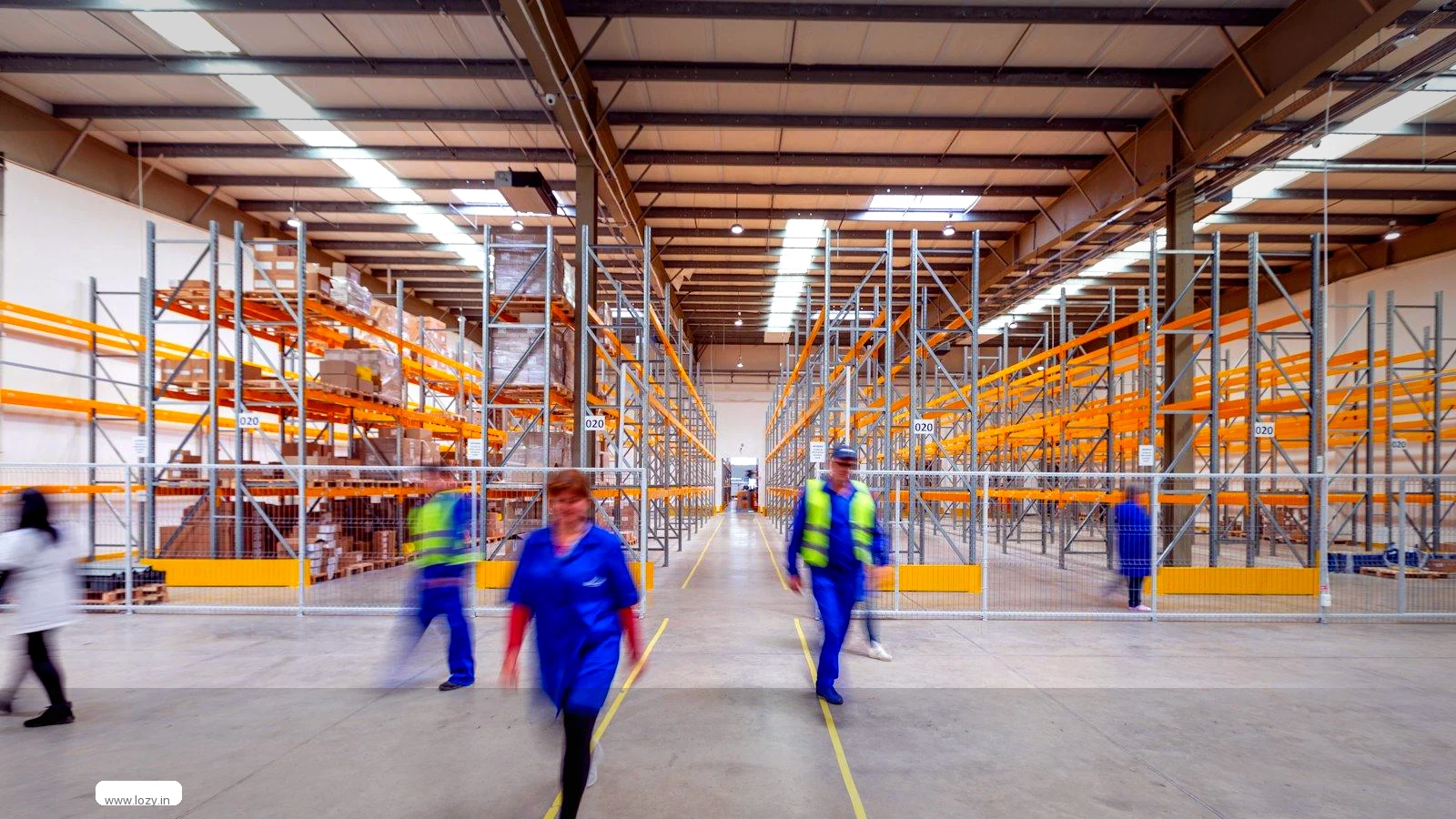
Spare parts warehousing is the work of holding a range of thousands of small, similar-looking items so that a dealer's pick list comes out right the first time and a given part number can be found without a search. Spare parts warehousing with Lozy gives every number its own labelled bin, keeps kit sets assembled as a single unit, separates fast movers from dead stock, and runs on an inventory-led plan from ₹4,499 per month. A workshop that receives the wrong bearing loses a lift for the afternoon, and nearly everything in a well-planned parts store exists to prevent that.
Key takeaways
- Lozy holds 77+ warehouses and more than a million square feet of live space, with aftermarket-ready capacity in Faridabad's DLF Industrial Area 2, on the Gurugram-Manesar belt and on the Dadri side of Greater Noida.
- The published bases that fit a parts operation are an inventory-led plan from ₹4,499 per month, racked business space from ₹14 per sq ft per month and godown space for rent from ₹12 per sq ft per month, each invoiced monthly with GST.
- Racking is set by part number rather than by the supplier's carton, because an unlabelled seal, sensor or brake pad cannot be identified by sight once the packing is open.
- One layout rule pays for itself: fast movers at the pick face, slow movers higher and deeper, and dead stock in a written quarantine bay rather than sharing a rack with lines that sell every week.
The aftermarket trades on range, not on volume. A plant dispatches one part number by the truckload; a dealer network sends an indent for two hundred numbers, most of them in ones and twos, and expects the set to be complete when the carton is opened. That difference decides the racking, the labels, the pick sequence and the way a return is handled - and it is why a parts distributor can outgrow a shop basement without its monthly volume changing very much at all.
How spare parts warehousing runs, from the vendor counter to the dealer's shelf
Four stages decide whether an aftermarket store works: what is captured when stock arrives, how it is put away, how a set is assembled, and how a dealer's list is picked. The first is the one that cannot be repaired later.
Intake: the part number, not the carton count
A consignment from a vendor or an importing agent arrives as mixed cartons, and counting them against the advice note is only the start. What has to enter the record for every line is the part number, the description, the vehicle or machine it fits, the quantity in the pack and the condition. A store that receives by carton count alone ends up with an accurate total and a useless one: it knows it holds forty filters, not which forty, and the first dealer order quoting a specific application number exposes the gap.
Each line then moves into its own container at the bin rather than staying in the supplier's master carton. A carton of forty identical seals is convenient to receive and awkward to pick from, because opening it to take two destroys the label that identified it. Putting the parts into a labelled bin, keeping the master carton flat and letting the bin label carry the number from that point onward is the difference between a range and a heap.
Intake is also where untidy faults get separated instead of stacked. A seeping box of oil seals or a crushed carton of filters marks everything it rests against, and a damp carton of brake linings is a safety question before it is a stock question - it should be pulled and recorded the day it is found rather than left in the rack to be discovered later.
Put-away by part number, not by supplier
The temptation with a fresh intake is to put the vendor's whole consignment in one place. It is quick, and it is wrong. Supplier-wise storage scatters a single part number across the building the moment a second source supplies it, and it slots a fast-selling line beside a slow one simply because the two shared a truck. Part-number-wise storage keeps every instance of a number in one bin and lets that bin's position be decided by how often the item moves.
Where numbers are long and look alike - brake pads and filters are the classic case, with digits that change for a model year - the bin label should carry a plain-language application line beside the code. A picker reading "front pad, 2019-2023 hatchback" catches a near-miss number faster than any screen check made after the walk.
Kits: one job, several part numbers
Much of the aftermarket does not sell single pieces. A clutch replacement, a timing belt job or a suspension overhaul goes out as a set, and that set is usually built from separate numbers that arrived on separate consignments. If the pieces are racked independently, the kit is assembled at dispatch time, which means the missing half is discovered when the dealer's vehicle is already standing at the gate.
The fix is a kit position. Constituent numbers are drawn from their bins into a labelled kit container as soon as the full set is in stock, and that container holds its own location with a bill of what is inside it. A kit short of one piece is not a kit; it is unassembled stock, and it has to be visible as such rather than counted as saleable.
The dealer-wise pick list
Dealer replenishment is the rhythm the building answers to. Orders arrive dealer by dealer and are picked the same way - one trolley, one dealer, one list, one packing slip - with the sequence arranged so the picker walks the rack face once instead of criss-crossing the aisles. The list is the document that decides whether the dispatch is right, and it earns more than any storage upgrade, because a wrong part dispatched costs a return run, a credit note and a dealer who phones a competitor from the workshop floor.
Keeping channels apart matters here too. A dealer's trade indent, a workshop's walk-in requirement and an online retail order drawn from the same bins will be picked and packed differently, and putting them on one trolley is how a retail parcel ends up inside a dealer's consignment.
Finding one part among thousands
Nobody can hold a range of tens of thousands of numbers in their head, and the day picking depends on one experienced man the operation has a single point of failure. The answer is not more software; it is a location system plain enough that a picker on his first day can execute it without asking.
The bin label does the work
Every bin carries three things: the part number, a short description with its application, and the bin's own location code, read as aisle, rack, level and position. The location code is what makes a pick list walkable - the list is sorted by location, so the picker moves in one direction along the rack face and never doubles back. It also makes a stock query simple: when a dealer asks whether a number is available, the answer comes from one location rather than from a hunt through the building.
Numbering locations and numbering parts are different jobs, and confusing them is common. Part numbers are commercial; location codes are physical. A part moved to a new bin keeps its number and takes a new location, and the record has to follow on the same day, or the next pick walks to an empty bin and the stock is "missing" while sitting three racks away.
Accuracy at the pick face, not at the annual count
Picking accuracy rests on two habits. The first is confirming the number at the bin rather than after the walk: the picker checks the bin label against the list before the item leaves the shelf and flags a short bin straight away instead of leaving a gap in the trolley. The second is counting the remainder whenever a bin is handled, so a shortage surfaces in the week it happens rather than in a quarterly reconciliation. A rolling count by bin catches the errors that matter while they are still cheap to fix.
Fast movers, slow movers and dead stock
The mistake that costs parts distributors the most is not a weak rack; it is one rack holding the consumable that leaves every week beside a part that has not moved since the vehicle it fits left the road. Every pick out of that rack becomes a search, and a search costs more than it looks - the picker's time, the delay before the trolley moves on, and the odds of the wrong part going out.
Three tiers, decided on turnover and nothing else
The range divides into three groups, and each belongs in a different part of the building. Lines that leave every week take the pick face at trolley height within a step of the aisle: filters, brake pads, belts and the fast service consumables. Lines that move monthly take the racking directly behind the pick face. Numbers that have not moved at all, on applications that are no longer serviced, come out of the live rack altogether and go to a quarantine or obsolete bay with its own written record.
The tiers come from your own dispatch history rather than from a catalogue, and they need revisiting on a schedule. A part climbs from slow to fast as a common model ages into the repair market, and the same shift pushes another number out of the live range. A range ranked once when the warehouse opened and never re-ranked stops matching the trade it serves.
Dead stock needs a decision date, not patience
Obsolete parts are the quiet cost of an aftermarket store. They occupy positions that fast movers need, and they inflate the stock figure for as long as they sit inside the live pick face. A separate bay with the age written on it and a decision date attached turns the problem into a monthly choice - sell through, return to the vendor, or write off - rather than an annual shock. Once the dead stock is out of the pick face, the rack it occupied can be re-slotted for something that actually sells.
The aftermarket calendar: monsoon breakdown season and dealer replenishment
Parts demand is not flat, and its peaks are regular enough to plan space around once they are named.
June to September: the breakdown peak
The monsoon is the heaviest season in the northern trade, and it is a parts season before it is anything else. Waterlogged roads and standing water load bearings, suspension, electricals and brake components; two-wheelers and the light commercial fleet that carries goods through the region work harder in the rain than in the sun; and dealers answer the surge with replenishment runs that land in bursts. The fast-moving lines of a parts store drain quicker in these weeks than at any other point in the year.
The planning consequence is space rather than stock. What a distributor needs through the season is enough pick face and bin capacity to hold a larger buffer of the seasonal numbers without displacing the rest of the range, and enough racked height to keep reserve cartons above the pick face instead of in the dispatch aisle. Booking that room in April or May is easier than finding it in July, when every workshop along the corridor is calling for the same parts.
The rest of the year
October to March is the repair, insurance and body-work window, when accident-damaged vehicles come back into service and replacement parts move in a steadier, more deliberate pattern. The weeks before the rains build the buffer on numbers the trade already knows it will need. Underneath all of it runs the dealer's own replenishment cycle - a district dealer ordering weekly or fortnightly, with a heavier indent ahead of a maintenance season and a lighter one behind it. A warehouse that can take extra positions for a peak and hand them back afterwards fits that shape; a fixed footprint either runs out of pick face in July or stands half empty in February.
Returnable bins, warranty parts and the reverse flow
Parts travel back as well as out, and the return is where many stores quietly lose control of their own records.
Bins that belong to somebody else
A large share of parts and fasteners arrives in returnable containers - plastic crates, steel bins and pallets of a particular footprint - that carry a deposit and belong to the vendor or to a pooled service. Those containers are assets, not packaging, and a store that stacks them in a corner and loses count burns a deposit on every cycle. Keeping them segregated, counted and sent back against a written schedule, with the deposit position visible, is ordinary housekeeping that pays for itself.
Warranty and wrong-fit returns
Warranty claims and wrong-fit parts come back with a reason attached, and the reason decides their route. An unopened part returns to its bin after a check. A part whose packing is open but whose condition is sound returns to saleable stock only after inspection. A part that has genuinely failed does not go back into the rack at all; it goes to a claim bay with the dealer's paperwork and waits on the vendor's decision. Merging those three streams into one returns pile is how a failed part reaches a second dealer, and that costs a relationship rather than a part.
What spare parts warehousing costs
Lozy publishes starting rates against the service each figure belongs to rather than one market rate for parts, because a number per square foot and a number per bin are not the same product. The bases that fit this trade:
- Inventory-led storage - from ₹4,499 per month on the inventory warehousing page, for stock tracked bin by bin as a running ledger. This is the basis most parts distributors start from, because what is being bought is space plus a part-number record.
- Racked business space - from ₹14 per sq ft per month on the business warehousing page, with racking, security, handling and invoicing inside the plan. Use it when you already know the floorplate and the bin count you need.
- Godown and warehouse space for rent - from ₹12 per sq ft per month on the warehouse and godown space for rent page, priced by area, which is the basis to compare when you are matching a building to a number of bins.
- On-demand space - from ₹14 per sq ft per month on the on-demand warehouse space page, taken month by month for the weeks a seasonal buffer sits in the building.
- Long-term and short-term holds - from ₹1,199 per month on the long-term warehousing page for a fixed smaller footprint held over a longer commitment, and short-term storage from ₹699 per month when a consignment stays for weeks rather than months.
Every figure above is a starting rate, invoiced monthly with GST and without a long lock-in.
What moves the number in this trade
- Bins against floor area. A range of small items needs many small positions rather than a large open floor, so the rack and bin count moves the rate more than the square footage does.
- Pieces per order. A carton lifted off a shelf is a cheaper pick than a kit assembled out of six bins, and a dealer network ordering in ones and twos is buying handling time as well as space.
- The slotting work. Ranking a range by turnover and re-slotting the pick face is labour, and it belongs in the quote rather than in a surprise invoice three months later.
- Season and term. Space taken for the monsoon weeks prices differently from space held through the year, and the footprint you occupy is the largest single input either way.
- Location. Racked space in Faridabad and racked space on the Gurugram side are different assets, and the gap shows in the monthly rate long before it shows in the transport bill.
Warehouse rent attracts GST, and a registered business can claim input credit when the invoice is raised as a tax invoice in its own name; the rules sit on the GST portal and your accountant can confirm how they apply to your entity. Where a facility stores and handles goods to a professional standard, the practice the trade measures itself against is set out by the Warehousing Development and Regulatory Authority. Many parts distributors, dealers and workshops buying this space are small businesses, and the registration and credit framework built around them is published by the Ministry of Micro, Small and Medium Enterprises.
Own godown, shared parts warehouse or a 3PL
These three routes are not ranked; they answer different questions. A distributor whose range keeps widening lands on one, an importer sitting on a first consignment on another.
| Decision | Own godown or shop basement | Shared parts warehouse | 3PL parts distributor |
|---|---|---|---|
| What you commit to | A lease or a family property, tied up for years | Month by month, or for the weeks of a seasonal buffer | A service contract on volume |
| Money before the first bin | Deposit, racking, bins, labels, watchman, staff | No fit-out; bin positions and the part-number record come with the plan | Onboarding, systems and a data handover |
| When the monsoon buffer lands | The aisles fill and the counter slows down | Add rack and bin positions for the weeks, release them after | Handled only if the contract allows surplus |
| Who keeps the part-number record | Your staff, in whatever format the shop already uses | Written bin by bin at intake and updated as stock moves | Held in the partner's system, seen on report |
| Labelling and slotting | You set the standard and enforce it yourself | Facility team labels, slots and re-slots by velocity | The partner's own method, applied across its clients |
| Stops making sense when | The range keeps widening and the premises cannot | The requirement is large, flat and wholly predictable | You want picking and dealer contact kept in-house |
| Usually best for | A shop-plus-counter business in its early years | A distributor whose range grows faster than its volume | A brand outsourcing its aftermarket distribution |
Lots of parts distributors run two of the three at once: the Mayapuri-style counter for walk-in trade, and a racked warehouse holding the range that the counter cannot. What matters then is that one part-number record survives the split, because a number counted as available in two places at once is how a dealer is promised a part that sits in the other building.
How to choose a site for an aftermarket range - and the red flags
Work backwards from the dealers you serve and the vehicles that collect from you, then test the building against the way parts behave. A walkthrough with someone who already runs racking for this trade saves a month; the spare parts warehousing team will do that with you before you commit to a visit.
- Rack and bin provision, not floor area. Ask how many bin positions the racking gives for your part sizes and pack quantities. A large empty floor is worth less to a parts range than a compact, densely binned block with a walkable aisle.
- Clear height and beam spacing. Take a sample master carton and a kit box with you. Height decides how many reserve levels sit above the pick face, and beam spacing decides whether your box fills a level or wastes half of it.
- The vehicle face and the collection lane. Dealers and couriers arrive in small vehicles through the day while vendors send a larger truck. Confirm both can work the face at once without a queue forming in the approach road.
- A labelling and location standard in writing. Ask to see a bin label from a live facility and a sample pick list. If the labels are handwritten per rack aisle and the list has no location sort, picking accuracy is a hope rather than a system.
- Dry stowage for the monsoon. Check roof condition, plinth height and yard drainage, and ask how the building behaved in last August's rain. Brake components and electricals do not forgive a damp shed.
- The invoice, before you sign. The GST treatment, the entity the invoice is raised in, the minimum term and the notice period belong in the written quote, not in a phone call afterwards.
Red flags to walk away from
- "We can store parts" with no bin-level record. Pallet racking sold as a parts store is a shelf system, not a range system.
- One open floor and no racking plan. Without bins and a location code, stock will be stacked supplier-wise and picked by memory.
- Bins without labels, or labels without the application. A number alone is not enough when two digits separate one model year from another.
- No separation for dead stock. If obsolete numbers have nowhere to go, they will sit in the pick face and slow every pick.
- Returns accepted into the live rack. Warranty and wrong-fit parts need their own bay and a written reason, or failures re-enter saleable stock.
- Returnable containers with no count. Somebody is paying a deposit on every bin that walks out and never comes back.
- Rent paid against a receipt with no tax invoice attached. A cheaper month now, a full year of input credit gone.
A worked example: a Mayapuri parts distributor weighing three sites
Take the case below as representative rather than a real account. A spare parts distributor with a shop and counter in Mayapuri, west Delhi, supplies two-wheeler and passenger-car dealers and a set of independent workshops across south Delhi, Faridabad, Ballabgarh and Palwal. The ground floor behind the counter has filled up: the fast service lines are stacked in front of the slow ones, and a full kit set now has to be assembled on the pavement outside before it can be loaded.
Three Lozy options are worth weighing. The first is racked space in Faridabad DLF Industrial Area 2, on the Mathura Road side. The second is the Jamalpur facility on the Gurugram belt. The third is space near Ghevra Metro, the closest of the three to Mayapuri and the easiest counter-to-store hop for a person, if not for a loaded vehicle.
Written down, the choice resolves on the dealer list rather than on rent. Two of every three dealers on the list sit down the Faridabad-Ballabgarh-Palwal corridor, so a racked store at DLF Industrial Area 2 shortens the replenishment run for the bulk of the trade and gives the shop counter a back-of-house it can draw on the same day. Jamalpur would suit a list weighted towards Gurugram and would leave the Faridabad leg longer every week. Ghevra wins on the city hop and loses on the two things this range needs most: racked clear height for a seasonal buffer above the pick face, and room to add bin positions when the range widens again.
What settled it was neither the headline rate nor the distance from the shop. A bin-level part-number record, enough racked height to bank a pre-monsoon buffer on bearings, seals and brake components, and a labelled kit position so a clutch set can leave complete carried more weight than a few rupees per square foot - and those three are the right things to test in any parts facility you visit.
How Lozy handles spare parts and aftermarket stock
Lozy runs spare parts and aftermarket warehousing across 77+ warehouses and more than a million square feet of live space, with the deepest coverage in Delhi NCR and collection centres feeding the rest of the country. Stock is received against the advice note and recorded by part number; racking is set by how fast each number moves, with kit sets held together in their own positions; dealer-wise pick lists are picked dealer by dealer so a consignment arrives complete; and dead stock is held out of the pick face with a written age.
Because the plan is monthly, the space follows the trade calendar rather than your worst guess. A distributor can add bin and rack positions before the monsoon peak and release them once the season turns, inside the same facility, with billing on a GST invoice every month and no long lock-in. Where the record matters more than the rack, inventory warehousing tracks stock as a running ledger; where the requirement is a large floorplate with dock access, industrial and bulk warehousing covers it.
Neighbouring verticals share most of the handling problem and are worth reading before you call. The auto component warehousing guide covers OEM and plant-side stock, the electrical and hardware guide deals with coils, switchgear and boxed sets, and the B2B distribution guide is written for trade-channel supply at volume. If you are comparing service shapes first, the inventory warehousing guide and the warehouse for rent guide each set out a basis in plain terms.
On the map, the belts that matter to this trade run through the Faridabad warehousing guide for the DLF estate cluster, the Gurgaon guide for the Manesar and Kherki Daula side, the New Delhi guide for space inside the boundary and the Uttar Pradesh guide for the eastern NCR belt. Every one of those runs leans on the same road network, maintained by the National Highways Authority of India, and the size of the market those parts serve sits on the IBEF auto components profile.
To see what is free today, browse the warehouse listing. To compare the full range, the services page lists everything from a single rack position to a bulk floorplate. And when you have a city, a part-number count and a date, the contact page comes back with rates and availability, usually within the working day.

Related guides
- auto component warehousing
- electronics warehousing
- B2B distribution warehousing
- warehousing in Haryana
Storing spare parts and aftermarket stock?
Send your part-number count and dealer list - we reply with a rate, a bin plan and the space available now.
Get a quoteCall +91 93547 12345Sources. Rates, facility names and service bases are Lozy's own published information. GST registration and input credit come from the GST portal; warehouse operating practice from the Warehousing Development and Regulatory Authority; MSME registration and credit context from the Ministry of Micro, Small and Medium Enterprises; aftermarket and component sector context from IBEF; and highway and corridor context from NHAI.
Last updated: 14 October 2026. Have a question the FAQ below does not answer? Call +91 93547 12345 or email care@lozy.in.
Need warehousing or storage in India?
Request a free, tailored quote in under 2 minutes — free pickup, no lock-in.