
Consumer Electronics Warehousing in Delhi NCR: Serial Records, Channel Staging and Cost (2026 Guide)
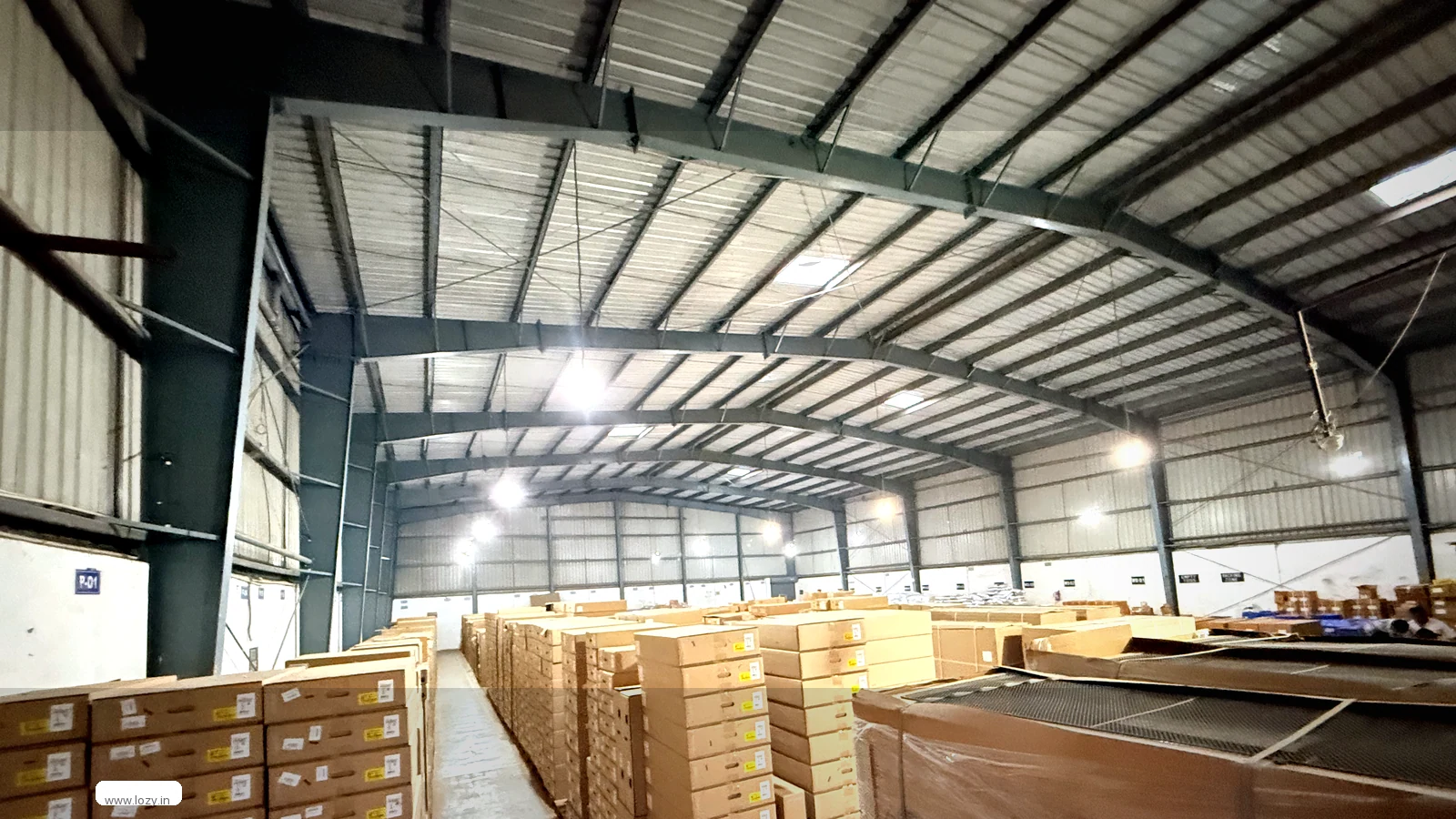
Consumer electronics warehousing is storage built for small goods that carry an identity: a phone, a laptop or a smartwatch is worth more per carton than a full pallet of most other trade goods, and every unit can be traced by IMEI or serial number rather than by carton count alone. Consumer electronics warehousing with Lozy keeps that stock in access-controlled bays with a movement record against each unit, stages it channel-wise for marketplaces, offline dealers and your own webstore, and bills month to month on a GST invoice with no long lock-in.
Key takeaways
- Lozy runs 77+ warehouses and more than one million square feet of live space, with consumer electronics positions across Delhi NCR - the Faridabad DLF Industrial Area 1 facility among them - and collection centres feeding the rest of the country.
- Handsets, tablets and laptops are recorded against their IMEI or serial number at intake, so a shortfall at a cycle count or a unit sent back by a dealer can be traced to one box instead of argued as a carton quantity.
- Racked and controlled-access space starts at ₹14 per sq ft per month, an inventory-led plan from ₹4,499 per month and a channel-led fulfilment plan from ₹4,999 per month, billed monthly on a GST invoice with no long lock-in.
- Marketplace, dealer and own-webstore stock is staged on separate lanes with its own pick face, because a consignment promised to a Gaffar Market or Nehru Place counter leaving under a marketplace label instead is this trade's most expensive routine error.
A sealed master carton of handsets or laptops is among the densest value a warehouse ever handles. Forty units of a mid-range phone fit on one shelf; the same shelf in a general godown would hold weeks of something else. That density is the whole problem. The value per square foot is high, the units are individually identifiable, the price changes on a launch date instead of a season, and the party who loses money when a carton is short is not always the party holding the keys. This guide is the operational detail behind Lozy's consumer electronics warehousing service: how a consignment actually moves through a facility, what the monthly invoice is built from, how a shared warehouse compares with your own space and with a 3PL, and what the first month looks like when a brand's stock moves in.
How consumer electronics warehousing runs, dock to channel
What separates a facility built for this vertical from a general godown is not the racking; it is two controls. The first is who can physically reach the stock. The second is what record exists of the last movement against it. Everything else - the slotting, the pick face, the packing bench - is arranged around those two, because in this trade the goods are small enough to leave in a pocket and identical enough that a carton of earphones cannot be told from a carton of chargers without reading the label.
Intake: the IMEI and serial read before put-away
A consignment from a brand, a distributor or an import lot arrives against a packing list that already names model codes and unit quantities. The load is counted against that list, outer cartons are opened where the declared count needs verifying, and the unit identifiers - IMEI for handsets, the manufacturer serial for laptops, tablets and audio - are written into the stock record before the goods are put away. That single entry is what a dispatch, a warranty claim, a customer return and a shortage claim will all lean on months later, and rebuilding it afterwards is not possible.
Intake is also where tamper evidence is judged rather than assumed. A carton arriving with a broken seal, a re-taped flap or a printed weight that does not match the declared contents is separated for a joint count instead of being stacked into the main lot on the receiver's word. In a warehouse of soap and detergent, a single missing case is caught in the next full-pallet reconciliation. Here, the gap between forty units and thirty-nine is the retail value of the unit itself, and there is no way to write it off as normal shrinkage.
Storage in controlled-access bays, not open aisles
High-value stock is kept where a person has to be authorised to stand. In practice that means zones with their own access control, a named custodian per zone, and movement allowed only against a written instruction - a pick list, a dispatch note or a transfer sheet. An open bay that anyone can walk through invites a loss nobody can attribute: ten cartons in, nine out, and no line in any register that says when or by whom the tenth left. The control is not theatre; it is the only thing that makes a shortage a traceable event instead of a suspicion.
Inside the bay the layout still follows pickability. Fast-moving accessories, chargers and the current model sit at the shelf positions nearest the pick face, within reach without a ladder. Deep stock, the previous generation and spare units go higher or further back. Nothing rests on a bare floor: a pallet or plinth keeps cartons clear of a monsoon floor, because a water-marked retail box is unsaleable even when the handset inside is untouched - and in this trade the packaging is part of the product.
Channel-wise staging: marketplace, dealer and webstore
Most electronics brands here sell through three doors at once, and each door takes the same model in a different shape. A marketplace needs a single-unit mailer with the invoice inside and the platform label outside. A dealer counter takes a multi-unit carton with a trade invoice and often a warranty card. Your own website needs a gift-ready box with your own branding. Staging that stock channel-wise, with its own pick face and outbound lane, is what stops a marketplace picker from opening a carton that was allocated to a trade counter.
The staging protects the count as much as the stock. When each channel draws from one labelled position, the quantity left in a slot means exactly one thing. When all three draw from the same pile, units sold on a marketplace panel and units promised to an offline dealer become the same number on paper, and the discrepancy surfaces as a cancelled listing, an oversold panel or an unfilled dealer order during the busiest week of the quarter. Separating the channels is a layout decision taken when the space is taken, not a corrective action available in December.
The movement record: in, out and back
Every transaction that touches the stock writes a line: intake with identifiers against a packing list, put-away to a slot, a pick against an order, a dispatch against an invoice or e-way bill, a return into a quarantine lane, and any adjustment with a reason recorded against it. The record is kept the way you instruct - per serial, per carton, or both - but it is kept, and a weekly cycle count tests a slice of it instead of waiting for an annual wall-to-wall count to expose twelve months of drift. Rolling counts are what make the difference between finding a problem while it is cheap and finding it after the buyer has.
This is the part of the service a brand is really buying. Racking can be replicated in any shed on any highway. A factory-sealed carton of handsets cannot be distinguished from a carefully re-sealed one without a record that says who handled it, and when, and against whose instruction. Where the finance team needs stock valued line by line rather than shelf by shelf, the ledger-led route is inventory warehousing, which is built for exactly that reconciliation.
Picking, packing and the courier cut-off
Dispatch in this trade runs to a cut-off rather than a convenience. A marketplace order commits to a dispatch day the moment the listing sells, so the day is planned backwards from the courier sweep - marketplace single-unit picks first, direct-to-consumer parcels next, dealer consignments consolidated on their own run, and returns booked back at the dock the same day they arrive. Single-unit picking is slower per order than pallet work, so the layout carries the load: bin addresses for every SKU, a packing bench with materials within arm's reach, a scale and label printer at the edge of the lane. A channel-led fulfilment requirement is what e-commerce warehousing covers, and it is usually the right basis when marketplace orders dominate the mix.
Packing follows the channel's own specification rather than a house habit: the right mailer or carton, void fill that survives a courier belt, the invoice inside, tamper-evident tape, and a label that matches the invoice line for line. A mismatch between the two is how a buyer opens a box and finds the wrong model, which in electronics comes back as a refund request, a rating, and an open-box unit that can no longer be sold as new.
The launch cycle, the festive run and the rhythm of this trade
Electronics does not have a gentle season. It has a launch calendar, and that calendar sets intake volumes, discounting and how much of the previous generation is still sitting in the rack when the new model lands. Both the rhythm and the pricing behind it are visible in the sector's own data: the IBEF consumer electronics and durables profile tracks the market a buyer is planning stock against.
When a new model lands
A launch arrives as a wave. The brand releases a first allocation to its channel partners, marketplace panels list the model on announcement day, and the stock has to be inside a warehouse with room for it before that date rather than after. The same event reverses the outgoing model's velocity overnight: discounting begins, dealer indents turn into requests to swap old for new, and the remaining units of the previous generation must stay separately identifiable, because a mixed pallet of old and new is how a discounted unit gets dispatched at the launch price.
Because the wave has a date attached, the space for it can be booked ahead and released after. Rack and floor positions taken for a first allocation can be handed back inside the same facility once the wave clears, which is the practical value of a monthly booking in this vertical - a brand does not carry launch-week space through a quiet February to have it available in September.
The festive run and channel restocking
September to November pulls three demand curves up together: marketplace volume, dealer restocking, and walk-in buying at the phone and IT hardware markets. Dealer counters stock ahead of the season rather than during it, which moves the intake peak into the weeks before the peak itself. An accessories and audio brand also rides gifting demand that a handset brand does not, since a pair of earbuds or a power bank is bought as a present. The stock for all of it needs a dry, secure position weeks in advance, and that position needs to be released again in January - which is why the space is taken monthly rather than leased annually.
Returns, RMA and the lane that must never rejoin the shelf
An electronics return is either a genuine defect or a change of mind, and neither belongs in saleable stock until somebody has checked it. Returned units are received into a quarantine lane with their serials matched against the dispatch record, inspected, and then decided: back to the brand or importer, out for repair, written off with a reason, or - rarely - released back to the shelf on a written note. Merging returns into stock on arrival is the fastest way to make an inventory count meaningless and to ship a second buyer the exact unit the first one rejected.
What consumer electronics warehousing costs
Lozy publishes starting rates against the service each one belongs to rather than one national average for electronics, because a rate quoted without its basis invites a comparison that misleads. Five published bases cover most of what this trade needs:
- Racked and on-demand space - from ₹14 per sq ft per month. The basis for a racked, access-controlled position or floor area held month by month, with security, handling and invoicing inside the plan, set out on the business warehousing and on-demand warehouse pages. Use it when you are sizing positions by floorplate.
- Warehouse and godown space for rent - from ₹12 per sq ft per month on the warehouse and godown space for rent page, the lowest starting basis and the one to price a bare floorplate against when you bring your own racking and team.
- Inventory-led storage - from ₹4,499 per month on the inventory warehousing page, for stock tracked as a running count per SKU rather than as a rented area - the shape that suits a serial or IMEI ledger.
- Channel-led fulfilment - from ₹4,999 per month on the e-commerce warehousing service page, for a catalogue that is picked, packed and dispatched to marketplace and website buyers rather than stored and released in cartons.
- Short-term storage - from ₹699 per month on the short-term storage page, the shape to use when an import lot or an end-of-line pile stays with you for weeks rather than months.
Each of those five figures is a starting rate, billed monthly, GST invoiced, with no long lock-in. The published bases sit together on the Lozy pricing page.
What moves the number in this trade
- Access control and the record. A bay with its own custodian and a per-serial record costs more to run than open floor space counted by carton. It is the part of the invoice that exists specifically because the goods are small and valuable.
- Counting method. Counting handsets unit by unit and reconciling identifiers is real labour, and it is what makes a shortage visible in a week instead of at the year end. A brand that asks for it should expect to see it in the rate.
- Picking format. Single-unit marketplace picking across a wide catalogue is the most labour-heavy shape; full-carton dealer dispatch is the cheapest. The mix you actually ship decides more of the bill than the rate per square foot does.
- Footprint, term and location. Racked positions taken by the month price differently from floor area committed for longer, and a position in the Faridabad estate belt is not the same asset as one at the far end of a corridor, whatever the shed looks like from the road.
- Add-ons. Packing material, dedicated labour, insurance against declared value, and any temperature-sensitive position are quoted on top, which is why describing your goods beats asking for a generic electronics warehouse.
Storage and handling charges attract GST, and a registered business can claim input credit when the invoice is a tax invoice raised in its own name. The registration and credit rules are published on the GST portal, and your accountant can confirm how they apply to your entity. Where handling and storage are run to professional benchmarks, the practice the trade works to is described by the Warehousing Development and Regulatory Authority.
Compliance is the other half of the paperwork in this vertical. Electrical and electronic goods sold in India carry obligations that sit with the brand or importer rather than the warehouse - registration under the compulsory registration scheme and the standard mark on listed categories such as adapters, chargers and batteries - and the requirements are published by the Bureau of Indian Standards. A store holding stock per model rather than per pallet is what makes those records checkable on a quiet afternoon instead of during a raid.
Own godown, shared electronics warehouse or a 3PL
These three routes are not ranked; they answer different questions. A dealer-import business with steady volume lands on one, a brand living on launch waves lands on another.
| Decision | Own godown | Shared monthly warehouse | 3PL fulfilment partner |
|---|---|---|---|
| What you commit to | A lease, usually multi-year | Month by month, weekly if needed | A service contract on order volume |
| Money before the first carton | Deposit, racking, security staff | No fit-out; racked space from ₹14 per sq ft per month | Onboarding, systems integration, packaging stock |
| When a launch doubles your stock | Corridors fill, or the allocation waits at the factory | Add rack and floor positions, release them after the wave | Handled only if the contract carries a surge clause |
| Serial and IMEI records | Yours to design, staff and keep | Written at intake against the packing list, as you instruct | Held in the partner's system and seen as a report |
| Access control | Your own locks and your own discipline | Authorised-entry bays with a named custodian | Operator's procedure, not always visible to you |
| Labour and supervision | You recruit, train and cover absence | Facility team handles movement and counting | Partner's staff, priced into the per-order rate |
| Stops making sense when | Volume is low, or the requirement is one launch long | The operation is entirely flat and needs no flexibility | Stock visibility and sellable price sit outside your hands |
| Usually best for | A settled, high-volume core operation | A brand with a launch calendar and three channels | A seller outsourcing fulfilment end to end |
Plenty of electronics businesses run two of the three together: a leased building for slow-moving core stock and spares, and a monthly warehouse for everything the launch calendar throws at them. What matters then is that the serial records join up. Two sites holding the same model under two different numbering conventions is how a unit dispatched from one is treated as missing at the other.
Where high-value electronics stock should sit in Delhi NCR
This trade rewards proximity to two things: where the stock enters the region and where the buyers are. Rent saved on a distant shed is spent again on vehicle hours and on stock that reaches a marketplace hub a day late. The consumer electronics warehousing page sets out the network view; the notes below are how the NCR belts differ for phones, laptops and accessories.
The Faridabad estate belt and the south-east corridor
Faridabad's industrial estates, DLF Industrial Area 1 among them, sit on the Mathura Road corridor and suit a distribution reaching the phone and IT markets of south and central Delhi, the Faridabad and Ballabgarh counters, and the Palwal side, with the Agra road running out for trade deeper into Uttar Pradesh. The district also carries a good deal of secondary electronics assembly, packaging and repair work, so stock can sit near the vendor that supplies it. The Faridabad warehousing guide walks through those estates one by one.
The Noida and Ghaziabad side
The Noida and Greater Noida industrial belts serve the eastern half of the capital region and the dealer rows of Noida, Ghaziabad, Indirapuram and Hapur, with the Dadri past the city edge taking the larger floorplates. Handset and mobile-accessory assembly is concentrated along this corridor, so a brand's staged stock and its supplier's line can sit within a short run of each other. The Noida warehousing guide takes that belt in detail, and the eastern highway run out towards Hapur and Moradabad is maintained by the National Highways Authority of India.
City-side positions and the Gurugram belt
On the Delhi side, a position inside the city - around the western edge and the Dwarka side - is the answer when your counters are the wholesale phone and electronics markets of central and west Delhi, because stock held inside the city reaches them without a boundary-timing decision. The Gurugram side serves a different trade: the consumer base of Gurugram and the Rewari-Bawal belt, and inbound stock arriving on NH-48, with the KMP expressway letting a vehicle reach the northern markets without entering the city. The New Delhi warehousing guide and the Gurgaon warehousing guide take each side of that question further. Where the requirement is a floorplate rather than a set of racks, commercial warehousing and warehouse space for rent are the two bases to price against.
How to choose an electronics storage site - and the red flags
Work backwards from how the goods move - in from a brand or an import lot, out to three channels - and test the building against what small, valuable stock does: it walks if nobody is watching, it needs a record, and its velocity flips on a launch date. If you would rather have the check run with you, the consumer electronics warehousing team walks through it before you commit to a visit.
- Access control that can be shown, not described. Ask to see the bay, the custodian's log and how a pick instruction is issued. If a visitor can walk unescorted from the gate to the stock, the control is a policy rather than a control.
- One real entry from the serial record. Ask for a single carton's line - model code, identifier range, date, receiving custodian - rather than the cover of a register.
- Cage or lockable positions for the top-value lines. Not every SKU needs one, but the top three models in a launch quarter do, and the site should be able to add mesh or a lockable bay without an argument about it.
- Slot and beam sizes against your own packs. A single-unit mailer needs a small slot; a dealer master carton needs a beam width. Take both cartons to the visit.
- A channel-wise layout with room to run it. Confirm there is space for a marketplace pick face, a dealer consolidation area and a packing bench without the three competing for one aisle.
- The vehicle face and the dock. How many vehicles can load at once, and can the largest one your buyer or importer sends reach the door without a height or lane problem? A van queue at a narrow gate costs an evening every week.
- Dry stowage and plinth height. Look at roof condition, plinth height and how the yard drains, and ask how the building behaved in last August's rain rather than how it looks in a dry month.
- The invoice, in writing. GST treatment, the entity the invoice is raised in, the minimum term and the notice period should all be in the quote before you sign anything.
Red flags to walk away from
- A high-value consignment in open-access bays. If the cartons are somewhere a person can reach without being named on a list, no rate on the sheet compensates for it.
- Identifiers "noted later in the week". A record written from memory at the end of the week is a reconstruction, not a record, and it will not survive a claim.
- Returns tipped straight into saleable stock. Ask where a customer return goes on the day it lands. If the answer is a shelf, walk away.
- One lane for three channels. Every shared lane eventually dispatches the wrong channel's stock, and the marketplace penalty lands on your seller score rather than on the warehouse.
- No answer for a launch week. Surge capacity should be a number and a lead time, not an assurance that space is available.
- A rent receipt offered in place of a GST invoice. The monthly saving is small; the input credit lost over a year is not.
- No adjoining room to grow. A facility that cannot offer the next bay or the next cage forces a second move with a launch already sitting in the racks.
A worked example: an accessory brand leaving a market storage room
Treat the case below as representative rather than a real account. A Delhi brand selling chargers, cables, power banks and phone cases through marketplace panels, its own website and a set of dealer counters has outgrown the first-floor room behind its shop. Stock is split across the shop, a garage and a rack at a courier's godown; two of the three have no record of what is inside, and the marketplace panel and the dealer ledger show different quantities for the same model.
Three Lozy options are worth laying side by side. The first is a racked, access-controlled position with a marketplace pick face on the west side of Delhi, close to the markets the brand sells into and cheap to reach on a bike as well as a van. The second is the Faridabad DLF Industrial Area 1 facility, with a larger floor and a proper dock, at the cost of a longer run to the north and west Delhi counters. The third is a position on the Noida side, which only makes sense if the plan is to hold stock near the accessory manufacturers rather than near the buyers.
Written down, the decision turns on how the brand replenishes. Its marketplace orders are single units with a cut-off attached and its dealer orders are master cartons on a monthly run. Neither the shop nor the garage can serve the first, and the courier's godown will not release stock in the brand's own name. The west Delhi position answers the city volume and the dealer run together; the Faridabad facility becomes the reserve for launch stock and a festive build-up, booked for the weeks it is needed and released after the wave. What settled it was not the gap between ₹12 and ₹14 per square foot. It was a pick face, a serial record and a lane per channel - and none of the three exists in a room behind a shop, at any rate.
How Lozy handles consumer electronics
Lozy provides high-value electronics storage across 77+ warehouses and more than one million square feet of live space, with the deepest coverage in Delhi NCR and collection centres feeding the rest of the country. Consignments are received against a packing list with IMEI ranges or serial numbers captured at intake, held in controlled-access zones under a named custodian, and released only against a written instruction, with a movement record against every unit in, out and back. Racking follows pickability, channels are staged apart, and counting is a rolling exercise rather than an annual event.
Because the booking is monthly, the space tracks the trade calendar instead of a worst-case guess. A brand can take rack and floor positions ahead of a launch or a festive season and release them once the first allocation clears, in the same facility, on GST-invoiced billing with no long lock-in. Where a lot has to be held for weeks rather than a season, short-term storage is the basis to use, and a requirement bigger than a set of racks is met with a floor with dock access rather than more shelving.
Neighbouring verticals share part of this handling problem and are worth reading before you call. The appliances warehousing guide covers large white goods, which are a floor-space and installation question rather than a cage-and-record one; the e-commerce and retail warehousing guide deals with marketplace fulfilment across a mixed catalogue; and the importers and exporters guide is written for consignments whose paperwork matters as much as the stock. If you are comparing service shapes first, the inventory warehousing guide, the warehouse for rent guide and the short-term storage guide each set out a single basis in plain terms.
To see what is free now, browse the warehouse listing. And when you have a city, a model list and a date, the contact page comes back with rates and current availability, usually within the working day.

Related guides
- appliance warehousing
- warehousing for beauty and personal care guide
- e-commerce fulfilment in India
- warehousing in Gurgaon
Storing phones, laptops, audio or accessories?
Send your model list, the channels you sell on and your dispatch rhythm - we reply with a rate and the space free right now.
Get a quoteCall +91 93547 12345Sources. Rates, facility names and service bases are Lozy's own published information. Market context comes from IBEF's consumer electronics and durables profile; GST registration and input credit from the GST portal; compulsory registration and standard-mark requirements for electrical and electronic goods from the Bureau of Indian Standards; warehouse operating practice from the Warehousing Development and Regulatory Authority; and highway and corridor context from NHAI.
Last updated: 14 October 2026. Have a question the FAQ below does not answer? Call +91 93547 12345 or email care@lozy.in.
Need warehousing or storage in India?
Request a free, tailored quote in under 2 minutes — free pickup, no lock-in.






