
Beauty and Personal Care Warehousing: Liquids, Batches and Gift Kits (2026 Guide)
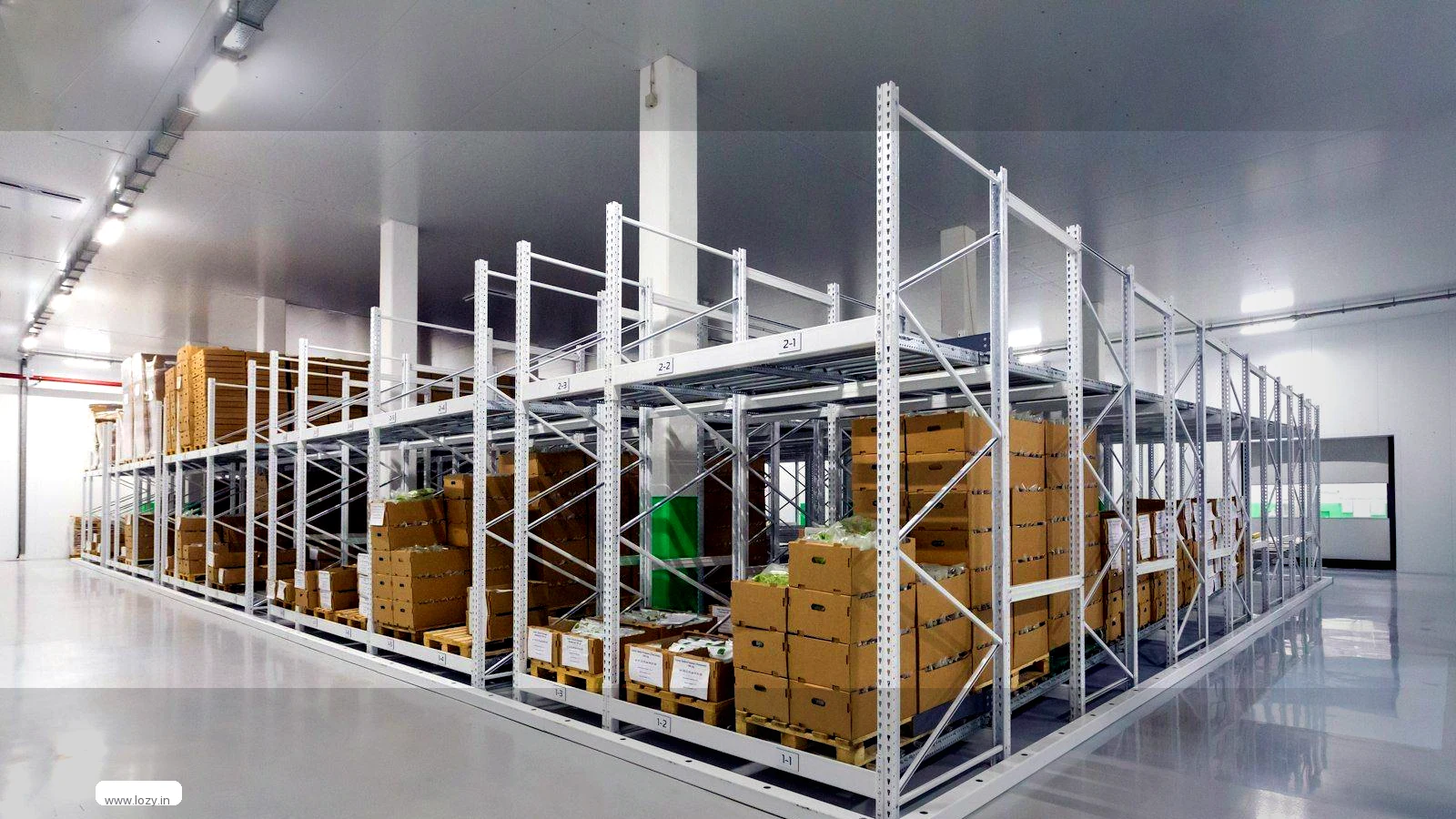
Short answer: Beauty and personal care warehousing is shelf-based, batch-aware storage for cosmetics, skincare, haircare and grooming stock — small cartons racked upright, liquids kept off the floor, and every unit carrying a batch code, a shade and a use-by date that has to survive the journey from the filler to the salon counter. Lozy runs it from a published ₹12 per sq ft per month, billed monthly on a GST invoice with no lock-in. The rate rarely decides whether it works; the intake record, the zoning and the release rule do.
Key takeaways
- Beauty stock moves in small cartons rather than pallets, so the space you buy is shelf runs plus a kit bench — beauty and personal care warehousing starts at ₹12 per sq ft per month, billed monthly with GST.
- Heavy cartons stacked on light retail packs is the mistake that empties a season's margin; at the Manesar Sector 8 units, liquids are racked upright in their own bay rather than mixed into general shelving.
- Batch code, shade and use-by date are captured at intake and released first-expiry-first, the difference between a counted ledger and a shelf of stock nobody can sell.
- Festive gifting, the wedding season and marketplace sale events bunch the kitting work into three months, so the plan should be sized for that peak and paid for by the month from ₹699.
Beauty and personal care is one of the few categories where the storage requirement grows sideways rather than upwards. A brand rarely graduates from one shelf to a whole floor; it graduates from one shelf run to three, then to a rack pair, and the SKU count climbs with every launch, shade extension and gift pack.
The second thing that makes this category its own problem is what sits inside the box. Serum, toner, shampoo and hair oil travel in pump packs, glass bottles or pouches, and each fails differently when handled like hardware. What follows is the detail that sits on top of a dark, dry building: intake at shelf level, the cost build-up, the checks before signing, and the first-month failures.
How the work is actually done, step by step
1. Receiving at the gate
Stock arrives from a contract filler, an importer, a marketplace return or a distributor's godown, usually as master cartons holding a dozen or more retail units. The gate work is unglamorous and decisive: count the cartons against the invoice or e-way bill, look for crushed corners and damp patches before the vehicle leaves, and open one carton per batch to confirm that the batch code and MRP label match the paperwork. A carton signed for unopened becomes your loss the moment the truck is out of the gate, and the argument then is always about whether the leak happened in transit or on the shelf.
Two records are written at that point. The first is what arrived: carton count, condition and photographs. The second is the identity of the stock — batch code, shade or variant, MRP and use-by date. Those four fields are what a marketplace asks about when a listing is flagged, what an auditor asks when stock is written off, and what you need when a counter returns a shade it cannot sell.
2. Zoning the shelf
The layout decision that pays for itself fastest is separating the working face from the reserve. The pick face holds the fastest-moving SKUs at waist height, where a person can lift them all day without a step ladder. Behind and above it sits the reserve, racked deep, holding the same SKUs in outer cartons until the face needs topping up. A wide shade range wants a third zone: variant lanes, where shade families sit together so a pick list asking for two colours of the same lipstick is one walk rather than two.
Two more zones belong in a beauty unit and are often missing from a generic plan: a liquid bay, separated and bunded, where pump packs, bottles and jars stand upright with nothing stacked on them; and a kit bench at table height, because gift sets are assembled rather than picked. Returns and near-expiry stock need a corner of their own — visible, but never picked by mistake.
3. The release rule
What leaves the shelf is decided by the rule the brand sets, and in beauty that rule is first-expiry-first-out. The picker is choosing between two cartons of the same shade that look identical, so the shelf has to decide for them: older batch in front, newer behind, and the rotation noted on the rack. Without it the newest stock ships first, because it is easiest to reach, and the oldest quietly reaches its use-by date on the shelf.
Returns need their own rule: inspected, photographed, then either cleaned back into saleable stock or held in quarantine with the defect noted — never returned to the pick face unexamined, because one weeping pump pack takes the cartons beside it down with it.
Why liquids set the layout, the losses and the labour
In most categories storage damage comes from impact. In beauty it comes from gravity. A filled shampoo bottle or a face serum sits under its own weight for months, and the failure points are the cap thread, the pump collar and the seal under the cap. Put a heavy master carton on top of retail packs and those points open — the most expensive thing that happens in a beauty warehouse, and the easiest to design out.
Three rules do most of the work. Nothing is stacked on a carton of bottles, jars or pump packs; the liquid bay is racked in single layers, bottles standing as they would on a shop shelf. Outer cartons are handled case-up rather than thrown, because a crushed corner on a carton of glass jars is a breakage waiting to be found. And the floor stays dry and the plinth above grade, because a carton that has absorbed moisture loses its stiffness and its printing, and neither comes back.
The labour effect is less obvious and just as real. A liquid unit takes longer to receive, count, pick and pack than a dry unit of the same size, because it cannot be thrown into a tote. So the racking you choose matters more than the headline rate: shelving that lets one carton be lifted at a time, at a comfortable height, in a bay that does not require moving three other cartons to reach it, is what keeps handling cost down across a liquid-heavy catalogue. The handling view of all this sits on the cosmetics and skincare storage page; the site checks further down apply to any building, including ours.
What beauty and personal care warehousing costs
Lozy publishes starting figures on its own service pages rather than a single market average, because an average quoted without its basis misleads a brand more than it informs it. Beauty stock prices two ways in the same building — by the square foot when you take shelf or floor area, and by the month when you take a counted, managed position — so the first useful step is knowing which basis your requirement actually is.
The published bases
- Warehouse space for rent — from ₹12 per sq ft per month, the basis for shelf runs or floor area priced by measurement. See warehouse and godown space for rent.
- Inventory warehousing — from ₹4,499 per month, where stock is recorded as a running ledger rather than as occupied area. See inventory warehousing.
- Seasonal warehousing — from ₹1,299 per month, for stock that arrives and leaves with a gifting calendar. See seasonal warehousing.
- E-commerce warehousing — from ₹4,999 per month, for a catalogue picked and dispatched order by order. See e-commerce warehousing.
- On-demand warehouse space — from ₹14 per sq ft per month, the flexible end of area-based pricing.
- Short-term storage — from ₹699 per month, for the weeks around a launch or a sale event.
All six are starting rates rather than quotes, billed monthly and invoiced with GST — a basis that starts a conversation rather than replacing one.
What actually moves a beauty brand's number
- How much of it is liquid. Sealed dry cartons need shelving; pump packs and glass need a bunded bay, wider aisles and slower handling — a different layout at a different cost.
- The kitting load. Gift-set assembly is labour, and one kit can pull three or four SKUs from three zones, turning a single-unit order into a five-touch job.
- Packaging material. Outer boxes, void fill, tape and label stock occupy real shelf space, are usually left out of the footprint, and appear as an overflow in week three.
- Term and handling frequency. A monthly booking and a longer commitment price differently, and a brand dispatching twice a day spends far more labour on the same shelf than one dispatching twice a month.
Own godown, shared shelf space or a 3PL
Three routes are genuinely available to a beauty brand in Delhi NCR, and the choice is less about cost per square foot than about which of the three jobs — storage, kitting, dispatch — you want to keep in-house.
| What you are weighing | Own godown or leased shed | Shared racked space | Full 3PL fulfilment |
|---|---|---|---|
| Control over the shelf | Total, and total responsibility for it | Your zone, laid out to your variant plan | Operator's layout; you see a dashboard |
| Capital up front | Deposit, racking, fit-out, housekeeping | No fit-out; shelving and trolleys in place | Onboarding and integration work, not fit-out |
| When a launch moves volumes | You pay for the shed through the quiet months | Add or release shelf runs month by month | Rates flex, but pricing is per order |
| Kitting and gift sets | Your own bench, your own labour | Bench space you operate or hand over | Priced per kit, handled for you |
| Batch and expiry record | Yours to keep and yours to lose | Written at intake, released on your rule | In the operator's system, exported to you |
| Dispatch to marketplace | You arrange every pickup | You arrange, with dock access at the site | Included, with an SLA behind it |
| GST invoice and input credit | Lease and fit-out invoices, mixed treatment | One monthly storage and handling invoice | Invoice covers storage, kitting and dispatch |
| A sensible fit when | Volumes are proven, steady and dry | The catalogue moves and the peak is seasonal | Order volume, not storage volume, is the issue |
Many brands run two of the three at once: a racked position for the core catalogue, and a 3PL route for marketplace orders that need a daily pickup. The arrangement that ages worst is a leased shed taken for one season's stock, because the shed does not shrink in July — which is what beauty and personal care warehousing on monthly terms, or business warehousing for a company's own stock, avoids.
Peak season: gifting, weddings and marketplace sales
The beauty calendar is not flat, and it is not one peak either. Festive gifting builds from roughly September into Diwali, when gift sets dominate the dispatch mix. The wedding season that follows keeps salon, bridal and hair-care volumes high into the new year, and marketplace sale events then pull a second, shorter spike through the same shelf. The quieter monsoon months are usually when a brand repairs its records and clears near-expiry stock.
Two things follow. The footprint should be planned for the peak month and paid for by the month: a brand sized for its average month is short of space in November and paying for air in July, while one that takes the extra shelf run in September and releases it in January pays only for the peak it used. And intake should be booked six to eight weeks ahead, because that is when a filler's dispatch schedule, a marketplace's inbound slot and the shelving are in contention at once.
Kitting multiplies the handling, not the space
A gift set looks like one unit on a shelf and behaves like four. Building it means collecting a bottle, a jar or a tube, the secondary packaging, a shipper and often a card or bag from separate zones, then assembling, sealing, labelling and packing them as one sellable unit. The shelf space barely changes; the touches multiply, and the labour is where a brand is surprised by its own bill.
So the bench belongs where the picking happens — near the pick face and the variant lanes, not at the far end of the building — with the kit components close to it rather than in the deep reserve. Before the season, the useful questions are how many kits a day the site can turn, whether assembly is done by the warehouse team or the brand's own staff on site, and how kit packaging material is stored and re-ordered. Kitting appears as its own line on a beauty brand's storage bill in this market for exactly that reason, and a quote covering space alone is an incomplete quote.
How to choose a site for beauty stock
Most of what decides whether a beauty warehouse works is visible on a twenty-minute walk-through, and almost none of it is in the rent. Run these five in order, on any site — including one of ours.
Five checks on the site visit
- Is the floor dry and the plinth above grade? Look for tide marks, damp patches near the loading bay, and a yard that drains away from the shed rather than towards it. Moisture ruins outer cartons before it ruins product.
- Is the shelving built for light cartons? Beauty needs shelf levels a person can reach and lift from, plus a bunded bay for liquids. Pallet racking alone means your cartons end up on the floor.
- Where do the liquids actually go? Ask to see the bay rather than to be told about it: separate, bunded or curbed, racked in single layers so nothing stands on a bottle.
- What does housekeeping look like on an ordinary day? Dust on the shelving and a dirty dock floor are not cosmetic problems here — the carton reaching a salon has to be presentable, and the product may touch skin.
- How does the vehicle reach the door? Inbound is often a filled vehicle from a contract filler, outbound a smaller van. Confirm both can work the face without a height restriction or a lane too narrow to turn in.
Red flags in a beauty storage deal
- Visits arranged only in the dry season. If the monsoon answer is vague, go after rain and look at the dock yourself.
- Cartons of bottles stacked under master cartons. If a site already does that to someone else's stock, it will do it to yours.
- Batch codes in pencil on the outer carton only. The unit inside is what a marketplace queries, and a mark that comes off with the carton is not a record.
- Kitting "arranged as needed". No bench, no trays, no sealer and no defined flow means gift sets are assembled on the floor of a pick aisle in the busiest month.
- Nowhere for returns and near-expiry stock. Without a quarantine corner, dated or returned units go back into the pick face and a weeping pack takes its neighbours with it.
- Cash rent with no tax invoice. Cheaper in the month it is paid, dearer across the year, because none of it returns as input credit. The registration and credit rules sit on the GST portal.
A worked example: a Gurugram skincare brand's shelf
Take a representative case rather than a named customer. A D2C skincare brand works out of Gurugram with a catalogue of a dozen-odd SKUs across serum, cream and cleanser lines, sells on two marketplaces and its own site, and supplies salons and a few counters in South Delhi. Its stock is produced by a contract filler and arrives in a filled vehicle, and the founder has been storing everything in a rented back unit inside the city whose racking is improvised, has no bench, and needs a phone call for every marketplace pickup.
Rent per square foot between the options is close enough to be a wash once sizes are matched, so the decision turns on three things that are not rent: serum bottles and cream jars need upright single-layer racking with a bunded bay, about a fifth of the SKUs leave as gift packs that must be built rather than picked, and marketplace orders need a dock where a pickup can be worked without damaging a carton.
Written down, the shortlist resolves to a racked position on the Manesar Sector 8 side of Gurugram against a unit deeper in the city. Manesar wins on the working detail — shelving runs sized for light cartons, a liquid bay for the serum and cleanser lines, a bench beside the pick face, and a dock a marketplace van can reach at the hour pickups happen. The Gurugram basis holds at ₹12 per sq ft per month, the kitting load is quoted as its own line rather than buried in the space rate, and near-expiry stock gets a quarantine corner from day one. The city-side unit would suit a different brand: dry stock, steady volumes, a walk-in trade at the same address. The same reasoning runs across the region — the Gurgaon warehousing guide covers the Manesar and Kherki Daula cluster this brand landed in, the New Delhi guide covers the Dwarka and Ghevra side that suits the salon trade, the Noida guide covers the eastern side, and warehousing in Maharashtra covers the Mumbai-Pune network if your demand sits there.
What goes wrong in the first month
Almost all of the trouble in a new beauty storage arrangement happens in the first four weeks, and it follows the same short list.
- The first leak arrives with the first stack. Someone, on the busiest day, puts master cartons on top of retail packs because the high shelf was full. Rack the liquid bay in single layers.
- Batches get mixed. The newest carton is easiest to reach, so it ships first and the older one ages on the shelf. The rotation note belongs at the rack before the first dispatch, not after the first write-off.
- There is no near-expiry list. Without a date check on a fixed rhythm, the first signal that stock is expiring is a marketplace blocking the listing.
- Packaging material is treated as not-inventory. Outer boxes, void fill and label stock take shelf space that was never counted, and the overflow lands in a pick aisle during the peak.
- Returns drift into saleable stock. One unexamined returned pump pack is enough to damage its neighbours and to send a customer a unit that has already been out.
- The intake argument. A carton signed for unopened and found leaking three days later is a dispute with no evidence on either side. Count, photograph and open one carton per batch at the gate.
How Lozy handles beauty and personal care stock
Lozy provides beauty and personal care warehouse space across 77+ warehouses and more than one million square feet of live space, with the Delhi NCR belt as the deepest part of the network. The working shape of a beauty unit is small-carton shelving with a separate bay for liquids, a bench for gift-set and kit assembly, and CCTV-monitored, PIN-accessed space billed monthly on a GST invoice with no long lock-in.
The part we run tightest is the record. Stock is booked in against your list with batch code, shade, MRP and use-by date written down, liquid lines are racked upright in their own bay, and releases follow the rotation your brand sets. When a launch or a gifting season changes the requirement, the shelf run is adjusted in the same facility rather than renegotiated from scratch.
If you are still comparing routes, the beauty and personal care warehousing page carries the category view, and adjacent categories are set out in the guides for FMCG warehousing, food and beverage warehousing and warehousing for e-commerce brands; longer reads in the same series are the commercial warehousing guide, the seasonal warehousing guide and the inventory warehousing guide, and the warehouse listing shows what is available now.

Related guides
- apparel brand warehousing
- electronics warehousing
- e-commerce brand warehousing
- warehousing in Gurgaon
Storing cosmetics, skincare or gift kits? Get a rate
Send us your SKU list and roughly how much of it is liquid. We reply with the space, the bench and the basis that fits — usually the same working day.
Get a quoteCall +91 93547 12345Sources. Rates, facility names and network counts are Lozy's own published information. Cosmetic import, registration and labelling rules are described from the Central Drugs Standard Control Organisation and packaging standards from the Bureau of Indian Standards; GST registration and input credit from the GST portal; warehousing and logistics context from the Warehousing Development and Regulatory Authority; and consumer and retail sector context from IBEF's retail industry profile.
Last updated: 14 October 2026. Have a question the FAQs do not answer? Call +91 93547 12345 or email care@lozy.in.
Need warehousing or storage in India?
Request a free, tailored quote in under 2 minutes — free pickup, no lock-in.