Apparel and Fashion Warehousing: Size Runs, Seasons and What It Costs (2026 Guide)
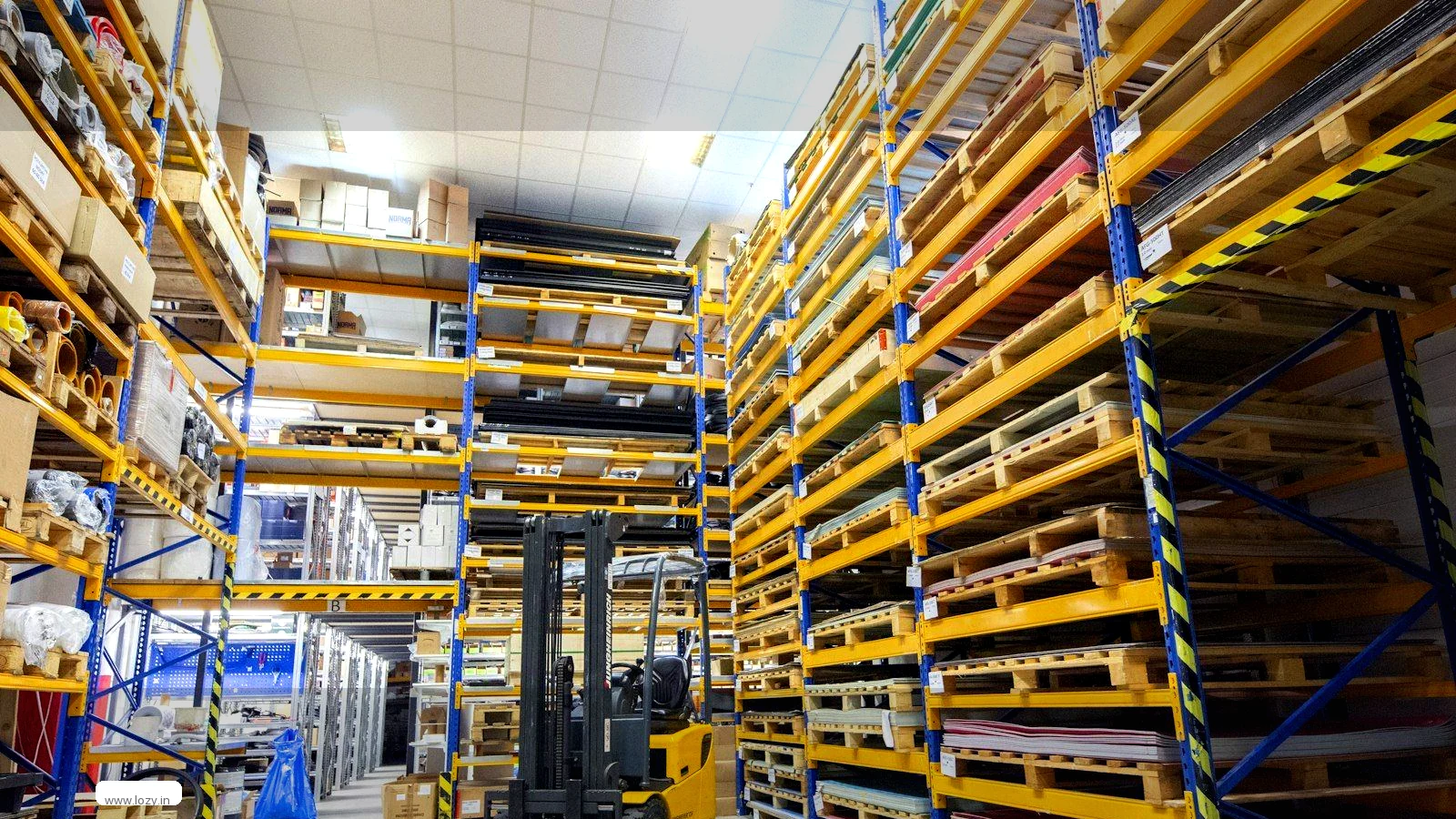
Apparel and fashion warehousing is storage organised around one stubborn fact of the trade: a single style is never one product. It is a size run spread across several colour ways, landing months before it sells and leaving in a rush when the season turns. Lozy holds folded and flat-pack garments in labelled rack positions with style code, size and colour recorded at check-in, so every variant stays pickable from the first intake to the end-of-season sale — billed monthly, GST-invoiced, with no lock-in.
Key takeaways
- One style becomes a size run across several colour ways, so a single spring/summer range runs to hundreds of stock-keeping variants before a second season on the same rack doubles the count again.
- Apparel arrives months before it sells, which means the space peaks before the drop rather than during it — and again at the end-of-season sale, when unsold stock and web returns both come back at once.
- Lozy's inventory warehousing plan starts at ₹4,499 per month and seasonal warehousing at ₹1,299 per month, both billed monthly on a GST invoice with no long lock-in.
- The trade's geography is split in Delhi NCR: the buying nerve sits in the ready-made garment clusters of Gandhi Nagar and the Chandni Chowk belt, while the stock is held on the Haryana belt at Manesar, Kherki Daula and Faridabad.
Why fashion stock is not like other inventory
A folding table and a rack can hold a great many garments, and that is exactly the trap. The difficulty of this category is not weight or volume; it is multiplicity. One style looks like a simple line item on a buyer's sheet, then multiplies at the rack into a size run across several colour ways, and a second season on the same shelf doubles the count again without adding a single new style.
Two consequences follow, and both are operational rather than commercial. Stock that is not labelled position by position goes missing while it is still in the building: the piece is there, but nobody can name the rack it sits in. And garments need storage that keeps them saleable rather than merely dry — a folded range wants shelving that holds a size run together, hanging pieces want a rail that does not crease them, and everything wants cover from dust.
Fashion also works a season ahead. Spring/summer and autumn/winter ranges land months before they sell, so the warehouse fills during a quiet trading month and empties during a busy one. Fashion brand warehousing is planned around that inversion, not a steady weekly flow.
How garments move through the facility
A garment's life inside a facility is short and repeated: it is counted in, held, picked out, and — for a growing share of this trade — returned and counted in again. Three movements do most of the work, and each has its own discipline.
Intake and tagging
Intake is where a range is won or lost. Cartons arrive from a stitching unit, a job worker or an importer, and each piece is recorded against the packing list by style code, size and colour before it is racked. A size run stays together on the shelf because it was placed together at intake, with the tag or barcode checked against the list rather than assumed from the label on the carton.
The practical rule is a packing one: goods should arrive sorted and marked by style and size, not tipped loose into a carton. A mixed carton is slower to check in and easier to mis-file, and that cost is felt on every pick for the rest of the season.
Picking for wholesale and for the web
Two dispatch rhythms run out of the same rack. A wholesale order leaves as a mixed carton built to a dealer's list — sizes assorted, styles grouped the way the buyer asked — while an online order is picked a piece at a time and packed for a courier. The wholesale pick is measured in cartons of assortments, the web pick in single units and their packing material.
Because both draw from labelled positions, one racked range can serve both channels at once. E-commerce warehousing at Lozy covers the order-picking and courier side of that split, and inventory warehousing covers the running stock record that stops the two channels from quietly fighting over the same piece.
Returns that arrive back
Fashion returns carry a second job with them. A returned piece is not automatically saleable stock: it has to be checked, graded and re-bagged, and only then returned to the pick face. A warehouse with nowhere to stage that grading turns returns into clutter, which is why the sorting floor matters as much as the racks.
Own godown, shared warehouse or 3PL for a clothing brand
Most apparel businesses arrive at one of three answers, and the choice is usually made on cost before it is made on workload. Written out honestly, the three are different products rather than three prices for the same thing.
| What you are deciding | Own godown | Shared monthly warehouse | 3PL fulfilment |
|---|---|---|---|
| Capital before the first carton arrives | Deposit, rent and fit-out for racking | No fit-out; monthly billing from day one | Onboarding and system integration effort |
| Space across the season | Fixed; you carry the empty months | Grows and shrinks by the month | Scales with orders, not with stock held |
| Size-run discipline | Yours to build and keep | Labelled rack positions, recorded at intake | Depends on the partner's own system |
| Wholesale dispatch | Your team prepares every carton | Picked to your list, released to your vehicle | Usually priced per order or per box |
| Online order picking | Manual, off the same rack | Rack to pick face, packed at the facility | The core of what a 3PL does well |
| Upkeep and compliance | Security, housekeeping and pest control on you | Included in the plan | Included, priced into the order fee |
| Best when | Volumes are high and flat all year | The season sets your peak and your trough | Your web orders dominate the dispatch |
Many fashion businesses run two of the three at once — a shared warehouse for pre-season intake and carryover, and a fulfilment partner or an in-house table for the daily web flow. The comparison worth making is not which is cheapest in a quiet month, but which absorbs the sale-week surge without a second negotiation. Space taken month by month through business warehousing flexes with the calendar, while a footprint you intend to keep for years is better taken as long-term warehousing.
What apparel and fashion warehousing costs
Lozy publishes starting rates on its own service pages rather than one headline number for clothing, because the rate follows the service you need — racked stock kept as a running record, seasonal overflow, or online order handling. These are the figures that come up most often for fashion, each attached to its service.
- Inventory warehousing from ₹4,499 per month — racked stock kept as a running record, which is the plan most brands use for a range held through a season. The inventory warehousing page sets out the basis.
- Seasonal warehousing from ₹1,299 per month — space that arrives and leaves with the calendar, priced for the pre-season intake and the carryover that sits after a sale. It is the natural home for seasonal warehousing stock.
- Warehouse space for rent from ₹12 per sq ft per month — the per-area basis, used when you are pricing a floorplate rather than a racked position, on the warehouse and godown space for rent page.
- Short-term storage from ₹699 per month — for a need measured in weeks rather than a season, taken through short-term storage when a drop has to be held and moved on quickly.
These are starting rates, not quotes, and every one of them is billed monthly. The final figure follows the range, the way it is stored, the term and the location, which is why we price after a short requirement check rather than publishing one national rate for garments.
What changes the monthly figure for garments
Five inputs move the number, and only one of them is the rate printed on the page.
- The size of the range. A racked position holding a folded size run and a full bay of flat-pack cartons are different amounts of space, and the area or the position count is the largest single input to the bill.
- How it is stored. Folded shelving, a hanging rail and a palletised stack each carry their own basis, so the same goods can be priced two ways depending on how they are kept.
- The season and its term. A range held for a single drop and one kept as running stock across the year are not the same booking, and the longer commitment is usually the cheaper month.
- Handling and value-added work. Tagging, re-bagging, kitting a set and grading returns all add handling on top of the storage itself.
- The location. A facility on the Manesar or Kherki Daula side of Gurugram and one nearer the Delhi boundary do not price alike, because the land beneath them does not.
Documentation and the GST invoice
Two documents decide whether a storage bill is actually worth what it says. The inventory record is the one you will need the day a buyer, a banker or an insurer asks what is where — a list of style runs by rack, not a recollection. The invoice is the other. Warehouse rent in India carries GST, and a registered business can claim input credit when the tax invoice is raised in its own entity's name.
Before signing, ask whether GST is included or charged on top, whether the document will be a tax invoice in your entity's name, and whether storage and handling can be shown as separate lines. The rules are published on the GST portal, and an accountant can confirm how they apply to a garment business.
Choosing a site for garment storage — the checks
Garments are a light, high-value, dust-sensitive cargo, and a site that suits engine parts does not automatically suit a size run. Six checks settle most of the decision before the paperwork starts.
- Dust and damp. Garments should be stored covered on racking, never in open cartons left on the floor. Ask how the shed keeps dust off the pick face and how the floor near the doors is kept dry.
- The monsoon question. Delhi NCR humidity decides whether stock goes musty. Plinth height above the surrounding grade, a paved yard and a drain invert that runs away from the shed matter more than any interior photograph.
- Pest control. Fabric is a food source. Ask what the pest-control schedule is and whether the record is kept, because an answer of "as needed" usually means there is no schedule at all.
- Rack type. Long-span shelving with a shelf per size keeps a folded range together, while pallet-only racking forces cartons into a stack and loses the run.
- Room for the return wave. The week a sale ends, unsold stock and web returns both come back. A site with no staging floor for that wave turns a tidy rack into a pile at exactly the wrong moment.
- The invoice answer. GST treatment, the invoicing entity, the minimum term and the notice period belong in writing before anything is signed.
Red flags on a fashion site
- Open cartons left loose. If the facility's own practice is to keep garments uncovered on the floor, your size runs will break within a month of arriving.
- No pest-control record. A verbal assurance about "regular treatment" is not a schedule, and fabric damage is discovered far too late to prove.
- No staging space. Nowhere to lay out the sale and return surge means the stock you most want to re-sell sits in the way of the stock you are moving out.
- A damp-looking yard after rain. Visit the site in August or September rather than at the viewing that suits the landlord's calendar.
- Cash rent with no tax invoice. Cheaper on the day, dearer across the year, and nothing you can claim back — the tell that the apparel and fashion warehousing arrangement is informal rather than operational.
Which Lozy locations suit apparel — and a worked example
Apparel's geography in Delhi NCR is unusual. The trade's buying nerve sits inside the city, in the ready-made garment clusters of Gandhi Nagar and the Chandni Chowk belt, while the space to hold stock sits outside it on the Haryana belt. A brand wholesaling into those markets is choosing how far its stock sits from the shops it supplies — and paying for that distance on every run.
For most fashion businesses the answer is the Gurugram–Manesar side or the Faridabad estates. Manesar Sector 8 and the Kherki Daula cluster put a facility on the NH-48 side with an easy run back into south and central Delhi, and the belt's larger floorplates suit a full season's intake. Faridabad's DLF Industrial Area suits a brand that sits closer to its stitchers than to its showrooms. The Gurgaon warehousing guide works through the Manesar and Kherki Daula nodes in detail and the Haryana warehousing guide sets the state's two corridors against each other; a brand needing a position inside the boundary should read the New Delhi warehouse guide, and one supplying the eastern side of the region has the Uttar Pradesh warehousing guide.
A worked example: a Gurugram label's autumn/winter intake
Take a representative case rather than a named customer. A Gurugram label sells its autumn/winter range through dealers in the Gandhi Nagar wholesale market and, increasingly, on its own website. Until now the stock has lived in a corner of its stitching unit in the Manesar belt, and the arrangement has started to fail in a predictable way: the unit needs its floor for production at the same moment the AW cartons arrive, and the pieces that sell best are the ones nobody can find quickly.
The unit looks free because its rent is already paid, but the space it consumes is space the cutting table needs: the brand's real cost is one season's stock sitting in the way of one season's production.
On the racked side, the AW range moves to labelled positions on the inventory warehousing plan from ₹4,499 per month, with style, size and colour recorded at intake so the size run stays whole. The overflow that arrives before the drop and the carryover left after the sale are better held as seasonal space from ₹1,299 per month, because neither needs to sit in the pick face. The unit gets its floor back, the pick face becomes a rack instead of a corner, and dealer orders leave as mixed cartons built to a list. The deciding factor is not the rent — it is which square feet are doing production work and which are doing storage work.
Run the same arithmetic for a label that sells mostly online and the answer shifts towards order handling: the pick-and-pack work is what the requirement is really about, and warehousing for e-commerce brands covers that shape of business. The storage underneath it is still where the season's stock waits.
The season calendar: spring/summer, autumn/winter and the sale cycle
Apparel's year is not one peak but four, and each one moves stock in a different direction. Planning space around a single busy month is the fastest way to run short exactly when the stock matters most.
The two drops
Spring/summer and autumn/winter are the spine of the calendar. In each case stock lands ahead of the selling window and leaves in waves as the range moves through wholesale, retail and web. The space requirement therefore peaks before the season opens, when the full range is on the racks and none of it has sold yet — the one stretch of the year when a fashion brand is at its heaviest.
The wedding and festive window
Over the top of the two drops sits the Indian wedding and festive season, which pulls ethnic wear, occasion wear and accessories into a compressed selling window. For a label in that segment the pre-season intake is heavier and the dispatch weeks are shorter, so the pick face has to be ready before the calendar turns rather than after the first order lands.
The end-of-season sale and carryover
When a season ends, three streams come back at once: unsold stock from dealers, web returns, and the pieces a brand carries over into the next year. This is the month a fashion warehouse earns its keep, and the month an under-planned one fails. Carryover wants racked space that can sit outside the pick face, seasonal overflow wants space that can be handed back the moment the sale clears, and returns want a staging floor. Seasonal warehousing is priced for that overlap — a footprint that grows for the intake and shrinks once the sale is done.
The first month: what actually goes wrong
The failures we see in apparel are consistent, and most of them are visible in the first four weeks rather than at the end of the season.
- Cartons arrive mixed. A range tipped loose into cartons instead of sorted by style and size slows intake and files every piece a little closer to lost.
- The size run breaks early. Once the shelf per size stops matching the stock, pickers start picking by eye, and a run of identical pieces scatters quietly across the rack.
- No home for the sale surge. A business that sizes for the average month rather than the sale month finds the return wave on the floor in the week it needs the pick face clear.
- Returns are treated as stock. A returned piece put straight back into the pick face without grading re-sells a problem to the next buyer.
- The record drifts. A hardware line can be counted a season later; a fashion line cannot, because the variants move faster than a manual count can follow. Stock kept as a running record on the apparel and fashion warehousing plan is what prevents that drift.
How Lozy helps apparel brands
Lozy provides apparel and fashion warehousing for brands, labels and sellers — folded and flat-pack garments held in labelled rack positions, with style code, size and colour recorded at check-in and the stock kept as a running record. It runs on a monthly plan with GST invoicing and no long lock-in, backed by 77+ warehouses and more than one million square feet of live space across the network.
What the operation does is narrow and practical. It holds a range organised the way the range is shaped, so a size run stays together and a mixed dealer order can be built to a list. Pre-season intake and carryover sit as seasonal space, web orders are picked and packed for a courier, and returns get a staging floor before they re-enter the pick face.
Because the network is a network rather than a single shed, a brand can begin with a racked position in the Gurugram belt and move to a larger floorplate in the same cluster as the range grows, without renegotiating from the beginning. Adjacent requirements sit on Lozy's services, from warehousing for 3PL partners to warehousing for importers and exporters; the seasonal warehousing guide and the inventory warehousing guide read alongside this one.

Related guides
- e-commerce brand warehousing
- warehousing for beauty and personal care guide
- fulfilment centre vs warehouse
- warehousing in New Delhi
Storing a garment range or this season's carryover?
Tell us the styles, the sizes and roughly how much rack space they need - we reply with a rate and what is available now.
Get a quoteCall +91 93547 12345Sources. Rates, facility names and network figures here come from Lozy's own published pages. Textile and apparel export context comes from the IBEF textiles and apparel profile and the Ministry of Textiles; warehousing-sector practice from the Warehousing Development and Regulatory Authority; GST registration and input credit from the GST portal; and NCR corridor context from the NHAI.
About the author. Lozy Editorial Desk. This article was put together by the Lozy Editorial Desk, which handles warehousing, self storage and logistics writing for lozy.in. Everything factual in it is drawn from Lozy's own facility and rate information, or from public sources a reader can check, and no rating, review or statistic here has been invented.
Last updated: 14 October 2026. If the FAQ below does not settle something about your garment range, call +91 93547 12345 or write to care@lozy.in.
Need warehousing or storage in India?
Request a free, tailored quote in under 2 minutes — free pickup, no lock-in.