3PL Warehousing Services: Running Multiple Clients in One Shed (2026 Guide)
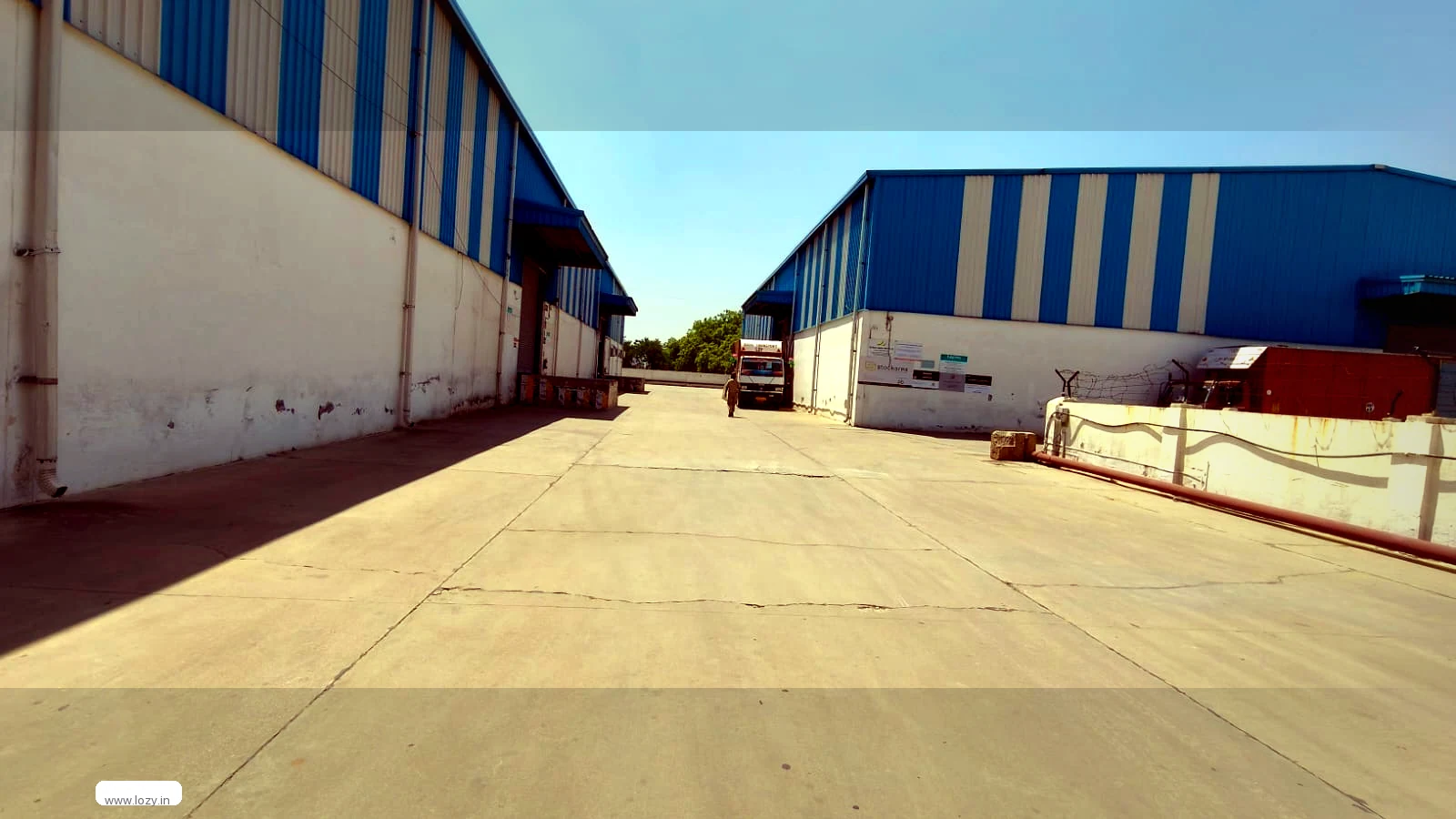
3PL warehousing services are storage and handling run for clients whose goods you never own - several accounts under one roof, each with its own cut-off, its own paperwork and its own peak. What decides whether that arrangement holds is not the racking but the separation: keeping client stock, client documents and client rules apart while the dock, the labour and the floor are shared. 3PL and distribution warehousing with Lozy is built for that multi-account load, from a single pallet to a dedicated section, starting at ₹14 per sq ft per month.
Key takeaways
- Lozy runs 77+ warehouses and more than one million square feet of live space, with operator-ready positions on the Gurugram-Manesar belt, in Faridabad's DLF Industrial Area 2 and on the Dadri side of Greater Noida.
- Business and on-demand space starts at ₹14 per sq ft per month, warehouse space for rent at ₹12 and an inventory-led plan from ₹4,499 per month - all billed monthly on a GST invoice with no lock-in, so an account's peak can be taken on and released again.
- One operating standard for every account is the most expensive habit an operator can keep: a fast-moving client held to a slow client's pace loses a dispatch day, and the loss surfaces at renewal rather than in the same week.
- Client-specific SOPs, a dock slot per account and inbound and outbound documents raised in the client's own name are what keep six accounts from quietly turning into six disputes.
A landlord hands over floor area and steps back. An operator taking space behind its own client contracts runs a service business inside somebody else's supply chain: it receives stock it does not own, moves it on instructions it did not write, and answers for accuracy on goods whose value never appears on its own balance sheet. What carries several accounts under one roof is not the steel of the racking but the discipline of keeping them apart. How large the wider opportunity has become is set out in IBEF's logistics sector profile, and the corridors the stock travels sit with the National Highways Authority of India.
How 3PL warehousing services run behind a client contract
The 3PL and distribution warehousing service is the cover; the operating model underneath it is what a client is really buying. Three things decide whether that model holds. Each of them is a decision made before the first pallet lands, and each of them gets expensive when it is left to the floor.
One building, several rule books
Picture three accounts sharing a shed. The first ships full pallets to a small dealer network twice a week and books a truck when it is ready. The second picks single cartons for marketplace orders every evening and cannot start before a 4 pm order cut-off. The third takes an import container on a two-hour window once a fortnight and does nothing in between. They have nothing in common except a roof.
A shed that runs one process for all three will run it at the pace of the slowest. The marketplace picker waits for a pallet to be moved; the fortnightly container blocks the dock on the one day the evening picker needs it most; and the account that never complains is usually measuring your service against a tighter promise than you realise. Giving each account its own rhythm inside shared walls is a layout and scheduling problem long before it is a labour problem.
Multi-client separation without wasting the building
Separation does not mean a wall for every client; it means a boundary the picking team cannot cross by accident. In practice that is a nominated rack bay, an aisle reference and a floor marking per account, with each client's stock kept in its own lanes rather than interleaved because a gap happened to be free. Where an account carries fast lines, its pick face sits nearest its own dispatch staging area, so a picker never walks through a neighbour's zone to reach a pallet.
Two accounts can share a racking row and still stay clean, provided the bay reference belongs to one of them and never to a mix. What must not happen is the loose practice of putting a pallet wherever a gap exists: it looks efficient in a quiet week and produces a mis-supplied client in a busy one, because the next picker has no way to know which contract the carton belongs to. Where an account needs more than a bay - its own dock lane, its own labour, a locked room - that is the step up into a dedicated business warehousing position, and it is a bigger number for a good reason.
Client-specific SOPs, written and signed
Every account needs a short standard operating procedure, and no two of them should be identical. The document does not need to be long, but it has to fix five things in writing: what arrives and how it is checked, where it is put, how it is picked and packed, what documents leave with it, and what time of day any of it can happen. A written SOP is also the only fair way to hold a picker to a standard, because an instruction given verbally on a busy afternoon is an instruction that will be remembered differently by two people.
The SOP should carry the client's signature and a version date. Accounts drift, and the client who adds a new SKU family, changes its pack format or introduces a returns process will otherwise be served by a document that describes last quarter's operation. A short review note attached to each quarterly account check is enough; the point is that the document has a date on it and someone has agreed to it.
Dock scheduling across clients: the bottleneck nobody prices
The dock is the one asset every account competes for and the one an operator most often leaves unmanaged. Two doors and four clients sounds workable until two of them want the same morning, and the queue behind the gate starts to decide the service levels you were careful to promise in writing.
Time windows instead of a queue
Give each account a nominated window rather than first-come access. An inbound-heavy client takes a morning slot when its containers land; a pick-and-pack account takes the late afternoon its orders actually generate; a dealer-shipment account takes the middle of the day. The window is a booking, not a suggestion, and it is repeated back to the client as part of its SOP so that the receiving team knows when to expect the goods rather than discovering them at the gate.
Windows only work if they are honest about capacity. Two doors can physically work two vehicles at a time; a third vehicle in the yard is waiting, and a client told "anytime" will eventually send three at once. Publishing the number of dock positions and the realistic turnaround for each account is better service than a promise nobody can keep, and it gives the operator a defensible answer when a client presses for a slot that is already taken.
Cross-docking and the shared yard
Not all inbound stock needs to be put away. An account whose goods are pre-sold - an appliance importer shipping straight to dealers, a marketplace seller whose inbound is already allocated to orders - is better served by cross-docking: received on one face, checked and staged, loaded out on the other without ever taking a rack position. That saves storage and, more importantly, keeps the inbound queue from colliding with the pick face of a neighbouring account.
The yard is part of this discipline. A shared yard must keep a free turning circle and a marked staging lane at all times, because the day a client's vehicle cannot turn is the day two accounts lose an hour each.
Inbound and outbound documentation behind someone else's contract
An operator produces paper that a client's auditors will eventually read, and the documents have to be right the first time. Two streams matter, and they are mirror images of each other.
Inbound: from advice note to goods-received note
Every consignment arrives against something - an advice note, a purchase order, a transfer list. The receiving step is to count against that document, record the condition of what arrived - especially where a carton is crushed or a pallet is short-wrapped - and raise a goods-received note that the client can reconcile. A discrepancy does not need to be dramatic to matter: two cartons short on a ten-pallet delivery, noted and signed the same day, is a conversation; the same two cartons found at a stock count three months later is a credit dispute.
Where an account's stock is dated, batch-coded or serialed, the reference belongs on the receiving note at intake rather than on a later report. The number is cheap to write at the gate and expensive to reconstruct from memory, and for an operator carrying several similar-looking SKUs from different clients it is the only thing that reliably tells one account's pallet from another's.
Outbound: pick list, manifest and handover
On the way out, the chain is a pick list that names the account, the order and the lines; a packing step that matches what was picked; and a manifest with a signed handover record when the vehicle leaves. Those three documents together let the operator answer the only question a client ever asks in a dispute - when did this leave, and against what instruction. A missing handover signature is the weakest link in most operations, because it is the one document a driver is in a hurry to be free of.
What stays with the client is its own commercial paper: the invoice it raises on its buyer, and any e-way bill its GST position requires. Registration, invoicing and e-way bill rules are published on the GST portal, and an operator that issues warehouse receipts as an instrument of trade sits under a separate regime described by the Warehousing Development and Regulatory Authority. A client storing its own inventory needs the tax invoice, not the receipt regime - and an operator holding stock for several clients needs to keep the two records clearly apart.
Own godown, shared multi-client warehouse or a dedicated section
An operator scaling up from its own leased building faces the same three shapes any growing business does, but the trade-offs read differently when the stock belongs to somebody else.
| Decision | Own godown (operator leases) | Shared multi-client warehouse | Dedicated section in a managed shed |
|---|---|---|---|
| What the operator commits to | A lease, racking, staff and a fixed overhead | Month by month, sized to today's accounts | A defined area and, usually, a term |
| Money before the first client | Deposit, fit-out, security, recruitment | No fit-out; space from ₹14 per sq ft per month | Setup and onboarding of the section |
| When a client signs a peak | Corridors fill and the fourth account is refused | Add rack or floor positions, release after | Grow inside the section if the shed allows |
| Client separation | Yours to design and enforce | Bays and lanes per account, shared dock | A walled or roped boundary of its own |
| Dock and labour | Operator recruits, rosters and covers absence | Facility slots and team shared across accounts | Priority dock access, dedicated hands |
| Stops making sense when | Accounts are few and the volume is flat | An account genuinely needs full isolation | The account is small or the peak is short |
| Usually best for | A settled operator with steady contracts | A growing operator adding accounts | A large account behind a named contract |
Most operators run two of the three at once: a leased building for a stable account they have served for years, and shared or dedicated managed space for the accounts that come and go with the season. The thing that breaks when the mix grows is the paperwork, because three sites recording the same SKU family under three different habits is how a clean stock file and a disputed one come out of the same building.
What 3PL warehousing services cost
Lozy publishes starting rates against the service each one belongs to rather than a single blended number, because a rate quoted without its basis invites a comparison that misleads. An operator buying space to run behind client contracts usually needs one of four shapes, and each carries its own published floor:
- Business and on-demand space - from ₹14 per sq ft per month on the business warehousing page, for racked or floor space taken month by month with security, handling and invoicing in the plan. This is the basis most multi-account requirements land on.
- Warehouse space for rent - from ₹12 per sq ft per month on the warehouse and godown space for rent page, priced by floor area, which is the basis to use when you are matching a floorplate to a pallet count you control yourself.
- Commercial space - from ₹13 per sq ft per month on the commercial warehousing page, for a general-purpose position where goods are held and moved without a specialised fit-out.
- Inventory-led storage - from ₹4,499 per month on the inventory warehousing page, for stock tracked as a running ledger rather than as a rented area, which suits an account-heavy operation whose real need is records as much as floor.
All four are starting rates, billed monthly and invoiced with GST, with no long lock-in, so an operator can take positions ahead of a client's peak and release them once it clears. A month-by-month shape for a demand that genuinely moves is on the on-demand warehouse page, and the published bases sit together on Lozy's pricing page.
What moves the number
- The basis you are quoted on. Floor area prices per square foot, racked and palletised space per position, a lockable room per unit, and an inventory-led plan per month. When two quotes diverge, the difference is usually the basis rather than the market.
- How many accounts share the building. A shed sized for one large account and a shed sized for six small ones are different builds, and the dock, the labour and the segregation all scale with the account count even when the pallet count does not.
- Peak coverage. Holding space through a client's seasonal surge and giving it back afterwards costs more per month than holding a flat footprint forever, and it is usually cheaper than building for the peak and running half-empty in the trough.
- Handling intensity. A cross-docked pallet account costs little to run; a marketplace picker touching single cartons costs a great deal, and the quote should say so out loud.
- Location and add-ons. Land on the Gurugram side and land on the Dadri side are not the same asset, and packing material, dedicated labour and insurance are quoted on top of the storage basis.
Billing several clients from one building
Warehouse rent attracts GST, and a registered business can claim input credit when the invoice is raised as a tax invoice in its own name - which matters to an operator passing a share of that cost through to each account. The registration and credit rules are published on the GST portal and your accountant can confirm how they apply to your entity. The practical discipline is to keep each client's cost line separately attributable from the start, because the operator who bills one blended figure is the one who cannot show an account what its own space and handling actually cost when the renewal comes round.
How to choose space as an operator - and the red flags
Work backwards from the accounts you carry and the vehicles that serve them, then test the building against the way several clients behave at once. If you would rather have the check run with you, the 3PL warehousing team walks through it before you commit to a visit.
Six checks before you sign
- The dock, counted not described. How many vehicles load at once, and does the busiest account's window overlap another's inbound window? Two doors is something you can count; "multiple docks" is not.
- Segregation capacity. Is there enough rack and floor to give each account its own bay and lane, or would a fourth client have to interleave with a third? Take a sample pallet from each account and see where three of them would go.
- A cross-docking face. Confirm there is a receive-and-stage area distinct from the pick face, or pre-sold inbound will fight the evening picks for the same floor.
- The yard and the approach. A trailer needs clear width, a turning circle and headroom. Ask how the yard behaves after rain before you ask about the racking.
- Room to add an account. Ask what the next bay or the next racked row looks like and where it is, because an operator that outgrows a node pays twice for the move while a client is mid-season.
- The invoice, in writing. Ask which entity raises it, how GST is applied, what the minimum term is and how much notice you must give - settled before signing rather than after a dispute.
Red flags to walk away from
- Shared rack positions with no bay reference. If the only way to know whose carton it is, is memory, the account boundary does not exist.
- A dock booked by whoever shouts first. Unmanaged dock access is fine until two accounts need the same morning, which is the morning you lose both.
- A verbal SOP. If the operating rules are not written and dated, they will be enforced differently on different shifts.
- No quarantine corner for returns. Client stock coming back needs a place to sit that is not the saleable rack, or a return merges into inventory and never leaves.
- Handover records the driver signs alone. A manifest with no operator-side signature is no evidence at all.
- A rent receipt where a tax invoice belongs. The month looks cheaper and the input credit is gone for good.
- Assurances instead of numbers on surge. A peak should come with a rack count and a lead time, not a promise.
A worked example: one operator, two client peaks
Take the case below as representative rather than a real account. A mid-sized 3PL operator runs two accounts out of a single leased shed in Delhi NCR: an appliance brand whose stock moves in full pallets to a dealer network, and a marketplace seller whose orders are picked from single cartons every evening. Both peak at the same point in the festive quarter, but at different ends of the building - the appliance brand wants inbound containers and dock time, the seller wants pickers and pack space.
Two Lozy positions are worth putting side by side. The first is a racked shed on the Gurugram-Manesar belt, with dock-side loading and room to add positions. The second is space in Faridabad's DLF Industrial Area 2, closer to the operator's existing south-Delhi dealer runs but with a tighter yard. A third option - the Dadri side of Greater Noida - is ruled out early, because the operator's accounts sit on the opposite side of the region and every inbound run would add a leg.
Written down, the choice turns on the dock. The appliance account can be cross-docked on a morning window, received and shipped to dealers without a rack position, which keeps its containers out of the seller's evening pick face. For that to work, the shed needs a staging area separate from the racks and enough turning room for a container vehicle - and the Manesar belt scores on both, while the Faridabad yard would force the container to wait for the seller's picks to clear. The Gurugram-Manesar shed wins on the crossing point of two peaks, not on the headline rate.
What settled the choice was neither the rent nor the postcode. A dock that can hold two accounts' movements apart, a staging floor for cross-docked pallets, and the freedom to add a rack position as the seller's order count climbs carried more weight than a few rupees per square foot - and those three are worth testing in any shed you visit on an operator's behalf.
How Lozy works with operators and distribution brands
Lozy provides 3PL and distribution warehousing across 77+ warehouses and more than one million square feet of live space, with the deepest coverage in Delhi NCR and collection centres feeding the rest of the country. Positions suit a range of shapes: a racked bay for a growing account, a demarcated section behind a named contract, a bulk floorplate with dock access for a high-volume operation, and space that is added and released as a client's calendar moves. The network view sits on the Lozy locations page.
Because the plan is monthly, the space tracks your accounts instead of your worst guess: an operator can take positions for a client's festive surge and hand them back once it clears, in the same facility, on GST-invoiced billing with no long lock-in. Where the requirement is steadier, a warehouse for rent basis usually prices better over a year, and a stock ledger that reconciles line by line across several accounts is what inventory warehousing is for.
Adjacent verticals share most of the operating problem, and they are worth reading before you call. The B2B distribution guide deals with trade-channel supply at volume, the e-commerce brands guide covers the pick-and-pack account most operators carry, and the manufacturers guide sets out component and finished-goods storage. Where the requirement sits on a named corridor, the Gurgaon, Faridabad, Noida and Uttar Pradesh posts each work through the belt in more detail. And if you are still deciding what to outsource in the first place, the client-side answer is the 3PL warehousing in Delhi NCR guide - this article is the mirror image of it, written for the side holding the stock rather than the side handing it over.
Services for the two shapes above are described on the business warehousing and commercial warehousing pages, and the basis behind a growing requirement is also set out in the inventory warehousing guide and the warehouse for rent guide. When you have an account count, a pallet count and a date, the contact page comes back with rates and what is free right now, usually within the working day.

Related guides
- 3PL warehousing in Delhi NCR
- contract logistics in India
- warehouse management services
- warehousing in Haryana
Running several client accounts out of one shed?
Send your account count, pallet count and peak dates - we reply with a rate and the space available now.
Get a quoteCall +91 93547 12345Sources. Rates, facility names and service bases are Lozy's own published information. Sector and logistics-trend context come from IBEF; GST registration, invoicing and input credit from the GST portal; warehouse receipt and operating practice from the Warehousing Development and Regulatory Authority; highway and expressway context from NHAI; and small-business and vendor-management context from the Ministry of MSME.
Last updated: 14 October 2026. Have a question the FAQ below does not answer? Call +91 93547 12345 or email care@lozy.in.
Need warehousing or storage in India?
Request a free, tailored quote in under 2 minutes — free pickup, no lock-in.