Warehousing Companies in Delhi NCR: How to Shortlist and What Each Type Really Does (2026 Guide)
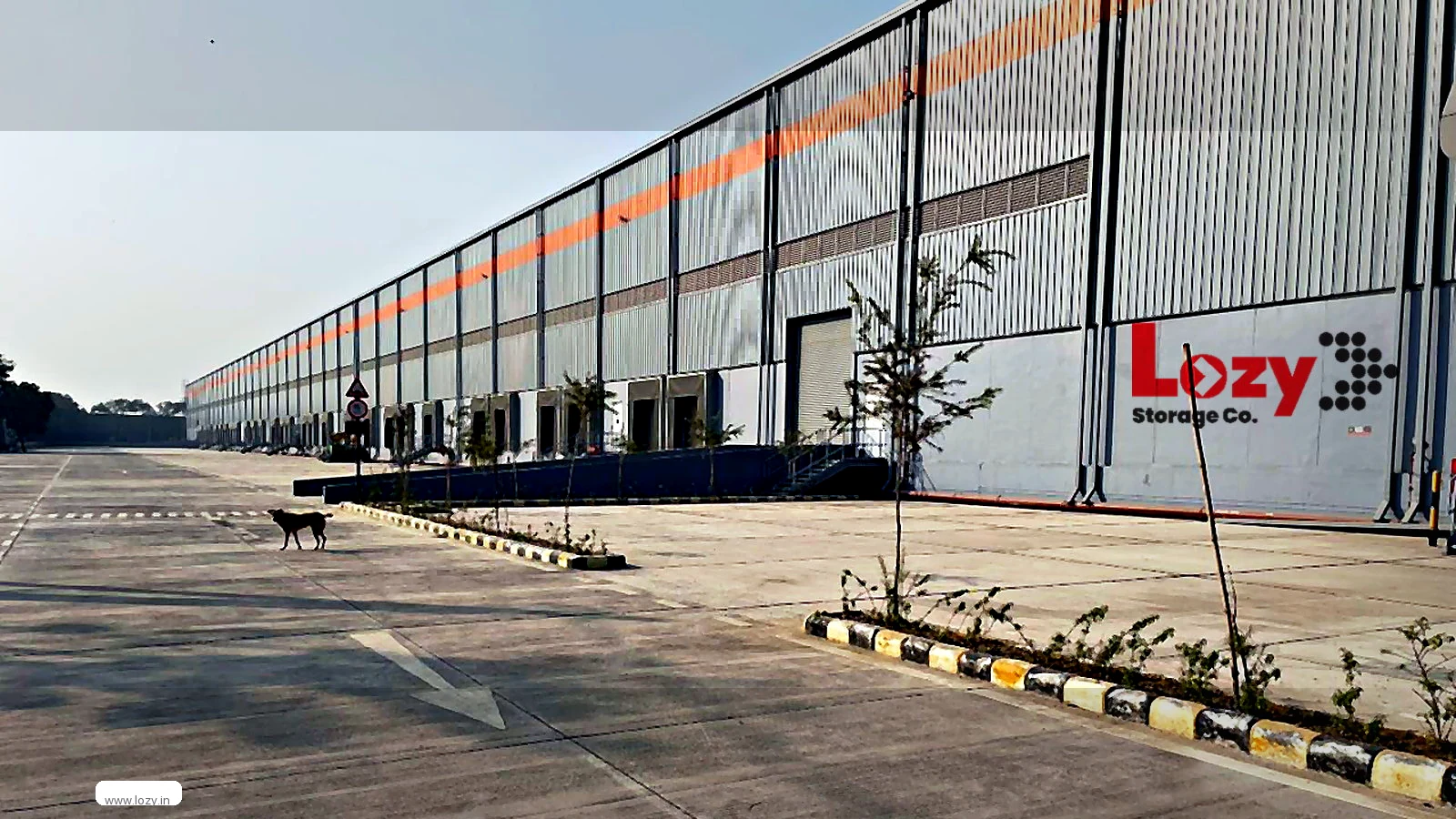
A search for warehousing companies in Delhi NCR returns one kind of result and hides another: a rank of names sorted by size, when the buyer's real question is which of five different businesses they are actually talking to. A park developer leases you a building and nothing else. A third-party operator stores, picks and dispatches your stock. A marketplace's own arm serves only its own sellers. An on-demand platform rents space by the month. A transport firm with sheds sells movement first and storage second. The shortlist is decided by which of those you need, not by who is largest.
Key takeaways
- Delhi NCR's stock sits on four corridors - NH-48 through Gurugram and Manesar, NH-44 through Kundli and Sonipat, NH-19 through Faridabad, and the KMP and Eastern Peripheral expressways linking them.
- Five company types cover almost every enquiry, and each charges on a different basis: per square foot per month, per pallet, per order, or per lockable unit.
- A published starting rate is a floor, not a quote. Lozy's own pages show warehouse space from ₹12 per sq ft per month, commercial space from ₹13, and business or on-demand space from ₹14.
- Seven questions settle most shortlists - land use, fire NOC, GST invoice, dock count, who bears handling, exit notice, and the next size up on the same site.
Almost every enquiry in this market hides two decisions inside one. The first is where the goods should sit - which belt, how far from the customers and from the freight arriving into the region. The second is who runs the building once the goods are inside: whether you take a shell and staff it, or hand the stock to somebody who receives it, racks it and dispatches it against your instructions. Most confusion on a Delhi NCR shortlist comes from answering only the first.
Why the Delhi NCR list is really five different businesses
The region's geography pushes in the same direction. Warehousing moved outside the capital boundary because heavy vehicles could not move freely inside it, so the stock followed the ring roads and expressways out. What is left is a set of belts with distinct personalities. The Gurugram and Manesar belt runs along NH-48 with the inland container depot at Garhi Harsaru on its western edge. The Kundli and Sonipat strip sits on NH-44 for anything going north. Faridabad's older industrial estates line NH-19. The Dadri and Greater Noida side works off the Eastern Peripheral Expressway. Tughlakabad, Palwal, Rewari and Dadri complete the region's customs geography.
You can see the coverage belt by belt on the pages that list every Lozy location, and the Gurgaon rent guide takes one of those belts apart in detail. Geography usually resolves itself early: a business shipping forty orders a day to three cities does not have twenty realistic belts, it has two or three. Once that is settled the decision that remains is about the company - and this is where a list of names stops being useful, because a lease with a landlord and a contract with an operator are different products with different bills, risks and exit paths.
The five types of company a buyer meets
Nearly every organisation holding warehouse space in Delhi NCR belongs to one of five groups. None is better than the others in the abstract - each is the right answer to a different question.
1. The landlord and the park developer
This is the simplest relationship on the list: you rent a building, or part of one, and everything inside it is your problem. Developers work at scale, with large floorplates, dedicated power, estate roads and a manned gate, and they lease to businesses that already run a warehouse crew. What you receive is space, usually as a shell. What you do not receive is labour, racking, software, or anybody to answer for a dispatch that left late.
The model suits a business with its own operations team, a predictable volume and a horizon measured in years - and almost nobody who is moving out of a rented basement this quarter. The fit-out alone, from racking to staff and connectivity, takes longer than most first-time tenants budget for.
2. The third-party (3PL) operator
An operator takes your stock in, stores it, and dispatches it against your instructions. The agreement covers people as much as square feet: inward handling, put-away, picking, packing, labelling, stock counts and the report you read at month end. Pricing follows the service, which is why an operator's proposal rarely looks like a rent figure - it is a storage line plus handling, sometimes with a per-order charge on top.
Operators suit steady stock movement, a thin internal team, sales across several channels, and many small dispatches rather than a few large ones. They are also the type most likely to hand over a facility that is already racked and already staffed, which removes the hardest month of any warehouse move.
3. The marketplace fulfilment arm
If you sell on a large online marketplace, the platform will offer you space inside its own network. The proposition is narrow and strong: inventory sits closer to the delivery promise, and order routing happens without your involvement. It is narrow in the other direction too. The space exists to serve that marketplace, so a brand selling on three platforms ends up with one warehouse per platform, three sets of stock and three sets of numbers to reconcile. The guide to fulfilment space for marketplace sellers works through how sellers usually split that requirement.
4. The on-demand or flexible-space platform
This is the newest category and the one that changed how a small business enters the market. Instead of a lease measured in years, you take space measured in months - a few shelves, a bay of racking, a lockable area - with security, billing and often basic handling included. The rate is published as a starting figure per square foot per month or per unit, and because billing is monthly the footprint can grow before a peak and shrink afterwards. The on-demand warehousing explainer describes how that billing model works in practice.
It suits seasonal demand, a first warehouse, an overflow position beside a primary site, or a business that cannot yet forecast six months ahead. Its trade-off is scale: flexible space absorbs change well, but past a certain steady volume a conventional lease is cheaper.
5. The transport firm with sheds
The last group is a transport company that also holds goods. Its centre of gravity is the fleet, and the warehouse exists to make the fleet work: cross-docking, staging, a few days of buffer stock, consolidation before a run. If your problem is movement - an expensive lane, a transit that runs a day long - this is often the most direct fix available, because the company already owns the vehicles.
Where it is weaker is everything about storage that is not about movement: long-held inventory, fine-grained picking, racked stock with a wide SKU range. That belongs to the operator's territory, and a competitive freight rate should not change it.
Type by type: what you get and what you pay for
The table below is the shortest version of the choice. Read across the row that matches your own position.
| Type of company | What you get | What you pay for | Best fit |
|---|---|---|---|
| Landlord or park developer | A building or a bay, a gate, power and an estate road | Rent per square foot per month, usually on a multi-year lease | A business with its own warehouse team and stable volume |
| Third-party (3PL) operator | Storage plus people: inward, put-away, pick, pack, dispatch, reporting | A storage line plus handling charges, sometimes a per-order rate | A distributor or brand without a warehouse team, or one selling on several channels |
| Marketplace fulfilment arm | Space inside one platform's network, with automatic order routing | Storage and fulfilment fees set by the platform | A seller whose volume is concentrated on that one marketplace |
| On-demand or flexible platform | Racked or floor space taken month by month, with security and billing included | A published starting rate per square foot per month, or per unit | A first warehouse, a seasonal peak, or an overflow position |
| Transport firm with sheds | Short-term holding and cross-docking attached to a fleet | Freight rates, with storage priced around the movement | A business whose largest cost is the lane, not the shelf |
How to shortlist warehousing companies in Delhi NCR
Once the type is settled, the shortlist narrows quickly and the remaining work is verification rather than research. The questions below are grouped by what they protect - your compliance, your building, and your money.
The paperwork questions: land use and GST
- Is the land allowed to hold a warehouse? Ask whether the plot sits in an approved industrial area or on land whose use has been converted, and ask to see the document rather than hear about it. A shed that looks cheap because the land underneath it is not industrial is not cheap; it is a stop-work notice waiting for a date. The Haryana State Industrial and Infrastructure Development Corporation publishes the estate and allotment framework that governs the Haryana side of NCR.
- Do I get a GST tax invoice in my own entity's name? Rent carries GST, and a registered business can claim input credit on it once the invoice is issued correctly. A cash rent with no document is the most expensive economy in this market.
- Which entity am I actually contracting with? On an estate or a park, the name on the invoice is often not the name on the gate. Confirm both in writing before anything is signed.
The building questions: fire NOC, dock count and approach
- Is the fire NOC in hand, or in progress? These describe different buildings; a NOC in progress is routinely the longest item in a fit-out programme, and it is the tenant who cannot open until it lands. The Warehousing Development and Regulatory Authority and the Warehousing Development and Regulatory Authority both publish material on how India's warehouse stock is classified and regulated.
- How many docks, exactly? "Multiple" is not an answer. The number of doors along the loading face governs how many vehicles can work at the same time, and that governs how long your own vehicles wait.
- Can a loaded trailer reach the gate, in the rain? Approach width, turning circle, height clearance and the yard surface decide this, and none of them appear in an interior photograph. Visit after rain if the visit can be timed that way.
The commercial questions: handling, notice and the next size up
- Who bears inward and outward handling? On an operator's contract handling is usually a separate line; on a lease it is yours by default, along with the labour, the insurance and the supervision. Ask which you are buying.
- What is the exit notice, and is there a lock-in? A monthly arrangement and a three-year lease are not comparable on rent alone. The cost of leaving early belongs in the comparison, on the same side of the ledger as the rent.
- What is the next size up, and is it on the same site? A business that outgrows its space and has to move pays twice - in money and in a month of disruption. Ask what the next step looks like before you need it.
Ask them in that order: the answers to the paperwork questions can end a shortlist entry before you spend an afternoon on a site visit. The Lozy FAQ pages carry the facility-level answers for our own units.
What each type charges, and why the bases do not compare
There is no single rate for warehousing in Delhi NCR, and quoting one without its basis is where most comparisons go wrong. What can be checked is the basis each type charges on. Lozy publishes starting figures on its service pages rather than a market average; the three that matter most here sit on the pricing page:
- Warehouse space for rent - from ₹12 per sq ft per month, published on the warehouse and godown space for rent page. This is the floor-area basis: you pay for the area you occupy.
- Commercial storage space - from ₹13 per sq ft per month, published on the commercial warehousing page, for racked and organised positions built for businesses that buy and sell.
- Business and on-demand space - from ₹14 per sq ft per month, published on the business warehousing page, for space taken month by month with handling security and billing included.
Each of those is a basis, not a quotation. The final figure moves with the city, the size taken, the term and the extras the goods genuinely need, and a per-square-foot rate cannot be set against a per-pallet charge until both are converted into a monthly cost for your own volume.
A landlord's lease is priced as rent. An operator's contract is priced as storage plus handling, sometimes with a per-order fee. A marketplace arm sets its own rates inside its own network, and a transport firm prices the lane and treats the shed as an input to it. The published figures in the warehouse rent per sq ft guide and the Delhi NCR price guide show how far one basis can spread within a region, and the monthly-billing explainer covers what changes when a booking is not tied to a multi-year term.
Normalising three quotes in five steps
- Write the basis next to every number. Per sq ft per month, per pallet per month, per order, or per lockable unit. If two quotes use different bases, convert both into a monthly cost for your own expected volume before you look at the totals.
- List what is included. Racking, labour, handling, security, housekeeping, pest control, power and software are sometimes inside the rate and sometimes outside it. A higher rate with everything included frequently beats a lower one with five extras.
- Cost the exit. Add the notice period, any penalty for leaving early and the cost of moving out. A twelve-month commitment is not comparable with a monthly arrangement until that line exists.
- Cost the run to your customers. A cheaper shed further from your delivery area turns into fuel, driver hours and missed slots, and all of it belongs in the comparison as money.
- Price the peak separately. If your volume doubles for two months a year, ask what the peak costs, not only what the base does.
What people get wrong when comparing warehouse quotes
- Comparing a floor-area rate with a per-pallet rate. One prices the ground you stand on; the other prices storage positions and usually includes the racking. Setting them side by side without conversion is the most common error in this market.
- Reading a starting rate as a quote. A published floor is the lowest figure for the smallest version of the service. It is honest as a basis and misleading as an expectation.
- Ignoring who supplies the labour. A warehouse with no handling arrangement looks cheap until you hire, train, insure and manage a team of your own.
- Treating "warehouse" and "fulfilment" as synonyms. Bulk storage and pick-pack-dispatch are different operations with different equipment and staffing. Settle the vocabulary before the site visit - the godown, warehouse and self storage comparison deals with the words themselves.
- Assuming the larger operator is automatically the better fit. Scale is a real advantage for a national brand and a near-irrelevance to a business shipping forty orders a day from one belt.
- Skipping the physical visit once the paperwork looks clean. A rate agreed over a call is a hypothesis until a loaded trailer has turned into the gate and back out.
One companion discipline is worth adopting: decide in advance what would make you walk away, and write it down before the first call. The guide to choosing a warehouse storage solution sets out the same sequence for a business that has not settled on a shortlist at all.
A worked example: one brief, three shortlisted companies
Take a representative case. A packaged-foods distributor in Karol Bagh supplies grocery retailers across Gurugram, Noida and Ghaziabad. It holds roughly six hundred pallets and dispatches forty to sixty orders a day, and it needs to leave a ground-floor godown where stock is stacked three deep because the lease is up and the space cannot be racked.
The brief produces three shortlist entries. A park developer in the Manesar belt answers with a large bay on a three-year lease and the lowest rate per square foot, with the fit-out, the racking and the warehouse team all remaining the distributor's problem. A third-party operator near Kherki Daula answers with a racked position and a monthly proposal covering storage and handling, at a higher headline rate and a far lower internal workload. A flexible platform answers with racked space in the same corridor, billed monthly, with the footprint adjustable by the shelf.
On a spreadsheet the lease wins on rate and loses on everything else. Six hundred pallets stacked three deep is precisely the profile that needs racking, so the distributor would be funding that racking, hiring five or six people and carrying a three-year commitment across a category whose demand moves with the season. The operator proposal prices highest because it includes the parts the lease leaves out, and the flexible answer is the most sensible if the volume genuinely cannot be forecast.
The rule that resolves the case is not the rate; it is whether the business wants to run a warehouse or merely to hold stock. A distributor with forty to sixty daily orders and no operations team is buying a service. A manufacturer with steady volume and its own crew is buying space. Once that is clear the belt becomes a secondary question, and here Kherki Daula sits on NH-48 with workable runs into all three destination cities. Move the destinations north and the answer moves up NH-44 towards Kundli or Sonipat; make the brief a container one and it moves again, towards Garhi Harsaru. For an industrial-scale requirement rather than a distribution one, the industrial and bulk warehousing page covers the floorplates and dock access involved.
How Lozy fits, using only its published figures
Lozy sits in the fourth category above, the flexible and on-demand platform, and it also runs space that behaves like the second: it receives stock, racks it, handles it and dispatches against instructions. That combination is deliberate, because most enquiries arriving in Delhi NCR come from businesses moving for the first time, and a first-time mover cannot yet say whether it needs a shelf or a shed.
What can be checked without taking our word for any of it. Across the network there are 77+ warehouses and more than one million square feet of live space, based in Delhi NCR and extending well past it. Warehouse space for rent starts at ₹12 per sq ft per month, commercial space at ₹13, and business or on-demand space at ₹14 - each a published starting rate on its own service page, not a quotation. Billing is monthly and invoiced with GST, so the footprint can grow into a festive or export peak and come back down without renegotiating the arrangement.
Where Lozy is the wrong answer is worth stating as plainly as where it fits: a business that wants a bare shell for seven years and will staff it with its own team is better served by a lease, and a brand selling entirely on one marketplace is better served by that marketplace's own network.
You can see the belts and the facilities belt by belt on the Lozy locations index, including Delhi and Haryana, and the space types sit together on the services pages. The company page explains how the network is run. If you are still deciding between types, the list of warehousing companies operating in Delhi NCR is a useful companion read, as are the warehouse for rent guide and the business warehousing guide. Give us the city, the size and the date you need and the contact page comes back with a rate and the options that are genuinely open, usually the same working day.

Related guides
- 3PL warehousing in Delhi NCR
- warehouse rent per sq ft
- warehouse inspection checklist
- B2B distribution warehousing
Not sure which type of company you need?
Tell us the goods, the belt and roughly how much space - we will tell you which type fits and what it starts at, even when the answer is not us.
Get a quoteCall +91 93547 12345Sources. Rates, network counts and facility descriptions are Lozy's own published information. Highway and corridor context comes from the National Highways Authority of India; market and sector context from IBEF; industrial estate and land-use framework from HSIIDC; GST registration and input credit from the GST portal. Warehouse regulation and industry representation are linked in the shortlist section above. No company named in this guide is ranked, and no position in it is sold.
Last updated: 14 October 2026. Have a question the FAQ below does not answer? Call +91 93547 12345 or email care@lozy.in.
Need warehousing or storage in India?
Request a free, tailored quote in under 2 minutes — free pickup, no lock-in.