Wholesale Distribution Warehousing: Dealer Staging, Cost and Dispatch (2026 Guide)
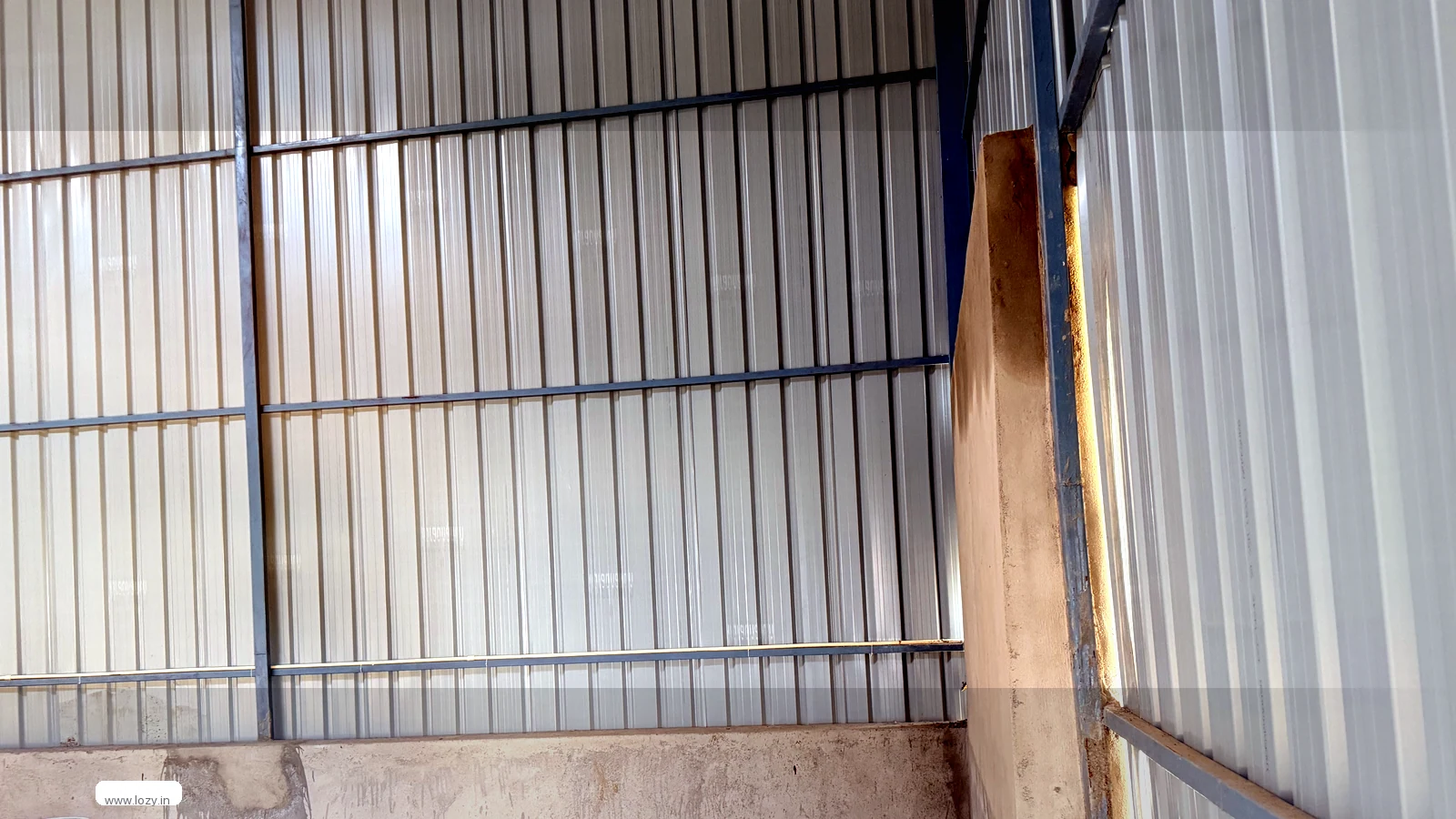
Wholesale distribution warehousing is holding stock for the short distance between a manufacturer's dispatch dock and a dealer's counter: goods arrive by the pallet or container lot and leave as dealer-sized consignments. B2B and wholesale distribution warehousing at Lozy pairs bulk intake with break-bulk floor and a dealer-wise staging bay, billed monthly from ₹12 per sq ft per month. What decides whether a season runs smoothly is rarely the rate - it is whether the staging floor is marked and empty on the morning the vehicles come.
Key takeaways
- Lozy holds distribution stock across 77+ warehouses and more than one million square feet of live space, with dealer-side sheds on the Kherki Daula and Manesar belt, in Faridabad's DLF Industrial Area 2 and on the Bisnoli side of Greater Noida.
- Rent starts at ₹12 per sq ft per month for godown and warehouse space, ₹13 for commercial space, an inventory-led plan from ₹4,499 per month, a seasonal booking from ₹1,299 per month and short-term storage from ₹699 per month, billed monthly on a GST invoice with no long lock-in.
- Dealer-wise staging, a carton and closed-pallet zone, a loose-pick face and a scheme-stock corner are four separate areas with four different counting habits; a shed that merges them misdispatches in the busiest week of the quarter.
- The year runs on quarter-end distributor dispatches and the festive build-up, so surge space is best booked weeks before a scheme window opens and released once the consignments have gone out.
The trade a distribution shed serves moves goods it never owns for long. A truckload comes in because a plant will only dispatch in pallets; ten smaller consignments go out because ten dealers will only buy in cases. That reversal is the entire reason the building exists, and every arrangement inside it either helps the reversal or gets in its way. The size and shape of the channel behind it is tracked in IBEF's retail industry profile, while the trader-facing schemes and registration support that reach these businesses are published by the MSME ministry.
Two numbers get compared when a wholesaler rents space: rate per square foot and distance to the dealer network. Neither describes the constraint that actually binds. A cheap shed with no staging floor and one loading face will cost more across a festive quarter than a dearer building two kilometres further out, because one can work a parked line of vehicles while the other works a single vehicle and leaves the rest standing on the approach road.
How the dealer-network job differs from plain storage
The quantities on either side of a distribution warehouse never match, and that mismatch is what the layout has to answer. Inbound is a pallet, a shrink-wrapped stack or a container lot. Outbound is a consignment built for one dealer, often a few cases each of a dozen lines. Storage between the two is not storage in the sense a factory or a household understands it; it is a pause, and the pause is short, because every case in the building was bought to be moved on.
Bulk in, dealer-sized out
That difference reorders the whole building. Where goods are stockpiled, the efficient plan groups like with like and stops there. In a dealer-distribution shed, grouping by product still matters for the intake record, but the operational centre of the building is the floor where orders are assembled and the moment a completed consignment is handed to a vehicle. A facility can be immaculately racked, insured and counted and still fail at this trade, because the last fifty metres were never planned. Closing that gap is exactly what wholesale distribution warehousing as a service is meant to do - bulk receipt at one end, dealer-sized dispatch at the other, with the staging floor in between.
It also changes what a distributor should count. In a stockpile the number that matters is what is on hand. In this trade the numbers that matter are what is on hand, what is already committed to a named dealer, and what is staged waiting for a vehicle. A shed that cannot separate those three answers is a shed where an order and a stock position look identical until the dealer calls.
The CFA job, described plainly
A carrying and forwarding agent - and the contract-logistics operators who now sell the same service under a modern name - does one recognisable thing: holds a principal's stock, breaks it into dealer-sized dispatches, moves it to the principal's instructions, and keeps a ledger of what left. The vocabulary around that service is commercial, covering consignment agency terms, service levels, credit limits and collection. The daily work underneath it is the four zones, the loading sequence and the documentation described further down this page.
Where the two arrangements genuinely differ is where the facts live. Under an agency arrangement, opening stock, dealer entitlements, scheme quantities and dispatch history sit in the agent's system and reach the principal as a report. Under a distributor's own monthly warehouse, those same facts sit in a building the business can walk through, on counts it orders and reconciles against its own books. Both are legitimate. Disputes begin when a business believes it has one arrangement while actually operating the other.
The four zones a dealer-distribution shed needs
Layout in this trade follows the order, not the product. Four zones and a clear lane between them will out-perform a larger building arranged any other way, because each zone does a different job with a different counting discipline. Merge them to save floor area and the saving is repaid in misdispatches and in a count that never reconciles.
Dealer-wise staging, the zone that decides loading day
Staging is a marked patch of floor where one dealer's complete consignment is assembled and held until a vehicle takes it. Dealer-wise means the division is by consignee rather than by SKU, which is the opposite of racking logic: a staging bay deliberately contains cases drawn from a dozen rack positions, because that is what the dealer ordered. The moment the pile is complete it is labelled with the dealer name, the route and the invoice reference, and it stops moving until loading begins.
This is the floor buyers most often decline to pay for, and it is the one that pays for itself. Loading a staged consignment is a lift and a count; loading an unstaged one is a search. Give staging the area equivalent of a day or two of dispatch volume, mark it so it cannot be quietly colonised in a lean month, and treat it as unavailable for long-term storage whatever the calendar says. The first busy week of a quarter will show whether it stayed clear.
The carton and closed-pallet zone
Here live the loads that will leave in the state they arrived in: unbroken pallets, sealed master cartons, and stock already committed to a dealer but held back for a dispatch date. Movement in this zone is measured in pallets and cases rather than pieces, so it wants clear height, straight runs and a face a pallet truck reaches without turning. Where a distributor receives full-truck or full-container lots, the same zone carries the reserve stock that refills the pick face as it empties, which is why it belongs immediately behind or beside it.
The loose-pick zone, where break-bulk happens
Break-bulk is the trade's own word for the job and this is where it runs. Cases are opened, a working quantity of each line is held on shelf positions within reach, and a dealer's mixed order is built case by case against a printed indent. The pick unit here is usually a case or a bundle rather than a single piece, so the face is shelf-and-trolley rather than a bin wall, and one person with a trolley can complete most orders unaided.
The reason this zone cannot share floor with the carton zone is counting. Carton-zone stock is checked in pallets and cases at a face; loose-pick stock is drawn down case by case and returns a different figure every evening. Run the two on the same ground and the opening count stops reconciling - which is how a distributor discovers a shortfall at the year end instead of on the day it happened.
A separate corner for scheme stock, returns and display material
Scheme stock deserves its own marked area and its own record: which scheme it belongs to, which dealer's entitlement it satisfies, and the date the scheme window closes. The reason is not tidiness. Promotional stock is the newest intake in the building and the most attractive thing in it, so stored loose among regular stock it leaves first, and the dealer receives a carton nobody billed him for while the goods he did order sit behind it. Keep it separate, label it, and dispatch it only against a named entitlement.
Two smaller neighbours belong in the same corner. Returns and damaged cartons need a position that is visibly not saleable, or a returned case re-enters the pick face as good stock and the count is wrong from that day. Display material is the third: standees, danglers, shelf strips and posters travel with consignments in small quantities, are easily lost inside a general pile, and are the first thing a dealer asks for that a warehouse cannot produce.
The restocking rhythm: quarterly dispatches and the festive quarter
Distributor volume does not arrive evenly, and the swing is not random. It follows scheme windows, quarterly targets and the festival calendar. A shed sized for the average week is undersized for the eight weeks that matter, and the wholesaler who books against the average spends those eight weeks working in the aisle with a queue at the door.
Quarter-end distributor dispatches
Principal schemes and quarterly targets compress a month of dealer demand into the closing days of the quarter, and the compression lands on the wholesaler's building rather than on the plant. Two-week volumes arrive in one week, the pick face empties, the staging floor never gets a clean hour, and the loading face carries a queue it was never sized for. What makes the difference is preparation that is cheap while it is early: positions booked before the window opens, consignment labels printed for known routes, a fixed dispatch cut-off hour per route, and a decision about which slow-moving stock will come off the staging floor for those ten days and go back afterwards.
The festive quarter
Festive is a stock-building season as much as a selling one. Dealers hold more than they can sell in the week of the festival because they expect to sell it, so the distributor's building fills earlier and empties faster than the sales figure alone suggests. Gift packs and combo cartons usually arrive as a distinct family with their own outer packing, which means new positions rather than spare capacity in the old ones, and break-bulk of a gift pack is the riskiest picking of the year: the carton is expensive, the combination is not interchangeable, and a dealer who receives the wrong pairing returns the whole consignment.
The lean weeks, and what to do with the space
Once the festive quarter clears, and again through the monsoon lull, volume drops back and the extra positions can be given up. Give them up - but keep the staging area marked and keep the pick face inside its own footprint, because the quiet months are exactly when a distribution shed is quietly converted into a general store and the change is only discovered in the week it must be undone. The monsoon earns its own line on the calendar as well. Outer cases and paper-based packaging soften in a shed that is not sealed, and a dealer who receives a damp carton records it on the delivery document and deducts for it. Stock meant to rest through the rains needs a dry, raised position rather than floor beside an open door.
Dispatch documentation: what travels with a consignment
In this trade the paperwork is not administration; it is the evidence that decides who pays when something arrives short, late or damaged. None of it is difficult. The failures come from assembling it after the vehicle has already gone.
The consignment file
Every dispatch should leave with one identifiable set: the picking list the consignment was built against, the sale invoice in the dealer's name, a scheme reference wherever promotional stock is included, the transporter's consignment note or lorry receipt, and the dealer's own indent if the order came in writing. Whether that set lives in a folder or in a system matters far less than whether one named consignment can be reconstructed three weeks later without a search. Dispatching against a telephone order and writing the paperwork afterwards is the commonest documentation fault in the trade, and it stays invisible until the first dispute.
The invoice, the movement document and the tax trail
Goods crossing a state boundary, and goods of higher value moving anywhere, need the movement documentation that accompanies a tax invoice, and the current thresholds and generation rules for that document are published on the GST portal. Two habits matter more to a distributor than the rules themselves: keeping the vehicle number and the dispatched quantity on the movement document aligned with what actually left the gate, and raising sale invoices from the same entity that holds the warehouse. Warehouse rent itself attracts GST, and where the space is billed as a tax invoice in the renting business's own name, a registered dealer can take input credit on it.
Proof of delivery and the return trail
Proof of delivery is where dealer-distribution disputes end, and it only works when the receiving counter records what it saw at the moment of receipt. A short carton noted on the delivery document and countersigned is settled in one phone call; the same carton reported a week later is a deduction the distributor usually absorbs. Returns need the same discipline in reverse - a return note stating what came back, why, and whether it is saleable, booked into stock on arrival, so that returned cases never merge silently into the pick face. The operating practice the trade works to is published by the Warehousing Development and Regulatory Authority.
What breaks on loading day when no staging area exists
Loading day is the test every distribution shed eventually sits. With consignments staged, it is a sequence: the vehicle arrives, the consignment is moved, the document is signed, the next vehicle comes forward. Without a staging area it becomes a search conducted in front of a queue, and the failures arrive in a predictable order.
- The pick face turns into a loading bay. Orders are completed in the aisle as vehicles arrive, so the picker works around a pallet truck and the reserve stock behind the face stops being reachable at all.
- Consignments lose their identity. Two dealers' cases share one trolley because that trolley was free, and the only thing keeping the piles apart is what the loader remembers at the moment of loading.
- Vehicles queue on the approach. A driver waiting on the road is a driver who eventually leaves, and the consignment travels the next day on a route that was planned for today.
- The wrong dealer gets the right carton. Mixed orders are what this trade dispatches, so one mislabelled pile becomes a return, a credit note and a second run in the opposite direction.
- Documents are raised after the fact. The invoice follows what was loaded rather than what was picked, and the movement document is generated at a desk while the vehicle is already past the gate.
- The quiet-month conversion shows up. Staging floor given over to slow movers in the lean weeks fails in the first week it is needed, precisely when nobody has an hour to clear it.
None of those failures needs a larger building. They need a marked staging floor, one consignee per bay, a dispatch cut-off hour per route, and a loading sequence that matches the order in which vehicles actually arrive. Those four decisions cost almost nothing when they are made at the planning stage, and they cannot be improvised during a quarter-end dispatch.
What wholesale distribution warehousing costs
Lozy publishes a starting rate against each service rather than one headline number for the trade, because a rate that does not say what it measures cannot be compared honestly. Six published figures cover most distributor requirements.
- Warehouse and godown space for rent - from ₹12 per sq ft per month on the warehouse space for rent page, priced on floor area; this is the basis to use when matching a floorplate to a pallet count.
- Industrial warehousing - from ₹12 per sq ft per month on the industrial warehousing page, for larger floorplates with dock-side access where consignments are loaded, not just stored.
- Commercial warehousing - from ₹13 per sq ft per month on the commercial warehousing page, for racked or part-racked space inside a business-area building.
- Inventory-led storage - from ₹4,499 per month on the inventory warehousing page, where stock is tracked as a running ledger rather than as rented area.
- Seasonal warehousing - from ₹1,299 per month on the seasonal warehousing page, for a named season such as a festive stocking run or a quarter-end push.
- Short-term storage - from ₹699 per month on the short-term storage page, the shape to use when stock stays weeks rather than months.
Each of those is a starting rate rather than a quotation. Billing is monthly, invoiced with GST, and held without a long lock-in.
What moves the figure in this trade
- The basis being quoted. Floor area is priced per square foot, racked or palletised space per position, a lockable unit per room, and an inventory-led plan per month. Two quotes that look far apart are frequently measuring different quantities rather than different buildings.
- How much break-bulk a consignment needs. A full-pallet dispatch costs less to run than an order assembled case by case from twenty lines. A distributor whose dealers buy mixed quantities is buying handling time alongside space, and the quote should say so.
- Staging floor, stated explicitly. Staging is floor that earns nothing on its own, so a quote should either include it or price it. A wholesaler who does not ask will conclude in month two that the attractive rate came with no room for it.
- Footprint and term. The area occupied is the largest single input, and a monthly booking prices differently from a longer commitment - which is why surge space is better taken monthly than leased.
- Location inside the region. Land at Kherki Daula and land on the Bisnoli side of Greater Noida are not the same asset, and the gap reaches the monthly rate before it reaches anywhere else.
- Add-ons. Packing material, dedicated labour, insurance and any special position are quoted on top, which is why describing the goods and the order pattern works better than asking for a generic wholesale warehouse.
Own godown, a shared monthly warehouse or a CFA contract
The three routes are not ranked, because they answer different questions. A distributor with a flat, high-volume core lands on one of them; a wholesaler whose year peaks around schemes lands on another.
| Decision | Own godown | Shared monthly warehouse | CFA or 3PL contract |
|---|---|---|---|
| What you commit to | A lease and a fit-out, usually multi-year | Space month by month, added and released as volume moves | A service agreement priced on volume and dealer reach |
| Money before the first consignment | Deposit, racking, manpower, security | No fit-out; space from ₹12 per sq ft per month | Onboarding, systems and often an implementation fee |
| Who builds the consignment | Your staff, in your sequence | Facility team moves stock to your printed indent | The agent's staff, to the principal's instruction sheet |
| Staging floor | Whatever area you choose to give it | Marked bays allocated with the space and kept clear | Sized to the agent's operating plan, not yours |
| Dispatch documentation | Yours to design and to keep | Dispatch note, invoice and movement document raised per consignment | Held in the agent's system and shared as a report |
| When a scheme doubles your stock | Corridors fill, or the consignment waits at the plant | Extra positions taken for the window and given back after | Handled only if the contract carries a surge clause |
| Trade disputes | Settled out of your own records | Traced to an intake entry and a dispatch record | Resolved through the agent, at one remove |
| Usually right for | A steady, flat and heavy core operation | A distributor whose year has peaks and lulls | A principal outsourcing the whole dealer channel |
Two of the three are often run side by side: a leased building for the moving core of the catalogue, and monthly space for the seasonal and scheme load. Where that happens the counts have to meet. The same SKU held in two buildings under two different counting habits is how a distributor ends up unable to say whether a shortage is real or a difference in how the two sites counted it.
How to choose a distribution site - and the red flags
Work back from the dealer map and the routes, then test the building against the way consignments are built. The B2B and wholesale distribution warehousing team will walk a shortlist through the check before you spend a day travelling between sites.
- Staging floor, in square feet, on the plan. Ask for it as an area rather than as a promise, then walk the bay and confirm it is marked and currently empty rather than occupied by slow-moving stock.
- Loading faces against your vehicle mix. Most distributors run small vehicles on some routes and a larger one on others. Confirm the widest vehicle you send can reach a dock or a level face, and that more than one vehicle can be worked at once.
- The pick face and the assembly floor. Shelf-level picking with trolley room around it is what mixed-carton orders need. Pallet racking alone pushes break-bulk work into the aisle.
- Counting discipline at intake. Ask what is recorded when a case is received - quantity only, or quantity with carton condition and date. Condition is the number your dealers will argue about.
- Dry stowage through the monsoon. Roof condition, plinth height and yard drainage decide whether a festive build-up survives August. Visit after rain if it can be arranged.
- The invoice and the entity. Confirm in writing that the space will be billed as a GST tax invoice in your own business's name, together with the minimum term and the notice period.
Red flags to walk away from
- "There is space to stage" with no bay marked. Staging that is described rather than laid out is the first thing a busy week consumes.
- One loading face for a multi-route dispatch. A single door turns one morning's loading into a day spent queueing.
- Dealer scheme stock tipped in with ordinary saleable stock. It ships first, and the dealer is billed for a carton nobody ordered.
- No separate position for returns. Without one, returned cases re-enter the pick face and the count is wrong from that day onward.
- A rate with no basis written on it. A per-square-foot figure quoted against a per-position requirement cannot be compared with anything.
- No answer for the quarter-end window. Availability should be a number and a lead time, not an assurance.
- A landlord who issues a receipt and not a tax invoice. It looks cheaper every month and quietly removes the input credit for the whole year.
Where distribution stock sits in Delhi NCR
For a wholesaler, siting is a routing decision before it is a property decision: the node belongs where the dealer runs begin, not where the floor is cheapest. On the south-west side, the Kherki Daula and Manesar belt along NH-48 suits a network of Gurugram, Rewari and south-west Delhi counters, and the Gurgaon warehousing guide covers that cluster node by node. Closer in, space around Ghevra Metro and Dwarka lets a distributor serve the Sadar Bazaar, Karol Bagh and west Delhi wholesale markets without a boundary crossing, which is the case the New Delhi warehousing guide sets out market by market. On the eastern side, the Bisnoli and Dadri stretch of Greater Noida serves Noida, Ghaziabad and the western Uttar Pradesh dealer base, explained in the Uttar Pradesh guide. A distributor whose dealers run north through Sonipat, Karnal and Panipat, or south-east through Faridabad and Palwal, needs the state-level view more than any single city, and the Haryana corridor guide walks both legs of it. All of those runs depend on the same roads, maintained by the National Highways Authority of India, and the live coverage across the region's collection centres is on the Lozy locations page.
A worked example: a grocery and hardware distributor in west Delhi
Treat the case below as representative of the situation rather than as the record of one business. A distributor of packaged groceries and hardware supplies sells to kirana counters, hardware shops and two cash-and-carry outlets across Sonipat, Karnal, Gurugram and Faridabad. Its present arrangement is a rented floor in a west Delhi commercial building: one goods lift, an approach shared with other tenants, and no floor set aside for assembling orders. In the last week of every quarter the pickers build consignments in the corridor, and on the biggest dispatch day of the year two of the four vehicles were loaded only after their drivers had already left once.
Three Lozy positions are worth weighing. The first is space in Faridabad's DLF Industrial Area 2, well placed for the north-bound dealers who run through the KMP expressway and for the Faridabad and Palwal routes. The second is a shed on the Kherki Daula and Manesar belt along NH-48, with dock-side loading and room to add rack positions, which suits the Gurugram and Rewari half of the network. The third is a city-side position near Ghevra Metro, which keeps the west Delhi wholesale runs short at the cost of room to grow.
On paper all three answer the constraints the current floor cannot. The quarter-end picture settles it. An industrial shed can take the incoming quarter's pallets at a dock while consignments for the day's four routes sit completed in marked staging bays - which the commercial floor cannot do at any hour, because the staging area does not exist there. The Faridabad option wins the north-bound dealers through the expressway, and the staging floor is why it is on the list at all. The Kherki Daula shed stays as the position for the Gurugram-heavy half of the network, and the Ghevra space as a small second position for fast lines serving the city markets.
Notice what did not decide it: the headline rate. Loading capacity across the eight busiest weeks, a staging floor that can hold four consignments at once, and dry stowage for grocery cartons through the monsoon carried more weight than a few rupees per square foot - and those three are worth testing at any distribution site you visit.
How Lozy runs wholesale and B2B distribution storage
Lozy provides wholesale distribution warehousing from 77+ warehouses and more than one million square feet of live space, based in Delhi NCR with collection centres reaching the rest of the country. Stock is received against the advice note and counted at intake, racking carries the reserve, break-bulk space with shelf-level picking carries the dealer orders, and staging bays are allocated so a quarter-end dispatch leaves in sequence rather than in a queue.
Because the plan is monthly, the space moves with the scheme calendar instead of against it. Positions can be taken before a quarter closes and given back once the consignments have gone, inside the same facility, on GST-invoiced billing with no long lock-in. A bulk floorplate with dock access is the industrial side of the network; a racked position inside a business-area building is the commercial side; and stock that has to reconcile line by line against the books is what the inventory-led plan is for. A festive build-up booked against a named season, or a single consignment held for a few weeks, both have their own published basis on Lozy's service pages.
Neighbouring verticals run into the same problems and are worth reading before you call. The FMCG warehousing guide deals with fast-turn packaged stock under the same scheme calendar, the 3PL partner guide is written for operators holding someone else's inventory, and the importers and exporters guide covers consignments that start life as a port document. Where the comparison is between service shapes rather than verticals, the inventory warehousing guide and the seasonal warehousing guide each take one basis end to end.
To see what is free now, browse the warehouse listing. And when you have a dealer map, a pallet count and a dispatch date, the contact page comes back with rates and availability, usually within the working day.

Related guides
Storing stock for a dealer network? Get a rate
Send your dealer list, the order sizes you dispatch and your scheme calendar - we reply with a rate and what is free now.
Get a quoteCall +91 93547 12345Sources. Rates, facility names and service bases are Lozy's own published information. Market and channel context comes from IBEF's retail industry profile; trader and enterprise scheme information from the MSME ministry; GST registration, invoicing and movement-document rules from the GST portal; warehouse operating practice from the Warehousing Development and Regulatory Authority; and highway and expressway context from NHAI.
Last updated: 14 October 2026. Have a question the FAQ below does not answer? Call +91 93547 12345 or email care@lozy.in.
Need warehousing or storage in India?
Request a free, tailored quote in under 2 minutes — free pickup, no lock-in.