Fulfilment Centre vs Warehouse: Which Does Your Business Need? (2026 Guide)
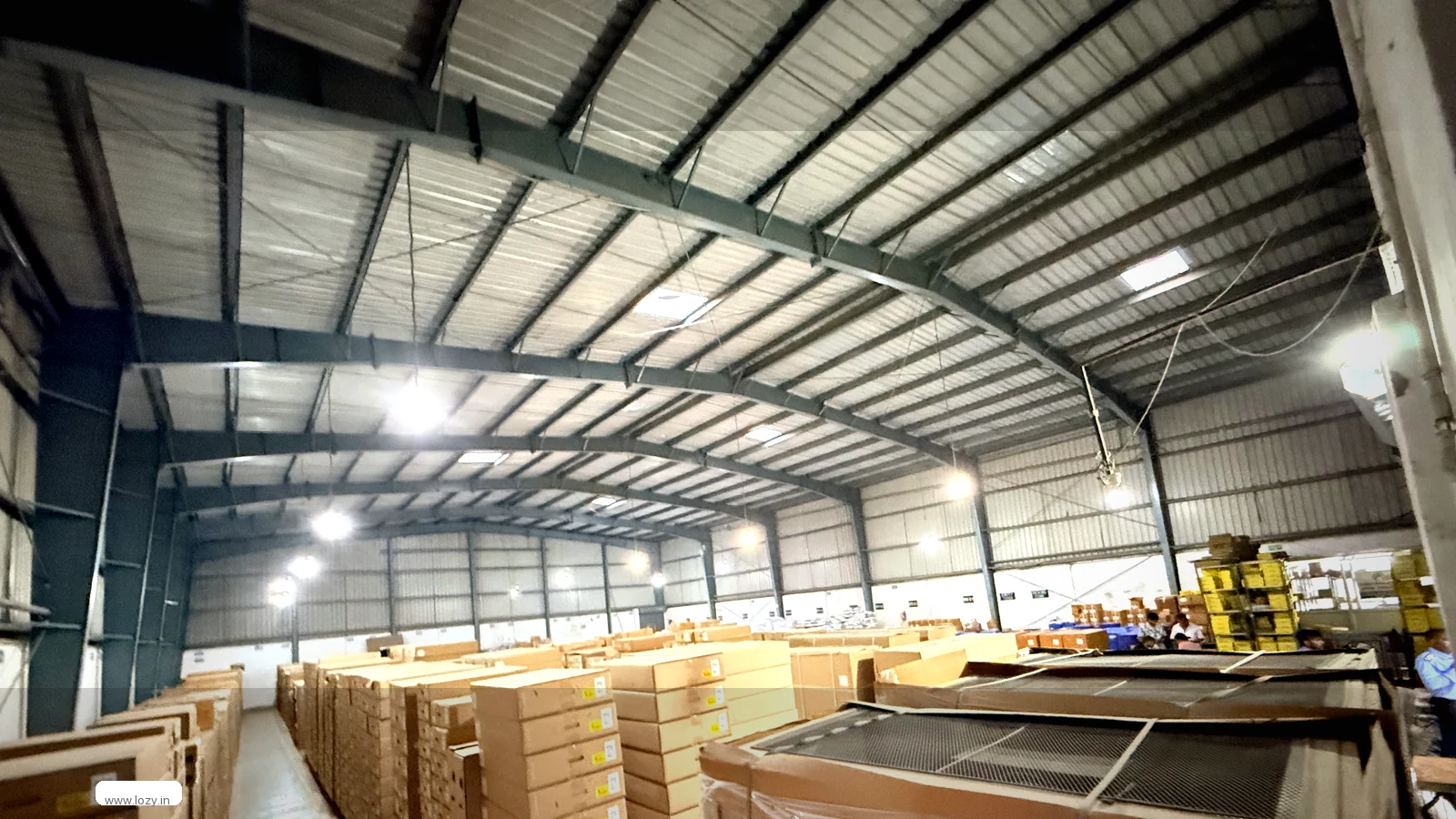
Fulfilment centre vs warehouse comes down to one question: does the operator do the work, or only hold the goods? A warehouse holds your stock - your team receives it, stores it, picks it and dispatches it, and what you rent is space. A fulfilment centre holds the same stock and then picks it, packs it, prints the shipping label and hands each parcel to a carrier, so what you buy is an operation rather than a floor. The two words describe different businesses that can live inside one building.
Key takeaways
- A warehouse stores; a fulfilment centre stores and then picks, packs, labels and dispatches. The same thousand square feet can be either - the difference is who staffs the pick line and who carries the evening cutoff.
- You pay two different ways. Pure storage is priced on floor area, from ₹12 per sq ft per month on warehouse space for rent, while a fulfilment-style plan starts at ₹4,999 per month on ecommerce warehousing - a basis, not a quote, on both sides.
- Delhi NCR's online sellers usually sit on the fulfilment side and the region's traders, manufacturers and importers usually sit on the storage side. A business shipping pallets to trade buyers and parcels to consumers needs both.
- You can start with storage and add fulfilment later. Lozy runs both across 77+ warehouses and 1M+ sq ft of live space, with a Delhi NCR base and a PAN-India network.
Almost every enquiry about warehousing in Delhi NCR hides one of two questions, and the vocabulary does not separate them. If the goods need somewhere to sit until a buyer appears, the requirement is space. If the goods need to leave the moment an order arrives - picked, packed, labelled and handed to a courier - the requirement is a service. A warehouse answers the first and a fulfilment centre answers the second. Confusing them is expensive in both directions: a trader pays for racking and pick software it will never use, and an online seller signs for a bare bay and then has to recruit, train and supervise a dispatch team it thought it had outsourced.
Fulfilment centre vs warehouse: the full comparison
The table below is the decision on one screen. Read the "who does the work" row first, because the label, the returns, the price and the exit all follow from it.
| What changes | Warehouse | Fulfilment centre |
|---|---|---|
| What happens to your stock | Stored as you left it - racked, bulk-stacked or floor-loaded, counted for as long as it sits | Stored as individual sellable units on a shelf, so one shirt can be picked without disturbing the carton behind it |
| Who does the work | Your team. Receiving, put-away, picking, packing and dispatch are your labour, your supervision and your problem | The operator's team. You send stock in and instructions out; the floor is staffed, supervised and measured by the fulfilment partner |
| Who generates the shipping label | You do, from your own courier account and your own software | The centre does, against its own carrier integrations, at the point of dispatch |
| Who owns returns | You do. Returns land at your address or your bay and you decide what happens to them | The centre receives them, checks them against the order and returns sellable units to the shelf |
| What you pay for | Floor area, by the month - a rate per square foot or a racked position | Storage plus handling - space, and a charge for the work of pulling, packing and dispatching each order |
| When it makes sense | Bulk stock sold in whole loads, and a business that already runs its own warehouse crew | Many small orders, sales across several channels, and a thin or non-existent warehouse team |
| The hybrid case | A storage bay with a pick-and-pack desk bolted on, for a business that mostly stores but occasionally ships | — a fulfilment centre is already the fuller service |
The row that catches the most businesses is the second. A trade buyer who moves stock in full pallets is buying storage and would pay for pick labour it never needs. An online seller shipping hundreds of small parcels is buying that labour, and a bare bay quietly commits it to hiring and supervising a dispatch team on top of the rent. The two situations look identical on a rate card and nothing alike on a Monday morning.
What happens to your stock, order by order
Storage and fulfilment see the same carton differently. A warehouse sees a pallet that stays put; a fulfilment centre sees unit stock that leaves one item at a time. That is the whole of it, and it drives every operational difference below.
Who picks and packs
On the storage side the pick is your job, or your staff's: a pick list, a walk down the aisle, a pack bench and a roll of tape. That labour scales with order count, not with floor area, which is why a business can hold a small footprint and still need a large temporary team in a festive week. At a fulfilment centre the picking, packing, labelling and handover are the operator's standing work, priced per order or inside the monthly plan rather than as overtime.
Who generates the shipping label
A shipping label is a small document with a large dependency behind it: a courier account, a serviceable pin-code list, agreed rates and a manifest that reconciles at the end of the day. A tenant in a warehouse keeps all of that themselves and prints from their own desk. A fulfilment centre integrates with its carriers and raises the label as part of dispatch, so the parcel is labelled, manifested and tracked without the seller touching a printer. That single responsibility is often the reason a small online brand moves to fulfilment in the first place.
Who owns the returns
Returns are the row sellers forget until after the peak. In a warehouse the customer's parcel comes back to the seller, who inspects it, decides whether it can be resold, restocks it or writes it off, and processes the refund - all of it internal work. In a fulfilment centre the return is received against the original order, inspected and, if sellable, put back on the shelf as live stock; the seller sees the reconciliation and issues the refund. For a category with a high return rate, that reverse flow is a bigger commitment than the outbound one.
What the storage route still asks of you
None of this argues against a warehouse; it argues for counting the full bill before choosing one. Storage leaves you owning the labour roster, the training, the supervision, the packaging material, the courier negotiation, the dispatch cutoff and the software that knits them together. A business that already has those capabilities is buying exactly what it needs. A business without them is buying a project, and the project starts on the day the first order arrives.
What you pay for on each side
The two services are priced on bases that do not compare on a first read, which is where most confusion starts. Storage is quoted against floor area or against a stored position. Fulfilment is quoted against the work: space plus a handling charge that moves with order volume. Setting a per-square-foot rate beside a per-order charge compares a rent with a wage bill.
Lozy publishes starting figures against the service each belongs to, and every one of them is a floor rather than a quote:
- Fulfilment-style ecommerce space - from ₹4,999 per month on the ecommerce warehousing page, for sellers whose stock moves as orders rather than as pallets.
- On-demand space - from ₹14 per sq ft per month on the on-demand warehouse page, taken month by month with billing and security included.
- Inventory-led storage - from ₹4,499 per month on the inventory warehousing page, where stock is tracked as a running ledger rather than as rented ground.
- Business and managed space - from ₹14 per sq ft per month on the business warehousing page, for racked or floor space held with handling inside the plan.
Read together, those figures show the shape of the choice. A storage rate pays for ground; a fulfilment plan pays for ground and for the hands that move each order across it. On a low order count the difference is small enough that storage plus your own labour is cheaper. Past a certain parcel volume the arithmetic turns, because the labour you would have hired becomes the service you are now buying. Each published figure is a starting basis after a requirement check, billed monthly on a GST invoice, with no long lock-in on the monthly plans. The full set of published bases sits together on the Lozy pricing page linked below.
The hybrid: a warehouse with fulfilment bolted on
Most real requirements do not sit at either end. They sit in the middle, where a business holds bulk stock for its trade buyers and also ships a growing number of small orders to consumers - and that is exactly what a hybrid bay is for. It is a storage position with a pick-and-pack desk added: the pallets stay where they are, and the orders that need individual attention are pulled and packed alongside them.
The hybrid is the right answer in three situations. A wholesaler testing a direct-to-consumer line wants its existing stock to serve both without renting a second facility. A seasonal brand wants storage for its off-season volume and fulfilment only through the peak, so it is not paying for a permanent operation. And a business whose order count has just crossed the point where its own team is stretched wants to add capacity without giving up the bay it already runs.
Where the hybrid is the wrong answer is worth saying as plainly. If order volume is high and steady, a dedicated fulfilment setup is cleaner than a pick desk squeezed into a storage bay. If the business is entirely digital, with no trade sales and no bulk loads, storage is dead weight it should not be paying for. And if returns are heavy, the reverse flow needs a proper returns bench rather than a corner of a dispatch table. The on-demand warehouse guide and the ecommerce warehousing guide take the two ends of that hybrid apart in more detail.
Which Delhi NCR business types sit on each side
The region makes its own cut on this question, because the two economies inside it are genuinely different. Delhi NCR runs on two flows: consumer parcels leaving the city for pin codes across the country, and bulk goods arriving from factories and ports into the belts along NH-48, NH-44, NH-19 and the two expressways. A fulfilment centre serves the first flow and a warehouse serves the second, and the two rarely want the same building. The corridor context behind those flows is published by the National Highways Authority of India.
NCR businesses that need fulfilment
Direct-to-consumer brands top the list. An apparel label in Naraina, a homeware seller in Okhla, a beauty brand in Udyog Vihar, a gadget reseller in Karol Bagh shipping from a counter - all of them sell units rather than loads, and all of them face the same dispatch cutoff every evening. The second group is the multi-channel seller: a brand live on three marketplaces and its own website needs one pool of stock in one place, which a marketplace's own warehouse cannot give it. The third is the business with no warehouse at all, where the founder is still packing orders at home and the cheapest fix is to stop. Every one of these needs picking, packing and labelling more than it needs floor area, and the ecommerce and retail warehousing page is where that requirement is described.
NCR businesses that need a warehouse
On the other side of the line sit the region's traders, manufacturers and importers. A packaging-materials trader in Faridabad selling to industrial buyers in full pallets does not pick units; it loads a truck. A manufacturer in Manesar or Sonipat holds raw material and finished goods that move in batches, not in parcels. An importer clearing containers through Tughlakabad or Garhi Harsaru needs bulk space near the gateway, and a distributor supplying retail chains across Gurugram and Ghaziabad needs a racked position for pallets that leave whole. For all of these, pick labour would be a cost they never recover, and what they want is space, security and a dock. The racked and managed side of that requirement sits under business warehousing, and the list of warehousing companies operating in Delhi NCR shows how the two kinds of provider divide across the region.
NCR businesses that sit in the middle
Between the two are the region's mixed sellers, and they are more common than either extreme. An FMCG distributor supplying kirana shops by the carton and also running a consumer website. A furniture brand delivering assembled units to trade buyers and flat-packs to online customers. A spare-parts business serving workshops in bulk and riders one part at a time. These need a bay that behaves like both, and the honest description of that requirement is a warehouse with a fulfilment desk attached - a real product, not a compromise. The city-side posts, including warehousing in Delhi and warehouse rent in Gurgaon, map where those bays sit belt by belt.
A worked example: two NCR businesses, two different answers
Take two representative cases, both drawn from the region and neither a real account. The first is a direct-to-consumer home-decor brand working out of a ground-floor unit in Naraina, selling on its own website and two marketplaces and shipping a few hundred parcels a day with a sharp festive rise. The second is a packaging-supplies trader in Faridabad's NH-19 belt, selling to factories and distributors across Haryana and western Uttar Pradesh in full pallets, with barely a single-parcel order in a month.
The home-decor brand's problem is not space; a few hundred square feet would hold its stock. Its problem is that every order has to be pulled, wrapped, labelled and manifested by evening, its returns come back in volume after the festive season, and its stock has to be one pool serving three channels. That is a fulfilment requirement, and paying for a bare bay would only relocate the work rather than remove it. The packaging trader's problem is the exact opposite: nothing leaves except on pallets and there is no pick line to staff at all. Its requirement is a dry, secure bay near NH-19, with a dock wide enough for a loaded truck and room to turn - a warehouse. It should be looking at warehouse space for rent and leaving the pick bench to somebody else.
The instructive case is neither of those. It is the third business the trader's own success creates: the same Faridabad firm a year later, having opened a small online shop and begun selling single packs to consumers. It still ships pallets to its factories, and now it also ships a growing trickle of parcels. It does not need a second facility. It needs its existing bay to grow a pick desk, and the answer to its question is the hybrid rather than a move.
What people get wrong about warehouses and fulfilment
The mistakes here are consistent, and most of them start with treating two different words as one.
- Using warehouse and fulfilment centre as synonyms. A building that stores and a service that stores, picks and ships are different products with different bills. The godown, warehouse and self storage comparison settles the words before a rate is discussed.
- Assuming fulfilment is only for marketplaces. A brand selling on its own website needs the same pick, pack and label work. Fulfilment is a way of operating a warehouse floor, not a feature of one platform.
- Buying storage and then hiring the work back in. A bare bay looks cheaper until the pick team, the rosters, the packaging and the courier account are added. The labour is in the bill either way; the only question is whose.
- Reading a per-square-foot rate as the cost of fulfilment. Storage and handling are separate lines, and a plan built on floor area alone will not cover the work of getting an order out of the door.
- Believing a warehouse cannot do fulfilment. It can, as a hybrid desk inside the bay. What a plain storage contract cannot do is run the pick line for you unless it is written in.
- Forgetting returns. The return leg, the inspection and the restock are real work with a real cost, and they belong in the same comparison as the outbound flow.
One habit avoids all six: ask what happens to a single order from the moment a customer clicks, and write down who does each step. The moment the answer stops at "it sits on a shelf", the requirement is storage. The moment it runs through picking, packing and a printed label, the requirement is fulfilment.
How Lozy covers both sides
Lozy runs both kinds of space, which matters here because the question is which one a business needs, not which one happens to be available. The storage side is a published floor-area basis from ₹12 per sq ft per month, and the fulfilment-led side is a plan from ₹4,999 per month for ecommerce sellers, both billed monthly on a GST invoice with no long lock-in. Between them sit the on-demand and inventory options that make a hybrid workable - space taken month by month, with the pick desk added when the order count justifies it.
The network is 77+ warehouses and more than one million square feet of live space, based in Delhi NCR and extending across India, which is what lets a business hold bulk stock near a gateway and still serve parcels from a position close to its customers. Where a requirement is genuinely one-sided, the honest answer is to say so: a business that wants a bare shed for seven years and will staff it with its own crew is better served by a plain storage contract, and a pure online brand is better served by a fulfilment setup with nothing else attached. What Lozy avoids is selling a pick desk to a pallet buyer, or a bare bay to a seller who will spend the next quarter building a dispatch team.
Everything Lozy operates is listed on the services page and mapped on the locations index; the space bases sit on pricing, and browsing the warehouse listing shows what is free now. Related reading in the same family: the warehouse rent per square foot guide turns the storage bases into real monthly numbers, the inventory warehousing guide explains how a unit ledger differs from a rented floor, and the marketplace sellers' fulfilment guide works through the one-platform trap. Send the goods, the order count and the cities you ship to, and the FAQ and contact page bring back a rate and a straight answer on which side of the line you actually sit.

Related guides
- e-commerce fulfilment in India
- e-commerce brand warehousing
- returns and reverse logistics
- dark stores for quick commerce
Not sure whether you need storage or fulfilment?
Send your order count, your pallet count and the cities you ship to - we will tell you which side of the line you are on and what it starts at, even when the answer is storage.
Get a quoteCall +91 93547 12345Sources. Rates, plan figures, network counts and service descriptions are Lozy's own published information, drawn from the live service and pricing pages. GST registration and input-credit rules come from the GST portal; market and sector context from IBEF; warehousing policy and regulation from the Warehousing Development and Regulatory Authority; corridor and highway context from the National Highways Authority of India; and scheme and press material from PIB.
Last updated: 14 October 2026. Have a question the FAQ below does not answer? Call +91 93547 12345 or email care@lozy.in.
Need warehousing or storage in India?
Request a free, tailored quote in under 2 minutes — free pickup, no lock-in.