Dark Stores for Quick Commerce: What the Model Needs From a Warehouse (2026 Guide)
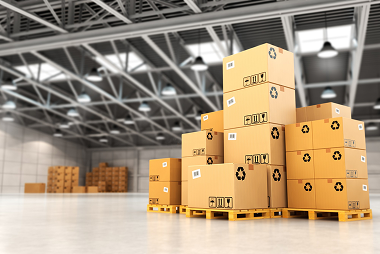
A dark store is a warehouse with no shoppers in it: a small, city-embedded building that holds fast-moving stock only and picks orders for delivery within minutes. Dark store warehousing for quick commerce is a different discipline from ordinary warehousing - the building is chosen for its catchment rather than its rent per square foot, and the stock inside it is the top slice of a catalogue held in bulk elsewhere. This guide sets out what the model actually requires from a warehouse, and the places where it quietly stops working.
Key takeaways
- A dark store is a picking node built for minutes, not a small warehouse: a few hundred to a few thousand square feet, no walk-in customers, and only the fast-moving slice of the catalogue on the shelf.
- The stock model is two-tier. Fast movers sit in the dark store; the full range waits in a bulk warehouse behind it, and a daily replenishment rhythm - not a weekly one - keeps the front node full.
- The site is chosen on catchment, not on rent: ground-floor access, three-phase power, a dense cluster of paying households within a short ride, and a landlord who tolerates constant two-wheeler movement decide whether a node works.
- In Delhi NCR the model holds in dense micro-markets - parts of Gurgaon, west and south Delhi, Noida and Ghaziabad - and turns marginal where catchment density is thin, because a dark store's fixed cost does not shrink with its order count.
Quick commerce is a promise about time, and a dark store network is engineered backward from that promise. A customer taps an order; the nearest node picks it from a shelf a few kilometres away; a rider carries it the last stretch. Every part of that sequence refuses the habits of ordinary warehousing. A building that made a fine distribution centre - wide, cheap, out on a highway - is the wrong shape for this job, and a building that is perfect for it would make a poor distribution centre. The rest of this guide is about that difference, and about the two-tier stock discipline the model quietly depends on.
What a dark store is, and what it is not
A dark store is a small, city-embedded facility that holds fast-moving stock and picks orders for immediate delivery, with no customers admitted. The name is literal - the shop is dark to the public. From the road it often looks like a shop unit, but the frontage never opens. Inside, stock sits on simple racking, pickers walk a short loop, orders are packed at a bench, and riders arrive and leave on a continuous cycle. The whole design bends toward one number: how long it takes to get a packed bag from a shelf to a rider's hands.
Why "small warehouse" is the wrong mental model
The instinct is to treat a dark store as a warehouse that has been shrunk. It is closer to a shop turned inside out. A warehouse is organised around the cost of holding stock - cheap floor area, dock doors, pallet handling, long dwell times. A dark store is organised around the cost of a minute: how fast a picker completes an order, how quickly a rider is back on the road, and how few steps separate the shelf from the door. Storage is the constraint, not the product, and the floor is judged by velocity rather than by capacity.
What a dark store is not
It is not a fulfilment centre for marketplace orders, which survives on pick times measured in hours and a batch that leaves once a day. It is not a retail shop with a stockroom, because a stockroom exists to top up shelves a customer walks past, and nobody walks past here. And it is not a substitute for a bulk warehouse: a dark store deliberately carries a thin slice of the catalogue, and the moment it tries to be complete it loses the speed that justified the rent in the first place.
Dark store, warehouse and retail shop: the difference that decides everything
Three buildings can hold the same product and be built to three different logics. The table is the fastest way to see why a dark store cannot borrow a warehouse's layout, or a shop's address, without paying for the mistake later.
| What changes | Dark store | Bulk warehouse | Retail shop |
|---|---|---|---|
| Who comes in | Pickers and riders; no walk-in public | Inbound and outbound vehicles; no public | Shoppers, on foot |
| The job it is built for | Fill one order in minutes | Hold the range cheaply for weeks or months | Sell off the shelf, now |
| Location logic | Inside the catchment, dense households close by | On a corridor, cheap land, dock access | Where footfall already is |
| Stock held | Fast movers only, high-velocity lines | Full catalogue, bulk and slow lines | Full range for browsing |
| Picking | Short walk, per order, seconds per line | Case or pallet pick, hours per release | Customer picks for themselves |
| Replenishment | Daily, from the bulk store | Inbound in truckloads from supplier or port | From a distributor, on a schedule |
| What the rent buys | Proximity; the speed pays for the rate | Volume; the cheap rate pays for itself | The address; the sale pays for it |
Read the location row first, because it does the most damage when it is wrong. A bulk warehouse dropped inside a dense residential area would pay city rent for highway work with no return. A dark store pushed out onto a corridor would pay corridor prices to fail its own promise, because the rider's last leg is exactly the distance this model exists to shorten. There is no single correct answer for a site; there is only the question of which of the three jobs the building is being asked to do.
Where a dark store has to sit: catchment and site requirements
A dark store is sited in the opposite direction from a warehouse. A warehouse asks where the rent is cheapest and the truck access best. A dark store asks how many paying households a rider can reach in a few minutes. Those two questions rarely point at the same plot, and the second one is not negotiable.
Catchment comes before everything
The unit of planning is the catchment - the set of households a node can serve inside its promised time. Density decides whether the model is economically alive, because a node's cost is largely fixed: rent, power, a small team and the replenishment run. A thin catchment pays those fixed costs with too few orders. That is why quick commerce clusters around apartment-dense micro-markets and busy high streets rather than spreading evenly across a city. In practice, the first question about any address is how many orders a day the surrounding households can plausibly generate, and the second is whether a rider can complete a round trip before the promise expires.
Ground-floor access, a door and a stopping point
Riders are the throughput constraint, so the geometry around the door decides how many orders an hour a node can actually clear. A ground-floor unit with a kerb a two-wheeler can pull up to is worth more than a larger basement with a ramp and a lift, because every rider turn that stalls at the access adds minutes the model cannot afford. In practice a site needs a legal stopping point, a short carry from pavement to pack bench, and enough circulation that two or three riders are not queuing into each other at the same ten feet of floor.
Power, water and the small physical realities
Cold and frozen lines need steady power, and a dark store carrying dairy, chilled beverages or frozen food needs the load to match - a commercial connection, back-up for the chillers, and room for a deep freezer or a cold cabinet. Even a dry node wants three-phase power for lighting, chargers and equipment, a clean floor and reasonable drainage. Water matters more than a dry warehouse would suggest, because intake, cleaning and staff use all sit on the same meter, and a node with no water is a node that cannot run a full shift properly.
Licensing, neighbours and the checks that stop a site
The last set of requirements is the least glamorous and the most likely to stop a deal. Constant two-wheeler movement, night shifts and delivery noise have to be acceptable to the landlord and the neighbours; the unit has to be permitted for commercial storage and the relevant trade use; and it has to satisfy fire access and the basics a local body will inspect. A perfect catchment behind a building that cannot be licensed is not a site. Because this touches GST-registered trade, business licences and the permissions a small operator carries, the practical checklist runs through the same framework published on the GST portal and the small-business regime at MSME.
The two-tier stock model: the bulk store behind the dark store
The mistake that sinks many dark store plans is trying to make one building do both jobs. It cannot. A dark store is fast precisely because it is shallow, and a bulk warehouse is cheap precisely because it is slow. The model that works runs them as two tiers with a defined relationship between them, and the relationship is a daily one.
The front tier: fast movers only
The dark store holds the lines that actually turn - roughly the top slice of the catalogue by velocity, chosen by what the catchment orders rather than by what the catalogue contains. Fresh produce, dairy, beverages, snacks, staples, personal care, household consumables and the emergency version of everything else: the items a household wants in the next twenty minutes and will not wait a day for. Everything slower is deliberately absent, because slow stock in a speed node does nothing but lengthen the walk.
The back tier: the full range in a bulk warehouse
Behind the node sits a bulk warehouse holding the complete range and its depth, at a corridor rent that suits slow lines and pallet quantities. This is where the warehouse space for rent economics live, and it is why a quick commerce operator with several dark stores in one city runs one or two bulk stores rather than the full range in every node. The bulk store is also the buffer: when a new line proves itself in a catchment, the node starts stocking it from the bulk store instead of waiting on a supplier lead time, and when a line stops selling, it quietly stops being replenished.
Why one building cannot be both
Put the full range in the dark store and the pick loop lengthens, the slow stock eats the space the fast stock needs, and the rent per order climbs. Put only fast movers in a bulk warehouse and its cheap rate is wasted on a job that needs a location it does not have. The two tiers are not a ranking of importance; they are two different cost structures serving two different promises - one buys proximity, the other buys depth.
Picking and replenishment in dark store warehousing for quick commerce
The picking model
Picking in a dark store is a per-order walk, not a batch release. The layout puts the fastest lines closest to the pack bench, keeps the pick path short and repeatable, and lets a picker finish a multi-line order in a single loop without backtracking. Bin locations are simple and stable, and the walk rather than the software is the design, because the whole advantage is seconds. Packing happens at a bench beside the door, so the packed bag reaches a rider without crossing the floor twice.
Fast-mover replenishment: the rhythm, not the order
Replenishment here is a daily loop, and often more than once a day for the fastest lines. The node reports what it sold and what it is short of, the bulk store picks and despatches the top-up, and the node is restocked before the next peak rather than after the last shortage. The discipline that matters is accepting that a dark store is allowed to run out of a slow line and is not allowed to run out of a fast one, so replenishment is planned around velocity, and the in-stock target applies to the fast movers rather than to the whole catalogue.
What has to be true for the loop to hold
- The bulk store has to hold enough depth of the fast lines that a top-up is a pick, not a fresh purchase at retail cost.
- The replenishment run has to be timed to the node's peak, so stock arrives before demand rather than during it.
- The node's stock record has to separate what it holds from what the bulk store holds, or the same unit gets counted twice and the numbers stop meaning anything.
- Slow lines have to be allowed to go absent, or the node slowly turns back into a warehouse with a shop front.
Delhi NCR reality: where the model holds and where it does not
Delhi NCR is a strong quick commerce market and an uneven one. The model works where households are stacked densely and paying, and it strains where they are spread out - and pretending otherwise is how operators lose money on rent they cannot outrun.
Where it holds
Dense apartment and high-street micro-markets reward a node: parts of Gurgaon such as the Sector 14, Sushant Lok and Golf Course Road belts, the older south and west Delhi colonies, and the thickest pockets of Noida and Ghaziabad. In these areas a small ground-floor unit has thousands of households within a short ride, order density supports the fixed cost, and the pick loop stays short because the catchment is compact. The Lozy network's positions along the Gurgaon and New Delhi belts are the kind of urban-edge locations a bulk store sits on when it feeds nodes in exactly these micro-markets.
Where it does not
The model turns marginal where catchment density is thin: plotted developments with low occupancy, low-rise colonies with long internal lanes, and new sectors where the housing exists but the households have not moved in yet. In those places the promise still has to be met, so the rider's round trip lengthens, the orders per node fall, and the fixed cost of the unit is spread across too little revenue. A node placed there for coverage rather than for density is a subsidy, and it is the first thing to cut when a network is trimmed. The honest rule is that Delhi NCR does not have a uniform answer - viability follows catchment density address by address, not city by city.
A worked example: a node and its bulk store in Gurgaon
Take a representative case rather than a real account. A quick commerce operator wants to serve a dense Gurgaon micro-market around the Golf Course Road and Sushant Lok belt, with a secondary pocket in south Delhi. The full catalogue runs to a few thousand SKUs, but the operator expects only a few hundred to carry the orders. Two decisions follow from that.
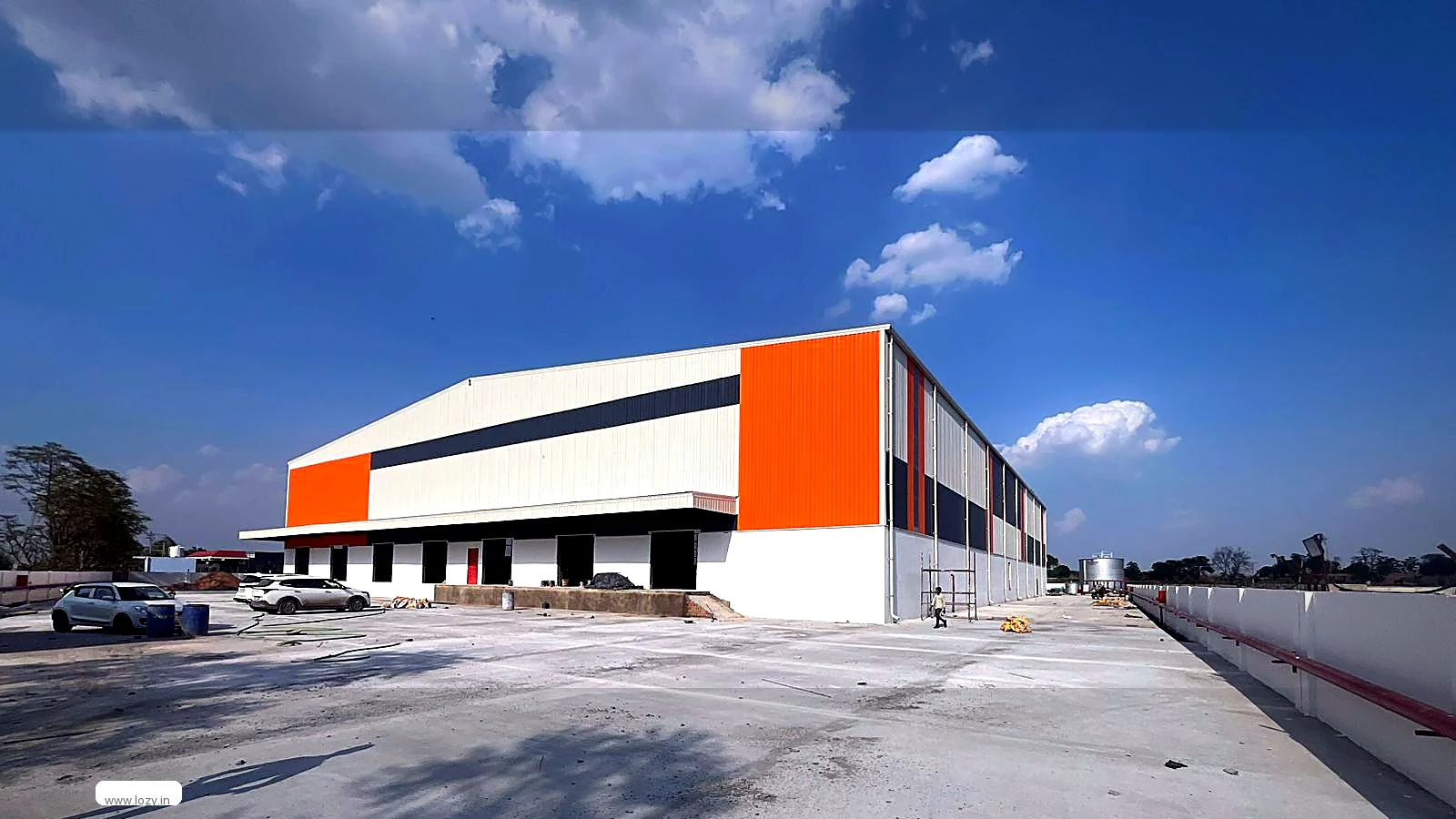
First, the node. A ground-floor unit of a few thousand square feet inside the catchment, with a short carry from the kerb, three-phase power for the chiller cabinets and the lights, and no more racking than a fast-mover pick loop needs. The full catalogue never comes here. Second, the bulk store. Rather than scattering the whole range across nodes, the operator holds the complete catalogue and its depth in a bulk position on the Gurgaon belt near the corridor - the kind of bay the on-demand warehouse service provides - and replenishes each node daily from there.
What makes the case work is not the rent on either building; it is the split. The node pays city rent only on the space its fast movers need, and the bulk store pays corridor rent on everything else. Reverse the split - full range in the node, or fast movers only in a distant bulk store - and the arithmetic breaks in one direction or the other. The same logic repeats for a Ghaziabad pocket feeding off the Eastern Peripheral, or a Noida node drawing from a Greater Noida bulk store.
What a dark store warehouse costs
Lozy does not price a "dark store" as a line of its own, because the parts a dark store needs are ordinary published services priced on their own bases. The node is a space decision, billed by floor area or by month; the tier behind it is a storage decision; and the fulfilment layer is a service. Four published bases cover most of it, and each is a starting floor rather than a quotation.
- Managed, month-by-month space - from ₹14 per sq ft per month on the on-demand warehouse service, which suits a node taken without a long term, with handling available where you want it.
- Warehouse space for rent - from ₹12 per sq ft per month on the warehouse space for rent page, a floor-area basis for the bulk store behind the nodes.
- E-commerce fulfilment - from ₹4,999 per month on the e-commerce warehousing service, where the picking, packing and dispatch layer is the product rather than the square footage.
- Inventory-led storage - from ₹4,499 per month on the inventory warehousing page, where the bulk tier is tracked as a running ledger and feeds replenishment numbers.
Two things follow for anyone building a cost sheet. First, the node and the bulk store are billed on different bases - per square foot at city rent for the front, per square foot at corridor rent or per month for the back - so a single blended rate hides the thing you are trying to manage. Second, a dark store's real cost driver is orders per square foot, not rent per square foot: a node that clears a high order count against a modest floor is a different business from one paying the same rent and clearing a quarter of the orders. All the published starting figures sit together on the pricing page, billed monthly with a GST invoice.
What moves the number
- Catchment density. The same unit in a dense micro-market clears several times the orders of one in a thin area, at the same rent.
- Ground floor versus basement. A ramp, a lift or a long carry slows every rider turn and effectively cuts the node's capacity per hour.
- Chilled and frozen lines. Cold cabinets and back-up power add load and equipment a dry node does not carry.
- Replenishment distance. A bulk store an hour from its nodes turns a cheap daily top-up into an expensive run.
- The fulfilment layer. Whether you pick yourself or buy the picking, packing and dispatch as a service changes what appears on the invoice.
What people get wrong about dark stores
- Treating a dark store as a small warehouse. It is a speed node, not a storage node. Layout, siting and stocking all answer to the pick loop, not to the cost of holding stock.
- Putting the full range in the node. A complete catalogue in a small urban unit lengthens the walk and floods the fast-mover space with slow lines. The node is meant to be shallow.
- Chasing cheap rent over catchment. The one cost a dark store cannot cut its way out of is distance. A cheap unit outside the catchment fails the promise and the P&L together.
- Ignoring the door. Riders are the throughput constraint. A site with no stopping point or a slow carry caps orders an hour no matter how good the stock is.
- Running nodes with no bulk store behind them. Without a back tier holding depth, a node either runs short on fast movers or buys in small quantities at retail cost.
- Building for coverage instead of density. Nodes placed to shade a map rather than to serve dense households carry fixed costs against thin demand, and they are the first to close.
One habit keeps the model honest: measure a node by orders per square foot per day, and measure the network by the density of each catchment it serves. Those two numbers decide everything the rent line cannot see.
How Lozy supports a dark store network
Lozy does not operate a quick commerce brand, and nothing here claims one. What Lozy provides is the real estate and the operating layer a quick commerce network is built on: small urban and urban-edge units taken on flexible terms for the front nodes, bulk storage behind them for the full range, and an e-commerce fulfilment service for the picking, packing and dispatch where an operator would rather buy it than run it. The on-demand warehouse and warehouse for rent pages cover the space, the e-commerce warehousing service covers the fulfilment layer, and the inventory-led plan covers the running ledger behind the bulk tier.
The network carries 77+ warehouses and more than a million square feet of live space, Delhi NCR based with PAN-India reach, and every figure quoted in this guide is a published starting basis rather than a quotation, billed monthly on a GST invoice. What is free right now sits on the warehouse listing, the corridor detail is on the locations index, the industry view is on the e-commerce and retail warehousing page, and the full range of services is gathered under services.
Related reading in the same family: the e-commerce warehousing guide covers the pick, pack and dispatch layer in detail, the marketplace fulfilment guide sets out how sellers hand stock to a network, the rent per square foot guide and the on-demand warehouse guide explain the space bases in plain terms, and the warehousing in Delhi and Gurgaon rent guides carry the corridor detail. Send your catchment, the SKU count you expect to turn fast and the micro-markets you need to serve: the contact page comes back with a rate and an honest read on whether a node is viable in a given catchment at all.

Related guides
- e-commerce fulfilment in India
- fulfilment centre vs warehouse
- e-commerce brand warehousing
- reverse logistics and returns warehousing guide
Working out whether a catchment can carry a dark store node?
Send the micro-market you need to serve, the SKU count you expect to turn fast and the orders per day you are planning for - we reply with a rate, what is available behind it, and an honest read on whether the catchment is dense enough to work.
Get a quoteCall +91 93547 12345Sources. Rates, facility details, service scope and network counts are Lozy's own published information, drawn from the live on-demand warehouse, warehouse for rent, e-commerce warehousing, inventory warehousing and pricing pages. Trade and tax framework context comes from the GST portal; the small-business framework from MSME; sector-level market context from IBEF; corridor context from the National Highways Authority of India; and warehouse classification and regulation context from the Warehousing Development and Regulatory Authority. Every figure above is a published starting basis rather than a quotation, and nothing in this article is modelled or estimated.
Last updated: 14 October 2026. Have a question the FAQ below does not answer? Call +91 93547 12345 or email care@lozy.in.
Need warehousing or storage in India?
Request a free, tailored quote in under 2 minutes — free pickup, no lock-in.