
Cold Storage for Pharma: What Temperature-Controlled Stock Actually Needs (2026 Guide)
Cold storage for pharma is not one temperature. It is three storage classes - ambient, 2-8°C and frozen - and the storage statement on the product label decides which one a carton belongs to. Ambient lines need a cool, dry, dark place, commonly stated as below 30°C; refrigerated lines need 2-8°C; frozen lines need −20°C or colder. Whatever the class, the control has to be evidenced by a record rather than a thermostat reading.
Key takeaways
- Three classes decide pharma storage, and the label decides which one: ambient (below 30°C), refrigerated (2-8°C) and frozen (−20°C or colder). One company's range can need all three, so "we store pharma" does not answer the question of class.
- Temperature control is a record before it is a room: continuous datalogging at mapped positions, a written note for every excursion with a disposition, a mapping study and current calibration certificates. A store that cannot produce last month's log for a named position is not controlled.
- Lozy does not run a temperature-controlled cold room and claims none. The pharma and healthcare warehousing service is monitored, secure ambient storage for lines whose label asks for a cool, dry place.
- Published starting bases are ₹12 per sq ft per month on warehouse space for rent, ₹14 on business warehousing and ₹4,499 per month on an inventory-led plan. Each is a floor to measure a quote against, never a quotation.
The word "cold" carries more weight here than it can bear. It gets used for a refrigerator held at 2-8°C, for a −20°C freezer, for the chilled final mile, and sometimes for nothing more than a clean dry shed in which nobody has ever measured anything. Meanwhile the class holding most pharmaceutical stock by count - the flat ambient range of oral solids, dry syrups, devices and consumables - falls outside the phrase, though the carton in that rack carries an instruction as binding as any vaccine's. In India the storage statement travels with the product approval and on the pack, the premises are licensed and inspected by the Central Drugs Standard Control Organisation and the state drug control authorities, and the storage conditions are published in the Indian Pharmacopoeia; the sector picture comes from IBEF.
The practical consequence is that a distributor, a stockist or a hospital store rarely has one storage problem; it has two or three running side by side in the same building, and folding them into one bay is how excursions begin. Separate the classes first, then separate the record each class needs, then decide whether the facility in front of you can hold the class you are asking it to hold. That last question is what the pharma and healthcare warehousing service is built around, and the goods-handling side of it sits in the sibling warehousing guide for pharmaceutical stock. If your question is operating discipline rather than category, best storage practices for pharmaceutical products walks through intake, rotation and segregation.
What cold storage for pharma actually covers
"Cold storage" and "temperature-controlled storage" are not the same phrase, though pharma uses both as if they were. Temperature-controlled covers every store where a defined band is maintained and evidenced, including a controlled ambient store asked to stay below 25°C through an Indian summer with no compressor in the building. Cold storage, strictly used, means the refrigerated and frozen classes. A buyer asking for cold storage for pharma usually wants the second, needs the first, and should be told which one is being sold.
Ambient: the class most pharma stock actually sits in
An ambient store holds the lines whose label says store below 30°C, store in a cool, dry place, or protect from light and moisture - most oral solids and capsules, dry syrups and powders for reconstitution, sachets, most medical devices, dressings, surgicals, orthopaedic implants, consumables, nutraceuticals and the printed packaging that travels with them. None of it needs a compressor. All of it needs a building that behaves: airflow that holds the internal temperature under the band through May and June, shading that stops the afternoon sun loading one face of racking, racking that keeps stock off the floor and clear of walls, a floor that stays dry through the monsoon, and pest control that is documented rather than remembered. An ambient store treated as "just a godown" fails these quietly, and usually in the hottest three weeks of the year.
Refrigerated: the 2-8°C band, and why freezing it is a mistake
The refrigerated class is narrow. Two degrees of drift at the top of the band is a stability problem; a night below zero is a different failure, because the adjuvanted vaccines and several biologics in this class are freeze-sensitive - ice crystals damage the product, and the log shows it as an excursion exactly like heat does. The lines here are set by the storage statement rather than the molecule: many vaccines, insulin, certain hormones, monoclonal antibodies, blood-derived products, some ophthalmics, and products reconstituted to a short in-use shelf life. A 2-8°C store is a purpose-built cold room or a validated refrigerated unit, mapped so its warm and cold positions are known rather than assumed, continuously logged at those positions, alarmed with a named person behind the alarm, and backed by power resilience - because a cold room on an unprotected supply is a storage decision with a countdown running on it.
Frozen and ultra-cold: −20°C, and colder again
The frozen class runs colder than a domestic freezer reliably manages and needs its own equipment, its own record and its own plan for a long outage. Certain live vaccines and a set of enzyme and biologic products sit at or below −20°C, and a small group of advanced therapies sits at ultra-cold temperatures only the manufacturer specifies - at which point the product's own documentation answers the storage question rather than any general table. Door-opening discipline, defrost cycles and how fast a cabinet recovers after a delivery are the practical variables, and each belongs in the record.
Which pharma lines sit in which class
| Storage class | What the label says | Typical pharma lines | What the store must provide |
|---|---|---|---|
| Ambient | Below 30°C, store in a cool dry place, protect from light and moisture | Oral solids, capsules, dry syrups, powders, sachets, most devices, dressings, surgicals, implants, consumables | Airflow and shade, racked off-floor storage, monsoon humidity control, pest control, batch record |
| Controlled ambient | Below 25°C | Some syrups and solutions, certain hormones, temperature-sensitive excipients, some kits | All of the above plus a mapped band, continuous monitoring and an alarm - this is temperature-controlled space |
| Refrigerated | Store in a refrigerator, 2-8°C, do not freeze | Many vaccines, insulin, hormones, monoclonal antibodies, blood-derived products, some ophthalmics | Validated cold room or refrigerated unit, mapping, continuous datalogging, alarm chain, backup power |
| Frozen | Store frozen, at or below −20°C | Certain live vaccines, enzyme and biologic products | Purpose-built freezer, its own temperature record, power resilience, defrost and door discipline |
| Ultra-cold | Manufacturer's instruction only | A small number of biologics and advanced therapies | Specialist equipment, and a supplier-approved shipper for any movement |
Read that as a filter rather than a catalogue: the label governs, and a manufacturer is free to set a narrower band than the class implies. The commercial point sits in the second and third rows. A controlled ambient store holding below 25°C rather than 30°C is temperature-controlled space and should be priced and evidenced as such, with a mapped band, monitoring and an alarm rather than merely good ventilation. Most warehouses call every dry bay ambient and quote one rate for all of it, which is how a five-degree requirement quietly becomes nobody's job.
What a temperature-controlled store has to record
A temperature-controlled store is selling evidence: the room is the equipment, the record is the product, and any facility you are evaluating should produce all three of the following without warning.
The datalogger, and where its probes sit
Continuous logging means a device recording at set intervals, day and night, at positions chosen from a mapping study rather than from convenience. A single thermometer beside the door reports the temperature of the door; what you want to see is a logger in the warmest position, a logger in the coldest, and both records retrievable by date and by position. Alarm thresholds should be set to the label band, not to a round number that leaves the room space to drift, and the alarm should have a named person behind it at two in the morning. Ask how the log is retained, for how long, and in what form it can be handed to you.
Excursion: the note that has to exist afterwards
An excursion is any period in which stock moved outside its labelled band - a cold room through a power cut, a pallet left on a June dock, a chiller door open for twenty minutes during a delivery. The event and the record are both normal; an unrecorded event is not. The note should carry the period, the highest or lowest temperature reached, the duration, the batches in the affected position, an assessment against the product's stability data or the manufacturer's guidance, and a written disposition: release, quarantine or reject. Quietly editing an unflattering line out of the log is the one act that turns a storage problem into a compliance one.
Mapping, calibration and the paperwork underneath both
A mapping study shows how temperature actually distributes through the space - empty and loaded, door closed and door open, summer and winter - and it is what turns a single reading into a defensible claim about every position in the room. Calibration is what makes the logger's number mean anything: every probe checked on a schedule against a reference traceable to a national standard, which in India means a laboratory accredited by NABL, with the certificate kept. Beneath those sit the written procedures - door discipline, defrost, power failure, loading limits - and training records for the people handling stock. The WHO model guidance for the storage and transport of time- and temperature-sensitive pharmaceutical products is the reference most quality teams work from, and it treats mapping, monitoring and qualification of the storage area as parts of one job. Retention is where that paperwork earns its keep: an inspector or a stockist will ask for one period at one position, and if the answer takes a week to assemble, treat the control as absent.
The licence reality for pharma storage in India
Storage capability and storage permission are two different things here, and a clean, well-run shed can still be the wrong building for your products.
The drug licence, and the premises conditions behind it
Storing drugs for distribution requires the premises to be covered by a drug licence issued by the state drug control authority - in the wholesale trade the Form 20B and Form 21B set - and the conditions reach into the layout: adequate space, protection from contamination, ventilation, and a refrigerator wherever the licensed products need one. The licence also attaches a competent person to the premises. A commercial warehousing licence, a fire no-objection certificate, a trade licence and a GST registration are separate documents and none substitutes for it. Read the licence rather than glance at it, and check that the categories you intend to store sit inside its scope.
A second regime gets confused with this one, and the confusion is worth naming. The Warehousing Development and Regulatory Authority regulates warehouses issuing negotiable warehouse receipts against notified commodities, a mechanism built for commodity finance, and it does not stand in for the drug licence a pharmaceutical store needs. If a warehouse leads its pitch with registration of that kind and cannot produce a drug licence, that is worth noticing.
GST, invoicing and what stays on your side
Storage and handling are services, billed monthly with a GST invoice, and a registered business takes the input credit against its returns under the rules published on the GST portal. What an invoice never changes is ownership: goods, batch numbers and sale decisions stay yours, and the compliance that follows the product - labelling, batch records, recalls - travels with the goods rather than the building. Movement of stock between your own premises is documented separately from the storage invoice under the ordinary movement rules, including an e-way bill where the consignment qualifies.
How storage connects to distribution
The class of the store is one link in a chain, and the chain is where most excursions happen. A 2-8°C consignment leaves the cold room packed into a validated passive shipper with conditioned coolants and, ideally, a datalogger inside the box; it arrives at a stockist or a hospital store where somebody reads the logger before counting cartons; and an out-of-band arrival follows a written route to a disposition rather than an argument. Ambient consignments need less of this and are not free of it - monsoon humidity, heat on an open dock and hours on a tailgate can each move an ambient product past its statement.
Where Lozy fits: monitored, secure ambient storage
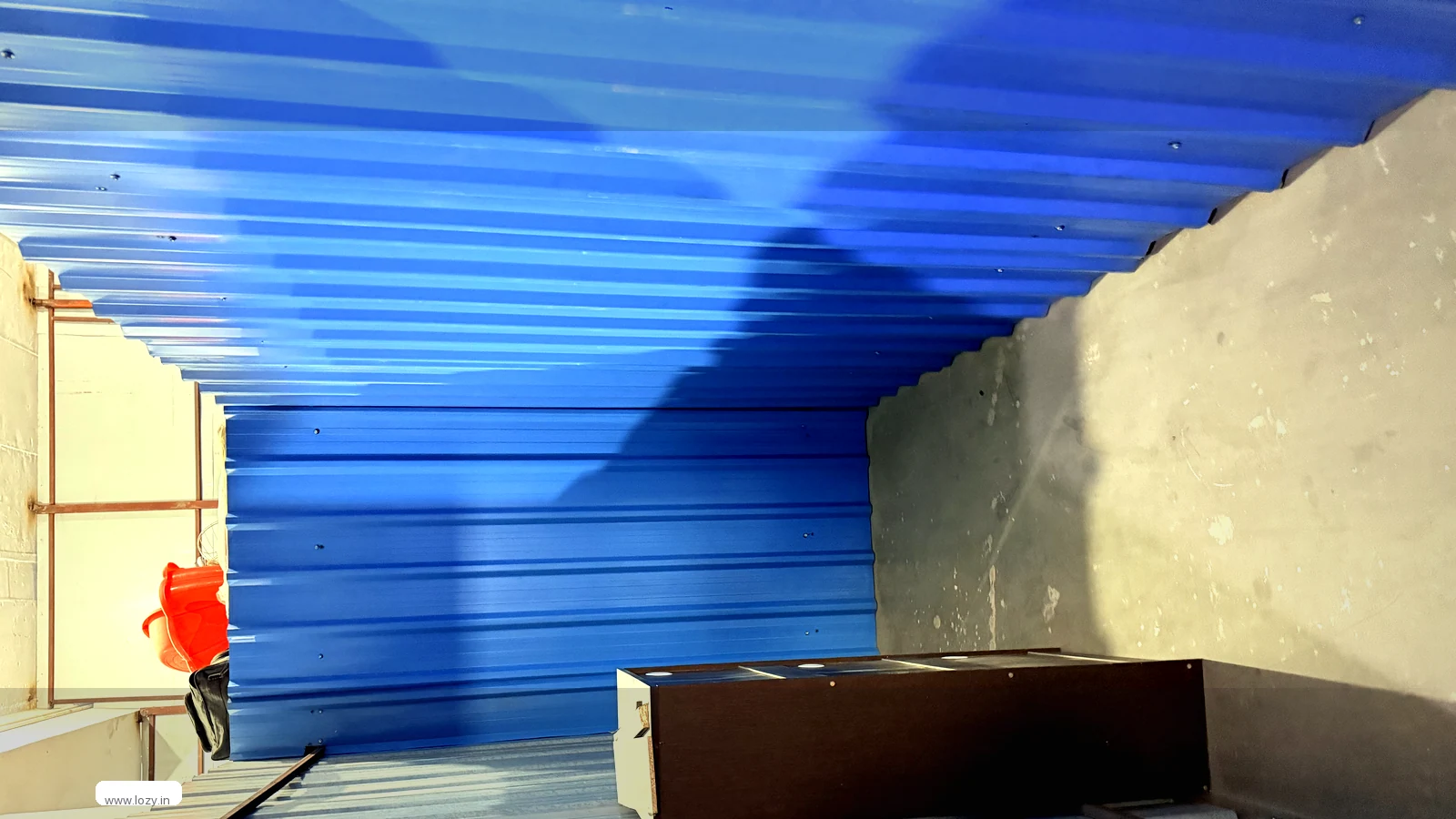
Stated plainly, because this is the one thing the article should not leave ambiguous: Lozy does not operate a temperature-controlled cold room, and nothing here should be read as claiming one. What Lozy runs for pharmaceutical and healthcare clients is monitored, secure ambient storage - the class in the first row of the table above - and it says so at the point of enquiry rather than after the stock arrives. The service is set out on the pharma and healthcare warehousing page: a clean, dry, racked shed under camera cover and controlled access, with batch numbers, quantities and carton condition entered against your documents before a carton reaches a rack, returns flagged as they land, and stock released only against the order your team placed.
Which lines that suits: oral solids and capsules, dry syrups and powders, sachets, most devices and consumables, dressings and surgicals, implants, nutraceuticals, pack inserts, labels and secondary packaging, and the buffer stock a distributor holds on lines whose label asks for a cool, dry place below 30°C. Those are also the lines that consume floor area and handling hours, which is why they are usually the first a distributor tries to move out of a self-run godown. Which lines it does not suit, and where the answer is no: anything whose label states 2-8°C, store frozen, or do not freeze. That stock needs a validated cold room with a mapping study, continuous logging, an alarm chain and power resilience. Take it to a facility that will show you the mapping study and last month's log for the exact position your stock would occupy, and check that its drug licence covers the products.
The ambient side draws on 77+ warehouses and more than a million square feet of live space, Delhi NCR based with PAN-India reach, so a distributor can hold stock near the market it sells into and shift it between positions as the season changes. What is free right now is on the warehouse listing, the positions are mapped on the locations index, and every service type sits together on the services pages. Billing is monthly on a GST invoice with no long lock-in, which matters in pharma because a distributor's stock profile changes with the tender calendar.
What to check on a site visit
Everything above becomes a checklist the moment you stand inside a candidate facility. Eight things are worth verifying in person.
- The licence and its scope. See the drug licence, note the categories, and confirm your products fall inside them.
- The building's honest afternoon temperature. Walk it at three in May, not at ten in February; shading, insulation and airflow hold an ambient statement.
- Monitoring positions. How many loggers, where they sit, whether the warmest position is covered, and whether the record is continuous or a hand reading at shift end.
- Last month's log, retrieved on the spot. Ask for a named position on a named date. The speed of the answer tells you as much as the numbers.
- The most recent excursion note and what followed it. A facility that has never had one is either new or not looking.
- Calibration certificates, current and traceable, for each logger and probe.
- Power and the alarm chain. What runs on backup, for how long, and who takes the call at two in the morning.
- Segregation and housekeeping. Stock off the floor and clear of walls, a labelled area for damaged, expired or recalled stock, pest records, and a shaded dock.
One line runs through all eight: the visit tests whether the facility can produce evidence, not whether it looks tidy. The tidy shed with no record is the more common risk.
What pharma storage costs in Delhi NCR
Lozy publishes starting figures against the service each belongs to, and those are the floors to measure any pharma storage proposal against. Ambient warehouse space starts at ₹12 per sq ft per month on the warehouse space for rent page; managed business space starts at ₹14 on business warehousing; and where the stock record is the product rather than the floor area, an inventory-led plan starts at ₹4,499 per month. On the month-based services, plans sit from ₹1,199 to ₹1,299, and short-term storage starts at ₹699 per month. All are published floors billed monthly with GST rather than quotations, and the figures sit together on the pricing page.
Temperature-controlled space is a different asset and is not quoted on a floor-area basis. A cold room carries the equipment, the mapping study, the monitoring, the alarms and the power resilience, so the honest comparison between two proposals is which class each one covers. A controlled ambient rate and a 2-8°C rate are not two prices for the same thing, and setting them against each other is how a pharma storage project starts badly. Ask what is included: whether monitoring and calibration sit inside the rate, and who answers the alarm.
What moves the number in an ambient pharma requirement
- Volume and dwell time. Racked positions, palletised floor space and an inventory-led plan are three different pricing bases, and stock held against institutional tenders for months prices differently from a range that turns in weeks.
- The band the stock needs. A below-25°C controlled ambient requirement asks more of a building than a below-30°C statement and should be priced and evidenced accordingly.
- Handling intensity. Batch-numbered intake against documents, FEFO picking and a returns process cost more labour than bulk put-away, which is why two sheds of the same size can quote differently.
- Position. A bay on the NH-48 belt at Kherki Daula and Manesar, off NH-44 at Kundli or near Faridabad on NH-19 prices differently from a city address, and the difference reappears in the delivery legs.
- Add-ons. Dedicated labour, insurance cover, extra security and any monitored position sit on top of the space rate.
A worked example, and what people get wrong
Splitting an ambient range from two cold lines
Take a representative case rather than a real account. A Delhi distributor of oral solids and medical devices supplies stockists and pharmacy chains across Haryana and western Uttar Pradesh from a self-run godown in the Peeragarhi belt, holds around 900 SKUs, and has a mixed range: the bulk ambient, and a small valuable slice that is insulin and two vaccines living in a domestic-style refrigerator against the office wall. There is no mapping study, no logger and no written procedure for that fridge, and this summer already produced one afternoon when the needle sat high.
Two moves are on the table. The first keeps everything under one roof and upgrades the cold side in place - a validated refrigerated unit, mapping, a logger, an alarm and backup power, with the distributor's own staff on the alarm rota and its own procedures to write. The second splits the stock: the two cold lines to a licensed cold-chain facility that already has the equipment, mapping and monitoring, and the ambient range into a Lozy bay on a monthly invoice with a batch-level record. The split is usually the better answer, because the ambient majority is what consumes floor area, labour and handling hours, and it needs a record and security rather than a compressor. The cold minority needs a discipline the distributor either owns completely, alarm rota included, or buys from a facility that does it every day. What stays with the distributor either way is the chain: a validated shipper and a logger in every outbound 2-8°C consignment, a receiving check at the stockist, and a written disposition when a shipment arrives out of band.
What people get wrong about cold storage for pharma
- Treating cold storage as a single temperature. A controlled ambient shed and a 2-8°C cold room are different products, and a proposal that does not name the class cannot be compared with one that does.
- Freezing a 2-8°C product to be safe. Below-band cold damages freeze-sensitive vaccines and biologics exactly as above-band heat does, and both surface in the same log as an excursion.
- Accepting a thermostat reading as the record. One dial proves nothing about the pallet in the far corner; without mapping and continuous logging there is no evidence at all.
- Writing the excursion procedure after the first excursion. A power cut is not the moment to design the disposition route; it is the moment to follow one.
- Assuming a clean shed is a licensed one. A building can be spotless and still sit outside the product categories its drug licence covers.
- Storing expired, damaged and recalled stock in the live racking. Without a separate labelled quarantine area, a recall cannot be executed in the hours it is measured in.
- Leaving the ambient range unmonitored because the band is wide. Below 30°C is still a requirement, and an NCR afternoon in an unventilated shed can exceed it unwritten.
One habit covers most of that list: ask which class the facility holds, and ask for the document showing the temperature held last month. The answer is either a log or a reason why there is no log.
Send the batch profile rather than a general enquiry - which classes you hold, pack sizes, volumes and the cities you dispatch into. The FAQ pages carry the facility-level answers and the contact page comes back with a rate and, where the honest answer is that your lines need a cold room, it will say so. Related reading in the same family: the inventory warehousing guide on running a batch-level record, the warehouse for rent guide on the space bases, the corridor detail in the Delhi warehouse guide, and the two nodes a pharma distributor asks about first - warehousing in Noida and warehousing in Gurgaon.

Related guides
Which class does your pharma stock actually sit in?
Send your batch profile, pack sizes and the cities you dispatch into. We will come back with a rate, what is available for the ambient range, and an honest answer where your lines need a cold room instead.
Get a quoteCall +91 93547 12345Sources. Rates, service scope and network counts are Lozy's own published information, taken from Lozy's own live service and pricing pages. Storage statements, licence forms and premises conditions come from the Central Drugs Standard Control Organisation and the Indian Pharmacopoeia published by the Indian Pharmacopoeia Commission; mapping, monitoring and qualification practice from the WHO model guidance for time- and temperature-sensitive pharmaceutical products; calibration traceability from NABL; warehouse receipt regulation from the Warehousing Development and Regulatory Authority; GST invoicing and input credit from the GST portal; and sector context from IBEF. Every figure above is a published starting basis rather than a quotation, and no rate, statistic or customer is invented anywhere in this article.
Last updated: 14 October 2026. Have a question the FAQ below does not answer? Call +91 93547 12345 or email care@lozy.in.
Need warehousing or storage in India?
Request a free, tailored quote in under 2 minutes — free pickup, no lock-in.






