Small Warehouse for Rent: What to Take from 500 to 5,000 Sq Ft (2026 Guide)
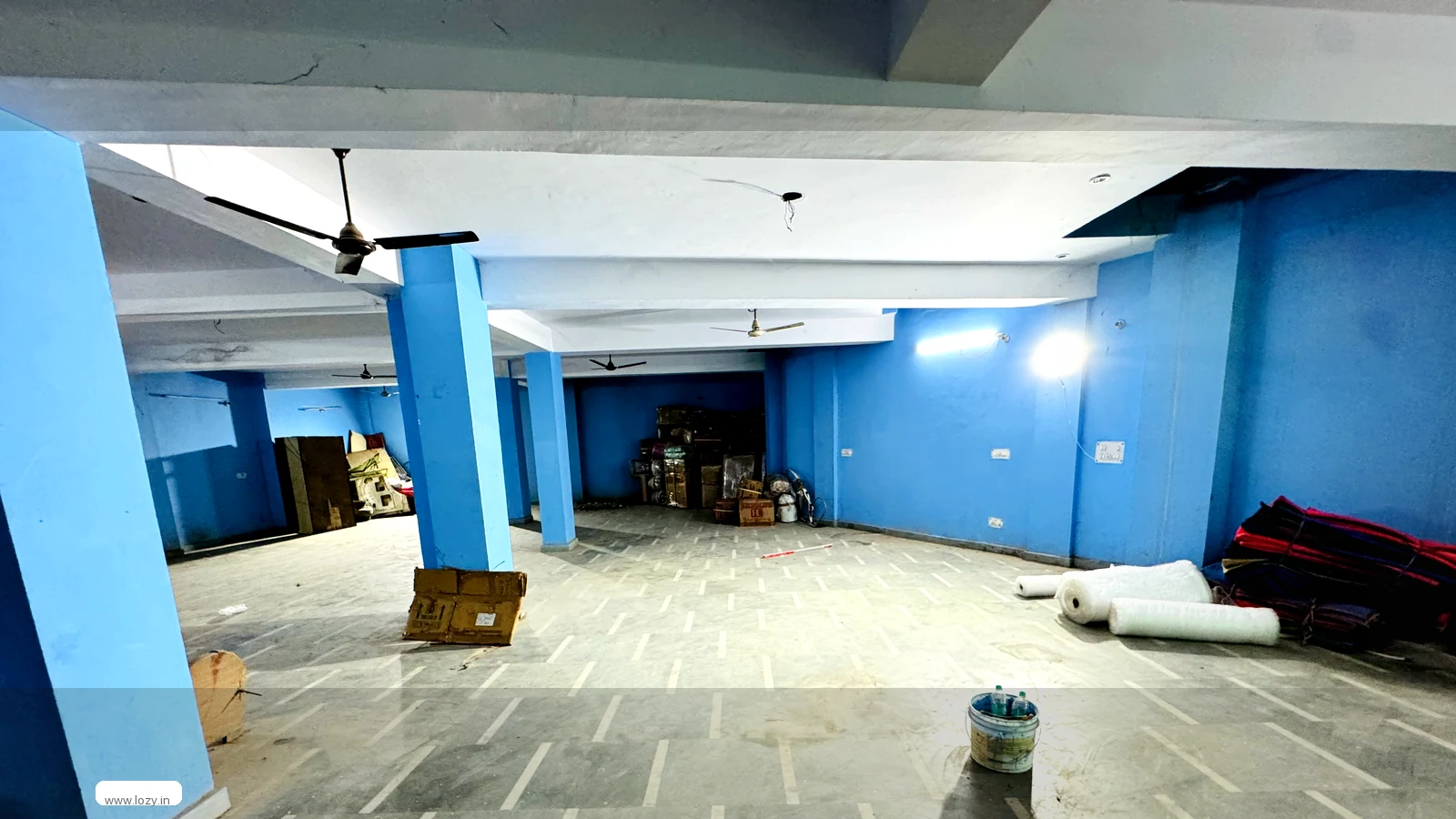
A small warehouse for rent starts at about 500 sq ft and stops being small around 5,000 sq ft, and Lozy's published warehouse and godown rate begins at ₹12 per sq ft per month — a basis, not a quote. Below roughly 2,500 sq ft your real choice is a shared racked bay inside a managed facility or a lockable unit of your own, and at 500 sq ft you are often better served by self storage at ₹999 per month. The costliest mistake at this size is accepting 20,000 sq ft you cannot fill.
Key takeaways
- Four size bands cover almost every sub-5,000 sq ft requirement: 500, 1,000, 2,500 and 5,000 sq ft. A 500 sq ft unit is a lockable room and a pick face; 5,000 sq ft is a first real distribution floor.
- Lozy's published starting figures at this size are warehouse space from ₹12 per sq ft per month, self storage and personal storage ₹999 per month, short-term storage ₹699 per month and furniture storage ₹1,499 per month.
- Roughly half of any floorplate goes to gangways and turning space, so a 1,000 sq ft unit realistically holds 35-40 single-tier pallet positions rather than the 75 the bare area suggests.
- Shared bays suit stock that arrives and leaves by vehicle; a lockable unit suits stock you handle yourself. Buyers working Dwarka, Kirti Nagar, Karol Bagh and Sadar Bazaar usually land between 500 and 2,500 sq ft.
Most people who search for a small warehouse for rent are not warehouse people. They run a shop, a workshop, an online store or a clinic, they have filled a back room or a lock-up, and they need somewhere secure for stock that is no longer welcome at home. The quote that comes back, far too often, is for a 20,000 sq ft shed with a dock and a three-year lease — inexpensive per square foot, punishing per month.
This guide works the other end of the market: what each band from 500 to 5,000 sq ft holds, when shared space beats a lockable unit, which published monthly plans suit this size, and when a storage room is the better answer.
What "small" means when you ask for a small warehouse for rent
There is no formal definition of a small warehouse, and that absence is half the problem. A developer's small-format warehouse is 20,000 sq ft. A broker's small godown is whatever happens to be empty this month. A storage operator's small unit may be a locked room with no vehicle access at all. When you ask for a small warehouse for rent and are shown a shed with a 12-metre clear height, nobody has lied to you — the word small was doing different work on each side of the conversation.
For this guide, small means under 5,000 sq ft and, more usefully, four sizes: 500, 1,000, 2,500 and 5,000 sq ft. Those are the bands where a business that is not a logistics company actually lands.
Where the small end gets quoted badly
Two habits push a small enquiry up a size class. The first is answering from the warehouse's point of view: a landlord with one 20,000 sq ft shed and no partition wants a single tenant, so a small enquiry is met with the space that exists rather than the space that fits. The second is quoting per square foot and never per month — ₹12 per sq ft sounds like a rounding error until it multiplies into an area you cannot fill.
Arrive with three numbers of your own: how many pallets or cartons you hold at peak, how often a vehicle comes and goes, and whether you or the facility team picks the stock. Those answers narrow the choice before anyone shows you a site. If the honest answer is a room rather than a shed, the size comparison from 1BHK to 5BHK converts a household or shop-sized requirement into a unit number.
A market shed and a storage unit are different products
Both get called a small warehouse, and they behave differently from the day you move in. A market shed or small godown is bare floor behind a shutter with an electricity point; you bring the racking, the labour and the housekeeping. A managed storage unit is a locked, pest-controlled room inside a staffed facility, with access control and someone present to check goods in and out.
Lozy's published rates show the split. Warehouse and godown space is priced per area, from ₹12 per sq ft per month, on the warehouse and godown space for rent page; a self storage or personal storage room is priced per room at ₹999 per month. The godown, warehouse and self storage comparison takes that difference apart properly; this post only needs the point that the two are sold on different bases, and so must be compared on different bases.
What each size band actually holds
The honest answer to "what fits" depends on racking height, the pallet size you use, and how much floor you will surrender to aisles. Almost every small enquiry overrates the first and forgets the third. Use the standard industrial pallet — roughly 1.2 m by 1 m, a little over one square metre of floor — as the unit of account, and assume about half the floorplate is lost to gangways and turning space. On that stated basis:
| Size band | What it holds | Who it suits |
|---|---|---|
| 500 sq ft | One lockable room or bay plus a pick face; around 15-20 pallet positions on the floor, more once racked in tiers. | A trader or online seller holding one or two SKUs deep; a clinic, salon or workshop storing bulk supplies; any business that has outgrown a back room. |
| 1,000 sq ft | Roughly 35-40 single-tier pallet positions, or a racked block two tiers high with one aisle and a small packing bench. | A shop or small distributor on a weekly replenishment cycle; an ecommerce seller holding two to three months of stock; a service business storing tools and spares. |
| 2,500 sq ft | About 90-100 positions at floor level, enough for a racked layout with a goods-in end and a dispatch face, plus room for a tempo to load under cover. | A growing distributor serving a route of shops; a small manufacturer keeping components and finished goods together; a seasonal business that peaks twice a year. |
| 5,000 sq ft | Around 180-200 floor positions, or a full selective-racking installation, with separate inbound and outbound faces and room for a small team to work. | The first real distribution floor: multi-city dispatch, a 3PL account, or a brand that has outgrown a shared bay and wants its own four walls. |
Count pallet positions, not floor area
Floor area tells you what you are paying for; pallet positions tell you what you can hold. The two differ by roughly a factor of two, because access is not optional: a shed where a reach truck stacks to the clearance height recovers most of the loss, a unit you trolley into recovers none.
Before comparing two quotes, walk each space and count the positions you could actually fill. If you can fill 35 and the quote is for 1,000 sq ft, the arithmetic is holding; if you can fill 12, you are paying for aisles. The guide to choosing a storage unit size and the note on monthly-basis warehouse space between them settle the size question before a landlord answers it for you.
Shared space or a small exclusive unit
At this size the decision is rarely between one warehouse and another. It is between a bay inside a shared facility and a smaller unit you lock yourself. Both are legitimate, and the trade-offs run in both directions.
When shared space is the right answer
Shared space is a partitioned position inside a managed warehouse: your pallets on your racking, your declared section of floor, with the building, gate, power, security, pest control and housekeeping shared with other clients. What you buy is infrastructure no sub-1,000 sq ft tenant could fund alone — a manned gate, CCTV, fire systems, loading access, and a facility team who can receive a vehicle while you are elsewhere.
What you give up is exclusivity. Your stock sits inside a building other people enter, and if you need to run a machine, unpack at volume or keep your own staff on site through the day, a shared bay turns awkward quickly. Shared space is at its best when goods arrive by vehicle, rest on racking and leave the same way.
When to pay for a lockable unit
An exclusive unit is a room or a small shed with your own shutter, your own keys and nobody else's goods inside it. Choose it when you handle stock yourself at odd hours, when confidentiality matters — records, samples, prototypes — when the goods are bulky rather than dense, or when tools need to stay set up between visits.
The trade is control against cost per square foot. A lockable unit carries a higher rate for the same floor, because the operator is dividing the building into smaller pieces with more doors, keys and administration. Many small businesses run both: an exclusive unit for the material that must not be touched, and racked positions for the fast-moving lines that can be.
The published monthly plans, and what this size costs
Lozy publishes starting figures on its own service pages rather than quoting a market average, and for a sub-5,000 sq ft requirement four are relevant. Each is a basis for comparison, not a quote: the final figure depends on the area, the city, the term and what the plan includes.
- Warehouse and godown space for rent — from ₹12 per sq ft per month on the warehouse space page; the per-area basis, and the one to use when you are pricing a floor rather than a room.
- Self storage — ₹999 per month for a lockable room on the self storage page, with a personal storage plan published at the same figure.
- Short-term storage — ₹699 per month on the short-term storage page, for a smaller holding taken for weeks rather than seasons.
- Furniture storage — ₹1,499 per month on the furniture storage page, for household or office furniture held as a set rather than as pallets.
All are billed monthly against a GST invoice, and that matters more at this size than at any other. A business paying the from-₹12 per sq ft basis on 1,000 sq ft commits a monthly sum a registered entity can claim input credit on — so rent taken without a tax invoice costs more than the rate printed on the page.
Matching a plan to what you actually store
The plan follows the goods, not your industry. Cartons and pallets that move on vehicles want racked warehouse space, priced per square foot or per position. Household goods, shop fixtures and furniture want a lockable room, priced per room per month. The published pricing page puts the whole ladder on one screen, from a ₹49 per box document plan to a from-₹12 per sq ft area.
What moves the number at this size
Four inputs, and only one of them is geography.
- Area taken. At this size the rate and the area multiply into a small enough monthly sum that a rupee of rate difference is trivial beside taking 400 sq ft you never use.
- Exclusive or shared. A lockable unit costs more per square foot than a racked position in shared space, and the premium buys doors, keys and administration rather than floor.
- Term. A monthly booking prices higher than a longer commitment on the same footprint. Lozy's long-term warehousing plan is published from ₹1,199 per month for a fixed smaller footprint held longer.
- What is included. Racking, handling, packing material, insurance cover and climate control each move the figure. Describe your goods — cartons, pallets, furniture, records — so that the extras quoted are the ones you need.
Rates in this band also differ city by city, by enough to change an answer. Lozy's city-wise cost guide sets the published bases side by side when you are comparing two locations rather than two units.
The minimum term, and the question that matters more than the rate
Ask about the term before the rate, because a rate you cannot commit to for long enough is not a rate. On a monthly plan the minimum is a month, and what governs your freedom is the notice period — how many days before a billing date you must confirm you are leaving. The plans quoted above are billed monthly on a GST invoice rather than tied to a multi-year lock-in; an eleven-month commitment on a 1,000 sq ft shed is a lease wearing a rental's clothes.
How the first month usually goes
A small booking moves faster than most buyers expect: there is no fit-out to design and no landlord's approval to wait on. The sequence below is the normal one; the dates shift, the order does not.
- Days 1-2 — the requirement, in numbers. You supply three things: what the goods are, how many positions or cartons you hold at peak, and where your vehicles come from and go to.
- Days 2-5 — a viewing, or a size recommendation against your own list. You see a 500 sq ft and a 1,000 sq ft option side by side rather than one shed, and you walk the loading access. Take it in person: photographs will not tell you whether a tempo can turn inside the gate.
- Days 5-7 — booking and paperwork. Area, plan, term and notice period are confirmed, and your entity's GST details go on the record so the first invoice is raised correctly.
- Week 2 — goods in. Stock arrives, is checked, racked and labelled. Most small clients handle this themselves; the facility provides the gate, the unloading point and the access control.
- Week 4 — the first invoice and the first honest sizing. By the time the bill arrives you know whether the space was right, and whether the invoice is raised in your entity's name with GST you can claim. That is the moment to change the size too, and at this size a change is a phone call.
When self storage or a locker is enough instead
Not every requirement under 5,000 sq ft is a warehouse, and at the bottom of the range the warehouse is often the wrong instrument. The test is straightforward: a warehouse earns its money when goods move in and out on vehicles; storage earns its money when goods sit still.
Self storage for a room-sized requirement
If what you have would fit in a large room — a stall's worth of stock between seasons, a shop's fixtures and signage, a set of furniture, an archive you must keep and rarely open — a self storage or personal storage plan at ₹999 per month is the honest answer, with the security, pest control and access control a bare shed does not offer. You pay per room rather than per pallet, which is the right basis when there are no pallets to count. The self storage guide covers what a unit includes; household warehousing handles the same shape of requirement for a home.
When a short-term plan or a box is the whole answer
Between seasons, between premises, or between two deliveries from the same supplier, the requirement is measured in weeks, and a short-term storage plan at ₹699 per month exists for precisely that gap. Below it sit records and samples, which do not need a room at all: a box-based plan at ₹49 per box per month covers documents you are obliged to keep but will almost never touch, and document storage is the page for it.
The trap is renting a warehouse to solve a storage problem: you take 1,000 sq ft because it was the smallest area the landlord had, put four pallets in it, and pay per square foot for empty air for the rest of the year. If nothing in your stock needs a vehicle, a gate or a member of staff on site, you want a room, not a unit.
What people get wrong at this size
- Sizing to the average instead of the peak. A business that imports twice a year should size for the month the container lands and reduce afterwards, not size for a quiet April and overflow in October. Monthly plans exist so the footprint can move.
- Comparing rates across different bases. A per-square-foot rate, a per-position rate and a per-room rate are not comparable until each is converted into what you actually hold.
- Ignoring the vehicle. At this size you receive in a tempo or a small truck, not a trailer, and a unit up a narrow lane costs more every week than a slightly dearer one on a wide road.
- Assuming the smallest shed is the cheapest option. Per square foot it usually is. Per month it is the most expensive way on earth to store four pallets, and the cheapest correct answer is frequently a lockable room.
- Never asking for the tax invoice. A registered business that pays rent in cash on a small unit leaves the input credit behind every single month — over a year, worth more than most rate negotiations ever recover.
- Accepting a lock-in for a seasonal problem. If the requirement peaks and shrinks, a monthly plan is worth more than a discount, because you can hand the space back rather than carry it.
How Lozy fits at the small end
Lozy operates 77+ warehouses and more than one million square feet of live space, and the small end of that network is real rather than nominal: racked positions, lockable units and rooms at the ₹699, ₹999, ₹1,499 and from-₹12 per sq ft bases quoted above, billed monthly on a GST invoice. A business can start in a single locked room, add racked positions as the stock grows, and step up to its own floor inside the same network.
The routes that matter here are warehouse space for rent for anything priced by area, self storage for a room, and short-term storage for weeks rather than seasons. When the goods are business stock rather than household goods, read the inventory warehousing and on-demand warehouse plans; a trader working a market route is closest to commercial warehousing. Everything from a box to a floorplate is bookable through Lozy's services, and the warehouse listing shows what is open now.
A worked example: 1,000 sq ft for a west Delhi trader
Take a representative case rather than a named customer. A trader in Karol Bagh sells readymade garments to small retailers across west and south-west Delhi, keeping stock in a shop back room and a spare bedroom in Dwarka. Two order cycles ahead of the festive season, both are full.
What has to be stored is a short list: about 30 pallet positions of boxed garments at peak, a bulk order of packaging material, and a desk's worth of returns awaiting sorting. Two tempos collect during the week, both from the gate on the main road. Priced honestly, that requirement is a 1,000 sq ft racked position in a shared bay, not a shed — and on the published from-₹12 per sq ft basis the monthly figure is arithmetic the trader can do himself.
The point of the comparison is that a 5,000 sq ft shed — what a landlord holding one empty unit will offer — would hold five times the peak stock at five times the monthly cost, with four-fifths of the floor empty for eleven months of the year. A shared bay in the Dwarka belt also keeps the collection run inside the traffic pattern the trader knows. The reverse case is just as common: goods that arrive and leave on pallets and are handled by staff belong in a bay, not a room, because there the pallet position is the unit of account.

Related guides
How much space do you actually need?
Tell us what you are storing, roughly how much of it at peak, and how it arrives — we come back with the smallest size that fits and the plan that goes with it.
Get a quoteCall +91 93547 12345Sources. Plan figures, facility details and the network count are Lozy's own published information. Warehouse-sector context comes from IBEF's warehousing profile and the Warehousing Development and Regulatory Authority; GST registration and input credit are described from the GST portal; warehouse-receipt regulation from the WDRA; small-business context from the Ministry of MSME; and road-freight context from the National Highways Authority of India.
Last updated: 14 October 2026. Have a question the FAQ below does not answer? Call +91 93547 12345 or email care@lozy.in.
Need warehousing or storage in India?
Request a free, tailored quote in under 2 minutes — free pickup, no lock-in.