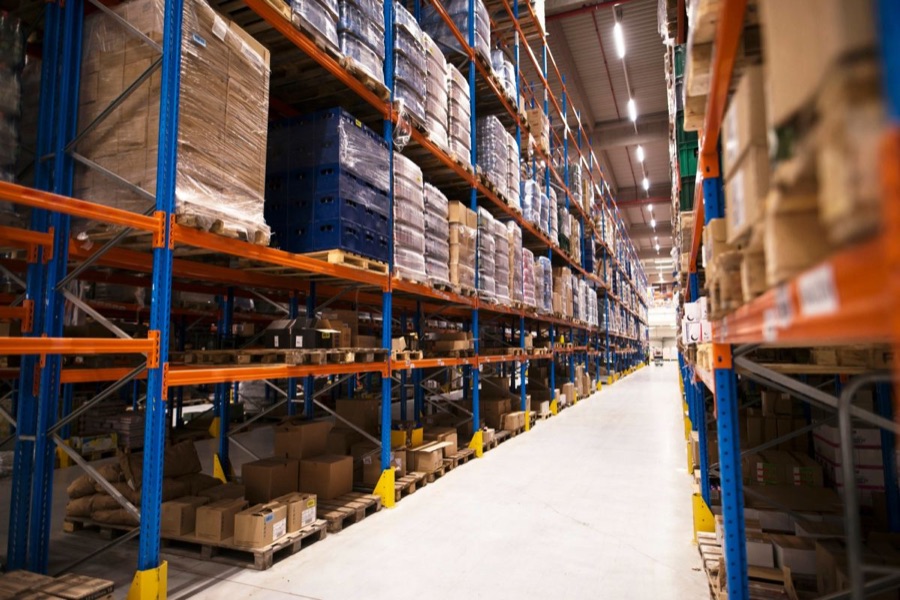
Warehouse for Rent in Noida: Sector 63, Extension and Greater Noida Explained (2026 Guide)
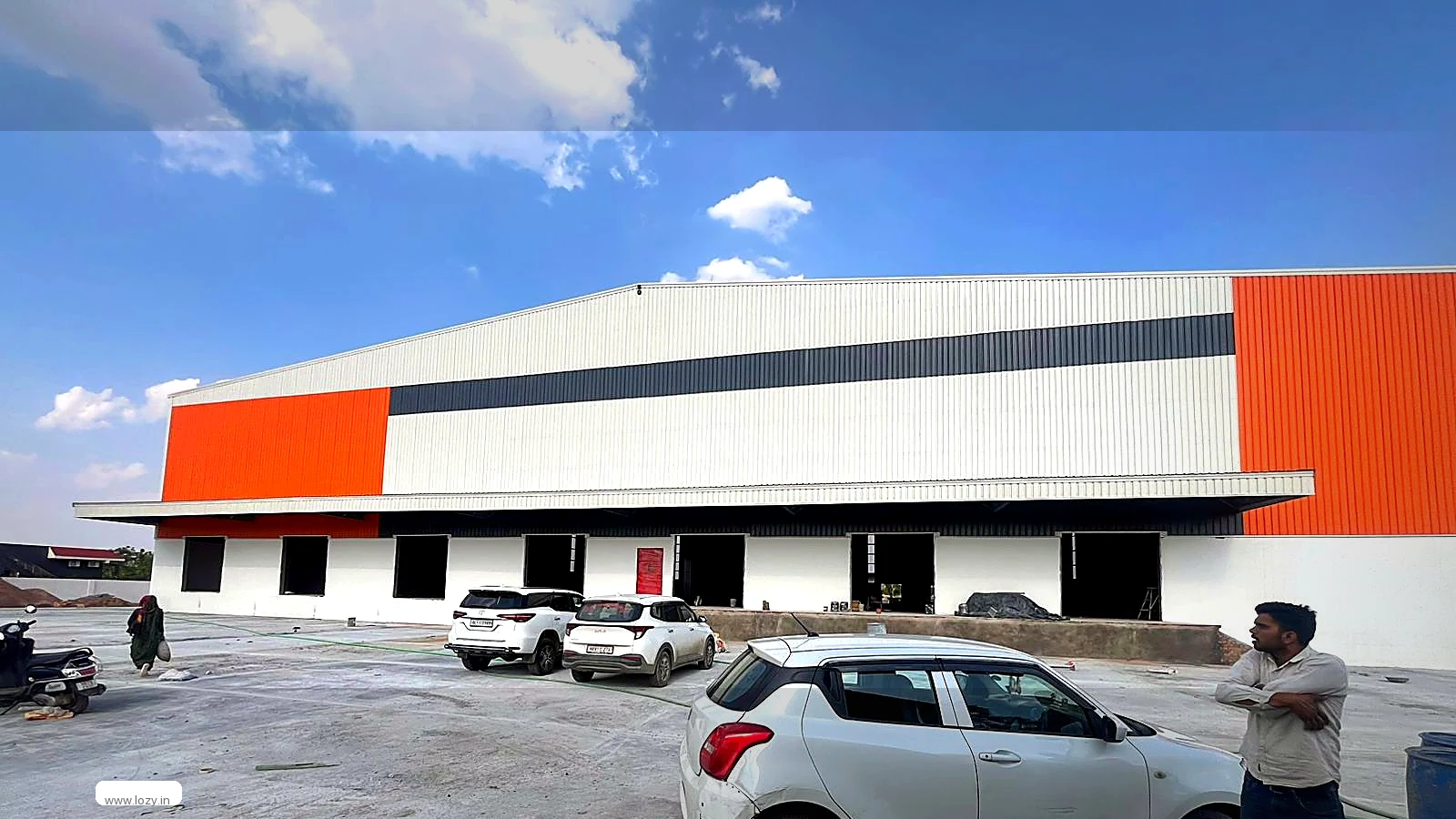
Warehouse for rent in Noida is five markets under one name, and a rate only means something once you know which you are standing in. Sector 63 and 62 hold the industrial core, Sectors 8 and 10 the older city-side sheds, Noida Extension the smaller newer units, Greater Noida the large parks, and the YEIDA belt the land for a built-to-suit. Space in the Lozy network starts at ₹12 per sq ft per month — a basis, not a quote. This is the companion to our Noida city guide: where the space is, what a quote covers, and how the expressways change dispatch.
Key takeaways
- Five belts answer five requirements — Sector 63 and 62 for industrial sheds, Sectors 8 and 10 for city-side units, Noida Extension for small space, Greater Noida for large floorplates, YEIDA for bare land.
- Godown and warehouse space is quoted from ₹12 per sq ft per month, business space from ₹14, and a self-storage room from ₹999 — starting rates, billed monthly on a GST invoice.
- A Noida Authority plot and a private shed hide different paperwork behind the same rent: the lease governs who may occupy and what may be built, while a private shed leaves land use and fire compliance for you to verify.
- The Eastern Peripheral Expressway and DND / NH-24 decide dispatch economics, reaching Ghaziabad, Sonipat or Palwal without the capital's daytime goods-vehicle restriction.
Ask for a rate without naming a belt and the number will fit nothing. The reason is land: Noida was built by one authority on acquired land, so almost every shed in the city sits on a plot whose lease and building approval came from the same source — while the Greater Noida parks, the Extension belt and the Yamuna Expressway side each sit under a different arrangement again.
Proximity is the other reason. A distributor delivering daily into the sector grid pays for an address inside it; a business dispatching palletised loads towards Punjab, Rajasthan or the ports moves east and pays less. The belt you pick fixes two numbers: the rent, and the hours each vehicle spends reaching its first customer.
Where the warehouse for rent in Noida options actually sit
Six belts cover almost every requirement from this city. Read the table as a filter, not a ranking: the right belt is the one whose vehicle route matches your order book.
| Belt | What it suits | How your vehicle gets out |
|---|---|---|
| Sectors 63 and 62 | Industrial sheds, components, appliances, small 3PL blocks | NH-24 (NH-9) towards the Delhi border and Ghaziabad |
| Sectors 8 and 10 | Older city-side units, small lots, first-floor space | Sector grid to the DND flyway and the Kalindi route |
| Noida Extension (Greater Noida West) | Small and mid-size units for west Noida and Ghaziabad | Link roads to NH-24 and the Greater Noida spine |
| Greater Noida parks | Large floorplates, dock-height sheds, 3PL blocks, built-to-suit | Noida–Greater Noida Expressway, then the Eastern Peripheral |
| YEIDA belt | Bare land and built-to-suit for large footprints | Yamuna Expressway; Eastern Peripheral for north and west |
| Expressway edge | Fulfilment and 3PL blocks serving both cities | Directly on the Noida–Greater Noida Expressway |
Coverage across these belts is listed on the Lozy locations index.
Sectors 63 and 62: the industrial core
Sector 63 is the address most people mean by "warehouse in Noida", and it has earned the name. The sector was laid out as an industrial estate, so its roads take a container and its plots were sized for buildings rather than homes. What stands there today is a mix: older sheds re-roofed and re-let several times, newer units behind them, and first-floor halls inside multi-tenant buildings.
Its advantage is not the rent, it is the exit: a vehicle leaving Sector 63 or 62 reaches the NH-24 corridor and the Delhi border without crossing the city twice, which is what a business supplying Delhi's wholesale markets or a Ghaziabad dealer network needs. For that pattern, start with the bulk-floorplate products on the industrial and bulk warehousing page — the appliance and component loads here leave on a rigid or a 32-foot truck.
The cost of the core is competition for space and the age of it. Many plots carry more than one occupant, so the shared yard and shared gate are the things to test: who loads first at seven in the morning, and how a trailer turns when a second is already inside.
Sectors 8 and 10: the city-side sheds
The older industrial sectors nearer the city centre offer what Sector 63 cannot: small units from which a delivery round into the residential sectors takes minutes rather than an hour. Lot sizes are smaller, buildings older, and much of the stock is a portion of a shed rather than a whole one.
That makes these sectors home to the trader, the electronics dealer and the small distributor — stock that turns over weekly, needs a pick face and a packing bench, and leaves in vans. If that is your pattern, the city-side view of Noida's tenant mix explains why an upper floor is no compromise for light goods.
Two checks decide a unit here: whether the building's approval covers storage as a use, since part of what is offered was put up for something else; and whether the gate and lane outside take the vehicle you actually send. In these sectors the last hundred metres is the real constraint, not the floor plate.
Noida Extension: smaller units, shorter commitments
Noida Extension, the Greater Noida West belt, is where the market's smaller requirement lands: newer units of a few thousand square feet, in buildings that mix storage with other commercial use. It suits a seller or distributor whose buyers sit in west Noida, Ghaziabad and the newer residential sectors, and who wants a footprint that can grow without a change of address.
The trade-off is the run out: routes towards central Noida and the Delhi border are less direct than from Sector 63, so a business delivering east or south pays for the convenience twice, once in rent and once in hours. Space here fits the business and on-demand warehousing model, where the area is billed monthly and moves with the season.
Greater Noida's parks: the large floorplates
Cross the Noida–Greater Noida Expressway and the shape of the stock changes. The parks on that side — the Ecotech and Surajpur belts, Kasna, and the newer blocks along the expressway — were laid out for industry: plots are larger, clear heights are real, and a dock-height shed with a proper apron is normal rather than lucky. A 3PL provider, an appliance brand or a manufacturer's finished-goods warehouse lands here when the requirement runs to tens of thousands of square feet.
What you give up is the last mile into Noida and Delhi; what you gain is the first mile out. From a Greater Noida gate, the expressway and the Eastern Peripheral reach Ghaziabad, the Haryana border and the routes south without a sector of city traffic. See what is available on the warehouse listing before you fix the belt.
The YEIDA side: land for a built-to-suit
The Yamuna Expressway belt is a different product altogether: large land parcels, and room for a business that needs a building to its own specification — a very tall clear height, a set dock count or a specialised floor. Renting a ready shed and building are separate decisions, and this is the belt that makes the second possible.
Treat it as a project rather than a booking: allotment, approvals and construction run on their own calendar, so the belt suits a business planning years ahead, not one that needs space this quarter. The Yamuna Expressway Industrial Development Authority publishes the framework, and its site is where to read it.
Noida Authority lease or private shed: the paperwork behind the rent
Two kinds of landlord offer space here, and the difference is not the rent. It is who holds the land, and what they may do with it.
On the first kind, the plot was allotted on lease by the Noida Authority or its Greater Noida counterpart, and the allottee built on it. Renting from that allottee makes you a sub-tenant on leased land, so the lease's terms matter to you: whether sub-letting is allowed, whether the approved use includes warehousing, and whether the lease is current. Ask for the document, not a summary.
On the second kind, the land is private or outside the authority's planning, and the owner put the building up. There is no lease to read, but no authority has verified the use either. That is where permitted use, fire clearance and structural soundness become your homework instead of someone else's procedure.
At the viewing the question is the same either way: whose approval allowed this building to hold goods, and can I see it? A landlord who answers in thirty seconds is a better risk than a cheaper one who cannot. Industrial land and single-window approvals are published by Invest UP.
Keep this separate from your own tax position. Authority plot or private shed, you need a GST tax invoice in your entity's name before the rent is claimable as input credit; the rules sit on the GST portal. How Lozy raises its monthly invoices is on the pricing page.
What a per sq ft quote in Noida actually includes
A per square foot rate is a unit of measure, not a description of a product. Two quotes at the same figure in the same sector can land a third apart once the inclusions are written down, so make the operator write them down.
What a managed booking covers: a demarcated racked or floor area, racking and stacking equipment, round-the-clock CCTV with controlled entry, security, housekeeping, pest control, and monthly GST invoicing. The warehouse and godown space for rent page starts at ₹12 per sq ft per month on that basis, and the warehouse for rent guide explains how such a rate is built.
What it usually does not cover, and what turns a rate into a monthly bill:
- Power. Lighting, charging and handling equipment draw on a commercial tariff. Ask whether it is metered to your unit or apportioned across tenants, because apportioned power starts the easiest argument in a warehouse.
- Parking and extra vehicles. One bay is often part of the rate; the second vehicle your peak needs may not be.
- Local levies. A commercial bill in this part of Uttar Pradesh can carry charges that are not rent, the ET line among them. Ask which levies run alongside rent, and who raises them.
- Maintenance and common area. The shed, the yard, the gate and the drain all need repair eventually. Establish who pays before the first monsoon.
- Insurance of the goods. An operator insures the building, not your stock. Ask what happens after fire or water and get it in writing.
- Handling beyond the standard. Loading, unloading, repacking and returns are priced separately when the operator does them.
The tenant-side costs that surprise people
The lines that most often arrive after signature, in the order we see them:
- Power as a second head. A tenant who assumed electricity sat inside the per square foot rate meets a second bill in month one — the commonest misunderstanding here.
- Diesel for handling equipment. Where the facility's forklift or stacker runs on diesel and you use it, the fuel is usually yours.
- ET and other local levies. These ride on local bills rather than on rent, and they are easy to miss when a quote is read in a hurry.
- Racking charged as an extra. Racking inside the rate and racking rented per pallet position on top of it look identical until the first invoice.
- Fire compliance upkeep. Extinguishers, an annual refill, an alarm panel and its testing: small numbers, but they belong to somebody.
- Minimum billing on vacant area. A unit taken at 5,000 square feet and used at 3,000 is billed on the 5,000.
The remedy is boring and effective: ask for the first invoice to be drafted as though the goods were already in, before anything is signed. If the requirement is still unclear, compare what a godown and a warehouse each include, because the cheaper word is not always the cheaper product.
Access, restrictions and what gets a truck to your gate
Noida's roads are generous until they meet a gate. Three things decide whether a unit is usable, and none appears on a floor plan.
The first is the approach: a truck needs width, a turning circle and height clearance, and in the older sectors the last hundred metres may be a lane shared with parked vehicles. Send the vehicle you actually use, loaded, to the gate before you sign, and note where a second would wait.
The second is weight and timing restriction: some internal roads carry limits, and the city manages heavy-vehicle movement at particular hours. Which route your driver may take, and when, belongs to the landlord and the local traffic arrangement, not to a map.
The third is the Delhi border itself. The capital restricts goods vehicles by day, so a Noida warehouse serving Delhi customers lives with a delivery window, not a delivery day — which makes the expressway question below one of cost, not convenience.
What the Eastern Peripheral and DND/NH-24 change
Two road groups do the heavy lifting here, and they are not interchangeable.
DND and NH-24 (NH-9) link this city to Delhi's eastern edge and Ghaziabad. They are the roads a van or rigid truck uses for daily drops into east Delhi, Noida's sectors and the Ghaziabad residential belt — short runs, frequent trips, and the reason a Sector 63 or Sector 8 address feels close to everything.
The Eastern Peripheral Expressway is the opposite kind of road: it exists so traffic never enters Delhi at all, linking the Noida and Ghaziabad side to the Sonipat and Palwal side in one sweep. That changes dispatch economics for trucks leaving loaded for Haryana, Punjab, Rajasthan or the ports — the long-haul vehicle never meets the capital's daytime goods-vehicle restriction, because it never crosses the capital.
The consequence is a split: keep a city-side or Extension unit for the daily round, and put bulk stock on the expressway side for the long haul. If the business is one pattern rather than the other, choose the belt whose road matches the majority of its movements. Lozy's services cover both ends of that arrangement, and the monthly warehouse space guide explains how a second location is billed mid-season.
What warehouse space in Noida costs
Lozy publishes starting rates against products rather than one city average, because a single number for a market this varied would mislead more than explain. Three figures cover nearly every Noida requirement:
- Warehouse and godown space — from ₹12 per sq ft per month on the space for rent page, the basis for pricing a floorplate by area.
- Business or on-demand space — from ₹14 per sq ft per month, for racked space taken month by month with security and handling inside the rate.
- A lockable room — from ₹999 per month for self storage, the right shape for records, samples or a shop's overflow rather than trade stock that turns weekly.
All three are floors, not quotes, and each is billed monthly with a GST invoice and no long lock-in, so a footprint can grow for a peak and come back down. Where the need lasts weeks, short-term storage is priced on its own shorter horizon.
What moves the rate inside this city
- Ground floor with a dock against a slab hall. The biggest local swing: space a trailer can reach prices above space a lift serves.
- Belt. An Extension unit and a Greater Noida park bay are not the same product at the same figure, because the land beneath them is not the same land.
- Area and term. The area occupied is the largest input; the term decides which product you are buying, and a longer commitment normally prices lower per month.
- Add-ons. Climate control, extra handling, packing material and insurance each move the total, which is why describing your goods beats asking for a generic warehouse.
Compare bases before comparing numbers: floor area prices per square foot, shared arrangements per pallet, a lockable room per unit. The per sq ft cost guide puts NCR on the same basis as the other cities.
A worked example: two belts, one decision
Take a representative case, not a named customer. A distributor of building hardware sells to dealers across west Uttar Pradesh, Haryana and Delhi, and has outgrown a godown in the Sector 8–10 belt. The requirement is 4,000 sq ft of racked floor plus a dock a 32-foot truck can use.
Two options are on the table: a shed in the Sector 63 belt, or a bay in a Greater Noida park near the expressway. At the published starting basis of ₹12 per sq ft per month, 4,000 sq ft is ₹48,000 a month on either, so the headline rate does not separate them. The decision is about movement.
Nine of the distributor's ten larger dealers are reached by the expressway or the peripheral route, and the trucks leave loaded and return empty. A Greater Noida gate puts the load onto the expressway within minutes, and onto the Eastern Peripheral with no Delhi entry window, while the Sector 63 shed adds a city leg to every outbound run. Sector 63 would win if most of the business were daily van drops into the Noida sectors and east Delhi. It is not.
So the park wins on the long haul, and the distributor keeps a small Extension or Sector 8 position for the local dealer round rather than paying park rent to run vans. That split — city-side unit for the short run, expressway-side bay for the long one — is the pattern this market rewards most often.
What people get wrong about renting a warehouse in Noida
- Comparing rents across belts. A rate in Extension and a rate in a Greater Noida park describe different buildings with different access. Compare total monthly outflow, power and parking included.
- Assuming storage is the approved use. Part of what is offered was built for another purpose. Ask to see the approval, not the brochure photograph.
- Treating an upper floor as a discount. It is one only for light goods. Heavy or palletised stock on a slab is a problem with rent attached.
- Ignoring the exit. Notice period, deposit and who clears the bay at the end belong in the conversation before the first invoice.
- Reading the rate as the bill. Power, parking, ET and maintenance are the four lines that turn a good rate into an average month.
- Forgetting the Delhi window. A warehouse chosen for its distance to Delhi customers that cannot deliver inside the permitted hours has bought the wrong address.
If you would rather not carry a first warehouse alone, the business warehousing guide sets out how a managed booking differs from a bare shed you fit out yourself.
Where Lozy helps in Noida and Greater Noida
Lozy's Delhi NCR base is the deepest part of a network of 77+ warehouses and more than a million square feet of live space, with a PAN-India reach. The Uttar Pradesh side of it is built around the Noida–Greater Noida corridor, and a booking made in this city starts with a doorstep collection. The state picture is on the Uttar Pradesh location page.
A booking brings a racked or floor area sized to your goods, racking and handling equipment on site, round-the-clock CCTV with controlled entry, security and pest control, and monthly GST billing. A container from overseas can be held duty-deferred in a customs bonded warehouse; pick, pack and returns handled by the operator start from e-commerce warehousing; stock sitting between two of your own sites fits the on-demand warehouse model.
Noida does not sit alone in the region: the New Delhi network page covers the capital, the Greater Noida guide the expressway belt, and the Lozy blog the rest. A city, a size and a date gets you a rate.

Related guides
Which Noida belt fits your goods?
Tell us the belt, the size and the vehicle you send — we reply with a rate and what is available now.
Get a quoteCall +91 93547 12345Sources. Rates and facility counts are Lozy's own published information. Land allotment comes from the Noida Authority and YEIDA; industry policy from Invest UP; expressway and DND context from NHAI; industry practice from the Warehousing Development and Regulatory Authority; GST rules from the GST portal; state context from IBEF's Uttar Pradesh profile.
Last updated: 14 October 2026. Have a question the FAQ below does not answer? Call +91 93547 12345 or email care@lozy.in.
Need warehousing or storage in India?
Request a free, tailored quote in under 2 minutes — free pickup, no lock-in.