Appliance Storage Requirements: Floor Load, Serials and Claim Evidence (2026)
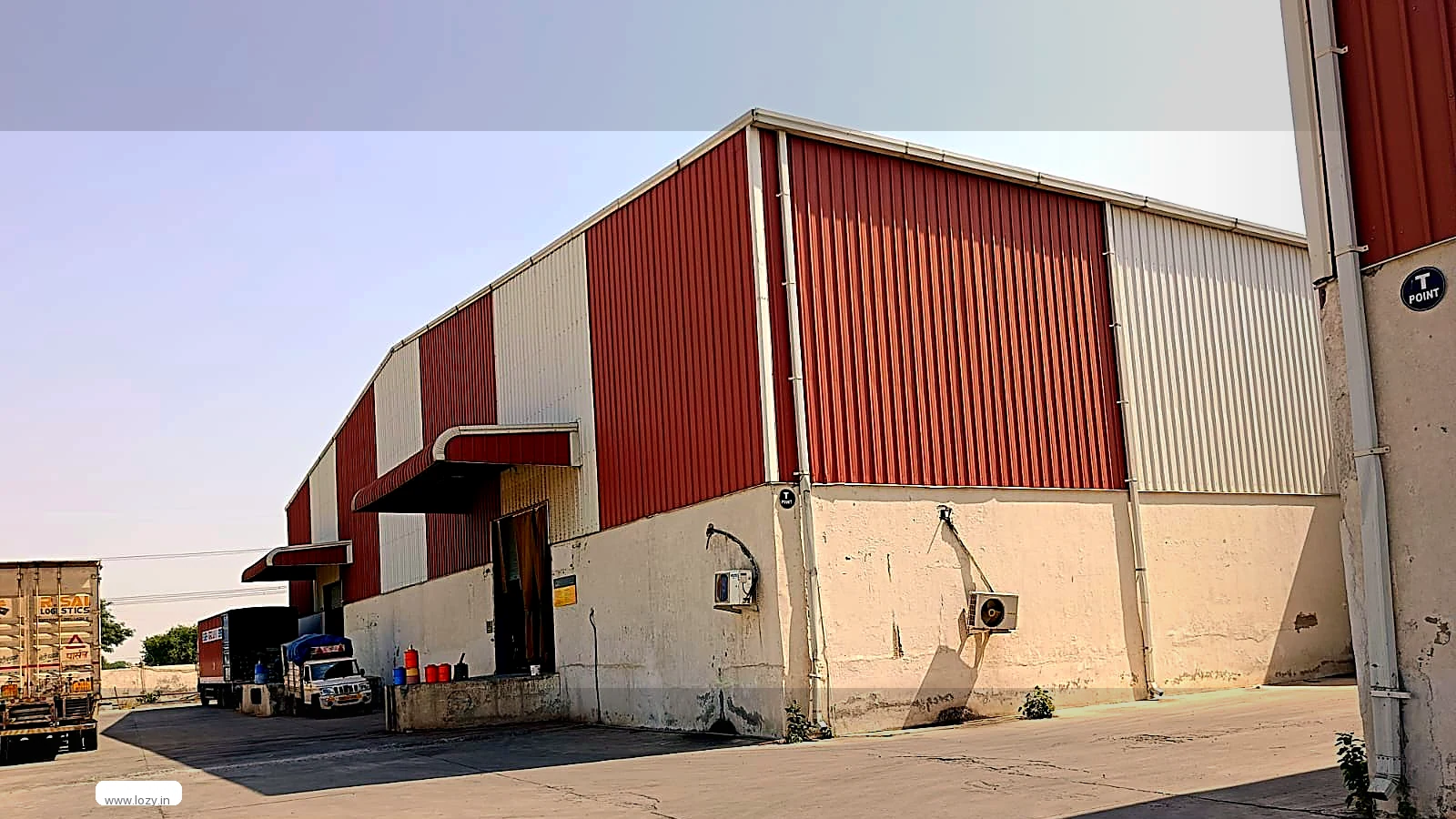
An appliance warehouse has to provide three things a general godown does not: a slab that carries a loaded refrigerator on four small feet without deflecting, positions tall and wide enough for cartons that cannot be double-stacked by hand, and a serial number written against every unit before the pallet is moved. Appliance storage requirements are those three, plus pair integrity, cosmetic grading and damage evidence, written as tests you can score on a visit rather than promises. This is the sheet to carry to a landlord or a 3PL in Delhi NCR, on a starting basis of ₹21 per sq ft per month.
- Ask for the structural drawing and the rack load plate for the bay you will actually use. Appliance weight arrives on four compressor feet and a laden pallet of outdoor units, not spread evenly across a floorplate.
- Every unit's serial number is read from the rating plate at the tailgate and written to a position before put-away. A carton barcode is not always the unit serial, and a pallet count is never a serial list.
- Loaded refrigerator and washing-machine cartons are stored single-high and upright; nothing is ever stacked on a television carton. These are floor rules with painted lines, not preferences.
- The indoor and outdoor units of a split system are received, stored and dispatched as one pair under one pick label. A pair separated by two bays becomes two unsaleable units.
The storage classes, the seasonal calendar, the site-choice argument and the published cost bases sit in the consumer durables warehousing guide; the service itself is on the electronics and consumer durables warehousing page. Neither gives you the sheet you carry on a visit. This post does: minimums with a test attached, and a table to score two or three buildings against before anybody quotes.
What a large-appliance store has to provide, and why volume is not the constraint
Appliance storage looks like a volume problem and behaves like a handling problem. Every unit is too heavy for one person, too awkward for a standard pallet, and too visible in its damage for a cosmetic mark to be argued away, and each is individually numbered and warrantied. Those four properties write the specification.
Four properties of the goods that decide the building
Bulk without density. A refrigerator carton is nearly two metres tall and light for its size, so it consumes height and floor and very little of the slab's rated load. A pallet of outdoor units is the opposite: compact, dense and hard on the floor at four points. One building has to serve both.
Concentrated weight. A loaded appliance pallet does not spread like a pallet of biscuit cartons. The figures that matter are the permitted point load and the beam's rated capacity per level, not an average load per square metre on a lease summary. A slab that carries general cargo can still crack under a dense pallet parked in one spot.
A surface that shows everything. Stainless doors, coated side panels, glass cooktops and television panels record every contact. A scratch a carton of hardware would shrug off is a discount on an appliance, and a crease is a rejection.
Individual identity. Every unit carries a serial tied to a warranty, a manufacture month, a model year and a dealer claim, so the building has to answer a question about a single machine months later.
Why the carton, not the pallet, is the unit of design
Most warehouse design starts with a 1200 by 1000 millimetre pallet stacked to a height. Appliance stock refuses that discipline: a double-door refrigerator arrives one to a pallet, a television arrives four to a tower that must not lean, and a split air-conditioner consignment arrives as two unrelated carton types, a wide flat indoor box and a dense outdoor crate.
So the sheet is written against a carton list, not a pallet count. Take the tallest, widest and heaviest carton in your range to the site, and measure the beam spacing, the clear height and the slab against them. A pallet position quoted without those three numbers is a generic answer.
What the building must show rather than promise
Three things are shown, not described. A structural drawing or certificate for the bay, with a load plate on the beam. A clear height measured at the bay you will occupy, to the lowest obstruction. A written stacking rule with painted floor markings that match it, because a rule that lives in an induction briefing leaves with the shift that was briefed.
The acceptance specification: twelve rows to score on the visit
Print this table and take it with you. Score each row pass, fail or partial, and treat three failures as a walk-away rather than a discount: the rows that fail in an appliance building are structural and record rows, and no rent concession fixes either. These minimums are drafting benchmarks, not a substitute for a structural certificate or a fire NOC.
| Requirement | Minimum | How to test it on the visit | Why it matters for this trade |
|---|---|---|---|
| Slab and rack load, for concentrated appliance weight | A structural drawing or certificate stating the design load for the bay, and a load plate on every rack beam level | Ask for the drawing, not an assurance. Read the beam plate. Inspect the slab near the shutter for cracking, spalling or a patched trench, and ask where the heaviest pallet stood last month. | A loaded appliance pallet and a stack of outdoor units concentrate weight at four points. A slab rated for general cargo is not rated for that. |
| Clear height measured at the bay, not at the door | A measured clear height to the lowest obstruction over the bay you will occupy, with the top beam level usable | Tape from slab to the underside of the beam, purlin, sprinkler head or light fitting at the proposed bay. Then stand your tallest carton against it. A door height is not a storage height. | A refrigerator carton that clears a beam by a hundred millimetres is the difference between three usable levels and two, and the rent is the same either way. |
| A ground-level floor bay for dense pallets | Slab-level space reachable by pallet truck, inside the shutter, not behind racking | Walk the route from the shutter to the bay with a laden pallet truck. Ask what happens to that route when the neighbouring bay is being loaded. | Outdoor air-conditioner crates and loaded white-goods pallets belong on the floor. Lifting them to a beam is how a pallet goes over. |
| Wide-beam racking set to the carton, not to a generic pallet | Beam spacing, beam length and level heights matched to your carton list, with a stated maximum overhang | Put one of your cartons on the beam. Measure how much of the base is unsupported at each end and how much clearance is left above it. Ask for the beam's rated load per level. | A beam that leaves a third of a television carton hanging in air is where the panel crack starts, months before anybody sees it. |
| A printed stacking limit, enforced, with a no-stack list | The maximum stack taken off the carton's own symbols, loaded refrigerator and washing-machine cartons stored single-high, and nothing stacked on a television carton | Find the tallest stack in the building and read the limit printed on the carton at the bottom. Ask which products are on the no-stack list and where that list is posted. | Carton crush is slow and invisible: the box looks fine, the door skin is deflected, and the claim arrives from a customer three weeks later. |
| Upright-only handling for refrigerators and washing machines | A written upright rule, painted floor markings, and no unit stored on its side, its face or its end | Walk the floor and look for one horizontal refrigerator carton. Ask what happens when a unit has to be moved through a low door. | A refrigerator laid flat moves compressor oil into the circuit; a washing machine without its transit bolts can damage its own drum. Neither fault is visible in the carton. |
| A marked, separated fragile and high-value zone | A defined bay away from the pick face and general cargo, kept dry and low-dust, with panel cartons upright and edge-protected | Ask what bounds it — a wall, a painted line, a mesh partition — and whether television and glass stock is inside. Look for grit on the floor and a leak path overhead. | Panels and glass need only a flex or a point load. Separation is what stops a trolley handle providing it. |
| Serial capture at the tailgate, read from the rating plate | A written intake record carrying model code, unit serial from the rating plate, manufacture month, invoice line, position and grade — completed before put-away | Pick a unit at random, ask for its intake entry, then ask for the dispatch entry of a unit that has left. If both appear in under ten minutes, the record is real. | Warranty, theft and transit claims are all settled by the serial written at the gate. The factory's dispatch list is not your inbound record. |
| Cosmetic grading with a dated photo set at receipt | Four defined grades, a photograph of each face with the carton label and a date card in frame, filed against the serial | Ask for the grade of a specific unit and the photograph that supports it. Then ask what grade a dented carton with an undamaged unit would receive, and where that is written down. | A grade recorded on day one is what separates transit damage from warehouse damage. Without it, every mark found later is yours. |
| Matched-pair control for split air conditioners | Indoor and outdoor units of one system stored together under a single pick label, with capacity and refrigerant recorded | Ask to see one complete pair. Then ask how the facility would pick a replacement outdoor unit for a customer whose indoor unit is already installed. | A pair separated across two bays, or two model generations, produces two units that cannot be sold as a system. |
| Installation-kit and accessory completeness check | An accessory list per model, contents verified at intake, bag sealed and the check ticked on the intake sheet | Open one accessory bag against its list and count. Ask what happens when a remote or a wall bracket is missing on arrival. | A missing remote, bracket or drain kit turns a sale into a return, and the cost lands on whoever cannot prove it was missing at intake. |
| A paved, level apron and a dock that takes your inbound vehicle | Hardstanding, level, with turning space for the vehicle type you use, no slope or step at the shutter, and drainage that works in July | Stand at the shutter: slope, loose aggregate, standing-water marks, a ramp with a lip. Ask how many vehicles can work the face at once and where a trailer waits. | A trolley carrying a refrigerator tips on a slope, and a monsoon apron turns one consignment into a two-day intake. |
Score the building, not the brochure
Send the twelve rows with your carton list — tallest, widest, heaviest — and the units you expect to hold. We will tell you which facilities pass, and what the space costs.
Send the specificationCall +91 93547 12345If you would rather walk a shortlist with somebody who has run the sheet, the consumer durables warehousing team will visit two or three buildings against these rows and name the ones that fail.
Serial numbers, model codes and the grade written at receipt
An appliance intake is not a count of cartons. It is the creation of a record per machine, and it has to be created while the vehicle is at the shutter, the only moment when the carrier is present, the load is still on the vehicle, and the condition of the packaging can be attributed to somebody else.
The six fields read at the tailgate
The model code and the variant. Appliance codes carry capacity and finish inside them — litres, tonnage, star rating, a colour suffix. Two cartons of the same nominal model in different finishes are different products to a dealer, and one of them will be wrong. Record the full code, not the family name.
The unit serial from the rating plate. Most cartons carry a printed label with a barcode and a number, and usually that is the unit serial, but not always: some are carton identifiers, some are pallet labels. The reliable source is the plate on the machine, readable through a carton window or behind a flap that lifts without breaking the seal. Where it cannot be read, record the carton number, mark the entry unverified and reconcile at first unpacking. A serial column filled in from the invoice is a copy of the invoice.
The manufacture month and year. Two fields, not one, and written at receipt rather than discovered at dispatch. This is the field that makes a model change-over visible in a stock list, and the field that tells you which units are ageing on your floor while the price list moves on.
The invoice or advice-note line. So the serial can be traced back to the document the carrier signed and the dealer was billed against. A serial with no document line is a number with no owner.
The position, written at put-away. Serial to bay, level and face, entered when the unit is placed rather than reconstructed at the next count. Where a pair is involved, the position record covers both cartons.
The grade, with its photograph. Covered in the next section, because it is the field buyers most often leave out and the one that decides who pays for a dent.
Cosmetic grading at receipt: four grades and a photograph
Grade the packaging and the unit separately, because they fail separately. A crushed carton with an untouched machine is a carrier claim and a saleable unit; a clean carton with a creased door is a handling problem that surfaces at delivery. Four grades are enough for a working sheet.
- Grade A — sealed and undamaged. Carton intact on all faces, seals unbroken, no staining, no corner crush beyond the printed allowance. Photograph the label face and one side; no unpacking.
- Grade B — carton compromised, unit uninspected. A dented corner, a torn flap, a damp patch, a strap that has cut into the board. Photograph all four faces with the label and a date card in the same frame, note the defect on a diagram, and mark the unit for inspection before it is offered to a dealer.
- Grade C — unit marked, saleable with disclosure. A scratch, scuff or shallow dent on the machine itself, photographed with a scale, recorded against the serial, and flagged so that it is not picked against a full-price order without somebody deciding.
- Grade D — unit damaged, not saleable as new. Cracked glass, a creased panel, a broken hinge, a compressed corner that has reached the machine. Moves to a quarantine position the same day, with a damage note, a photograph set and a decision owner named.
The photograph set is what makes the grade worth anything: four faces, the carton label and the serial in one frame, the vehicle number and the seal in another, all taken before the unit leaves the tailgate. A picture taken after put-away proves only that the carton was damaged in your building.
What a serial does that a pallet count cannot
Three questions arrive after the goods have gone, and all three are answered from the intake record or not at all. A warranty claim on a lost invoice: the serial fixes the manufacture month and model year. A dealer reporting a dented door: the grade and photograph decide whether that dent travelled in. A consignment short by one unit: the serial list names which one, and whether it ever arrived. A pallet count answers none of that.
Floor bays, wide-beam racking and the carton that must not be crushed
The stock splits into two storage treatments inside one building, decided by density and by what the carton can bear. Getting it wrong either way is expensive: racking a dense pallet risks the beam, and floor-stacking a light carton wastes height you are paying for.
Which appliance goes where
On the floor, in a marked bay. Outdoor units, dense and sharp-cornered; refrigerators, tall and heavy at the base; washing machines; any carton marked do-not-stack; and Grade D stock awaiting a decision.
On wide-beam racking. Indoor air-conditioner cartons, television cartons stored upright and never flat, microwaves, chimneys, hobs and accessory cartons. Racking is where the height gets used, and in a mixed consignment it is the only way the stock fits.
In the fragile zone, low. Glass-topped and glass-fronted stock, display units and anything opened for a showroom, because a fall from a low beam breaks a carton and a fall from a high one breaks a machine.
Written down, this becomes a layout, and a layout becomes a painted floor. A facility that cannot show where the fridge bays are, where the pair bay is and where the fragile zone begins will rearrange your stock to suit the next consignment.
Stacking limits, carton crush and the dent nobody sees
Appliance cartons carry a stack limit in symbols on the side, and the number is almost always lower than the space available. Board crushes slowly, and the failure reaches the machine as a deflection rather than a break: a door skin that no longer sits flush, a cabinet side that has taken a set, a bezel with a pressure mark at the panel edge.
Four rules keep it out. Nothing is stacked on a television carton, ever. Loaded refrigerator and washing-machine cartons are single-high, because the compressor and the drum sit at the bottom and only the carton's own base is designed for the load. Stack height comes off the printed symbol rather than the gap to the beam, and is painted on the floor marking. And a crushed carton never goes to the bottom of a new stack, because its board has already lost its strength.
The test is simple: find the tallest stack, read the limit printed on the carton at the bottom, and count. If the answer is "we stack to the beam", the damage rate is set and you will meet it as customer returns in month three.
Floor load: the number on the drawing, not a number in this guide
There is no useful single figure to print here, because the answer depends on the pallet, the rack and the slab, and a guide that invented one would be doing what this post warns against. What can be specified is the evidence: a structural drawing stating the design load for the bay, a load plate on every beam level, and a slab you can inspect at the shutter for cracking and old repairs, because the door end of a shed is where overload shows first.
Two questions turn that evidence into a test. Where did the heaviest pallet in this building stand last month, and can I see the spot? What is the heaviest single item this bay has held, at what footprint? A manager who answers both without leaving the office has the drawings; one who walks you to the spot has the practice. Ask about the pallet truck and the last rack inspection too, because a beam that has been hit loses capacity quietly.
Where the requirement is a full bay with dock access and a slab you can load without a second thought, industrial and bulk warehousing fits; where the space has to flex month by month around a season, price on-demand warehousing.
Glass, panels and matched pairs: the two things a general warehouse loses
Two failure modes account for a large share of appliance write-offs, and neither is about weight: a panel or a glass surface that takes a flex or a lean it cannot survive, and a split system whose two halves lose each other inside the building.
Panel and glass protection, in four habits
Store upright, and never on the face. A television carton standing on its base is a rigid box; the same carton lying flat is a panel supported at its edges with its own weight bending the middle. The instruction is printed on the box and it is there for a reason. The same applies to glass-topped hobs, chimney glass and mirror-fronted cabinets: upright, on the base the factory designed.
Keep the factory foam, and replace what you remove. Corner protectors, edge boards, foam end caps and the polythene bag are not packaging to be tidied away at put-away. A unit that has been unpacked for a showroom and returned to storage needs its own wrap standard — a written one — or it will travel to the next customer as a loose machine in a carton that no longer fits it.
Separate the fragile zone from traffic. Panel damage is usually caused by something ordinary: a trolley handle, a pallet truck, a stack leaned against a television tower, a reversing mast. A marked bay away from the pick face removes the traffic. Low storage for high-value glass is the other half of the habit, because a fall from 1.2 metres is a broken carton and a fall from four metres is a broken machine.
Photograph before you wrap. Where a unit is re-wrapped, the condition photograph is taken before the wrap goes on. Otherwise the next person to open it cannot tell whether the mark was there when it was packed.
Matched pairs: one system, one position, one label
A split air conditioner is not one product. It is an indoor unit, an outdoor unit, a pipe kit, a remote, a drain hose and a bracket, and the two units are matched by capacity and refrigerant. A 1.5-tonne indoor unit will not run with a 1.0-tonne outdoor unit, and two refrigerant generations are not a pair at all. Store by carton type — indoor boxes in one rack, outdoor crates on the floor — and the first busy week produces two mismatched dispatches.
So a pair is received as a pair, recorded as a pair and stored as a pair: one pick label covering both cartons, one position holding both, and capacity and refrigerant fields in the record. Where one carton belongs on a beam and the other must sit on the floor, the position record carries a cross-reference and the pick sheet prints both. Partial dispatch then becomes a decision somebody makes rather than an accident somebody discovers at the customer's flat.
The same logic applies to other kits: a chimney with its ducting and brackets, a built-in oven with its trim kit, a washing machine with its inlet hose and transit bolts in place. The bolts deserve their own line. They hold the drum during movement, they come out at installation, and a machine moved without them can damage its own suspension before it is ever plugged in. If they have been removed in the warehouse, nobody will know until it spins.
Licences and documents: what the business holds, what the premises must show
Nothing in this category needs a drug licence or a food licence, and that is where buyers relax too far. An appliance warehouse still sits inside a compliance frame: product certification, tax registration, fire safety, land use, insurance and, for the brand rather than the dealer, electronic-waste obligations.
What the business itself must hold
- GST registration with this warehouse as an additional place of business. Rent is an input only against a tax invoice raised in your entity's name, and a warehouse address is not covered by the registered address. The procedure sits on the GST portal.
- Models carrying the certification the law requires. Household electrical appliances, televisions and air conditioners fall within India's compulsory certification regime, and the listing is published by the Bureau of Indian Standards. The mark attaches to the model, so a stock list that carries model codes can be checked against it; a stock list that carries only product families cannot.
- Importer obligations where anything is imported, including an import-export code and the labelling that applies to imported units. A dealer buying locally does not carry these, and should not be sold a service that assumes them.
- Stock insurance in your own name. The facility's policy covers the building and its own liability; it does not indemnify your cartons. Ask the question in writing and get the answer in the same form.
- Producer responsibility, if you are the brand. Electronic-waste obligations attach to producers under the rules administered through the Central Pollution Control Board. A warehouse holding stock is not the producer, but a brand storing its own returns and write-offs needs the disposal route documented, not improvised.
What the premises must be able to show
A document file, produced before the first vehicle. Proof of lawful occupancy naming the invoicing entity and identifying the shed on a plan. A current fire NOC for this address and use, with detection matched to a commodity that is mostly cardboard, foam and shrink wrap. Land-use confirmation that storage is permitted. Structural confirmation of the slab, and the rack design with its last inspection. Insurance with a written answer on which policy covers your stock. A power agreement.
Read three fields on each document — entity, address, expiry — and expect one to be wrong. The commonest substitution here is a fire NOC issued for the landlord's other shed, which looks like a document until somebody reads the address.
If your compliance team has a vendor checklist, send it before the visit. Start the document check here and we will say which items a Lozy facility provides and which remain yours as the business holding the stock.
Record-keeping: the serial ledger, the damage file and the monthly reconciliation
Nine records carry an appliance store. Each needs a format, an owner, a frequency and a retention period, and the last belongs in the agreement rather than in an assumption, because a warranty or carrier dispute can arrive two seasons after the unit left.
| Record | What it must contain | Frequency | Who signs it off |
|---|---|---|---|
| Goods receipt note, per unit | Date and time, vehicle and seal number, advice note, model code and variant, unit serial from the rating plate, manufacture month, quantity, grade, photographs | Every receipt, closed the same day | Receiving supervisor |
| Location register, keyed to serial | Serial, model, pair reference, zone, bay, level and face, with the date of put-away | At put-away; audited weekly | Store controller |
| Serial stock ledger | Opening list, receipts, dispatches, returns, adjustments and closing, so one unit can be followed from gate to gate | Entry at each movement; reconciled monthly | Store controller, countersigned monthly |
| Damage and grading register | Grade, defect description, photograph reference, carrier note, claim reference and outcome | Every occurrence, reviewed weekly | Receiving supervisor and facility manager |
| Accessory and kit register | Accessory list per model, contents verified at intake, missing items and the action taken | Every receipt of a kit-bearing model | Receiving supervisor |
| Dispatch note and gate pass | Serial, model, pair reference, buyer, invoice, e-way bill reference, condition at dispatch and gate-out time | Every dispatch | Dispatch supervisor |
| Ageing and model change-over report | Units by manufacture month, days held, model year and clearance status, with the proposed action | Monthly, on a fixed date | Commercial owner |
| Claim file | Photograph set, damage note, carrier acknowledgement, insurer correspondence and settlement | Per claim, tracked to closure | Facility manager |
| Statutory and inspection file | Fire NOC, occupancy, land use, structural and rack certificates, insurance, pest and housekeeping records, training | Quarterly, tracked to expiry | Facility manager |
Three numbers belong in a monthly report, and none is stock value. Serial accuracy against a physical count, so the register and the rack agree. The number and age of open damage claims, so a carrier dispute does not quietly become a write-off. And the count of units past an agreed ageing threshold, because stock that has sat through a model change-over has lost value whether or not it has lost condition.
What moves the monthly figure in this trade
The published rate is the smallest part of an appliance bill. What moves it is how much floor one machine consumes, how long a person spends at the tailgate, and how much of the building goes to stock that cannot be stacked.
- The basis you are quoted on. Floor area is priced per square foot, a racked position per position, a managed stock plan per month. An appliance quote at ₹21 per sq ft and an inventory-led quote from ₹4,499 per month measure different things, and comparing them as though one were cheaper is the commonest error here.
- Area per unit, and the height you can use. A refrigerator or a loaded washing-machine carton takes real floor because it cannot be stacked by hand. Every level the building yields above that floor is free capacity, which is why clear height is a cost line and not a technical footnote.
- Handling time at the gate. Reading a rating plate, photographing four faces, opening an accessory bag and matching a pair are minutes per unit, and they are minutes that prevent claims. A rate that assumes sealed pallets in and out is a rate for a different commodity.
- Separation and the fragile zone. Protected, low-traffic space for panels, glass and display stock costs more than open floor per square foot, and it is the difference between a unit that sells and a unit that is discounted.
- Season. Air conditioners and refrigerators lift before summer, televisions and kitchen appliances around the festive months, and both are followed by a flat tail. A month-by-month basis follows that curve; a full-year commitment prices the peak into every month.
- Add-ons. Insurance, dedicated labour, packing material, a reserved dock slot and a re-wrap standard sit outside the published bases and should be listed rather than assumed.
Against those drivers, the published bases are these. Warehouse and godown space begins at ₹21 per sq ft per month on the warehouse for rent page, the same basis applying to racked space under business warehousing and to a bay with dock access under commercial warehousing. Where stock reconciles unit by unit, price the inventory and stock storage basis, from ₹4,499 per month. A short booking runs from ₹699 per month, a seasonal hold from ₹1,299, a long hold from ₹1,199 under long-term warehousing, and single-unit online orders from ₹4,999 per month under e-commerce warehousing. Every figure is a starting basis, billed monthly with a GST invoice and no long lock-in, gathered on the pricing page.
Want the bill built from your unit list?
Give us the model-wise count, the carton dimensions of the largest item and your dispatch pattern. We will come back with the bays and positions the stock needs, and the monthly figure.
Model my requirementCall +91 93547 12345The five ways appliance storage fails, and the row that catches each
None of these failures announces itself. Each one is discovered by a customer, a dealer or an auditor, weeks after the decision that caused it.
One: the intake with no serial. A consignment is counted against the invoice and put away, and the serials exist only on the factory's dispatch list. Six months later a unit is missing, or a warranty claim arrives, and the first question — which serial, received when — has no answer. A missing unit cannot be distinguished from one never received, and an insurer reads that gap as an admission. The row that catches it: serial capture at the tailgate, tested by producing one intake entry and another unit's dispatch entry inside ten minutes.
Two: the stack that was one carton too high. The beam had space, the carton had a printed limit, and the limit lost. Board crushes over weeks, the door skin takes a set, and the fault surfaces as a rejected delivery rather than a warehouse incident. The row that catches it: a printed stacking limit, tested by reading the symbol on the carton at the bottom of the tallest stack in the building.
Three: the pair that came apart. Indoor units go to the rack because they are light, outdoor crates to the floor because they are heavy. Both correct, made separately, and together they guarantee a wrong-capacity dispatch in the first rush. The row that catches it: matched-pair control, tested by asking to see one complete system and one replacement outdoor unit picked against an installed indoor.
Four: the dent photographed too late. A carton arrives dented, the driver signs clean because nobody looked, and the damage is photographed at put-away. The carrier's liability ended at the gate, and the loss moves to the stock owner or to the warehouse, depending on what the agreement says. The row that catches it: cosmetic grading with a dated photograph, tested by asking for the grade and the picture behind one unit.
Five: the clearance stock that became current stock. A model year changes, the outgoing range stays in the same bay under the same label, and a picker sends a superseded unit against a live order. The dealer finds it at the counter and the customer finds it at installation. The row that catches it: an ageing and change-over report with a separate clearance position, tested by asking which units here are more than two model years old.
The pattern is the same in all five. Every failure was cheaper to prevent than to repair, every one was visible to somebody who knew what to look for, and every one is a row on the table rather than a matter of luck. The commercial side of the same argument is in the consumer durables warehousing guide, and the consumer durables and electronics team scopes a site against these rows.
From requirement to first dispatch, and the clauses that hold it
Nine steps take a requirement to a working appliance store. The order matters more than the speed, and the two that buyers skip — the written layout and the observed intake — are the two that prevent the expensive surprises.
- Write the sheet. The twelve rows, a model-wise unit list, the carton dimensions of the largest and heaviest items, the pair count for split systems, and the dispatch pattern by dealer and installation team.
- Split the range by treatment. Which units are floor stock, which are racked, which are fragile, which are display pieces. This decides the bay plan before a rate is discussed.
- Settle the tax and insurance questions. The entity that will be invoiced, the GSTIN, the additional place of business, and whose policy covers the stock in the building.
- Request the document file before visiting. Occupancy, fire NOC for this address, land use, structural and rack certification, insurance, power agreement.
- Visit with a kit. A tape measure, a torch, a phone camera, one carton from each extreme of your range and a printed copy of the table. Score rows on the spot, not from memory in the car.
- Agree the layout on a drawing. Floor bays for refrigerators and outdoor units, the pair bay, the fragile zone, the clearance position, the quarantine position and the pick face. A layout agreed verbally is a layout somebody will improve on a busy Tuesday.
- Agree the record format, then watch one intake. One vehicle, several models, a dented carton, a unit with its accessory bag already open, and one pair. Watch what gets written and where the damaged unit goes.
- Agree the change-over and disposal route. Where superseded stock sits, who decides when it moves, and which route it takes: back to the brand, through a clearance channel, or to a registered recycler where it is unrepairable and the producer's obligation applies.
- Measure the first month. Serial accuracy against a spot count, the open damage claims and their age, and the units already past your ageing threshold. Then decide, while the arrangement is still monthly.
Where the first consignment is a season's stocking run landing over a weekend, send the unit list and layout on WhatsApp before the vehicle is booked, and we will mark up what the facility can do with that intake.
The clauses that matter for this trade
- Serial capture, as a term. Which fields, read from where, written by whom and by when. A promise to "track serials" without fields is not a term.
- Upright and stacking rules. Single-high for loaded white goods, nothing on a television carton, stack height from the printed symbol.
- Pair integrity. Receipt, storage and dispatch as one system, with partial dispatch only on your written instruction.
- Grading and damage responsibility. The four grades, the photograph set, and the point at which transit damage becomes warehouse damage.
- Claim evidence and notice. What the facility must produce after a damaged intake, within what period, and who notifies the carrier.
- Access and audit. Your right to enter, to count, to audit on notice and unannounced, and to bring a dealer or an insurer's surveyor.
- Records: ownership, format, retention, exit. Yours, in a usable export, retained for the period you specify, and handed over on exit rather than summarised.
- Liability and insurance. Whose policy covers the stock, the basis on which a loss is valued, and how a concealed shortage found at a count is treated.
- Handling charges, itemised. Per unit in, per unit out, per pair matched, per accessory check, per re-wrap. "Inclusive" is not a number.
- Term, notice and exit. The notice period, the days allowed to remove stock, and who provides loading equipment.
- GST and invoicing. The invoicing entity, its GSTIN and the place of supply. A rent receipt where a tax invoice belongs costs the input credit quietly, all year.
Hold the agreement beside the requirement sheet when you sign. A row that lives only in an email is a preference, and preferences leave with the person who wrote them. Where the alternative is a full-service partner rather than space, the 3PL warehousing guide and the contract logistics guide set out the contracting side.
Where Lozy fits, and where we do not
Lozy runs 77+ warehouses and more than one million square feet of live space from a Delhi NCR base, with floor bays for bulky stock, wide-beam racking, separated positions for fragile units and records kept to the fields each client specifies. Space starts at ₹21 per sq ft per month, an inventory-led plan from ₹4,499 per month, billed monthly on a GST invoice with no long lock-in. What is free now is on the warehouse listing; the belts are under locations and in the Gurgaon, Faridabad, New Delhi and Haryana guides; the service set is on the services page.
What this network does not do belongs in the same paragraph. There is no manufacturer-authorised service centre, no appliance repair, no installation crew and no e-waste recycling authorisation. There is no bonded store and no climate-controlled room. A Grade D unit is held in quarantine and photographed; its disposition — carrier claim, brand return, discount or scrap — is your decision, taken with your insurer. Photos of a working facility are on the consumer durables warehousing page.

If the requirement sits on the right side of that line, email the sheet to care@lozy.in with the model-wise list and carton dimensions, and we will reply with the facilities that pass the twelve rows and the rate, usually the same working day.
Related guides
- appliance warehousing: serials, change-over and cost
- the warehouse inspection checklist
- warehousing in New Delhi
- inventory and stock storage
Take the sheet to a building, not a brochure
Tell us the unit list, the largest carton and the belt you want to be on. We will confirm which facilities pass the twelve rows and hold them for your visit.
Book the site visitCall +91 93547 12345Sources. Prices and network numbers are Lozy's published information, checked 25 October 2026. Product certification from the Bureau of Indian Standards; electronic-waste obligations from the Central Pollution Control Board; GST from the GST portal; operating practice from the WDRA; sector context from IBEF. The minimums are drafting benchmarks, not a substitute for a fire NOC or a structural certificate.
Last updated: 25 October 2026. Something the FAQs below do not cover? Call +91 93547 12345 or email care@lozy.in.
Need warehousing or storage in India?
Request a free, tailored quote in under 2 minutes — free pickup, no lock-in.