
Auto Parts Warehouse Requirements: The 2026 Acceptance Specification
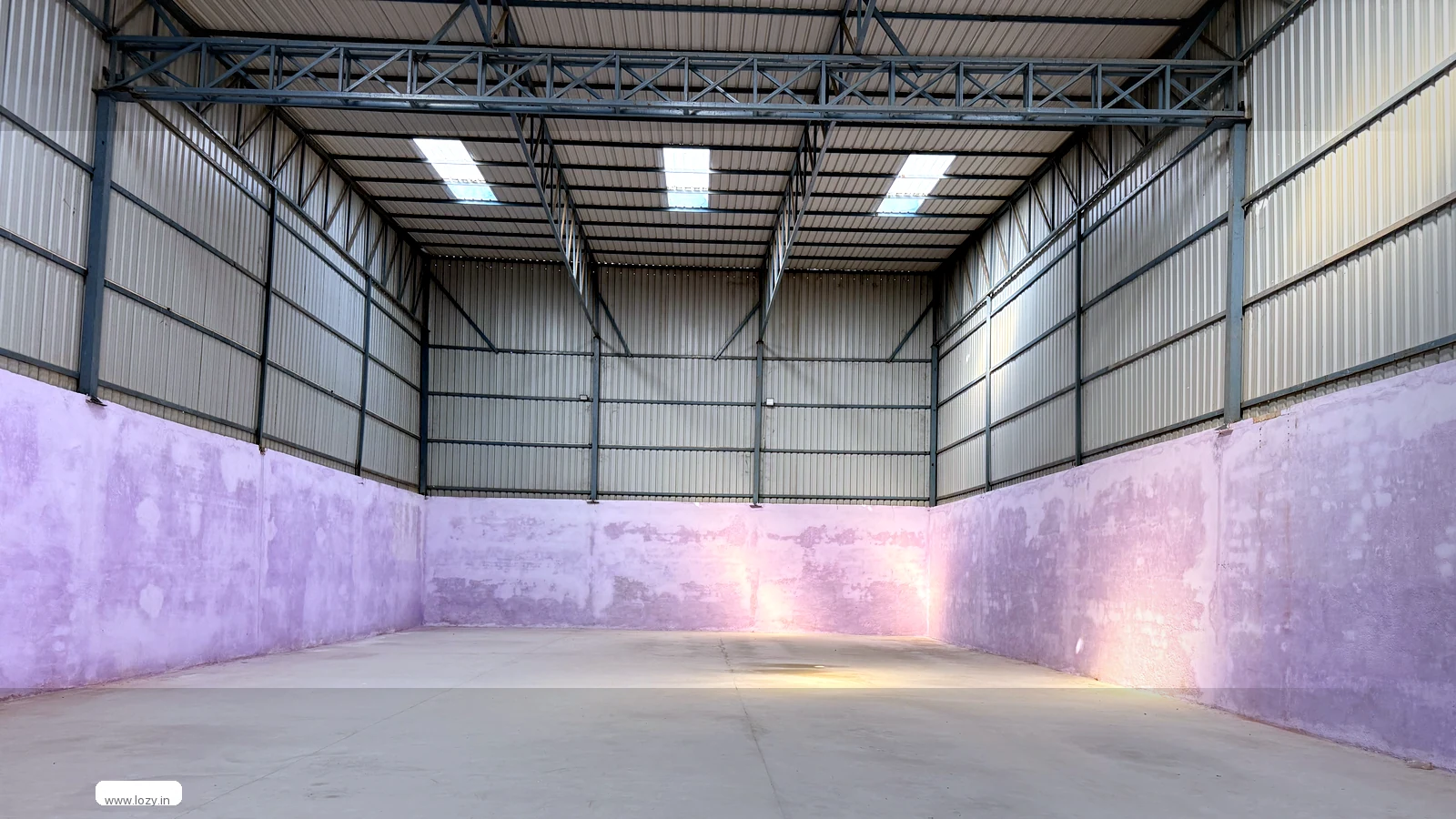
An auto parts warehouse has to provide four things before its rate is worth discussing: a named position for every part number and revision, kit sets that stay sealed and complete, a dry envelope that keeps bare metal out of the monsoon, and a floor that carries engine and transmission crates without settling. Those four conditions, written as numbers with a test attached, are what an auto parts warehouse requirement sheet contains - because a building that fails any one of them rejects stock at the plant gate rather than at the rack.
- A bin that holds "brackets" is not a location, it is a search area. Every part number needs its own labelled position, with the revision recorded against it and superseded lots apart.
- Bare and oil-coated metal needs a measured answer to humidity, not a promise: a plinth above the yard, a roof that does not track water, and wrapping intact until dispatch.
- Dense parts are a point-load problem before a volume problem. A uniform floor figure is a start; the load that matters is what one crate transfers through four stillage feet.
- Twelve rows follow, each with a minimum, a test and the reason this trade cares - plus the records an OEM auditor will open and the container balance that decides whether dispatch stalls.
Most component enquiries are written the way a property requirement is written: a city, a size, a budget, a decision taken on rent and photographs. The attributes that decide whether an OEM schedule can be met - bin addressing, kit completeness, surface condition, container balance, floor capacity - never appear, so nobody tests them, and the failures surface in week three.
A requirement sheet inverts the order: one page of numbers, each with a test, scored across two or three buildings in an afternoon. The service context sits on the automotive and auto components warehousing page, and the operating cycle behind it is the warehousing for auto components guide. This post repeats neither.
What an auto parts warehouse must provide, and why six of those things are not optional
Six capabilities separate a building that can hold components from one that can supply a line. A building carrying five is not 83% suitable; it fails on the sixth within a quarter, and the sixth is usually the one nobody priced.
A position per part number, not per part family
Addressing means a name on a location that maps to one part number and one revision: aisle, bay, shelf, bin. The test is to walk it - take a part number off a call-off, ask the facility to lead you to it, and see whether the answer is a location or a person. If it is a person, storage is remembered rather than addressed, and remembered storage stops working once live part numbers exceed what one supervisor can carry in his head. A location holding "bracket, LH" ends up holding a superseded bracket, a current one and a part on hold.
Kits stored as sets, not assembled at dispatch
A kit is one unit of supply made of several part numbers - a service kit, a sub-assembly with its fasteners, a repair set with seals and clips - and it is only fast to dispatch when it was complete before the vehicle arrived. Kits are built and sealed at a kit station, counted against a kit sheet, stored as sealed sets, and never opened for a single-line request without being re-counted. A facility with no kit station assembles kits in the dispatch lane, when the truck is already at the dock.
A dry envelope, measured rather than described
Bare and oil-coated metal makes component storage a moisture problem before it is a space problem. The requirement is not "covered shed" but a roof that does not leak at the purlin, a storage floor above the surrounding yard, wall bases that do not draw damp, and stock never in contact with slab or wall. Each is testable in ten minutes and none is visible in a February photograph.
A weight plan expressed in numbers
Castings, crates and assemblies concentrate load. The plan states the beam capacity of every rack level, the capacity of the floor where crates stand on the slab, the stillage each part travels in, and the rule for what may be stacked on what. Without it a layout is chosen from a catalogue by bay width, and a crate of transmission housings lands on a beam selected for cartons of filters.
A container loop with a balance
Returnable bins, trolleys, pallets and the dunnage inside them are part of the supply, not packaging. They need counted space of their own, a balance per container type, and a staging area where empties are assembled for return. Otherwise dispatch stalls while somebody hunts for a bin, and the balance becomes an argument with the plant.
A record an auditor can follow
Ask what the facility can put in front of an OEM auditor at a day's notice: a receipt against your packing document, a location per part number, a movement history with dates and users, a container balance, a hold log and a cycle count with variances posted. Then ask whether that set exports as a file. A facility holding a good record it will not export is holding your audit hostage to a conversation. How the wider operation runs around those six is the subject of how auto components are stored and dispatched.
The acceptance specification: twelve rows to test on the visit
Attach this table to a requirement sheet or carry it on the visit. Read it as a drafting benchmark to agree in writing, not as a substitute for a structural, fire or licensed engineer's certificate - each is a separate document, listed under licensing below. Score every row pass or fail, and treat three failures as a walk-away rather than a discount.
| Requirement | Minimum | How to test it on the visit | Why it matters for this trade |
|---|---|---|---|
| Uniform floor load in the storage area | 3.5 tonnes per sq m across the working floor, plus a stated point load for stillage feet, in writing | Ask for the slab specification and any reinforcement drawing; walk the floor looking for crack mapping and patch repairs; drive a loaded pallet truck across a joint. | Engine and transmission crates transfer a tonne or more through four feet. A slab rated for stacked cartons settles under that and throws racking out of plumb. |
| Floor capacity where crates stand on the slab | Written confirmation that the slab carries your heaviest crate at its actual footprint, not at an averaged figure | Give the facility one crate dimension and weight and ask where it may stand. The answer should be a marked, rated floor block, not a shrug. | Crates are stored on the floor because stacking them is worse, so the slab is the storage medium. No rack rating helps if the floor is the weak point. |
| Clear height to the lowest obstruction | 6.0 m from finished floor to the lowest truss, sprinkler head or light fitting; 4.5 m as the working floor | Laser-measure at four corners and the centre, to what is in the way rather than to the eaves line painted on the wall. | Each usable metre is a rack level, and a level is roughly a third more positions for the same rent. |
| Roof, plinth and water path | No active leak at any purlin or sheet lap; storage floor at least 300 mm above the external yard; yard draining away from the building | Visit after rain, or ask for photographs from the last spell. Look for rust tracking on purlins, damp at the wall base and standing water at the apron. | Rust rejection is the expensive failure here because it is found at the plant. Water reaches bare metal through roof, wall base and floor, not through air alone. |
| Humidity in the storage zone | A measured spot reading at or below 60% relative humidity on a monsoon afternoon, taken where your stock will sit | Carry a hygrometer; read open floor, rack face and rear corner, and record the time and weather. Ask what the facility does when the reading climbs. | Condensation on cold machined surfaces starts before anyone sees a drip. A guaranteed band needs a specialist facility, not a general warehouse. |
| Floor finish and dust | Sealed, power-floated slab; joints filled flush; no lip over 3 mm at a joint; aisles swept | Wipe a two-metre stretch with a white cloth, drag an empty carton across the floor, and run a finger along the nearest top rack beam. | Dust is abrasive and settles inside bearing races, seal grooves and threaded holes, turning clean components into rework at the customer's gate. |
| Part-number addressing | One labelled position per part number and revision, with status - current, superseded, hold - visible on the label | Pick three part numbers at random, ask for their positions, walk to each and read the label against the part in the bin. | A picker under time pressure takes what is in front of him. Without revision and status on the position, the wrong revision ships. |
| Racking rating and condition | A rating plate on every beam level; no bent beams, no missing safety pins, uprights protected at aisle ends; an inspection record within twelve months | Read three plates at random, hold a straight edge along a loaded beam, shake a bay, and check aisle-end guards and floor fixings. | Component loads are where unrated racking fails, and it fails with a person nearby. The inspection record is what an insurer asks for first. |
| Kit station and kit integrity | A defined bench with a kit sheet per kit, sealed sets in storage, and a re-count rule when a kit is opened | Ask for one live kit, open the sheet, count two line items against the contents, and check the seal on the next kit on the shelf. | One short fastener stops a line as surely as a missing casting. Kits assembled at dispatch turn a schedule into a scramble. |
| Returnable container and dunnage area | A marked area of at least 10% of your footprint, separate from saleable stock, with a balance per container type and a staged return | Walk the area and ask for today's balance of one container type against the plant's record. Note where empties go when it is full. | Dispatch stalls when bins cannot be found, and an untracked loop turns a packaging cost into a debit note. |
| Oil and fluid segregation | A separate bay with a spill bund, no floor drain to the yard, closed containers on racks or pallets, extinguishers and absorbent within reach | Look at the floor inside the bay for staining, check where the drain goes, and ask what happens to a drum that starts leaking overnight. | Oils, coolants and hydraulic fluid contaminate stock, floors and stormwater. Stored loose, one leaking drum becomes an insurance event. |
| Security, gate control and audit access | One controlled entry, CCTV on dock, aisles and container yard, footage kept at least 30 days, a vehicle log, and your quality team admitted on 24 hours' notice | Ask to see yesterday's dock footage from where you stand, then read the last page of the vehicle log and check it is filled in as things happen. | Components carry design value and customer-owned tooling, and an OEM will inspect and count at the facility rather than at your office. |
Two rows are worth arguing about before you sign. Floor capacity where crates stand is a structural fact that better housekeeping cannot upgrade, and part-number addressing decays the moment the supervisor changes. Everything else can be fixed with money or attention; those two cannot be fixed while stock is inside.
Twelve rows, one building - will it pass?
Send the part families, the weights, the container types and the plants you supply - we reply with which Lozy facilities pass the sheet, and the rate for the space.
Send the sheetCall +91 93547 12345Part numbers, bins and kits: the addressing discipline that survives a revision change
Addressing is cheap to build and expensive to retrofit, because it is a habit rather than a fitting. A facility either puts a part number on a position or it does not, and the difference shows in pick accuracy before it shows in an invoice.
Bins sized to the count, not to the shelf
Fasteners, seals, clips, bearings and circlips are where a component catalogue explodes into part numbers. The requirement is a bin per part number, at a width holding roughly one replenishment cycle, open-fronted so the label reads without lifting the container, and divided so two part numbers cannot share a compartment. Twelve part numbers in twelve bins is a location system; twelve in one bin is a counting exercise nobody performs.
One part number, one revision, one front face
A shelf rule worth writing into the requirement: one part number per position, one revision per position, and the label on the shelf edge rather than on the bin, so a bin that moves does not carry the address with it. Revision matters because part numbers are revised mid-life - material, tolerance, supplier - and old and new coexist for weeks. A superseded revision belongs in a separate zone with its own label, not behind current stock; a part on quality hold belongs in a marked hold area with a decision date. Three statuses, three physically distinct places.
FIFO by production lot, not by receipt date
Component stock is dated twice: when it was produced and when it arrived. Receipt-date rotation is the warehouse default and the wrong rule here, because two lots of one part number can arrive in the same week with production dates a quarter apart, and the older lot fails a surface check first. Rotation runs on the manufacturing lot or date code, recorded at check-in so the pick list can be sequenced by it. Without a lot reference on the pick list, rotation is by shelf position - and the oldest lot stays at the back until somebody notices it is rusty. Suppliers running production and aftermarket references together should read the spare parts and aftermarket warehousing guide.
Kit sets kept intact, counted and sealed
Kits need three things a loose part does not: a kit sheet listing every line and quantity, a tamper-evident seal showing the kit has not been opened since it was counted, and a position sized to the whole set. Stored as loose components in adjacent bins, a kit exists only in the customer's part number and every dispatch becomes an assembly job. A kit leaves in the condition it was counted: break one line out and the remainder is re-counted, re-sealed and returned under a new kit reference, with the break recorded. Facilities that skip that step accumulate phantom kits - sealed boxes short one fastener, found at the plant.
Rust, humidity and bare metal: the protection you can actually measure
Surface condition decides more rejections here than breakage does, and it is the failure a buyer is least equipped to test, because rust starts invisibly and is found at the customer's incoming inspection. A general warehouse cannot offer a humidity guarantee, and one that offers it without a calibrated system is describing an intention. What can be specified and tested are the physical conditions that keep the corrosion rate low enough for the dwell time your stock has.
What actually fails, in order of cost
First, water ingress: a leaking sheet lap lands on the top of a stack and is never seen until the pallet is broken. Second, contact with slab or external wall, where moisture migrates through concrete and rusts the bottom layer first. Third, condensation on cold metal during a humid spell, forming inside bores and under torn wrapping. Fourth, dust on a thin oil film, which becomes a grinding paste. Fifth, damage to the protection itself - a scraped wrap, a cut VCI bag, an oil film wiped off by a gloved hand.
What travels with the part, and what the building owes it
Three protections travel with the part: the oil film, the wrap or VCI bag, and the dunnage that stops parts rubbing. The building's only job is that all three survive storage - nothing dewrapped for inspection and left bare, nothing stacked so a wrap compresses against a sharp edge, nothing stored where a forklift or rack upright will tear it. Write it as a handling rule: parts arrive protected and leave protected, and inspection that needs unwrapping happens at a bench in a defined place with re-wrapping material to hand. VCI paper and bags have a working life and lose effect once opened, so a roll in the corner is a habit, not a programme.
The building measures that do most of the work
Four conditions carry it: a storage floor above the external yard so water runs away rather than in; a roof and gutter discharging clear of the walls; a wall base with a damp-proof course and no stock stacked against it, so air can move; and enough ventilation that the interior does not sit at saturation for days after rain - exactly the dwell time a slow-moving part has. Stacking follows the same logic: nothing on the slab without a pallet or floor block, a gap from walls and columns, the stack top clear of purlins, and no storage under a skylight that condenses. The same discipline, applied to a whole building, is what the auto components warehousing service is scoped around.
Dust control, because grit is a surface defect
Dust settles into bearing races, seal grooves, threaded holes, splines and machined faces, and does its damage in transit rather than in storage. What matters: a sealed floor that sweeps clean rather than releasing fines, aisles swept on a schedule, no grinding or timber work inside the storage area, and stock kept closed. The white-cloth test on the top rack beam tells you more than the floor does, because that is where dust lands undisturbed.
Floor load, crates, oils and the rules that keep dense and wet stock apart
The heavy end of an auto parts list behaves differently from everything else in the building, and the wet end differently again. Both need their own clauses, because a specification written for cartons will pass a building that cannot hold a crate of engine blocks and has nowhere to put a drum of coolant.
Engine and transmission crates: point load, footprint, stacking
A crate holding an engine or a transmission is heavy, awkward, and usually delivered on a stillage or timber base transferring the whole mass through four small feet. Three numbers belong in the requirement: the mass, the footprint of the base, and the floor capacity at that footprint. A uniform figure alone will not do, because a slab carrying 3.5 tonnes per square metre spread evenly may be marginal under a single point of several hundred kilos, especially at a joint or a drain.
Then the stacking rule. Crates of this class are normally not stacked at all - the second damages the first, and the handling risk outweighs the space saved - so the floor they occupy is the storage, and the layout is drawn around the forklift turning circle and the extraction path for each crate. Ask where a crate stands, how it comes out when the aisle is full, and what the floor is rated for. A bay number and a rated floor block is an answer; "wherever there is space" is not.
Mixed-weight racking: who goes up and who stays down
Racking here is not one specification. The bottom level takes castings and heavy stillages on rated beams, the middle machined parts in bins and small pallets, the top light high-count items such as seals, clips and harnesses. Light goods get the cheap height, heavy goods get the expensive steel near the floor, and the layout is drawn from the part list. Test it by asking for the rating of three specific levels, then putting your heaviest stillage on the lowest beam in the drawing: if a beam change is needed the building can still work, but the cost belongs in the quote. Manufacturers holding their own output alongside bought-in parts meet the same arithmetic in the manufacturers warehousing guide.
Oil and fluid segregation, with bunding
Oils, coolants, brake fluid, hydraulic oil, solvents and paint are the part of a component operation a general warehouse handles badly, because they need containment, separation and a fire answer at once. Containment is a bunded bay - kerbed, impermeable floor, capacity above the largest container plus a margin - so a drum that splits overnight is a cleanup rather than a discharge. Separation is distance and a wall from bare metal, because mist and spill reach wraps and cartons. The fire answer is extinguishers of the right class and a written rule on what may be stored in the bay.
Two further rules. Nothing drains from that bay to the yard or the storm line, which means checking where the floor falls rather than accepting an assurance. And the bay has a stock limit, because a facility that starts with four drums and ends with forty has converted a storage bay into a hazard. Flammables in quantity sit outside a general warehouse: a facility that accepts them without asking quantities is not flexible, it is uninsured.
Licences, documents and the OEM audit file
There is no auto parts warehouse licence, and an operator who says there is one is selling something you do not need. What has to exist is a pair of document sets: the premises must show its statutory approvals, and your business must hold its own registrations, including the premises as a place of business. Both are checked before the first container, because both are painful to retrofit around live stock and impossible to retrofit around an audit.
What the premises must produce
- Proof of lawful occupancy - lease, leave-and-licence or ownership document, in the name of the entity that invoices you, with the address matching the agreement.
- Fire certificate or NOC for these premises, current, carrying the address and the occupancy use. This is the document most often produced expired, and the one an insurer reads first.
- Zoning and trade licence confirming storage is permitted at that address, plus the municipal or trade licence the local body requires.
- Structural confirmation of floor load and racking installation, with a racking inspection record where racking is already fitted.
- Building insurance, plus a written answer on what protects your goods while they are stored: policy holder, perils covered, excess, and whether cover continues while a consignment waits on the apron.
- GST tax invoice capability in the name of the contracting entity, not a rent receipt from an unregistered proprietorship.
- A written handling and storage rule set - stacking limits, coated-part rules, fluid bay limits - because an auditor asks what the facility's procedures say, not what the salesperson said.
What your business has to hold
GST registration is the baseline, and the step that matters is registering the premises as an additional place of business, not relying on the address already printed on the certificate. The procedure is published on the GST portal, and your accountant should confirm how it applies to your entity's state and constitution before stock moves. Beyond that:
- Udyam registration where you claim the benefits attached to it, and state shops and establishment registration where the state requires it.
- IEC from DGFT if you import the components you store, along with the import documentation your forwarder will ask for.
- BIS registration or conformity assessment for the categories that carry a compulsory requirement, checked per product rather than per brand - scope published by the Bureau of Indian Standards.
- Product and type approvals for the components themselves, which sit with the manufacturer and stay there: a warehouse stores an approved part, it does not make it approved.
- Stock insurance in your own name. The landlord's cover protects the structure and the operator, not your inventory, so your policy has to name the goods.
- Customer-specific supplier documents - vendor code, packaging standard, label format, gate-pass requirements.
What an OEM auditor actually opens
Component customers audit their suppliers' storage, and the audit is not a tour. Six artefacts get opened: the receipt against a packing document for a lot the auditor selects; the location record showing where that lot is now; the movement history showing what left and when; the container balance for that lane; the hold and rejection log with decision dates; and a cycle count with variances posted. A facility that produces all six for a randomly chosen lot is auditable; one that produces them for a pre-arranged lot is performing.
Access is a clause, not a courtesy. The requirement should say your quality team and your customer's auditors may enter, inspect, count and photograph on 24 hours' notice, that a person will accompany them, and that records will be produced in a readable format the same day. Send us the document list you are working to and we will say which items a Lozy facility provides and which sit with you as the supplier.
Records: what is written down, by whom, and how often
Eight records carry a component operation, and each needs an owner, a format and a frequency. The test is not whether a record exists but whether it would survive being read by somebody who was not there - an auditor, an insurer, or your accountant six months later.
| Record | What it must contain | Frequency | Who signs it off |
|---|---|---|---|
| Inward register | Date, vehicle, vendor, invoice or transfer note, part numbers, revisions, quantities, container codes, lot or date code, damage notes with photographs | Every receipt, closed the same day | Receiving supervisor |
| Part and lot register | Every part number with revision, lot or production date, quantity, status - current, superseded, hold, rejected - and its location | Updated at put-away; audited weekly | Stock controller |
| Bin location register | Position per part number and revision down to aisle, bay, shelf and bin, including overflow and temporary locations | Updated at every put-away and relocation | Stock controller |
| Kit count sheet | Kit reference, every component line and quantity, seal number, who counted it, and any break-out with date and reason | Every kit built, and every time a kit is opened | Kit station lead |
| Container and dunnage register | Balance per container type - with you, with the plant, in transit, damaged, scrapped - plus the dunnage inserts that go with each type | Daily movement; reconciled weekly against the customer's record | Dispatch supervisor |
| Hold, rejection and rust report | Part number, lot, quantity, defect found, photographs, decision and date, disposal or return instruction | Same day the defect is found; decision within an agreed number of days | Facility manager, countersigned by your quality contact |
| Cycle count sheet | Positions counted, system quantity, physical quantity, variance in units and value, adjustment posted with a reason code | Weekly by zone; full count monthly | Stock controller and a second signatory |
| Change-over and obsolescence register | Part numbers affected by a model change, last movement date, quantity remaining, disposal or return route, and the date your customer approved it | Reviewed monthly; opened at every change-over | Facility manager with your commercial contact |
Two disciplines make these records evidence rather than paperwork: separation of duty, so the person who picks does not post the adjustment; and the dated decision, so every hold, rejection and obsolete part has a date by which somebody must decide. Stock without a decision date becomes furniture.
Two derived numbers are worth tracking monthly. Pick accuracy - dispatched lines matching the part number and revision ordered - tells you whether addressing is holding. Container balance - your containers at the plant, in transit and in the facility, against the total you own - tells you whether the loop is turning. If accuracy drops while the balance holds, the fault is bins and labels; if the balance drifts while accuracy holds, it is dispatch staging, and it will stall a truck within a month. How those records feed a monthly stock position is in the component warehousing operations guide and on the automotive warehousing page.
What moves the monthly figure in auto parts storage
Six inputs move a component storage bill, and only one is the rate per square foot. The rest turn a published starting basis into a budget, and explain why two suppliers with similar footprints pay different amounts for the same month.
- Weight class, not area. A rack level rated for castings costs more than one rated for boxed seals at the same square feet, and floor blocks for crates cost more again in lost height.
- The shape of the part list. Twelve hundred part numbers in small bins consume more rack face and more of a person's day than four hundred in pallets. In the small-parts zone you buy bin density.
- Distance to the plants you serve. Land in the Manesar-Kherki Daula-Faridabad belt is priced off its proximity to the assembly lines, and the daily run costs more across a month than a cheaper shed on the far side saves.
- The container loop. Counting, storing, sorting and reissuing returnable bins is work with a labour content, and the line most often missing from a first quote.
- Handling and preparation. Inward handling per container, kit assembly per kit, re-wrapping after inspection, VCI and dunnage consumed - separate items on a well-built quote.
- Term and flexibility. Monthly billing keeps the commitment short and prices accordingly; a longer booking on a settled footprint prices lower. A model cycle rewards the first.
The published starting bases are these. Floorplate and godown space starts at ₹21 per sq ft per month on the warehouse for rent page, the basis for pricing racked area and floor blocks against a part list. Storage held month by month follows the same basis on the business warehousing and commercial warehousing pages. Inventory-led storage, reconciled line by line, starts at ₹4,499 per month on inventory and stock storage. A long-term booking on a settled footprint starts at ₹1,199 per month on long-term warehousing, a short hold at ₹699, a seasonal booking at ₹1,299. Bulk floor area for tonnage rather than fine parts is quoted through industrial bulk warehousing. All are starting rates, billed monthly with a GST invoice and no long lock-in, sitting together on the pricing page.
What a model change-over does to the bill
A change-over moves cost in both directions. Inbound volume spikes while the outgoing revision is still being consumed, so for eight to twelve weeks you hold two generations of the same part, often in two revisions of the same packaging, and the space needed is the sum rather than the average. Then the phase-out completes and you hold the tail: obsolete part numbers, half-used dunnage for a container the plant no longer uses, and tooling to store or return.
The requirement handles this with three clauses rather than one. A peak allowance, so the extra rack row is booked for a stated period and released afterwards - which is what a seasonal or short-term booking does. A disposal clause, so obsolete stock has a route and a date instead of occupying prime rack face for a year. And a dunnage clause, because the containers for a discontinued part are useless the day the part stops and still take floor. Price it before it starts: prime rack face held by obsolete stock for twelve months usually costs more than a short-term block for three, and nobody put that number in the business case. The cost per pallet guide has the per-position arithmetic, and city rates are in warehouse rent per sq ft in India.
Cost the positions for your part list
Give us the part families, the weights, the container types and the peak weeks of your model cycle - we will come back with the positions you need and what they cost per month.
Price my requirementCall +91 93547 12345The five ways auto parts storage fails - and the row that catches each
Failures here are rarely dramatic: they are specification gaps that show only under load, after rain, or at the customer's incoming inspection.
One: bare metal in a corner that stays damp
Stock arrives oiled and wrapped, sits through a monsoon in the least desirable corner - against an external wall, under a sheet lap, behind a column - and is rejected at the customer's incoming inspection for surface rust. The corner was simply never specified. The rows are roof and plinth, humidity, and the handling rule that keeps protection intact.
Two: bins addressed by family instead of by part number
The rack says "BRACKETS" and holds four part numbers and two revisions, and it works for a month because the picker knows. Then the picker changes, or a launch doubles the part count, and the shelf becomes a search. The row is part-number addressing - the cheapest to fix at the start and the most expensive later, because retro-labelling a live warehouse means touching every position once.
Three: kits assembled at dispatch
Kits are stored as loose components because loose components fit the racking, and every order becomes a kitting job in the dispatch lane. It works until two kit orders fall on the same morning, when the vehicle waits, the second kit ships short, and the shortage is found at the line.
Four: crates on a floor rated for cartons
The racking is fine and the floor is the problem. A crate of engine blocks or a stillage of housings stands on a slab specified for stacked cartons, at a joint or near a drain, and over months the surface cracks and the crate settles. The rows are floor load and slab capacity at the crate footprint - two numbers asked for in writing.
Five: a container loop with no balance
Bins leave, bins come back late, and nobody counts both directions. Within a quarter the facility is short of a container type it cannot buy quickly, dispatch slips whenever that type is needed, and the customer raises a debit note for packaging it never received.
The pattern is the same in all five: the failure was cheaper to prevent than to fix, and it was visible on the visit to anybody carrying a sheet. That is the argument for a written specification instead of an impression, and it is how automotive warehousing at Lozy is scoped. Where the building is shared, the separation rules are in the shared and multi-client warehouse guide.
From requirement to first dispatch, and what to put in the agreement
Nine steps take a requirement to a working operation, and the order matters more than the speed. The two skipped under time pressure - the written layout and the test intake - are the two that prevent the expensive surprises.
- Write the requirement sheet. The twelve rows, your part families with weights, container types, plants supplied and peak weeks. One page, and the document every later conversation refers back to.
- Request documents before visiting. Occupancy proof, fire NOC, zoning confirmation, structural and racking records, insurance covering stock, and whether the entity that invoices you is GST-registered. If those papers cannot be produced, skip the visit.
- Shortlist two or three buildings on the same side of the region, so the comparison is about the building and not the drive. What sits where is in the Gurgaon warehousing guide, the Faridabad guide and the Haryana corridor guide.
- Visit with a test kit. Laser measure, hygrometer, white cloth, torch, one bin of your smallest parts, one stillage dimension with its weight, and the table. Score on the spot.
- Agree the layout in writing. Rack runs and level ratings, bin naming, kit station, hold area, container yard and fluid bay. A layout signed by both sides is the only version that survives the first busy week.
- Set the operating rules. Receiving windows, call-off cut-off, labelling standard, container return schedule, hold decision times and the escalation contact - in the agreement, not in an email.
- Sign, then set up access. Your users on the stock system, your part master and revisions loaded, kit sheets built, and the audit-access clause confirmed with a named contact.
- Run a test intake. One vehicle, one pallet, one kit, one crate: received, located, counted, picked and dispatched under observation. Cheaper to find a fault with one pallet than with a container.
- Measure the first week. Pick accuracy, container balance and dispatch-on-time against the call-off. Right means scale the intake; wrong means fix it before volume hides it.
If the stock is moving over a weekend, send the requirement sheet on WhatsApp with a photograph of the layout drawing and we will mark it up before the vehicle is booked.
The clauses that matter in a component storage agreement
- The positions, not just the square feet. Name the racked area and its level ratings, the bin count, the floor blocks and the container area.
- Weight limits, in writing. Per beam level, per floor block and per square metre, with the consequence of exceeding them.
- Handling rates, itemised. Per container in and out, per kit built, per re-wrap. An itemised rate is comparable; a bundled one is not.
- The call-off cut-off as a service level. A time, a measurement and a consequence. "Same-day dispatch" without a stated cut-off is a marketing phrase.
- Liability for stock. Who insures what, the excess on a claim, whether a loss is valued at cost or replacement, and the evidence needed to claim.
- Surface condition and inspection. Who inspects on receipt, what is recorded, who decides a rust or damage rejection, and where a disputed part sits meanwhile.
- The container loop. Who owns the containers, who counts them, what happens to a damaged bin, what the balance reconciles against, and who pays for a shortage.
- Records, audit and access. Who owns the data, the export format, retention after exit, and your right to audit on notice.
- The change-over clause. How much peak space may be added and for how long, at what rate, and the date by which obsolete stock must be disposed of.
- Exit and GST. Notice period, the days allowed to release stock afterwards, the closing stock statement format, the invoicing entity, the GSTIN and the place of supply.
Read the agreement against the requirement sheet before signing. A row that has become a promise in an email rather than a term in the document is a preference, and preferences disappear when the facility changes staff.
Where Lozy fits, and where we do not
Lozy runs 77+ warehouses and more than one million square feet of live space from a Delhi NCR base, with component positions that can be scored against the twelve rows above: load-rated racking and floor blocks, part-number bin addressing, a counted returnable container loop, goods received against your own packing lists, and dispatch marshalled to the call-off. Storage starts at ₹21 per sq ft per month, inventory-led storage at ₹4,499, and monthly billing with a GST invoice carries no long lock-in. Live availability sits on the warehouse listing.
We are not the right answer for everything. There is no cold-room capability, no bonded warehouse, no calibrated humidity guarantee and no testing laboratory here; a component needing a controlled atmosphere or a certified test needs a specialist facility, and we will say so rather than take the booking. Bulk flammable liquids, solvent recovery and cleanroom work sit outside what a general warehouse should hold.
If your requirement is on the right side of that line, email the requirement sheet to care@lozy.in and we will reply with the facilities that pass it, the positions available and the rate - usually within the working day. For a straight footprint, compare warehouse space for rent; a requirement that exists for six weeks around a launch suits on-demand warehousing, and a full-service comparison is in the 3PL warehousing in Delhi NCR guide.

Related guides
- the auto components operating guide
- the site-visit inspection checklist
- warehousing in New Delhi
- business warehousing
Score a site against the sheet
Tell us your part families, weights and the plants you supply - we will confirm which facilities pass the twelve rows and hold them for your visit.
Book the visitCall +91 93547 12345Sources. Rates, plan prices, network counts and facility details on this page are Lozy's own published information, checked 25 October 2026. Component-sector context comes from the Automotive Component Manufacturers Association of India and the Society of Indian Automobile Manufacturers; industry profile data from IBEF's auto components profile; GST rules from the GST portal; certification scope from the Bureau of Indian Standards. The minimums in the acceptance table are drafting benchmarks, not a substitute for a structural, fire or licensed engineer's certificate.
Last updated: 25 October 2026. Have a question the FAQ below does not answer? Call +91 93547 12345 or email care@lozy.in.
Need warehousing or storage in India?
Request a free, tailored quote in under 2 minutes — free pickup, no lock-in.






