B2B Warehouse Requirements: Twelve Tests Before You Sign (2026)
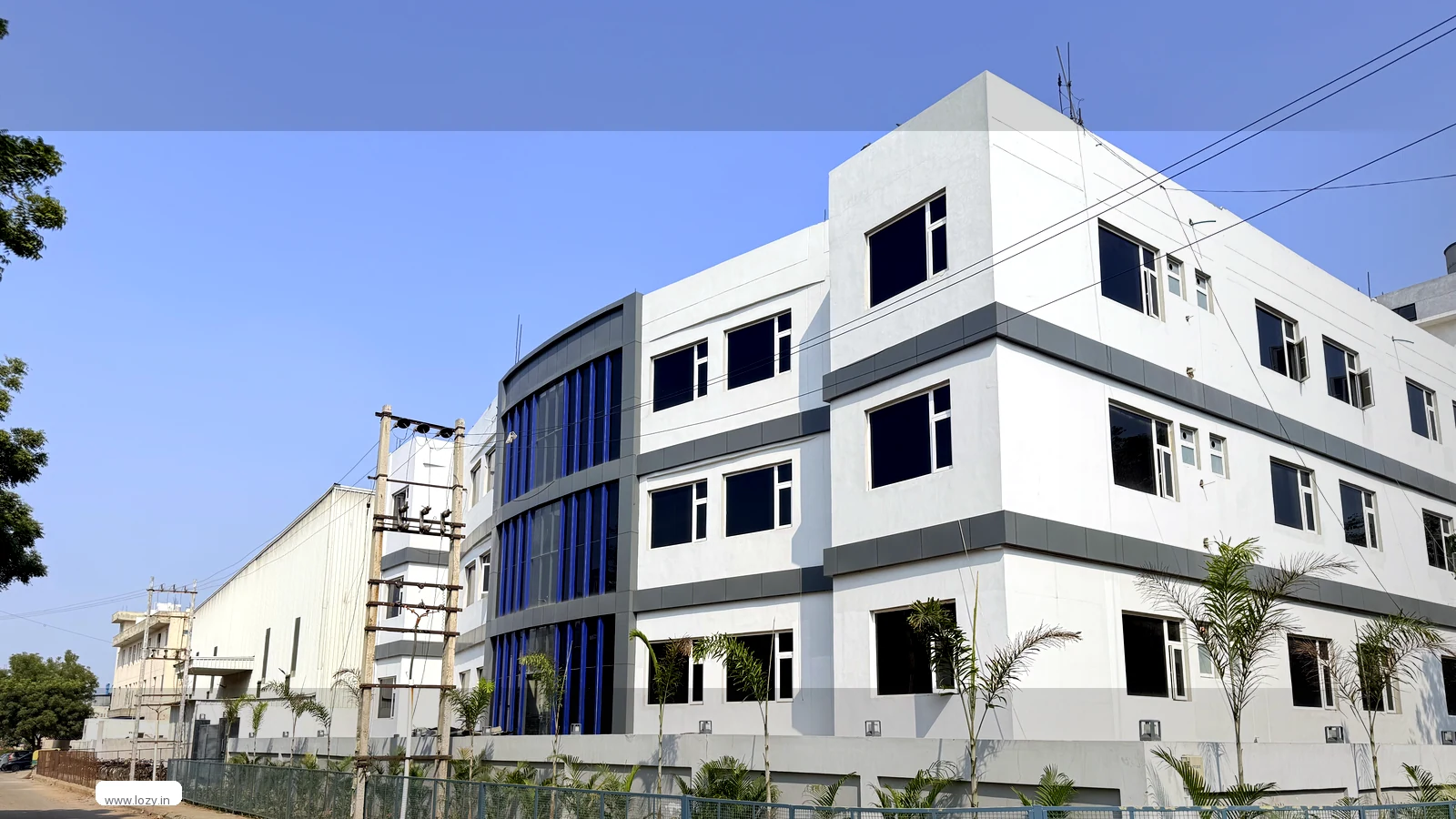
A B2B distribution warehouse has to do four things at once: take a full-truck or container lot at one end, hold dealer-wise staging lanes that are marked and empty, keep carton reserve and loose cases in two separate picking environments, and stop the gate opening on stock that is under a credit hold or short of a document. B2B warehouse requirements are those four turned into numbers - lanes, loading faces, floor ratings, hold rules and a document set per consignment - each with a test you can run before you sign. This is that specification, against a published starting rate of ₹21 per sq ft per month for Delhi NCR.
- One marked staging lane per route dispatched on the peak morning, sized to a pallet footprint with 3.5 m clear in front of it, plus a separate hold lane for consignments waiting on a document or a payment release.
- One loading face per eight to ten outbound vehicle loads on the busiest day, with an apron deep enough for the largest body your dealers' transporters send and room for a second vehicle to wait without blocking the first.
- A credit-hold bay that is caged, counted and kept outside the pick face, released only against a written release reference from accounts, never on a call to the loader.
- Four documents per consignment before gate-out - invoice, movement document where the rules require one, the transporter's copy and a picked-and-checked list - so that any consignment can be reconstructed three weeks later without a search.
Most distribution enquiries lead with rent per square foot, distance from the market, and how tidy the shed looked from the road. A requirement sheet inverts that order: it opens with how many dealers load on the same morning and how many sit on credit hold, and reaches a rate only after both have numbers.
The commercial case is set out in the wholesale distribution warehousing guide, which covers the four zones and how to choose a site. This post is the document that follows it: what the building and the records must provide, written so a landlord, a 3PL or a site manager can be held to it. The service sits under B2B and wholesale distribution warehousing.
What dealer-distribution stock demands from a building, and why a retail shed does not qualify
Dealer stock exists in three states at once, each with a different requirement. The reserve is unbroken pallets, sealed cartons and stock committed to a dealer but held for a dispatch date. The pick face is a working quantity of each line, opened and reachable, from which a mixed consignment is assembled case by case. The staging floor holds a consignment that is complete, labelled and waiting for a vehicle. A building that handles one state well and the other two badly works for eleven months and fails in the twelfth.
Dealer stock is light per cubic metre and heavy per pallet, because cartons cube out before they weigh out and then get stacked two high to save floor. A double-stacked pallet of packaged groceries, hardware or electrical accessories puts roughly a tonne on a square metre, so the sheet should carry around 750 kg per sq m for floor storage and about 1,200 kg per sq m wherever pallets go into racking. That is a third of what an industrial store of steel needs, which is why a distribution tenant can use buildings a manufacturer cannot.
Height comes next. Cartons stack, so vertical space converts into pallet positions, and the number that matters is clear height to the lowest obstruction rather than eaves height on the listing. Six usable metres gives three pallet levels; 4.5 m is the practical floor for any rack at all. Below that the building floor-stacks, and the rent per position roughly doubles.
Separation is the demand this trade gets wrong most often. Carton reserve, loose pick, scheme stock, credit-hold stock and dealer returns answer different questions: reserve is what you have, pick face is what you can build from today, scheme stock belongs to a window and often to a named entitlement, hold stock is sold but unreleasable, returns are of unknown value until inspected. Put any two on the same ground under one register and the count stops reconciling within a quarter.
The fourth is a document trail tied to a consignment rather than to an item: which dealer received which cases against which invoice, on which vehicle, at what time, and what came back. That is a different question from a bill-of-materials issue, and it needs a different record.
The acceptance specification: twelve requirements you can test on the visit
Each row below is a drafting benchmark to agree in writing, with a test that takes minutes on site, and is not a substitute for a structural or fire certificate. Score pass or fail, and walk away at three: what fails here is usually the envelope - doors, apron, floor, height - and none of it can be fixed once the agreement is signed.
| Requirement | Minimum | How to test it on the visit | Why it matters for this trade |
|---|---|---|---|
| Dealer-wise staging lanes, marked and counted | One lane per route dispatched on the peak day, plus one hold lane and one build lane; lane a minimum of 2.4 m wide by 3.5 m deep, painted and numbered | Visit on a dispatch morning, not at 11 am on a quiet Tuesday. Count the painted lanes, then count how many are occupied by slow-moving stock. | Staged stock leaves on a lift and a count; unstaged stock is hunted for while the driver waits. This is the row buyers strike first to save rent. |
| Loading faces and apron | One face per eight to ten outbound vehicle loads on the busiest day, two faces once routes exceed four, apron 20 m or more with a turning circle for the largest body used | Count the doors and the vehicles at the inbound peak. Watch an LCV and a 32-foot body turn and reverse, and check whether a second can wait without blocking the first. | Consignments leave on many small vehicles, not one trailer. A single shutter turns a four-route morning into a queue on the approach road. |
| Floor load, in writing | 750 kg per sq m for general floor storage of cartons and stacked pallets; 1,200 kg per sq m where pallets go into racking, with a certificate that states it | Demand the slab drawing and certificate rather than a caretaker's view. Check the unit - a kilonewton per square metre is roughly 102 kg - and look for cracked joints at the rack uprights. | Double-stacked cartons are heavier than they look. A floor rated for light storage deflects under a loaded rack and puts the uprights out of plumb. |
| Clear height and aisle width | 6 m to the lowest truss, sprinkler head or light fitting for three pallet levels; 4.5 m minimum for any racking; 3.5 m aisles for a counterbalance truck, 2.4 m for pallet-truck-only floors | Laser-measure four corners and the centre, take the lowest, then pace an aisle with a loaded pallet truck. | Reserve and pick face share the building, so an aisle serves a truck on one side and a picker with a trolley on the other. |
| Carton reserve separated from loose pick | A physical boundary - racking run, kerb or partition - not only a painted line, with a separate register for each zone | Ask for one SKU that exists in both zones and compare the two balances to the system. | Reserve is checked in pallets and cases at a face; loose pick is drawn down case by case. On shared ground the variance appears at year end. |
| Scheme and discount stock bay | A separate marked bay with the scheme code, window open and close dates and the dealer entitlement written on the label; reported as its own line in the stock statement | Ask to see a scheme carton and its label, how it is excluded from the free-sale count, and what happens the week after the window closes. | Promotional stock is the newest stock in the building, so stored loose it leaves first and a dealer is billed for a carton nobody ordered. |
| Credit-hold bay, caged and counted | A lockable cage or taped bay outside the pick face, with a hold register carrying the reason, the dealer, the invoice and the release reference | Ask what happens physically when an account goes on hold mid-month, who may release stock and on what document, then ask to see a current register entry. | Stock that is sold, invoiced and unreleasable must not be loadable. A hold held only in the software is loaded by whoever is on the dock. |
| Returns and quarantine bay | A distinct bay from the hold bay, with a return note per consignment, reason codes and a 72-hour disposition rule | Ask where a returned carton sits on arrival, who decides whether it is saleable, and how the credit note links to the return note. | Returned cases that re-enter the pick face merge saleable and unsaleable stock in one count. |
| Document station and gate control | A desk or terminal at the gate where invoice, movement document, transporter copy and picked-and-checked list are printed and matched before gate-out; a gate register signed for every vehicle | Stand at the gate for one dispatch and watch what is checked against what is loaded, then trace one register entry end to end. | Paperwork raised afterwards describes what was loaded, not what was picked, and the difference is a dealer deduction you absorb. |
| Stock system with the four balances | On hand, committed, staged and held reported separately per SKU per location, with min/max flags and a CSV export on demand | Pick one fast-moving SKU and ask for its four numbers, then ask what sales sees when it quotes - available, or merely on hand. | On hand includes stock already promised and stock under hold, so a team quoting on hand oversells the same cases twice in a quarter-end week. |
| Dry stowage, plinth and drainage | Plinth 450 mm or more above the apron, sealed roof and wall base, floor falling to a channel, yard draining away from the doors | Visit after rain if you can. Look for tide marks at the shutter base, and tip water at the far corner to see where it goes. | Cartons and paper-based packaging soften in a damp shed, and a dealer records a damp carton on the delivery document and deducts for it. |
| Fire NOC, hazard class and access control | A current NOC for this address and this use, sprinkler design matched to a carton-and-plastic commodity class, and a gate log of everyone who enters | Read the NOC for address and expiry, not the cover. Ask your insurer which hazard class packaged goods fall in. | Cartons, stretch wrap, pallets and plastic houseware burn far hotter than the steel in an industrial shed. The design basis has to match what you store. |
The two rows buyers argue about are the staging lanes and the hold bay, because neither carries saleable stock - and both are the cheapest to satisfy and the most expensive to retrofit. If you would rather have the sheet walked with you, the wholesale distribution warehousing team will run a site against it and say which rows it fails.
Judge the shed against twelve rows, not a brochure
Send your route count, peak-day vehicle mix and the dealer list you dispatch to - we reply with the facilities that clear the table, and the monthly figure for each.
Send the requirement sheetCall +91 93547 12345Dealer-wise staging: how many lanes, how big, and what keeps them clear
Staging is the one area of a distribution building defined by what it must not contain. It has to be empty at the start of a dispatch morning, fill in a known sequence, and be empty again when the last vehicle is loaded. A warehouse where the staging floor has a permanent resident fails in the busiest week of the quarter - and the four-zone layout this sits inside is set out in the wholesale distribution warehousing guide.
Lane geometry that a loader can actually work in
Build the lane from the pallet outward. A pallet footprint is 1.2 m by 1.0 m, and a consignment needs clearance each side to be counted, wrapped and lifted. A lane that holds four to six pallets - one vehicle's worth - wants about 2.4 m by 3.5 m of floor, painted, numbered and labelled with the route.
Three details decide whether a lane gets used or quietly absorbed. The marking must be a physical edge - 100 mm tape or a painted band under clear sealer - not chalk that disappears in a week. The lane must carry a number that appears on the dispatch sheet, so a loader is told "lane four" rather than a description. And it must be reachable by the vehicle without crossing another lane.
How many lanes a route network needs
Count the routes that dispatch on the busiest day of the quarter, then add three. One lane per route is the base, because two dealers on the same route still receive two separate consignments with two invoices and cannot share a pile. The three additions are a build lane where the consignment currently being assembled sits half-finished, a hold lane for consignments that are complete but cannot be released, and a returns lane where stock coming back off a vehicle is set down before it is inspected.
A shed serving forty to sixty dealer accounts across four to six routes therefore needs eight to ten marked lanes and roughly 250 to 350 sq ft of staging floor. Put that figure in the requirement sheet: it converts "some space near the door" into an area somebody has to allocate, and on a 10,000 sq ft floor it is the 3 per cent that decides whether a quarter closes on time.
The four rules that keep the floor clear
The first rule is one consignee per lane, with no sharing even when a lane is half empty: sharing is how the wrong dealer receives the right carton, and it starts with a small order on a busy day. The second is a label the moment a consignment is complete - dealer, route, invoice reference, lane number, piece count - because an unlabelled pile becomes anonymous within an hour.
The third is a dwell limit: no consignment sits in a lane for more than 48 hours outside a declared dispatch window, because beyond that either the date was never real or the lane has become storage. The fourth is a weekly count of clear lanes, taken with the stock count. A facility reporting "six of eight lanes clear on Monday" is managing the floor; one reporting nothing is hoping.
Dispatch day: dock slots, credit holds and the consignment file
Dispatch is where the specification stops being a floor plan and becomes a sequence of decisions with a time attached to each. Three of those decisions recur in every distribution operation: which vehicle goes to which door and when, which consignments are not allowed to leave, and what paper has to exist before the gate opens. All three are cheap to write down and impossible to improvise.
Dock scheduling when four dealers load on the same morning
A slot sheet is the whole mechanism: vehicle, transporter, body size, door, window, consignment reference and lane. Four routes leaving between nine and one is sixteen slots on a single door, which is why the door count is expressed per vehicle load. Two doors turn a queue into a schedule; one door turns a schedule into a queue.
Sequence by departure time, working backwards. A consignment going ninety minutes out on a route that closes at noon has to load by ten, be staged by nine, and be picked the previous evening. Written that way the dispatch plan produces the pick plan, which is what the supervisor actually runs.
Assign doors by body size: a 32-foot body needs a leveller or a ramp at the right height, an LCV loads from a level face. Reserve the dock-height door for the largest body of the day, and write a no-show rule - a vehicle that misses its window goes to the back of the list.
Credit-hold stock that must not dispatch
Credit hold turns a warehouse into a financial control, and it is the requirement most often satisfied in the software and ignored on the floor. Stock goes on hold for recognisable reasons: the dealer is over the sanctioned limit, an earlier invoice is past due, a cheque is under realisation, a consignment is under dispute, documentation is incomplete. Each is an instruction not to load, and each can be overridden by a loader told on the phone that it has been cleared.
So the specification is physical as well as procedural. There must be a caged or taped bay where held stock is moved the moment the hold is applied, out of the pick face and away from the door, and a register recording dealer, invoice, reason, date applied and the releasing reference. Then one rule with no exceptions: nothing leaves the hold bay without a release reference from accounts, entered before the vehicle is loaded.
The failure mode is predictable. Held stock left in the pick face gets loaded, because the consignment is already built and stopping it means unpacking; after the second time, the hold means nothing. Count the hold bay with the stock count and target zero unreleased items older than seven days.
The consignment file: four documents before the gate opens
Every dispatch should leave with a set that can be reconstructed without a search: the checked picking list the consignment was assembled against, the tax invoice raised on that dealer, the movement document the value and route require under the current rules, and the transporter's consignment note or lorry receipt. Where promotional stock is included, a scheme reference belongs in the same set.
Two habits matter more than the format. Documents are produced before loading, not after, so picked, invoiced and loaded quantities are the same number checked at the gate. And the vehicle number and quantity on the movement document match what left, because a document raised at a desk while the vehicle is on the highway will be questioned in an audit.
The rules for the movement document - when it is required, what threshold applies, how it is generated - change, and they are published by the GST portal rather than summarised here; confirm the position with your accountant for your state and commodity. What does not change is the sheet's requirement: for any named consignment the file must be reconstructable in ten minutes, three weeks later. Ask that on the visit and watch whether the answer is a system, a folder or a shrug.
Min/max visibility for the sales team, and consignment-level reconciliation
A distribution warehouse has its stock position quoted to customers all day by people who are not in the building, and that generates most of the reconciliation work: a sales team working from on hand will promise stock already staged for another dealer, stock in a hold bay, or scheme stock that cannot be sold at list price.
What sales must be able to see, and how often
The requirement is four balances per SKU per location, not one: on hand, committed to named dealers, staged and awaiting a vehicle, and held. Available is the first minus the second and the fourth, and available is the only number a sales team should quote from. A single on-hand figure forces the sales desk to keep a shadow list in a spreadsheet, and two lists that disagree is how a distributor ends up unable to explain a shortfall.
On top of the four balances sit min and max per SKU per depot. The minimum triggers the next inbound, in cases and days of cover; the maximum is where ordering stops because the season is about to turn. Both are commercial decisions, but the warehouse has to hold them and report against them, because a min/max in somebody's head produces a reorder after the stock-out. Report the flags weekly on a fixed day: every SKU at or below minimum, with days of cover and open inbound.
Consignment-level reconciliation: three numbers, one variance
Item-level reconciliation tells you whether the books agree with the building. Consignment-level reconciliation tells you whether a specific dealer was served correctly, which is the question that produces disputes. For every consignment, three numbers should exist: picked against the indent, loaded onto the vehicle, and invoiced. Any gap is a variance with a name attached, reported weekly rather than discovered at the dealer's counter.
The gate count makes the three numbers mean something: somebody who is not the picker counts the consignment against the invoice, signs, and records vehicle and time. That signature separates a short-load from a short-delivery - a short-load is your cost, a short-delivery is a claim that needs evidence to survive, and the evidence is a counted consignment, a signed gate register and a proof of delivery recording what the counter received.
Report the variance weekly and reconcile monthly, with three figures: closing stock by value, the book-to-physical variance with its causes, and the value of consignments dispatched but not yet acknowledged. Those three answer a lender, an auditor or a principal, and they are why a distributor with a tracked ledger should price the inventory and stock storage basis rather than floor area.
Dealer returns, and why they need their own bay
Returns arrive for reasons that are all legitimate: transit damage, a near-expiry date the dealer will not accept, a wrong SKU against a correct invoice, unsold scheme stock coming back at the end of a window, a commercial return agreed by a sales manager. Each has a different value and destination, and none should touch the pick face until somebody decides which it is.
The specification is a return note per consignment, reason codes matching the list above, a quarantine bay separate from the credit-hold bay, and a 72-hour disposition rule - saleable back to stock, non-saleable to a scrap record, or returnable to the principal. The credit note then links the return note, the original invoice and itself. A credit note without a return note is stock leaving the ledger without leaving the building.
Licences, registrations and premises documents that must exist before stock moves
No statute issues a "B2B warehouse licence", so treat any offer to arrange one as a service nobody requires. What has to exist is a pair of things: approvals that belong to the premises, and registrations that belong to your business. Neither is asked for until there is a claim or an audit, which is why both are usually incomplete by the time anybody reads them.
What the premises must produce
- Right to occupy - a lease, leave-and-licence or title document naming the entity that raises your rent invoice, with the shed shown on a layout rather than described by a gate.
- Fire NOC or fire safety certificate covering this address and this occupancy, in date. Ask for the certificate itself: the commonest defect in the set is a document that lapsed two renewals ago, or one that names a neighbouring shed.
- Land-use permission for storage on that plot: an estate allotment, a sanctioned change of use, or a municipal licence wherever the local body requires one for a godown.
- Structural paper for the floor rating, and for any installed racking, the design with its latest inspection and the rated load per bay.
- Building policy with a written answer on your stock: whose cover, which perils, what deductible, and whether cartons and plastic goods have been declared.
- Capacity to raise a tax invoice in the contracting entity's name. Rent is creditable only against a tax invoice; a receipt from an unregistered proprietorship is a monthly cost pretending to be a saving.
- Electricity connection agreement, so the load that runs lighting, chargers and the stock system is contracted rather than assumed.
What the business itself has to hold
GST comes first, and the step that catches distributors out is registering the godown as an additional place of business rather than treating the head-office address as enough - the process is set out on the GST portal. Beyond that:
- Municipal trade licence or shops and establishment registration where the local body requires one for storage, checked for that district rather than copied from another state's practice.
- FSSAI registration or licence for any packaged food, at the tier your turnover and activity attract, with the categories published by FSSAI. Sealed packs stored and dispatched are one activity; repacking or relabelling is another and needs a facility built for it.
- Legal metrology as packer or dealer only where pre-packaged goods are actually packed or labelled on site.
- Drug licence for pharmaceuticals, which is a specialist approval and not something a general distribution shed can carry.
- IEC from the DGFT if you import what you distribute, with CBIC handling the clearance side.
- BIS licence or registration for any category under a compulsory mark - electrical accessories, some hardware, a good deal of plastic houseware - checked product by product against the Bureau of Indian Standards scheme.
- Udyam registration where you qualify as a micro, small or medium enterprise, since most trader-facing schemes key off it.
- Your own stock policy. The facility's cover protects the building and its own exposure; it does not pay you for a burned pallet of cartons.
- Contract labour registration if your workers, not the facility's, are stationed on site.
How to check the set in ten minutes
Three fields per document: who it names, what address it covers, when it lapses. A fire NOC describing the occupancy as an office has approved something other than what you are about to do, and one for another shed in the same estate covers neither your stock nor your liability. The benchmark for professional storage in India is published by the Warehousing Development and Regulatory Authority, and it is a fair answer to "what should a warehouse be able to show".
The point of the check is speed, not suspicion. Put the document set in the requirement sheet and a site that cannot produce it drops out on paper instead of being argued about a fortnight later. Send the list you are working to and we will mark which items a Lozy facility supplies and which remain yours.
Record-keeping: nine registers a distributor has to be able to produce
Nine records carry a distribution warehouse, and the test of each is whether it answers a question about one consignment. Records kept as a habit survive a quarter-end; the ones that fail first are always the same three - staging, hold and returns. They are also what makes the discipline behind B2B and wholesale distribution warehousing auditable rather than assumed.
| Record | What it must contain | Frequency | Signed off by |
|---|---|---|---|
| Goods receipt note against the vendor document | Date, vehicle, consignor, invoice or advice note number, item, cases received, cases short or damaged, carton condition at intake, photographs | Every receipt, closed the same day | Receiving supervisor |
| Location and zone register | Every SKU mapped to reserve rack, pick face, scheme bay, hold bay or returns bay, with the balance in each | At put-away; audited weekly | Warehouse controller |
| Dealer-wise staging register | Lane number, dealer, route, invoice reference, piece and pallet count, time staged, time loaded, vehicle | Every dispatch, per consignment | Dispatch supervisor |
| Credit-hold register | Dealer, invoice, value, reason for hold, date applied, physical bay reference, release reference and releasing authority | Every hold and release, reviewed weekly | Accounts, countersigned by warehouse |
| Consignment dispatch file | Picked-and-checked list, invoice, movement document where required, transporter copy or LR, scheme reference, gate-out time | Every dispatch, complete before gate-out | Dispatch supervisor and gate |
| Gate register | Vehicle number, transporter, driver, in and out times, consignment references, seal number where sealed, gate signature | Every movement, both directions | Security and dispatch |
| Scheme stock register | Scheme code, window open and close dates, quantity received, quantity allocated by dealer entitlement, quantity dispatched, balance at close | At receipt, at dispatch, and at window close | Sales and warehouse, jointly |
| Returns register | Dealer, original invoice, return note number, reason code, quantity, condition on arrival, disposition and date, credit note reference | Every return, disposition within 72 hours | Warehouse and accounts |
| Stock statement and statutory file | Four balances per SKU, min/max flags, days of cover, variance to physical count; plus fire NOC, insurance, power agreement and racking inspection tracked to expiry | Weekly statement, monthly reconciliation, quarterly document audit | Warehouse manager |
Three derived numbers belong on the monthly statement: stock accuracy against the physical count, the value of consignments staged but not dispatched, and the share of dispatches that left with a complete document set first time. The first is a warehouse measure, the second a cash measure, the third the one that predicts disputes. The warehouse inspection checklist turns a site visit into evidence and is worth carrying alongside the acceptance table.
What moves the monthly figure in this trade
Six inputs move a distribution storage bill, and only one of them is the rate per square foot. A wholesaler who negotiates the rate and ignores the other five is negotiating the smallest number on the page.
- The basis being quoted. Floor area is priced per square foot, a tracked ledger per month, a named season per booking. Two quotes that look far apart often measure different quantities rather than different buildings.
- Staging floor, stated as an area. Staging carries no saleable stock, so a quote either includes it or prices it separately. Skip the question and month two reveals that the keen rate bought nowhere to build a consignment.
- Break-bulk depth per consignment. Sending a sealed pallet is cheaper work than assembling twenty lines case by case, and a dealer network that buys mixed quantities is buying minutes as well as square feet.
- Term and seasonality. A flat core operation prices differently from a year that peaks around scheme windows and the festive quarter. A monthly basis lets the second release positions once the consignments have gone.
The published bases measure different things and should be compared that way. The floor-area basis opens at ₹21 per sq ft per month, as published on the warehouse for rent page, and racked or part-racked space inside a business-area building follows the same floor-area logic under commercial warehousing. A bulk floorplate with dock-side loading and room to stack is the industrial bulk warehousing basis, and a business park position for a sales office attached to the shed sits under business warehousing. Where stock is tracked as a running ledger with the four balances above, the plan is published from ₹4,499 per month under inventory and stock storage; a festive or quarter-end push fits seasonal warehousing from ₹1,299 per month; a short hold for a few weeks starts at ₹699 per month; a standing hold for a longer term is published from ₹1,199 per month under long-term warehousing; and a single campaign with a defined end date fits on-demand warehousing.
Each is a starting rate, not a quotation: billed monthly, GST invoice, no long lock-in, and collected on the pricing page. Compare bases rather than numbers, and divide the monthly figure by the pallet positions the building yields - the method is in the cost per pallet guide.
Want the monthly figure built from your routes?
Send route count, peak-day vehicle mix, pallet positions and the share of stock held on scheme - the reply gives the area, the lane count and a monthly figure.
Price my requirementCall +91 93547 12345Five ways dealer storage goes wrong, and the table row that catches each
None of these arrives suddenly. Each is a gap in the specification that shows itself on a dispatch morning, and each maps to a row in the table above.
One: staging that was described rather than marked
The visit happens on a quiet afternoon, the shed has a clear patch near the door, and the operator says orders are assembled there. Six weeks later the patch holds slow-moving stock because it was never an allocated area, and in a quarter-end week consignments are built in the aisle while three vehicles wait outside. Nothing was lied about; the floor was never given to staging in writing.
Two: held stock that stayed inside the pick face
The dealer goes on hold on a Tuesday, the system flags the account, and the cartons stay where they were because there is no bay to move them to. On Thursday a loader takes them, the vehicle leaves, and the hold is discovered when accounts runs the ageing report.
Three: scheme stock merged with saleable stock
Promotional cartons arrive in the same intake as regular stock and go away in the same rack because there was no scheme bay. They are the newest cases on the face, so they are picked first, and a dealer receives one against an entitlement already taken - a billing argument, a credit note and a second dispatch to put it right.
Four: documents raised after the vehicle left
The vehicle is loaded at eleven, the invoice is raised at two from the dispatch sheet, and the movement document at four from the same sheet. Loaded and invoiced quantities are now two numbers, nobody counted at the gate, and the first dealer deduction arrives three weeks later with no evidence on either side.
Five: one stock figure quoted to the sales team
Sales works from on hand, so stock already staged for one dealer is promised to a second and stock in a hold bay to a third. Nothing is missing from the building - only from the number the desk can see. The shortfall surfaces at dispatch, the second dealer is given a date that has passed, and the wholesaler concludes the warehouse cannot count, when it counted correctly and reported the wrong thing.
The pattern is the same in all five: cheaper to prevent than to repair, and visible to anybody who knew what to look for. That is how B2B and wholesale distribution warehousing at Lozy is scoped. Sharing a shed with other tenants raises its own separation questions, answered in the shared and multi-client warehouse guide; handing the channel to an operator is compared honestly in the 3PL warehousing in Delhi NCR guide and the contract logistics guide.
The handover, from requirement to first dispatch - and the clauses to sign before it
Nine steps take a requirement to a working distribution warehouse. Sequence beats speed here, and the two steps dropped when a date is tight - the written layout and the test consignment - are precisely the two that stop the expensive surprises.
- Write the requirement sheet. The twelve rows, the route count, the peak-day vehicle mix, pallet positions by stock state, scheme calendar and the dealers on credit terms.
- Request documents before visiting. Fire NOC, occupancy proof, land use, structural confirmation, insurance position, GST status of the invoicing entity, power agreement.
- Shortlist two or three buildings on one belt, so the comparison is about the building rather than the drive. The Gurgaon guide and the Faridabad guide set out what sits where for the south-west and south-east dealer runs.
- Visit with a test kit. Laser measure, a bottle of water, a printed copy of the table, and one consignment's worth of cartons so the pick face is tested with real cases rather than an estimate.
- Agree the layout on the drawing. Lane numbers and count, door allocation, carton reserve, loose-pick face, scheme bay, hold cage, returns bay and the aisle the truck will use.
- Set the operating rules in writing. Dispatch cut-off per route, slot windows, hold and release authority, intake condition recording, labelling standard, escalation contact. In the agreement, not in an email.
- Sign, then configure. Your users on the stock system, SKU master loaded with min/max, four balances visible to sales, scheme codes opened, a dummy consignment picked, staged and reversed.
- Run a test consignment. One dealer, one route, one vehicle: received, binned, picked, staged in a numbered lane, counted at the gate, documented, dispatched and acknowledged.
- Measure the first month. Stock accuracy on the test SKUs, lanes clear on dispatch mornings, document sets complete first time, and the variance between picked, loaded and invoiced.
Then the clauses, because a row that survives only as a promise is a preference. Eleven belong in a distribution agreement: footprint with lane count and bay numbers on a plan; the hold rule, naming who may release stock and what the release reference is; the document set per consignment and by when; dispatch cut-off and slot windows as a measured service level; the scheme stock rule, including stock still in the bay when a window closes; the returns process with the 72-hour disposition and who decides; the weekly stock statement and CSV export, four balances named; the audit and count right with a variance tolerance; insurance and liability, including stock in the hold bay and at whose value; notice period, stock release time and equipment for loading out; and the invoicing entity with GSTIN and place of supply.
Hold the agreement and the requirement sheet side by side before signing, and check that every row in the table has a sentence in the contract. Moving the intake over a weekend? Put the sheet and the layout on WhatsApp and we will mark it up before the first vehicle is booked.
Where Lozy fits, and where it does not
Lozy operates 77+ warehouses and over a million square feet of live space out of Delhi NCR, billing monthly on a GST invoice with no long lock-in. Distribution positions are scoped against the twelve rows above: marked lanes, more than one loading face where the route count needs it, racked reserve behind a loose-pick face, and a stock system reporting on hand, committed, staged and held. Floorplate space starts at ₹21 per sq ft per month and the tracked-ledger plan is published from ₹4,499 per month. What is free now is on the warehouse listing, the network under locations, and the service set on the services page.
Some requirements do not belong here, and it is cheaper to say so than to discover it later. This network has no cold room, no bonded facility and no calibrated testing, and it cannot hold pharmaceuticals, solvents, or anything classed as petroleum or explosive - each needs a building designed and approved for it. Dry, non-hazardous dealer stock with a staging discipline is the case it is built for.
If that describes your operation, mail the requirement sheet to care@lozy.in and you will get back the sites that clear it, with the monthly figure, usually the same working day. General questions sit on the FAQ page, the other verticals under industries, and a conversation starts at contact us.
Related guides
- wholesale distribution warehousing: zones, cost and dispatch
- the warehouse inspection checklist
- warehousing in New Delhi
- business warehousing

Walk the shortlist with the sheet in hand
Send your routes, your peak dispatch day and your dealer credit terms - we will name the sites that clear the twelve rows and hold one for a visit.
Hold a site visitCall +91 93547 12345Sources. Prices, plan figures and network counts are Lozy's own published information as at 25 October 2026. GST registration and movement-document rules from the GST portal; operating practice from the Warehousing Development and Regulatory Authority; packaged-food storage from FSSAI; compulsory-mark categories from the Bureau of Indian Standards; channel and trader context from IBEF. Import documentation sits with the DGFT and enterprise schemes with the Ministry of MSME. The minimums in the table above are drafting benchmarks for your own sheet; they do not replace a structural, fire or licensed engineer's certificate for the building.
Last updated: 25 October 2026. Something the FAQ below does not cover? Call +91 93547 12345 or email care@lozy.in.
Need warehousing or storage in India?
Request a free, tailored quote in under 2 minutes — free pickup, no lock-in.