Cosmetic Warehouse Requirements: A Testable Specification (2026 Guide)
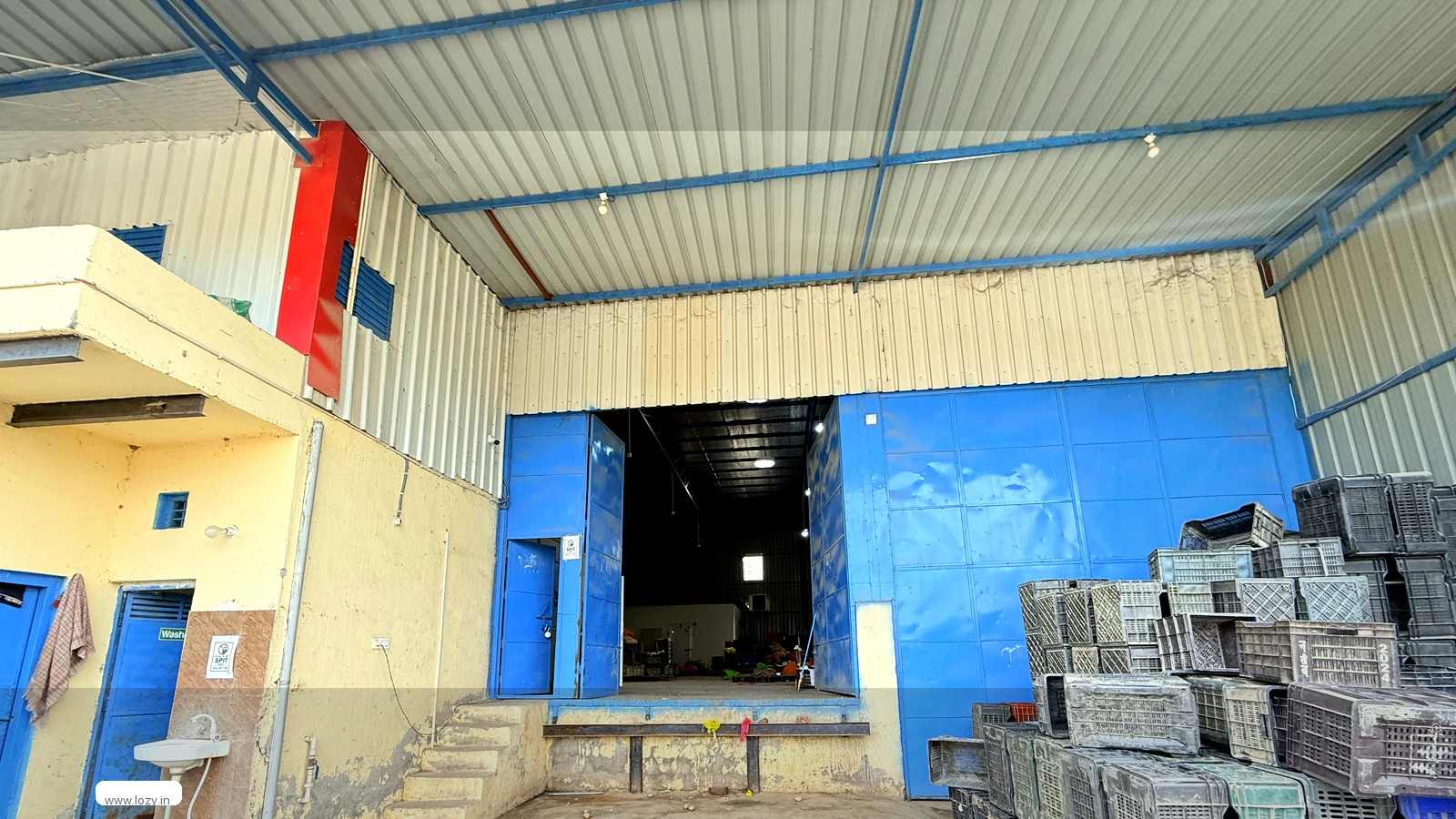
Short answer: A cosmetic warehouse has to provide four things and prove each one: an envelope that keeps emulsions and powders inside a temperature and humidity band, a handling discipline that keeps every unit upright with nothing stacked on a pump pack, a batch-and-expiry record that survives from the filler's pallet to the retail shelf, and a quarantine path for leaks, returns and near-expiry stock. Lozy's starting basis is ₹21 per sq ft per month in Delhi NCR, billed monthly on a GST invoice with no lock-in — but the rate is the last thing that decides whether a consignment is still saleable in month nine. What decides it is the specification below: measurable limits, and a way to test each one before you sign.
- An envelope, not just a shed. The requirement is a band — temperature range, relative-humidity ceiling, no direct sun on any shelf face — tested with a logger over 72 hours including the afternoon, not by standing in the aisle saying it feels cool.
- Handling that assumes gravity is the enemy. Pump collars, cap threads, dropper bulbs and crimped valves fail under load, so liquid cartons are racked in single layers with nothing above them.
- A record with four mandatory fields. Batch number, manufacture date, use-by or period-after-opening, and MRP. Any one missing turns a saleable unit into a write-off the first time a marketplace or a returns desk asks a question.
- A quarantine route that exists before the first leak. Returns, damaged pumps and near-expiry stock need a marked position with its own register, or a weeping bottle goes back into the pick face.
What a cosmetic warehouse must provide
A cosmetic warehouse must provide a dry, shaded, ventilated building with shelf-level storage, a separated liquid area, a clean assembly surface and a written identity for every unit it holds. Those five are the irreducible minimum; everything else here is their measurement. The list is longer than a general merchandise warehouse's because cosmetics are not one product but four families with different failure modes arriving in the same consignment.
The four families, and how each one fails
Emulsions — creams, lotions, serums, foundations, sunscreens, cleansers. These are oil-and-water systems held together by emulsifiers and are the most heat-sensitive stock in the building. Warm them and the dispersed phase migrates: the product creams at the top, thins at the bottom, or splits outright. Pump and airless packs make it worse, because a separated formula left on its side can pull air through the collar on first actuation. Freeze them and ice crystals break the emulsion permanently — a winter consignment left overnight in an unheated shed can be ruined unopened.
Powders — pressed compacts, loose powder, blush, eyeshadow palettes. These fail on moisture rather than heat. A pressed pan is compacted powder held by a binder, and when humidity climbs the binder takes up water, the pan swells and either crumbles at the edge or pulls away from the case. Talc-free and starch-based formulations are more hygroscopic than traditional ones, so reformulating away from talc quietly tightens a brand's own storage requirement.
Anhydrous sticks and balms — lipsticks, lip balms, stick blushes, solid fragrances, body butters. No water, so humidity is secondary, but the fat and wax matrix softens with heat. A lipstick that has been through a hot week can lean in the tube, sweat oil at the surface, or develop a white haze of fat bloom that is harmless and completely unsellable. Once a bullet has leaned it does not straighten: the unit is scrap at full retail value.
Aerosols, fragrance and nail enamel — deodorant sprays, setting sprays, dry shampoo, eau de parfum, nail polish. This is the family that changes the building's compliance conversation rather than its racking. A pressurised can is a fire load for insurance purposes; a solvent-based enamel and an alcohol-heavy fragrance are flammable liquids in retail packaging. They need to sit away from heat and direct sun, in a bay whose separation and fire load the landlord has accepted in writing. Fragrance and enamel are also the most light-sensitive stock in the trade: a clear flacon on a sunlit shelf loses its top notes and shifts colour in a season.
Four families, four specifications, one footprint — so a cosmetic warehouse is zoned rather than uniform: a shaded run for emulsions, a low-humidity run for powders, a rigid unstacked bay for glass and pumps, and a fire-accepted position for aerosols and solvents. One flat environment called storage has not answered the requirement. The sister article in this series, beauty and personal care warehousing, covers how that zoning is operated day to day; this piece turns it into numbers a landlord or operator can be held to, and tests a buyer can run. The commercial shape of the service sits on the beauty and personal care warehousing page.
Temperature, humidity and light: what cosmetics actually need
Cosmetics need a stable, shaded environment inside a stated band, and the band comes from the brand's own stability data rather than from a regulation. No Indian rule fixes a storage temperature for cosmetics in general trade; what exists is the product's stability file, the storage instruction on the pack and the shelf life the brand has declared. A warehouse requirement is therefore written by the brand, offered to the operator and tested with a logger — and the common mistake is writing the band loosely enough that any shed passes.
Temperature: the band, and the afternoon spike
A common specification for emulsion and wax-based stock is a room held between roughly 15 °C and 25 °C, with no freezing and no sustained excursion above 30 °C. That is not a regulatory number and not a Lozy guarantee; it is the range most stability programmes are written around, and a brand's own file should replace it if the file says otherwise. What matters on a site visit is not the figure a landlord quotes but where the temperature actually goes at three in the afternoon in May.
An Indian warehouse shed is a steel roof over a concrete slab, and the roof is the whole story. Metal decking without insulation radiates heat downward from noon; the air at 1.5 m reads comfortable while the air at 6 m, where the top rack level sits, is several degrees hotter. That is the most consequential fact in cosmetic storage here: the stock most easily damaged by heat is stored where the heat is worst, because the top level is the cheapest space per square foot and the last to fill.
Two requirements follow, and both are testable. First, no emulsion, wax or fragrance stock is stored above the height at which the roof's radiant load becomes material — in practice, the level a person can reach with a step ladder. Second, the site is tested with a data logger at the proposed storage height, not at eye level in the aisle, over at least 72 hours including a full afternoon. A logger reading 24 °C at 9 a.m. and 33 °C at 3 p.m. has told you the building has no usable envelope for emulsions above the ground tier, and that is a finding, not a negotiating point.
Ventilation changes the picture and is worth asking about. Ridge vents, turbo vents and open loading faces move hot air out of the apex, and a shed with working ridge vents runs cooler at rack height than an identical shed without them. Insulated panels or a reflective coating do the same job for more money. None of this is air conditioning and none should be called temperature control: it is heat-load reduction, and it separates a shed adequate for powders from one adequate for emulsions in June.
Humidity: the powder problem, and the carton problem
Relative humidity is the requirement most often left out of a cosmetics specification and the one most likely to cost money. A working ceiling for powder and carton storage is generally written at 60% RH, with excursions above 70% treated as an incident. Delhi NCR runs well above that through the monsoon, and a shed in the belt is not sealed: shutters open all day, and the slab wicks moisture from the yard unless the plinth sits above grade with a damp-proof course.
The damage is sequential. The outer carton takes up water, loses stiffness and its print softens; a scuffed or crushed shipper is refused at a marketplace inbound dock. Then the retail carton cockles and the printed batch, MRP and use-by panels become illegible at exactly the moment they are needed. Then the product: pressed pans crumble, loose powder cakes, salt-based bath products absorb water and swell their tubs, and metal parts — pump collars, tin rims, compact clasps — begin to corrode. A fragrance that has absorbed a musty note cannot be sold at any discount.
The tests are simple. Ask for the floor level relative to the yard and look at the plinth from outside rather than the slab from inside; look for tide marks on the bottom wall course, staining on the lower 300 mm of any carton stack and rust at the racking feet. Then leave a logger for 72 hours across a monsoon week and read humidity as well as temperature.
Light: the requirement that costs nothing
Direct sunlight is the cheapest requirement here to meet and the most commonly ignored. Ultraviolet and visible light drive oxidation in fragrance oils, fade dyes in pressed powders and lipsticks, and degrade the actives a skincare brand's claim rests on — retinoids, vitamin C derivatives and the plant extracts used across the category. A clear glass bottle on a shelf face that takes sun from a side window for four hours a day will discolour in a season, and the brand finds out when a customer photographs it.
The requirement is: no direct solar path to any shelf face at any hour of the working day, and no storage under translucent roof sheeting. The test is to stand at the position at midday and at four and look for a sun patch, then check whether the roof above is opaque. Shading or relocating the run solves it; where the only position is under a translucent sheet, emulsions, fragrance and actives should not be stored there — a specification decision, not a housekeeping note.
Where the shed stops and a climate room begins
Some cosmetics genuinely cannot be stored in an ambient shed, and that is worth being blunt about before a quotation is written. A formula with a declared storage instruction of 2–8 °C, a live-culture skincare line, a serum whose stability file assumes a refrigerated chain, or a product labelled "store below 25 °C" sold into a 42 °C summer — these need a controlled-climate room: insulated panels, refrigeration or HVAC plant, validated monitoring with alarms, and temperature mapping to prove the room holds its band in every corner, loaded and empty.
Lozy does not operate a controlled-temperature or humidity-controlled room. Our facilities are ambient, dry, shaded warehouses with ventilation and heat-load reduction, not cold rooms and not validated climate chambers. Where a stability file demands a band an ambient shed cannot hold in May, the correct facility is a specialist temperature-controlled 3PL, and the requirement should say so rather than being negotiated down to a shed with a thermometer in the office. The rest of this guide is written for stock an ambient, well-run cosmetics warehouse can genuinely hold: emulsions and powders inside their declared shelf life in a shaded, ventilated building, anhydrous sticks, sealed aerosols and fragrance, against a specification that is measured rather than assumed.
The acceptance specification
The table below is the document to take on a site visit: each row is a requirement, the minimum to accept, a test that can be run in the room, and why it matters for cosmetics. The bracketed figures are starting specifications drawn from common stability practice — not Lozy guarantees, and not a substitute for your own stability file. Replace any of them with your own number and hold the operator to the number you wrote.
| Requirement | Minimum | How to test it on the visit | Why it matters for this trade |
|---|---|---|---|
| Roof and envelope integrity | No water ingress over stored stock; no daylight through sheeting above a shelf | Walk the roof line from inside at the apex; look for stained purlins, drip marks on the slab and light pinholes; visit after rain if the calendar allows | One drip onto a pallet of shippers ruins the outer cartons and the printed batch and MRP panels underneath |
| Floor slab and plinth | Level, crack-free slab; finished floor above yard grade with a damp-proof course | Stand outside and compare slab with yard level; look for tide marks on the bottom wall course and rust at racking feet | Moisture wicks into cartons from below; powders cake and pump collars corrode before product is touched |
| Temperature at storage height | Inside the brand's declared band — commonly 15–25 °C — no freezing, no sustained excursion above 30 °C | Logger at the proposed shelf height for 72 hours including a full afternoon; read the 3 p.m. peak, not the morning figure | Emulsions cream or split, waxes soften and bloom, airless pumps draw air past a separated formula |
| Relative humidity | Under 60% RH averaged over 72 hours; no excursion above 70% for more than an hour | Same logger, humidity channel; also look for cockled cartons, rusted compacts and tide marks on lower cartons | Pressed pans crumble, loose powder cakes, labels lift, shippers are refused at inbound docks |
| Light exposure | No direct solar path to any shelf face; no translucent sheeting above stock | Stand at the shelf at midday and at 4 p.m. and look for a sun patch; check the roof panel above | Fragrance loses top notes, dyes fade, retinoid and vitamin C actives degrade in visible light |
| Shelf and racking specification | Levels at liftable height sized for light cartons; beam spacing matched to your carton; not pallet-only racking | Take a sample carton and set it on a shelf; check whether one carton can be lifted out without moving two others | Beauty stock moves in small cartons; pallet racking forces it onto the floor or into deep, unreachable positions |
| Liquid bay, separated and bunded | A distinct bay for bottles, pumps and jars with kerb, bund or spill tray; single-layer racking; nothing stacked on units | Ask to see the bay, not to be told about it; look for a kerb at the floor line, a drain path, and any carton sitting on a carton of bottles | Pump collars and cap threads fail under load; one weeping bottle takes the cartons beside it down with it |
| Quarantine position | A marked, physically separate area with its own register for returns, leaks and near-expiry stock | Ask to be shown it, and to see the last page of its register; a corner with nothing in it and no register is not quarantine | Uninspected returns and near-expiry units otherwise re-enter the pick face and ship to a customer |
| Kit and assembly bench | Table-height bench near the pick face, lit, with power and room for trays and shippers | Measure it, then check the walking distance from bench to the fastest-moving SKUs | Gift sets and sampler kits are assembled, not picked; a bench at the far end multiplies the labour |
| Aerosol and solvent separation | A position away from heat and direct sun, with the fire load accepted by the landlord in writing | Ask for written acceptance of pressurised and flammable retail stock, and look at what sits beside it | Deodorant sprays, setting sprays and nail enamel change the building's fire load and insurance basis |
Ten rows is a working specification, not a complete one: a brand importing finished goods should add a row on the customs and CDSCO paperwork that must accompany each consignment. The discipline is that every row has a number and a test. A requirement that cannot be tested on a visit is a preference, and a preference will not survive the first busy week. Where the space is one of ours, the scope behind these rows is on the cosmetics and skincare storage page.
Take this specification to a site visit
Send us the band your stability file states, the share of your catalogue that is liquid, and how many kits a month you assemble. We will tell you which of our facilities can hold it, and which of your lines need a climate room we do not run.
Get a quoteCall +91 93547 12345Batch codes, shelf life, MRP and label integrity
Every cosmetic unit must leave storage carrying the four identifications it arrived with — batch or lot number, date of manufacture, use-by or period-after-opening reference, and the printed MRP — and the warehouse's obligation is to record them at intake and never alter, cover or reprint them. That sentence separates a cosmetics warehouse from general storage. General merchandise is identified by SKU and count; cosmetics are identified by SKU, batch and date, because the same shade of foundation arriving in March and in August is not interchangeable stock.
What the retail unit has to carry
A cosmetic pack in India carries a defined set of declarations: product name and function, net content, manufacturer or importer name and address, manufacturing licence number for domestically made goods, batch number, month and year of manufacture, use-before date where applicable, MRP inclusive of all taxes, and consumer-care details. Imported packs add the importer and country of origin. Where durability exceeds thirty months, a period-after-opening symbol may replace the use-by date — a consumer instruction that tells a warehouse nothing.
Batch number and manufacture date are the storage fields; the rest are commercial. The MRP is the field most often damaged in storage and the most expensive to get wrong, because a unit with a scuffed or over-labelled MRP panel cannot be sold at retail at all. The pack is non-compliant before the product is even opened.
Two date systems, and only one of them is yours
Brands run two clocks and warehouse paperwork constantly confuses them. The first is shelf life: the interval from manufacture to the use-by date on the pack, which is the number the warehouse manages. The second is the period after opening, which starts when a customer first uses the product and is measured in months from that moment. A warehouse cannot manage the second clock and should not pretend to. It can hold the first honestly: record the manufacture date, compute remaining shelf life at intake, and report stock that has fallen below a threshold the brand sets.
That threshold is a commercial decision, not a storage one. A brand selling through marketplaces usually wants a report at six months remaining, because marketplace rules and retailer inward teams reject short-dated stock; a salon-led brand can work with three. Whichever number is chosen belongs in the agreement, with a monthly report against it, because a near-expiry list produced when someone remembers is not a control.
MRP and label integrity: what the warehouse must never do
Three practices destroy label integrity and all three are common in improvised storage. The first is over-labelling: a new MRP or batch label stuck over the printed one when a price changes or a batch is unclear. On a cosmetic pack the printed panel is the compliance record, and a warehouse that reprints it has taken on a manufacturer's obligation without a manufacturer's licence. The second is hand-annotation: a batch number written on an outer carton in marker because the inner units were illegible. Fine as an internal aid, fatal as the only record. The third is sticker migration: MRP stickers lifting at the corner in humidity, or batch stickers that will not hold on a laminated tube, so the unit reaches retail with a loose label and is refused.
Write the requirement negatively and unambiguously: no re-labelling, reprinting, over-sticking or annotation of any batch, date or MRP field on a retail unit; any consignment arriving with an illegible or missing panel is quarantined and reported to the brand the same day, and the decision is the brand's. That clause protects both sides — the operator cannot be accused of altering stock, and the brand cannot discover a relabelled batch in the market six months later with no way to trace who did it.
The release rule
Outbound allocation runs first-expiry-first-out, on manufacture date and remaining shelf life. Where two cartons of the same shade look identical, the shelf has to decide for the picker: older batch in front, newer behind, and a rotation mark on the rack naming the live batch. Without a rule, the carton nearest the aisle leaves first, and the oldest batch reaches its use-by date in the position nobody visits. The cost is the landed cost of the unit plus disposal.
Kits complicate the rule and deserve their own line in the record. A gift set with a lotion, a shower gel, a hand cream and a lip balm carries four component batches, and when one is recalled the brand has to say which kits were built from it. A kit therefore needs its own batch identity, built from the components consumed, with the count produced and the date. Without it, a component recall is a total kit write-off; with it, the affected kits are isolated in an afternoon.
If you want the eleven registers opened against your own SKU list before you commit, send the list and we will map one SKU end to end — intake, shelf, rotation, dispatch and return.
Licences, registrations and the documents file
A cosmetics business storing stock in a warehouse needs GST registration in the entity that pays the rent, a state trade licence for its own place of business, and — for imported products — a CDSCO import registration covering the products stored. It does not need a warehousing licence, and the building's fire, occupancy and structural compliance sits with the operator.
What the business must hold
GST registration and a tax invoice. Rent paid against a cash receipt cannot be claimed as input credit, and the invoice must be in the name of the entity that owns the stock. This is the most consequential document in a storage arrangement: the GST portal sets out registration and credit rules, and a monthly tax invoice for storage and handling is what makes the cost recoverable. A rate that is cheaper without an invoice is usually dearer across a year.
A state trade licence for the place of business. Shop and Establishment registration, or the state equivalent — Gumasta in Maharashtra, for instance — is held by the brand for its own registered address. It does not travel with the stock and is not a warehouse document, which is why buyers ask about it and then discover it does not apply to the storage site.
CDSCO import registration, for imported cosmetics. Imported cosmetics need a registration certificate from the Central Drugs Standard Control Organisation before they can be imported and sold, and each consignment moves against it with its own bill of entry. The storage requirement is documentary: the warehouse file should hold a copy of the registration for every imported line, so a recall query is answered from the shelf rather than from a folder in another city. Goods held before clearance sit in a customs-bonded arrangement with its own approvals — a different facility from an ambient commercial warehouse, and outside this specification.
Product standards and labelling. Cosmetics in India are held to standards referenced through the Drugs and Cosmetics Rules and to Bureau of Indian Standards specifications for the category, and the label declarations above are part of that compliance. A warehouse does not test for these; it preserves the evidence that the product was packed and labelled to them, which is why label integrity is a storage requirement and not a packaging footnote.
A manufacturing or packing licence if you repack. This is the trap for growing brands. Filling, repacking or relabelling a cosmetic is treated as manufacture and needs a licence from the state drugs authority; a warehouse that opens a bulk drum and fills retail units, or re-stickers a batch, has crossed that line. Assembling already-labelled units into a gift pack is different, but not automatically exempt: where the pack carries its own declared MRP and net quantity, the business assembling it may be treated as the packer under the Legal Metrology (Packaged Commodities) Rules.
What the premises must show
The operator's side of the file is short and should be produced without delay: fire compliance or a no-objection certificate for the building, an occupancy or completion certificate, property and public-liability insurance, a pest-control programme with dated records, and CCTV covering entry, the liquid bay and the dispatch face. Ask for all five and keep copies. None makes storage compliant on its own, but their absence is the clearest signal that a site is run informally.
Two matter more here than for general goods. Fire documentation matters because aerosols, fragrance and nail enamel change the building's fire load, and a landlord who has not accepted that in writing can end the arrangement the week an insurer asks. Pest control matters because cosmetic cartons are food-adjacent to a rodent — starch-based powders, glycerine soaps and sugar scrubs are attractive — and a gnawed carton of lip balm is a total loss with a public-health dimension.
The document that ties both sides together is the storage specification itself: the band, the handling rules, the release rule and the report cadence, signed by both parties. It is not statutory and need not be notarised, but it converts a conversation into an obligation, and it is the paper an auditor asks for when a batch has to be explained. The commercial terms sit on the cosmetics and personal care storage page; the specification is what you add to them.
Unsure which licence applies to your stock?
Tell us whether the goods are made in India or imported, and whether you assemble gift packs. We will tell you what the file needs and what the warehouse will ask for on day one.
Ask the questionCall +91 93547 12345The record: what gets written down, and how often
A cosmetics warehouse must keep eleven records, and every one answers a question that will be asked — by a marketplace, a retailer's inward team, an insurer or a customer returning a product. In this trade the record is not administration layered on storage; it is the product of storage. Stock that cannot be identified by batch and date is not saleable stock, whatever its physical condition.
| Record | What it holds | Frequency | Who signs it |
|---|---|---|---|
| Inward register | Consignment, invoice or e-way bill number, carton count, condition on arrival, photographs, one opened carton per batch | Every receipt, same day | Receiving staff and the brand's representative |
| Batch and expiry register | Batch number, manufacture date, use-by date, MRP, quantity by SKU, shelf position | Every receipt and movement | Warehouse supervisor |
| Near-expiry report | Every batch inside the agreed threshold, with remaining shelf life and recommended action | Monthly, fixed date | Supervisor, to the brand |
| Temperature and humidity log | Logger readings at storage height, with any excursion and the action taken | Continuous, reviewed weekly | Facility manager |
| Quarantine register | Unit, batch, reason for hold, date in, decision and date out | Every entry and release | Supervisor and brand approver |
| Leakage and damage register | What leaked, on what, neighbouring stock affected, photographs, disposal | Every incident | Supervisor |
| Dispatch record | Batch allocated to every outbound line, consignment reference, date | Every dispatch | Dispatch staff |
| Returns log | Returned unit, batch, condition grade, saleable or quarantine decision | Every return | Supervisor |
| Kit build record | Kit identity, component SKUs and their batches, quantity built, date | Every kit run | Kitting team lead |
| Label and MRP deviation log | Any pack arriving with an illegible, missing or over-labelled panel, and the brand's instruction | Every occurrence | Supervisor |
| Housekeeping and pest control log | Cleaning schedule, pest control visit dates, findings, treatment | Weekly and per visit | Facility manager |
Eleven records sounds heavy until set against what they replace: which batch was in that carton, who signed for it, whether a leak happened in transit or on the shelf. The two most often skipped are the kit build record and the label deviation log, and they are the two cosmetics brands most often need. A component recall with no kit record is a write-off of the whole kit run; a pack with a scuffed MRP and no deviation log is a dispute about who scuffed it.
How these registers are actually worked day to day is set out in the beauty and personal care warehousing guide. The cadence matters as much as the content. Inward and dispatch records are written the same day or they are fiction; the near-expiry report runs monthly on a date that does not move; the logger is read weekly even when nothing has happened, because the value of a log is the weeks when nothing happened. A brand reviewing these four times a year is not running a control — it is auditing its own optimism.
What moves the monthly figure
Cosmetic storage costs are built from five variables: footprint, the share that is liquid, the number of batches rotated, the volume of kitting and how often stock moves. A brand that prices only the first will be surprised by the other four within a quarter.
Lozy publishes starting bases rather than a market average, because an average quoted without its basis misleads more than it informs. Area-based space on the warehouse and godown space for rent page begins at ₹21 per sq ft per month in Delhi NCR. A counted, managed position on the inventory storage plan begins at ₹4,499 per month. Stock that arrives and leaves with a gifting calendar fits seasonal warehousing from ₹1,299 per month, or a shorter hold on short-term storage from ₹699 per month. A catalogue picked and dispatched per order sits on e-commerce warehousing from ₹4,999 per month, and the flexible end of area pricing is on-demand warehousing. All are starting rates, billed monthly on a GST invoice, and none is a quote until the five variables are known.
- Liquid share. Dry cartons need shelving. Bottles, jars and pumps need a bunded bay, single-layer racking, wider aisles and slower handling — the same volume at a higher labour cost per unit.
- Batch count, not SKU count. Two hundred SKUs in one batch each is a simple shelf. Two hundred SKUs in four batches each is eight hundred positions to rotate, report and reconcile, and the near-expiry report grows with the batches.
- Kitting volume. A gift set pulls three or four SKUs from three zones, then assembles, seals and packs. Shelf space barely changes; touches multiply, and a quote covering space alone is incomplete for any brand with a gifting line.
- Handling frequency. Dispatching twice a day costs more labour on the same shelf than dispatching twice a month. Frequency, not volume, most often turns a comfortable rate into a difficult invoice.
- Glass, fragrance and solvents. Glass needs pack material and a breakage allowance; aerosols and enamel add fire-load separation that can cut usable footprint.
- Packaging material. Outer boxes, void fill, tape and gift packaging occupy real shelf space, are left out of the footprint, and surface as overflow in week three.
One line deserves separate mention because it is the one most often assumed away: climate. A room held inside a band needs insulated panels, plant, power and validation, and is priced as a specialist service, not as a shelf in a shed. Lozy does not operate one. Where a stability file requires it, budget for a temperature-controlled 3PL and expect several times an ambient basis — and do not accept a quotation that calls an ambient shed "temperature controlled" because it has a thermometer on the wall. The arithmetic of ambient storage is on cost per pallet, and the routes are compared on the beauty and personal care warehousing page. To have the five variables priced against your own list, send the SKU list on WhatsApp.
The five ways cosmetics storage fails
Cosmetics storage goes wrong in five recognisable ways, and four are layout or record failures rather than rent problems. Each has a cheap preventive that belongs in the specification.
- The top tier bakes. Emulsions and waxes sit at the highest rack level, nearest the roof, because it is the cheapest space and the last to fill. One May afternoon at 38 °C is enough to cream a lotion or lean a lipstick. Preventive: no heat-sensitive family above liftable height, with a logger at storage height to prove the rule is kept.
- The monsoon reaches the powder. Pans crumble, loose powder cakes and cartons cockle because the shed is unsealed, the plinth is at yard level and stock sits on the bottom tier. Preventive: a plinth above grade, a damp-proof course, pallets off the slab, and a humidity reading taken in the wet months rather than the dry ones.
- Something heavy sits on a pump pack. On the busiest day the liquid bay fills and master cartons go on top of retail packs; cap threads and collars fail, one bottle weeps, and the cartons beside it are stained. Preventive: single-layer racking in a separate bay and a rule with no exception for busy weeks.
- The batch and expiry record drifts. Nothing looks wrong until a marketplace flags a short-dated listing or a retailer refuses an inward consignment. Preventive: a batch register written at intake, a monthly near-expiry report at an agreed threshold, and first-expiry-first-out as a written release rule rather than a habit.
- The label is the casualty. A scuffed MRP panel, a lifted sticker or a hand-annotated batch turns compliant stock into unsaleable stock without touching the product. Preventive: a no-relabelling clause, careful carton handling and a deviation log that records the brand's decision. The checks that catch all five on a visit are on the warehouse inspection checklist.
From requirement to first dispatch
The handover takes days when sequenced and weeks when it is not. This order keeps a batch record intact from the first carton.
- Write the specification. One page: the families in your catalogue, the band from your stability file, the handling rules, the release rule and the record list.
- Build the SKU and batch list. One line per SKU with pack type, unit volume, cartons per case, batch number, manufacture date, use-by date and MRP — the list the site is measured against.
- Screen facilities against the band first. A site that cannot hold the band is out before pricing. Screening on rent first is how brands end up moving twice.
- Visit with a logger and a sample carton. Leave the logger at storage height for 72 hours, set the carton on a shelf and check the lift, open the liquid bay and quarantine area, and look at the roof and plinth from outside.
- Price on matched bases. Area against area, monthly plan against monthly plan, kitting as its own line, pack material space counted.
- Settle the agreement clauses set out in the next section — the band and its evidence, handling rules, quarantine authority, label integrity, damage liability and exit reconciliation.
- Assemble the document file. GST registration and invoicing entity, product list, CDSCO registrations for imported lines, insurance, fire documentation, pest control records.
- Fit out by family. Shelving for light cartons at liftable height, a bunded liquid bay, a lit kit bench near the pick face, a marked quarantine position, and a light check on every shelf face at midday and at four.
- Receive the first consignment. Count sealed cartons against the invoice, photograph condition, open one carton per batch, write the inward and batch registers, start the logger review and open the quarantine register while it is still empty.
- Review at thirty days. Near-expiry report, leakage register, kit throughput against plan and the first logger trace against the band. This is where a specification becomes a working facility, and it is the step most often skipped.
The geography matters less than the specification, but it is not nothing: a cosmetics unit on the Gurugram side suits a brand whose fillers and marketplace hubs sit west and south, as set out in the Gurgaon warehousing guide, while the eastern side is covered in the Noida guide and the third option in the Faridabad guide.
Start with the batch list, not the rate card
Send a SKU list with pack types and the share that is liquid. We will tell you which facility holds it, what the bench and the bay need, and what the monthly basis looks like.
Get a quoteCall +91 93547 12345What belongs in the agreement
The agreement must convert the specification into obligations with evidence. Ten clauses carry almost all the risk in this trade.
- The band, in numbers, and who owns the evidence. The temperature and humidity range, where the logger sits, who reads it, how often, and what happens on an excursion — notification within a stated time and a written record of stock affected.
- Handling as obligations. Nothing stacked on liquid cartons, single-layer racking in the bay, no heat-sensitive family above liftable height, cartons handled case-up. Duties, not housekeeping notes.
- The release rule and the report. First-expiry-first-out, the near-expiry threshold, and the date each month the report is issued.
- Quarantine authority. Who may place stock on hold, how quickly the brand is told, who decides, and how long held stock may occupy the position.
- Label integrity. No relabelling, reprinting, over-sticking or annotation of batch, date or MRP fields on any retail unit, with the consequence of breach stated plainly.
- Damage and leakage liability. Who bears glass breakage, who bears leakage that damages neighbouring stock, what evidence is required, and how a claim is valued.
- Kitting terms. Rate per kit, who supplies components and packaging, how wastage and short supply are handled, and how the kit build record is delivered.
- Access and audit. The right to enter, count and inspect, the frequency of a joint stock count, and the CCTV retention period.
- Insurance and declared value. Whether the operator's cover extends to the brand's stock, and at what declared value — a figure that should reflect retail, not concentrate cost.
- Term, notice and exit reconciliation. Monthly billing with no lock-in is only real if the exit is defined: batch-wise reconciliation, treatment of near-expiry and quarantined stock, and the date the position is handed back.
Two of these are absent from generic templates: label integrity and the kit build record. Both cost nothing to write and are hard to reconstruct after a dispute. Send a draft to care@lozy.in for a second read against the specification, or take the commercial comparison first on the business warehousing page.
Where Lozy fits, and where we do not
Lozy provides ambient, dry, shaded cosmetic storage across 77+ warehouses and more than 1M sq ft of live space, the Delhi NCR belt being the deepest part of the network: small-carton shelving, a separated liquid bay, a kit bench, a quarantine position and batch-level records, billed monthly on a GST invoice from ₹21 per sq ft per month with no lock-in. We do not operate cold rooms, controlled-humidity rooms or bonded premises, and we do not repack or relabel. If your stability file needs a band an ambient shed cannot hold in May, we will say so on the first call and point you to a specialist facility — a consignment that fails in month nine costs both sides more than the booking was worth.

Adjacent categories run into the same checks with different numbers: pharma warehousing for stock that genuinely needs a validated band, FMCG warehousing for dated stock with a fast trade calendar, and warehousing for importers for consignments arriving with customs paperwork. What is available now is on the warehouse listing, and the operating model is set out in 3PL warehousing in Delhi NCR.
Related guides
- beauty and personal care warehousing
- warehouse inspection checklist
- warehousing in New Delhi
- warehouse space for rent
Sources. Rates, facility details and network figures are Lozy's own published information, checked 25 October 2026. GST registration and input credit from the GST portal; cosmetic import registration and product regulation from the Central Drugs Standard Control Organisation; product standards from the Bureau of Indian Standards; storage-receipt and warehousing context from the Warehousing Development and Regulatory Authority; sector context from IBEF's retail industry profile. Temperature and humidity figures here are starting specifications from common stability practice, not a Lozy guarantee; a brand's own stability file governs.
Last updated: 25 October 2026. Have a question the FAQs do not answer? Call +91 93547 12345 or email care@lozy.in.
Need warehousing or storage in India?
Request a free, tailored quote in under 2 minutes — free pickup, no lock-in.