Furniture Storage Requirements: The 2026 Acceptance Specification
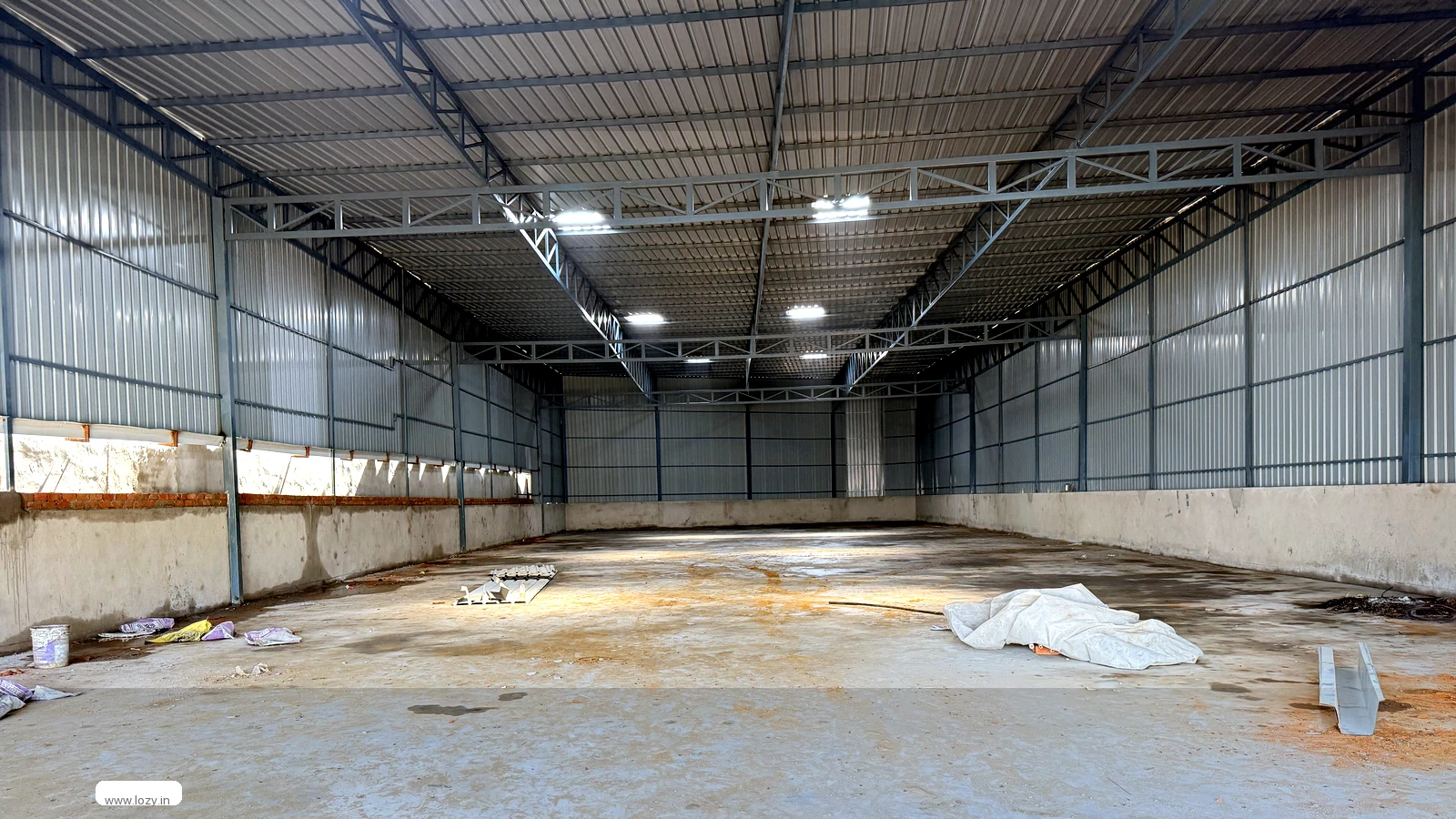
A furniture warehouse has to provide four things a general godown does not: floor bays a piece can be walked into and lifted out of, clear height measured to the lowest truss rather than the eaves, a dry base under every carton, and a wrapping routine written down before the first sofa arrives. Furniture and home furnishing warehousing at Lozy is specified against those four, quoted from ₹21 per sq ft per month in Delhi NCR as a starting basis, with the furniture plan from ₹1,499 per month. What follows is the specification itself - the minimums, the test for each, and the rows where a site should be walked away from.
Key takeaways
- Between 15% and 25% of the footprint must stay unracked: an assembled sofa, wardrobe or bed cannot go on a beam, and racking it damages the piece on every pick.
- Height is measured to what is actually in the way, not to the eaves. Six usable metres is the target, and worth paying for only where the carton can take the stack it implies.
- Nothing sits on the slab. A plinth, a damp-proof course, 100 mm of dunnage and a gap to the wall are four separate requirements, and all four fail in the same monsoon.
- The wrap standard, the assembly bench, the quarantine lane and the shutter opening are handling requirements, not housekeeping - each has a minimum, a test and a cost.
Furniture enquiries usually arrive in the wrong order: a city, an area in square feet, a monthly budget, and a decision taken on rent and how the photographs look. The requirements that decide whether a dealer's order can be picked, wrapped and loaded leave the conversation entirely, and they resurface in week three with a scuffed chair and a driver waiting at a shutter 200 mm too narrow.
A requirement sheet fixes that in one page, because every line carries a number, a test and a reason. The commercial side - what a season costs, which node to choose, how a first month usually goes - is the warehousing for furniture brands guide.
What the building has to provide, and why none of it is optional
Four capabilities decide whether a building can hold furniture: bay floor that is not racked, a base that lifts goods off the slab, a wrapping routine with a written standard, and a marked lane for anything that comes back scratched. The rest hangs off them.
Bay floor before racking
An assembled three-seater is roughly two metres long and will not go on a beam. It is carried in, set on its own feet and lifted out the same way, which needs a marked bay with clear floor in front of it. Walk a sofa in and back out: if the route needs two other pieces moved, the bay is on the drawing and not on the floor.
A base under every carton
Wood, particle board, MDF, jute, wool and foam all take up moisture from a slab, and a building that reads dry in February can read damp at the wall base in September. "Dry" cannot be tested, so the requirement is written as four things that can be: a plinth, a damp-proof course, dunnage under the bottom carton, and a gap to the wall.
A wrap and repack routine with a written standard
Wrapping is where this trade loses value quietly: film applied by habit, a corner left bare, tape across a lacquered top. What has to exist is a standard per piece type, a consumables stock to meet it, and a photograph at intake.
A lane for the piece that comes back
Furniture returns are rarely whole consignments - one chair with a scuff, one top with a chipped edge, one mattress with a soiled corner. Without a marked lane and a grading rule those pieces rejoin the saleable stack, and the next dealer to open that carton sets the price for the lot.
The acceptance specification: twelve requirements and the test for each
This is the table to attach to a requirement sheet or carry on the visit. Each row gives the minimum, the way to prove it and the reason this trade cares; score pass or fail on the spot, and treat three failures as a walk-away. These are drafting benchmarks to agree in writing with the operator, not a substitute for a structural certificate, a fire approval or a licensed engineer's sign-off.
| Requirement | Minimum | How to test it on the visit | Why it matters for this trade |
|---|---|---|---|
| Unracked bay floor | 15-25% of the footprint as marked bays, 1.2 m deep and 2.6 m long per two assembled pieces, 1.5 m clear in front | Count the painted bays against your piece count; walk your longest piece in and back out without moving anything else | An assembled sofa or wardrobe cannot go on a beam, and racking it damages it on every pick |
| Long-span racking rating | A load plate on every beam level, 2.7 m clear between uprights, uprights protected at the aisle end | Read three plates at random, tape the clear span, hold a straight edge along a loaded beam | Heavy cartons deflect a light beam, and deflection precedes collapse |
| Clear height to the lowest obstruction | 6.0 m to truss, sprinkler deflector or light fitting; 4.5 m is the practical floor | Measure slab to the lowest object at four corners and the centre; record the lowest reading | Long, low cartons get their second and third level from height |
| Stack limit declared per carton | A written limit per carton type, matching the printed stack symbol, never exceeded | Read the symbol on your own carton, then count the highest stack in the building and ask who authorised it | Cartons carry load through their edges; one extra layer writes off the column |
| Plinth and damp protection | Slab 300 mm above the apron, visible damp-proof course, 100 mm dunnage, goods 100 mm clear of walls | Look for tide marks and salt bloom at the wall base, rust at the rack feet, and ask for last September's photographs | Particle board and MDF swell permanently and cannot be sanded back |
| Moisture readings and air movement | A hygrometer on site, readings logged twice daily, air movement from fans or louvres, no airtight polythene on wool or silk | Ask for last month's readings, then take your own at 08:00 and 16:00 and stand in the furthest dead corner | Mould and moth start in still, damp air, and a reading is a number to act on |
| Wrapping standard | Three passes of stretch film at 20 micron or heavier, foam corner guards, bubble on glass and stone, no tape on veneer or lacquer | Ask for a stored piece to be unwrapped at a corner while you watch - one in for a month, not yesterday's arrival | Finish is the whole value of the piece, and the wrap stands between A grade and a discount |
| Assembly and repack space | One bench 2.4 m by 1.2 m at 900 mm, 1.2 m clear on three sides, consumables within reach, one staging bay per ten pieces a day | Watch a piece assembled end to end and time it, then see where the packed piece waits before it reaches a bay | Furniture is assembled, dismantled and repacked far more often than expected |
| Returns and scratch quarantine | A marked lane of at least 2% of the footprint, separate from saleable stock, with a grading bench, a touch-up kit and a disposition clock | Ask what happens to a sofa graded B: where it goes, who decides, how long it waits, how it leaves | One scuffed chair in the saleable run becomes a dealer complaint |
| Loading access for long items | Clear shutter opening 3.0 m by 3.5 m, apron 12 m deep, nothing within 3 m of the opening, threshold step under 25 mm | Carry your longest piece through the opening at the angle you will really use; watch a flat-bed turn on the apron | A 2.4 m wardrobe enters on the diagonal, and a wide door can still fail at the turn |
| Fire safety for a high fuel load | Current fire NOC for this address, serviced extinguishers, two independent exits, stack tops 450 mm below sprinkler deflectors | Read the NOC for address and expiry rather than the cover; measure the gap under a head over the tallest stack; open both exits | Timber, foam and fabric burn hot and fast, and the NOC is the first paper an insurer reads |
| Piece-level stock and condition record | One bay or rack position per SKU or lot, quantity on hand, a movement log, intake photographs, CSV export on request | Pick one SKU and ask for its position, quantity, last three movements and the photographs taken on arrival | Disputes are about condition and count, and a dated photograph settles both |
Two rows are worth a note: the bay row is failed most often by buildings that photograph beautifully, and the stacking row by the operator rather than the building, so it belongs in the agreement too. The warehousing team will walk a shortlisted site against all twelve.
Taking a requirement sheet to a furniture site?
Send the rows you care about with your piece count, carton sizes and the longest item you ship - we will reply with which facilities pass them and the rate for the floor.
Send the specificationCall +91 93547 12345The envelope: bays, racking, clear height and the stacking limit
Two numbers decide how much furniture a building holds: how much floor is left unracked, and how many usable metres sit between the slab and the lowest obstruction. Both can be settled on a drawing, and neither can be changed after signature.
Bay geometry
A working bay is about 1.2 m deep and 2.6 m long - two sofas or two wardrobes side by side with a hand's width between them. Depth matters more than length: at 1.2 m a piece is set down on its feet and lifted straight out, while at 2 m the piece behind has to be climbed over. Bays are painted and numbered, because "near the shutter" is not a location. Aisle width follows the handling method: 1.5 m for a two-man carry, 2.4 m for a pallet truck.
Long-span racking, for what behaves like a carton
Flat-pack cartons, boxed chairs, rolled rugs and cushion bales rack well. Beams at 2.7 m clear between uprights take a wardrobe carton laid flat without overhang, and a decked level stops it sagging between supports. What does not belong on a beam: an assembled chair, a mirror, a stone top, a mattress, or anything whose own weight will bow it. Read the rating plate on every level rather than the certificate for the run.
What a wardrobe carton and a sofa carton actually use
A flat-pack wardrobe ships as a long shallow carton, around two metres by 0.6 m by 0.15 m, and is normally stood on end because standing uses 0.6 m of floor instead of two metres. Standing, it needs about 2.3 m of clear height per level, so a 6 m building gives two levels and a shelf. Laid flat it racks five or six high, which is why flat storage looks efficient on paper and why the bottom carton arrives crushed.
A sofa carton is the opposite shape - about 2.1 m by 0.95 m by 0.9 m - and cannot be rotated, because the piece inside cannot lie on its back or its arm. The arithmetic says six layers; the carton says two. That gap is the most expensive misunderstanding in furniture storage, because the rent is paid on the height either way.
The stacking rule, piece by piece
Write the limit into the layout drawing and mark it on the rack. The number in your case comes from the carton's printed symbol, and where it is disputed, from a compression test rather than an opinion.
| Piece | How it is held | Working limit | What the limit protects |
|---|---|---|---|
| Flat-pack wardrobe carton | On end on racking, or flat and decked | Standing: two levels. Flat: per the symbol, typically four | The long edge and the panel inside, which bow under load |
| Sofa carton | On its base, on racking or floor | Two high, never on its side or back | The frame and arm joints, which take the stack at two points |
| Assembled sofa or armchair | On its feet on a floor bay | One. Nothing on top, ever | Cushions and the seat deck, which stay compressed under load |
| Mattress | Flat on a deck or in a bay | Two to three, nothing on the sleeping face | The fill, which takes a set and a soil mark that will not clean out |
| Glass, stone or mirror | On edge, crated, face never down | One crate, never flat-stacked | Cracks under point load, and scratches on the polished face |
| Rug or upholstery roll | Horizontal, supported at both ends | Per beam rating, never stood on end for long | Creasing along the fold and compression marks on the pile |
The base of the building: plinth, damp and what moisture does to upholstery
Damp is the failure that arrives slowest and costs most, because it does not announce itself as a loss - it appears three months later as a swollen panel, a rust ring on a leg and a smell in a mattress. "A dry warehouse" cannot be tested, so the requirement is written as four physical things: a plinth, a damp-proof course, dunnage under the goods, and a gap to the wall.
The plinth, and why 300 mm is the number
A plinth lifts the finished floor above the apron so water off the yard runs away from the door, and the apron must fall away from the shutter or the plinth means nothing. Look for the damp-proof course as a visible line - a slate or bitumen layer a course or two above the floor - and ask for the drawing if it has been plastered over.
Inside, nothing sits on the slab. Cartons go on pallets or skids with at least 100 mm of air beneath, and goods stay 100 mm clear of the wall so air moves behind. Both rules break first in the corners, where a leak or a condensation run does its damage. A brand holding only display pieces may not need a bay at all; a lockable room on self storage at ₹999 per month is often cheaper.
The monsoon test
The most informative visit to a furniture warehouse happens in or just after rain, and almost nobody schedules one. What you are looking for is what the building did in September: tide marks at the wall base, a white salt bloom on the blockwork, rust at the foot of the racking, a swollen edge on the bottom carton. Any one is a question; three is a row failed.
Ask for photographs taken during the last monsoon, and who took them. A facility with none has either never had a problem or never looked.
Moth, wool and the sealed-bag mistake
Wool rugs, silk cushions, jute and woollen upholstery are moth food, and moth works in the dark corner nobody walks past. The control is a routine rather than a spray: clean the piece before storage, because body oils and food traces are what the larvae eat; cover it in a breathable non-woven cover rather than an airtight polythene bag, because a sealed bag holds the moisture that starts the mould; and inspect the same bays quarterly.
Readings, air movement and what to write down
A hygrometer on the wall costs little and turns every argument about damp into a number: ask for the last month of readings, taken morning and late afternoon. As a drafting benchmark, agree a band of roughly 45% to 60% relative humidity, with a written action when the reading leaves it - fans on, louvres open in dry weather and shut in rain. That band is not a controlled-environment guarantee, and no furniture warehouse should sell one without the plant to hold it.
Wrapping, assembly, repack and the quarantine bay
Four handling requirements sit between the building and the finish: a wrap standard per piece type, a bench with clear floor for assembly, a repack routine that survives a courier, and a marked lane for anything that comes back marked. Each is cheaper to specify than to argue about later.
The wrap, piece by piece
One standard does not fit a lacquered sideboard and a wool rug, so the specification is written per surface - and it is worth agreeing in writing, because "wrapped" means three different things to three operators.
- Lacquer, veneer and high-gloss tops. Three overlapping passes of stretch film at 20 micron or heavier, foam corner guards, interleaving tissue on a gloss face, and no tape in contact with the finish. Tape is the commonest cause of a pull mark on a lacquered top, and it is always applied by somebody trying to be helpful.
- Upholstery and mattresses. Brushed or vacuumed, then a breathable cover, with film only around feet and frame. A sealed polythene bag on a sofa in a humid month is a mould chamber; a mattress bagged flat, with the bag not airtight, survives a season.
- Glass, stone and mirrors. Bubble at 10 mm or a foam blanket, then a crate or edge board, stored on edge and never flat. Glass laid flat under load is a crack waiting for the next person who steps over it.
- Metal frames and legs. Wiped dry, a light oil film on bare steel, then film. Rust starts at a weld and at a foot, and both are invisible under a cover until the piece reaches a showroom.
- Labels. On the outside of the wrap, never on the finish: piece code, bay, intake date and stack limit. A marker on a veneered panel is a permanent mark, and it happens on the busiest day of the month.
Behind the standard sits a wrap log - date, piece code, who wrapped it, materials used, photograph reference. Without it, a scuff found at delivery is one person's word against another's.
Assembly and repack: the floor that is not storage
Furniture passes through a bench far more often than a carton operation expects: a display piece is dismantled so it uses less floor, a dealer's order is assembled and photographed before it leaves, a return is repacked because the original carton did not survive. None of that can happen on a rack.
The minimum is one bench at 2.4 m by 1.2 m and about 900 mm high, with 1.2 m of clear floor on three sides so a piece can be turned, a consumables rack within reach, and a fittings box per SKU holding the screws and cam locks that go missing. A touch-up kit belongs on the same bench: a chip touched up here is a piece that ships. Staging is the part that gets forgotten - one position per ten pieces assembled a day.
The quarantine bay: grading, touch-up and the disposition clock
Anything that arrives damaged, returns from a dealer or is found marked during a stack audit goes into a lane physically separate from saleable stock - two per cent of the footprint is a sensible minimum. Inside it, three grades and one clock: A is saleable once cleaned, B is saleable after a documented touch-up or as a seconds piece at a stated discount, C is a write-off needing your written approval. The clock is the days a piece may sit before a disposition is decided, and seven is a reasonable default.
The rule that makes the lane work is procedural: nothing moves back into saleable stock without a signature and a photograph. Without it the lane becomes a shelf, the shelf joins the pick face, and a dealer receives the chair with the scuff on it.
Loading access for long items: the opening, the apron and the turn
Long pieces are damaged at the door more often than in the rack, and the reason is geometry: a wardrobe on a trolley is over 2.1 m at the top of the load, and a 2.2 m sofa carried by two people enters on the diagonal. Walk the route from shutter to furthest bay with your longest piece and count the pinch points - the corner by the office, the fire exit that opens inward, the gap between rack runs.
The opening
Specify a clear opening of 3.0 m wide by 3.5 m high, measured with the shutter fully up and nothing stacked in the threshold. The word clear is doing the work: a 3 m structural opening with a 300 mm pier either side is a 2.4 m opening, and a shutter that stops 400 mm short of its housing takes the height with it. A threshold step over 25 mm stops a trolley and turns every long piece into a manual lift.
The apron and the turn
Twelve metres of apron in front of the shutter is the working minimum for a flat-bed or a 32-foot body to reverse, straighten and stand while it is loaded. Check the gate height too: a gate that clears a container but not a flat-bed with a tall load is a constraint discovered with the vehicle already at the door.
The vehicle mix shapes the door
Three vehicle types call and want three different things. Flat-pack cartons arrive on a container and want a dock close to the bed. Assembled pieces go out on a flat-bed, which wants open space to load from the side. Dealer drops go on a tempo and want to be in and out. A building with one narrow dock serves the first well and the other two badly - the same reasoning that puts a vehicle face in every warehouse for rent brief.
Licences, registrations and the documents that have to exist before the first carton
There is no furniture storage licence, and anyone who says there is is either selling a service you do not need or describing a fire approval in the wrong words. What has to exist is a pair: the premises must show its statutory approvals, and the brand must hold its own registrations. Both are checked before the first carton moves, because both are painful to retrofit around live stock.
What the premises must be able to show
- Proof of lawful occupancy - a lease, a leave-and-licence agreement or an ownership document held by the entity that invoices you.
- A fire NOC for these premises, current, with the address and occupancy class matching what the building is used for. A certificate granted for a factory shed and used for storage is a mismatch, and a mismatch is what an insurer disputes after a loss.
- Trade or municipal licence where the local body requires one, plus written confirmation that warehousing is a permitted use on the plot. Zoning cannot be cured by paying a fee.
- Structural confirmation for the floor load you intend to impose, and a racking inspection record where racking is fitted. A verbal "it takes anything" fails the row on documentation alone.
- Building insurance, plus a written answer on what covers your stock inside - whose policy, which perils, what excess, and whether stock is covered at all.
- GST tax invoice capability in the contracting entity's name. A rent receipt from an unregistered proprietorship is not a tax invoice, and the credit you lose exceeds the discount that came with it.
Fire, because furniture is a fuel load
Timber, particle board, polyurethane foam and fabric burn hot and fast, and a furniture store carries all four in quantity. The NOC should reflect a storage occupancy, and stack heights must leave 450 mm clear under the deflectors, because a stack that reaches the head is a stack the water cannot reach through. The operational half is a hot-work permit for welding, a no-smoking rule that is enforced rather than posted, and two exits that open. Test them yourself.
What the brand has to hold
The registration every seller needs before stock moves is GST, and the step that matters is registering the premises as an additional place of business; the registered address alone does not cover a warehouse. The steps are set out on the GST portal, and your accountant should confirm the position for your state and constitution. Beyond that:
- Shops and establishment registration under the state's own Act, where the state requires it of a business operating from the premises.
- Importer-exporter code from the DGFT if you import the stock you store, with the bill-of-entry trail that goes with it.
- BIS registration per product where an item falls in a compulsory certification category. Most furniture does not, but fittings sometimes do, so check per SKU rather than per brand - the list sits with BIS.
- Legal metrology registration only if you sell pre-packaged goods by weight or measure. A sofa sold as a piece does not attract it.
- Stock insurance in your own name, because the warehouse policy covers the building and its own liability, not your inventory.
How to check the file in ten minutes
Ask for the documents as one set and read three fields on each: entity name, premises address, expiry date. A certificate for a different shed in the same estate is not a certificate for this building. Where storage runs to professional benchmarks, the practice is described by the Warehousing Development and Regulatory Authority. Send us the document list you are working to and we will say which items a Lozy facility provides and which sit with you.
Checking the paperwork before you sign?
Send the site address and the entity that will hold the stock - we will confirm what the premises can evidence, what sits with you, and the rate for the floor.
Check a site against the fileCall +91 93547 12345Records: what has to be written down, and how often
Eight records carry a furniture store, each with a format, a named owner and a frequency. The test of a record is not whether it exists but whether it can answer a question about one piece six weeks later - which piece, which bay, wrapped by whom, moved when, in what condition.
| Record | What it must contain | Frequency | Who signs it off |
|---|---|---|---|
| Intake condition report | Date, vehicle, vendor, invoice or transfer note, piece count against the packing list, photographs of every piece and of any existing mark, and anything accepted with a reservation | Every receipt, closed the same day | Receiving supervisor |
| Bay and rack register | Every lot mapped to a bay number or rack position, with carton count, stack limit applied and any overflow location | At put-away; audited weekly | Floor controller |
| Piece-level stock ledger | Opening, receipts, dispatches, returns, quarantines and adjustments by SKU and lot, with the closing position | Weekly; monthly reconciliation | Stock controller, countersigned monthly |
| Wrap and repack log | Piece code, materials used, who wrapped it, whether it was repacked and into what, and the photograph reference for the wrapped condition | Every piece wrapped or repacked | Floor controller |
| Movement and dispatch log | Piece code, bay, destination, vehicle, driver, loading time, who loaded it, condition at handover, and a photograph of a loaded long item | Every dispatch | Dispatch supervisor |
| Damage and scratch register | What was found, which bay, when, a photograph, the cause if known, the grade assigned and the corrective action | Same day; weekly summary | Facility manager |
| Quarantine disposition record | Piece code, grade A, B or C, the disposition decided, the date, the approver's name and the date the piece left the lane | Every piece; reviewed weekly against the clock | Facility manager and your nominated contact |
| Statutory and safety file | Fire NOC, extinguisher and hydrant service records, racking inspection, generator maintenance, insurance certificates, hot-work permits and training | Quarterly; every certificate tracked to expiry | Facility manager |
What turns these records into evidence is separation of duty: the person who wraps a piece should not sign off its condition, and the person who counts a bay should not post the adjustment. Two derived numbers are worth reading monthly - pieces damaged per hundred movements, which tells you whether the problem is handling or the building, and bay utilisation, because a store that is 95% full stops being able to receive. Where the stock is counted by system rather than by bay, the same discipline runs on inventory stock storage.
What moves the monthly figure in this trade
Six inputs move a furniture bill, and only one is the rate per square foot. Two operators quoting the same floorplate can bill very different amounts, because furniture is priced on floor and air rather than on pallet positions, and the handling around it is labour rather than a machine.
- The bay share, which is the expensive floor. Unracked floor costs the same per square foot as racked floor and holds far less - so size it precisely, because every extra bay is floor you pay for all year to hold pieces for a few weeks.
- Carton cube against piece cube. A flat-pack sideboard travels in a carton of about a fifth of a cubic metre; assembled, it occupies well over a cubic metre and cannot be stacked.
- Consumables and the minutes they take. Film, foam, corner guards, tissue, bags and tape are priced per piece, and wrapping twenty pieces a day is a person, not a roll of film.
- Assembly, repack and touch-up labour. Every piece assembled for a dealer, dismantled for a bay or repacked after a return consumes bench time. Quote the count you run.
- The season. Three events move the floor - the festive home-upgrade run, the wedding season for matched sets, and project handovers where a fit-out lands complete and waits.
- Access, term and location. An apron deep enough for a flat-bed and a shutter wide enough for a wardrobe are part of what you rent, used or not.
The published bases measure different things. Floorplate space starts at ₹21 per sq ft per month in Delhi NCR. The furniture plan starts at ₹1,499 per month on furniture warehousing, the managed side of the furniture and home furnishing service. A short hold starts at ₹699 on short-term storage, a seasonal booking at ₹1,299 on seasonal warehousing and a longer commitment at ₹1,199 on long-term warehousing - all starting rates, billed monthly with a GST invoice and no long lock-in, and all on the pricing page. A dealer holding stock month by month usually weighs them against commercial warehousing floor.
A bay of 1.2 m by 2.6 m is about 3.1 sq m, roughly 34 sq ft including its share of aisle; at the ₹21 basis it costs about ₹700 a month and holds two assembled pieces, so an assembled sofa runs at about ₹350 a month while the same piece flat-packed uses a fraction of that floor.
The five ways furniture storage fails, and the row that catches each
Failures in this trade are rarely dramatic. They are specification gaps that become visible under load or after a season, and every one maps back to a row in the acceptance table.
One: racking the unrackable
The layout is drawn around pallet positions because that is what warehouse software understands, and the assembled pieces get the leftover slots. It works for a fortnight, while the store is half empty. Then a pick needs the sofa at the back of a double-stacked position, getting it out means moving four other pieces, two of them wrapped, and the dents appear on the third move.
Two: buying height the carton cannot use
A six-metre building is rented for six metres and stacked to two, because sofa cartons cannot take more than two high. The rent is paid on the air above the stack for the whole term. The fix is a carton with a compression rating that supports the stack, or a smaller building rented honestly.
Three: a dry-season decision
The site is visited in April, the slab is dry, the walls are clean, and stock moves in during May. In September the bottom row of cartons has swollen edges, the rack feet have rust blooms and one mattress smells of damp. Nothing was done wrong except that the building was judged in the wrong month.
Four: wrapping by habit
Everyone wraps, nobody wraps to a standard. One person uses three passes and corner guards, another one pass and tape across a lacquered top, and both would say the piece is wrapped. Three months later a dealer rejects a sideboard for a tape pull on the face, with no photograph to show whether the mark arrived with the piece.
Five: a door that fits the drawing and not the piece
The shutter measures 3 m on the drawing, so the specification says 3 m. On the day a pier reduces it to 2.4 m, the wardrobe goes through at an angle and the wrap fails at the one point protecting the veneer. Carry the longest piece through yourself rather than reading a dimension. The warehouse inspection checklist covers the rest of the walk-round, and where the building is shared the shared and multi-client warehouse guide sets out the separation to insist on.
Across all five the pattern is the same: the failure was cheaper to prevent than to fix. That is how furniture and home furnishing storage at Lozy is scoped.
The handover, and the clauses that hold it
Nine steps take a requirement to a working furniture store, and the order matters more than the speed. The two that get skipped under pressure - the written layout and the test intake - are the two that prevent the expensive surprises.
- Write the requirement sheet. The twelve rows, your piece count, the dimensions of your three extreme cartons and the longest item you ship. One page, and the reference every later conversation returns to.
- Request the documents before visiting. Fire NOC for the address, occupancy proof, structural confirmation, insurance position and the GST status of the invoicing entity.
- Shortlist two or three buildings on the same side of the region, so the comparison is about the building rather than the drive. The Gurgaon guide, the Faridabad guide and the New Delhi guide set out what sits where.
- Visit with a test kit. A tape or laser measure, one carton of each extreme size, the longest assembled piece you can bring, a torch for wall bases and the roof line, a hygrometer, and a printed copy of the table.
- Agree the layout in writing. Bay numbers and dimensions, rack runs and beam heights, the assembly bench, staging, the quarantine lane, the wrap standard and the inbound flow.
- Set the operating rules. Receiving windows, the stack limit per carton, the wrap standard, the quarantine clock and the escalation contact - in the agreement, not an email.
- Sign, then set up access. Your users on the stock system, your SKU master loaded with carton dimensions and stack limits, and the photograph routine tested on the first delivery.
- Run a test intake. One vehicle, ten pieces, one assembled sofa: received, photographed, wrapped, binned, picked and loaded through the real door onto the real vehicle.
- Measure the first month. Pieces damaged per hundred movements, bay utilisation, and the share of dispatches loaded inside the agreed window. Right means scaling the intake; wrong means fixing it before volume hides it.
The handover is also the moment to agree the exit: notice period, how stock is released, and how long records are kept. If the stock is moving in over a weekend, send the requirement sheet on WhatsApp with a photograph of the layout drawing and we will mark it up before the vehicle is booked.
What to put in the agreement
Ten clauses carry a furniture storage agreement, and most disputes trace back to one of them being missing rather than to anybody acting in bad faith.
- Footprint, bay count and rack positions. Square feet alone is not a specification: name the marked bays and their dimensions, the racked area and the beam heights.
- Handling rates, itemised. Per piece in, per piece out, per wrap, per assembly, per repack, per return, and what each includes.
- The wrap standard, as an annex. Materials, number of passes and the pieces needing corner guards, so "wrapped" means one thing to both sides.
- The stack limit per carton. Which carton may go how high, who may authorise an exception, and what happens to a stack that exceeds it.
- Liability for condition. Who insures what, the excess, whether a loss settles at cost or retail, and the intake photograph as the reference point.
- The quarantine clock. Who grades, who approves a disposition, how long a piece may sit, and who pays for storage while it waits.
- Records and export. Who owns the data, what format it exports in, and how long records are kept after exit.
- Access rights. Your right to enter, audit, count and photograph, on what notice, and whether you may station staff during a handover.
- Price review, notice and term. Notice period, how a rate change is communicated, and whether the plan renews monthly.
- GST and invoicing. The invoicing entity, its GSTIN, the place of supply, and how any exempt component is treated.
Read the agreement beside the requirement sheet before you sign it. If a row has become a promise in an email rather than a term in the document, it is a preference - and preferences are what get lost when the operator changes staff.
Where Lozy fits, and where we do not
Lozy runs 77+ warehouses and more than one million square feet of live space from a Delhi NCR base, with furniture floors that can be measured against the twelve rows above, monthly billing with a GST invoice and no long lock-in. The furniture plan starts at ₹1,499 per month and floorplate space at ₹21 per sq ft per month, and both can be checked against your own arithmetic. What is vacant today sits on the warehouse listing.
We are not the right answer for every requirement. There is no cold-room, no bonded store and no calibrated humidity or temperature control here, so a brand that needs a moisture guarantee in a service level needs a specialist facility, and we will say so rather than take the booking. Hazardous materials, pharma-grade storage and anything requiring a validated environment sit outside what this network does.
If your requirement is on the right side of that line, email the requirement sheet to care@lozy.in and we will reply with the facilities that pass it, the bays available and the rate. A dealer holding a season's stock can also look at business warehousing, and a mixed requirement has household warehousing and office warehousing alongside it. How the bases add up over a season is worked through in the furniture brands guide.

Related guides
- warehousing for furniture brands
- the warehouse inspection checklist
- warehousing in Gurgaon
- furniture warehousing
Read next: the cost per pallet guide for the per-position arithmetic behind a square-foot rate, and the 3PL warehousing in Delhi NCR guide if the alternative is a full-service partner.
Take the specification to a site, not a brochure
Tell us your piece count, carton sizes and the longest item you ship - we will confirm which facilities pass the twelve rows and hold them for your visit.
Book a specification visitCall +91 93547 12345Sources. Rates, plan prices, network figures and facility details are Lozy's published information, checked 25 October 2026. Sector context comes from IBEF and the Press Information Bureau; GST registration from the GST portal; warehouse operating practice from the Warehousing Development and Regulatory Authority; product standards from BIS; and corridor context from NHAI. The minimums in the acceptance table are drafting benchmarks, not an engineer's, fire or structural certificate.
Last updated: 25 October 2026. A question the FAQ below does not cover? Call +91 93547 12345 or email care@lozy.in.
Need warehousing or storage in India?
Request a free, tailored quote in under 2 minutes — free pickup, no lock-in.