Food Storage Requirements: The Specification for a Dry Warehouse (2026 Guide)
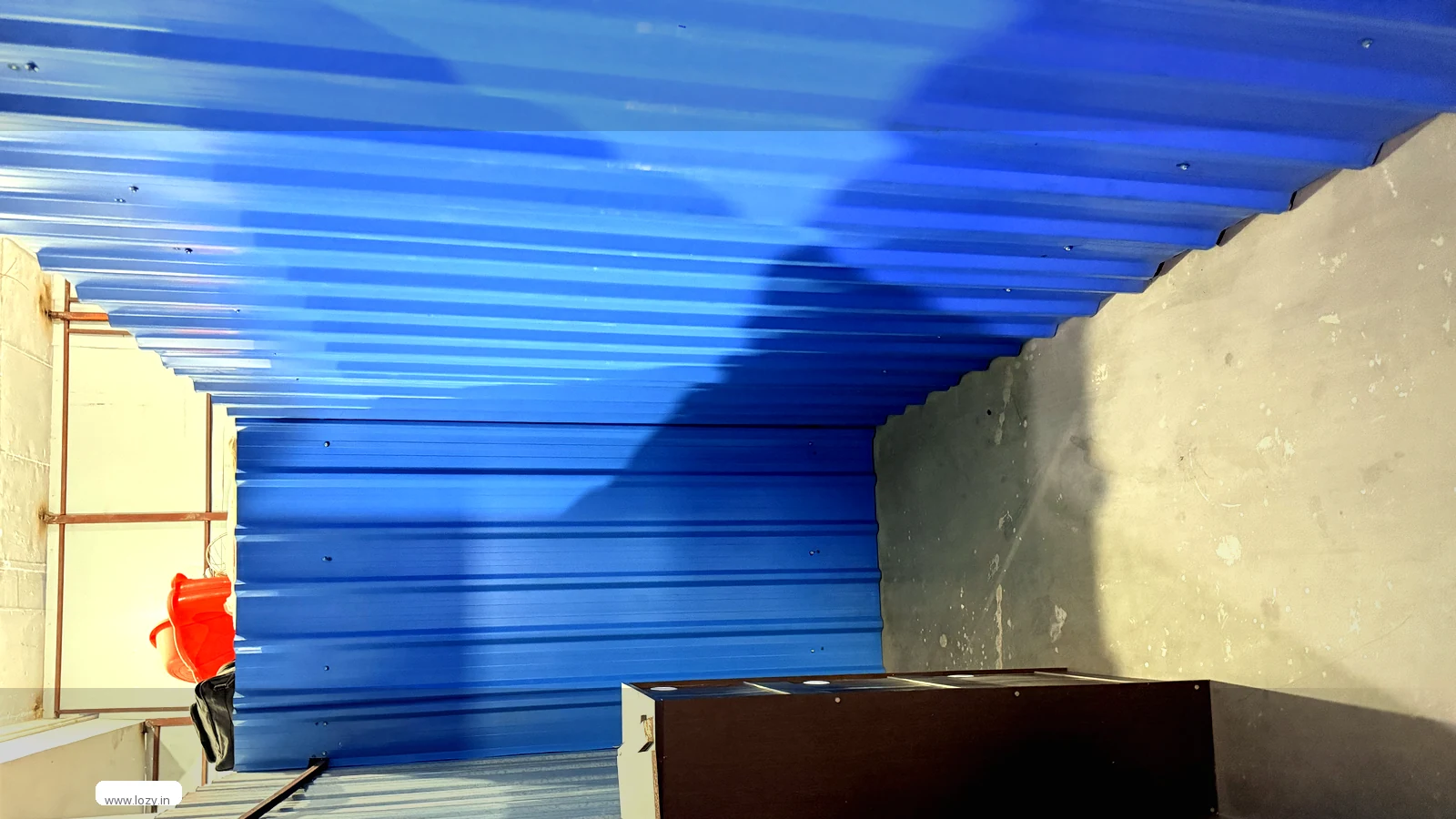
Food storage requirements are the conditions a building and its paper trail must satisfy before packaged food can legally and safely sit in it: a dry, pest-proof, ventilated envelope, every pallet off the floor and clear of the wall, a lot-level record of batch and best-before from gate to dispatch, and a food licence held by the business whose name is on the pack. This guide is that specification written out — eleven tests a buyer can run on a site visit, the FSSAI licence class a dry warehouse falls into, and the records that must exist before the first carton is racked. Chilled and frozen product is outside it deliberately: that is a different building, and the section below says so plainly.
Key takeaways
- Eleven acceptance tests, each with a number attached and a way to check it in an hour — from 450 mm of clear wall to a pest report whose actions column is actually filled in.
- The FSSAI class for a dry warehouse follows declared storage capacity, not rent: up to 50,000 MT is a State licence at ₹2,000 a year, above that a Central licence at ₹7,500, and the licence belongs to the food business, never to the landlord.
- Four facts have to sit on a tag at the rack — SKU, batch, best-before, quantity — because first-expiry-first-out cannot be run from memory.
- Lozy's starting basis for dry food storage in Delhi NCR is ₹21 per sq ft per month; billing is monthly, on a GST invoice, with no lock-in.
What a food storage brief has to specify
A food storage brief has to fix three things before it fixes a price: the envelope the product tolerates, the handling its packaging can survive, and the records that prove both were kept. Everything else — racking height, aisle width, dock count, invoice layout — follows from those three, which is why the food and beverage warehousing requirement is normally settled before anyone discusses a rate. Buyers who start with the rate end up renegotiating the first three, and the rent they saved is gone by the second claim.
The envelope: dry, ambient and bounded
Dry ambient storage is best written as a set of negative promises, because that is what it actually is. The building promises no water from above, no water from below, no sunlight on the pack, no route in for a rodent, and air that moves rather than sits. It does not promise a temperature. A shed in Sonipat in the third week of May is not a refrigerator and never will be, and an operator who claims a fixed 22 °C without a plant room is describing a wish.
That distinction decides whether your catalogue fits. Biscuits, namkeen, extruded snacks, tea, coffee, sugar, salt, atta and rice in sealed packs; edible oil in tins and PET; bottled water and soft drinks; jams, sauces and pickles in glass; retort pouches; and most festive hampers are formulated to survive Indian ambient conditions for the shelf life printed on them. Chocolate, paneer, curd, frozen peas, ice cream, fresh juice and anything whose label says keep refrigerated are not, and no amount of racking or pest control changes that arithmetic.
What the building can commit to in writing is narrower and more useful, because it can be measured: a roof that does not drip, walls that do not weep, a slab above ground level, a sealed envelope with doors that shut, air that turns over, and stock that never touches the floor. Those six commitments separate a food store from a room with a roof, and a buyer can check each one with a torch.
Handling: what the carton can take
Packaging is the part of the specification buyers leave out, and it produces most of the damage in the first quarter. A snack carton is a box of air with a biscuit in it: it has almost no compression strength, so a four-high stack crushes the bottom layer before the top layer is even loaded. A beverage crate is the opposite problem — dense, heavy, unkind to whatever sits beneath it. A glass jar of pickle is a third case again, because it fails by impact rather than by load.
The brief should therefore carry, per SKU: case dimensions, gross weight, maximum stack height, which way up it travels, and whether it can share a pallet. That schedule decides whether the space you are shown can hold your stock at all, and it is what a warehouse needs before it can quote racking rather than floor area. The handling rules that follow are short: nothing dragged, nothing hooked, nothing cut open at the pick face, one carton lifted at a time off a stack, nothing set down on the floor even for a minute.
Cold chain: the line this brief does not cross
Frozen, chilled and cold-chain storage is a purpose-built facility, not a corner of a dry shed with an air conditioner in it. It needs an insulated envelope, a refrigeration plant sized for the door openings, temperature mapping across the whole room rather than one probe by the door, backup power, continuous logging, and staff trained to keep doors shut in a way dry-goods teams never have to be. FSSAI licenses cold and refrigerated storage as its own kind of food business, with a 10,000 MT capacity threshold against the 50,000 MT that applies to an ordinary godown.
Lozy does not operate cold rooms, blast freezers, chilled bays or controlled-atmosphere stores. If your product must be held between 0 and 5 °C, or at −18 °C, this is the wrong document and the right move is a cold-chain operator who will show you the temperature mapping and the power backup before you ask. The ambient food storage Lozy runs is the other half of that split, and saying so at the start of a specification is cheaper for everyone than discovering it at the dock.
The acceptance specification: eleven tests
This is the table to take on the visit. Each row is a requirement, the minimum that satisfies it, the check that proves it on the day, and why it matters for food. Score each row on the spot and photograph the fails; a facility scoring eight of eleven with three honest fails is a better buy than one scoring eleven because nobody measured anything. The fuller room-by-room walk is in the warehouse inspection checklist.
| Requirement | Minimum | How to test it on the visit | Why it matters for this trade |
|---|---|---|---|
| Off-floor stowage | Every pallet on a sound pallet or dunnage, nothing on bare slab, including the overflow bay | Walk the floor bays, not just the racking. Look at the bottom carton of each stack for a dark wicking line or a softened corner, then ask to see a bay loaded the way yours will be | Slab moisture wicks up through corrugated board in a single monsoon; a stained bottom layer is unsaleable and usually invisible from the aisle |
| Wall and roof clearance | Roughly 450 mm (18 in) clear between product and wall; no stack touching a purlin | Tape-measure the gap at a loaded bay, and look for a painted or taped sanitation line on the floor — if the line exists, stock should sit behind it | The wall strip is the cleaning lane and the pest lane at once; stock pressed to a wall cannot be inspected, cleaned or treated behind |
| Roof and wall integrity | No leak, no drip, no tide mark, no daylight through the envelope | Look at the underside of the roof for staining and wall bases for tide marks. Visit after rain, or ask what happened last monsoon and who repaired it | One drip over a pallet of biscuit cartons ruins the lot below, and the mould is not always visible until the pallet is broken |
| Floor and load capacity | Declared slab load in writing, sufficient for your heaviest pallet; no cracking or settlement at joints | Ask for the slab figure, then convert: a 1,000 kg pallet on a 1.2 m × 1.0 m footprint is about 8 kN/m². Look for cracks, patched trenches and drumminess underfoot | Beverage and oil pallets are the heaviest stock in the building; a slab that was fine for cartons of crisps is not fine for a tonne of bottles |
| Air movement | Cross-ventilation or fans, no dead corner behind stacked stock | Stand in the furthest corner for a minute. If the air is still and smells closed, that corner will grow mould before the aisle does | Still air holds moisture against packaging, and the damage starts where nobody walks |
| Temperature and humidity record | A hygrometer or logger in the storage area, readings written down at least daily | Ask for the last thirty days, then ask where the instrument hangs. A log with one flat repeated number is a copied log | You cannot prove a monsoon did not touch your stock, or argue a claim, without a number recorded on the day |
| Pest control proof | Contracted vendor, scheduled service, numbered bait stations, reports on file with actions closed | Ask for the last three service reports and the station map. Check that the recommendations column has entries and the follow-up column answers them | Rodent and stored-product insect damage is progressive and silent; a report recommending nothing for three months is a report nobody read |
| Lighting and glass | Shielded or diffused fittings, a written glass-breakage procedure, no loose glass over stock | Look up. Ask what happens the day a tube breaks over a pallet, and who signs the record | Glass is the physical hazard that ends up in a packet and in a recall, and it is the cheapest hazard to design out |
| Dock and door discipline | Doors that shut tight, no daylight gap at the base, a dock the vehicle you send can reach | Stand inside with the doors closed and look for light at the edges. Ask what happens to a 32-foot trailer at this face | An open door is a pest highway and a rain inlet; a dock that cannot take your vehicle adds a transhipment you did not budget for |
| Segregation and quarantine | A demarcated, labelled area for rejected, damaged and expired stock, apart from saleable and from allergens | Ask to be walked to it. A quarantine area you have to be talked out of seeing is a corner with a label on it | One split bottle of oil left in the rack becomes a claim across everything it soaked |
| Access and stock visibility | Your stock in a recorded bay, an entry register, a named contact, a stock report you can read | Ask to see one SKU on the system: location, batch, quantity, date. If one SKU cannot be shown, forty cannot be found | Food moves weekly and audits arrive unannounced; an operation reachable only through a call chain answers neither |
Weight the rows to your catalogue rather than scoring all eleven equally. For biscuits and namkeen, off-floor stowage and roof integrity carry more risk than dock geometry; for beverage cases the slab and the wall strip dominate. Then attach the completed score to the contract as a schedule. A facility that agreed eleven rows on paper is one you can hold to eight in July, and the conversation is shorter when the photograph is already in the file.
How dated stock is received, rotated and loaded on an ordinary Tuesday is in the packaged food and beverage warehousing guide; this document is the specification those operations answer to.
Taking the eleven tests on a visit?
Send us your product schedule and the dates you need the space — we will tell you which bays are free, and what the building can and cannot promise for your line.
Book a site visitCall +91 93547 12345FSSAI licensing and the documents behind a food booking
Storage is a food business activity in India, and the licence for it is held by the food business operator — the entity whose name is on the pack or on the invoice to the trade — not by the warehouse and not by the landlord. That single sentence answers most of the confusion buyers arrive with. Renting a bay in a licensed facility does not license your brand, and a licence number printed on a quotation is not a substitute for your own registration.
Whose licence it is, and what it covers
The Food Safety and Standards Authority of India licenses food business operators by kind of business and by premises. An ordinary dry godown falls under the kind of business its FoSCoS portal describes as storage without atmospheric or cold control: food products in packed or unpacked condition, stored for further distribution in facilities also called warehouses or godowns. An operator storing other people's food is a food business operator in their own right, which is why a shared facility should be able to show a storage licence for that address. That licence covers the operator's activity on those premises. It does not cover your brand, your labels, your turnover or your liability, and no arrangement between you changes that.
So there are two licence questions in every food storage deal, and buyers usually ask one. The first is whether your own entity holds a licence for the activity you are doing — manufacturing, wholesale, distribution, import, or storage as a distinct activity — and that is your work. The second is whether the premises you are renting appear on a valid licence at all, which is the food and beverage warehousing operator's work, and entirely reasonable to ask for in writing before you sign.
Which class you fall into
For a dry warehouse the class follows declared storage capacity rather than rent or floor area, which surprises buyers who assume turnover decides everything. On the FoSCoS eligibility table, storage without atmospheric or cold control runs as follows: capacity up to 50,000 MT is a State licence at ₹2,000 a year; capacity above 50,000 MT is a Central licence at ₹7,500 a year; and where annual turnover is up to ₹12 lakh the entry point is registration at ₹100. Cold and refrigerated storage is treated separately at a 10,000 MT threshold, and controlled-atmosphere storage at 1,000 MT — a useful reminder that the regulator regards a cold store as a different animal from a godown.
Two consequences follow. A facility that declares a capacity on its licence has told you the ceiling it may hold, so check that figure against your planned tonnage, not only against the square feet. And because the licence is tied to a premises, a copy for the shed next door, or for the operator's head office, is not the document you need: the address on the certificate should be the address on your agreement.
What to ask for, and what to read on it
Ask for the licence copy as a PDF and read four things: the kind of business, the declared capacity, the validity date and the address. A licence listing retail but not storage is not a storage licence; one that expired last quarter is a pending renewal, ordinary enough and still a fact you want before your stock is inside. The number is fourteen digits and should appear on the tax invoice you receive, which is how an auditor traces the premises back. Ask too how it is displayed, and who files the annual return through FoSCoS — together those answers tell you whether compliance is a system or a document somebody found for the meeting.
The other documents in the file
Your own file needs four things. GST registration, because rent attracts GST and a tax invoice in your entity's name is what lets you claim the input credit — cash rent with a receipt looks cheaper in the month and costs more across the year. Your FSSAI licence for your activity, current. A product schedule with case weights, stack limits and allergen flags, which the facility needs to plan racking and segregation. And for imported lines, the import licence and customs paperwork that travels with the consignment — a conversation for your customs broker, though customs services and storage often land in the same week.
Registrations and applications sit on the GST portal and on FoSCoS respectively; the regime itself, including the schedule that sets hygiene requirements for storage, is published by FSSAI. Read the eligibility table before arguing about who needs what, because the thresholds are specific and they are not the ones most people assume.
Need the licence position checked before you sign?
Tell us the product line and the capacity you need. We will confirm what the premises holds, and put the answer in the proposal rather than in a phone call.
Ask about complianceCall +91 93547 12345Date codes, lot discipline, FIFO and FEFO
A food warehouse is run off the date printed on the carton, and the whole discipline hangs on one rule: the date is transcribed, never interpreted. Batch codes arrive in a dozen formats — six digits in day-month-year order, a month grid with one box punched, a Julian code that means nothing outside the factory that printed it. A picker who decides what a code means will eventually decide wrong, and the error travels to a shelf where a customer photographs it.
What is actually on the carton
Four things need reading at goods-in, and all four belong on the record. The batch number, which is the handle for every later question. The best-before date exactly as printed, with the format noted beside it. The quantity in the outer, because case counts differ from unit counts and the difference is where shortages hide. And the allergen declaration, because a SKU carrying one is stored and picked differently. Where the outer carries no date at all, the retail pack inside does, and the facility should open a case rather than assume the outer is complete.
This is also where damage is caught. Cartons with crushed corners, split shrink wrap, a damp patch, a leaking bottle in the tray or a torn label are pulled at the door and reported the same day. In a food operation the report matters as much as the pull: a leaker found at intake is a supplier conversation, and the same leaker found in week six is a claim against you.
FIFO, FEFO, and the tie-break nobody writes down
First-in-first-out ships the lot that arrived first. First-expiry-first-out ships the lot that expires first. They are the same thing only when every delivery carries the same remaining life, which in practice it does not — a fresh consignment from the factory can sit beside a short-dated pallet returned from a distributor, and under FIFO the short-dated pallet waits its turn. FEFO is therefore the default for food, and FIFO is the fallback for lots with identical dates.
What goes wrong is not the choice of rule but the missing tie-break. Two lots with the same best-before but different batch numbers, one already open on the pick face: without a written instruction the picker takes whichever is nearer, and nearness is not a rotation policy. Write the rule as an annex to the contract — FEFO primary, oldest batch first where dates match, open lots consumed before intact ones, offer packs and samples never mixed into saleable stock — and make it the document a new picker is shown on their first morning.
The rack tag is the system in miniature
One tag per lot per location, carrying SKU, description, batch, best-before, quantity received and date received. If a lot is split across two bays it needs two tags, because the tag describes what is in that position, not what exists somewhere in the building. The tag is what a picker reads without opening a case, what an auditor reads without asking a question, and what a stock count reconciles against. A facility that keeps bin cards and a FIFO register current as stock moves, rather than reconstructing them at month end, is doing the minimum the trade requires.
Short-dated reporting and the dispatch floor
Two numbers belong in the agreement, and neither is a warehouse default. The first is the short-dated horizon: how many days before expiry a lot starts appearing on a weekly report to you, with SKU, batch, quantity, date and days remaining — ninety, sixty and thirty days is a common three-stage shape, so pick horizons your shelf life supports. The second is the minimum remaining shelf life on dispatch, the floor below which a lot does not leave without your written approval. Without that floor, a warehouse under pressure ships the oldest thing it has, which is correct for FEFO and wrong for a distributor who rejects it at their gate.
One prohibition sits above both. Re-dating, over-stickering or obscuring a date mark is a labelling violation, not a warehouse shortcut, and a facility that offers to refresh a printed date has told you how it treats every other instruction. The daily loop these rules sit inside is set out in the food and beverage warehousing guide.
Records: what is written down, and how often
Records are what make the rest of this specification enforceable, and they are the part of a food storage arrangement most often promised in conversation and never seen. The list below is deliberately short. If a facility cannot produce these, more paperwork will not help; if it can, the arrangement is auditable, and a running count held in inventory stock storage is usually the cheapest way to keep it honest.
Every day, and every consignment
Temperature and humidity readings for the storage area, with the time and the instrument's location. Goods-in records per vehicle: supplier, delivery note number, SKU, batch, best-before, quantity received, quantity rejected and why, signed by whoever checked it. Dispatch records carrying the batch forward, so a complaint traces to a lot and a lot to a supplier. A damage and leaker log opened the day something splits. None of this needs software: a printed sheet with the right columns and a signature line beats a system nobody fills in, and it survives the week the internet goes down.
Every week
A short-dated report against the horizons you set, one line per lot with days remaining. A cleaning sign-off for the storage area, the aisles and the loading face, because a warehouse swept when somebody notices is swept after the problem. And a walk of the quarantine area to confirm nothing has quietly migrated back into saleable stock — which happens more often than anyone admits when the quarantine area is a corner rather than a cage.
Every month
A stock reconciliation against the running count, with variances explained rather than carried. A pest control service report with findings, treatment, recommendations and the actions taken since the last visit — read the actions column first, since it is the one that separates a service from an invoice. A documented self-audit of the storage area covering hygiene, pest management and sanitation, which is the minimum rhythm FSSAI's own storage and transport guidance sets. And an aged-inventory report: what has sat longest, and what you intend to do about it.
Every year, and every recall
Licence renewal on its own cycle, annual return through FoSCoS, and a review of the product schedule, because catalogues change and racking plans do not update themselves. Alongside that, a traceability test: pick one batch that shipped last month, find its supplier and its customers from the records alone, and time how long it takes. FSSAI's storage guidance expects a recall programme to be tested rather than merely written, and the exercise is more useful than it sounds — a facility that cannot reconstruct one batch in an afternoon cannot help you in a genuine withdrawal.
Expect a distributor, a quick-commerce vendor audit or a customer's quality team to ask for the last twelve months of these. Keep them where they can be produced in an hour, in one place, for one premises, with the batch numbers that appear on the dispatch notes. That is the whole test. Ask any facility you are considering to show you a completed month before you ask about the rate. If the count has to stand up to that scrutiny, the inventory warehousing guide covers how a running record is reconciled between audits.
Pest control, hygiene and the separation rules
Pest control in a food warehouse is a contract, a map and a paper trail, and all three have to exist. The contract is with a qualified vendor on a scheduled visit cycle. The map shows numbered bait stations and traps around the perimeter, along the walls and at the doorways, so a finding can be located rather than described. The paper trail is the service report, and it is the only one of the three a buyer can actually test.
What proof of service looks like
A usable report carries the date, the technician, the areas treated, the chemical and concentration where one was used, the findings, the recommendations, and a follow-up line someone has signed. Ask for three consecutive months and read them in order. Stations intact in month one, chewed in month two and replaced in month three describe a building being monitored. Three reports that each say no activity, with no recommendations and no follow-up, describe a form being filled in.
Proofing matters as much as treatment and is cheaper: doors that shut tight, no gap at the base of a shutter, mesh on vents that are used, covered drains, no pallet against an external wall, and a 450 mm strip kept clear along the internal walls. Rodent activity announces itself along a wall before it reaches the stock; the wall strip is how anyone notices.
Hygiene and handling practice
The hygiene rules for a dry food store are unglamorous and non-negotiable. The storage area is cleaned weekly and immediately after any spill. Cleaning chemicals and equipment stay out of the storage area, not in a bucket beside the racking, because a drum of detergent next to a pallet of atta is a contamination event waiting for a lid to be left off. Forklifts are maintained so they do not drip oil, and any spill is cleaned and inspected rather than absorbed by the nearest carton. Light fittings over stock are shielded, with a written procedure for the day a tube breaks.
People matter as much as plant. Anyone handling your stock should be trained on the specific instruction, not just general hygiene: what FEFO means at this rack, which SKUs carry an allergen, what to do with a leaker, who to tell. FSSAI's storage and transport guidance treats training as a documented requirement for everyone who touches food, including contract and temporary staff — which in a warehouse means the festive crew as much as the permanent team.
Separation: allergens, odours, and the things that must not meet
Packaged food does not contaminate by contact the way open food does, but it contaminates by proximity in three ways. The first is allergen cross-contact through damaged or opened packs: a split pack of peanut-containing namkeen in a bay of milk-powder cartons is a labelling problem for the brand and a recall risk for the retailer. Allergen-bearing SKUs therefore want their own bay, their own tag marking, and a rule that they never share a pallet with a non-allergen line.
The second is odour transfer. Tea, coffee, milk powder, besan and spices take on the smell of whatever sits beside them, and a carton of tea stored next to a case of pickles will taste of pickle long before anyone can prove why. Strong-smelling lines go in their own bay, away from the bland ones, and never in the same aisle as cleaning chemicals — which should not be in the storage area at all.
The third is the leak. Oil, syrup, sauce and glass-pack lines fail by leaking, and a leak travels downward through corrugated board and sideways across a pallet. This is what the quarantine area is for: a demarcated, labelled space where rejected, damaged, expired and returned stock sits apart from saleable stock, with its own record and a decision attached to each item. FSSAI's guidance asks for a quarantined and clearly demarcated area for rejected material, and for damaged cases to be held in a specific location rather than left where they fell.
Rejection, expiry and disposal discipline
Stock leaves the saleable count in one of four ways, and each needs a line in the record: returned to the supplier, destroyed, reworked or relabelled under your instruction, or discounted through a channel you approved. Expired stock is never quietly moved back. The destruction record carries SKU, batch, quantity, date, method and the person who witnessed it, because we destroyed it without a document is indistinguishable from we put it back on the shelf to everyone except the person who did it.
What moves the monthly figure
Lozy publishes starting bases rather than one national average, because two dry-store requirements of similar size stop being comparable as soon as the racking or the node changes. For the ambient food storage this guide covers, the basis is ₹21 per sq ft per month, always a starting basis and never a quote. Alongside it, published plans cover the shapes this trade actually uses: inventory-led storage at ₹4,499 per month where the count is kept as a running record, seasonal storage at ₹1,299 per month for stock that arrives and leaves with the calendar, short-term storage at ₹699 per month for weeks rather than seasons, and an e-commerce plan at ₹4,999 for brands shipping parcel by parcel. Document storage is ₹49 per box per month, office storage ₹4,999, long-term ₹1,199, household and furniture ₹1,499, and self or personal storage ₹999.
Each is a starting figure with a basis attached, and comparing a per-pallet quotation against a per-square-foot one is the fastest route to a number nobody can reconcile. Billing is monthly on a GST invoice with no lock-in, which is what lets a food footprint follow the calendar.
Six things that actually move it
- Space type. A racked position costs more per square foot and less per case; a floor bay inverts that, looking cheap by area and dear by case. Beverage crates want floor positions, snack cartons want shelves.
- Pallet count and stack height. The honest number is not your average month but your peak fortnight, expressed in pallet positions at the stack height your packaging allows — which for a snack carton is lower than most buyers assume.
- The node. Land under a shed on the Haryana belt and land inside the capital are valued very differently, and the rent carries that gap. The Gurgaon and Faridabad clusters load a trade heading down NH-48 and NH-44 respectively, and the Haryana guide works through the highway sheds that food trucks actually load from.
- Handling frequency. Food moves in small frequent indents. Ten part-pallet dispatches a month cost more in labour than two full ones, and a rate that ignores handling frequency will be revisited.
- Rotation and date work. Batch-wise picking, tag printing, short-dated reporting and label checks take time, and time sits inside the rate.
- The term. A monthly booking and a year-long commitment are two different products. The monthly one costs more and buys the right to shrink in the quiet quarter, which for a festive-heavy catalogue is usually the better trade anyway.
Two costs are easy to forget: quarantine space, small but permanent once you run a proper rejection process, and packing material if the facility assembles hampers for you — film, trays and cartons are supplied or charged, and it is worth settling which before the first festive build. For the arithmetic on positions rather than area, the cost per pallet guide works it through; for an all-in monthly shape, business warehousing is the usual starting point for a food distributor, and the FMCG guide covers the same categories at distributor scale. Faster than email: message us on WhatsApp with your SKU count and peak weeks.
The five failures
Food storage goes wrong in repetitive ways, and nearly all of them are visible in the first month. Each has a cheap prevention and an expensive cure, and each is a specification gap rather than a training gap.
- Cartons on the floor against a wall. The most expensive free decision in food storage. It happens when racking was planned for an average week, a pre-season consignment arrives and does not fit, and the overflow goes down on the slab in the least-walked corner. Damp wicks up through the board, pests run the wall line, and the damage is invisible until the pallet is broken. Prevention: a written rule that overflow is racked or refused, plus an overflow bay reserved before the season.
- Rotation agreed in conversation. FEFO is discussed at the sales meeting, never written into an annex, and therefore never reaches the rack. The first pick goes to whatever is nearest the aisle, and by month three the oldest lots sit at the back getting older. Prevention: the rotation annex, the rack tag, and a monthly reconciliation somebody signs.
- One rack for every kind of stock. Saleable, promotional, returned, samples and allergen-bearing lines share an aisle because the racking was drawn before the catalogue was explained. Fast lines age behind slow ones and offer packs get picked as full-price stock. Prevention: a bay plan by stock type, allergen lines marked on the drawing.
- Leakers left where they fell. A split bottle of oil or a cracked jar of pickle soaks the pallet beneath and the cartons beside, and without a quarantine area and a same-day report one case becomes a claim across four. Prevention: a damage log opened at the door and a named person who decides disposition within a day.
- The licence question answered by assumption. The brand assumes the warehouse's licence covers the stock, the warehouse assumes the brand has its own, and nobody reads the certificate until a vendor audit asks. Prevention: two documents before move-in — your licence for your activity, and the premises licence with the right address, kind of business and validity date.
There is a sixth that is not a failure but a season: the first monsoon. A shed is chosen in February and tested in July, so a visit after rain — or a direct question about what happened last August and who repaired it — tells you more than any assurance about construction. Ask for the repair record, not the roof guarantee.
From requirement to first dispatch
What a food storage arrangement looks like run as a project rather than a conversation: three weeks is realistic for a straightforward dry catalogue, and the order matters more than the speed.
- Write the product schedule. SKU, case dimensions, gross weight, units per case, stack limit, shelf life, allergen flag, and whether it is ambient at all. This document drives everything after it.
- Set the envelope. Confirm the line is dry ambient and nothing in the catalogue needs chilling. If part of it does, split the requirement into two briefs now rather than discovering the conflict at the dock.
- Settle the licence route. Establish which activity your entity is licensed for, and request the premises licence copy with its kind of business, capacity and validity date.
- Fix the rotation rule in writing. FEFO as primary, the tie-break for identical dates, the short-dated horizons, and the minimum remaining shelf life on dispatch.
- Size the space. Pallet positions at your stack height for the peak fortnight, plus quarantine, a staging area, and an overflow allowance for the season you are actually heading into.
- Run the eleven tests on site. Score each row, photograph the fails, and time the visit for the hour your vehicles will actually arrive.
- Agree the records pack. Rack tag template, goods-in sheet, dispatch note, short-dated report format, pest report access, and who signs what at month end.
- Put it in the agreement. The clauses below, attached as schedules rather than summarised in the body.
- Move one vehicle, not the catalogue. A trial consignment of one or two lots, checked in against the schedule, rotated once, dispatched against a real order. Two weeks of that finds more than a site visit can.
- Reconcile at the first month end. Count, compare, explain the variance, and correct the record format while it is still new enough to change.
What to put in the agreement
Twelve clauses carry the weight in a food contract, and most standard agreements do not have them. The licence warranty, with a copy attached and an obligation to tell you if it lapses. The rotation instruction as an annex, not a sentence. The minimum remaining shelf life on dispatch, in days or as a share of shelf life. The short-dated reporting cadence and horizons. Rejection authority at the door, and the approval threshold above it. Disposition rules for damaged and expired stock, including who pays for destruction and who witnesses it. The damage liability basis — per case, per kilogram or declared value — and the window to claim. The pest control standard, with a right to see the reports. Access to temperature and humidity logs. A right of access for your own audits and your customers' vendor audits. Insurance, stated plainly: whose policy covers whose stock, because a warehouse's policy usually covers the building and not your goods. And an exit that works — notice period, a removal window, and a final reconciliation that closes the count.
Two deserve a second sentence. The liability clause is where food contracts are won or lost, because a per-kilogram basis on a pallet of premium gifting can be a fraction of its value, and that difference is not something to discover after a leak. The audit-access clause keeps the rest honest: a facility confident enough to let your customer's quality team walk the aisle in a normal week is running the records, not reconstructing them.
Ready to write the brief?
Send the product schedule and the weeks you peak. You will get a space recommendation, the licence position and a monthly figure with its basis shown.
Start the requirement checkCall +91 93547 12345Where Lozy fits, and where we do not
Dry, ambient, racked and floor storage for packaged food is what Lozy runs: 77+ warehouses, more than a million square feet of live space, a Delhi NCR base with PAN-India reach, monthly billing on a GST invoice, no lock-in, and a starting basis of ₹21 per sq ft per month. What we do for this trade is the specification above: palletised storage with nothing on the slab, dated intake with a rack tag per lot, rotation to your instruction, pest control with reports you can read, a demarcated quarantine area, dispatch against your indent, and records a distributor audit can follow.
What we do not do is equally specific. No cold rooms, no chilled or frozen storage, no blast freezing, no controlled-atmosphere store, no bonded warehouse, no in-house laboratory or calibrated testing, and no repacking of open or loose food — only closed, packaged, shelf-stable goods. Strong-smelling, hazardous and leaking lines are not co-stored. If any of that is in your requirement, say so at the first call: the honest answer is to point you at a specialist rather than stretch this facility's description.
The food and beverage warehousing page carries the service detail and the live warehouse listing shows what is free today. If you are still weighing a godown against rented space, the business warehousing guide compares them on cash and control, the shared and multi-client warehouse guide covers how a demarcated bay works when a building holds several brands, and the B2B distribution guide covers the indent-driven trade most food distributors actually run. The storage FAQ answers the short versions of the questions above.

Related guides
- Food and beverage warehousing: cost, date codes and site checks
- The warehouse inspection checklist
- Warehousing in Gurgaon
- Business warehousing at Lozy
Sources. Prices, plan rates, network numbers and facility detail here are Lozy's own published information, checked 25 October 2026. The food licensing regime, including the kind-of-business definitions and the capacity thresholds for storage, cold storage and controlled-atmosphere storage, is taken from FoSCoS, the licensing portal of the Food Safety and Standards Authority of India; storage hygiene, pest control, FIFO and FEFO, quarantine and traceability practice from FSSAI's storage and transport guidance for food business operators. GST registration and input credit from the GST portal; processed-food sector context from the Ministry of Food Processing Industries. All links checked 25 October 2026.
Last updated: 25 October 2026. For anything the FAQ table above does not cover, call +91 93547 12345 or write to care@lozy.in.
Need warehousing or storage in India?
Request a free, tailored quote in under 2 minutes — free pickup, no lock-in.