FMCG Warehouse Requirements: Twelve Clauses to Test Before You Sign (2026)
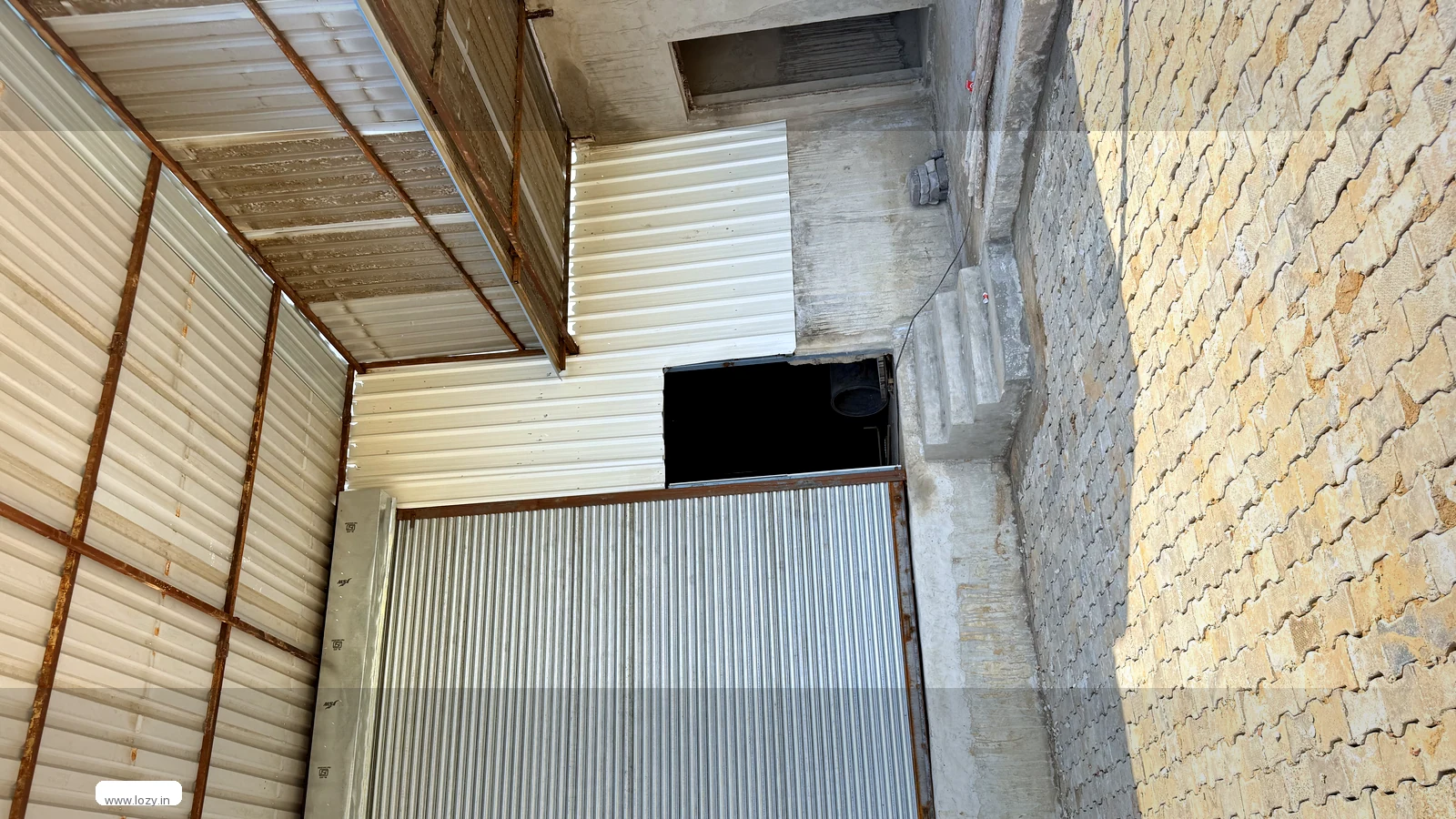
An FMCG warehouse has to provide four things before any rate is worth discussing: a dry envelope that keeps paper-based packaging out of the monsoon, a floor that carries stacked pallets without settlement, a picking face that can assemble mixed cartons for dealer indents, and a record that carries a batch code and a date for every carton in the building. FMCG warehouse requirements are those four conditions written as measurable clauses rather than a square-footage number, because a shed that fails any one of them will ship the wrong date eventually. This guide is the specification a buyer can carry on a site visit and score.
- Every carton carries a batch or lot code and a packed or expiry date, recorded per SKU before the pallet leaves the intake bay - not reconstructed at the stock take.
- Rotation runs on one written rule per category, first-expiry-first-out for dated lines and first-in-first-out for packed-date lines, and a pick list from last week can prove it.
- Scheme and promotional stock sits in its own marked bay, out of the saleable count, so the newest carton in the building cannot leave first.
- Stock stands on pallets off the floor and clear of the walls, under a roof someone has inspected in rain, with pest control on a numbered and mapped schedule.
Most warehouse searches for this trade start in the wrong place. A buyer asks for a certain number of square feet at a certain rate, visits two sheds, and picks the one that smells better. That works until the first scheme season, when the promotional cartons have to leave ahead of the regular stock and nobody can prove which pallet is which. A requirement list fixes the order of the conversation: first whether the building can keep stock dry, dated and separated, then how much of it you need, then what it costs. The FMCG and consumer goods warehousing page covers the service; this post is the clause-by-clause specification behind it.
What FMCG stock demands from a building
A requirement list for this trade is short, physical and unglamorous. FMCG stock is cheap per kilo, dense per pallet and unforgiving per carton: a pallet of detergent bars weighs more than its footprint suggests, a carton of extruded snacks crushes under a second layer, a shrink-wrapped tray of sachets takes a permanent set if it stands on a damp floor for a fortnight, and every one of them carries a date that decides whether it ships at full margin or comes back as a credit note. The building has to answer for weight, water, air and time - in that order of physical risk, and in that order of inspection.
The dry envelope comes first
Moisture reaches stored FMCG stock from six directions, and all six can be checked in under an hour. It comes through the roof sheets and the ridge, down a blocked gutter and back up the wall, under a shutter that does not close to the floor, up through a slab below the yard apron, and out of the air itself when a warm humid morning follows a cool night. Paper-based outer cases show the damage first - soft corners, wavy board, lifting labels - long before the product inside is affected, which makes the outer case the honest indicator of a building's dryness.
The commercial consequence is not the damaged case. It is the argument at the dealer's counter three weeks later, when a carton that looked sound at dispatch arrives soft and the trade buyer refuses the consignment. Nobody can prove at that point whether the water entered in the warehouse, in the vehicle or in the dealer's own godown, so the credit note lands on the brand. A building that keeps a dry stowage position away from doors and walls, on a plinth above the apron, under gutters that discharge clear of the wall, removes the argument before it starts.
A floor that carries the stack, and a stack the carton can carry
Two different limits get confused on site visits. The first is the slab: what weight per square metre the floor was built for, whether it is level enough for racking feet, whether the joints have opened, and whether it sits above or below the yard. A floor below the apron ponds water at the shutter in every rain, and the bottom layer of every stack in that corner fails first. The second is the carton: how many pallets a case carries before the bottom layer takes a compression set. Printed cartons, trays of pouches and shrink-wrapped multipacks all fail at different heights.
Stacking height is therefore a written number per SKU, not a matter of how high the forklift reaches. Where the two limits conflict - a low-compression carton in a high-clearance shed - the answer is racking, which turns unused height into load-bearing levels without putting weight on the product. Where the slab is the limit, the answer is a plan that keeps heavy pallets near the columns and light cartons in the deeper bays.
A picking face, and floor to assemble on
A distributor indent is a few cases each of several SKUs, not a pallet, and that one sentence reorganises the building. It means a shelf-level pick face reachable without a ladder, an assembly bench or marked floor where a mixed order is built and checked, and staging space where the finished order waits without blocking the aisle. A shed with nothing but pallet floor still stores FMCG stock, but every indent becomes a pallet move: down, picked, and back up again, three times a day.
Buyers leave this out of a brief because it sounds like an operating detail. It is a building condition: either the clear height and floor allow a pick face, an assembly floor and staging, or no procedure fixes a building whose only free floor is the lane a truck needs.
A record that starts at the first carton
The fourth requirement is not physical at all, and it is the one that decides whether the other three are usable. Every carton has to become a line in a record at the moment it crosses the intake bay: SKU, batch or lot code, packed or expiry date, case count, pallet identity and location. Without that entry, the building is holding anonymous stock, and anonymous stock cannot be rotated on any rule, cannot be recalled, cannot be reconciled against a distributor's claim and cannot be insured for its actual value.
Ask for the record rather than the system; a warehouse can own software and still write dates into it a week late. The test is whether the entry for one carton exists the day after intake, whether the screen matches the case, and whether the desk can find the pallet without walking the floor. If that takes ten minutes and two phone calls, the record is decorative.
The acceptance specification: twelve requirements you can test on the visit
The table below is the document to take to a site. Each row is a requirement, a minimum acceptable condition, a test that produces evidence rather than an impression, and the commercial reason the requirement exists for this trade specifically. Score each row pass or fail on the day. Any failure in the first four rows means the building cannot run a dated-stock operation at all, whatever the rate, because those four are the mechanism by which batch and date information survives contact with a working warehouse.
Three instruments make the visit productive: a carton from your own range, a wet day, and a pick list from the previous week. The carton tests beam spacing, shelf depth and stack height against something real; the wet day tests the water path in a way no dry visit can; the pick list tests whether rotation happens or is merely described. A facility that cannot produce one is telling you something the sales conversation will not.
| Requirement | Minimum | How to test it on the visit | Why it matters for this trade |
|---|---|---|---|
| Batch and date code per carton | Every carton carries a readable batch or lot number and a packed or expiry date; the intake record shows both per SKU before put-away | Pull three cartons from three different pallets. Ask the supervisor to open the intake record for each and read the date back. Then ask what happens to a carton that arrives with no date on it | A carton without a date cannot be rotated on any rule. It leaves on whichever pallet is nearest the door, and the oldest stock stays in the rack |
| One rotation rule, in writing | A named rule per category - first-expiry-first-out for dated lines, first-in-first-out for packed-date lines - written into the agreement rather than the internal SOP | Ask for last week's pick list for one fast-moving SKU and compare the date picked against the earliest date in stock. Ask who authorises an out-of-sequence pick, and what is written down when they do | Rotation by habit picks the reachable pallet, and the reachable pallet is usually the newest intake. The loss shows up as near-expiry stock at the stock take |
| Scheme stock kept apart | A physically separate, marked bay for scheme and promotional stock, excluded from the saleable count and released only on written instruction | Walk to the scheme bay. If the answer is "it goes with the rest", there is no bay. Check that the last scheme intake appears as its own line in the count, not as extra quantity on the parent SKU | Scheme stock is the newest stock in the building. Mixed into the rack it ships first, and the regular cartons behind it age out unsold |
| Hold area for near-expiry, damaged and returned stock | A marked, counted hold area with a written release; nothing returns to saleable stock without a signature and a reason | Ask where a leaking case found at six in the evening goes. Look for the hold bay, its log, and the date of the most recent entry. Ask who can release an item from it | Without a hold area the problem stock circulates inside the count and surfaces at the stock take, when it is too late to move it on at any price |
| Dealer-wise staging at the dispatch face | Marked staging bays per route or dealer, sized to hold a day's indent without blocking an aisle or a shutter | Stand at the dispatch face at ten in the morning. Count the labelled bays and watch whether a mixed order can be built without moving another dealer's stock first | An indent assembled on the floor at the shutter is handled twice and blocks every vehicle behind it. The cost is labour plus a departure slot |
| Case picking and loose picking both | A shelf-level pick face for carton picks and an assembly surface for loose units; not a pallet-only floor | Ask for a three-case pick across three SKUs and time it. Then ask for one loose unit out of a broken case, and time that too | Dealer indents are mixed cartons and part-cases. In a pallet-only building every indent turns into a pallet move and a re-wrap |
| Floor level, slab and stacking limits | Floor at or above the yard apron with no standing water at the shutter; slab load capacity stated in writing; stack height set by carton compression, not by roof clearance | Visit during or after rain and look for water at the threshold and damp pallet bottoms. Ask for the slab rating in writing. Look at how high the sitting tenant stacks printed cartons | Water at the threshold wicks into the bottom layer of every stack, and a stack taken past carton compression crushes the layer below - visible only at the dealer |
| Roof, gutters and the water path | No daylight or staining through the roof sheets; gutters and downpipes intact and discharging clear of the walls; yard graded away from the building | Walk the roof line with a torch looking for light pinpricks, stained purlins and drip marks on stored cartons. Check where each downpipe ends and which way the yard falls | A roof that leaks in August is a write-off claim in September, and the stock most exposed is paper-based packaging that cannot be dried out afterwards |
| Pest control, documented | A scheduled service with numbered bait stations on a site map, proofing on shutters, vents and door gaps, and a sighting log | Ask for the last two service reports and the bait station map. Walk the perimeter and check that the numbers on the wall match the map, and that the shutter closes to the floor | Rodents and cockroaches enter through gaps a buyer never notices on a walk-through. Without a log there is no way to know whether anyone has looked since the last infestation |
| Hygiene and odour separation | A written cleaning schedule and a spill kit at the dispatch face; leak-prone and odorous lines in a bay of their own, away from paper and food-adjacent stock | Smell the air near the detergent or floor-cleaner stock, then near the paper cartons. Ask what is used on a spill and where the kit is kept, then look at the kit | One split floor cleaner marks a whole layer of cartons with a smell the trade buyer notices long before the paperwork is read |
| Clear height and racking rated for the load | Usable clear height stated on the drawing; racking plated for the pallet weight it will carry; beam spacing matched to your carton footprint | Take your own carton and offer it to a beam. Ask for the racking load plate, check it is legible and current, and look at whether beams are bowed under the stock already on them | Racking that wastes half a beam per pallet doubles the footprint you pay for, and racking loaded past its plate is a safety exposure nobody has priced |
| Access control, records and the invoice | Visitor and vehicle log at the gate, camera coverage of intake and the dispatch face, and a GST tax invoice raised in your entity's name | Ask to see yesterday's visitor log and the camera view of the dispatch face. Ask what the invoice will say, in whose name, and on what GST basis, and get it in the quote | Unrecorded movement is uninsured movement, and a rent receipt standing in for a tax invoice costs the input credit every month of the term |
A dozen rows produce a document, not an impression. Mark each row pass, fail or not shown: a site scoring ten of twelve is worth a second visit with the two failures written into the negotiation, while a site scoring six is a shed with a rate. The scoring also settles arguments inside your own team, because the requirements were agreed before anyone saw a building.
If you would rather have the twelve rows answered in writing against live space than score them yourself, send the requirement list to our team - we reply row by row, and we say when a building cannot meet one.
Batch, date code and rotation: the clause that protects margin
Batch discipline is what separates an FMCG warehouse from a general godown, and it is cheap at intake and expensive to fix afterwards. The record carries four things per carton: the manufacturer's batch or lot code, the packed or expiry date, the case count on the pallet, and the location the pallet went to. A fifth - the scheme reference, where the stock is promotional - belongs on the same line, because scheme stock stops behaving like saleable stock the day the promotion ends.
What the intake record must show
Four fields, in this order, on one line: SKU or material code matching your own master data, batch or lot code exactly as printed on the case, packed date and expiry or best-before date, and pallet plus location identity. Anything less and the record cannot answer the only question that matters at dispatch, which is which physical carton leaves next. It also needs a condition field - received sound, torn outer, crushed corner, leaking - because a damaged case entered as ordinary stock leaves as ordinary stock and comes back as a return.
Ask to see the entry for a carton still in the building, then for one that has already left. A record that produces both, weeks apart, is a record; a system that can only show a current balance per SKU is a stock report, and stock reports do not rotate anything.
First-in-first-out, first-expiry-first-out, and which one gets written down
Two rules are in common use and they are not interchangeable. The first releases stock in the order it was received, which suits lines bought and sold on packed date where shelf life is long against turn - a soap or a detergent, where the batch received in March should leave before the batch received in June. The second releases the nearest printed date regardless of when the pallet came in, which is what a snack, a beverage concentrate or any line with a live actives shelf life needs, because a slow batch can sit in front of a fast one.
What matters in the agreement is not which rule you prefer in the abstract but that one rule is named per category, in writing, with the exception process beside it. A warehouse left to choose per pick will choose the pallet it can reach, and out-of-sequence picks then happen silently, without a note, because nobody has been told they are exceptions. The written rule also gives you a monthly check that costs nothing: pull the dispatch register for one SKU and confirm the dates left the building in ascending order. If they did not, ask for the note that authorised the break.
The scheme bay, and why a promotional carton is dangerous
Trade schemes are the most reliable way an FMCG operation loses margin without noticing. A scheme load arrives as the newest stock in the building, in packaging that often looks different from the regular line, and it is needed for a fixed window - a month-end push, a festival offer, a dealer incentive. If it is put away into the general rack, it becomes the easiest stock to pick: it is at the front, it is recent, and the picker has no reason to prefer an older pallet. The result is that regular stock ages while promotional cartons ship early, and the scheme stock that remains after the window closes is both out of date for the offer and newer than the regular stock it displaced.
The requirement is a marked bay, a separate count line and a release instruction. It can be racked or floor, but it must be identifiable on the plan and separable in the record, so the saleable balance your sales team quotes from excludes it. When the scheme closes, whatever remains is returned, cleared or reclassified by written decision.
Quarantine, returns and the discipline of the hold bay
Every FMCG warehouse generates three kinds of stock that must not be picked: near-expiry lines pulled from the pick face, damaged cases, and trade returns. All three are still in the building and still counted by somebody, which is why they need a bay of their own - a marked area, a log with a reason and a date against every item, and a written release naming who authorised the movement out.
Returns deserve their own line in that log, because returned stock is the commonest route by which non-saleable goods re-enter a saleable count. A carton that has travelled to a distributor and back has been in a vehicle, a counter and possibly a damp storeroom, so it cannot be treated as the goods that left. The written rule should say that returns are inspected at intake, graded, and then returned to the scheme or hold bay or written off.
Where the quantity of dated stock is large enough to be a live balance rather than a lot, this is the point at which storage stops being a rented area and becomes a ledger, which is what inventory warehousing is built for. Either way, the discipline is the same: one line per batch, one date per line, and a hold bay that is counted as carefully as the saleable rack. Buyers who want the operational version of this discipline, rather than the specification, will find it in the FMCG warehousing operations guide.
Dealer-wise staging, and the case-versus-loose question
Staging is a floor requirement disguised as a procedure. A distributor indent arrives as a mixed order that has to be assembled, checked against the invoice and held until a specific vehicle on a specific route reaches the gate. That takes marked floor: a bay per dealer or route, sized to hold a day's indent without spilling into the aisle. Where it was never planned, orders are built on whatever floor is free - on a busy morning, the lane the next truck needs.
The test is a clock, not a conversation. Stand at the dispatch face at ten in the morning and watch whether a completed mixed order can be built and parked without moving another dealer's stock. If every order requires shifting somebody else's pallet, the staging area is under-sized for the indent pattern, and the shortfall will show up as a departure delay on exactly the days you can least afford one. Racked business space with a defined dispatch face handles this better than pure floor area, which is why the business warehousing layout is the usual starting point for a distribution operation.
Case picking sits at shelf height
Carton picks want a shelf-level face where a picker takes three cases without a ladder, a reach truck or a walk to the back of the building. That is a layout decision with a measurable consequence: the number of cartons a person can assemble in an hour. A pick face also lets a broken case sit beside its parent SKU instead of being carried to a corner, which is how part-cases stay findable.
Loose units need a bench, not a bay
Part-case and unit picking is the requirement buyers forget until the first modern-trade order arrives with a mixed quantity. It needs a surface at working height, light, and enough room to lay out an order without stacking it twice. Some FMCG lines never break a case; a great many do, and the building has to offer both a case face and an assembly surface or the operation improvises on the floor. The wider handling picture, including how a 3PL would price this stage, is set out in the 3PL warehousing guide for Delhi NCR.
The dry, clean envelope: roof, monsoon, pest control and hygiene
Three of the twelve requirements are really one requirement seen from different angles: the building must keep water, pests and smells out of the stock. None of the three can be assessed from a photograph, and all three are cheap to check on a visit that lasts an hour longer than the sales meeting.
Trace the water path before you discuss racking
Water arrives at a shutter threshold, at a wall base, through a roof sheet and out of the air. Start at the door: does it close to the floor, is there a ramp or a lip, and is there a drain or a slope that carries water away from the opening rather than towards it? A shutter that leaves a finger-width gap at the bottom is a monsoon entry point, and the pallet standing nearest to it is the first casualty every year. Then walk the wall base: a damp line, efflorescence or a tidemark above the plinth tells you the wall has been wet, whatever the wall looks like now.
Next the roof, with a torch. Light pinpricks through the sheets, rust runs on the purlins, sagging between purlins and stained insulation all point to a leak that has been running for a while. Look at the stock already in the building for the same evidence: drip marks on cartons, softened corners on the top layer, water staining on pallet tops. A tenant's stock is a better roof report than the landlord's assurance, because it has been through a monsoon.
Gutters, downpipes and the yard
A sound roof with a blocked gutter is a wet wall. Check that gutters run to downpipes, that the downpipes discharge clear of the plinth rather than onto it, and that the yard falls away from the building. Standing water within a metre of the wall in October is why the bottom layer of a stack is soft in November, and an uneven apron also drops a loaded pallet truck a corner at the shutter.
Pest control is a document, not a spray
Ask for three things: the service schedule, the last two visit reports, and the bait station map. Then walk the perimeter and check the numbers on the wall against the numbers on the map. The purpose is not to catch a vendor out; it is to establish whether anyone has been counting. A facility with twenty mapped stations and two missing from the wall has a control problem, and one that cannot produce a report has no control, only an invoice.
Proofing is the physical half of the same requirement: shutters that close to the floor, mesh on vents, door brushes, no gap under the fire exit, and no stock against an external wall where a rodent can travel undisturbed. Cockroaches travel in corrugated board and pallet voids, which is why a split deck board is a pest finding as much as a load finding.
Hygiene, spills and the odour boundary
Detergents, floor cleaners, phenyl, bleaching powder and perfumed personal care will mark anything porous near them. The requirement is a bay of their own, away from paper cartons, food-adjacent stock and anything that will sit for months. On the visit, smell the air at both ends of the building: if the two are indistinguishable, the separation does not exist.
Ask where the spill kit is, then walk to it. A spill wiped with a dry cloth pushes the product into the board and the smell stays for the life of the carton. A cleaning schedule, a kit at the dispatch face and a rule that a leaking case is pulled the day it is seen are the cheapest requirements here, and the ones most often missing. The full inspection sequence, room by room, is in the warehouse inspection checklist.
Where the load is heavy enough to need a large floorplate rather than a distribution bay, dock access, apron strength and drainage become the deciding conditions, and industrial warehousing is the shape to price.
Licences, registrations and the premises documents
An FMCG warehouse needs no licence of its own the way a cold store or bonded facility does, but the business storing there carries registrations that name the premises, and a site that cannot be named in them is a site you cannot use. A brand, distributor or CFA operation should be able to produce the list below.
What the business must hold
- GST registration for the entity that will be invoiced, with the warehouse address recorded as an additional place of business where the stock is held. The rules sit on the GST portal; your accountant confirms how they apply to your entity.
- Shops and establishment registration in the state where the premises sit, where the state requires it for a storage or distribution operation.
- Trade or municipal licence for the premises, and a fire certificate where the local fire authority issues one for storage occupancy. Both are premises-specific, so they belong on the site checklist rather than in a head-office file.
- FSSAI registration or licence for any food business - and packaged snacks, beverages, biscuits and ready-to-eat lines are food businesses - with the storage address covered by the licence. The categories and the application route are published by FSSAI; the food and beverage specification is set out separately in the food and beverage warehousing guide.
- Legal metrology registration for a packer, importer or manufacturer of pre-packaged commodities, and stamping of any weighing equipment used on the premises. The declarations on the pack - net quantity, MRP, batch, date - are the same fields the warehouse record must carry, which is why the two systems should agree.
- Stock insurance written against the described premises, with the address on the policy matching the address holding the goods. A policy that names a different godown is a policy that will be argued about after a loss.
What the premises must show
The building side is thinner but not optional: extinguishers with current refill dates and inspection tags, exit signage and clear routes, a first-aid box, a pest control file, a visitor log, and a named person accountable for each. Keep the licence copies at the site - an inspector at the gate will not wait while somebody drives to a head office.
Two practical notes save weeks. Adding a warehouse as an additional place of business on a GST registration takes time, so the effective date of the storage arrangement should follow the registration date, not lead it. And a food licence that lists a factory address but not the storage address is an expensive gap that has to be closed before the stock arrives.
Need the twelve rows answered in writing?
Send your category list, monthly carton volume and the city. We reply with the space that fits, the requirements it meets, and the ones it does not.
Get a requirement checkCall +91 93547 12345Records: what must be written down, and how often
A record is only a control if it is written at the moment of the event and reviewed on a fixed cycle. For this trade, eight registers cover the whole operation, and each one answers a question that will be asked by a distributor, an auditor, an insurer or your own sales team.
- Intake register - per consignment: vehicle, date, invoice, case count, condition, and the batch and date list attached to the load.
- Batch register - per SKU and batch: quantity in, quantity out, balance, location, and the date sequence. This is the register that makes rotation provable.
- Dispatch register - per invoice: SKU, batch and date dispatched, quantity, dealer, vehicle and time out. Read against the batch register, it shows whether the rule was followed.
- Hold and quarantine log - per event: what was pulled, why, by whom, and the release decision.
- Returns register - per return: dealer, reason, condition on arrival, grade, and destination.
- Damage and write-off register - per case: cause, location, and whether it was a building fault or a handling fault. This tells you whether the roof or the forklift is costing you money.
- Pest control file - per service: date, findings, treatment, and the sighting log between visits.
- Count sheet - rolling count by SKU each week and a full count each month, signed, with variances investigated rather than adjusted.
Two disciplines turn this list into a system. Count something every week, because a rolling count finds a rotation fault while the stock can still be moved on at a discount rather than written off. And keep one system of record: if the warehouse and your own team each maintain a list, the two diverge within a month. GST records run to 72 months from the annual return, which your accountant will confirm, so the agreement should say who holds the archive and for how long. Distribution operations that run on documentation are described in the contract logistics guide, and the Lozy services list shows which of these the facility team runs.
If you want a second pair of eyes on the record format before the first intake, send the draft register on WhatsApp and we will mark what is missing.
The five failures that cost FMCG buyers money
Most losses in this trade come from five specific failures, and four of them are visible on a site visit before anything is signed.
- Dates captured at pallet level instead of carton level. One pallet, one date is a fair assumption until a mixed pallet arrives from a co-packer with three batches on it. From that day the record is wrong and every pick from that pallet is a guess. The requirement is a line per batch, whatever the pallet count.
- Scheme stock merged into saleable stock. The newest carton in the building becomes the easiest to pick, the regular stock ages behind it, and the loss lands as a near-expiry write-off two quarters later, long after the promotion that caused it.
- Rotation described but never sequenced. A warehouse that says "we follow FIFO" and cannot produce a pick list is relying on the picker's judgement at seven in the morning. The test is one SKU's dispatch history against its intake history, and it takes ten minutes.
- Water found after the stock is in. A leak is a repair if it is found in May and a write-off claim if it is found in August with cartons under it. A buyer who signs in October without asking how the roof behaved in July has skipped the only test that matters.
- Stacking past what the carton can carry. Saving floor space with a third or fourth tier on printed cartons produces crushed bottom layers that are found at the dealer, where the cost is a return plus freight both ways. Stack height belongs in the specification per SKU, not in the supervisor's discretion.
A sixth failure is invisible until it is expensive: an invoice that is not a tax invoice. A rent receipt for storage looks like a small monthly saving and costs the input credit on every invoice of the term. The warehouse and godown space for rent basis and the paper that comes with it should be settled in writing before the first carton moves; the operating habits that prevent these five failures are set out in the FMCG warehousing operations guide.
What it costs, and what moves the monthly figure
Storage for FMCG and consumer goods in Delhi NCR starts at ₹21 per sq ft per month - a starting basis, not a quote, because it prices floor area and floor area is only one of the things an FMCG operation consumes. The published plans price the other shapes, and knowing which shape your requirement is saves a misleading comparison.
- Racked or floor space - from ₹21 per sq ft per month on the space for rent basis, the right unit when matching a floorplate to a pallet count.
- Batch-led inventory storage - from ₹4,499 per month on the inventory plan, for stock tracked as a running batch ledger rather than a rented area.
- Seasonal and short-term holds - from ₹1,299 per month on seasonal warehousing and ₹699 per month on short-term storage, for a scheme window or a festive run.
- Business and e-commerce plans - from ₹4,999 per month where handling is part of the arrangement rather than the tenant's own labour.
All of it is monthly billing on a GST invoice with no long lock-in, and the same starting figures are collected on the Lozy pricing page. Five things move the number in this trade: the peak pallet count rather than the average, because scheme stock arrives in a wave; pick intensity, because a mixed-carton indent costs more labour than a pallet out; the staging area, which earns nothing and prevents a delay; the spread of batch dates, since more batches mean more partial pallets; and location, where the Gurugram-Manesar belt and the Dadri side are not the same asset. Ask for area, handling and term to be quoted separately, so a comparison is possible at all. To have a figure built from your own carton count, email the requirement list to care@lozy.in.
Handover: from requirement to first dispatch
Between a signed requirement and a working operation sit ten steps, each with an output you can hold. Skipping the middle ones is how a first month goes wrong in ways that look like bad luck.
- Write the requirement list from the twelve rows, with your own thresholds, before you speak to a landlord.
- Convert volume to positions: cartons to pallets on your own carton dimensions, pallets to positions on the racking offered, positions to square feet at peak rather than average - then add pick face and staging floor, which are not pallet positions.
- Shortlist two or three sites on the right side of the market for your counters, not the cheapest side of the region.
- Book the visit for a wet week if you can, and take one carton from your range with you.
- Score the table on site, photograph every failure, and note who said what. A photograph of a drip mark settles more than a paragraph of assurance.
- Put the failures into the negotiation: an added hold bay, a scheme bay marked on the plan, another level of racking, a shutter repair with a date.
- Agree the record format and the rotation rule per category in writing, including who keeps the batch register and who can authorise an out-of-sequence pick.
- Agree the intake document set - invoice, e-way bill where applicable, batch and date list per vehicle - and the cut-off after which a vehicle is received the next morning.
- Walk the physical handover: bay allocation, labelling, opening count, and a signature on the opening stock position from both sides.
- Run the first dispatch under supervision, then read the pick list against the batch register before volume scales. The first week is the cheapest time to find a rotation fault.
Site choice for this trade leans on two belts in particular: the Gurgaon and Manesar cluster for counters across south Haryana and west Delhi, and the Faridabad estates for the south-east and the Mathura Road run. Both are worth visiting before you commit to a floorplate, and both are searchable on the warehouse listing; the wider network is described on the FMCG and consumer goods warehousing page.
The clauses that carry the requirement
Nine clauses do the work in an FMCG storage agreement, and none is exotic: the rotation rule per category, named not summarised; the scheme and hold bays on the floor plan; the batch register, its format and ownership; the right to count on notice and to see the register rather than a summary; the condition standard at intake and what happens to a carton that fails it; the receiving cut-off; liability for dated stock lost to a building fault and the insurance behind it; the invoice basis, GST treatment and entity; and the exit - notice, stock transfer and the register archive.
Two cause the most argument when missing: liability for a leak, and the definition of an out-of-sequence pick. A sentence on each, agreed before the first carton, is worth more than a page of general terms.
Taking a requirement list to a site visit?
Send it across before you go. We will tell you which of the twelve rows the space meets, in writing, and which it does not.
Start the requirement checkCall +91 93547 12345Where Lozy fits, and where we do not
Lozy holds FMCG and consumer goods across 77+ warehouses and over a million square feet of live space, deepest in Delhi NCR, with batch and date recorded at intake, scheme and hold bays marked on the plan, and stock rotated on the rule you nominate - monthly billing on a GST invoice, no lock-in, from ₹21 per sq ft per month. Where we do not fit: chilled, frozen and temperature-controlled storage, bonded or customs-held cargo, and anything needing a calibrated environment; those are specialist facilities and we say so rather than quote. Adjacent specifications are worth reading first - B2B distribution, 3PL operations and the cost per pallet basis.

Related guides
- FMCG warehousing operations and cost
- the warehouse inspection checklist
- warehousing in New Delhi
- business warehousing
Specifying an FMCG warehouse?
Send the requirement list, the carton count and the city. We answer row by row, with the space that is free now and the rate it comes at.
Get a quoteCall +91 93547 12345Sources. Rates, plans and facility details are Lozy's own published information (checked 25 October 2026). GST registration and record retention from the GST portal; food business licensing from FSSAI; storage benchmarks from the Warehousing Development and Regulatory Authority; sector context from IBEF and the Press Information Bureau.
Last updated: 25 October 2026. Have a question the FAQ below does not answer? Call +91 93547 12345 or email care@lozy.in.
Need warehousing or storage in India?
Request a free, tailored quote in under 2 minutes — free pickup, no lock-in.