
3PL Warehousing Company in Gurgaon: Managed Space, Cut-Offs and the Lease Comparison (2026)
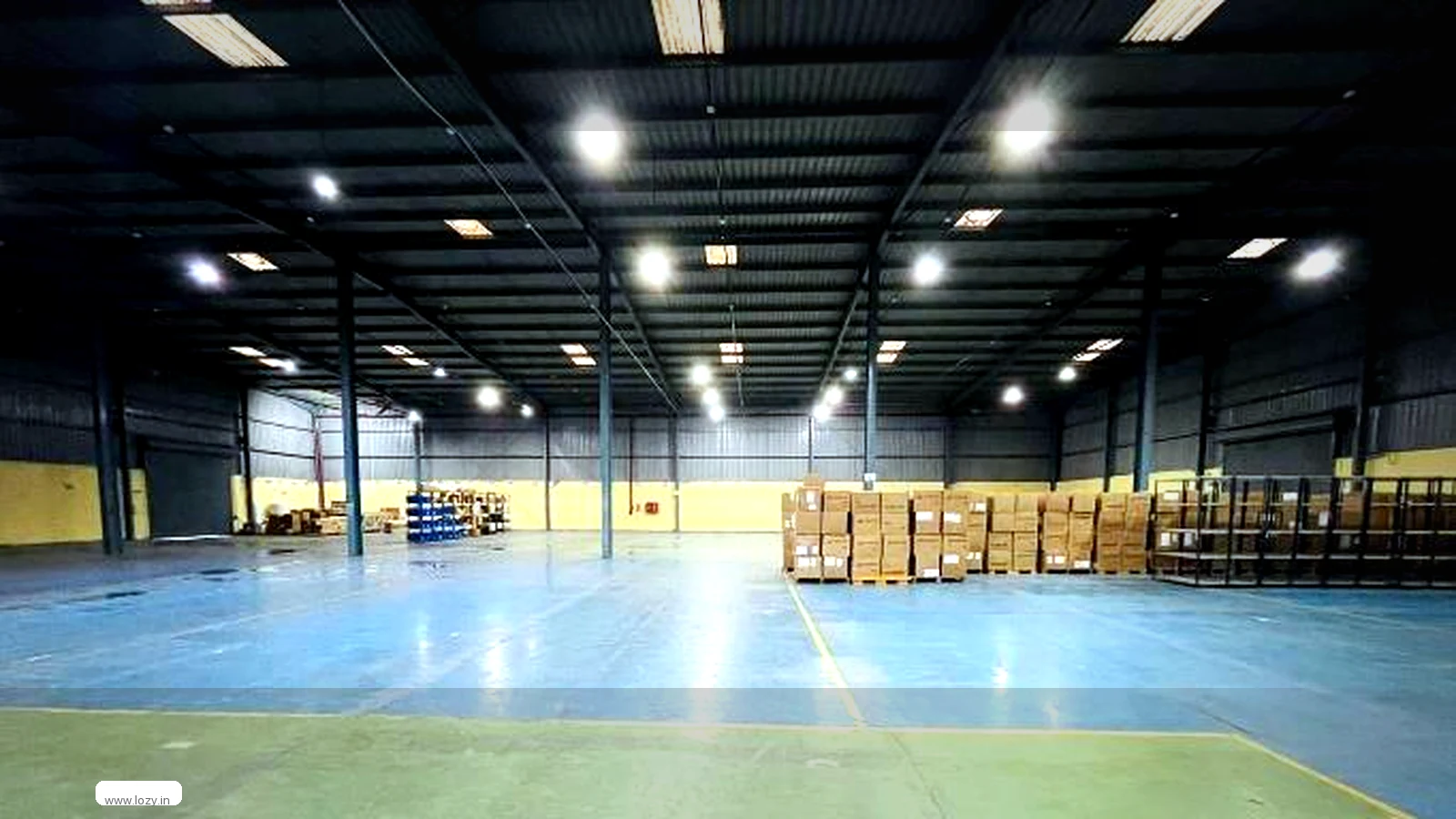
Short answer: a 3PL warehousing company in Gurgaon runs the building, the labour, the system and the paperwork behind your stock, and bills you monthly for the space you occupy and the work it does. You stop renting a shed you have to supervise and start buying a stock position you can read. Space on the published Delhi NCR basis starts at ₹21 per sq ft per month, with the plans itemised on the pricing page rather than quoted case by case.
- A Gurugram godown lease buys you a building and, with it, a deposit, a fit-out, a racking bill, a guard roster and a supervisor to manage all of it. A 3PL buys the output of those things.
- The rate per square foot is the smallest variable in most Gurugram 3PL decisions. Order profile, handling intensity and cut-off discipline move the monthly figure further.
- Your cut-off is a geographic fact before it is a service promise. A facility on the wrong side of the Kherki Daula toll queue cannot dispatch at the same hour as one on the right side of it.
- Outsourcing transfers the operation, not the stock, the invoice or the risk. The stock stays yours and the insurance is still yours to place.
Two pages cover the ground on either side of this one. The Gurgaon warehousing guide maps the belts and the costs; the 3PL warehouse in Gurgaon service page is the commercial summary. What sits between them is here.
What a 3PL warehousing company in Gurgaon actually does for you
A 3PL warehousing company stores goods it does not own, handles them on instruction, and reports on them as a running balance — for a fee billed by period. The building is only the first of five things it supplies. The others are people, a system of record, the documentation around every movement, and a first-mile arrangement to get goods out of the gate. A godown landlord supplies the first and nothing else, which is exactly why a godown looks cheaper on a rate card and rarely is on a P&L.
| What you are buying | What it includes | What it does not include |
|---|---|---|
| Space | A defined area or pallet positions inside a managed facility, racked or on floor, billed monthly on the published basis | Ownership of the building, or a lease in your name |
| Labour | Receivers, put-away staff, pickers, packers, supervisors and the roster that covers a peak | Your own payroll, PF and ESI position for that labour |
| System | A stock ledger keyed to SKU, batch or serial as your product needs, with a location for each | Your ERP. The operator's system reconciles with it, not replaces it |
| Documentation | Goods receipt notes, pick lists, dispatch documents, e-way bill references, returns records, monthly statements | Your GST returns, your e-way bill generation, or your books |
| First mile | Loading, manifesting and handover to a carrier at the dock, on a booked slot | A guarantee about the carrier's transit time or the buyer's acceptance |
| Premises compliance | Occupancy, fire clearance, power, pest control, housekeeping and security for the building | Product licences, stock insurance, or the legality of what you store |
That split is the whole argument, and the right-hand column deserves a second read. Half the disappointment in outsourced storage comes from a buyer who assumed the operator had taken on something it never had — the licence, the insurance, or the promise that a courier delivers tomorrow. What a 3PL genuinely takes on is the operational middle: the part of the business that consumes supervision and produces nothing you can sell.
The space, and what "shared" actually means
Shared space is not a room you sublet. It is a defined footprint inside a larger floor, marked and recorded, with your stock in it and nobody else's. The distinction matters at the boundary: shared space is priced by area or by position and can be resized in a month, whereas a leased shed is priced by the building and fixed for years. Lozy's model is the first, and the shapes it comes in — floor area, racked block, pallet positions — are set out under 3PL warehouse services rather than invented per enquiry.
The people who touch your cartons
Receiving decides everything downstream. Somebody has to count what arrived against the invoice, check the outer for damage, record the batch or serial, decide where it goes, and write that decision down before the vehicle leaves the yard. That is a trained person doing a disciplined twenty minutes, and it is the first thing a business running storage out of its own back room loses when the person who knew how to do it resigns. An operator's answer is a roster and a supervisor, not a hero.
The system of record
Every 3PL runs some system, and the only question is whether it can answer three things on a Tuesday afternoon: how much of this SKU do I have, where is it, and what moved today. A warehouse management system earns its place by making put-away and pick locations explicit rather than remembered, and by producing the movement history a stock dispute is settled with. Ask for a sample of the report you will actually receive, not a dashboard screenshot.
The paperwork that follows the goods
Goods leaving a Gurugram facility cross into Delhi more often than not, which brings a document set: a tax invoice, an e-way bill where the consignment crosses the threshold, a transporter's LR, and a gate-out record with a time on it. None of it is exotic, and all of it is where a small operation quietly falls over in its first festive season.
What stays yours whoever operates the floor
The stock is your asset, so the insurance on it is your policy. The tax invoice is raised by you or in your name, so the GST position is yours. Any licence to store or sell a regulated product is granted to you for named premises. The commercial relationship with the buyer is yours. A 3PL offering to take those off your hands is describing a different service or overreaching. The 3PL warehousing in Delhi NCR guide sets that activity split out in full.
Why a Gurugram business outsources instead of renting a godown
Most Gurugram businesses outsource because a lease asks them to buy capacity for their best month and pay for it in their worst. A 3PL asks them to buy capacity for the month they are in. Everything else follows from that one difference in commitment, and it is what shows up first when the two are compared properly.
The district makes the point sharply because its demand is lumpy. A D2C brand selling into Delhi and the NCR does not ship evenly through the year. An auto or engineering supplier feeding the Manesar plants ships against a build schedule that is not its own. A distributor holding stock for Haryana and south Delhi carries breadth rather than depth, and breadth is expensive per square foot.
A lease is a bet on your own forecast
Signing a shed in the Kherki Daula belt or a Manesar industrial block is a multi-year commitment with a security deposit against it. Using it then means fitting it out: racking sized to a product you may stop selling, floor marking, lighting, a power connection, handling equipment and a fire compliance position. That fit-out is sunk the day you sign and sized to a forecast made before you had a season's evidence. If the forecast is high you pay for the gap every month of the term; if it is low you rent overflow elsewhere and run two supervised sites.
A lease hands you an employment problem
A shed with no staff is a shed full of cartons nobody can find. Running it means a supervisor, two or three handlers, a guard agency, housekeeping and a pest control contract — plus the payroll, provident fund and ESI position for people you employ directly, or a contractor arrangement under the Contract Labour (Regulation and Abolition) Act if you do not. For a business of fifteen people that is a second organisation, with a failure mode that arrives without warning: the supervisor leaves, and the location register leaves with them.
A lease does not come with a cut-off
What a buyer actually wants from Gurugram storage is a delivery promise kept. That promise is made of a pick wave, a pack bench, a manifest and a gate-out time, and a leased shed supplies none of them — it supplies a building in which you can attempt them. The 3PL supplies the sequence and owns it as a service level. This is the argument that most often decides the question, and it has its own section on cut-off geography below.
Seasonality, and the cost of being early
Festive stock arrives weeks before it sells. A leased facility has to be big enough for the September peak and is then half empty in February, and the rent does not care. A monthly basis lets the footprint follow the stock: larger for the build-up, smaller after the sale. Plans of that shape are what a plan sheet is for, and the guide for 3PL partners covers the operator's side of the same arrangement.
The arithmetic: a Gurugram lease against managed space
Managed space wins on total cost for most Gurugram requirements under a few thousand square feet, and a lease wins when the requirement is large, flat and long. That is the honest shape of it. A rate comparison alone will mislead you in either direction, because the two bills contain different things — so the useful exercise is to list what the lease bill leaves out.
- Security deposit. Usually several months of rent, locked up for the term. On the managed side this does not exist.
- Fit-out. Racking, floor marking, lighting, a small office, a power connection, a fire compliance position. Sunk on day one, not recoverable at exit.
- Material handling. A reach truck or stacker, pallet trucks, trolleys, scales, labellers, and the maintenance and charging behind them.
- People. A supervisor and handlers on your payroll or through a contractor, with the statutory position that follows, plus recruitment every time one leaves.
- Running costs. Electricity, water, housekeeping, pest control, security, repairs, and the lighting and cooling of an empty floor.
- The empty-space cost. The line that never appears on a quote. Every square foot above your average requirement is rent paid for air, every month, for the whole term.
- The system. A WMS, the hardware around it, and somebody to keep the data honest.
- The exit. De-racking, making good, deposit recovery, and notice owed whether or not you still need the space.
On the managed side the bill is space at a published rate plus handling at an agreed tariff. Space on the Delhi NCR basis starts at ₹21 per sq ft per month, an inventory-led plan is published from ₹4,499 per month, a seasonal plan from ₹1,299, a long-term plan from ₹1,199 and a short-term plan from ₹699 — starting bases for the product, not a quote for a specific requirement, with the terms attached on the pricing page.
What the lease bill hides, and the managed bill shows
The lease bill is mostly fixed and partly invisible. Rent is obvious; the fact that you are also funding an idle mezzanine, a guard roster and a racking layout sized for a product mix from two years ago is not. The managed bill is the reverse: every line is a charge for something that happened, which makes it easier to argue with and easier to reduce. A business that can see storage cost per order rather than per square foot starts making better decisions about packaging and about which slow-moving lines deserve shelf space at all.
When the lease is the right answer
Three situations, plainly. The requirement is large and flat enough that your own fit-out amortises. The goods need equipment that only makes sense in a dedicated building — a paint booth, a test rig, a line-side store. Or the business is in the building anyway and the storage is a corner of a factory whose rent you already pay. In those cases the lease is cheaper per unit and the control is worth having. What does not follow is that the lease is cheaper for a business whose volumes move; the cost section below sets out which inputs move the number.
Put your Gurugram requirement on both sides of the sheet
Send the area you think you need, your monthly inbound and outbound volumes, and how many lines an average order carries. We will come back with the managed figure and the space it implies.
Compare the two routesCall +91 93547 12345Labour, shifts and supervision on the Gurugram belt
Labour in the Gurugram belt is available and mobile, which is the same sentence twice. Handlers are findable around the industrial estates; keeping a trained one through a festive peak is the harder half, and it is the half a business discovers after it has leased a shed and hired three people. A 3PL absorbs that by pooling: the same supervisors cover several clients' flows, a peak on one account is covered by staff idling on another, and a resignation is a roster change rather than an operational crisis.
Why the shift pattern decides your dispatch hour
A single-shift operation packs what it can between a morning start and an evening stop, which makes the cut-off whatever the bench clears. A facility running a second shift can take an order placed in the afternoon and still put it on a vehicle the same evening. So the question to ask a Gurugram operator is not "how many people do you have" but "what does my order placed at four in the afternoon actually get". That answer is a schedule, and a schedule is more useful than a headcount.
The statutory layer a lease puts on your books
Employing handlers directly means provident fund and ESI registration and monthly returns, a standing position under the Contract Labour (Regulation and Abolition) Act if you engage a contractor instead, minimum wage compliance for the category, and the records behind all of it. None of that is unusual and none of it is small for a company whose main business is something else. When the labour sits inside a 3PL's operation, the employment relationship is theirs and the service level is what you manage.
Supervision is the product, not the overhead
The difference between a well-run shared floor and a badly run one is rarely the racking. It is whether a supervisor walks the aisle at the end of the shift and reconciles the pick list against what left, whether a damaged carton is photographed and segregated the hour it is found, and whether the person who wrote the location on the put-away slip is the one who has to find it again. Ask who that supervisor is, what else they cover, and what happens on their weekly off.
Where the goods are a manufacturer's own components feeding a plant, the question changes shape, because the store may belong inside the factory rather than in a shared facility. That arrangement is covered under in-plant operations, and it is the right answer for a Manesar supplier whose buffer has to sit beside the line.
How NH-48 and the Dwarka Expressway decide your cut-off time
Your cut-off is set by where the building sits on the corridor, not by what the operator promises. A Gurugram facility's dispatch day is bounded by three things in sequence: when the pick wave is released, when a vehicle can physically leave the gate, and when the carrier's line-haul departs. Geography decides the second, and the second decides whether the first two were worth anything.
The Kherki Daula side: the toll is the boundary
Kherki Daula sits on NH-48 at the Gurugram end of the corridor, and it is where trailers queue before entering Delhi. That has a commercial consequence: a facility on the toll side is well placed for freight heading south and west down the Delhi–Jaipur highway, and a facility whose dispatch must cross the plaza towards Delhi is exposed to the queue at exactly the hour a morning dispatch wants to move. Nothing about the building changes that. If most of your buyers are inside Delhi and your promise is a morning delivery, the queue is part of your service level whether or not anyone wrote it down.
Lozy runs a managed facility at Kherki Daula, described on the Kherki Daula warehouse page rather than generalised into a claim about the district. It is the right side of the corridor for southbound freight and for distribution into Haryana; it is not a magic answer for a same-morning Delhi drop.
Manesar: the industrial corridor, south-west
Manesar is the industrial township further along NH-48, and its storage demand is shaped by the plants around it: components in, finished goods out, buffers that swing with somebody else's build schedule. For a supplier feeding a Manesar plant, cut-off is not a customer promise at all — it is a line-side call-off, and the question is how quickly a part reaches a gate. For a distributor using Manesar as a regional stock point, the corridor is the asset, because a load going south or towards Delhi is on the highway at the gate rather than after a cross-town run.
The Dwarka Expressway side, and the airport
The Dwarka Expressway links the Gurugram belt west into Dwarka and towards IGI Airport, which changes the arithmetic for two kinds of business: those whose buyers are in west and south-west Delhi, and those moving air freight. A facility on that axis can put a consignment on the western side of the city without crossing the middle of it, and a shipment booked onto a flight has a cut-off measured against a terminal rather than a city. The Gurgaon locations page lists the facilities on each side so the choice is made on the map rather than on a phone call.
The dispatch chain, and where it breaks
A working dispatch day runs in a fixed order, and every link is a place a promise dies.
- Order release. Orders arrive from a marketplace panel, an ERP export or a distributor's message, and are consolidated into a pick wave. Orders after the wave wait for the next one, however small.
- Pick and pack. Lines per order matter more than orders per day. Twenty orders of one line are a different job from five orders of eight lines, and only one of those shapes fits a tight cut-off.
- Manifest and documents. Invoice, e-way bill where it applies and the carrier's manifest are produced together. A missing document here is the commonest reason a packed order misses a vehicle.
- Gate-out. The vehicle leaves and the time is recorded. This is the only cut-off that is a fact rather than an intention.
- Carrier line-haul. The carrier's departure decides the rest, outside both your control and the operator's. Ask which carriers serve the facility and what their pick-up windows are before you promise a delivery day.
The useful discipline is to define the cut-off at the gate, work backwards to the wave release, and state both in the agreement. A service level saying "same-day dispatch" without saying by when, for which carriers and counting from which event is not a service level.
If you already know your order profile and want it tested against a specific belt, send the profile on WhatsApp — orders per day, lines per order, and the cities you ship to — and we will say which Gurugram positions can hold that cut-off and which cannot.
The inbound side of the same question
Inbound is the half everyone forgets. A supplier's vehicle arriving unannounced at eleven in the morning meets a floor that is picking; the same vehicle at a booked slot in the afternoon meets a receiving bay that is ready. Facilities running a dock appointment system are not being bureaucratic — they are protecting the outbound cut-off, because unloading and picking compete for the same aisle.
What you get, and how each part of it is measured
Every line of a 3PL service should have a definition and a number attached, or it is a description rather than a commitment. The table below is the operating sheet to hold an operator to: what the service covers, the measure that makes it real, and the document you should receive without asking.
| What the service covers | How it is measured | What you should receive |
|---|---|---|
| Receipt and check-in | Counted against the invoice, damage photographed, batch or serial captured, receipt closed the same day | A goods receipt note per vehicle, with discrepancies flagged rather than absorbed |
| Put-away and location control | Every unit given a location at put-away, written down before the vehicle leaves | A location register keyed to SKU, and to batch or serial where your product needs it |
| Stock accuracy | System balance against a physical count, per SKU, variance shown rather than netted off | A stock statement on an agreed date, plus the count sheet behind it on request |
| Storage condition | Dry stowage, goods off the slab, nothing above its stacking rating, aisles clear, weekly walk recorded | A condition report, plus pest control and housekeeping records for the period |
| Pick and pack | Lines picked correctly, packing standard applied, short picks notified the same day | A pick confirmation per order and an exception list for anything not filled |
| Dispatch and gate-out | Orders manifested with the right documents and a recorded gate-out time | A dispatch register by date, with carrier, consignment and document reference |
| Cut-off adherence | Percentage of orders released before the wave that left the gate the same working day | A monthly figure, and the reason for every miss |
| Returns and reverse flow | Received, graded and dispositioned within an agreed window; resaleable stock back to the pick face, the rest quarantined | A returns register with the grade and decision for each unit |
| Damage and shortage | Claims raised with photographs, cause recorded, and a written position on liability | A claims log, and the credit or replacement reference for each one closed |
| Reporting | Inbound, outbound, stock on hand, ageing and exceptions, on a fixed date each month | One report package, in an agreed format, not a screenshot on request |
| Billing | Space, handling and value-added work itemised separately against the tariff | A GST tax invoice with the period, the area or units, and the rate basis shown |
| Exit | Stock released and reconciled within the notice period, records handed over in a usable export | A final stock statement, a reconciliation signed by both sides, and the data |
Two rows decide whether the arrangement is worth having. Stock accuracy: a facility that reports 99% and a facility that can show you the count sheet are different suppliers, and the second is worth more even when its number is lower. Cut-off adherence: an operator hitting nine dispatches out of ten is telling you something about the tenth, and you should hear the reason before your buyer does.
If you would rather start from a template than a conversation, the warehouse inspection checklist turns most of these rows into things to look at on a site visit, and the enquiry form is the place to say which of them are non-negotiable.
What moves the monthly figure in Gurugram
Six inputs move a Gurugram 3PL bill, and the rate per square foot is only the first. Two quotes compared on rate alone usually compare two buildings, two service levels and two answers to the question of who unloads the vehicle — which is why the comparison belongs on a cost per order or a cost per pallet position.
- The space basis. Area, racked positions, or a plan priced by period. Area suits a steady footprint, positions suit a predictable cube, a period plan suits stock that swings. Storage on the Delhi NCR basis starts at ₹21 per sq ft per month.
- Handling intensity. Cartons in and cartons out is the cheapest version. Case picking, piece picking, labelling, kitting and checks are all labour, and labour is the largest line in most 3PL invoices after space.
- Order profile. Orders per day multiplied by lines per order is the real volume measure. A hundred single-line orders is a heavier pack bench than twenty five-line orders carrying the same units.
- Storage type. Floor stacking is cheapest per pallet. Selective racking costs more per position and buys access. A lockable bay or cage for high-value stock costs more again.
- Value-added work. Relabelling, repacking, gift sets, serial capture, inspection and photo documentation are quoted as tasks, because each is a person doing something to a unit.
- Transport and the peak. First mile to the carrier, dedicated runs, and the surcharge that appears in a festive month sit outside the storage line and should be visible before the peak rather than on the invoice after it.
The plan shapes matter more here than in most markets because the district's demand is not evenly spread. A D2C brand peaks hard; an auto supplier's buffer follows a build schedule; a distributor's stock is broad and slow. A seasonal plan published from ₹1,299 per month, an inventory-led plan from ₹4,499, a long-term plan from ₹1,199 and a short-term plan from ₹699 exist because those four shapes are genuinely different products. All of them, and the ₹21 per sq ft per month area basis, are set out on the pricing page with the terms attached.
Pick a unit and stay with it
Storage can be priced per square foot, per pallet position, per unit of stock or per order fulfilled, and each answers a different question. Per square foot answers "how much floor do I occupy". Per position answers "how many pallets can I hold". Per order answers "what does fulfilment cost me". Comparing a per-position quote from one operator with a per-square-foot quote from another is comparing a cube with an area, and the arithmetic will not reconcile however carefully it is done.
Ask every operator for the basis in writing, then convert both into a cost per pallet position at the height you will use. The guide to calculating warehouse space walks through that conversion, including the aisle and access allowance a naive length-times-width sum leaves out.
Want the bill modelled on your own order profile?
Give us the SKU count, the pallets you hold at peak and trough, and the lines per order. We will come back with the space basis, the handling line and a monthly figure you can compare with a lease.
Model my requirementCall +91 93547 12345The provider types you will meet in Gurugram, briefly
Gurugram has every kind of storage provider and they are not interchangeable. Five models matter to a business choosing between them: a large integrated logistics campus, where transport and warehousing sit inside one campus; a warehousing operator, whose product is the building itself, dedicated or built to specification; a 3PL in the classic sense, taking a distribution function across regions; an e-commerce fulfilment network built around marketplace sellers; and a tech-led 3PL that sells a system layer with the operation. Lozy's model is the sixth: shared, managed space on flexible terms with published prices, which suits SMEs, D2C brands, distributors and traders who need to scale up or down. The trade-off is honest both ways — a national campus or a built-to-suit shed rewards a long lease and a large block, and a shared monthly footprint rewards a requirement that moves.
| Provider (type) | Model | Built for | Commercial shape |
|---|---|---|---|
| Varuna Group | Large integrated logistics campus | Transport and warehousing inside one large campus | Annual contract, volume commitment |
| Warehousing Express | Warehousing operator | A building — dedicated, or built to specification | Lease or long licence |
| SD Global Logistics | 3PL | Outsourcing a distribution function across regions | Contract with committed volume |
| Shiprocket Fulfillment | E-commerce fulfilment network | Marketplace sellers needing nodes in several cities | Per-order fulfilment fee |
| Prozo | Tech-led 3PL | Multi-channel brands wanting the software layer with the operation | Contract, per order |
| Lozy | Shared, managed space | SMEs, D2C brands, distributors and traders scaling up or down | Monthly, per sq ft or per plan |
Read the table as a question about your own requirement rather than a ranking: committed, flat and large volumes belong with the first five rows, variable or unproven ones with the last. The guide to warehousing companies in Delhi NCR sets out the wider field.
The first 30 days at a Gurugram facility
A 3PL handover goes wrong in the first month or not at all. Nothing below is complicated; it is sequenced, and the sequence is the point. The Gurugram-specific items are the ones businesses forget, because they are administrative rather than operational.
Before day one: the scope sheet
Four documents decide the handover and should exist before the first vehicle is booked. A SKU master with dimensions, weight, unit of measure and any batch, serial or expiry attribute. An order profile — orders per day, lines per order, cities shipped to, and the prepaid to cash-on-delivery split. A cut-off sheet stating wave release, gate-out and which carriers serve which destination. And a returns policy, because returns arrive whether or not anyone planned for them.
Days 1–5: layout, addresses and access
The layout goes on a drawing before anything moves: which face of which rack, where the floor block sits, where inbound and outbound stage, where returns land, and where the aisle stays clear. In parallel, three administrative jobs run.
- The address on your channels. Marketplaces and your own checkout need the dispatch address changed and verified, and some platforms re-verify a new pick-up location before releasing orders to it. Do this in week one, not on the day you switch.
- GST and the place of business. Storage and warehousing are treated as services in relation to immovable property, so the place of supply follows the building rather than your registered office. If the invoicing entity and the warehouse sit in different states, add the warehouse as an additional place of business so the credit is claimable; the procedure is on the GST portal and your accountant should confirm the position for your entity.
- Transport and access. Empanel two or three transporters who actually cover your destinations, agree the dock slot pattern, and name the users who may enter your area and release stock.
Days 6–12: one observed inbound
Do not migrate a warehouse on a spreadsheet. Bring one vehicle first, with a mixed load — several SKUs, at least one carton with a crushed outer, at least one line that does not match the invoice — and watch. Where the damaged carton goes, what is written on the receipt, how the short line is reported, and whether the put-away location is recorded before the vehicle leaves: those four observations tell you more than a day of conversation. Then compare the receipt against your own count before the second vehicle arrives.
Days 13–20: the first full outbound cycle
Run a week of real orders rather than a test batch, covering the whole profile: a single-line order, a multi-line order, one into Delhi, one staying in Haryana, one return and one cancellation. Watch gate-out times against the cut-off sheet. The failures at this stage are almost always documentary — a missing e-way bill, an invoice raised against the wrong address, a carrier that does not serve a pin code — and they are cheap to fix in week three and expensive to discover in December.
Days 21–30: measure, then agree the report
At the end of the first month three numbers should exist: stock accuracy against your own count, cut-off adherence against the wave, and the reason for every miss. Agree the report format at that meeting rather than before it — by then both sides know what actually goes wrong. Then set the rhythm: a monthly stock statement on a fixed date, a quarterly review of the space basis, and a standing item on returns ageing, because returns are the line that quietly grows.
The warehouse listing shows what is available to move into now, and the Gurgaon business and 3PL facility page describes a unit set up for this kind of handover.
The agreement: clauses worth fixing before the first vehicle
A Gurugram 3PL agreement should fix ten things in writing, and the first is what the service actually is. The test of a clause is whether it can be answered with a document, a date and a number — if it reads well but cannot be tested, it belongs in a brochure.
- Scope, by activity. Receipt, put-away, storage, pick, pack, dispatch, returns and every value-added task named individually. Anything not listed is not included, and "as required" is not a scope.
- The space basis and the minimum. Area or positions, rate, billing period, any minimum billing quantity, and how a mid-month change is prorated. A minimum is legitimate; a minimum nobody mentioned is not.
- Service levels with definitions. Cut-off adherence, order accuracy, stock accuracy, damage rate and returns turnaround, each with its measurement window and the event it counts from.
- Handling tariff, itemised. Per carton in, per carton out, per piece pick, per order packed, per return processed, per relabel. "Inclusive" is not a number.
- Liability, valuation and insurance. What the operator is liable for, at what basis a lost unit is valued, the cap, the excess, and — stated plainly — that the facility's cover is on the building, not on your stock.
- Ownership and lien. The stock remains yours, the operator holds it as bailee and not as owner, and any lien over your goods is stated in terms rather than implied.
- Access and audit. Your right to enter during operating hours, count your stock, audit the location records, and bring your accountant or a buyer's auditor with you.
- Records: format, ownership, retention, exit. Yours, in an agreed format, retained for an agreed period, handed over as a usable export at exit — not a PDF of a screen. This clause decides whether leaving takes a week or a quarter.
- Term, notice and exit. Notice in days, the period allowed to remove stock after notice, who provides labour and equipment for the load-out, and how a final reconciliation is signed.
- The entity, the GSTIN and the place of supply. Which entity invoices you, its registration, and the place of supply. A rent receipt where a tax invoice belongs quietly costs you the input credit for the whole term.
Where service levels are usually written badly
Three failures recur. A stock accuracy figure with no count behind it — 99% of what, counted when, by whom. A dispatch promise measured from the order arriving rather than from the wave being released, so a late order counts as a miss even though the facility did its job. And a damage allowance expressed as a percentage of value with no definition of what counts as damage, so a crushed outer and a broken unit are argued at the same rate. Fix all three by attaching a definition sheet to the agreement and a worked example to each definition. If the operator cannot produce a worked example, the definition is not settled.
Who carries what, and three risks people assume away
The first is insurance. A facility's policy covers the building and its own liability; it does not cover your stock at replacement cost, and a claim against the operator is capped somewhere in the terms. Place your own stock policy, name the location, and tell your insurer the goods are held in a third-party facility.
The second is the licence. Whatever permission your product needs to be stored or sold is yours, and it names premises. A warehouse cannot lend you its licence, and a facility asking to see yours before accepting stock is doing its job. Where goods are imported and duty is deferred, the arrangement is a bonded one governed by customs rather than by a storage contract; the Gurugram bonded warehouse page sets out how that category differs, and it is a separate licence and building from general storage.
The third is the goods themselves. Hazardous material, solvents, pesticides, anything strongly odorous, food without the right licence and high-value lines with a theft exposure all sit outside a general storage agreement. Agree the exclusion list in writing before the first vehicle, because the day it matters is the day a consignment is already at the gate.
Where Lozy fits in Gurugram, and where we do not
Lozy runs 77+ warehouse locations and more than one million square feet of live space across owned, leased and partner facilities, from a head office at Sector 19B Dwarka in New Delhi. In Gurugram that means a managed facility at Kherki Daula on the NH-48 belt, a business and 3PL facility in the city, and shared space in the sector facilities listed on the locations pages. Space on the Delhi NCR basis starts at ₹21 per sq ft per month, with plan shapes published and billed monthly on a GST invoice with no long lock-in.
The services behind that space are the ordinary 3PL set, each with its own page rather than a claim on a home page. Storage and handling sit under third-party logistics; a longer arrangement with defined service levels is contract logistics; pick, pack and dispatch for an online channel is fulfilment warehousing and e-commerce warehouse services; the first mile out of a Gurugram dock is distribution and transportation; returned stock is reverse logistics; and labelling, kitting and inspection are value-added services.
Who this suits in this district
Three profiles fit the model well. A D2C brand shipping into Delhi and the NCR that needs a Gurugram position, a cut-off and a stock view without signing a lease. A distributor holding stock for Haryana and south Delhi, whose breadth is expensive to warehouse on its own account. And an auto or engineering supplier that needs a buffer near the Manesar belt without renting a shed for it — with the plant-side alternative covered under in-plant operations where the store belongs inside the factory instead.
Two service lines matter at the edges. A business sourcing domestically for export, or importing components, works with sourcing from India and free trade warehousing; a company with a national distributor network but no premises of its own uses CFA and carrying-and-forwarding agent services. Where the question is which belt to sit on rather than whether to outsource, supply chain consultancy is the honest starting point.
Where we are the wrong answer
Said plainly, because it saves a meeting. There is no temperature-controlled room in this network: if your product needs a cold chain, a validated chamber or a mapped frozen store, that is a specialist facility and we will say so on the first call. Lozy does not hold a bonded warehouse licence for deferred-duty import cargo, does not run a manufacturing or assembly line, and does not take hazardous, solvent or strongly odorous goods. Where a requirement is a multi-year commitment to a large built-to-suit block, a lease or a national campus operator is the better shape — the table above says so, and it is not a criticism of either route.
Where the requirement is shared space in Gurugram on a monthly basis, with handling, a stock ledger and a cut-off that is stated rather than implied, it is inside what this network does every day. Photos of the Garhi Harsaru facility are on the commercial and business warehouse page, and the general questions are answered on the FAQ page.

If the requirement is on the right side of that line, email the requirement to care@lozy.in with the SKU count, the space you think you need and your cut-off, and we will reply with the Gurugram positions that fit and the monthly figure — usually within the working day.
Related guides
- warehousing in Gurgaon: belts, corridors and cost
- 3PL warehousing in Delhi NCR
- warehouse rent in Gurgaon
- what a 3PL warehouse must provide
- shared and multi-client warehousing
- 3PL warehousing company in New Delhi
- 3PL warehousing company in Noida
- 3PL warehousing company in Faridabad
- 3PL warehousing company in Manesar
See a Gurugram floor before you commit to one
Tell us the space you need, the goods and the cut-off you have promised your buyers. We will hold the positions that fit and walk you through the facility.
Book a site visitCall +91 93547 12345Sources. Prices, plan shapes and network numbers are Lozy's published information, checked 26 October 2026. Corridor and highway context comes from the National Highways Authority of India; the Haryana industrial estate and single-window context from HSIIDC and Invest Haryana; state economic context from IBEF's Haryana profile; GST registration, additional place of business and place of supply from the GST portal; and export-import procedure from the Directorate General of Foreign Trade. Rates quoted are starting bases for a product, not a quotation for a specific requirement, and nothing here is a statement of regulatory approval for any facility.
Last updated: 26 October 2026. Something the FAQs below do not cover? Call +91 93547 12345 or email care@lozy.in.
Need warehousing or storage in India?
Request a free, tailored quote in under 2 minutes — free pickup, no lock-in.






