
3PL Warehouse Requirements: The Specification to Send Before You Sign (2026)
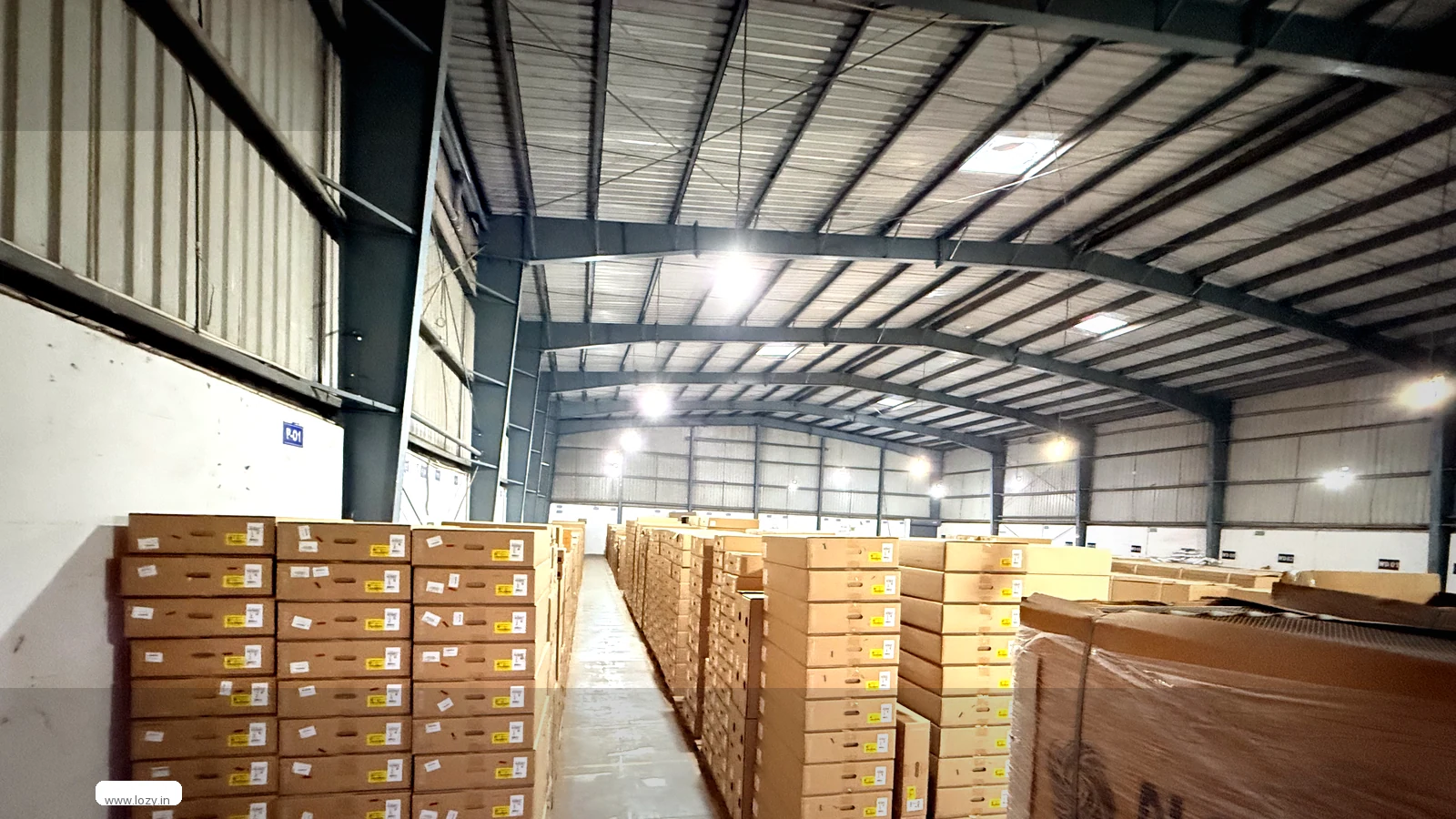
A 3PL warehouse has to provide two things at once: a building that keeps your stock dry, secure and findable, and an operator that has promised, in numbers, how fast and how accurately it will move that stock. 3PL warehouse requirements are those two written as tests — a service level with a measurement method, an accuracy tolerance with a count frequency, a cut-off with a dispatch clock, dock slots with a booking calendar, a separation rule between clients, and an exit protocol that returns your stock and your data. What follows is the sheet to send before signing, on a starting basis of ₹21 per sq ft per month in Delhi NCR.
- Never accept a service level without the clock rules: when it starts, when it stops, what is excluded, and what is credited on a miss.
- Fix stock accuracy as a tolerance and a count frequency in the same clause. Accuracy promised without a counting method is discovered at the annual audit.
- Four controls keep two clients apart: a bay owned by one account, a location register keyed to the client, a client code on every transaction, and a returns point that is not shared.
- Ask what happens on the day you leave, before you sign. Notice, count method, transfer cost and export format decide whether exit is orderly or expensive.
Everything a client can lose in an outsourced warehouse is lost through a promise that was never written down. The stock is theirs, the building is not, and the people moving it answer to an operator whose margin depends on speed — so the specification has to be specific enough for both sides to know what was agreed. The commercial case is in the 3PL warehousing guide for partners, which covers site choice and storage classes for operators holding several accounts; this post is the client-side specification behind it, and the service it describes is 3PL and distribution warehousing at Lozy.
What a 3PL warehouse must provide, before it provides space
A 3PL requirement splits into three parts, and buyers usually test only the first. The building must be dry, secure and servable. The operator must have promised a measurable standard. The records must reconcile to a physical count. A site that scores well on the building and badly on the other two is the most expensive kind, because it looks finished. The operator's half of that equation, with several client accounts under one roof, is worked through in the partner guide to multi-client operations.
The building's part: dry, secure, servable
Servable means a vehicle can reach a dock, a reach truck can work an aisle, and a pallet can be put away without moving three others: dock positions enough that inbound does not occupy the pick face, a slab that carries the racking load, aisle widths matched to the equipment run, and a yard with a turning circle. Dry is a monsoon question, tested at the wall base and under the gutter. Secure is a counted question: how many ways a person can enter, what camera cover exists at each, and whether yesterday's visitor log was signed.
The operator's part: a promise with a clock attached
An operator sells labour, systems and supervision applied to somebody else's stock. So the requirement is not good service but a set of lines — dispatch by cut-off, receive within a window, pick at a stated accuracy, report on a stated date — each with a definition, a measurement method and a consequence. This is the part a landlord does not have and a 3PL cannot avoid, and it is where negotiations end too early.
The records' part: one location register that reconciles
The record a 3PL must produce is a location register: every pallet, carton and lot at a named position, owned by a named client, with the date it arrived. The test is not whether the register exists in a system, but whether a named position matches what is physically there. Where register and floor disagree, the client has no stock control — only a number in a dashboard nobody can prove.
The acceptance specification: eleven rows to test before signing
Attach this table to the requirement sheet and to the draft agreement, and score each row pass, partial or fail. Any three failures in rows one to four are a walk-away rather than a discount, because those four are contractual and cannot be installed after signature. The minimums are drafting benchmarks, not market statistics, and none replaces a fire NOC, a structural certificate or your insurer's view.
| Requirement | Minimum | How to test it on the visit | Why it matters for this trade |
|---|---|---|---|
| A written SLA, line by line | Each line states the metric, its definition, when the clock starts and stops, the exclusions, the reporting frequency and the remedy for a miss | Ask for the SLA they run for an existing client, name removed. Count the lines, then ask what happened the last time one was missed and what was credited. | You are buying movement, not floor area. A date you cannot measure is a date you can only argue about. |
| Stock accuracy as a number, with a count method | A line-and-unit tolerance in writing, a cycle-count frequency by stock class, and a variance procedure needing your approval before an adjustment | Ask to see last month's count sheet for any client, the variances and the approvals. Then ask whether the counter saw the system quantity first. | Accuracy is the only asset you own inside the building. A tolerance without a count is an opinion. |
| Order cut-off and dispatch TAT | A stated cut-off hour, a dispatch TAT by service type, and a rule for what a partial dispatch does to the clock | Name an order released a minute before cut-off and one after, and ask which leaves today. Ask whether TAT ends at gate-out, manifest or proof of delivery. | The clock definition decides the number. Two operators quoting "same day" can be measuring three different moments. |
| Dock slots and an inbound booking calendar | A named number of dock positions, a booked slot per inbound, a turnaround allowance per vehicle type and a person who owns the calendar | Ask to see this week's booking sheet and count the slots against the doors. Ask what happens to a vehicle arriving outside its slot, and who unloads. | An unbooked dock is where a same-day promise dies; the queue behind the gate decides the service you were promised. |
| Client segregation, physical and recorded | A bay or marked lane per client, a location register keyed to client, a client code on every transaction, and a returns point not shared with another account | Walk to a rack and ask who owns the pallet in front of you without looking at a label. Ask the system the same question and compare. | One interleaved bay is how a mis-pick becomes a shortfall and an argument about whose carton it was. |
| WMS access and reporting you can read yourself | At least a read-only login or a daily extract in a stated format: stock, receipts, dispatches, adjustments and the audit trail | Ask to be shown the screen or file, live. Ask how an adjustment appears, who can delete a line, and whether the trail survives a correction. | Access is the difference between trusting a report and checking one. Without it you are auditing a summary. |
| Damage and shortage liability, with insurance evidence | A written liability basis, a per-event cap you have read, the insurer's name with a policy period, and a claims window you can meet | Ask for the certificate of insurance, read the insured party and period, then ask whose policy pays when stock is damaged by handling rather than fire. | The operator's policy usually covers its own liability, not your goods. The gap is yours unless a clause closes it. |
| Peak-season capacity, dated and counted | Positions you may occupy, labour added, dock windows extended, the date cover begins and the date it is released — all four in writing | Ask what happened last festive quarter: how many extra positions, how many extra hands, which dock windows, and when it was booked. | "We will manage it" is not capacity. Peaks are decided weeks ahead, and a commitment made in November is a queue. |
| Exit and stock handover protocol | Notice period, a stock freeze date, the count method, who bears transfer cost, the export format and a deadline for releasing stock after final payment | Ask them to describe the last client who left. Ask how long the stock took to release and whether the data came out as a file or a printout. | Every outsourcing ends. The only question is whether it ends with a count or with a negotiation. |
| Fire NOC, occupancy and racking inspection | A current fire NOC naming this address and this use, proof of lawful occupancy, a floor-load confirmation and a dated racking inspection | Read the address and expiry on each document rather than the cover. Ask when the last racking inspection was done and who signed it. | A NOC for the landlord's other shed is the commonest substitution in the file, and it protects nobody. |
| A client-specific SOP, signed and dated | What arrives and how it is checked, where it goes, how it is picked and packed, which documents leave, and the hours any of it may happen | Ask to see the SOP for an account similar to yours, then ask which version is in force and where the signed copy lives. | An instruction given verbally is enforced differently on every shift, and you have no evidence of what you agreed. |
Score the building and the contract, not just the racking
Send the eleven rows with your SKU count, order profile and peak months. We reply with which facilities pass them, which rows need a variation, and the monthly figure for the space.
Send the specificationCall +91 93547 12345If you would rather have the sheet run with you, the 3PL and distribution warehousing team will walk a shortlisted facility against the eleven rows and name the ones it fails, including the rows that fail on the contract rather than on the concrete.
Service levels and stock accuracy: the definition, the count and the evidence
Most 3PL disputes are not about effort; they are about definitions. Two parties can both be honest and disagree about whether an order gated out on Tuesday was late, because one measured from order release and the other from gate-out, and neither wrote the rule down. The fix is mechanical and costs a page.
Seven fields every service level needs
Take any promise and force it through seven fields: the metric, its precise definition, the event that starts the clock, the event that stops it, the legitimate exclusions, the evidence produced, and the remedy when it is missed. Applied to on-time dispatch: the metric is the share of order lines released before cut-off and gated out inside the TAT; the clock starts at the system timestamp of order release, not the email; it stops at the gate-out scan, not the delivery; exclusions are a stock-out you caused, a credit hold, an address query and a documented dock cancellation by your carrier; the evidence is the dispatch register with both timestamps; the remedy is a credit against the handling charge for the affected lines.
That removes three arguments that would otherwise occupy a quarter: whether an order was in time, whether the delay was the operator's, and what a miss is worth. Every other line takes the same seven fields, and a line that cannot fill all seven belongs out of the contract rather than in it as decoration.
The report that proves it, and how often it should arrive
Ask for three cadences rather than one. Daily, an exception list: orders released in time that did not gate out, receipts outside window, adjustments above an agreed value. Weekly, a one-page view with causes named. Monthly, the full pack — accuracy against the count, on-time dispatch, receipts within window, damage, open claims, space occupied and peak cover for the next two months — issued by a stated working day and signed by a named manager.
The system behind the numbers, and who owns the data
The minimum is a read-only login for two named people, or a daily extract in a flat format your system can ingest without retyping. Better is an API or scheduled export covering stock by location, receipts, dispatches, adjustments and the user audit trail, because the trail tells you whether a correction was a correction or an overwrite. Then settle ownership in one paragraph: the stock file, transaction history and client master data are yours, the system and its configuration are the operator's, and on exit you get a complete export in a stated format at no charge. Ask for a sample pack before you sign, and read it against your own last month of orders.
A tolerance that means something
Define accuracy on the measure that matters. A location tolerance counts positions where the quantity matches exactly, which suits high-value, low-volume stock; a line tolerance counts SKUs within a small percentage, which suits fast-moving cartons; a unit tolerance counts pieces, the strictest and the one most often missed on a pick face. Most contracts settle on line accuracy at a high threshold plus a tighter rule for a named list of critical SKUs. Write the measurement date and counting method beside the figure, because accuracy measured by the operator with the counter holding the system quantity is not the same number as the same figure measured blind.
Cycle counting by class, not once a year
An annual count is an audit, not a control: by the time it runs, a systematic error has had eleven months to compound and every affected order has shipped. Cycle counting replaces it — a slice of the stock counted every working day, weighted by how fast it moves and what it is worth, every count blind. The schedule belongs in the agreement as a frequency per class: monthly for the fastest class, quarterly for the middle, half-yearly for the slow tail, with the whole stock covered inside the cycle you agree.
Variance, root cause and who may adjust
Every variance needs the size, the likely cause and the action. Cause codes should be short and honest — mis-pick, receipt error, dispatch error, damage write-off, unrecorded return, theft, system fault, unknown — because three mis-picks in one aisle is a layout problem and three in one shift is a training problem. No quantity changes without your approval above a stated value. Once a month, three records should agree: your ledger, the operator's stock file and the physical count — a data problem, an operational problem, and the number your books are wrong by.
Order cut-off, dispatch TAT, dock slots and inbound windows
Every dispatch promise rests on a calendar somebody has to own. Four things belong in the specification: the cut-off hour, what the TAT measures, how dock slots are booked, and what happens to a vehicle arriving outside its window.
The cut-off hour, and what it costs to move it
A cut-off is the point after which an order joins tomorrow's work, and it should be a stated hour on a stated working calendar with the weekend and holiday position beside it — a four o'clock Friday cut-off means nothing if Saturday is not a working day and your customer expects Monday delivery. The commercial question behind it is labour: a generous cut-off needs an evening shift, which is why a cut-off offered before signing and quietly eroded in month three belongs in the SLA with a remedy attached.
What the dispatch TAT actually measures
Dispatch TAT can mean four things and the difference is usually a day: order receipt to pick completion, to gate-out, to manifest handover, or to proof of delivery. Only the middle two are within the operator's control. Write the definition, the timestamp source and the treatment of an order dispatched in two consignments, then set the promise by service type: same-day for orders released before cut-off on stocked lines, next-day where kitting or mixed-case picking is involved, and longer where a quality check or serial capture applies.
Dock slots, turnaround and the booking calendar
Ask how many vehicles can be worked at once, count the doors, then ask to see this week's booking sheet. The sheet is the real answer: it shows whether slots exist, who owns the calendar and how much of the week is committed to other accounts. Six doors and no booking discipline gives fewer usable slots than three doors and a calendar. Fix three numbers per vehicle type — slot length, unloading allowance and turnaround — then decide who unloads and who counts. Where a consignment arrives damaged, the notation must be made while the driver is on site: a remark added the next morning is worth nothing in a carrier claim.
Inbound windows, ASN and the receiving clock
Inbound deserves the same treatment, because most stock errors begin at the gate: an advance shipping notice you send, a window the operator confirms, a receiving allowance in hours from unloading, and a rule for what counts as received — counted, checked against the advice, condition-noted and put away, or merely unloaded. The gap between those two states is where a pallet sits on the floor for three days and then gets counted twice. Ask for last week's receiving register: arrival, slot, unloading start and finish, count completed, put-away completed, and any discrepancy with the time it was raised.
Peak season: the commitment gets a date and a number
Peak cover is not a service level, it is a booking. Four numbers make it real: additional positions you may occupy, additional hands rostered, dock windows extended and by how much, and the date by which all of it must be confirmed. Beside those sit two dates clients forget — when cover starts and when it is released — because capacity held three months after a peak is capacity you pay for in the trough. Ask what the facility did last festive quarter, not what it plans to do.
Client segregation: the controls that keep accounts apart
In a shared warehouse the boundary between clients is not a wall; it is a set of controls a picker cannot cross by accident. Four carry almost all the weight, and a facility that has three is not sixty per cent safe — it is unsafe in a way that is harder to see.
The physical boundary: a bay that belongs to one client
Every client's stock needs a position that belongs to that client and nobody else: a nominated bay, a lane reference and a floor marking, with the fast-moving pick face near its own staging area so a picker never walks through a neighbour's zone. Where an account needs a locked cage or a partition, that is a different product at a different price and should be named as such rather than promised inside a shared row.
The record boundary: a client code on every transaction
Physical separation collapses the first time two clients ship the same SKU. The record boundary is what survives: every receipt, put-away, pick, dispatch and adjustment carries a client code, every location belongs to one client code, and no stock record exists without one. Where two clients share a SKU family the client code is the only reliable difference. Keep the paper separate too — goods-received series, dispatch registers and returns logs per client.
Returns, hold stock and the shared bin that ruins everything
Returns are where separation fails most often, because a return is small, arrives unexpectedly and has nowhere obvious to go. If two clients' returns land in one corner they merge into general stock within a fortnight, and the only person who knows which is which has gone off shift. Each account needs its own returns point, hold area and disposition rule — back to saleable, back to the client, or written off — decided by a named person on each side.
The people boundary: SOPs, assignment and access
Separation is enforced by people, so the specification covers them: a client-specific SOP signed and version-dated, a named team or at least a named supervisor, an access list stating who may enter the client's section without an escort, and a rule that peak labour is inducted on the account's SOP rather than the building's general practice. Where separation cannot be achieved inside a shared row, the honest answer is a dedicated section, priced as what it is. The shared and multi-client warehouse guide sets out how the shared model works, and business warehousing describes the dedicated position for an account that has outgrown a shared bay.
Damage, shortage, liability and the insurance that responds
Your stock sits in a building you do not own, moved by people you do not employ, covered — or not — by a policy you have probably not read. The question is settled in four sentences: what the operator is liable for, up to what amount, on what evidence, within what time.
Custody, not ownership
An operator holds your goods in custody. It does not own them, does not insure them by default, and is not liable for every event that can befall them. What it is liable for is loss or damage caused by its own negligence or that of its staff and subcontractors while the goods are in its care — and that liability is usually capped. Read the cap: per kilogram of gross weight it produces a small number against a pallet of electronics. The answer is to declare value and have liability measured against it.
Whose policy pays, and the gap in the middle
Three policies can be in play. The landlord's covers the building; the operator's covers the operator's liability subject to its cap and excess; your own stock policy covers your goods, usually wherever they are including a third-party warehouse, if the policy says so and the warehouse is declared. That last condition is where claims fail, because an insurer never told the stock moved can decline a loss. Ask for the operator's certificate — insurer, insured party, period, and whether it covers goods held in trust — then declare the address on your own policy.
The claims clock and the evidence that decides it
Claims are decided on paper produced in the first week: the goods-received note with condition noted at receipt, photographs taken at the time, the pick and dispatch record, the proof of delivery with any remark, the stock adjustment with its reason code, and camera footage for the date. A facility keeping seven days of footage cannot support a claim raised on day ten. Then fix the clock: a notification window from discovery, a response window, and a settlement basis naming declared value, invoice value or replacement cost.
Licences, the document file and the records you can demand
A warehouse cannot lend you a licence, and an operator's registrations do not cover your stock. What the operator must hold is the right to run the premises and to invoice you; what you must hold is the right to trade the goods you are storing.
What the business storing the stock must hold
- GST registration with this warehouse added as a place of business. Rent is an input only against a tax invoice, and a third-party address is an additional place of business rather than something your registered address covers. Registration and the additional-place procedure are set out on the GST portal.
- E-way bill capability for stock movements. Where a consignment crosses the threshold and distance rules the document travels with the vehicle; the rules are published by CBIC.
- The sector licence for the goods themselves: a drug licence for medicines, an FSSAI registration or licence for food, a legal metrology registration for packaged goods sold by weight or measure, and an import-export code where anything is imported. None is issued to a warehouse on your behalf.
- Insurance on the stock in your own name, with the third-party address declared, because the operator's policy is not your policy.
Where stock is held against a warehouse receipt intended as an instrument of trade, a different regime applies, described by the Warehousing Development and Regulatory Authority. Most distribution clients storing their own inventory need the tax invoice and the movement documents, not the receipt regime.
What the premises must be able to show
A document file, produced before the first vehicle and refreshed at each renewal: proof of lawful occupancy naming the entity that invoices you and identifying the shed on a plan; a current fire NOC for this address and this use; land-use confirmation that storage is permitted; a structural confirmation of floor load and a dated racking inspection where racking is fitted; building insurance; a power connection agreement; and GST invoice capability in the contracting entity's name. Read three fields on every document — entity, address, expiry — and expect one to be wrong.
The records you can demand, and how often
Ten records carry an outsourced operation. Each needs a format, an owner, a frequency and a retention period, and each belongs in the agreement as an obligation rather than a courtesy. Set retention at the longer of the statutory period and your audit need, with the export format defined in advance.
| Record | What it must contain | Frequency | Who signs it off |
|---|---|---|---|
| Goods-received note | Date, vehicle, slot, supplier, invoice, SKU and lot, quantity received and rejected, condition at receipt, photographs | Every receipt, closed the same day | Receiving supervisor |
| Location register | Client code, SKU, lot or serial, zone, rack, level and bay, with the put-away date | At put-away; reconciled at each count | Stock controller |
| Stock ledger by client | Opening, receipts, picks, returns, adjustments and closing, so a line can be followed end to end | At each movement; monthly reconciliation | Stock controller and client |
| Cycle-count sheet | Blind count by location, system quantity revealed afterwards, variance, cause code and approver | To the agreed schedule | Count supervisor and client |
| Dispatch register | Order release timestamp, pick completion, gate-out, manifest number, carrier, boxes and weight | Every dispatch | Dispatch supervisor |
| Exception list | Orders released in time but not gated out, receipts outside window, adjustments above the agreed value | Daily | Operations manager |
| Damage and claim file | Incident, timestamped photographs, value, cause, claim reference, settlement and date | Every incident | Operations manager and client |
| Returns and hold register | Source, SKU, quantity, condition, reason, decision, disposition and date | Every movement in or out | Designated person |
| Access, visitor and dock log | Name, organisation, purpose, times, escort, section entered; slot booked against arrival for vehicles | Every visit and every vehicle | Security and dock supervisor |
| Statutory and training file | Fire NOC, occupancy, structural and racking certificates, insurance, power agreement, induction dates | Quarterly, tracked to expiry | Facility manager |
Want the document file before you visit?
Send the goods you store, the licences you hold and the reporting your own auditor expects. We reply with the documents a Lozy facility provides, the ones that sit with you, and the rate for the space.
Request the document fileCall +91 93547 12345What moves the monthly figure in this trade
Six inputs move an outsourced storage bill, and the rate per square foot is only the first. Two quotes compared on rate alone usually compare two buildings, two service levels and two ideas of who unloads.
- The basis you are quoted on. Floor area prices per square foot, racked space per pallet position, a lockable section per unit, and an inventory-led plan per month. Business and commercial space starts at ₹21 per sq ft per month in Delhi NCR; an inventory-led plan is published from ₹4,499 per month.
- Positions rather than square feet. A segregated multi-client operation needs more positions than a single-client block stack, because a client's stock cannot be squeezed into whatever gap is free.
- Handling intensity. Receiving a sealed pallet is minutes; checking a mixed carton against an advice note, labelling, picking single units and packing is an hour. Handling is a larger share of the bill than storage in every pick-and-pack account.
- Dock and labour time. A booked slot, an evening shift for a late cut-off, an extra hand for a two-vehicle morning: each is a real cost and each should be visible.
- Peak cover. Holding positions and labour through a festive quarter and releasing them afterwards costs more per month than a flat footprint and less than building for the peak. Seasonal storage is published from ₹1,299 per month, and long-term holding from ₹1,199 per month.
- Records and desk work. Reports in your format, on your dates, with your fields, are somebody's hours every month.
Everything above is a starting basis rather than a quote, billed monthly with a GST invoice and no long lock-in, gathered on the pricing page. Converting a square-foot rate into a cost per pallet position at a given height is worked through in the cost per pallet guide, and the space itself is listed under warehouse space for rent. Where stock is tracked as a running ledger rather than a rented area, compare the inventory and stock storage basis; for a short consignment around a promotion, on-demand warehousing prices the months you need; and a high-volume operation wanting a floorplate with dock access should look at industrial bulk warehousing.
The five ways outsourced storage fails, and the row that catches each
Failures in this category are quiet. Nothing collapses; a promise erodes, a count drifts, a client's customer receives the wrong carton. Each of the five maps back to a row of the table.
One: the service level nobody measured
The contract says same-day dispatch. Nobody wrote down when the clock starts, so the operator measures from the pick wave and the client from the email, and both are honest. By month four there is a spreadsheet war. The row that catches it: a written SLA, line by line, tested by asking what happened the last time a line was missed.
Two: the count that arrived too late
Accuracy is promised and never counted, or counted once a year by the operator holding the system quantity. A systematic mis-pick compounds for eleven months, the annual count surfaces a large gap, and the argument is about who owns a number nobody can trace. The row that catches it: accuracy as a number with a count method, tested by reading last month's blind count sheet.
Three: the bay that was shared
Two clients ship the same SKU family. A pallet goes into the only free gap, the picker takes the nearest carton, and a customer receives stock belonging to another account. Nobody stole anything and nothing shows on a camera. The row that catches it: segregation that is physical and recorded, tested by asking the rack and the system the same question.
Four: the peak booked on a phone call
In September the client mentions a festive push and is told it will be handled. In November the positions are not there, the labour was never inducted, and the dock runs a queue that costs every account a day. The row that catches it: peak capacity dated and counted, tested by asking what last year's peak involved in numbers.
Five: the exit that froze
Notice is given and the stock cannot move, because the count is disputed, the data exists only on a screen and the final invoice is unsettled. Three weeks later the client is paying storage on stock it has already sold. The row that catches it: an exit protocol with a freeze date, a count method, an export format and a release deadline.
Each failure was visible at the site visit to somebody who knew which question to ask, and none was visible in the rate. That is what the table is for, and how the 3PL team scopes an account; the site-level version is in the inspection checklist.
From specification to first dispatch: nine steps, the exit protocol and the clauses that bind
The order matters more than the speed. The two steps that get skipped are the two that prevent expensive surprises, and the exit protocol is the one nobody writes until it is needed.
Nine steps from requirement to first dispatch
- Write the requirement sheet. The eleven rows, the SKU count, orders per day, the cut-off you need, the peak months and the reporting your customers require.
- Classify what you store. Weight and volume per pallet, value per pallet, any lot or serial control, and any line needing a specialist facility — cold chain, hazardous, bonded — so the project is not negotiated around a line the building cannot hold.
- Request the document file before visiting. Occupancy, fire NOC for this address, land use, structural and racking confirmation, insurance certificate, power agreement, and the GST status of the invoicing entity.
- Visit with the table and a test kit. A torch for the wall base, a tape for aisle width, a sample carton from each end of your range, and a printed copy of the eleven rows.
- Agree the layout on a drawing. Client bays, pick face, staging area, returns and hold points, inbound flow and dock allocation. A layout agreed verbally is one somebody rearranges in week two.
- Agree the SLA, count schedule and report format together. The accuracy figure is meaningless without the schedule, and the schedule is useless if the report never shows its completion.
- Run an observed trial intake. One vehicle, several SKUs, one carton damaged, one line short, one arrival outside its slot. Watch where the damaged carton goes and what is written down.
- Set access, escalation and the calendar. Named system users, the access list, the out-of-hours path, the dock booking contact, and the peak dates with their confirmation deadline.
- Measure the first month against the pack, then decide while the arrangement is still monthly and easy to change.
Where the first consignment is a container that lands over a weekend or a dealer scheme that ships in one week, send the sheet and the layout on WhatsApp before the vehicle is booked, and we will mark up what the facility can do with that intake.
The exit protocol: eight steps that decide whether leaving is orderly
- Notice in writing on the contractual date. The period starts when the operator acknowledges it, not when the email is sent.
- A stock freeze date agreed in advance. After it, no receipts booked without written agreement and no dispatches picked against new orders, so the count is taken against a stable position.
- A joint count, blind on both sides. A count where one side holds the system quantity is a count the other will dispute.
- Variances settled to a rule. The agreement should say who bears a variance above tolerance at exit, at what valuation, and by when.
- The data export in the agreed format. Stock by location at the freeze date, full movement history, open orders and open returns. A PDF of a screen is not an export.
- Transfer plan with dates and vehicles. Who loads, at which dock, on which days, with what equipment, and who signs at each end.
- Final invoice and release. Fix a deadline for releasing stock after the invoice is settled, and a rule that stock is not withheld for a disputed charge unrelated to storage.
- Retention and confidentiality after the exit. Records kept for the statutory period only, then returned or destroyed, with confidentiality still binding.
The clauses that matter for this trade
- The service levels, with clocks and remedies, as a schedule to the contract rather than a paragraph in it.
- Stock accuracy and the count schedule: a tolerance by measure, a frequency by class, blind counting and approval rights on any adjustment above a stated value.
- Cut-off, dispatch TAT and the working calendar, including weekends, holidays, peak variation, and what a partial dispatch does to the clock.
- Dock slots and who unloads: the number of positions, the booking mechanism, the turnaround allowance, and the duty to note damage while the driver is on site.
- Segregation in specific terms: bay or lane per client, client code on every transaction, separate returns and hold areas, a named supervisor.
- System access and data ownership: read-only seats or a daily export, audit trail retained, your data yours, a defined export on exit.
- Liability, declared value and insurance: the basis, the per-event cap, the declared value per pallet, whose policy responds, the claims clock.
- Peak capacity, with dates: positions, labour, dock windows, confirmation deadline, start and release dates.
- Charges, itemised: per pallet in, out, per order picked, per unit handled, per return processed. "Inclusive" is not a number and cannot be tested.
- Term, notice and exit: the notice period, freeze date, count method, transfer cost and release deadline.
- GST and invoicing: the entity that invoices, its GSTIN and the place of supply. A rent receipt where a tax invoice belongs gives up the input credit for the whole term.
Take the sheet to a site, not to a sales call
Tell us what you store, how many orders a day and which months peak. We will confirm which facilities pass the eleven rows, hold them for your visit, and put the exit protocol in writing.
Book the site visitCall +91 93547 12345Hold the agreement beside the requirement sheet before signing: a row that lives only in an email is a preference, and preferences leave with the account manager who wrote them. Where running the operation yourself is the alternative, the 3PL warehousing in Delhi NCR guide sets the two routes side by side, and the contract logistics guide covers the contracting side.
Where Lozy fits, and where we do not
Lozy runs 77+ warehouses and more than one million square feet of live space from a Delhi NCR base, with racked and block-stacked positions, controlled access, camera cover and movement records kept the way each client specifies. Published space starts at ₹21 per sq ft per month, with an inventory-led plan from ₹4,499 per month, invoiced monthly with GST and no long lock-in. What is free now is on the warehouse listing, the belts are under locations and the Gurgaon and Faridabad guides, and the service set is on the services page.
Not every requirement belongs here. There is no cold room, no bonded warehouse, no hazardous-goods store and no validated temperature-mapped chamber in this network, and Lozy does not act as a 4PL orchestrating third-party carriers. Stock needing any of those belongs with a specialist operator, and we say so on the first call.
Where the goods are ambient and non-hazardous — cartons, pallets, appliances, apparel, spares, hardware, FMCG and trade stock — and the requirement is separated positions, a defined cut-off, a measured service level and records that reconcile, it is inside what this network does. The industry view, including the multi-client model, is on the 3PL and distribution warehousing page; the general questions are on the FAQ page, and contact us reaches a person.

If the requirement is on the right side of that line, email the requirement sheet to care@lozy.in with your SKU count, order profile and the eleven rows you care about, and we will reply with the facilities that pass and the rate, usually within the working day.
Related guides
- 3PL warehousing: multi-client operations and cost
- the warehouse inspection checklist
- warehousing in New Delhi
- inventory and stock storage
Sources. Prices, network numbers and service bases are Lozy's published information, checked 25 October 2026. GST registration, additional place of business and input credit follow the GST portal; e-way bill and movement documentation follow CBIC; warehouse receipt and operating practice follow the Warehousing Development and Regulatory Authority; sector context comes from IBEF's logistics profile; corridor context from the National Highways Authority of India. The minimums in the acceptance table are drafting benchmarks, not market statistics, and none of them replaces a fire NOC, a structural certificate, an insurance opinion or legal advice.
Last updated: 25 October 2026. Something the FAQs below do not cover? Call +91 93547 12345 or email care@lozy.in.
Need warehousing or storage in India?
Request a free, tailored quote in under 2 minutes — free pickup, no lock-in.






