3PL Warehousing Company in Faridabad: What a Managed Warehouse Takes Off a Manufacturer (2026)
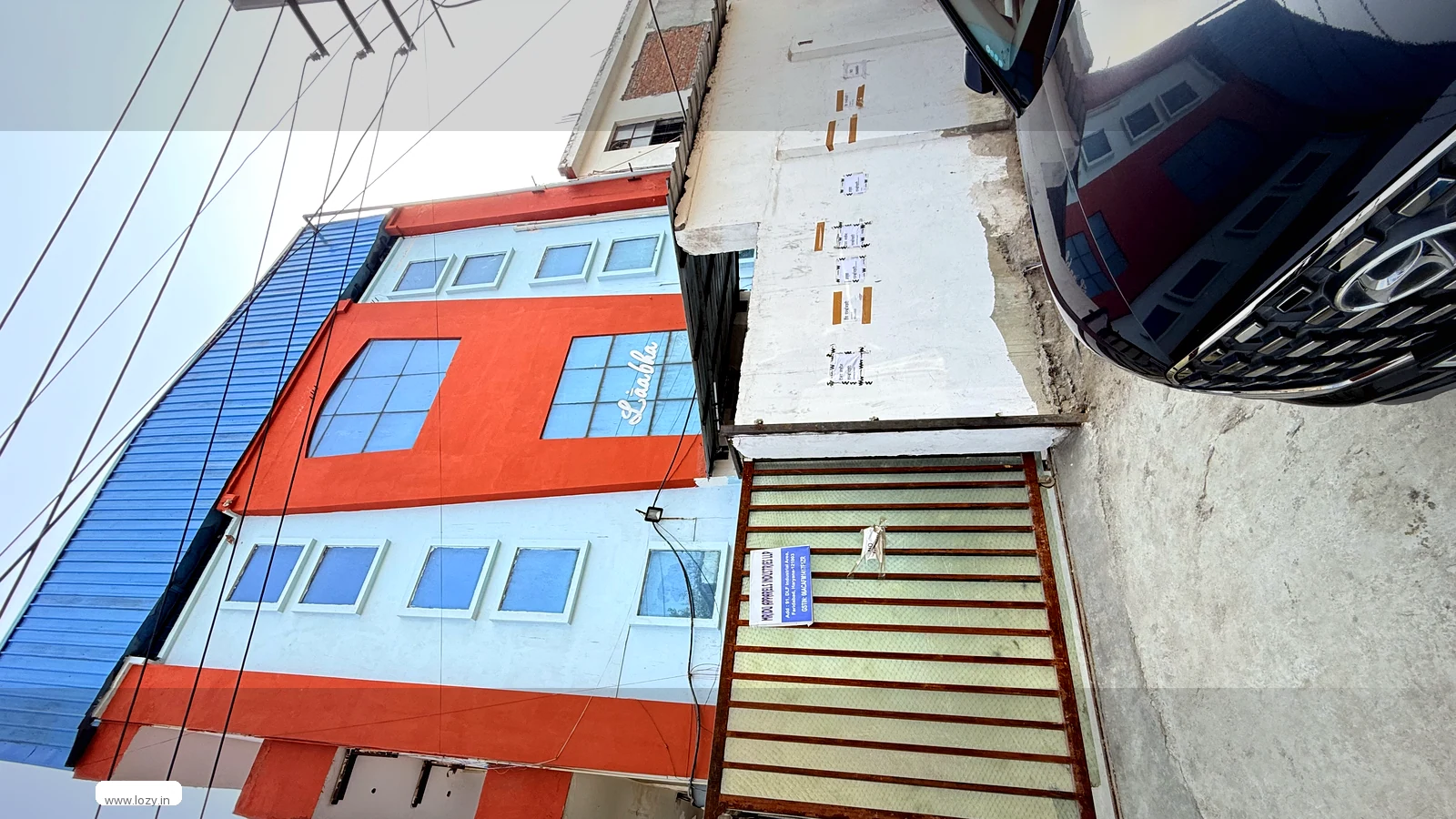
A 3PL warehousing company in Faridabad runs the storage and the handling around your stock — intake, put-away, storage, picking, packing, dispatch and the records that connect them — inside a facility you do not lease and can leave on a month's notice. You keep the stock, the title, the customer and the price; what moves across is the space risk, the manpower, the racking, the system and the paperwork. In a city built on auto components, engineering and electrical goods, where the sheds were put up for a different trade and a different truck, that transfer is worth more than a rate comparison suggests. Space in Delhi NCR starts at ₹21 per sq ft per month on our published pricing, and this post is about what sits behind that number.
- Faridabad is Haryana's oldest industrial city, and its warehouse stock was built for the trades that made it — so clear height, floor condition and dock access vary from shed to shed, and the variation is not visible in a photograph.
- One inspection with a tape, a torch and a loaded vehicle answers more than three brochures. The three measurements that matter are clear height under the lowest obstruction, floor load per square metre, and the turning circle at the gate.
- A lease transfers risk to you for the whole term. A 3PL keeps the space risk on its own books and prices it into a monthly bill — which is why the bill looks higher per square foot and often costs less per year.
- What you buy is not a floor but a receiving process, a location record, a dispatch routine and somebody who answers the phone when a truck reaches the wrong gate.
Two other pages cover adjacent ground. The broad picture of the city — estates, goods, rates, a worked example — is in the Faridabad warehousing guide, and the service with its facility and plans is on the 3PL warehouse services in Faridabad page. This post sits between them: what a 3PL does for a business here, how to test one, what it costs, and who else is in the market.
What a 3PL warehousing company in Faridabad does, and what stays with you
A 3PL takes over the warehouse work and leaves you the business. In practice that means it receives your stock, puts it away to a recorded location, holds it, picks and packs against your orders, dispatches it, and hands you a record of every movement — while you keep the inventory value, the customer relationship, the selling price and the decision about what to buy. The dividing line matters commercially, because it decides which costs become a monthly line item and which stay on your balance sheet.
In Faridabad the division has a particular shape. Manufacturers and distributors here arrive with one of three problems: a factory floor filled with finished goods and slow-moving spares; a rented godown whose lease is up and wants a longer term than the order book justifies; or a distribution business that has outgrown one person with a register and a phone. None of those is a storage problem in the narrow sense, and all three are solved by moving the handling and the record to somebody whose only job is handling and records.
The division of work, line by line
The table below is the one to keep beside a quote: what you hand over, what the operator must run, how you hold them to it, and where it happens in this city. A provider who cannot fill all four columns for every row is selling floor space with a service label on it.
| What you hand over | What the 3PL has to run | How it is measured | Where it sits in Faridabad |
|---|---|---|---|
| Inbound receipts | Gate entry, vehicle unloading, count against the invoice or packing list, condition check, damage notation, put-away to a recorded location | Receipts closed the same day, discrepancies reported the same day, put-away location visible against each line | A shared or dedicated bay in the DLF Industrial Area belt, reached off Mathura Road or the estate link roads |
| Storage | Racked or floor positions sized to the stock, housekeeping, pest control, security cover, stack rules by weight | Stock accuracy against a physical count; space billed on what is occupied rather than what is reserved | Upper floors and older single-storey sheds alike, which is why floor load is a question here |
| Picking and packing | Order release, pick by part number or SKU, packing to your specification, labelling, staging at the dispatch face | Lines picked correctly, orders dispatched on the agreed date, packing material cost per order | Same facility, so a pick does not become a cross-town movement |
| Manpower | Loaders, pickers, supervisors, security, housekeeping, and cover for leave and peak | Headcount on the floor during your shift window, and no wage or PF obligation landing on you | Local hires who know the estates and the gate timings |
| Systems and records | Receipt notes, location register, stock ledger, dispatch records, return records, monthly stock statement | A named SKU and location produced on demand; a stock statement you can reconcile to your own books | Held per client, exported on request, and handed over at exit |
| Space and term | Positions that can grow or shrink with your order book | Monthly billing against occupied space, with a notice period rather than a lock-in | Faridabad plus the wider NCR network if your stock needs to move closer to a customer |
| Transport | Vehicle arrangement for inbound and outbound, route planning, proof of delivery | Freight billed per trip or per route, with the vehicle type named | Mathura Road and NH-2 for the Delhi and Mathura directions; the KMP expressway for the western bypass |
| Returns and rejects | Receipt of returned goods, condition check, segregation from saleable stock, disposition against your decision | Returns register with reason codes, and a monthly count of what is still awaiting a decision | The same store, in a marked area rather than in the pick face |
| Compliance file | Fire NOC for the address, insurance on the building, GST invoicing in the operating entity's name, statutory registers where the commodity requires them | Documents produced with entity, address and expiry readable | The facility's own file, not a copy of another unit's |
What stays with you, and why that is the point
The stock stays yours. Title does not move, insurance on the goods should be in your name or named in the agreement, and the customer relationship never touches the operator; your selling price, credit terms and purchase plan remain yours. What you have bought is execution — somebody else's floor, team and system, on a contract you can end.
That is a different proposition from renting a godown, and the difference shows up in the first month rather than the first year. A godown gives you four walls and a shutter — not a person who counts what arrives, a location record that survives the person who wrote it, or a dispatch note that matches what left the gate. Most businesses moving out of a self-run godown find the cost they were carrying was never rent: it was the supervisor, the loader, the register and the leakage.
Tell us what you store, and we will price the work rather than the floor
Send the product list, the monthly inbound and outbound volume, and the city you dispatch into most. We reply with the positions required, the handling basis and the monthly figure.
Get a Faridabad quoteCall +91 93547 12345If your requirement is still a shape rather than a number, the third-party logistics service page sets out the scope, and the full 3PL service set shows what can be added later without changing facility.
Why Faridabad sheds vary so much, and why that variance is the whole decision
Faridabad's industrial buildings were put up over five decades for the trades that were here at the time, and a storage tenant inherits whatever the last use left behind. Two sheds a hundred metres apart on the same estate can differ in clear height, floor slab, roof condition and vehicle access by more than two sheds in different cities would. That is not a detail to be checked after the rate is agreed; it is the reason an inspection decides the deal.
The city's history explains the pattern. Faridabad grew as a manufacturing town — auto components, engineering and fabrication, tractors and spares, electrical goods — and the estates filled with units built to make something, not to store something. A floor with a machine foundation pit, a low truss over part of the bay and a hand-operated shutter onto a lane was rational for its first use, and became a storage problem the moment a pallet had to go in at a height.
The three measurements that separate two sheds a hundred metres apart
Clear height is not the height of the wall. It is the distance from the slab to the lowest thing in the way: a truss, a duct, a light fitting, a sprinkler main, a mezzanine edge. A building advertised at a generous height with a truss at two-thirds of it racks to the truss. Measure at three points along the bay, under the obstruction rather than in the clear span beside it.
Floor load is a figure, not an impression. Older industrial slabs were poured for machine beds and foot traffic, and a patched joint can hide a soft base. Ask for the design load per square metre in writing, and when the slab was last tested. A rack design is only as good as the slab under its feet. If nobody can produce a figure, plan for single-height floor stacks and treat that as a limit on how much you can hold.
The turning circle is part of the warehouse. Many Faridabad units open onto a shared compound with a gate, a guard cabin and a lane carrying two-way traffic at nine in the morning. A vehicle that cannot turn inside reverses onto the lane, and a forty-minute delivery takes two hours. Take the vehicle you actually use and watch it turn; on the Mathura Road frontage an articulated vehicle needs the estate's internal road and a slot that does not clash with the shift change.
Where the belt actually is: Mathura Road, the DLF estates and the KMP bypass
The warehouse belt follows the roads. Mathura Road — NH-2 — is the spine, carrying traffic south toward Mathura and Agra and north into Delhi, and the estates along it hold most of the storage stock. The DLF Industrial Areas, 1 and 2, are the addresses a buyer hears most: mixed estates where a factory, a godown and a small office share a building and a compound — exactly the arrangement that produces the variance above.
The KMP expressway changed the western side of the argument. It gives the district a bypass that connects toward Gurugram and the Manesar belt without crossing the city, which matters to a business whose customers are west and south rather than north. What it does not change is the shed stock: the expressway improves the road, not the roof.
Lozy's own Faridabad facility sits in the DLF Industrial Area, and the estate layout — a shared compound, a gate, an older building stock — is the reason we ask for an inspection rather than send a rate card. The Faridabad warehouse page shows what is available, and the factory-and-warehouse unit in DLF Industrial Area Phase 2 is the shape most industrial tenants here want: an indoor floor at an industrial address.
Nine checks to run on a Faridabad facility before you sign
One visit, ninety minutes, and a short list. The checks below are the ones that change the answer in this city; the generic version is on our warehouse inspection checklist, and the point of narrowing it here is that Faridabad's failure modes are physical and inherited rather than commercial.
- Measure clear height under the obstruction, at three points. Note the lowest truss, duct and light fitting in the bay you would use, then ask what rack height that permits with a loaded pallet and lift-off clearance. Two sheds with the same wall height can differ by a rack level, which across a few hundred pallets is real capacity.
- Read the slab, not the paint. Look for patched joints, cracks running across a joint and any area where the surface has broken away, then ask for the design load and the date of the last structural check.
- Walk the wall base with a torch. The monsoon leaves evidence: tide marks on the plinth, paint bloom at the bottom metre, a wavy bottom edge on a carton in the corner. Ask what the floor did in the last week of July, and where the water came from.
- Look up at the roof and the gutters. Old sheeting, rusted purlins, a gutter that drains onto the apron instead of away from it, and a downpipe that ends at the wall base. A roof repair is the landlord's cost until you have signed, and yours afterwards if the agreement is silent.
- Watch a vehicle turn in the compound. Bring the vehicle you use, or the largest one your customer sends. Time the turn, watch the gate width, and check whether a parked truck would block the neighbour's shutter. In a shared estate this is the most common cause of a delivery that repeatedly arrives late.
- Check the shutter and the dock face. Does it open fully and stay up; is there a ramp, a leveller or a plain step; is there a canopy or does rain come straight in; can a vehicle back square to the opening. A shed without a dock is not disqualified — most of this city works off a ramp — but handling time and manpower change with it.
- Ask about power, water and drainage as storage questions. Power for lighting, a charging point, a packing table; water that does not pool at the shutter; drainage that takes a monsoon hour. None of it is glamorous and all of it decides whether the floor is usable in August.
- Read the documents with the address on them. Fire NOC for this building, land use that permits storage, building insurance, the GST entity that will invoice you. Read the address and the expiry, not the cover. A NOC issued for the landlord's other unit on the estate is the substitution to look for.
- Ask what the neighbours do. Walk the adjoining bays and use your nose as well as your eyes. A paint shop, a foundry, a solvent store or a food godown next door changes what your cartons smell like and what your pest control is up against — a live question in an older mixed estate.
Every check on that list is cheap to run and expensive to skip. None needs an engineer, though a structural question should end with one; what they need is somebody not paid by the landlord standing in the bay with a tape.
Two more belong on the list when the stock is valuable rather than merely heavy: camera cover of the entry, aisle and dispatch face, with a retention period named in days; and a single manned entry with an access list. Both belong in the agreement as well as on the visit list, and the warehouse management system page shows the record half of the same requirement.
The lease you are really comparing against, and what it costs to carry
A lease is a bet that your space requirement will not change for the term. In Faridabad that bet is unusually hard to place, because the businesses here run on order books: a component supplier holds a season's stock against a contract, clears it, and refills. A 3PL converts that bet into a monthly bill. The comparison is not rent against rate — it is total cost of carrying the space yourself against a monthly charge that includes the space, the labour and the system.
Seven costs a lease puts on your side of the ledger
- Fit-out. Racking, a dock ramp or leveller, lighting, a packing bench, a fire extinguisher set, signage, and often a floor repair before anything can be racked. Fit-out is paid once and written off over the term, so leaving early means writing off the remainder.
- Idle space. A lease is priced on the peak. A business that needs the peak for eight weeks a year pays for it for fifty-two, and quiet quarters do not come with a rent rebate.
- Manpower. Loaders, a supervisor, security, housekeeping, and the statutory obligations that come with employing them. In a small operation this is one person doing four jobs badly, which is the most expensive configuration there is.
- Systems. A register, a spreadsheet, or a licence for a system nobody has time to configure. The cost is not the software; it is the discipline of using it at put-away rather than at month end.
- Compliance. Fire NOC renewal, insurance, GST on the rent, statutory registers for the commodity and the inspections that follow — each small, together a part-time job.
- Leakage. Short receipts nobody checked, damage nobody recorded, stock that leaves on the wrong challan. Leakage is invisible in a monthly rent figure and entirely visible in an annual stock count.
- Exit. Notice periods of three to six months are common on industrial leases, plus the cost of moving racking, and the risk of paying for a shed you have emptied.
The arithmetic, on published rates
Work the comparison on a floorplate rather than a rate. At the published Delhi NCR starting rate of ₹21 per sq ft per month, 4,000 sq ft comes to ₹84,000 a month and 2,000 sq ft to ₹42,000 — space alone, with no racking, manpower, system or security. A managed bill is larger per square foot because it carries those inside it, so price the same operation both ways: rent plus fit-out amortised over the term plus salaries plus system plus an allowance for leakage, against a monthly charge.
Two things usually decide it. Term: if the requirement is genuinely ten years and the volume is stable, a lease amortises its fit-out over a long enough period to win, and a dedicated facility with your own team is not a mistake. Variability: if the requirement moves by a third within a year — up for a tender, down after a scheme — a monthly managed charge wins on the quarters nobody plans for. Faridabad's order-book pattern puts most of its manufacturers and distributors in the second group.
Put the lease and the 3PL on one sheet
Send the floorplate you were quoted, the term and the rent. We will model the managed alternative on the same volume so the two numbers are comparable.
Model the comparisonCall +91 93547 12345What Faridabad businesses store, and what each trade needs from a 3PL
Five kinds of stock account for most of the outsourcing in this city, and each asks something different of the facility. Knowing which group you are in is what makes two quotes comparable, because a provider that is good at one of them is not automatically good at another.
Auto components, fasteners and machine parts
The staples are castings, fasteners, bearings, sheet-metal parts, filters, brackets, jigs and fixtures. They arrive on pallets or in crates, are racked by part number, and move in batches against a production plan. The hard part is granularity: a bin of two thousand fasteners picked in twenties is a different operation from a pallet of castings moved whole, and the two cannot share a picking routine. Location discipline matters more than space — a part number that is "somewhere in bay four" costs a shift half a day.
Weight is the second issue. Component stock is dense, so a rack designed for cartons is the wrong rack, and a floor that was poured for a lathe may not carry a loaded beam. This is where the Faridabad variance bites hardest, and it is why the guide to warehousing for auto components starts with the building rather than the rate.
Tractors, spares and after-market distribution
Faridabad's engineering base includes tractor and implement manufacturing and a long tail of spares suppliers, and the after-market has its own shape: a wide catalogue, low volume per line, and a dealer network ordering small quantities against a season. The 3PL's job is a pick face that serves many small orders a day without a mistake, plus a record that answers a dealer's query from a screen. Sowing and harvest cycles move the whole catalogue, which argues for positions added for six weeks rather than a lease sized for the peak.
Electrical goods and switchgear
Electrical goods bring a different risk profile. Much of the stock is boxed, light and high in value per pallet, and a fair share carries a warranty and a serial number. The requirement is careful handling, a record tying a serial to a dispatch, and dry storage through the monsoon — cartons that take damp lose their print and their resale. It also wants nothing heavy stacked above it, which is a layout decision at put-away rather than a promise on a call.
Engineering stock, tooling and fabrication material
Tooling, jigs, dies, fixtures and offcut material behave unlike production stock: heavy, slow-moving, often irregular, and sitting for months between runs. Tooling wants a floor bay or a dedicated pallet position with a dry corner, not a high shelf, recorded by job or by machine so the next run does not begin with a search. Fabrication material — sheet, section, bar — wants length and floor load, and is the one category where a big clear span beats a racked store.
Packaging, paper and print
Faridabad carries a printing and packaging trade, and paper is the one stock here that genuinely cares about moisture: reels, corrugated sheet and printed cartons absorb damp, go wavy and lose value fast. They need pallets underneath, height off the slab, a roof that does not leak over them and a wall base that does not weep. Paper does not need cooling; it needs a straight answer about water, and that answer is a plinth, a gutter and a drain.
Trader stock, importer consignments and surplus lines
The last group is the least industrial and the most price-sensitive: a trader's surplus lines, cleared import cartons awaiting allocation, a distributor's slow movers. These are irregular in shape and often do not justify a square-foot minimum, so the smallest sensible unit — a lockable bay or a pallet position — fits better than a warehouse floor, and the same business often runs both.
For a manufacturer whose factory floor has filled with finished goods, the answer is often not another building. In-plant warehousing puts a store team inside your own plant — raw material, line feeding, work-in-progress, finished goods — so material moves without leaving the premises and the floor you free up goes back to machines. Where the overflow is surplus rather than flow, a managed store nearby does the same job with less disruption.
The five provider types you will be comparing in Faridabad
Faridabad's 3PL market has four or five recognisable shapes, and the question is not which is best but which shape matches your volume and term. A large integrated logistics campus — Varuna Group is the example buyers name — suits a business that can commit to a big block on a long lease. A warehousing operator such as Warehousing Express competes on shed quality and location. SD Global Logistics is a conventional 3PL, taking over handling as well as space. Shiprocket Fulfillment is an e-commerce fulfilment network built around parcel flow. Prozo is a tech-led 3PL, where the system is the product as much as the floor.
The honest contrast is a trade-off. National campuses and built-to-suit space are efficient for a stable, large requirement with the balance sheet to commit; their economics assume committed term and block. A shared, managed model on monthly terms with published prices exists for the rest of the market — the SME, the D2C brand, the distributor whose requirement moves with the order book. Both are legitimate, priced for different buyers, and a quote from one is not comparable to the other.
| Provider type | Built for | What to check before you compare it |
|---|---|---|
| Large integrated logistics campus | A committed block of space on a long term, with transport in the same contract | The minimum commitment and the notice period, because that is what sets the effective rate |
| Warehousing operator | Tenants who want the shed and will run their own operation inside it | Whether handling, manpower and systems are in scope or whether you staff it yourself |
| Conventional 3PL | A manufacturer or distributor handing over storage and handling together | The handling basis — per pallet, per line, per order — since that is where the bill actually is |
| E-commerce fulfilment network | Parcel-led sellers whose unit of work is an order, not a pallet | Whether the model suits pallet and case movement, or only piece picking |
| Tech-led 3PL | Businesses buying visibility and integration as much as floor space | What the system actually reports, and whether the data is yours to export |
Lozy is the sixth shape: shared, managed space on monthly billing, for businesses that need the operation and not the lease.
Send the quotes you already have and we will tell you what each one includes before you add ours to the pile.
Onboarding: from the first enquiry to the first dispatch
Onboarding is a fixed sequence; the calendar depends on how fast documents and stock data arrive. The steps most often skipped — the written layout, the record format, the observed test intake — are the ones that produce the arguments in month two.
- A requirement note, not a rate request. What the stock is, how it arrives and leaves, the monthly inbound and outbound volume, the live SKU count and the customer pattern. A provider who quotes before asking these is quoting a building.
- A facility shortlist with the reason for each. In Faridabad that means naming the estate, the clear height, the floor load and the access, because those four decide whether the shed fits the stock. The live warehouse listing is the starting point for what exists now rather than in principle.
- The document file, before the visit. Occupancy proof naming the entity that invoices you, fire NOC for that address, land-use confirmation, building insurance, power connection, GST status — with the address read on each one.
- The visit, with a tape and a vehicle. The nine checks above, scored on the spot and photographed, because two sheds blur into one in the car park.
- A layout on a drawing. Bins, rack levels, the pick face, inbound staging, the returns bay and the dispatch face, marked on the actual bay. This is the document the floor team works from, so it has to exist before the first pallet.
- The record format, agreed in writing. What is captured at receipt, what a location record contains, what your monthly stock statement looks like, and how a discrepancy is reported and closed. Agree the fields, then run one intake and compare the sheet against the format.
- The test intake. One vehicle, several SKUs, one carton damaged and one short-shipped. Watch where the damaged carton goes, what is written about it and who signs. That single hour tells you more about the operation than a month of assurances.
- Access, escalation and the first month's numbers. Your named users, the out-of-hours contact, the person who may release stock, and the three figures reviewed at the end of month one: stock accuracy, dispatch against promise, and time to answer a stock query.
What you bring is shorter than most buyers expect: a product list with pack dimensions, the inbound invoice or packing-list format, a sample outbound order, and the names of those who sign off a discrepancy. The rest is the operator's job to ask for.
If the first consignment is a tender lifting or a dealer scheme that lands over a weekend, send the layout and the intake plan on WhatsApp before the vehicle is booked, and we will mark up what the facility can and cannot do with that delivery.
What it costs, and the six things that move the bill
There is no single Faridabad rate, and any provider quoting one number before understanding the stock is quoting a floor. What can be published is a starting basis: space in Delhi NCR starts at ₹21 per sq ft per month, and the managed plans on our pricing page run from ₹4,499 a month for an inventory-led arrangement, ₹1,299 for a seasonal plan, ₹1,199 for a long-term hold, ₹999 for a lockable unit and ₹699 for short-term storage. Those are bases, not quotes, and the figure depends on the six inputs below.
- Space or positions. Floor storage is priced on area; racked storage is priced on what the rack yields at the building's clear height. The same square feet can hold materially more in one shed than another, which is why a rate per square foot compared across two buildings is not a like-for-like number.
- Handling intensity. Receiving a sealed pallet and putting it away is one kind of work; checking twenty lines against an invoice, labelling each and picking twelve small orders a day out of them is another, and it costs more. Handling belongs on its own line.
- Storage class. Dry, secure, racked space is commercial warehousing and is what most Faridabad stock needs. Anything requiring a controlled environment is a specialist facility, and the difference is not a negotiation.
- Term and seasonality. A monthly basis lets positions grow for a tender and step down afterwards. A longer commitment is normally cheaper per month, and it is the right choice only when the volume is genuinely stable.
- Value-added work. Kitting, re-labelling, repacking, shrink-wrapping, quality checks, serial capture and returns processing are all labour, and each should be named and priced. The value-added services page lists what is on offer so a quote can be checked against it.
- Transport and distance. Freight is priced per trip or per route, not per square foot, so a facility on the wrong side of the city can lose its rate advantage in a month of trips. Moving stock closer to the customer is often worth more than a rupee off the rent.
The conversion that most buyers get wrong is square feet to pallet positions. A shed with useful clear height and a sensible rack design holds more per square foot than a low one, so a cheaper rate on a low building can be the more expensive decision. The method is worked through in the cost per pallet guide, and the same logic applies to a rented shed as to a managed one.
Billing on the managed plans is monthly, on a GST invoice in the operating entity's name, with no long lock-in and no fit-out bill at the start. For a registered business that means input credit on the storage and the handling, and for a growing one it means the commitment can follow the order book. The published bases for the other shapes — warehouse space for rent, business warehousing and the on-demand warehousing basis for a short peak — are on the same pricing page, so the comparison can be made on one screen.
Records, systems and the four numbers you should be able to see
A 3PL is only as good as its record of where your stock is. Ask for four things and you will know within a month whether the operation runs on a system or on somebody's memory: a stock statement that reconciles to your books, a location for any SKU on demand, a dispatch record matching what the customer received, and a returns log showing what is still undecided. Dashboards, integrations and alerts are built on those four.
What a working record contains
At receipt: date, vehicle, supplier, invoice number, SKU, quantity, condition of the outer, and photographs of any damage. At put-away: the location, written at the time rather than reconstructed at the next count. At pick: which location was drawn from, so a mismatch is traceable to a place. At dispatch: the order, quantity, vehicle, e-way bill reference where one applies, and gate-out time. At return: source, reason, condition, and the disposition with a date and a name against it.
What makes those fields worth having is that they are captured at the moment of movement; a record completed at month end is a reconstruction, and a reconstruction is what you hired a 3PL to escape. The order management service covers the outbound half and the warehouse management system the inbound half.
The four numbers to review monthly
- Stock accuracy. Locations and quantities that match a physical count, expressed as a percentage of lines counted. A store that cannot state this number is not measuring itself.
- Dispatch against promise. Orders that left on the date you promised the customer, not the date the store got round to them. This is the number your own customer feels.
- Damage and shortage. Claims raised and claims accepted, with the reason for each. A rising count is a handling problem; a count of zero usually means nobody is recording.
- Space used against space billed. Positions occupied versus positions paid for. In a monthly model this is the number that keeps you honest about whether the requirement is still the size you think it is.
Ask for those four in the first meeting. A provider who has them produces a sample within a day; one who does not will describe a dashboard, which is a picture of a record rather than a record.
The contract: eleven clauses, and when a 3PL is the wrong answer
The agreement is where a good operation and a bad one look identical, so it is worth reading for the clauses that decide what happens on a bad day. Eleven matter. None of them is unusual, and all of them are easier to agree before the first pallet than after.
- Scope, itemised. Storage, handling in, handling out, picking, packing material, labelling, returns, transport, and anything else, each with its unit. "Inclusive" is not a number and cannot be managed.
- Space and basis. Whether you are buying square feet, pallet positions or a plan, and how a change in either direction is billed. The notice to add space and the notice to release it should both be stated.
- Term and exit. Monthly or fixed, the notice period, the days allowed to remove stock after notice, and who provides equipment for loading out. An exit that takes three weeks is not an exit.
- Liability and insurance. Whose policy covers the goods, at what basis a loss is valued, what the excess is, and how a concealed shortage found at a stock count is treated. Building insurance is the landlord's; stock insurance is yours unless it is explicitly named.
- Stock accuracy and count. How often a count happens, who attends, what happens to a discrepancy and how it is valued. Silence here is the most expensive silence in the document.
- Access and audit. Your right to enter, to count, to audit on notice and unannounced, and to bring your accountant or your customer's auditor with you. A 3PL that restricts access is describing a problem.
- Records: ownership, format, retention, exit. The records are yours, in a format you can use, retained for the period your own compliance requires, and handed over as a usable export rather than a PDF of a screen.
- Restricted goods. What will not be accepted: hazardous material, solvents, anything requiring a licensed store, and any commodity whose handling changes the facility's fire or pollution position. Say it in the agreement, not at the gate.
- Sub-contracting and location. Whether your stock can be moved to another facility without your consent. Stock that moves without notice is a reconciliation problem and an insurance question at the same time.
- Force majeure and business continuity. What happens to your stock if the facility is unusable — where it goes, who moves it, who pays, and how fast. In an older estate this is not a theoretical clause.
- GST and invoicing. The entity that invoices, its GSTIN, the place of supply, and whether handling is billed separately from storage. A rent receipt where a tax invoice belongs quietly costs you the input credit.
When a 3PL is the wrong answer
Some requirements a shared warehouse should decline, and it is worth knowing them before you spend a month on a proposal. A single commodity in very large volume, stored for years with no handling to speak of, is cheaper in a dedicated lease — the managed model charges for flexibility you are not using. A facility that must carry your name and your auditors belongs to you, and cold chain, licensed hazardous storage and narcotics are specialist categories. A business whose stock is static, whose term is long and whose team already runs a tight store is not obviously better off outsourced: the case for a 3PL is variability, handling intensity and management attention, and where all three are low the arithmetic can go the other way.
Where Lozy fits in Faridabad, and where we do not
Lozy runs 77+ warehouses and more than one million square feet of live space across owned, leased and partner facilities, from a head office at Sector 19B Dwarka in New Delhi, with a facility in the Faridabad DLF Industrial Area. Space in Delhi NCR starts at ₹21 per sq ft per month, the managed plans start at ₹4,499 a month on the inventory basis, and billing is monthly on a GST invoice with no long lock-in. What is free now is on the warehouse listing, the belts are under locations and the Haryana coverage page, and the service set is on 3PL warehouse services.
For a Faridabad manufacturer the offer is a store for finished goods and slow-moving spares, a receiving routine that counts what arrives, and positions added for a tender and released afterwards. For a distributor, a pick face serving many small orders a day and a dispatch record that matches what the dealer received. For a trader, a dry, secure, camera-covered bay on a monthly bill.
What we do not claim matters as much. This is not a Grade A campus and we do not describe it as one; the Faridabad stock is older industrial building stock, and the answer to that is an inspection rather than a badge. There is no cold chain here, no validated temperature-controlled room and no ISO certificate to quote. Bonded storage is a separate service with its own compliance, documented on the Faridabad bonded warehouse page and explained in the bonded warehouse guide — it is not inside a standard plan. Where a requirement needs any of that, we say so on the first call.

The useful next step is a short call with the product list and the volume, because that is where a facility either fits or does not. If you would rather write, email care@lozy.in with what you store and the city you dispatch into most, and we will reply with the facilities that suit it. General questions are on the FAQ page, sector context on industries, and contact us reaches a person.
Book the inspection, not the brochure
Tell us the stock, the volume and the belt you want to be on. We will shortlist the Faridabad facilities that fit, hold one for a visit, and put the rate against the handling so the two numbers are separate.
Book a Faridabad visitCall +91 93547 12345Related guides
- warehousing in Faridabad: the estates, the goods and the rates
- 3PL warehousing in Delhi NCR, compared
- what to put in a 3PL requirement sheet
- contract logistics: scope, clauses and cost
- laying out a spare-parts store
- 3PL warehousing company in Gurgaon
- 3PL warehousing company in New Delhi
- 3PL warehousing company in Noida
- 3PL warehousing company in Manesar
Sources. Facility names, network numbers and prices are Lozy's published information, checked 26 October 2026. Industrial estate and land context comes from the Haryana State Industrial and Infrastructure Development Corporation; state and sector context from IBEF's Haryana profile; GST registration and input credit from the GST portal; small-business registration and support from the Ministry of MSME. Rates quoted are published starting bases for Delhi NCR, not a quotation for a specific building, and the inspection points in this post are drafting guidance rather than a structural or fire-safety certificate.
Last updated: 26 October 2026. Something the FAQs below do not cover? Call +91 93547 12345 or email care@lozy.in.
Need warehousing or storage in India?
Request a free, tailored quote in under 2 minutes — free pickup, no lock-in.