3PL Warehousing Company in Manesar: The Plant-Supplier Belt (2026)
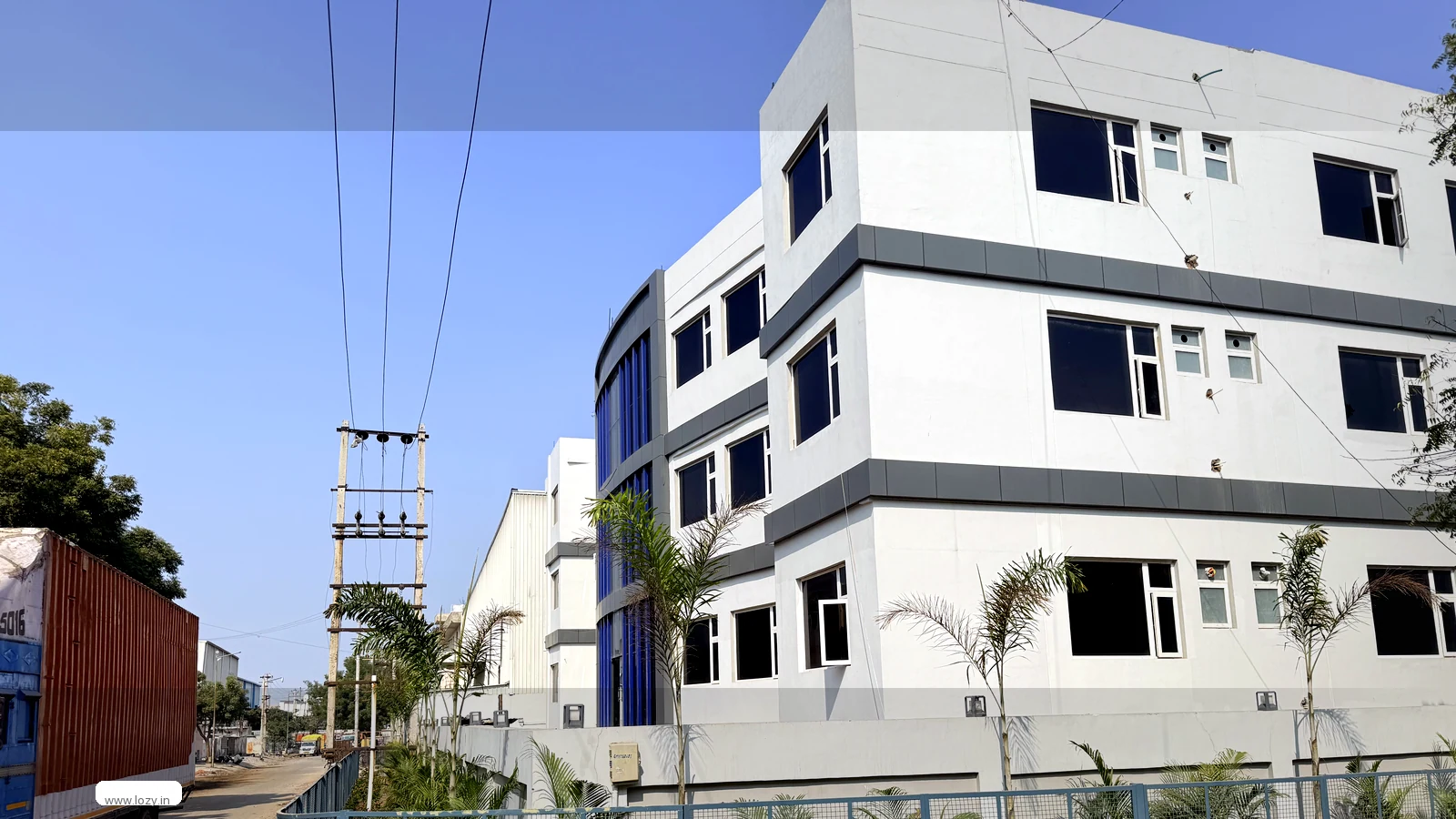
Short answer: a 3PL warehousing company in Manesar does three things a factory cannot do for itself. It holds your components, packaging or finished stock in a manned building a short run from the plants you supply, it runs the inward, put-away, pick, kit and dispatch work to your schedule rather than to its own convenience, and it reports what moved in a form your plant, your dealer or your marketplace will accept. Manesar is an industrial model township on NH-48 south-west of Gurugram, built around IMT Manesar and the auto, auto-component and engineering plants that cluster there — which is why the storage question in this town is nearly always a production question wearing a warehouse's clothes. Lozy runs 77+ warehouses and more than one million square feet of live space, with a facility in Manesar Sector 8; space starts at the published Delhi NCR rate of ₹21 per sq ft per month on our pricing page, and the Manesar options are listed on the Manesar warehouse-for-rent page.
- Manesar’s demand is industrial before it is commercial: tier-1 and tier-2 suppliers holding components near the line, manufacturer overflow, and D2C brands priced out of Gurugram’s core.
- What a plant supplier buys is not floor area. It is a bay on the right side of the Kherki Daula toll, a fixed dispatch window, and a stock report that matches the build schedule.
- Line-side sequencing and safety stock are two different jobs. Sequencing is a handling and labelling discipline; safety stock is a position count. A 3PL that quotes one and cannot run the other is quoting the wrong thing.
- The published Delhi NCR basis starts at ₹21 per sq ft per month, with plan bases from ₹699 to ₹4,499 per month on the pricing page — a basis to compare against, not a quote for your part numbers.
What a 3PL warehousing company in Manesar actually does
A 3PL in Manesar takes over the storage and movement of your stock inside a building it operates, and hands the work back to you as a monthly invoice and a set of records. You keep the inventory on your books and the customer relationship; the operator keeps the building, the staff, the racking, the scanners and the shift pattern.
That definition is worth spelling out because three different businesses describe themselves as warehousing in this town. A landlord rents you a shed and a meter connection and goes home. A transporter moves your pallets but stores nothing. A 3PL sits between them: it is a space business, a labour business and a record-keeping business in one contract, and the reason a supplier on the IMT belt uses one is that the alternative is rebuilding all three inside a plant that has no room for any of them.
The three layers you are actually buying
- Space. A defined bay or racked block with a numbered position for every pallet, a stated height, a stated floor load, dock access and a yard a trailer can turn in. The warehouse-for-rent product is this layer on its own, and plenty of businesses start there and add handling later.
- Handling and systems. Inward against your invoice or advance ship notice, damage photographed at the gate, put-away recorded against a position, pick and kit against a build order or a sales order, dispatch against a window, and a stock report you can reconcile. This is the layer that third-party logistics describes, and it is where a 3PL earns or loses the account.
- Transport handover. The point where your stock leaves the bay. It might be your own vehicle, a milk-run truck on a fixed route, a line-side drop at a plant gate, or a courier network for D2C orders. A warehouse that cannot load inside its window is a warehouse that made your transport expensive.
The full service set — contract logistics, fulfilment, distribution, order management, reverse logistics, value-added work, in-plant operations, WMS, customs and freight — is gathered on the 3PL warehouse services hub, and the Gurugram-side picture is on the 3PL warehousing in Gurgaon page. What follows is the Manesar version of that: not a service list, but what the plant-supplier economy here actually asks a building and a team to do.
What it is not
A 3PL is not a factory extension. If your process needs a machine, a jig or a test bench, that belongs in your plant or in a genuine in-plant operation where the operator runs a store inside your own four walls — a different arrangement, described under in-plant operations. Nor is it a bonded or duty-deferred store unless the facility holds that approval, and it is not a temperature-controlled one.
At a glance: services, space, terms and where
The quickest way to read this market is a single sheet: what the service covers, what kind of space it runs in, how the term works, and where the buildings are. The table below is that sheet for a Manesar requirement, and every row is expanded later in the post.
| What you are choosing | What a Manesar 3PL arrangement provides | Where to check it |
|---|---|---|
| Space | A defined bay or racked block, positions numbered, palletised or cartonised stock, dock access and a trailer-friendly yard. Shared floors with other clients, or a block shaped around one company’s stock. | The Manesar Sector 8 facility page, and the estate around it |
| Services | Inward and GRN, put-away, storage, pick and pack, kitting and sequencing, dispatch, stock reporting, returns handling, and transport coordination to a plant gate or a customer. | The 19-service 3PL hub, itemised service by service |
| Term | Month to month with no long lock-in. Space can grow into a peak and step back down afterwards without renegotiating a lease. | Pricing page |
| Price basis | Per square foot per month from the published Delhi NCR starting rate of ₹21, or a plan basis where the requirement is better described as a stock count than as an area. | Pricing page |
| Where | Manesar Sector 8, with the wider Gurugram belt — Kherki Daula, Garhi Harsaru, Farrukhnagar — and the rest of the Haryana cluster reachable through the same network. | Haryana locations |
| What is available now | Bays that are free this month, with size and location, rather than a brochure of what exists in principle. | Warehouse listing |
Read the table as questions rather than a menu. Most Manesar enquiries arrive with two rows already decided — a size and a rough location — and the four undecided rows are where the cost hides.
Why the storage demand here follows the plants, not the city
Manesar’s warehouse demand is generated by the industrial estate, and it moves when the estate moves. IMT Manesar is the anchor: an industrial model township laid out for manufacturing, with the auto, auto-component and engineering plants that grew around it and the supplier ecosystem that always follows an assembly operation.
Three kinds of demand come out of that, and they do not want the same building.
Tier-1 and tier-2 suppliers holding components near the plant
A tier-1 supplier makes a sub-assembly and delivers it to an assembly line on a schedule. A tier-2 supplier makes the parts that go into the sub-assembly. Both of them face the same arithmetic: their own factory is laid out for making things, and every square metre given to finished-goods storage is a square metre not making anything. When the customer’s build schedule starts to swing — a variant mix change, a promotion, a model-year change — the buffer that used to fit in a corner of the shop floor stops fitting.
What they need at that point is dull and specific: a building close enough that a truck can make the run inside a shift, a bay that can take returnable bins as well as pallets, a team that can label to a sequence, and a report that says what is on hand by part number. That is a 3PL requirement, and the automotive and auto-component industry pages set out the handling side of it in more detail than a city post can: automotive and auto-component warehousing, and for the dealer-facing end of the same trade, spare parts and aftermarket warehousing.
Manufacturer overflow, and the space a plant cannot buy back
The second stream is overflow. A plant that has committed its floor to a line, a store and a dispatch bay has no slack when a container arrives early, when a packaging consignment lands before the schedule says it should, or when finished goods wait for a quality release. Overflow is by definition temporary and by definition urgent, which makes it a bad fit for a three-year lease and a good fit for monthly space that can be released when the pressure drops.
The honest version of this is that overflow is the cheapest problem to solve badly. A yard full of pallets under tarpaulin costs nothing a month and a great deal the first time it rains, and an unnumbered pile is not stock — it is a claim about stock.
D2C brands priced out of Gurugram’s core
The third stream is newer. Direct-to-consumer brands serving south Delhi, the Dwarka belt and Gurugram’s own Sector addresses have found that the rent inside the city’s commercial core does not work for a picking operation, and that a building down NH-48 does. Manesar gives them the trade they usually want: a shorter run to the customer than a warehouse on the far side of Delhi, and a rent basis that leaves room for a marketing budget. The e-commerce warehouse services page covers that pattern, and fulfilment runs in the same building on its own service line.
The corridor decides more than the map does
Manesar sits on NH-48, the Delhi–Jaipur highway, and Kherki Daula toll is on the Gurugram side of the same corridor. That single sentence explains most of the site decisions in this town. A building on the Gurugram side of the toll and a building in the estate are minutes apart on a good morning and not minutes apart on a bad one, and a supplier whose dispatch window opens at six has a different opinion about that than a brand shipping parcels at noon.
Read the corridor before the rent. The Kherki Daula warehouse page covers the toll-side position, the Haryana location page lists the belt, and the broad city picture — corridors, what the city stores, how the ICD at Garhi Harsaru changes an import flow — is in the warehousing in Gurgaon guide.
Line-side sequencing: what a supplier needs minutes from the line
Line-side sequencing means delivering parts in the order the line will consume them, not in the order they were made. A supplier that sequences holds stock in a supermarket near the plant, picks to the build order, labels each bin or trolley with the sequence position, and dispatches so that the trolley arrives at the line just before it is needed — and no earlier, because the line has no room for it either.
That is a different job from storage, and it fails in different ways. Storage fails when stock cannot be found; sequencing fails when stock is found but is in the wrong order, wrongly labelled, or arrives inside the window but at the wrong gate.
What the discipline actually requires
- Part-number identity, not product description. A sequence call is made on a part number and often a variant and a colour or finish code. Every position, label and report has to carry the full key, because “bracket, left” is not a part number and the line will reject the trolley.
- A sequence label that survives the run. Printed at pick, applied so it can be read from the aisle without lifting the bin, and matching the plant’s own label standard if there is one. A label that the plant’s scanner will not read turns a sequenced delivery into a manual receipt at the gate.
- Returnable packaging under control. Bins, trolleys and dunnage belong to somebody, carry a count, and come back. A 3PL that stores your parts but not your empties leaves you reconciling packaging every month, which is why the empty-bin ledger matters as much as the parts ledger.
- A fixed dispatch window per shift. Sequencing only works if the vehicle leaves at a time it can be relied on. That means a loading plan, a gate-out time recorded, and a loading bay reserved rather than queued for.
- An advance ship notice the plant can book against. Part numbers, quantities, sequence references and vehicle details sent ahead, so that the receiving gate is expecting the load instead of discovering it.
Value-added work sits inside this discipline rather than beside it: kitting a set of parts into one bin, re-labelling to a customer standard, applying a protective film, repacking for a line-side trolley. The value-added services page lists the jobs, and the test of a provider is not whether it offers kitting but whether kitting has a rate, a bench, a supervisor and a completion time.
What “minutes from the line” is really buying
Proximity is not a distance on a map; it is the reliability of a short run. Three things make a run reliable, and only the first is about geography.
- The route is short and the gate is known. A vendor in the estate that hands over at a named gate, at a named hour, with a named person signing, is closer to the line than a building twenty minutes away with an uncertain gate.
- The load is ready before the vehicle arrives. Staged at the dock, counted, labelled and matched to a loading sheet. Staging is the step that decides whether a four-minute run becomes a forty-minute wait.
- The exception path is fast. A short bin, a damaged part, a wrong variant — someone has to be reachable and able to fix it in the same shift. Ask what happens at 9 pm on a Saturday, and listen for a name rather than a process.
This is the point at which a supplier should stop comparing buildings and start comparing operating rhythms. Two facilities in the same estate, at the same rent, with the same racking, are different products if one stages by shift and the other stages when the truck reaches the gate.
Sequencing, safety stock or both?
Send the part-number list, the dispatch window you have to hit and roughly how many pallet or bin positions it needs. We will tell you which Manesar bay can run it and what the monthly figure looks like.
Send the requirementCall +91 93547 12345Safety stock and buffer storage: sizing the swing that follows a build schedule
Safety stock is the quantity you hold to cover the gap between what the line consumes and what your inbound can reliably deliver. Buffer storage is the physical space that quantity occupies. In a 3PL arrangement the two are negotiated together, because the second one is the bill and the first one is the reason for it.
The common mistake is to size the buffer on a normal month. Buffers are not consumed in normal months.
Cover days, and why the honest number is a range
The working method is to express the buffer as days of cover against the line’s takt, then add the variability that actually exists: your own inbound lead time from your component maker or importer, the plant’s schedule stability, and the seasonal pattern of the corridor. A supplier asked for a number usually quotes a single figure and privately runs a different one. Write the range into the agreement — a floor that must always be on hand and a ceiling that triggers a conversation — and the buffer stops being a surprise every quarter.
Two notes. Cover days are counted in consumption, not calendar: a plant on a two-shift week consumes a week of stock in five days and none during a shutdown. And the buffer that matters is the one for the parts with the longest inbound lead time, not the ones you can reorder in a week.
From cover days to positions: the arithmetic
The bridge from a quantity to a bill is pallet positions. Take a worked example, with illustrative numbers rather than a claim about any particular supplier: a component line holding 400 pallets of a fast-moving part at the peak of a model-year change, on racking four levels high and two pallets wide per bay, needs roughly fifty bays of that configuration for that part alone — plus aisle space to reach the oldest pallet without unloading the newest. Add the slow movers, the packaging, the empty bins and the staging lane, and the floor area the business actually needs is larger than the pallet arithmetic first suggests. The method for turning a rate into a cost per position is set out in the cost per pallet guide; the point here is that a supplier who budgets on pallet count alone under-budgets on aisle, staging and empties.
Where the buffer should physically sit
- Fast, high-value, sequence-critical parts near the pick face, at accessible heights, in a dedicated block. These are the parts where the cost of a wrong pick exceeds the rent of the position many times over.
- Slow movers and service parts high and deep, or in a separate long-term arrangement. They occupy space steadily and earn it slowly, which is exactly the profile that a monthly basis handles better than a lease.
- Packaging and returnable empties in their own area, counted separately, because a packaging pallet sitting in the parts block is how a stock count goes wrong.
- Obsolete and engineering-change stock in a marked hold position, decided on rather than discovered. Every supplier on this belt has a part that a change note made surplus; the only question is whether it was quarantined before or after it was counted as live.
That last row is the one most often skipped, and it is the reason a supplier’s book stock and physical stock drift apart on this corridor. A marked hold position, a decision date and a disposition record are cheap. Discovering a superseded part inside a live pick face during an audit is not.
The swing: growth and step-down
The reason a monthly basis fits this market better than a lease is the shape of the demand, not the size of it. Automotive schedules move in blocks: a variant is added, volumes step up for a quarter, a model runs out and the parts for it stop. A supplier locked into a fixed floor plate pays for the peak all year and for the trough as well. A supplier on monthly space takes the extra positions for the quarter and gives them back, and the buffers that stay are the ones that earned their place. See on-demand warehousing for the product form of that, and business warehousing for the version shaped around one company’s own stock and reporting rather than a shared floor. If you want the peak and the trough priced before you choose a product, put the two position counts in an enquiry and we will model both.
Space, racking and what you actually get, measured
What you get in a Manesar 3PL is a written bay plan and a set of operating commitments, and both should be measurable. A bay is not “some space in a shed”; it is a numbered area with a stated height, a stated floor load, a defined dock, and a count of positions that the operator will stand behind.
The table below is the operational sheet to ask for. It converts each promise into something with a number attached, which is the only way to compare two providers who both say yes to everything.
| What you get | How it is defined | How it is measured |
|---|---|---|
| A defined bay or racked block | Area, height, floor load, dock assigned, positions numbered, in a bay plan you are given a copy of | Monthly cycle count against the plan; positions in use reported as a number |
| Inward and put-away | Receipt against your invoice or advance ship notice, outer condition checked and photographed, put-away recorded against a position the same day | Receipt accuracy against documents; put-away completion time; damage log with photographs |
| Pick, kit and sequence | Pick list per build order or sales order, kitting bench, sequence or customer label applied at pick, staging against a loading sheet | Pick accuracy; kit completion time; short-lines per dispatch; label rejections at the plant gate |
| Dispatch against a window | A reserved loading slot, a named vehicle, gate-out time recorded, documents and e-way bill matched to the load | On-time dispatch against the agreed window; dock-to-gate time; late-vehicle causes logged |
| Stock visibility | SKU and position level report, part or batch level where the trade needs it, exception list for short, damaged and hold stock | Book-to-physical accuracy at count; report issued on a fixed date each month |
| Returns and empties | Returns segregated on arrival with a status, returnable bins and trolleys counted in and out, re-pack and re-label on instruction | Bin reconciliation per cycle; return turnaround days; disposition recorded per return |
| Access and security | Named users on an access list, manned entry, camera cover on entry, aisle and dock face, visitor log signed and escorted | Access list reviewed on a stated frequency; visitor log audited; incident register |
| Reporting and review | Weekly exception note, monthly review pack with the measures above, actions with owners and dates | Actions closed against dates; the review held whether or not there is a problem |
Two rows carry the rest. Stock accuracy makes every other claim checkable: where the book and the rack disagree, nothing downstream can be trusted. On-time dispatch is the one the plant feels, because a late sequenced delivery stops being a warehouse problem the moment the line stops.
Racking, floor and the physical questions
Ask what the racking is rated for and who last inspected it, because a pallet of castings and a pallet of plastic trim are not the same load, and ask what the floor is rated for if you store anything dense. Ask whether the dock is levelled or a ramp, and whether a forty-foot trailer can turn in the yard or only a sixteen-foot truck: on this belt that decides whether your inbound arrives on a trailer or is broken down at somebody else’s yard first.
The physical questions are unglamorous and they are the ones that survive the first month. The warehouse inspection checklist walks through them in the order to ask, and the business warehousing product is the one most plant suppliers end up on.
The systems layer: stock you can see, dispatch against a schedule
A 3PL is only as good as the record it keeps. In this market that record is read by a plant’s stores team, an auditor and a founder with a laptop, usually in that order, and it is what turns a shed full of pallets into stock you can plan against.
The minimum is a warehouse management system that holds stock by SKU and by position, not by aisle and memory. That means every receipt creates a record, every put-away names a location, every pick reduces the position, and every dispatch closes the line. The warehouse management system page sets out what that looks like as a service rather than as software you buy.
The five reports to insist on
- Stock on hand by part or SKU, by position. Issued on a fixed date, with a total that ties to the last count. If the total moves without a movement record, the system is a spreadsheet with extra steps.
- Movement register for the period. Receipts, issues, returns, adjustments, each with a document reference, so that a query about one pallet can be answered by looking rather than asking.
- Ageing and slow-mover list. Stock that has not moved in a stated window, with value, because that list is the cheapest early warning a supplier gets about a part going obsolete.
- Exception report. Short receipts, damaged stock, stock on hold, missed windows, with the reason recorded. The exceptions are the only part of the pack that changes anything.
- Dispatch record with proof of delivery. Vehicle, gate-out time, consignee, quantity, and the signed receipt where the consignee signs one.
Order management is the layer above: one queue for orders arriving from a plant portal, a marketplace, a dealer and a sales team, with allocation rules that stop the same pallet being promised twice. The order management service line covers that layer, and it matters more in a mixed business — a supplier that also sells service parts direct has two order rhythms in one building.
Dispatch, transport and the handover at the gate
Transport is where the systems layer meets the road. Two arrangements cover most of this belt. The first is your own or your customer’s vehicle on a fixed run, where the warehouse’s job is to have the load staged, counted and documented before the vehicle reverses in. The second is a coordinated movement — a milk run across several suppliers, a part-load consolidated with another consignment on the same corridor, or a last-mile leg to a dealer. Distribution and transportation is the second arrangement, and the question to ask about either is the same: who owns the exception when the vehicle is late, and what is written down.
One caution that saves money: a warehouse that loads outside its window and bills the extra to handling is cheaper on the quote and dearer on the invoice. A provider that holds a window is doing you a favour, even when it feels like the opposite.
What a 3PL in Manesar costs, and the five inputs that move it
The published starting basis for Delhi NCR is ₹21 per sq ft per month, and Manesar sits inside that region’s pricing; the Manesar figure itself follows the unit, the size and the term. Where the requirement is better described as a stock count than as an area, the published plan bases run from ₹699 per month for short-term space through ₹999 and ₹1,199 for long-term, ₹1,299 for seasonal and ₹4,499 for an inventory-led arrangement — all on the pricing page, billed monthly with a GST invoice and no long lock-in.
Those are starting rates, not quotes. Five inputs move the number.
- Positions versus square feet. A racked block with aisle access costs more per square foot than a solid floor stack and less per pallet, because the racking uses the height. Price the positions the stock needs at the height the building yields, not the slab.
- Handling intensity. Receiving sealed pallets is one job; checking fifteen part numbers against an invoice, labelling to a sequence and kitting into bins is another, and it belongs on its own line.
- Term. Monthly space costs more per month than a year’s commitment, and it is worth it when the requirement is still settling. A supplier with a proven flat requirement should say so and take the better rate.
- Seasonality and the swing. A buffer that doubles for a quarter and halves again is cheap on a monthly basis and expensive on a lease. Model the peak and the trough before choosing the product.
- Transport and the last leg. Whether the run to the plant gate is inside the rate or billed per trip changes the comparison between two buildings more than their rent does.
Comparing two Manesar quotes like for like
Put four numbers side by side before deciding: the monthly storage figure, the handling figure per pallet in and out, the per-line or per-kit charge for the work your part numbers need, and the per-trip charge for the run to your customer. Two quotes that look different at the storage line often reverse once the handling line is included. The city rent bands and what drives them are covered in Gurgaon warehouse rent rates, and the contracting side — service levels, liability, exit — is in the contract logistics guide.
One habit worth keeping: ask for the invoice format before the rate. A GST invoice in your entity’s name, with handling separated, is worth more over a year than a discount on a cash rent with no input credit.
Price the positions, not the pallets
Give us the part list, the number of live positions you carry at peak and the dispatch window. We will come back with the bay size, the monthly figure and what the handling line would be.
Model my requirementCall +91 93547 12345Who else operates in this market, by provider type
Manesar is served by several kinds of provider, and the useful comparison is between models rather than between logos. A large integrated logistics campus, of the kind Varuna Group runs, suits a business that can commit to a big block and a long lease and wants warehousing, transport and related services from one large site. A dedicated warehousing operator in the Warehousing Express mould builds or takes a building and rents it on a lease, which suits a company whose requirement is proven and flat. An asset-led 3PL such as SD Global Logistics runs the operation inside space it controls, typically on a contracted basis. An e-commerce fulfilment network like Shiprocket Fulfillment is built around parcel flow and marketplace integration rather than around a plant’s dispatch window. A tech-led 3PL such as Prozo leads with software and a distributed footprint.
| Provider type | What the model is | Fits when | What you commit to |
|---|---|---|---|
| Large integrated logistics campus | One big site with warehousing, transport and related services together | You need several services from one gate and can fill a large block | A long lease and a large minimum area |
| Dedicated warehousing operator | A building taken or built for one occupier and leased | Your requirement is proven, flat and long | A multi-year lease with escalation and fit-out |
| Asset-led 3PL | An operation run inside space the operator controls, on contract | You want the work outsourced, including labour and systems | A contracted term with service levels |
| E-commerce fulfilment network | Parcel-flow buildings wired to marketplaces and courier networks | Your demand is online orders, not plant schedules | Per-order commercial terms |
| Tech-led 3PL | Software first, with a distributed set of partner sites | Visibility across several cities matters more than one site | A platform plus storage commercial terms |
| Shared managed space with published prices | Managed bays and blocks inside a multi-client building, monthly terms, rates on a public page | Your requirement is still settling, or swings with a build schedule | A month at a time |
The honest contrast is a trade-off, not a ranking. Large campuses and built-to-suit leases are the right answer for a business that can commit; shared, managed space with published prices is the right answer for one that cannot yet. The industry pages show which trades each pattern is usually built around.
How to choose, and the five ways a Manesar arrangement goes wrong
Choosing comes down to six checks and one drive. Run them in this order and the shortlist gets short quickly.
- Match the space to the goods. Floor stack for dense and bulky, racking for fast movers and mixed part numbers, a lockable block if the stock is high-value, bin-capable bays if the customer uses returnable packaging.
- Drive the run at the hour you dispatch. Not at noon on a Sunday. Time the gate-to-gate run and count the signals, because the toll on the Gurugram side of the corridor is a clock, not a distance.
- Check the yard and the dock. A trailer-friendly turning circle, a dock at the right height, and a staging area that is not the aisle.
- Ask what is included. Racking, pallet trucks, housekeeping, security, pest control, reporting. The list of what is extra is the real price list.
- Confirm the basis and the notice. Per square foot, per position or per plan; monthly or fixed; and how much notice to leave, in writing.
- Test the reporting. Ask to see a sample monthly pack from a real bay, redacted if need be. A provider who cannot show one has never produced one.
Red flags, in the order they appear: a quote that will not say whether GST is included; a “monthly” rate carrying a yearly minimum; a yard you cannot picture a trailer reversing into; and a sequence commitment given without anyone asking what your labels look like.
Failure one: the bay that was never numbered
The stock arrives, goes into “the Manesar shed”, and three weeks later nobody can say which pallet is where without walking the floor. Nothing is lost; everything is slow. The cost shows up as a pick that takes forty minutes and a count that takes two days. The fix is the cheapest item on any sheet: numbered positions, a bay plan, and a put-away that names a location at the moment it happens.
Failure two: sequencing sold but not run
A provider agrees to sequence deliveries and then runs them as ordinary dispatches, labelled in whatever the printer produces. The plant rejects the first trolley at the gate, the supplier sends a person to re-label it in the yard, and the arrangement is now a cost centre with a daily argument attached. The fix is to test it before signing: send one build order and ask for the staged, labelled trolleys to be photographed before the vehicle loads.
Failure three: the buffer nobody owns
A safety stock level is agreed in a conversation, never written into the agreement, and quietly erodes as space is needed for something else. Six months later the line stops for a part that was supposed to be held. The fix is a floor and a ceiling in the contract, a monthly position report against both, and a named person on each side who is told when the floor is breached.
Failure four: the last leg priced separately, discovered late
The storage rate looked keen because the run to the plant gate was never in it. The first month’s invoice carries per-trip charges that turn a cheap bay into an expensive one. The fix is to ask for the delivered cost per trip, not the storage rate, and to price the same run from every shortlisted building.
Failure five: the goods list agreed after the stock arrived
Paints, solvents, aerosols, adhesives, batteries, any strongly odorous material, and food without the right licence are handled differently or not at all. A consignment turned away at the gate is a production problem with a warehouse invoice attached. The fix is a written goods list before the first vehicle, and a written answer about anything on it that is not ordinary dry cargo.
All five failures share a shape: each was cheaper to prevent than to repair, and each was visible to somebody who asked. That is what the operational table is for. Where the alternative is a fully contracted operation, the shared and multi-client warehouse guide sets out the separation to insist on inside a shared building, and the Gurgaon city guide covers the wider belt this town sits inside.
Where Lozy fits in Manesar, and the nine steps to a first truck
Lozy runs 77+ warehouses and more than one million square feet of live space from a Delhi NCR base, across owned, leased and partner facilities, and Manesar Sector 8 is one of them. The unit sits in the industrial township on NH-48, takes palletised and cartonised stock with dock access, and runs the ordinary disciplines this post describes: numbered positions, inward against documents, put-away recorded, dispatch against a booking, camera cover and controlled access, and a monthly stock report.
What that means in practice for a supplier on this belt is a bay you can grow into for a model-year change and hand back afterwards, a sequence or kit operation with a rate attached, and a monthly GST invoice instead of a lease. Space starts at ₹21 per sq ft per month in Delhi NCR, plan bases run from ₹699 to ₹4,499 per month, and the free-now list is on the warehouse listing page.
It also means being clear about the boundary. This network is dry, ambient-managed space: there is no cold room, no temperature-controlled bay and no validated cold-chain capability, so a part or product that must be held in a temperature band belongs with a specialist facility. There is no customs bonded or FTWZ approval attached to the Manesar bay described here, so duty-deferred import cargo belongs in a bonded warehouse. It is not a factory and it does not run production processes. If your requirement is one of those, say so on the first call and we will say plainly that it is not ours.
Nine steps from enquiry to a first truck
- Describe the stock, not the space. Part or SKU list, pallets or bins at peak and at trough, whether it stacks or racks, and anything on the goods list that is not ordinary dry cargo.
- State the window you have to hit. The plant gate time, the dealer cut-off, or the marketplace dispatch promise. Everything else is sized around this.
- Send the label and document standard. A photograph of a plant-accepted label and one of your invoices tells an operator more than a page of description.
- Get a bay size and a monthly figure. Positions, height, dock, and the handling lines separated from the storage line.
- Visit at the hour you dispatch. Watch a loading, look at the yard, and walk the bay you would actually get.
- Agree the layout on a drawing. Pick face, buffer block, hold position, empties, staging lane. A layout agreed verbally is rearranged by whoever is on shift.
- Run one observed intake. One vehicle, several part numbers, one carton damaged, one label wrong. Watch what is written down and where the damaged carton goes.
- Set access, escalation and the review date. Named users, an out-of-hours number, and the date of the first monthly review before the first pallet moves.
- Measure the first month, then decide. Accuracy, on-time dispatch, and the time taken to answer one stock query. Keep the arrangement monthly while it proves itself.
If the first consignment is a schedule change landing over a weekend, send the part list and the window on WhatsApp before the vehicle is booked, and we will mark up which bay can take it and what the intake needs. For anything longer than a single load, email the requirement to care@lozy.in with the part list and the dispatch window, and we will reply with the Manesar options and the monthly figure, usually within the working day.
If you want the wider picture before you call, the network is on the locations hub, the state around this town is in the Haryana warehousing guide, and the NCR comparison is in the 3PL warehousing in Delhi NCR guide. Common questions are answered on the FAQ page, and contact us reaches a person.

Related guides
- warehousing in Gurgaon: space, corridors and cost
- business warehousing: the middle path
- warehouse space for rent in Manesar
- 3PL warehousing company in Gurgaon
- 3PL warehousing company in New Delhi
- 3PL warehousing company in Noida
- 3PL warehousing company in Faridabad
See the Manesar bay before you commit
Tell us the part list and the window you have to hit. We will confirm which bay fits, hold it for your visit, and put the monthly figure beside the handling lines so the comparison is honest.
Book the site visitCall +91 93547 12345Sources. Network numbers, facility details and prices are Lozy’s own published information, checked 26 October 2026. Highway and corridor context comes from the National Highways Authority of India; the industrial-estate and township context from the Haryana State Industrial and Infrastructure Development Corporation; state investment process from Invest Haryana; GST registration and input credit from the GST portal. The arithmetic in the buffer section is illustrative and uses hypothetical quantities, not a claim about any named business.
Last updated: 26 October 2026. Something the FAQs below do not cover? Call +91 93547 12345 or email care@lozy.in.
Need warehousing or storage in India?
Request a free, tailored quote in under 2 minutes — free pickup, no lock-in.