
Import Export Warehouse Requirements: Dock, De-Stuff Bay, Duty Trail and Records (2026)
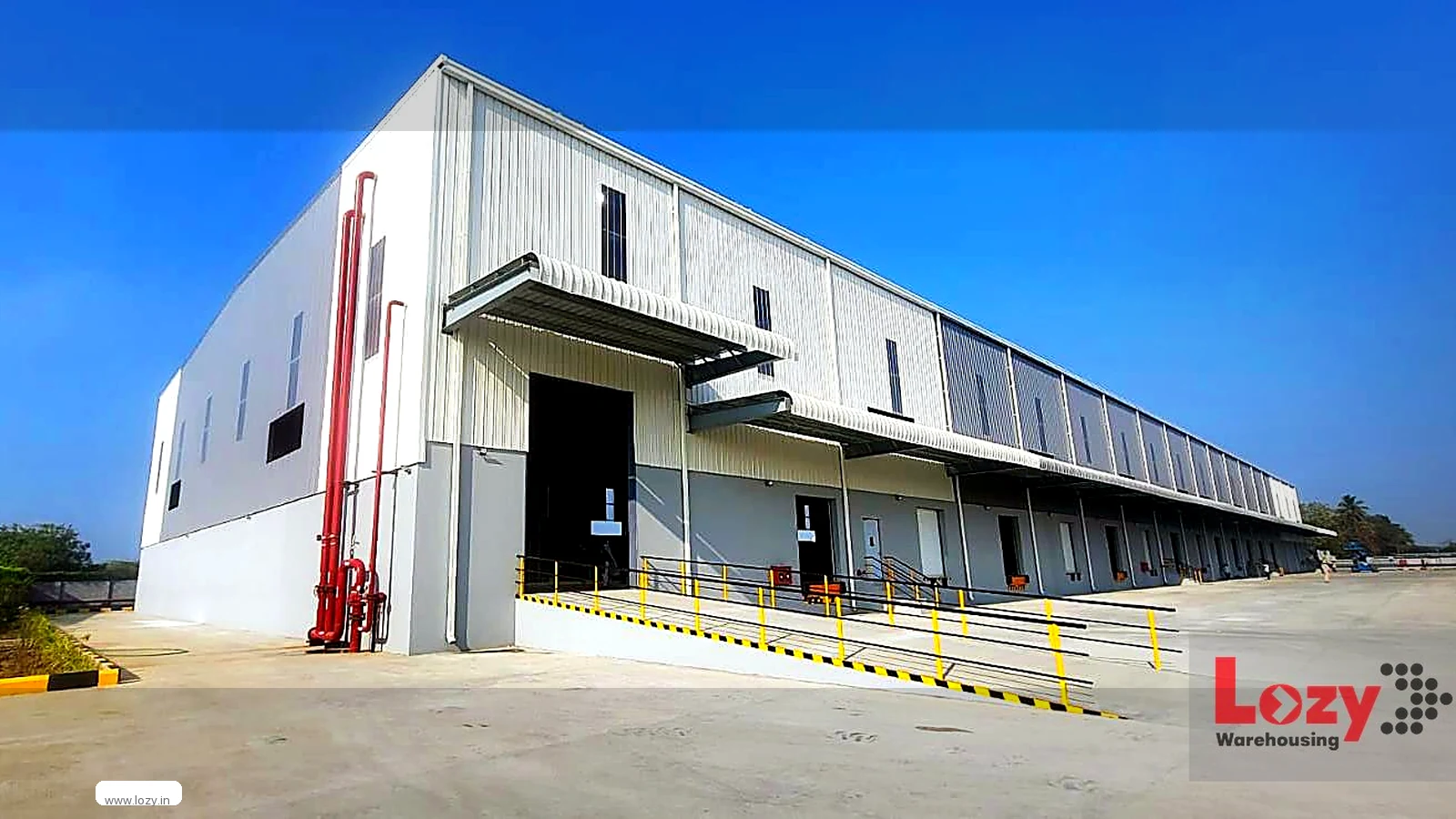
An import and export warehouse has to provide four things general storage does not: a dock and a closable bay that can take a loaded container and be emptied into it, a lot record that ties every carton back to the entry it cleared under, a marked place where uncleared or held cargo can sit without being picked, and a document file that still answers a customs query six months later. Import export warehouse requirements are those four written as tests a landlord or a 3PL can pass or fail on the day. This is the sheet to carry on the visit, on a starting basis of ₹21 per sq ft per month in Delhi NCR.
- A forty-foot box cannot be emptied into a shared aisle. The bay must be empty, cordonable and closable before the doors open, not cleared afterwards.
- Seal number, line-by-line tally and condition photographs are captured at the door. Reconstructed at month end, they are an opinion rather than a record.
- Bonded and duty-paid are different buildings under different law. An ordinary warehouse is not a customs area, and no paperwork makes it one.
- Free days at the terminal and on the container are shorter than any rent cycle. This specification is a calendar before it is a floorplate.
Most EXIM storage decisions get made on a rate and a photograph. A requirement sheet inverts that order: measurable rows, scored across two or three buildings before anyone quotes. The commercial case belongs to the import export warehousing guide; this is the specification behind it, and the service it describes is import and export warehousing at Lozy.
What import and export cargo demands from a building
Cargo that has crossed a border asks three questions ordinary storage never asks. Can a loaded container reach a dock face and be emptied inside a bay nothing else is using? Once the goods are out, can each lot be told apart from the next? And between gate and rack, can somebody say what arrived, in what condition, under which entry?
Access decides the site before area does
The hard constraint is the approach, not the slab. A forty-foot trailer needs a gate wide enough to pass without folding a mirror, an apron deep enough for the tractor unit to stand clear while the box is spotted, and a dock height that matches a trailer bed rather than a landlord's memory of one. Overhead cables, a low canopy, or a lane full of parked tempos at nine in the morning survive a four o'clock visit and fail on a loaded Monday.
The unit of storage is the lot, not the pallet position
A lot means the smallest thing that can be released on its own: one entry, one invoice line, one bill-of-lading split. Two consignments of the same product, cleared on two entries, are two lots and must be able to leave on different days against different invoices. A rack that answers "cartons of X" satisfies a stock count and fails a customs query, because the question is never how many — it is which ones, cleared when, and where they went. That drives the layout: gangways a reach truck can work rather than a solid block of racking, labels facing the aisle, a marked floor zone for lots counted but not yet put away, and a location register keyed to lot number and written at put-away.
The building sits inside a calendar you do not control
Every container arrives with two clocks, neither negotiable with a landlord. The terminal gives the cargo a free period before demurrage; the shipping line gives the box one before detention; both are measured in days and both run from events at the port. An extra forty kilometres adds roughly two hours to each drayage leg, which is how a comfortable free period becomes a claim — proximity to the gateway that clears your cargo is a requirement with a rupee value. Exports run the same discipline in reverse — shipping bill, vessel cut-off, stuffing date and terminal gate cut-off lining up with a pick, a pack and a load.
The acceptance sheet: twelve rows to test on the visit
Carry this table onto the requirement sheet and mark every row pass or fail where you stand. Three failures is a walk-away, not a negotiating point: in EXIM the rows that fail are access, record and segregation rows, and none of them improves after signature. The numbers are drafting benchmarks — a fire NOC, a structural certificate and a licensed engineer's view still come from elsewhere.
| Requirement | Minimum | How to test it on the visit | Why it matters for this trade |
|---|---|---|---|
| Dock and yard for a loaded container | Dock at trailer-bed height, apron deep enough to spot a forty-foot box, gate and approach clear of traps | Ask when the last forty-foot delivery was, and walk the gate with a tape. | A box that cannot be spotted cannot be de-stuffed. |
| A bay emptied, cordoned and closed | Clear before the doors open, several times the container footprint, light to read carton marks | Ask where a mixed floor-loaded container is emptied on a busy Tuesday. | De-stuffing spreads; across shared stock the count becomes a guess. |
| Floor strength and condition, in writing | Design load in a document, surface flat for pallet trucks, no spalling at the dock lip | Ask for the structural note, then run a pallet truck across the area. | Dense cargo is moved fast, on a slab nobody inspected. |
| Clear height under the sprinklers | Height to the lowest obstruction, quoted as a number, with deflector clearance designed into the racking | Measure to the deflectors and the lowest light fitting. | A plan built on eaves height loses a level across the lot rack. |
| Handling equipment sized to the manifest | Forklift rated for the heaviest pallet plus attachment, drum handling, labour for a floor-loaded box | Read the forklift plate; ask about drums and crates with no fork pockets. | Floor-loaded boxes and drums are routine in this trade. |
| Room for the lots and for the empty | Staging for two or three lots while sorting, plus a park for an emptied container | Ask where an empty sits afterwards and who calls the depot. | An empty that waits is detention charged by the day. |
| Marked hold area for uncleared cargo | Separated, marked bay or cage with restricted access, release by named role | Ask what is in it today, and who may release stock from it. | Uncleared stock inside released stock gets picked. |
| Space where a consignment can be examined | Ground floor near the dock, working light, room to spread cartons, repacking materials | Ask where the last examination happened, and what it crossed to get there. | Examination is supervised from opening to repack. |
| An intake desk that records at the door | Power, network, camera, scale, and a printed tally signed before put-away | Ask for one recent intake sheet, with seal number and damage notes. | The first hour decides the record. |
| One gate, camera cover, signed visitor log | Single manned entry, cameras on gate and bay, stated retention in days, controlled keys | Ask for yesterday's log, then ask who holds a key to your bay. | A shortage is settled by footage and signatures. |
| Dry stowage through a monsoon | All stock on racking or dunnage, roof and gutters sound, no tide marks at the wall base | Walk the wall base and the corners behind the racking with a torch. | Water damage is a total loss per carton. |
| Fire NOC for this address, insurance disclosed | Current NOC naming these premises, detection matched to cartons and drums, custody cover answered in writing | Read the address and expiry on the NOC, then ask for the custody clause. | An EXIM warehouse burns as packaging and pallets. |
Put the sheet against a real building
Send the twelve rows with your packing profile, the gateway your cargo clears at and the free days printed on your booking. The reply names the facilities that pass and quotes the space.
Send the twelve rowsCall +91 93547 12345If you would rather have the sheet run with you, the import export warehousing team will walk a shortlisted building against the twelve rows and name the ones it fails, in the order they would cost you money.
Container de-stuffing: the bay, the equipment and the hour that decides the record
De-stuffing is not unloading. It is a controlled unpack during which a container stops being a container and becomes a set of lots, and the bay, the equipment and the paper must be in place before the doors open. Everything the warehouse will ever say about that consignment is decided in the first hour of it standing on the floor.
The bay, before the doors open
Three conditions make a bay usable. It must be empty of anyone else's stock, because a mixed container comes out as a spreading pile with no aisles in it. It must be cordonable, so a client's cartons are not carried off by a picker working the next order. And it must be closable, because an imported container is a customs file in transit until its record is written, and a file lying open across a shared floor is how cartons end up inside another company's stack.
Size is judged against behaviour. The box's footprint is the floor of the container; the sorting area is several times that, because cartons come out faster than they can be counted. Light matters more than height: carton marks, shipping labels and damage are read at floor level, and a bay lit for forklift traffic rather than for reading is where mis-tallies come from. A bay at the far end of a shed means every carton is handled twice, and the second handling is where a lot loses its label.
Equipment the job actually needs
A de-stuff bay is specified by what it can pick up, and every item below is cheap against the cost of not having it.
- A forklift rated for the heaviest pallet on the manifest, plus the attachment. Imported pallets run heavier than domestic ones and attachments reduce capacity at the mast, so read the plate and subtract for the clamp.
- Drum handling and a spill kit. Resin, solvent and food-grade oil arrive as barrels that will not sit on a fork pocket.
- Strap cutters and a bin for the banding and dunnage that comes out with the cargo and must leave the floor before the next lot lands.
- A camera and a scale. Photographs of damage where it was found, and a weight for any parcel not on the packing list, settle more arguments than a register.
- A table at the door. The tally sheet is written standing up, at the container, by the person counting.
The first twenty minutes
Five things happen in sequence, and the sequence is the control. The seal number is read and matched to the transport document as the seal is broken, because that line connects the cargo on the floor to the container that carried it. The doors are photographed open before anything is touched. Cartons, drums, crates or bales are counted against the packing list line by line, with shortfalls marked at the line rather than in a total. Condition is recorded where it is found — a crushed corner, a torn bag, water staining on a bottom tier — with the photograph number beside the count. Then each lot gets its number and destination, and put-away follows the paper.
Two variants change the detail, not the discipline. A full container load comes out of a box spotted at your own dock, so the seal is the one applied at origin. An LCL consignment was de-stuffed at a freight station and arrives as loose cargo against a delivery order, so the tally must reconcile to that delivery — and a shortage found there is a claim against a different party. For where the de-stuff bay sits in the wider port-to-buyer chain, the import export warehousing guide walks the same container from discharge to dispatch.
The document trail: bill of entry, shipping bill and delivery order
Every carton in an EXIM warehouse is downstream of a document that let it in or will let it out. The import chain runs from bill of lading to bill of entry to clearance order to delivery order; the export chain from shipping bill to let-export order to a container stuffed and sealed. The lot record is the only link in that chain the warehouse controls.
The import chain, in the order it happens
The bill of entry is the entry of goods on importation under section 46 of the Customs Act, 1962, presented electronically on the customs automated system — in practice through ICEGATE by the importer or a broker. It declares the goods, the value and the classification, and assessment and duty follow, including integrated tax where it applies. Section 47 provides for an order permitting clearance for home consumption, which may itself be made electronically on the basis of risk evaluation — which is why a facilitated consignment moves quickly while a flagged one waits for a bay.
The delivery order is not a customs document. It is the carrier's or agent's authority to release cargo against the bill of lading, and it is what the custodian checks before a truck loads. A clearance order without a delivery order will not move a carton, and a delivery order against an unpaid freight bill will not either. The warehouse sees both, plus the custodian's gate pass, before a vehicle is allowed onto its apron.
The export chain, in the order it must be ready
Export entry runs on the shipping bill under section 50, again electronic, with the exporter declaring the accuracy of what is stated and the authenticity of the documents behind it. Section 51 provides for the order permitting clearance and loading — the let-export order without which no container is stuffed for a vessel — followed by stuffing and sealing, movement to port or depot, and the carrier's manifest, with the exporter's IEC from DGFT and the bank's AD code registered with customs underneath. The warehouse requirement follows: goods staged early enough to be picked against a shipping bill rather than a sales order, marked so carton marks match the declaration, and held where nothing is dispatched by mistake — a staging area that stands complete for a day or two without being picked apart by ordinary orders.
What the intake file must contain
Seven items. A warehouse that can produce all seven for a consignment three months old is doing the work.
- The entry reference — bill of entry or shipping bill number and date, on the intake sheet itself rather than only in an accounts system.
- The transport document — bill of lading or airway bill, container number, and the seal number as read at the door.
- Invoice and packing list, with the line numbers used for the tally rather than a re-typed summary.
- The delivery order or gate pass under which the cargo left the customs area, with its date.
- A signed tally sheet with damage and shortfalls against the line they belong to, plus numbered photographs stored with it.
- The lot allocation and any hold note — which position each lot went to, and what was withheld with the reason and the decision-maker.
De-stuff onto an ordinary floor and the chain stops at the door. No lot number ties a carton to the entry that cleared it, and six months later the only answer to a question about a consignment is somebody's recollection. The cost is invisible in month one, which is why the practice persists; it appears when a buyer wants one lot from one entry, when an insurer asks what the cargo looked like on arrival, or when a re-export needs proof of what came in.
Bonded storage and general storage: two buildings, two laws, who may operate each
Duty-paid and bonded storage are not two prices for the same shed. A general warehouse is an ordinary commercial building holding goods on which duty has been paid, under no customs supervision and free to move on instruction. A bonded warehouse is a licensed premises inside the customs system where duty has not been paid and nothing leaves without an order. The rent gap is the smallest part of the difference.
What each one is, in the statute's terms
A customs area — port, container freight station, inland container depot, air cargo complex — is where imported goods remain in the custody of a person approved by the Principal Commissioner or Commissioner of Customs until they are cleared, warehoused or transhipped, under section 45. That custodian keeps a record, sends a copy to the proper officer, and may not permit removal except with written permission; the Handling of Cargo in Customs Areas Regulations, 2009 set out how it receives, stores and delivers goods.
Inside the warehousing chapter, section 57 provides for licensing public warehouses, section 58 for private warehouses — where dutiable goods imported by or on behalf of the licensee may be deposited — and section 58A for special warehouses, locked by the proper officer and entered only with permission. A general commercial warehouse is none of these. It holds duty-paid goods, it has no bond, and no licence turns it into a bonded one after the fact.
Who may operate one, and what the licence has to say
The private warehouse licence is issued by the Principal Commissioner or Commissioner of Customs under section 58, on the conditions in the Private Warehouse Licensing Regulations, 2016, notified as Notification No. 71/2016-Customs (N.T.) on 14 May 2016. Four conditions are worth knowing before accepting a bonded quote.
- The licence is premises-specific and non-transferable. It names the licensee and the site, cannot be lent or assigned, and stays valid until cancelled rather than expiring on a date you can diarise.
- A solvency certificate from a scheduled bank is required, so the operator has been looked at financially as well as physically.
- The site must suit secure storage and general supervision by customs officers — the test buyers never apply, and the one a shed behind another shed fails.
- A warehouse keeper must be appointed with sufficient experience in warehousing operations and customs procedure — the human answer to who you call when the system is down on the day of an ex-bond entry.
Custodianship and insurance while goods sit in bond
Two liability facts shape the insurance question, and both are counter-intuitive. In a customs area the custodian is liable for duty on goods pilfered after unloading while in its custody, under section 45(3) — a duty liability at the rate on the manifest date, not a liability for your commercial value. And the licence requires an all-risk policy covering natural calamities, riots, fire, theft, skilful pilferage and commercial crime, taken in favour of the President of India, for a sum equivalent to the duty involved on the goods stored at any point of time.
That policy is duty-denominated and payable to the revenue. It does not replace a cargo policy in your own name for invoice value, freight, margin and any duty already paid on cleared goods, and a building policy covers nothing in custody without a custody clause. The requirement to put on the sheet is documentary: a certificate showing which policy responds to your goods, at what valuation, with what excess, and whether cover extends to stock at a third-party premises.
What to require in writing before the first carton goes into bond
Six documents and answers, all producible by anyone who genuinely holds a licence.
- The licence, with licensee and address legible — read the three fields and check the premises against the shed you are standing in.
- The bond arrangement and who signs it, including whether a standing bond is used and how part clearances work under it.
- The licence insurance certificate, plus a statement of what cover, if any, the operator carries on the goods themselves.
- The time limits that will govern your stock: one year from the order permitting deposit for goods other than capital goods, extensible by the Commissioner by not more than a year at a time, with interest on duty payable once goods pass ninety days. Those are the section 61 figures, and they set the rhythm of any part-clearance plan.
- The rent tariff and every charge — handling, examination support, repacking, part release — itemised, not "inclusive".
- Who files the ex-bond entry, and who answers for the delay when a document is missing on the day a lot is due out.
Section 64 is worth knowing too: the owner of warehoused goods may inspect them, sort them, deal with containers to prevent deterioration and show them for sale, so a bonded store needs space to open and sort, not only to stack. A requirement that runs both bonded and duty-paid stock is treated separately in the bonded warehouse guide, and Lozy publishes bonded storage, with its terms, on the customs bonded warehouse page. A licence is a fact about a premises rather than a brand, so the licence copy for that specific shed is the document to ask for.
If the election between duty-paid and bonded is still open, put the question to us before the entry is filed — it decides which building your cargo goes to, and it cannot be reversed at the gate.
CFS and ICD coordination: movement windows, free days and the container clock
Your cargo clears at a place that is not your warehouse, and the distance between them is a cost line before it is a convenience. A container freight station de-stuffs, examines and delivers at the gateway; an inland container depot is a dry port where the entry is filed inland. Both are customs areas run by licensed custodians working to windows — gate hours, examination slots, rake cut-offs — that your warehouse fits around rather than sets.
What the custodian controls, and what it means for your bay
The custodian decides when a truck enters, in what sequence, and against which document. Three consequences for the warehouse you choose: it must receive a vehicle outside a comfortable ten-to-six window, because gate-out slots at a busy depot are not issued to suit a landlord; it needs apron space for a vehicle that arrives early and waits; and it must be close enough that a driver makes the round trip inside a shift, since a leg that overruns its slot leaves a container on a trailer overnight.
Exports run to a harder clock. A shipping bill, a let-export order, a stuffing slot and a terminal gate cut-off have to line up, and a facility that cannot stage a consignment a day early and load it on a fixed slot costs you the vessel rather than a day. Ask what happens when a container is due at nine at night: whether a loader is on shift, whether the gate is manned, and whether the paper can be signed by someone with authority.
Demurrage and detention: two clocks, two bills
The two charges that surprise first-time importers are different animals. Demurrage is charged by the terminal, depot or freight station on cargo or a container overstaying the free period inside the customs area. Detention is charged by the shipping line on the container itself once it is outside the port beyond its free days. One is cargo sitting still; the other is a box taken away and not brought back. Neither is a warehousing charge, neither rate is negotiable at the counter, and both sit in tariffs read off the free days printed against your booking. What is negotiable is the sequence.
- File before arrival, because an entry filed after the vessel berths starts the clock before the paper is ready.
- Book the de-stuff slot before the box lands. A bay promised for next week is not a bay, and a container waiting for one accrues both charges at once.
- Keep one container sheet: discharge, free days, entry, clearance, de-stuff and empty return on a single line.
- Return the empty to the nominated depot and keep the gate receipt, because detention disputes are settled by evidence of return.
- Ask for a waiver in writing on the day, with documents; a request a month later is a favour rather than an argument.
Uncleared cargo, the quarantine area and the space an examination needs
In this trade "uncleared" is a legal state with a clock attached. Section 48 of the Customs Act deals with goods not cleared, warehoused or transhipped within thirty days of unloading and gives the custodian a route to sell them after notice. Section 49 allows goods that cannot be cleared within a reasonable time to be stored in a public warehouse pending clearance, for a period not exceeding thirty days at a time, extendable in thirty-day steps, with the warehousing chapter expressly not applying. Both exist because cargo genuinely sits, and both put a date on how long it may.
The hold bay and its register
The physical requirement is modest and non-negotiable: a marked bay or cage, separate from released stock, closed to ordinary picking, released only by a named person or role. What makes it work is the paper beside it — consignment reference, quantity, reason, date in, decision-maker, decision and date. Anything less and the bay becomes a shelf where awkward cartons live.
Reason codes matter more than format. A partial hold because one line does not match the invoice is a different problem from one awaiting a classification query, which differs again from stock held because a client has not paid. Each has its own owner and clock, and a register recording only "on hold" hides the consignment drifting toward day thirty. The rhythm that follows is a weekly ageing report: everything in the bay, days elapsed, which clock it is running against — which turns a legal deadline into a decision taken in week two rather than week five.
The space an examination needs
Not every consignment is examined; the system selects on risk and a facilitated entry moves without a physical check. But a warehouse holding EXIM cargo will see examinations, and the space must exist before the first flagged consignment arrives: ground floor, near the dock, working light, room to open cartons and spread contents, a table for the officer's papers, and repacking materials so what was opened can be closed to a standard that survives the rest of the journey.
Two conditions are easy to miss. The goods must reach that space without crossing another client's stock, because an examined consignment is supervised from the moment it is drawn out to the moment it is repacked. And the space must clear at short notice, since a slot is rarely booked a week ahead. Where a consignment is held for a document rather than examined, the goods stay sealed and the file moves — keeping those cases apart in the register is what stops a box being opened for no reason. If the container numbers and free-day dates are already on a sheet, send them on WhatsApp and we will mark up which stage your consignment is in.
Record-keeping: what is written, how often, and what settles a dispute
Nine records carry an EXIM consignment, and four of them are written at the door in the first hour. The rest run on a rhythm — per movement, weekly, monthly — and each needs an owner and an agreed format before the first vehicle rather than after the first argument. None requires software; a printed sheet signed at the right moment beats a system nobody updated.
| Record | What it holds | Written | Signed by |
|---|---|---|---|
| Seal and door record | Container and seal number as read, transport reference, doors-open photograph | Every container | Receiving supervisor |
| Tally sheet | Line numbers, quantity counted, shortfall per line, damage with photograph references | Every intake | Counter, countersigned |
| Entry register | Bill of entry or shipping bill number and date, duty or bond reference, delivery order | Every consignment | Documentation clerk |
| Lot location register | Lot number, entry reference, quantity, position, date put away | At put-away, audited weekly | Store controller |
| Stock ledger by lot | Opening, receipts, issues, part releases, balance to the last carton | Every movement | Store controller |
| Hold register and ageing | Reason code, date in, decision-maker, days elapsed | Weekly report | Facility manager |
| Examination record | Space used, officer and representative present, cartons opened, repack condition | Every examination | Facility manager |
| Dispatch and loading record | Lots loaded, instruction reference, vehicle, movement document, gate-out time | Every dispatch | Dispatch supervisor |
| Empty container log | Depot nominated, gate receipt, date returned | Every container | Yard supervisor |
Three do the heavy lifting in a dispute. The seal record proves the cargo on the floor is the cargo that was loaded. The signed, photographed tally sheet is the difference between a claim and an assertion. And the lot location register answers "which ones" when a buyer asks about a specific entry months later.
What moves the monthly figure in this trade
The monthly figure in this trade is moved by six variables, and rent per square foot is only the first. Two quotes compared on rate alone generally describe two different buildings doing two different amounts of work.
- Whether the space is bonded. Duty-deferred storage is a licensed, supervised service with its own filing, controls and insurance, not a discount on duty-paid space.
- How long a lot sits. A consignment clearing in a fortnight pays for rack positions; one waiting for a buyer pays for the same positions over months, on a customs calendar rather than a sales plan.
- Handling intensity. A floor-loaded mixed container costs several times the labour of a clean palletised load, and drums need equipment. Ask for handling as a separate line.
- Lots, not pallets. Twelve lots of one pallet each take more rack, more labels and more register lines than one lot of twelve pallets. Quote against the lot count.
- Record format and calendar. Records to your template and a weekly ageing report are desk work, and festive peaks and vessel cut-offs arrive in blocks that monthly billing with no lock-in can absorb.
Each published basis measures something else, so the comparison has to be made between equivalents. On the warehouse for rent page the Delhi NCR starting basis is ₹21 per sq ft per month for floor area, with racked and managed space on the same figure under business warehousing and a dedicated lockable bay priced by area under commercial warehousing. Bulk cargo, drums and heavy palletised consignments fit industrial and bulk warehousing. Where a consignment is tracked as a ledger by lot rather than rented area, price the inventory and stock storage basis, published from ₹4,499 per month. A gap between arrival and clearance fits on-demand warehousing or short-term space from ₹699 per month, a slow line held for months fits long-term warehousing from ₹1,199 per month, and archived files have their own basis at ₹49 per box per month.
Every one of them is a starting basis rather than a quotation, invoiced monthly with GST and held without a long lock-in, and they are collected on the pricing page. Customs filing, duty, integrated tax and examination charges sit outside rent and belong in a written quote of their own — a storage rate is not a landed cost. Converting a square-foot basis into a cost per pallet position is worked through in the cost per pallet guide.
Where this trade goes wrong, the nine steps that get it right, and the clauses that bind
Failures here are quiet. Nothing falls over; a consignment becomes unsellable, a lot cannot be found, or a charge appears that nobody budgeted. Each of the five below maps back to a row in the acceptance table, which is the point of having a table.
The five failures
One: the container emptied into a general bay. The box arrives when the de-stuff area is busy, so it is opened in the dispatch aisle; cartons mix with another client's stock and the seal number is never written down. Catches it: a bay that can be emptied, cordoned and closed.
Two: the lot that was only a product code. Two entries of the same item are racked together because they look identical, one is released, and the other goes with it. Catches it: a location register keyed to lot, tested by naming one entry reference.
Three: the delivery order nobody chased. The entry clears, duty is paid, and the cargo sits because the carrier's delivery order is held against a freight balance nobody mentioned, while demurrage runs. Catches it: the entry register, tested by asking what documents the facility will not accept cargo without.
Four: the empty that stayed a week. The container is de-stuffed on a Friday, the yard is full, and the box is parked behind two others while detention accrues. Catches it: parking space for the empty, tested by asking who calls the depot and when.
Five: the insurance nobody read. A pallet is damaged by a leaking roof, the landlord's policy covers the building, the licence insurance covers duty, and the client's own policy names a premises it has left. Catches it: a disclosed insurance position, tested by asking for the clause rather than the certificate cover.
Nine steps from sheet to first dispatch
- Draft the sheet. Twelve rows, packing profile, the lots you expect to hold at once, the gateway, and the free days on your containers.
- Settle the bond question first. Duty deferral decides which buildings are candidates, and it cannot be decided after the entry is filed.
- Request the document file before visiting. Occupancy, fire NOC for the address, land use, structural note, insurance position, power agreement, GST status of the invoicing entity.
- Visit with a tape and a torch. Gate width, apron depth, dock height against a trailer bed, height under the sprinklers, wall base behind the racking, hold bay.
- Agree the layout on a drawing. De-stuff bay, lot positions, put-away staging, hold bay, examination space, dispatch face, empty park.
- Agree the record format, then watch one intake. One container, several lots, one damaged carton, one short line. Watch where the damage goes and who signs.
- Run the calendar once on paper. Discharge, free days, entry, clearance, de-stuff, first dispatch and empty return on one sheet.
- Set access and escalation. Named users, keys, who may release a held lot, and who answers at eleven at night.
- Measure the first month. Tally accuracy, hold-bay ageing, empty return inside free days, and the time to produce one lot's history.
Where the first consignment is already on the water, bring the sheet to the import export warehousing team with the container numbers and free-day dates, and the layout question becomes a slot question.
The clauses that matter in an EXIM storage agreement
- What the facility is and is not. Duty-paid commercial storage, bonded storage or both — named explicitly, with the licence reference where bond is offered. "Customs support" is not a term.
- Lot integrity. One position per lot, lot numbers carried from intake sheet to dispatch note, part release against written instruction, no commingling of two entries.
- The intake record as a deliverable. Seal record, tally sheet, damage photographs and lot allocation, delivered within a stated time of de-stuffing — not on request.
- The hold bay and the ageing report. The bay, the register fields, the release authority and a weekly report with days elapsed: the clause that keeps a consignment off a section 48 timeline.
- Equipment, labour and calendar. Forklift capacity, drum handling, notice for a large intake, who books the de-stuff slot, who calls the depot for the empty, and who pays when a free day is missed through the facility's delay.
- Insurance, named. Whose policy covers the goods, at what valuation, with what excess, and whether cover extends to a third-party premises.
- Access, audit and exit. Your right to enter, count, photograph and audit on notice, to see the hold register and footage for a date, and to receive your records in an exportable format on exit, reconciled to the last intake.
Turn the sheet into a booked slot
Send the packing profile, the gateway and the dates. We will come back with the facilities that pass the twelve rows, the layout they would use, and the monthly figure.
Hold a building for the visitCall +91 93547 12345Where Lozy fits, and where we do not
Lozy runs 77+ warehouses and more than one million square feet of live space from a Delhi NCR base, with duty-paid bays that take a spotted container, intake recorded at the door with seal and tally, lot-wise positions, a marked hold area and dispatch on written instruction. Invoicing runs monthly with GST and no long commitment, which lets a bay be opened for a single consignment and given up once it has moved. What is free is on the warehouse listing; the belts sit under locations and in the Gurgaon, Faridabad and Chennai warehousing guides, and the full service set is on the services page.
The boundary is worth stating plainly. Lozy is a warehousing business, not a port, freight station or inland depot: the station and depot your cargo clears through are separate premises with their own licensed custodians, and clearance and filing run through Lozy's customs services desk, which works with those custodians rather than in place of them. Bonded storage is published as its own service on the customs bonded warehouse page; whether a particular shed holds a section 58 licence is a fact about that shed, and the licence, bond, keeper and insurance are the documents to see before cargo goes into bond, whoever offers it. A licence is not transferable between premises, and there is no cold-chain capability here.
Where the requirement is duty-paid storage for cleared cargo or assembly of export consignments — cartons, pallets, crates, drums, machinery, auto components, hardware, textiles — with a dock that takes the box, a bay that closes and lots that stay separate, it is inside what this network does. Photos of working facilities are on the import export warehousing page, general questions are on the FAQ page, and contact us reaches a person.

If the requirement falls on the right side of that line, send the sheet to care@lozy.in with the packing profile, the gateway and the free days. The reply lists the facilities that pass the twelve rows, with the rate, usually inside a working day.
Related guides
- import export warehousing: de-stuffing, duty trail and site choice
- the warehouse inspection checklist
- warehousing in New Delhi
- inventory and stock storage
Take the twelve rows to a building
Tell us the cargo, the gateway and the dates. We will confirm which facilities pass and hold them for your visit.
Start the requirementCall +91 93547 12345Sources. Rates and network numbers are Lozy's published information, checked 25 October 2026. Customs procedure, custody, warehousing licences, bond periods and record duties follow the text of the Customs Act, 1962 as published by the Central Board of Indirect Taxes and Customs, the Private Warehouse Licensing Regulations, 2016 on India Code and the Handling of Cargo in Customs Areas Regulations, 2009, filing through ICEGATE, the Importer-Exporter Code regime at DGFT, and GST registration and invoicing at the GST portal. The figures in the acceptance table are benchmarks for drafting a requirement sheet; they do not replace a fire NOC, a structural certificate or a licensed engineer's opinion, and nothing here asserts regulatory approval for any premises.
Last updated: 25 October 2026. Something the FAQs below do not cover? Call +91 93547 12345 or email care@lozy.in.
Need warehousing or storage in India?
Request a free, tailored quote in under 2 minutes — free pickup, no lock-in.






