
Solar Equipment Storage Requirements: Stacking, Orientation, Serials and Monsoon (2026)
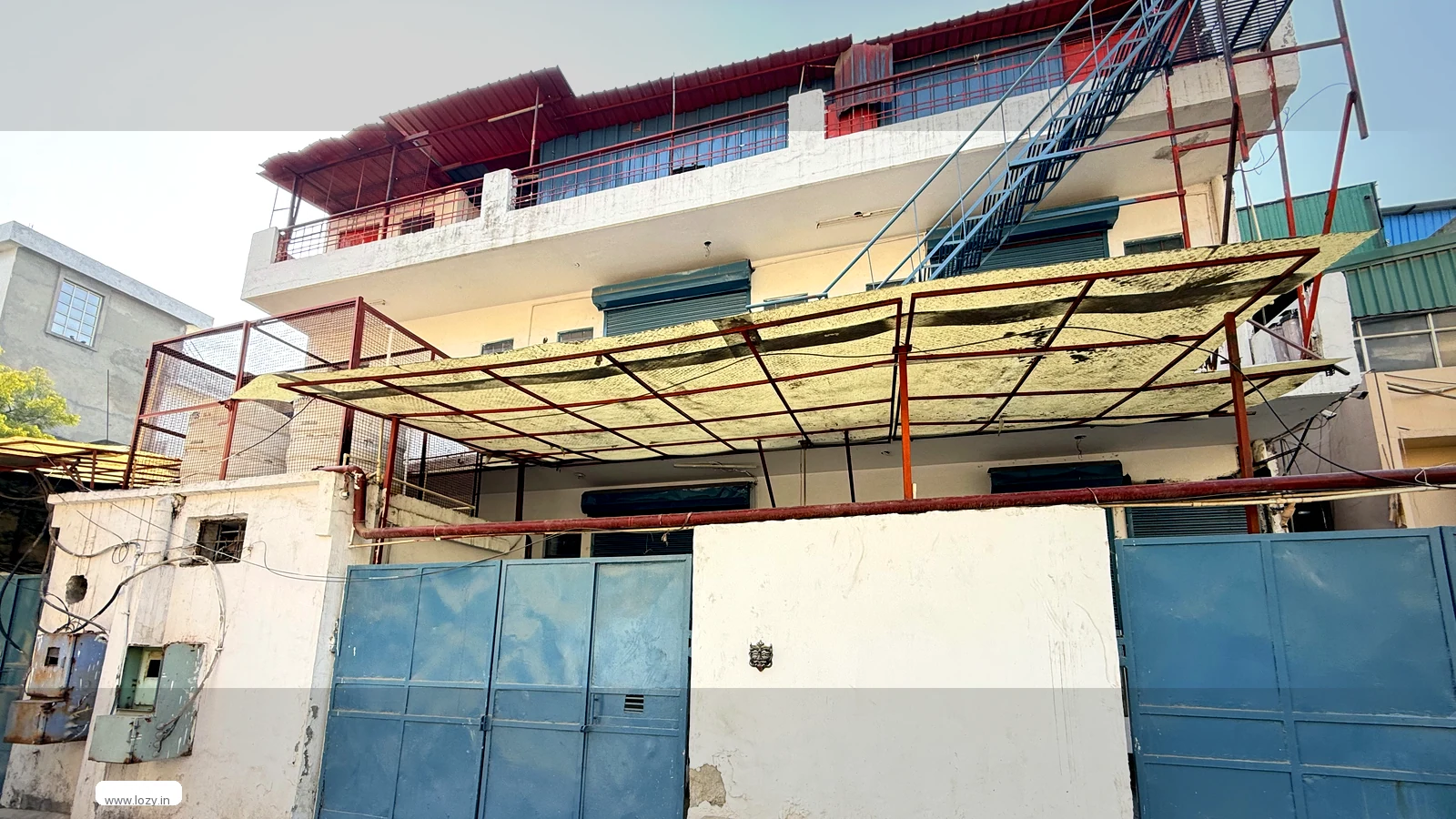
Solar equipment storage requirements are the conditions a building has to meet before a project's modules, inverters, connectors and rails can sit in it for months without losing value: crates stacked inside the maker's limit, glass upright and dry, electronics behind a lockable door, and a lot record tying every serial to a project, a site and a block. They are minimums with a test attached, so a commissioning team can find the right module on the morning the crew needs it. What follows is the specification to carry on a visit, from a starting basis of ₹21 per sq ft per month.
- No crate is stacked above its printed limit, and none sits on bare concrete - 100 mm of dunnage or a racked deck under every bottom row.
- Modules stay upright in the maker's crate, never flat face-up: a flat module holds water on the glass and carries weight the frame was never designed for.
- Inverters and connector cartons sit in a racked, covered, lockable zone with nothing wet above them.
- Six fields at intake - project, site, block, crate, serial range, wattage - resolve any serial to a block in a minute.
Most solar storage enquiries are written backwards: a rate per square foot, a shed within an hour of the site office, a photograph of a clean floor. A requirement sheet inverts that - one page of minimums, each with a test, scored across two or three buildings before money is discussed - because the loss here is almost never a lost pallet. It is a crate stacked a layer too high in July that produces a cracked module in November, a serial range nobody wrote down, or an inverter carton under a leaking downpipe that reaches site with corroded terminals.
The commercial framing sits in the solar equipment warehousing guide, which covers cost bases, site selection and the tender rhythm. This post is the specification that follows it; the service itself is described under solar and renewable energy warehousing.
What a solar bill of materials demands from a building, and why a general godown fails it
A solar consignment is four handling problems wearing one project name: crates of glass-faced modules, cartons of electronics, drums of cable, bundles of aluminium rail. One is fragile and heavy, one fragile and valuable, one heavy and rolls, one long and bends. A godown that stores cartons well will usually store modules badly, and the difference sits in the building.
Stacking discipline comes first. A module crate is glass, aluminium and cardboard held square by banding, built to carry a stated number above it - not an unlimited number, and not another brand's crate. Beyond the limit, load runs through the frame edge and the glass, and the damage is invisible: no crack, no corner to photograph. A micro-crack survives the factory flash test, the truck and the warehouse, then propagates on the structure six months after commissioning, leaving a serial number and a low string reading.
Orientation follows: crates stay on edge as packed, because laid flat a module holds a shallow pool under any leak and gives every dropped tool a target.
Third is a dry envelope and fourth is identity. Inverters, combiner boxes and connector cartons carry the highest value per cubic metre and the least tolerance for moisture, and they fail by humidity cycling inside a sealed carton rather than by soaking. Identity is free on one rooftop and decisive on a portfolio of three sites drawing from one building against three sequences, where it decides whether a lot is physically separated and racked by project or merely remembered by whoever received it.
Fix five inputs before looking at a shed: crate footprint and mass, the longest rail in the bill of materials, the number of projects drawing at once, the block sequence, and the serial granularity the owner's engineer will ask for. Everything else derives from those five, and a sheet built on square footage settles nothing.
The acceptance specification: twelve requirements you can test on the visit
Print it and carry it. Each row is a minimum, a physical test that takes minutes, and the failure it prevents; treat the rows about water, stacking and access as walk-aways, because no rate compensates for a serial range scrapped at commissioning.
| Requirement | Minimum | How to test it on the visit | Why it matters for this trade |
|---|---|---|---|
| Crate stacking limit, in writing | The figure printed on the crate, or a written figure agreed before intake; no crate above the top layer mark, and no mixing of brands in one stack | Read the stencil on two crates from different consignments, then look at the top of the tallest stack for crushed corners or slack banding | Over-stacking is the largest single source of micro-cracks that pass a visual check and fail on the structure |
| Module orientation | Upright in the maker's crate as packed; never flat face-up, never a loose module leaning on a column | Look for a crate lying on its face, a loose module against a wall, or a pallet where the glass faces the roof | A flat module holds water on the glass and takes point loads the frame and laminate were not designed for |
| Bottom layer off the slab | 100 mm dunnage, a skid or a racked deck under every crate row; nothing in contact with bare concrete | Torch the bottom of the first row in two aisles; a damp crate skirt or a white efflorescence line means the slab is wicking | Concrete passes ground moisture upward into the carton and the edge seal, which is where delamination starts |
| Roof and ceiling over glass | No missing sheet, no rust-through, no drip above a crate row or an electronics rack | Visit after rain if possible; otherwise read the underside of the roof for staining, sagging liner and daylight pinholes | One drip over one crate across one monsoon becomes a claim on a serial range, not on a single module |
| Plinth and door thresholds | Floor slab at least 150 mm above the apron, shutter closing onto a raised sill, no gap at the base | Look for a tide line at the shutter base, and check whether the outside apron falls towards the door or away from it | Water arrives at the door first, and the crate row nearest the door is the row that takes it |
| Roof and yard drainage | Roof water to piped downpipes discharging clear of the wall; yard falling away from the building; no standing water within 5 m of the shutter | Pour a bucket at the far inside corner and at the far outside corner, follow both, then ask where the downpipes end | A yard that holds water finds the wall base, and the wall base is where the bottom crate row stands |
| Dry zone for electronics | A racked, covered, ventilated zone for inverters, combiner boxes and connector cartons, with no downpipe, drain or roof opening above it | Ask what is above the rack, look at the ceiling and wall for damp, and put a hand on the underside of a stored carton | Inverter terminals and connectors corrode from humidity rather than rain, and corrosion is progressive and invisible |
| Lockable cage, one controlled entry | A single gate with a register, CCTV covering rack faces and the cage, a lockable cage for inverters and gateways with dual sign-out | Walk the perimeter and count ways in, look at where the cameras actually point on the monitor, ask who holds the cage key | A pallet of inverters is the most stealable item in the building and the hardest to replace inside a schedule |
| Long-item lane | A straight, dry run at least as long as the longest rail in the bill of materials, supported at intervals along its length, clear of the turning circle | Pace the run with the actual rail length, look for a sag or a bend in stock already stored, check the lane crosses no aisle | Rails and purlins take a permanent set when supported only at their ends, and a bent rail cannot be installed |
| Cable drum handling | Drums on their flanges, off the ground, outer wrap intact, rolled only in the winding direction, length drawn recorded | Look at where the drum meets the floor and at the state of the outer wrap; ask how the length drawn is written down | A drum on damp ground wicks water into the wrap, and the length record leaves with the wrap |
| Lot identity at intake | Project, site, block, crate number and serial range on every crate face and in the register before put-away | Pick a crate at random and ask a picker which project, which block and which serials it holds, without opening the register | A lot that cannot be identified in a minute at call-off is taken from whichever crate is nearest |
| Floor load and rack rating | 1,500 kg per sq m for floor-stacked crates, 3,000 kg per sq m where racked, with a certificate naming the figure and beams rated per level | Ask for the slab certificate and the rack load plate, and read the unit - 1 kN per sq m is about 102 kg per sq m | Crate weight concentrates on a small footprint, and a floor rated for cartons settles unevenly under glass |
Three rows are worth arguing about and nine are not: the stack limit, the dry zone and the single controlled entry, where a concession costs a serial range rather than an afternoon. If you would rather have the sheet walked with you, the solar warehousing team will score a shortlisted site and say which rows it fails.
Score the building before the first crate lands
Send the twelve rows with your crate footprint, the longest rail in the bill of materials and the projects drawing from the store - we reply with which Lozy facilities pass them, and the monthly rate for the space.
Send the specificationCall +91 93547 12345Module cartons: the maker's stacking limit, pallet orientation and breakage nobody sees
Modules are the one cargo here whose specification is printed by somebody else. Every crate carries a stacking limit and handling symbols, and those marks are the maker's warranty position as much as an engineering figure. So the requirement is a recorded limit - the printed figure noted against the crate at put-away, the stack built to it, and no second consignment's crate added on top because it looks the same. The service context for this stock is solar and renewable energy warehousing.
Marking the stack, so the limit is visible from the aisle
A limit that lives only on a crate face is a limit nobody checks on a busy Friday. Mark a footprint under each stack, paint the layer count on the upright, and cap the top crate with a strap or flag so the count reads from the aisle. Two people then own the number: whoever puts a crate away, and whoever signs the weekly check. The mixed-brand problem is subtler: two brands rarely share a crate dimension or a load path, so a stack built from both loads the weaker crate's frame edges, looks tidy, and is tested by nobody.
Pallet orientation: on edge, as packed, never face-up
A module is strong in the plane of its glass and weak across it. Standing on edge in a crate, the frame takes the load and the glass stiffens it. Lying flat under weight, the glass becomes a plate in bending and the junction box sits beneath the module above; lying flat under nothing is still wrong, because a drip, a dropped tool and a pallet corner swung on a fork all arrive from above.
So crates stand as packed, arrows up. Loose modules are not stored at all: a broken crate is re-crated, or its modules go into a marked single-layer rack and are counted separately. Nothing leans against a column, since a column is where a forklift reverses, and nothing sits flat under a roof opening, skylight, downpipe or condensate line - the four places water arrives unnoticed for a month.
Glass breakage: why the count is not the inspection
Breakage is mostly latent, which is what makes it expensive. A crate set down hard, a stack a layer too deep, a fork that grazed a corner: each leaves a crate that looks intact and passes a count. The damage is a chipped edge, a hairline in a cell, a stressed solder joint at a busbar, and it passes everything until the module is on the structure and reads low against its neighbours.
Three practices convert that into a procedure. Intake records visible condition crate by crate - corners, banding, pallet feet, crush marks on the top layer - with a dated photograph of any exception. Any crate dropped, tipped or struck is flagged and opened at the next quiet hour rather than at call-off, with its serials in an exception line. And a breakage register is kept even in a month when the answer is "no glass damage", because the empty month is what proves the handling was consistent.

Inverters, connectors, monsoon and theft: the protected envelope
The second half of a consignment fails differently. Glass fails mechanically; electronics fail chemically and disappear criminally. Water from above, humidity through the air and people through a gate are three problems a sound roof, raised plinth, racked dry zone and one controlled entrance solve cheaply, and that a shed without them cannot solve at any cost after signature.
Inverters and connectors: moisture works from the inside
An inverter carton is not waterproof and is not meant to be. It is a shipping box with a desiccant sachet inside, and the sachet's working life is measured in weeks once the carton is in a humid room. Then the protection expires quietly: the desiccant saturates, the internal air reaches ambient, and the first cool night after a warm humid day condenses on the coldest metal in the box, usually a terminal block. Nothing outside is wet to the touch.
Four attributes make a dry zone. Covered, so nothing drips from above. Racked, so cartons sit off the floor and away from the wall base. Ventilated rather than sealed, because a closed room over a concrete floor in the NCR summer is a humidity trap of its own. And free of anything wet running through it - no downpipe, no drain, no condensate, no tank above. On the visit, ask what is directly over the rack, look for a damp line on the wall behind it, and feel the underside of a carton; cardboard gone soft at the base has already been through a wet season. Connectors and MC4 pairs then deserve a labelled bin per part number, because loose connectors in an open crate are how a commissioning arrives at 60 of a 100-piece bag with no record of the rest.
Monsoon: roof integrity, drainage and the plinth line
June to September decides whether a solar store earns its rent. A metal roof fails at the fasteners first: a perished washer or a lifted sheet lets water in at a rate that never looks like a leak from inside until the liner stains. Look for staining under the sheets, daylight at the ridge, a sagging liner holding a reservoir above your racking, and rust blooms round fasteners. Ask when the roof was last inspected and whether downpipes were cleared before the monsoon - a blocked downpipe sends water down the wall face into the base of the nearest stack.
Then the plinth and the threshold. A floor at or below its own apron drains the yard into the building, and the tell is a tide line at the shutter base with a rust streak on the guide. A slab 150 mm above the apron, a shutter closing onto a raised sill, a yard falling away to a drain, and hardstanding reaching the dock are the version that behaves in the heaviest hour of a storm. Inside, the bottom crate row is the line that matters: 100 mm of dunnage or a racked deck keeps it clear of the slab and of the wash-down a floor row collects.
Theft, and the arithmetic of a stolen inverter
An inverter is the one item here a thief can convert quickly: boxed, branded, resalable, with a serial number most buyers never check. Theft in this trade is rarely a break-in at night. It is a carton that leaves on the right vehicle with the wrong paperwork, a cage left open at shift change, or a warranted unit that never comes back from a pickup.
Four controls answer it, all of them building or process requirements rather than insurance. One gate with a register recording vehicle, driver, material and time, and no second entrance left open for staff convenience. A lockable cage for inverters and gateways with dual sign-out - one signature from the facility, one from the project. CCTV covering the cage face, the dock and the rack aisles, with useful retention. And a serial-level record for every high-value unit, so a missing inverter is a serial on a list rather than a quantity in a shortage.
Project-wise and site-wise lot separation, and the records that make a serial findable
Lot separation is what separates a solar store from a general one, because this stock is not interchangeable. Two projects can hold the same wattage, brand and crate size and still not be the same stock: one belongs to a block being commissioned in three weeks, the other to a site still waiting on a structure. Physical separation is what stops a call-off becoming a substitution, and it is a racking decision before it is a labelling one.
Four zones, one project per bay face
Reserve holds untouched project kit in racked crates, still banded as it arrived. Active holds the week's call-off at quantities that leave the next block whole. Staging, on the dispatch face, holds only what a vehicle takes today. Returns holds warranty and damaged stock awaiting an RMA, kept away from everything issueable, because a faulty module reissued becomes a second site visit.
The boundary rule is one project per bay face at a time. A rack carrying two projects on the same face, at the same level, in crates that look identical will be picked wrong within a month - through geometry rather than carelessness, because the picker takes the crate in front. Where a bay must be shared, split it across separate uprights with a divider and a painted project code. Two further separations belong in the sheet: spares are not installation kit, and stock on hold never sits inside a live zone, for the same reason a quarantine pallet never sits in a pick face.
The six fields written at intake
Everything downstream is decided in the first twenty minutes of a consignment's life. Six fields go down before put-away: project, site, block, crate number, serial range, and wattage or bin class where a project mixes module types. Those six answer the only two questions a commissioning team asks - is my module here, and which module is it - and they are what a warranty claim rests on, since a manufacturer needs a serial rather than a project name.
A seventh earns its place for electronics: the inverter or gateway serial, against the carton and the crate it travelled in. Serial ranges are written as first, last and count - a list of thirty serials per crate is transcribed wrongly by the third crate and abandoned by the tenth. Wattage matters where a project mixes bin classes across blocks, because without the field the site team sorts modules at the structure, in the sun, with a datasheet.
The nine records, and how often each is signed
Records kept as a habit survive a busy quarter; records kept as an intention do not. Each of the nine needs a format, an owner and a frequency, and the frequency is what an auditor tests first.
| Record | What it must contain | Frequency | Who signs it |
|---|---|---|---|
| Intake sheet against delivery papers | Date, vehicle, supplier, invoice and e-way bill reference, crate count, visible condition, photographs of every exception | Every receipt, closed the same day | Receiving supervisor |
| Serial and wattage register | Crate number, serial range with count, wattage or bin class, project, site and block | At put-away, reconciled monthly | Store controller |
| Stack and orientation check | Layer count against the printed limit, orientation as packed, dunnage under the bottom row, brand per stack | Weekly, and after any re-arrangement | Facility supervisor |
| Breakage and damage register | Crate, serial range, nature of damage, photograph, disposition - re-crated, held, claimed, scrapped | Every occurrence; nil return monthly | Store and quality, jointly |
| High-value asset log | Inverter, combiner and gateway serials, cage position, dual sign-out, movement history | Every movement | Facility and project, both |
| Block allocation sheet | Quantity reserved per block, quantity drawn, balance held, and the crate each draw came from | Every call-off | Project coordinator |
| Dispatch and gate register | Block, crate numbers, serials leaving, vehicle, driver, e-way bill, gate-out time and signature | Every dispatch | Dispatch supervisor |
| Spares and warranty return register | Site, module or unit serial, fault code, RMA number, date raised, supplier status, replacement serial | Every return; reviewed fortnightly | Service coordinator |
| Building and monsoon file | Roof inspection, gutter clearing, drain and yard condition, damp readings, fire NOC and insurance tracked to expiry | Pre-monsoon, post-monsoon, quarterly | Facility manager |
Two derived numbers are worth reporting monthly: the share of blocks drawn complete on the first call-off, and the age of the oldest crate in reserve. Where stock must run as a tracked ledger rather than rented area, the inventory and stock storage basis is the one to price. The evidence to carry on a visit is in the warehouse inspection checklist, and the wider operating model is in the solar equipment warehousing guide.
Staging against the installation schedule, and the stock that must never be drawn
Solar dispatch is not a truck to one address. A commissioning team wants part quantities per block, the site pad has nowhere to hold kit that arrives early, and a crew stands idle if the crate at the gate holds the wrong block's modules. Staging turns a warehouse call-off into a load a crew can install that week.
Working from a block list rather than an order
The unit of dispatch is a block, and the block list runs the week: block name, module count, wattage mix, inverter and gateway units, and the hardware the block consumes. The facility draws from reserve, opens a crate to a part quantity only where the block is smaller than the crate, bags the hardware back inside, reseals, protects corners, and stencils the site and block reference on the faces before the pallet meets the ramp.
Loading follows install order in reverse: the block going up first loads last and comes off the tail first, which saves a day of double handling on a two-vehicle delivery. Rails and drums travel on their own vehicle or on a rack supported along their length, never on a crate stack, where a bundle's point load is what the crate was not built for.
Spares versus warranty return stock
Three kinds of stock get confused here. Installation kit is drawn to zero as the project completes. Spares are held against the commissioned asset for the warranty term and must never fill a shortfall, because a site that gave its spares to a block has no spare. Warranty returns are faulty units awaiting an RMA, and must not be reissued, resold, or quietly returned to a crate of good stock.
Spares are racked by site, named as spares in the register, with a monthly minimum report rather than a discovery at breakdown. Returns sit in the returns zone tagged with fault code, site, commissioning date and RMA number, excluded from available stock in every statement. Damaged modules go to a scrap bay with serials recorded, because damaged and end-of-life photovoltaic modules fall inside the e-waste framework, so disposal is documented with a recycler rather than tipped.
Licences, registrations and the documents that must exist before a crate is opened
There is no separate licence for storing solar equipment, and an operator who offers to arrange one is selling something that does not exist. Two sets have to exist at once: statutory approvals for storage at that address, and the business's own registrations for the goods it holds and the sites it serves. Both get checked before the first vehicle, not after the first dispute.
What the building must be able to produce
Seven documents belong in the sheet as a list a facility either has or has not: proof of lawful occupancy in the invoicing entity's name, with the shed on a plan rather than a gate number; a current fire NOC for this premises and use, address matching the agreement; land-use confirmation that storage is permitted on the plot; structural confirmation of floor load plus the racking design and its last inspection; building insurance, with a written answer on what covers your stock; GST tax-invoice capability in the contracting entity's name; and the power connection agreement.
Two deserve a second look. A fire NOC is issued for a premises and an occupancy, and the hazard class of a solar store is set by what burns - crate cardboard, pallet timber, wrap, cable insulation and the plastics in the electronics, not glass and aluminium - so ask for the design basis, not the certificate alone. And building insurance is not stock insurance: your modules need a policy in your own name, with the serial register as evidence of what was held on the date of a loss.
What the project business must hold
GST registration is the baseline, and for a warehouse the step that matters is adding the premises as an additional place of business rather than assuming a registered address elsewhere covers it. The procedure sits on the GST portal, and an accountant should confirm how it applies to the entity's state and constitution. Around that, four registrations come up in solar work.
- IEC from the DGFT where modules, inverters or connectors are imported, with the bill of entry kept beside the intake sheet rather than in a finance folder, because a warranty claim on an imported batch needs the import trail.
- BIS certification or registration where a category carries a compulsory mark, checked product by product against the scheme the Bureau of Indian Standards publishes.
- ALMM listing status for modules supplied to government-supported schemes - a procurement condition rather than a storage one, published by the Ministry of New and Renewable Energy. A project store should know which lots carry the listing, because listed and unlisted modules cannot be mixed into one block.
- Contract labour registration where the project stations its own workers rather than using facility staff, and Udyam registration where the business qualifies as a micro, small or medium enterprise.
Where storage is run to professional benchmarks, the operating standard the sector refers to is described by the Warehousing Development and Regulatory Authority. Checking the set takes ten minutes: entity name, premises address and expiry date on every document. A certificate that names a different shed in the same estate proves nothing about this one, and a fire NOC describing the occupancy as an office was granted for another use entirely.
The document list, and who holds what
Send us the compliance list your project owner is working to. We will mark which items a Lozy facility provides at handover, which sit with you as the business, and which need a specialist facility we do not run.
Check the documentsCall +91 93547 12345What moves the monthly figure in this trade
Six inputs move a solar storage bill and only one is the rate per square foot, which is why a comparison built on rate alone answers the wrong question. Lozy publishes a starting basis of ₹21 per sq ft per month for floorplate space in Delhi NCR - a basis to calculate from, not a quote.
- The basis behind the number. Area is priced per square foot on warehouse space for rent; a tracked ledger on the inventory and stock storage basis, published from ₹4,499 per month; a project build-up on on-demand warehousing; and a long hold from ₹1,199 per month under long-term warehousing. Compare bases before numbers.
- Crate density, not floor area. Modules are light for their volume, but the crate footprint is fixed and the stack height is capped by the maker, so a bay's usable cubic capacity is set by the crate rather than by the eaves. A taller shed does not give you more modules per crate.
- The long-item lane. Rails, purlins and profiles consume floor area inefficiently and cannot be racked vertically, so a straight dry run is worth paying for and expensive to improvise.
- Handling intensity. A crate leaving as it arrived costs less to run than block-wise drawdown with hardware bagging, resealing, corner protection and re-stencilling. Both are quotable; only one matches a phased site.
- The term and the shape of the requirement. A quarter's reserve, a two-week commissioning push and a single overspill lot should price on three different bases. A monthly cycle with no long lock-in lets the second step down when the last block ships.
- Distance to the sites. In a portfolio the vehicle run decides the building more often than the rent does, and a store ninety minutes from the block being commissioned gets bypassed.
Smaller requirements have their own published bases - short-term from ₹699, a seasonal plan at ₹1,299 where a project spans one weather window, a long-term plan from ₹1,199 where approvals push a lot past a season - billed monthly with GST and no long lock-in, collected on the pricing page. A whole bay with dock access prices against industrial bulk warehousing; a few pallets behind a shutter against short-term storage; a position shared with other tenants under commercial warehousing.
Price the position, not the floorplate. Two buildings at ₹21 per sq ft are not the same price if one yields four racked levels in a dry zone and the other two floor stacks beside a downpipe; the arithmetic is in the cost per pallet guide. To model the bill on your block list, send the crate count and the schedule.
The five ways solar storage fails, and the clause that would have caught each
Losses here are quiet and delayed, which is why they repeat. Each of the five has a signature: a crate that looked fine, a count that agreed, a dispatch that left on time.
- The stack that grew a layer after the visit. A Friday consignment had nowhere to go, so it went on top of an existing stack; six weeks later three modules in the bottom crate carry edge chips absent from the intake sheet. The failure is not the extra layer but the missing footprint marking, layer count and weekly check. The clause: a written maximum layer count per stack, a marked footprint, and a named signatory on the weekly check.
- The crate stored flat under a leak. A part crate loses its pallet, gets laid on its face to clear an aisle, in the bay where a roof fastener has leaked since June. Water sits on the glass, wicks along the frame edge, and the seal fails rather than the glass - a roof defect becomes a serial-range loss. The clause: upright storage only, and every roof defect logged with a repair date.
- The lot nobody could identify. Two projects, same wattage, same crate size, one rack face. The picker takes the nearest crate for site A; site B is short by eleven modules, discovered when its truck is at the gate. Nothing was stolen, nothing damaged - a serial range was allocated twice. The clause: one project per bay face, six fields before put-away, a block sheet naming each draw's crate.
- The inverter that left with the wrong signature. A carton goes out on a verbal instruction, and the gate register carries a driver's name rather than a person authorised to draw high-value stock. It is found missing at the next count, with no way to say which vehicle carried it. The clause: a lockable cage, dual sign-out, serials on the dispatch sheet, an authorising project name at the gate.
- The site that was ready a fortnight early. The block list said the fifteenth, the site said the first, and no staging bay was free because reserve crates occupied the dispatch face. The load left in pallet order rather than install order. The clause: a staging bay sized for one vehicle and held empty between dispatches, with reverse-install loading written into the instruction.
All five are invisible on a rate comparison and obvious on a requirement sheet, which is the argument for scoring a building before discussing money. If the choice in front of you is a partner running the operation rather than a position you run yourself, the 3PL warehousing in Delhi NCR guide weighs the two; if two tenants share a shed, the shared and multi-client warehouse guide sets out the boundaries to draw.
The handover, from requirement sheet to first dispatch, and the clauses that hold it
Nine steps take a requirement to a working solar store, and order matters more than speed. The two that get skipped under schedule pressure - the layout agreed on the drawing and the test intake - are the two that prevent the expensive surprises.
- Write the requirement sheet. The twelve rows, the crate footprint, the longest rail, the projects drawing from the store, and the block sequence for eight weeks.
- Book the space when the award is won, not when the modules land. Intake here is policy-shaped rather than seasonal, with awards clustering after an auction round and commissioning crowding towards quarter-end; the context sits in IBEF's renewable energy profile.
- Request documents before visiting. Fire NOC, occupancy proof, land-use confirmation, structural and racking certification, insurance position, power agreement, and the GST status of the invoicing entity.
- Shortlist two or three buildings within one belt, so the shortlist is decided by the building and not by the drive. The Faridabad guide covers the estates, the Gurgaon guide the Manesar side, and the Haryana corridor guide the nodes from Sonipat to Ambala.
- Visit with a test kit. A laser measure, a torch for the roof underside and the bottom crate row, a bottle of water for the floor fall, the actual rail length, and the printed table.
- Agree the layout on the drawing. Four zones with boundaries, stack footprints with layer counts, the dry rack away from downpipes and any damp wall, the rail lane paced and named.
- Put the operating rules in the agreement, not an email. Inbound windows, call-off cut-off, crate marking, cage sign-out, rejection and RMA handling, and the escalation contact.
- Sign, then set up the record. Your users on the stock system, serial and wattage fields live, a dummy project and block created, one crate registered and one block drawn against it.
- Run a test intake. One vehicle, one crate, one block: received against delivery papers, serials registered, condition photographed, put away inside the limit, drawn, marked, loaded in reverse order, reconciled the same evening.
Exit terms belong in the same conversation as entry terms - a facility that cannot say on day one how stock is released is planning to make it awkward later. Four things belong in writing: the notice period, how long a serial-level statement takes at exit, what happens to warranty returns still in the returns zone, and who pays for disposing of damaged modules. If the intake lands on a weekend, send the sheet and the layout over WhatsApp and we will mark it up before the vehicle is fixed.
The eleven clauses that matter in a solar storage agreement
- Footprint, zones and bay allocation. The area on a plan, and which bay face belongs to which project, including reserve, active, staging and returns.
- The stack limit as a term. Maximum layer count, the crate types it covers, and what happens when a consignment arrives with no room at that limit.
- Storage condition. Crates upright, nothing on bare concrete, electronics in the dry zone, nothing beneath a known roof defect - obligations, not practices.
- The record and its fields. The six intake fields, the serial register, the stock statement frequency, and the export format.
- Handling, itemised per unit of work. Per crate in and out, per block drawdown, per hardware bag, and the equipment each includes.
- The call-off service level. A cut-off time, a measured response and a consequence. "Same-day dispatch" without a cut-off is a marketing phrase.
- Access control and cage custody. Who holds keys, who may sign out high-value stock, the right to audit on notice, and CCTV retention.
- Liability and insurance. Whose policy covers what, the excess, cost or replacement valuation, and how latent glass damage and corrosion are treated after dispatch.
- Warranty returns and disposal. How an RMA is raised, how long a faulty unit may sit, and who evidences disposal of a damaged module.
- Exit and stock release. Days to release after notice, equipment for loading out, and settlement of outstanding handling charges.
- Price review, term and GST. Notice period, how a rate change is communicated, the invoicing entity, the GSTIN and the place of supply - and a tax invoice rather than a rent receipt, without which the input credit is simply gone.
Hold the agreement and the requirement sheet side by side before signing. Anything that exists only as an email promise is a preference, and preferences leave with the person who granted them.
Where Lozy fits, and where we do not
Lozy's network is 77+ warehouses and over 1M sq ft of live space, run out of Delhi NCR, and a solar position here is scored against the twelve rows above rather than a brochure. The published bases are ₹21 per sq ft per month for floorplate, ₹1,199 a month for a long-term hold and ₹4,499 a month for tracked stock, invoiced monthly with GST and no long lock-in. What is free now is on the warehouse listing, the belt under locations, and the service set on services with business warehousing for a position held month by month.
Not every enquiry belongs here. There is no cold-room capability, no bonded warehouse, no calibrated testing and no facility built for hazardous or explosive goods. Temperature-guaranteed storage - a contractual band with monitoring and alarms - is a specialist facility and outside what we run, so a project needing a stated temperature or humidity guarantee should be told that plainly rather than sold a dry shed and a promise. Dry, non-hazardous project stock with a stacking limit, a serial register and block-wise dispatch is squarely inside what we do; the coverage page is solar and renewable energy warehousing.
If that describes your project, send the requirement sheet to care@lozy.in with the crate footprint and the block list, and the reply will name the facilities that pass all twelve rows. General questions sit on the FAQ page; contact us to talk a specific site through.
Related guides
- solar equipment warehousing, cost and site selection
- the warehouse inspection checklist
- warehousing in Faridabad
- business warehousing
Take the specification to a site, not a brochure
Send the crate footprint, the longest rail, the projects drawing from the store and the block sequence - we will confirm which facilities pass the twelve rows and hold them for your visit.
Book the site visitCall +91 93547 12345Sources. Rates, plan figures and network numbers are Lozy's published information, checked 25 October 2026, and are starting bases rather than quotes. Sector context comes from IBEF; scheme and listing reference from the Ministry of New and Renewable Energy; GST registration from the GST portal; product marking from the Bureau of Indian Standards; warehouse practice from the Warehousing Development and Regulatory Authority. The minimums above are drafting benchmarks for a requirement sheet, and they do not replace a structural, fire or licensed engineer's certificate.
Last updated: 25 October 2026. A question the FAQs below do not answer? Call +91 93547 12345 or write to care@lozy.in.
Need warehousing or storage in India?
Request a free, tailored quote in under 2 minutes — free pickup, no lock-in.






